Feature Story
Switzerland doubles its contribution to UNAIDS
10 September 2013
10 September 2013 10 September 2013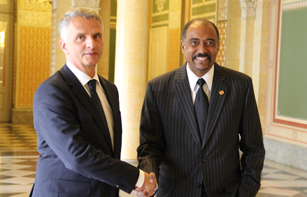
Federal Councillor for Foreign Affairs of Switzerland, Didier Burkhalter (left) and UNAIDS Executive Director Michel Sidibé.
The Federal Council for Foreign Affairs of Switzerland has announced that it will double its annual contributions to UNAIDS over the next three years. Switzerland will contribute a total of CHF 30 million until 2015 to support UNAIDS efforts in helping countries reach the HIV-related Millennium Development Goals. This contribution makes Switzerland UNAIDS’ eighth largest donor.
“We appreciate Switzerland’s engagement and leadership in the response to HIV and their unwavering confidence in the work of UNAIDS,” said UNAIDS Executive Director, Michel Sidibé. “Switzerland’s forward thinking policy development on harm reduction and its commitment to scientific research have been essential in advancing the response to HIV both domestically and globally. We look forward to continued close collaboration with Switzerland.”
The Swiss Government stated that UNAIDS was ‘the most important multilateral platform in the response to HIV’ and highlighted the key role of UNAIDS in ensuring a coordinated UN response to the epidemic.
Switzerland’s forward thinking policy development on harm reduction and its commitment to scientific research have been essential in advancing the response to HIV both domestically and globally. We look forward to continued close collaboration with Switzerland.
UNAIDS Executive Director, Michel Sidibé
As a member of UNAIDS’ Programme Coordinating Board, Switzerland actively advocates for increased efforts to stop new HIV infections among children and young people. It also strongly supports HIV prevention programmes for people at higher risk of infection such as sex workers, people who use drugs and men who have sex with men and has undertaken pioneering work in this domain.
Switzerland has a unique role in global health as the host country of leading global health organizations. Switzerland’s continued engagement in responding to HIV and strong partnership with UNAIDS will be critical in helping to shape the future of AIDS and in achieving UNAIDS vision of zero new HIV infections, zero discrimination and zero AIDS-related deaths.
Feature Story
Community caregivers: the backbone of HIV care and support programmes
09 September 2013
09 September 2013 09 September 2013
Community caregivers are an essential component of each country’s primary health care system. Credit: Suzanne Porter/HelpAge International
Community caregivers are the backbone of effective HIV care and support programmes according to a multi-country study funded by UNAIDS and Cordaid and conducted by the Caregivers Action Network (CAN) and Cordaid. The research, carried out in Ethiopia, Malawi, South Africa and Zambia, focused on home-based care concerning HIV prevention, treatment, care and support.
Findings from the research confirm that community caregivers play an invaluable service delivery role and are an essential component of each country’s primary health care system. According to the study, the role of community caregivers has shifted from basic home-based care functions such as visiting and caring for the sick to clinical and social support functions such as delivering medicines, adherence and psycho-social support.
The report highlights that social-support services for people living with HIV are becoming as important as clinical services with adequate food and nutrition, stable incomes and psycho-social support emerging as fundamental priorities.
The role of community caregivers in addressing stigma and mobilizing people to know their HIV status and seek timely HIV prevention and treatment remains essential.
UNAIDS Country Co-ordinator for Zambia, Helen Frary
“The role of community caregivers in addressing stigma and mobilizing people to know their HIV status and seek timely HIV prevention and treatment remains essential,” said UNAIDS Country Co-ordinator for Zambia, Helen Frary.
The general trend outlined in the report shows a tendency from health ministries toward creating a professional community caregivers workforce that works with and extends the reach of formal health care to communities and homes. However, the study warns about the need for caregivers to have access to social protection—such as income generating opportunities or remuneration—to enable them to provide essential care giving services without falling into further poverty themselves.
“This multi-country study clearly demonstrates the crucial role played by community caregivers in the HIV response,” stated CAN facilitator Rachel Albone. “It highlights the need for their expertise and experience to be recognized and appropriately remunerated in strategies to strengthen primary health care.”
For details see: http://www.caregiversactionnetwork.org/web/guest/can-research
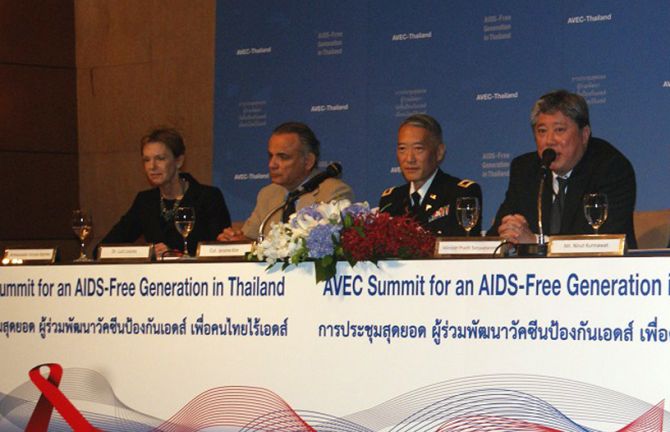
L to R: US Ambassador to Thailand, Kristie Kenney; UNAIDS Deputy Executive Director, Programme, Dr Luiz Loures; Project manager on HIV vaccines and Principal Deputy of the US Military Research Programme within the US Army Medical Research and Material Command, Col. Jerome Kim; and Minister of Public Health of Thailand, H.E. Pradit Sintavanarong. Credit: UNAIDS
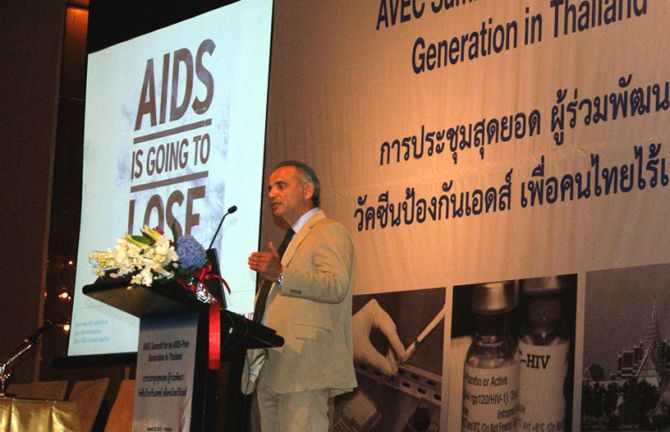
UNAIDS Deputy Executive Director, Programme, Dr Luiz Loures speaking at the AIDS Vaccine Efficacy Consortium (AVEC) Summit for an AIDS-Free Generation in Thailand. 29 August 2013. Credit: UNAIDS.
Feature Story
Thai-US partnership confirms renewed push on HIV vaccine
02 September 2013
02 September 2013 02 September 2013On 29 August at the AIDS Vaccine Efficacy Consortium (AVEC) Summit for an AIDS-Free Generation in Thailand, a Thailand-United States partnership working on the development of an HIV vaccine has announced its commitment to build on the success of previous trials, giving a renewed push to vaccine research.
In 2009, the landmark RV144 Thai vaccine study—jointly developed by the Thai health ministry and US military researchers—proved the first evidence in humans that a safe and effective preventive HIV vaccine is possible. Results of the RV144 found 31.2% efficacy at the end of the study among 16 000 Thai volunteers.
Building on this, researchers will work to improve the levels of protection found previously and conduct additional trials in Thailand over the coming years, focusing on key populations at higher risk of infection, including men who have sex with men. The aim of the on-going research is that a modified version of the vaccine would raise the protection rate to around 50%—the figure needed to obtain regulatory approval for public release.
The Thai Government will take a leadership role by supporting the future HIV vaccine efficacy study and assisting in the establishment of flexible manufacturing systems and infrastructure that could support the production of a registered HIV vaccine.
Quotes
The Government of Thailand has given high priority to the HIV epidemic and we strongly believe that the development of an effective vaccine is possible. We are fully committed to playing a constructive role.
Some of our most exciting partnership work with Thailand has been on HIV. Today we have the opportunity to step our efforts up a notch, towards our united goal of an HIV-free generation.
The Government of Thailand is showing important leadership in taking HIV vaccine research to the next step. This can be a win-win situation: for example, development of a manufacturing facility will provide opportunities not only for HIV vaccine production but also more broadly for other disease concerns.
A vaccine is an essential component to getting to zero on HIV and it is important that this is happening in Thailand, building Southern capacity for development and manufacturing, and focusing efforts where they are most needed. To get to the end of AIDS, we cannot leave anybody behind – this partnership is putting that consideration at the centre of its work.

Feature Story
UNAIDS lauds India’s progress on access to treatment, urges further scale-up and ‘focusing’ of response
30 August 2013
30 August 2013 30 August 2013
Dr Luiz Loures, UNAIDS Deputy Executive Director, Programme (right) with Mr Oscar Fernandes, Union Minister for Road Transport and Highways.
India’s rapid progress in expanding access to antiretroviral treatment over the last five years was heralded as “an example of national commitment and strategic action on AIDS,” by UNAIDS Deputy Executive Director, Programme, Dr Luiz Loures, during a mission to the country from 26-27 August.
The number of people living with HIV in the country receiving anti-retroviral therapy approximately doubled from 2007 to 2009 and then again from 2009 to 2012. India is now ranked second globally in terms of total number of people receiving life-saving drugs. Currently more than 650 000 people living with HIV are receiving treatment in the country and efforts are underway to ensure that 1 million people are covered by the national treatment programme in a short time frame.
Dr Loures congratulated the Ministry of Health and Family Welfare and the Department of AIDS Control for their firm commitment and leadership and their on-going efforts to strategically expand the national HIV response. Over the previous decade, India’s efforts in the AIDS response have reduced the number of new HIV infections by more than 50%.
India’s national AIDS response programme has secured results; it is one of the big global achievers.
UNAIDS Deputy Executive Director, Programme, Dr Luiz Loures
“India’s national AIDS response programme has secured results; it is one of the big global achievers,” he said. “Not only has it significantly expanded coverage of HIV prevention initiatives, but equally is placing emphasis on increased access, availability and coverage of HIV treatment and care services.”
Dr Loures emphasized the need for India to continue to capitalize on the gains achieved and ensure that investments are focused where they are most needed. “To realise greater impact across the country, India’s focus on strategic investments tailored at sub-national level—that consider local contextual realities—is critical. This strategy will be a game changer in influencing the epidemic’s future trajectory,” added Dr Loures.
Among other issues debated with the high-level officials, significant focus was given to the growing anticipation of India’s ability to meaningfully contribute to the global AIDS response and potentially supporting other countries in designing and delivering activities, through transfer of knowledge and exchange programmes.
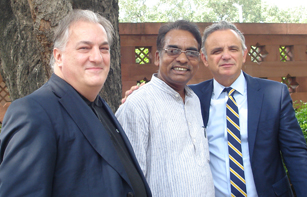
L to R: Oussama Tawil, UNAIDS Country Coordinator, India; Mr J.D. Seelam, Union Minister of State for Finance; and Dr Luiz Loures, Deputy Executive Director, Programme, UNAIDS.
“We encourage India to continue partnering with other countries on sharing experiences, knowledge and transfer of competencies,” said Dr Loures. “With an ever-increasing interdependence between populations, shared goals can be realised more effectively and efficiently though meaningful collaboration and partnership.”
Dr Loures’ visit to India was an opportunity for high level policy dialogue with political leaders and Government officials, including the Secretary and senior officials from the Department of AIDS Control. Key discussions were held with the President and the Secretary General of the Forum of Parliamentarians on AIDS, Mr Oscar Fernandes, Union Minister for Road Transport and Highways and Mr J.D. Seelam, Union Minister of State for Finance. Both leaders pledged their full support to enhancing India’s contribution to the AIDS response, globally and within India.
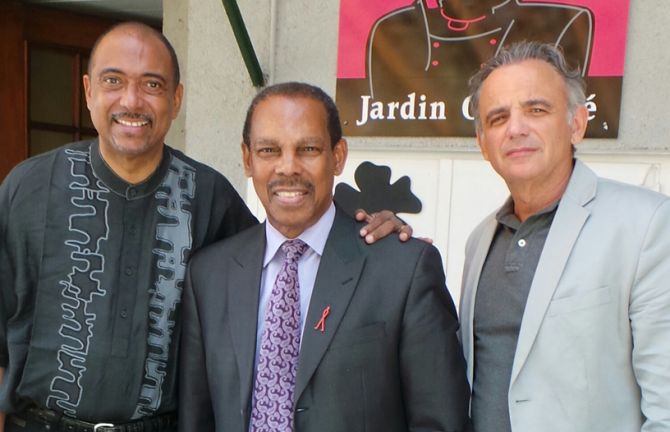
L to R: UNAIDS Executive Director, Michel Sidibé, United Nations Secretary-General’s Special Envoy for AIDS in the Caribbean, Dr Edward Greene and UNAIDS Deputy Executive Director, Programme, Dr Luiz Loures. Credit: UNAIDS
Feature Story
Dr Edward Greene, Secretary General’s Special Envoy for AIDS in the Caribbean visits Geneva
26 August 2013
26 August 2013 26 August 2013The United Nations Secretary-General’s Special Envoy for AIDS in the Caribbean, Dr Edward Greene, visited the UNAIDS Headquarters in Geneva on 23 August to meet with UNAIDS Executive Director Michel Sidibé.
Among the issues discussed, Dr Greene highlighted the new initiative of the Pan Caribbean Partnership Against HIV/AIDS (PANCAP) co-lead by him and the Prime Minster of St Kitts & Nevis, Dr Denzil Douglas, called Justice for All: taking action to reduce stigma and discrimination and increase access to justice in national HIV responses in the Caribbean by 2015.
The new initiative will unite stakeholders—including faith-based organizations, people living with AIDS, civil society, legislators and government officials—at national and regional levels to dialogue on the existing legal environment related to HIV in the Caribbean. The initiative aims to develop a roadmap for national and regional actors to reduce stigma and discrimination and to increase access to justice in national HIV responses including the abolition of punitive laws. The first national consultation is planned for St Kitts and Nevis in Fall 2013.
The Special Envoy also stressed the need to strengthen dialogue with faith-based organisations in the Caribbean and work collaboratively with their representatives. Dr Greene stressed the historical role played by such organizations in delivering social services and support in the region.
Quotes
As faith groups have been traditional gatekeepers of our society, it is imperative to include their representatives in the HIV response to ensure that their policies do not alienate populations most at risk nor restrict the range of strategies that can be employed to address the HIV epidemic in the Caribbean.
Removing punitive laws is a priority for UNAIDS. We must stand shoulder to shoulder with people who are living with HIV and who are most at risk. By transforming negative legal environments, we can help achieve a generation free from HIV.


Feature Story
Southern African Development Community leaders meet for special session of AIDS Watch Africa
22 August 2013
22 August 2013 22 August 2013
The 33rd SADC Summit was held in Lilongwe, Malawi on 17 and 18 August 2013.
Heads of State and Government from countries in the Southern African Development Community (SADC) met on 18 August to discuss the progress made and the challenges that the region is facing regarding HIV, tuberculosis and malaria.
Given the financial down-turn for the AIDS response, SADC leaders underlined the need to explore ways to increase domestic resources and expressed their support for the replenishment of the Global Fund to fight AIDS, TB and malaria. They also agreed to push for global solidarity and shared responsibility for HIV, TB and malaria responses in Africa in line with the African Union roadmap adopted in July 2012.
SADC Member States underlined the need for regional production and procurement of essential medicines and commodities for AIDS, TB and malaria. They stressed that with increasing demand for HIV treatment, the SADC region should step up its efforts to ensure favourable polices, encourage technology transfer and build capacity of African countries to produce high quality drugs and other pharmaceutical goods.
Despite progress made in the AIDS response in recent years—coverage of antiretroviral treatment for people living with HIV has increased considerably in several countries—SADC remains the region most affected by HIV, with millions of people still lacking access to life saving treatment and care services.
Discussing the need to scale up access to HIV testing and treatment, structural, financial, human resources and human rights challenges were identified by the SADC leaders as the main obstacles to attain the goal of universal access. HIV testing and counselling is a critical and essential gateway to HIV services. WHO and UNAIDS, having endorsed the concept of universal access to knowledge of HIV status, recommend that HIV testing be conducted on a voluntary basis, consistent with WHO/UNAIDS guidelines. In this context, SADC leaders welcomed WHO’s new treatment guidelines which provides for earlier initiation of HIV treatment.
The meeting took place on the margins of the 33rd SADC Summit held from 17–18 August in Lilongwe, Malawi. It was attended by many Heads of States, including Presidents of Botswana, the Democratic Republic of Congo, Mozambique, United Republic of Tanzania, South Africa and Zimbabwe.
External links
External links
Related
 “Who will protect our young people?”
02 June 2025
 Impact of US funding cuts on HIV programmes in Malawi
15 April 2025
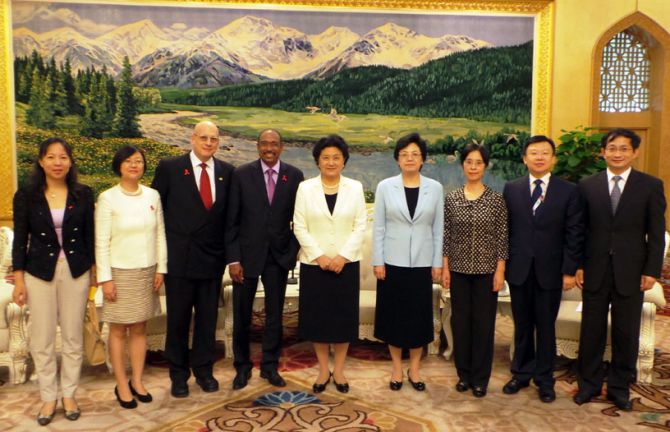
UNAIDS Executive Director Michel Sidibé (fourth from left) next to Chinese Vice Premier Liu Yandong in Beijing, China, 16 August 2013.
Feature Story
Chinese Vice Premier Liu Yandong met with UNAIDS Executive Director ahead of China-Africa Ministerial Forum on Health
16 August 2013
16 August 2013 16 August 2013Chinese Vice Premier Liu Yandong met with UNAIDS Executive Director Michel Sidibé in Beijing last Friday, ahead of the Ministerial Forum of China-Africa Health Development. During the meeting, Liu thanked UNAIDS for its support to China’s HIV response, and emphasized that addressing HIV is a key priority for the Chinese government.
Mr Sidibé commended China’s strong commitment to its HIV response, and noted the impressive results achieved to date, including the increase in the number of people receiving antiretroviral treatment and the 65% reduction of AIDS-related mortality. Mr Sidibé also stressed China’s leadership in responding to the epidemic among people who use drugs. The country is implementing the largest harm reduction programme in the world.
During the meeting, Minister Liu and Mr Sidibé also discussed the future of the cooperation between China and Africa on health. Mr Sidibé highlighted the production of medical commodities and pharmaceuticals as areas for potential collaboration.
Quotes
The Chinese government attaches great importance to fighting AIDS, and has been making increasing efforts to achieve the AIDS-related Millennium Development Goals.
By sharing China’s rich expertise in health and community systems strengthening, China can bring about huge impact in Africa.
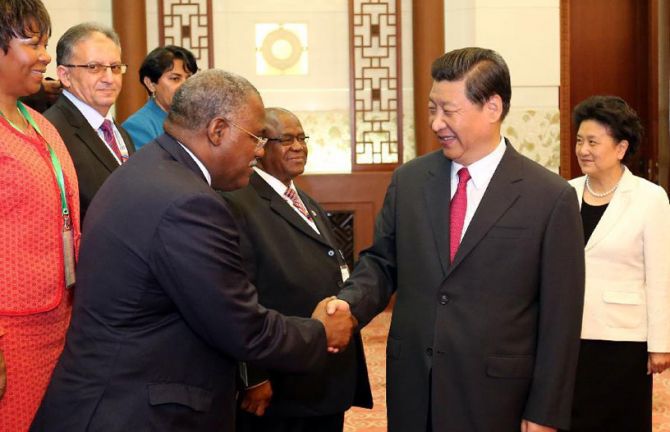
President Xi greets African ministers of health at China’s Great Hall of the People. Credit: UNAIDS/Zhou Lilong
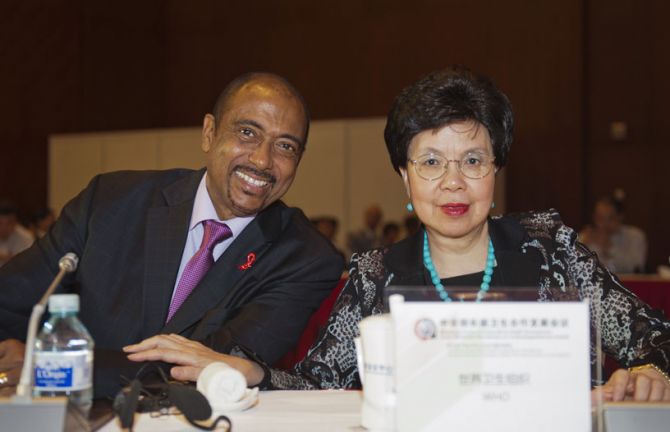
UNAIDS Executive Director Michel Sidibé (left) and WHO Director-General Margaret Chan in China, 16 August 2013. Credit: UNAIDS.
Feature Story
Chinese President Xi Jinping opens the Ministerial Forum of China-Africa Health Development in Beijing
16 August 2013
16 August 2013 16 August 2013Chinese President Xi Jinping welcomed the participants of the Ministerial Forum of China-Africa Health Development, launching a new era in cooperation between China and Africa. “Human development is at the core of development. We hope this forum will substantially push forward health cooperation between China and Africa," said President Xi Jinping at the opening ceremony at the Great Hall of the People in Beijing.
Addressing the opening plenary, UNAIDS Executive Director Michel Sidibé emphasized the enormous positive impact of stronger China-Africa cooperation for health. “The response to HIV can act as a pathfinder for the China-Africa partnership in health development,” said Mr Sidibé. “China can help African countries build on their leadership in the HIV response to advance Africa’s response to a range of other health issues.” Mr Sidibé also highlighted the importance of commodity security, with China’s unique potential to support Africa to develop sustainable capacity for local manufacture of antiretroviral drugs and other pharmaceuticals. The forum was also attended by the heads of international health organizations—Margaret Chan (WHO), Babatunde Osotimehin (UNFPA), and Mark Dybul (Global Fund).
Speaking during the Forum’s opening ceremony, Minister of China’s Health and Family Planning Commission Li Bin reiterated China’s commitment to building stronger China-Africa ties, noting the long and positive history of China-Africa cooperation on health. “China will continue to strengthen cooperation with international cooperation on global health and population development, and make use of international platforms to explore new approaches to South-South cooperation in the area of health with developing countries in Africa and elsewhere,” said Minister Li.
The Forum featured the negotiation and adoption of the Beijing Declaration, which outlines the commitment and direction of future cooperation between China and Africa in this important area. On behalf of the international organizations attending the forum, Mr Sidibé delivered a statement in support of the Beijing Declaration.
Statement of the International Organizations at the Ministerial Forum of China-Africa Health Development
- The international organizations represented at the Ministerial Forum of China-Africa Health Development (World Health Organization, the Joint United Nations Programme on HIV/AIDS (UNAIDS), the United Nations Population Fund (UNFPA), the United Nations Children's Fund (UNICEF), the Global Fund to Fight AIDS, Tuberculosis & Malaria, the World Bank, and the GAVI Alliance) commend its participants on their leadership efforts to advance health development, and give our strongest endorsement of the Beijing Declaration, which inaugurates a new era of China-Africa collaboration.
- We recognize this Declaration as a pillar of the larger partnership between China and Africa, which is one of the most important geopolitical and economic relationships of the 21st Century.
- We underscore the Declaration's importance for strengthening China's collaboration with regional institutions - the African Union and Africa's regional economic committees.
- We commit special attention and support for the implementation of the Beijing Declaration. We will seek to make available, where appropriate, the knowledge and resources of the relevant agencies to promote China-Africa health collaboration as a new platform to accelerate progress towards the Millennium Development Goals and to promote global health in the post-2015 development agenda.
- We welcome the Ministerial Forum of China-Africa Health Development as an innovative mechanism to convene the participation and dialogue of high-level leadership in support of health development and cooperation between China and Africa, and we encourage the regular reporting of progress towards its important objectives.
Quotes
Human development is at the core of development. We hope this forum will substantially push forward health cooperation between China and Africa.
The response to HIV can act as a pathfinder for the China-Africa partnership in health development. China can help African countries build on their leadership in the HIV response to advance Africa's response to a range of other health issues.
China will continue to strengthen cooperation with international cooperation on global health and population development, and make use of international platforms to explore new approaches to South-South cooperation in the area of health with developing countries in Africa and elsewhere.
External links:
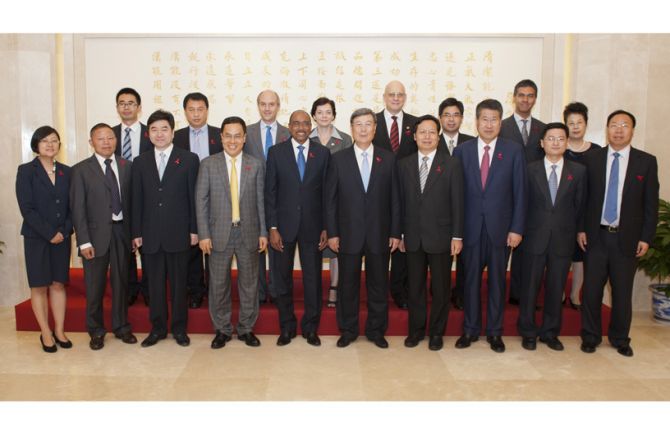
UNAIDS Executive Director Michel Sidibé meets with members of the China Red Ribbon Foundation
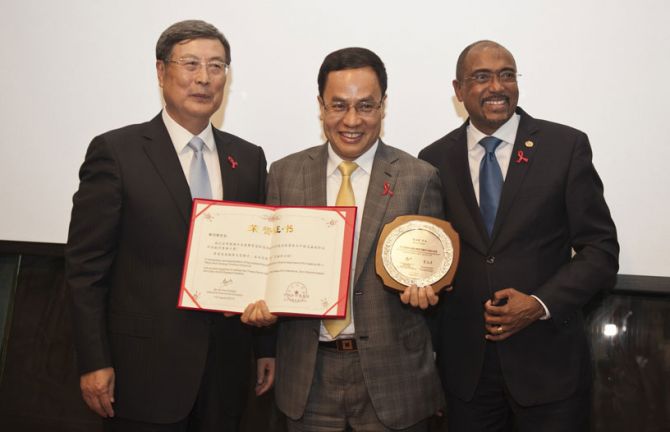
Michel Sidibé and Huang Mengfu present an award to Li Hejun, Chairman of China’s Hanergy Holdings Group
Feature Story
Chinese business leaders committed to the HIV response
14 August 2013
14 August 2013 14 August 2013On 14 August, UNAIDS Executive Director Michel Sidibé presented awards to the CEOs of six of China’s largest companies in recognition of their contributions to China’s AIDS response. Mr Sidibé was meeting with some of China’s leading CEOs at the Beijing secretariat of the China Red Ribbon Foundation, located within the headquarters of China’s Hanergy Holdings Group, to highlight the leadership and contribution of the private sector in China’s national and global HIV response.
Speaking at the event, Mr Sidibé praised the growing commitment of Chinese business leaders, particularly in the area of HIV. The private sector is playing an increasingly important role in China’s efforts to expand HIV prevention, treatment and care services and address discrimination. Much of this work is channelled through the China Red Ribbon Foundation, founded in 2005 by 20 of China’s leading private sector firms.
Huang Mengfu, Honorary Chair of the All-China Federation of Industry and Commerce thanked Mr Sidibé for his remarks and said that, “For the last 30 years, China has led on economic growth. In the coming years, China’s private sector will help China to lead on social responsibility, global health, and human development.”
Several Chinese CEOs reflected on their positive experiences in supporting the prevention and control of HIV in China and expressed their support for the UNAIDS vision of zero new HIV infections, zero discrimination and zero AIDS-related deaths.
Mr Sidibé also stressed the huge potential for China’s growing private sector to help bring an end to the AIDS epidemic globally. Particularly in Africa, where many Chinese companies now have extensive operations, Chinese businesses are in a unique position to encourage breakthrough progress in the HIV response and throughout the health sector. Reiterating UNAIDS’ commitment to working closely with private business, Mr Sidibé emphasized that a successful response to HIV requires strong and meaningful participation from all sectors of society.
Quotes
For the last 30 years, China has led on economic growth. In the coming years, China’s private sector will help China to lead on social responsibility, global health and human development.
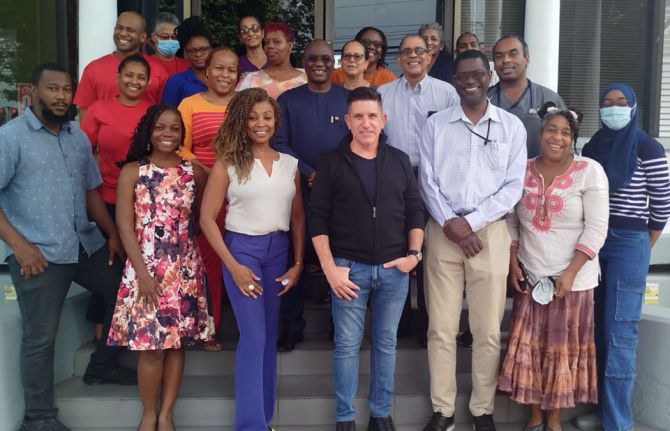

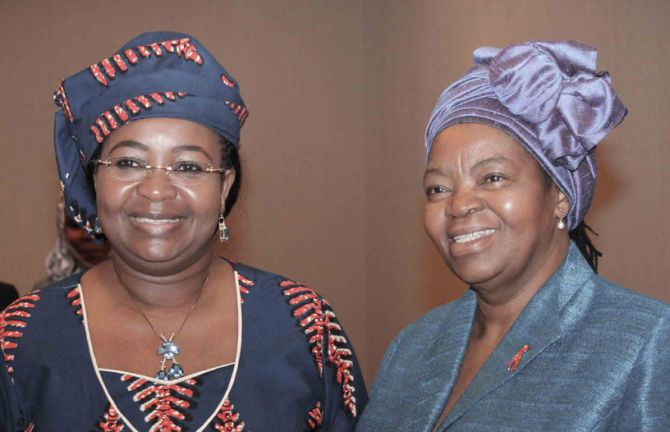
The First Lady of Tanzania, Mama Selma Kikwete (left) and Professor Sheila Tlou of UNAIDS at the recent meeting of the high level group of education and sexual reproductive health experts from Eastern and Southern Africa, held in Gabarone, Botswana from 30-31 July. Credit: UNESCO
Feature Story
Experts in Southern and Eastern Africa call for renewed commitment on sexuality education and health services
09 August 2013
09 August 2013 09 August 2013At a recent meeting in Botswana, a high-level group of education and sexual reproductive health experts from Eastern and Southern Africa highlighted the need for good quality, gender-sensitive sexuality education that prepares adolescents for puberty and relationships and prevents unintended pregnancy and HIV. They also stressed that countries need to provide improved access to youth-friendly health services, which includes contraception, confidential HIV and STI testing, HIV prevention, treatment and care, as well as safe pregnancy and delivery and safe options in the case of unintended pregnancy. Child-marriage and gender-based violence were singled out as current impediments for adolescents and young people realising their right to education and health.
The participants also called on the region’s health and education ministers to sign a new commitment to work closely together to improve access to high quality sexuality education and health services. This commitment, due to be signed in December 2013 ahead of the International Conference on AIDS in Africa, will demand that countries look at young people’s needs with more openness, and be willing to re-examine social norms about young people’s sexuality.
The meeting, held in Gabarone, Botswana from 30-31 July, was the first face-to-face meeting of this high-level group, chaired by Professor Sheila Tlou, regional directors of UNAIDS and a former Member of Parliament and Minister of Health of Botswana. The First Lady of Tanzania, Mama Selma Kikwete, opened the meeting.
Quotes
We will work hand in hand with young people, parents and communities at large to ensure that our leaders put their wellbeing at the centre of national agendas and resource allocation.