Feature Story
The United Nations lays out “historic” post 2015 development agenda
31 May 2013
31 May 2013 31 May 2013
United Nations Secretary-General Ban Ki-moon (right) receives report of the High-level Panel of Eminent Persons on the Post-2015 Development Agenda from co-Chair President Susilo Bambang Yudhoyono of Indonesia. Credit: UN Photo/Mark Garten
The United Nations is on the cusp of entering a bold new phase in ending poverty and ensuring meaningful and sustainable development for all. The UN Secretary-General Ban Ki-moon launched on 30 May 2013 a momentous and eagerly awaited report that puts forward a single United Nations development agenda beyond 2015.
Compiled by a panel of 27 top-level leaders appointed by the UN Secretary-General in 2012, A new global partnership: eradicate poverty and transform economies through sustainable development, provides a framework driven by five key transformative shifts. These build on and move beyond the Millennium Development Goals (MDGs) which committed the world to achieving a number of targets by 2015, including eradicating poverty.
The first shift, the new global partnership itself, involves fostering a spirit of solidarity, cooperation, and mutual accountability. There is also a call for ensuring that everyone reaps the benefits of universal human rights and basic economic opportunities; making sustainable development central; transforming economies for jobs and growth and building peace and accountable institutions.
Launching the report Mr Ban stressed its major significance. “We are at the beginning of an historic journey,” he said. “The post-2015 process is a chance to usher in a new era in international development—one that will eradicate extreme poverty and lead us to a world of prosperity, sustainability, equity and dignity for all.”
The UN Secretary-General also maintained that in championing the need for building institutions that are “honest, accountable and responsive to people’s needs” the report is achieving a key aim of filling in key gaps in the MDG process.
A new global partnership sets out 12 tentative goals to help focus and mobilize global and national efforts, providing a “rallying cry”. These goals are set to be “debated, discussed and improved” in the coming year and a half, the report contends.
They include empowering women and girls; providing quality education; ensuring food security and good nutrition; achieving universal access to water and sanitation; creating jobs, sustainable livelihoods and equitable growth; and ensuring healthy lives.
In terms of the last, as with the MDGs, the goals emerging from the report seek to reduce the burden of HIV, tuberculosis, malaria and neglected tropical diseases, as well as decreasing maternal mortality and ensuring universal sexual and reproductive health rights. It is widely acknowledged that without addressing the often devastating impact of diseases such as HIV, economic and social development will stall or even regress.
According to the UN Secretary-General, the report provides a catalyst for greater discussion of these “important and ambitious concepts” and developing a new framework to build on the MDGs and really “make a difference for future generations to come.”
The panel which compiled A new global partnership: eradicate poverty and transform economies through sustainable development was co-chaired by President Susilo Bambang Yudhoyono of Indonesia, President Ellen Johnson Sirleaf of Liberia and the United Kingdom’s Prime Minister David Cameron.
External links:
External links:
Publications:
Related
Feature Story
Women and HIV: Make positive women and young women’s voices count
31 May 2013
31 May 2013 31 May 2013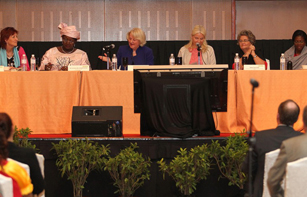
L-R: Alice Wellbourn, Founding Director of the Salamander Trust, First Lady of Sierre Leone Mrs Sia Nyama Koroma, UNAIDS Deputy Executive Director, Management and Governance, Jan Beagle, HRH Crown Princess Mette-Marit of Norway, Dame Carol Kidu, Former Member of Parliament, Papua New Guinea, Helena Nangombe, Namibia Women's Health Network. Credit: UNAIDS
“My power is my voice and my move to action is change.” These were the words of 29 year old Nargis Shirazi from Uganda speaking at a panel examining HIV and sexual and reproductive health and rights. She captured the essence of strong messages resonating at the 3rd Global Women Deliver Congress on the need for greater attention to the voices and rights of women living with HIV and greater engagement of young women.
Through a number of sessions featuring diverse and distinguished panellists from around the world, discussions at the Congress in Kuala Lumpur, Malaysia, highlighted how achieving health and development goals will only be possible through increased focus on upholding the sexual and reproductive health and rights of women living with HIV and young women. “Ending HIV is possible if we engage women in all their diversity,” said First Lady of Sierra Leone, Her Excellency, Sia Nyama Koroma during a discussion on how securing health and reproductive rights of women is critical to the attainment of the Global Plan towards the elimination of new HIV infections among children by 2015 and keeping their mothers alive.
“Young women living with and affected by HIV must be actively engaged in the HIV response,” said UNAIDS International Goodwill Ambassador, Her Royal Highness Crown Princess Mette-Marit of Norway. “They are best qualified to lead the way and guide health care planners and providers to deliver services that meet their needs.”
Worldwide, nearly 17 million women are living with HIV. Young women aged 15-24 are particularly vulnerable with infection rates twice as high as in young men. Women living with HIV, and young women, face particular challenges in accessing HIV services. Lack of knowledge about HIV, or lack of agency to act on knowledge—due to gender inequities and cultural norms—often prevents young women from receiving the support and services they need. Even when services are accessed, women living with HIV often face severe discrimination with regards to their sexual and reproductive health rights and choices. Across the world, women living with HIV report being advised to abstain from sexual relations and even coerced into considering abortion and sterilization, based on their HIV status.
All women have the right to choice when it comes to exercising their sexual and reproductive health and rights and protecting themselves from risk of HIV infection.
UNAIDS Deputy Executive Director, Management and Governance, Jan Beagle.
“So many young women are suffering not knowing what their rights are. The empowerment of young women matters,” said Helena Nangombe, Namibia Women's Health Network and Advisory Group member of the Global Coalition on Women and AIDS.
“All women have the right to choice when it comes to exercising their sexual and reproductive health and rights and protecting themselves from risk of HIV infection,” said UNAIDS Deputy Executive Director, Management and Governance, Jan Beagle. “AIDS is much more than a health issue, it is a development issue, a rights issue, and it is clear that gender equality and human rights are non-negotiable elements to ensure effective HIV and health responses as well as social justice for all.”
Delegates underlined that language and approach is critical when addressing and involving women living with HIV. Alice Wellbourn, Founding Director of the Salamander Trust and long-time advocate for rights of women living with HIV stressed: “Mind your language please! When talking about women’s sexual and reproductive health needs and rights within the context of HIV, we need to get away from using very negative language: stigma, fear, death, etc.” Speaking at a session exploring issues of women’s rights within health and development initiatives, Ms Wellbourn suggested that language emphasizing “compassion, love, support, respect and dignity” should be prioritized. “We need to turn the language towards possibilities, particularly in the healthcare settings,” she added.
Within the context of post-2015 development discussions, greater integration of HIV and sexual and reproductive health and rights services was underlined across sessions as a critical stepping stone towards enabling improved services for women and girls.
“HIV needs to be part of a comprehensive sexual and reproductive health and rights agenda, but it needs to be normalized, personalised beyond figures, and then we need to take the personalization to the political leaders– it needs to really reflect women and girls voices,” said Dame Carol Kidu, Former Member of Parliament, Papua New Guinea and member of the Global Commission on HIV and the Law. “To address this, and to have impact on the HIV-related stigma and discrimination often experienced by women and girls, we need work with mothers and sisters. We need community conversations,” she added.
The issues of HIV and sexual and reproductive health and rights were discussed in a number of panels including the high-level panel ‘More than Mothers: Upholding the sexual and reproductive health and rights of women in the Global Plan’; a session under the ‘Every Woman Every Child’ umbrella on continuous improvement for women and children’s health, co-organized by the H4+ and the Inter-agency Task Team on the Prevention and Treatment of HIV among Pregnant Women, Mothers and Children; and the Plenary Lunch ‘The Challenges and Benefits of Partnership on MDG5’. The 3rd global Women Deliver Congress ran in Kuala Lumpur, Malaysia from 28-30 May 2012.
Related links
Related links:
Feature Story
UNICEF report urges to see the child before the disability
30 May 2013
30 May 2013 30 May 2013
Children with disabilities are too often denied access to health and education and this has a detrimental effect on society as a whole. Credit: UNICEF/Marco Dormino
The marginalization of children with disabilities in critical areas like health and education not only has damaging consequences for the young people themselves but also the wider community, according to a landmark UNICEF report released today on 30 May.
The State of the World’s Children 2013: Children with Disabilities contends that children with disabilities are the least likely to receive health care or go to school. They are also more likely to face exploitation and neglect. This is because, the report suggests, children with disabilities are too often reduced to that disability and not seen as valuable individuals who should be given the same opportunities to flourish as everyone else.
"When you see the disability before the child, it is not only wrong for the child, but it deprives society of all that child has to offer," said UNICEF Executive Director Anthony Lake. “Their loss is society's loss; their gain is society's gain.”
HIV provides a salient example of how young people with physical, sensory, intellectual or psychosocial disabilities can be marginalized, overlooked and excluded from programmes. The report argues that, if the burden of the virus is increased in any one group this has negative implications for society as a whole, not least in terms of slowed development and increased expenditure.
Children with disabilities are often considered to be sexually inactive and thus not in need of HIV prevention services. Many receive no information about puberty and how their bodies change and develop. There may also be issues with a greater inability to set sexual contact boundaries for others.
In addition, a significant percentage of people with disabilities of all ages experience sexual assault or abuse during their lifetimes, especially women and girls and those in specialized institutions, schools and hospitals. Their vulnerability to HIV in these circumstances is therefore substantially increased.
When you see the disability before the child, it is not only wrong for the child, but it deprives society of all that child has to offer. Their loss is society's loss; their gain is society's gain.
UNICEF Executive Director Anthony Lake
HIV treatment, testing and counselling services can be physically difficult to access for those with disabilities or may not provide information in user-friendly formats such as Braille. Health care professionals are rarely trained to deal with such children and adolescents and may even demonstrate stigmatizing attitudes.
The State of the World’s Children sets out a number of recommendations to try to ensure that children with disabilities are included across a broad range of social, economic and cultural spheres so that they are involved in overall development.
One major recommendation involves filling the considerable information gap relating to children with disabilities. Few countries know how many such citizens there are, what disabilities they have and what level of service provision they need, making it very difficult for those needs to be met.
The report also highlights the need to remove barriers to inclusion so that environments like schools, health facilities and public transport encourage the participation of children with disabilities alongside their peers, free from discrimination. Families can also be supported to meet the higher costs of living and lost income-earning opportunities often associated with caring for affected children. It is also held to be important to ensure that children and adolescents are involved in the design and implementation of programmes and services so that they can play a role as active agents of change.
Finally, the report calls on countries to ratify and implement international commitments such as the UN Convention on the Rights of Persons with Disabilities and the Convention on the Rights of the Child. Around two thirds of them have ratified the former but for many implementation remains slow.
Publications
Feature Story
Right to health, right to life: HIV and human rights in Europe
29 May 2013
29 May 2013 29 May 2013
HIV as a human rights issue was the main theme of a high-level meeting co-organized by the European Commission and UNAIDS. The meeting explored the critical human rights issues in Europe that are preventing a more effective AIDS response in Western Europe and are contributing to an increase in new HIV infections and AIDS-related deaths in Eastern Europe.
Held from 27-28 May in Brussels under the overarching theme: right to health, right to life, the event brought together 150 representatives of European Union (EU) Member States and neighbouring countries—including Belarus, Moldova, Russia and Ukraine—civil society activists and representatives from the European Commission and UNAIDS.
Participants discussed ways to promote and protect the rights of people living with or affected by HIV, overcome stigma and discrimination and remove punitive approaches that act as major obstacles to an effective and rights-based response to AIDS.
In his opening statement, the European Commissioner for Health and Consumer Protection, Tonio Borg, committed to ensure continued leadership of the EU in the response to AIDS. For that, he announced the establishment of a new framework for EU action on AIDS before October 2014. "Doing nothing is not an option," said Mr Borg.
Participants reaffirmed the need to strengthen rights-based approaches to HIV and create supportive legal environments throughout Europe for people living with HIV and for key populations at higher risk of infection. It was noted that although Europe provides scientific, technical and human rights leadership in the HIV response across the globe as well as 40% of international AIDS funding, much more needs to be done in the sphere of human rights and HIV in Europe itself.
The legal system should not do more harm than good; it should not stigmatize people or increase their vulnerability to disease.
Luis Mendao from GAT (Grupo Portugues de Activistas sobre Tratamentos de VIH/SIDA
Europe has formally committed to respecting and defending human rights obligations through regional and global declarations. However, for many people living with and affected by HIV, these commitments have yet to make a difference to their lives. Key populations—such as men who have sex with men, transgender individuals, people who use drugs, sex workers, migrants and prisoners—remain marginalized and are still disproportionately affected by the epidemic.
“Europe has not yet been able to develop an approach based on rights and evidence, a legal framework that addresses migration, drug use, sex work, prison and LGBT,” said Luis Mendao from GAT (Grupo Portugues de Activistas sobre Tratamentos de VIH/SIDA). “The legal system should not do more harm than good; it should not stigmatize people or increase their vulnerability to disease,” he added.
HIV prevalence among key populations is well over 5%. In major European capitals, young gay men have a lifetime risk of becoming HIV-positive that matches that of young men in Southern Africa, the area in the world most affected by HIV.
In the past ten years, Europe has seen no reduction in the rate of new HIV infections and in the eastern part of the EU, the number of AIDS-related deaths rose by more than 20% between 2005 and 2011.
Participants recognised that, without properly addressing the human rights of people living with HIV and other key populations, the situation has little chance of improving. Stigma and discrimination remain major barriers to seeking HIV treatment. More than 30% of people living with HIV in Europe are only diagnosed in the advanced stage of infection, suggesting that they are afraid to come forward earlier. This fear may be exacerbated by the fact that a number of European countries still criminalize HIV transmission.
In countries where drug use and sex work are criminalized and law enforcement is harsh, many people are driven underground or imprisoned where they can become even more vulnerable to HIV infection. Although treatment is generally available following an HIV diagnosis, this is often not the case for the many undocumented migrants who are thus denied their right to health.
UNAIDS Deputy Executive Director, Programme, Dr Luiz Loures noted that, as a longer term trend, the global epicentre is moving towards Europe, through a resurgence of HIV in gay men across Europe and the unchecked epidemics among people who use drugs in Eastern Europe. Dr Loures contended that in moving towards the realistic possibility of ending the AIDs epidemic in Europe and beyond, three elements are essential:
“First we need speed: we must accelerate human rights-based programmes that are working, such as harm reduction which offers life to people who inject drugs. Secondly, we need to address the ‘hotspots’, directing vital HIV services to populations who need them most, such as gay men in Europe and other parts of the world where there is high HIV prevalence. Thirdly, we need innovation: in HIV testing, in strengthening community systems, and in building new young leadership in the AIDS response.”
A series of recommendations were made to address the human rights issues in the European AIDS response. Participants focused on the need for sustained and sufficient investment in HIV, including in programmes that challenge stigma, discrimination and punitive legal barriers. A panoply of interventions were identified including stigma reduction programmes, law reform, rights literacy, legal services, sensitization of police and challenging violence against women and harmful gender norms. Improved financing, including the allocation of more domestic resources to the AIDS response and reduced medicine pricing, were highlighted as elements of critical importance.
All agreed that tackling HIV as a human rights issue in the European Union and neighbouring countries is the key to turning the regional epidemic around, setting Europe on the path to ending the epidemic.
Multimedia
External links:
External links:
Publications:
Related
Feature Story
Wahidayah shelter shines light on the strength of women living with HIV in Malaysia
28 May 2013
28 May 2013 28 May 2013
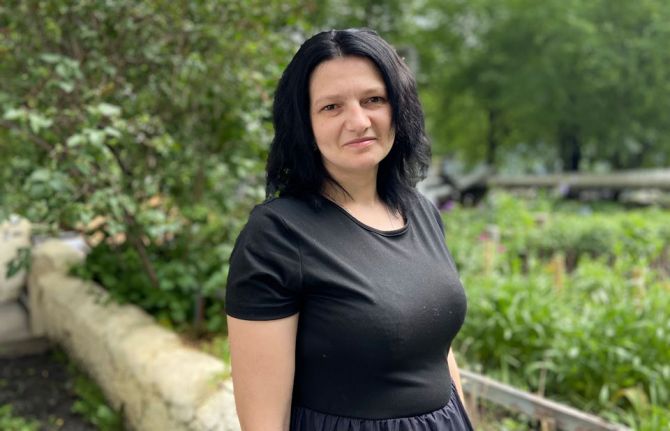
Malaysian AIDS activist Norlela Mokhtar (left) and UNAIDS Deputy Executive Director, Management and Governance, Jan Beagle visiting the Wahidayah shelter. Credit: UNAIDS.
In a quiet street, 40 minutes outside the bustling city centre of Kuala Lumpur, Malaysia, is a house with multi-coloured walls, filled with smiles and laughter. The laughter is coming from the Wahidayah shelter, a refuge for women living with HIV. Established last year by Malaysian AIDS activist Norlela Mokhtar, it provides home—both for short or longer stays—and a network of support for HIV-positive women and their families.
“There was not enough focus on the needs of HIV-positive women in the country, and no means for us to network,” explains Norlela, who has been living with HIV for 13 years. “This shelter gives HIV-positive women a space to rest, recuperate, and get back on our feet. It also allows us to meet other women, learn new skills, and learn about HIV and how we can live better and healthier lives.”
Operating with a small staff of just two volunteers, Norlela and her team welcome women who have tested positive for HIV and who need immediate and more long-term support in accessing treatment, care and support—for themselves as well as for their children. The women arriving to the brightly decorated shelter stay for as little as three days to up to six months. The shelter aims to provide smooth transitions for the women back into their family situations as well as a community network for on-going support.
As in much of Asia, the percentage of women living with HIV in Malaysia is lower than that of men—some 11% in 2012. Nevertheless, the estimated share of women becoming infected compared to men in the country has grown rapidly in the last 10 years—from one in ten in 2000 to one in four in 2011.
We HIV-positive women know best what we need and what to do. Our network and community strength is growing and we need to continue to voice up.
Malaysian AIDS activist Norlela Mokhtar
Norlela believes that women need to be much more informed about the factors that put them at risk. “Many women do not know they are living with HIV until their husbands or partners fall sick, or they fall sick themselves,” she explains. “Women’s knowledge about HIV, and ability to act on that knowledge, is low. At the shelter we try to teach women about our rights, how to negotiate safe sex with husbands and partners and encourage the women to help others to be more aware too.”
Visiting the Shelter, UNAIDS Deputy Executive Director, Management and Governance, Jan Beagle praised the strong community-led ethos of the Wahidayah shelter and its founder. “Norlela is a formidable female force in the country’s AIDS response. Community-led support is absolutely critical for reaching vulnerable and most-at-risk populations, as well as breaking down stigma and discrimination that is still very prevalent,” she said. “The experiences of Norlela and her colleagues also show how in Malaysia—and elsewhere in Asia where epidemics are more concentrated among men—the needs and realities of women and girls must not be forgotten and that there is a real need for more comprehensive sexual and reproductive health and HIV education for young women and men,” Added Ms Beagle.
During the visit, women living with HIV at the shelter discussed openly with Ms Beagle about their experiences of discovering their status, the challenges they face and how working with the shelter is helping them to move forwards with their lives.
“Here we have a voice and we can share our experience with other people without being judged,” said Maya, one of the women staying at the shelter.
For Norlela, hearing such declarations from the Wahidaya women makes her even more motivated to continue championing the cause of women living with HIV. “We HIV-positive women know best what we need and what to do. Our network and community strength is growing and we need to continue to voice up,” she said.
The work of Norela and the Wahidaya shelter is one of the many initiatives and examples of progress being showcased during the 3rd global Women Deliver Congress that takes place in Kuala Lumpur, Malaysia from 28-30 May 2012. The largest global event of the decade to focus on the health and rights of girls and women, the conference brings together more than 300 leaders, policymakers and advocates representing more than 150 countries. Live webcast and archived video of all plenaries and presidential sessions will be available here.
Related links:
Related links:
Feature Story
Daw Aung San Suu Kyi calls to end stigma and discrimination towards people living with HIV
28 May 2013
28 May 2013 28 May 2013
UNAIDS Global Advocate for Zero Discrimination, Aung San Suu Kyi lighting a candle (centre) with the Chair Person of the National Drug User Network in Myanmar Kyaw Thu on (left) and the Chair Person of the Myanmar Positive Group Myo Thant Aung (right) in Yangon, Myanmar on 26 May 2013. Credit: UNAIDS
UNAIDS Global Advocate for Zero Discrimination and Member of Parliament, Aung San Suu Kyi joined more than 200 people living with and affected by HIV for an AIDS Candlelight Memorial Vigil on 26 May in Yangon, Myanmar. The event, organized by a consortium of community networks, is one of many taking place around the world this month to commemorate people who have died of AIDS-related causes.
Aung San Suu Kyi called for greater solidarity to end stigma and discrimination towards people living with HIV and key populations at higher risk of infection. “Respect for the human rights of people living with HIV must be promoted,” said the Nobel Peace Prize Winner. “We also need to protect the people who live on the fringes of society who struggle every day to maintain their dignity and basic human rights. I believe that with true compassion—the invisible cord that binds us to other human beings regardless of race, personal status, religion and national borders—we can get results for all people.”
Representatives from networks of people living with HIV and key affected populations of people who inject drugs and men who have sex with men, together with women and children participated in the event. They called for more support to strengthen the capacity of people living with HIV and civil society organizations to meaningfully engage in the response to AIDS and to end stigma and discrimination. Tin Hlaing from the National NGOs Alliance on HIV/AIDS said, “We are calling on the government and local organizations to provide job opportunities for people who are now on antiretroviral treatment and healthy”.
Respect for the human rights of people living with HIV must be promoted.
UNAIDS Global Advocate for Zero Discrimination, Aung San Suu Kyi
According to the National AIDS Programme, in 2012 there were around 225 000 people living with HIV in Myanmar and more than 15 000 people died from AIDS-related illnesses. Progress has been made in the response to AIDS in the country. More than 54 000 people eligible for HIV treatment are receiving it, compared to 29 000 people three years ago. However, much more needs to be done because more than 50% of people living with HIV are still in need of treatment.
Heralding Aung San Suu Kyi’s commitment to HIV and the elimination of HIV-related discrimination, UNAIDS Country Coordinator, Eamonn Murphy, emphasized the growing momentum of the AIDS response in Myanmar. “All partners in Myanmar are working closely together to scale-up antiretroviral treatment services, with the hope to double the number of people on treatment by 2015.” He also added that Myanmar was one of the first countries to participate as an early applicant to the Global Fund to fight AIDS, TB and Malaria (Global Fund) New Funding Model. The Global Fund has initially allocated up to US$ 161 million for HIV for the period 2013-2016. Pending grant approval from the Global Fund’s Board in mid-June, the additional investments for HIV will cover high impact interventions for HIV prevention, testing and counseling and treatment.
Related
Feature Story
Life Ball champions zero new HIV infections in children
27 May 2013
27 May 2013 27 May 2013
Austrian Federal President Dr Heinz Fischer, UNAIDS Deputy Executive Director, Programme, Dr Luiz Loures, UNAIDS Goodwill Ambassador Aishwarya Rai Bachchan.
Credit: AIDS Life
The Life Ball 2013, Europe’s biggest AIDS charity event, brought to the Austrian city of Vienna on 25 May celebrities and influential leaders in the global AIDS response to celebrate the 21st edition of one of the largest AIDS fundraising events worldwide. Organised by Gery Keszler in his capacity as chairman of the NGO AIDS LIFE, this year’s Life Ball was held under the theme “1001 nights”. All proceeds from this year’s event will go towards reaching the international goal of eliminating new HIV infections in children and keeping their mothers alive.
During the star-studded evening high-profile guests included former United States President Bill Clinton, UNAIDS Goodwill Ambassador Aishwarya Rai Bachchan, Sir Elton John, singer Fergie representing amfAR, the Foundation for AIDS Research, Editor-in-chief of the Italian Vogue, Franca Sozzani, former Chairman and CEO of MTV Networks International, Bill Roedy, and fashion designer Roberto Cavalli who hosted this year’s Life Ball fashion show.
The role of UNAIDS in achieving the global success against AIDS was highlighted by celebrities and global leaders at the gala dinner. "We can celebrate tonight the work of UNAIDS. A lot of the success and work achieved so far has been championed by UNAIDS, the Global Fund, the Elton John foundation and other partners,” said President Clinton
At the international press conference before the grand opening UNAIDS Goodwill Ambassador Aishwarya Rai Bachchan stressed the need to join efforts to stop new HIV infections among children. "It is every mother's wish to have a healthy child and it is every woman's right to live a life with dignity and access to health services,” said Ms Bachchan. “It is everybody's responsibility. In my role as UNAIDS International Goodwill Ambassador I will do my best but the media can play a huge role and I ask you to help me spread the message," added Ms Bachchan.
We can celebrate tonight the work of UNAIDS. A lot of the success and work achieved so far has been championed by UNAIDS, the Global Fund, the Elton John foundation and other partners.
Former United States President Bill Clinton
For the third year in a row UNAIDS co-hosted the AIDS Solidarity Gala, a dinner at the Hofburg Palace which directly preceded the ball. The patron of the gala was the Austrian Federal President Dr Heinz Fischer, which provided the event with political backing at the highest level.
"The AIDS response in the future will be led, shaped, and defined by young people. If we fail to build our AIDS response that is inclusive of young girls and young men who have sex with men we cannot achieve the goal of ending the AIDS epidemic,” said UNAIDS Deputy Executive Director, Programme, Dr Luiz Loures. “Following Sir Elton John's words: we are going to the end of AIDS but we need to make sure we leave no one behind,” he added.
The Life Ball itself began with the opening ceremony spectacle of tens of thousands of people thronging City Hall Square for a two-hour show staged on a gigantic red ribbon.

L to R: UNAIDS Deputy Executive Director, Programme, Dr Luiz Loures, Sir Elton John and former Chairman and CEO of MTV Networks International, Bill Roedy.
This year’s Crystal of Hope Award—a 100 000 euro award given to individuals who are making a difference in the AIDS response—was presented by actor and producer Hilary Swank to representatives of the transnational project ‘The Girl Effect’, an initiative that supports young women to fight poverty and keep themselves safe from HIV. They were: Lisa T.D. Nguyen from Cambodia, Patricia Suriel from the Dominican Republic, Sulaiman Turay from Cameroon and Sadie St. Denis from Uganda.
Following the opening ceremony some 4 000 invited guests entered City Hall for an all-night event involving international performers.
Thousands of children and their mothers are expected to benefit from the several million dollars following Life Ball 2013. Organisers hope that this year’s event will not only help to stop children becoming infected, but also further strengthen solidarity, understanding, and tolerance towards those living with and affected by HIV.
External links
External links
Related
 Women living with HIV in China unite to confront discrimination
14 October 2024
Feature Story
South Africa: Young people to lead a new wave of community mobilization and political advocacy
23 May 2013
23 May 2013 23 May 2013
Young participants at the UNAIDS workshop. Credit: UNAIDS
Young people in South Africa are facing the challenge of creating a movement to overcome the impact that the AIDS epidemic is having on their lives.
Issues such as intergenerational and transactional sex, substance abuse and high rates of teenage pregnancy are just some of the many factors that put young people at even higher risk of HIV infection than people in other age groups.
Recently, UNAIDS brought to Johannesburg, South Africa, young people from around the country to discuss ways to effectively empower youth to take the lead in the response to AIDS. The base for the discussion was the application of the CrowdOutAIDS Strategy—the UNAIDS Secretariat’s youth-led policy recommendations—in the context of South Africa.
“The UNAIDS CrowdOutAIDS Strategy puts the focus on youth. In the strategy, young people are part of the process in terms of involvement and engagement,” said Bruce Dube, Managing Director of Youth Village, an online portal for youth. “Every young person has a contribution to make, not just at a high level. Young people have the power to effect change in their own communities,” he added.
The elimination of existing high levels of stigma and discrimination, increase availability of youth-friendly HIV services and facilities, and the creation of opportunities to develop youth–driven solutions were identified as the key elements for the young South African activists to act upon.
“It was clear from the discussions at the workshop that young people are eager to create spaces where they can gather and create dialogue not only about the challenges, but importantly, what solutions lie in their hands,” said UNAIDS Country Coordinator, Dr Catherine Sozi.
Participants in the workshop explored ways to strengthen community mobilization and political advocacy led by young people to scale up the demand and supply of HIV services for all young people regardless of HIV status, sexual orientation or gender identity. The young activists also strengthened their skills for effective leadership at national and provincial levels. They also had an opportunity to brainstorm ways to gain access to HIV-related information, especially through digital technologies, and forge strategic networks among themselves and their respective youth organizations. The workshop will lead to the development of an action plan, using the CorwdOutAIDS Strategy to guide future activities.
“HIV activism is not part of the youth lifestyle—we need to change that and incorporate it into all facets of our lives,” stressed Mr Dube.

Feature Story
Celebrating fifty years of African unity
24 May 2013
24 May 2013 24 May 2013
Leaders from across Africa and beyond are gathering for a special African Union (AU) summit which marks the 50th anniversary of unity on the continent.
Meeting in the Ethiopian capital, Addis Ababa, from 25-27 May, Heads of State and Government will celebrate achievements spearheaded by the AU and its predecessor the Organisation of African Unity established in 1963.
On Saturday, a Special Commemorative Summit will debate Pan Africanism and the African renaissance and stage an event involving more than 70 world leaders, 15 000 invited guests, a gala dinner hosted by Ethiopian Prime Minister Hailemariam Desalegn and performances from international stars like Salif Keita and Papa Wemba. The following two days are given over to the 21st Assembly of Heads of State and Government where leaders will help chart Africa’s way forward.
Since it was set up some thirteen years ago, the African Union has worked to ensure the further development of the continent and it is committed to meeting future social, health and economic challenges. This is especially relevant now when there is so much emphasis on the post 2015 development agenda and what this will mean for people, countries and regions.
Highlights
There are several meetings and side-events occurring during the Summit. Today, for example, the African Regional Civil Society Health Platform, the Consortium of Christian Relief and Development Association and the Global Network of People Living with HIV are hosting a roundtable discussion.
They are joined by UNAIDS Executive Director Michel Sidibé and Mark Dybul, Executive Director of the Global Fund to Fight AIDS, Tuberculosis and Malaria. High on the agenda will be the collective responsibility of ‘Getting to Zero’ (zero new HIV infections, zero discrimination and zero AIDS-related deaths) and keeping health issues central to the post 2015 development agenda.
There will also be a focus on the implications of the Roadmap on Shared Responsibility and Global Solidarity for AIDS, TB and Malaria Response in Africa adopted by African leaders last year. The Roadmap is a plan aimed at improving health outcomes and access to affordable high quality medicines, as well as diversifying financing mechanisms. Advancements in the AIDS response in Africa have been considerable in recent years, with ever greater numbers of people on HIV treatment and dramatic reductions in the rate of new HIV infections. The roundtable will look at how these successes can be built upon.
With the theme of accountability a motif of the summit the African Union Commission, alongside UNAIDS and the New Partnership for Africa’s Development (NEPAD), will launch Delivering results towards ending AIDS, Tuberculosis and Malaria in Africa, the first thematic accountability report on the AU-G8 partnership. It recommends that both bodies exercise greater leadership, especially in the spheres of sustainable financing, access to medicines and human and gender rights.
The summit also provides an opportunity for AIDS Watch Africa (AWA) to measure partners’ progress in the three key diseases affecting the continent—AIDS, tuberculosis and malaria. AWA was founded by African Heads of State in 2001 as a platform for advocacy and accountability. The outcome of its recent Action Committee meeting will be presented to the 21st session of the AU Assembly for endorsement and follow up action. AWA is expected to request that member states develop a sustainable investment plan for health with year on year increases in domestic funding.
According to the Chairperson of the African Union Commission Dr. Nkosazana Dlamini Zuma, the continent has made great strides in the last 50 years and needs now to look to the future. She said, “As we celebrate the 50th anniversary of the OAU and AU, we are inspired by their example, and pledge to work together in solidarity for an integrated, people-centred and prosperous Africa, at peace with itself.”
related links
Related

Feature Story
Youth organizations form a pact for social transformation in the AIDS response
23 May 2013
23 May 2013 23 May 2013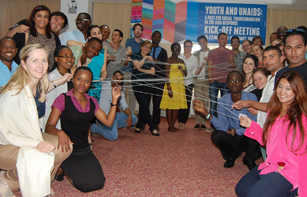
Participants at the Youth and UNAIDS event held in Hammamet, Tunisia from the 20-22 of May. Credit: UNAIDS
AIDS activism has radically changed since the beginning of the epidemic. New modes of communication are amplifying people’s voices, creating cross-national webs of solidarity opening up new opportunities for progressive social change.
Young activists in countries around the world are increasingly demanding HIV services to be tailored to their needs and claiming their seat at the decision-making table.
While the HIV prevalence has fallen by nearly 27% among young people aged 15-24 globally between 2001 and 2011, young people still account for 40% of all new HIV infections among adults. In 2011, there were some 4.6 million young people living with HIV.
Against this backdrop, UNAIDS brought together 12 global and regional youth organizations working on HIV, sexual and reproductive health and rights, and lesbian, gay and transgender rights with the 16 community, country and regional youth activists that constitute the recently established UNAIDS Youth Advisory Forum. The aim was to strategize on a clear direction to move the AIDS response forward for young people.
“Many small organizations lack the time, resources, and strategic space to reflect on their work and forge new alliances,” said Pablo Aguilera, director of the HIV Young Leaders Fund and member of the UNAIDS Youth Advisory Forum. “We called for this meeting to ensure the movement is responsive to the needs of young people most affected by HIV.”
To deliver results for young people on the ground, a decentralized, connected global youth movement—that thinks globally but acts locally is needed to initiate a new wave of activism in the AIDS response.
The meeting, called the Youth and UNAIDS: A pact for social transformation took place in Hammamet, Tunisia from the 20-22 of May. The main outcome of the consultation was a pact outlining five key themes that cut across individual organizational agendas where youth organizations can make tangible impact towards the goals set in the 2011 United Nations General Assembly Political Declaration on HIV and AIDS.
The five themes include: Integrating HIV services into sexual and reproductive health services, with a focus on government accountability and sexuality education; enabling legal environments and removing punitive laws that impede access to services for young key populations at higher risk; scaling up treatment and disaggregating data for evidence informed advocacy; using resources effectively; and ensuring that HIV remains a priority in the Post-2015 development framework through strategic lobbying of national delegations.
“This new commitment to collaborate around specific priorities is a radical departure from business as usual in the youth AIDS response. Through strengthening collective action that goes beyond organizational agendas, we hope the movement can achieve concrete change for young people affected by HIV,” said Caitlin Chandler, community representative who co-facilitated the meeting together with Beth Goodey from the youth-led development agency Restless Development.
Supporting increased collaboration and strategic direction of the youth movement in the AIDS response is a key priority for the new UNAIDS youth programme, which aims to increase youth leadership, ownership, and mobilization in the AIDS response at the country, regional, and global level by 2015 and beyond.
“We want to work closer with organizations of young people living with HIV and young key populations at higher risk to create broad alliances,” said Mariangela Simao, UNAIDS Director of Gender, Human Rights and Community Mobilization Department. “It’s an effective strategy to ensure national ownership for progressive social change—because the demand for change will come from within,” she added.