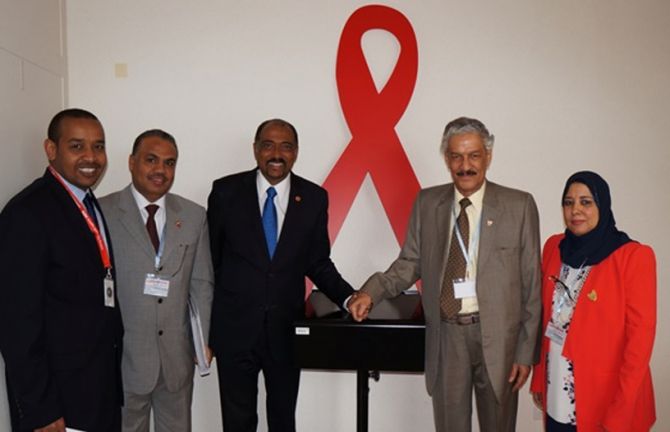
L to R: El Tayeb El Amin, UNAIDS, Mr Abdulazia Al Rufai, Director of Public and International Health of Bahrain, UNAIDS Executive Director Michel Sidibé, Mr Sadiq AbdulKarim Al Shehabi, Minister of Health of Bahrain, Dr Mariam Al Hajri, Chief of School Health, Member of Supreme Health Conference.
Feature Story
Kingdom of Bahrain and UNAIDS commit to intensify cooperation
23 May 2013
23 May 2013 23 May 2013During a meeting on May 23 in Geneva, the Minister of Health of the Kingdom of Bahrain, Dr Sadiq AbdulKarim Al Shehabi and UNAIDS Executive Director Michel Sidibé pledged to strengthen cooperation between UNAIDS and the Ministry of Health.
Mr Sidibé commended the leadership of the Minister Al Shehabi in Bahrain in responding to the AIDS epidemic. He also asked Dr Al Shehabi to champion national and regional initiatives to prevent new HIV infections among children by 2015 and to accelerate scale up of HIV treatment in the Arab Region.
Dr Al Shehabi welcomed the partnership with UNAIDS and committed to putting HIV on the agenda of the Gulf Cooperation Council, currently chaired by the Kingdom of Bahrain.
The Arab Region has one of the fastest growing HIV epidemics in the world. Between 2001 and 2011, the estimated number of people living with HIV in Arab countries increased from 170 000 to 230 000. The numbers of AIDS-related deaths and new HIV infections have also increased significantly. Between 2001 and 2011, there was a 32% increase in AIDS-related deaths and since 2001, the number of people newly infected with HIV in Arab countries has increased by more than 47%—from 19 000 to 28 000. Recent studies suggest that concentrated epidemics are emerging among key populations at higher risk of HIV infection in many countries of the region.
Quotes
We believe Bahrain will benefit from this intensified technical support from UNAIDS. We will also do our best to bring awareness of HIV issues in the Gulf Cooperating Council which we currently chair
Arab Countries have a great opportunity to end the AIDS epidemic. HIV prevalence is still low, the resources are available and there is ample evidence to inform policy development and innovative programming
Related

Press Statement
International Day Against Homophobia and Transphobia
17 May 2013 17 May 2013Message from UNAIDS Executive Director Michel Sidibé
GENEVA, 17 May 2013—More than 30 years ago, gay men lit the first spark that kindled the world’s response to the AIDS epidemic. Thanks to the audacity and courage of lesbians, gays, bisexuals, and transgender people, we have now seen extraordinary progress against AIDS around the world.
However, stigma and discrimination based on sexual orientation or gender identity still drive new HIV infections and are an obstacle to treatment efforts in every part of the world.
We call on political and community leaders to cast aside discriminatory laws and social practices.
The right to health belongs to everyone. Everyone should have access to HIV prevention, care, treatment and support.
Today and every day, UNAIDS stands with our fellow LGBT brothers and sisters for a world without homophobia and transphobia.
Let us work together to realize our vision: a world with zero new HIV infections, zero discrimination, and zero AIDS-related deaths.
Feature Story
Viet Nam: South-South learning helps prepare for sustainable provision of AIDS treatment
16 May 2013
16 May 2013 16 May 2013
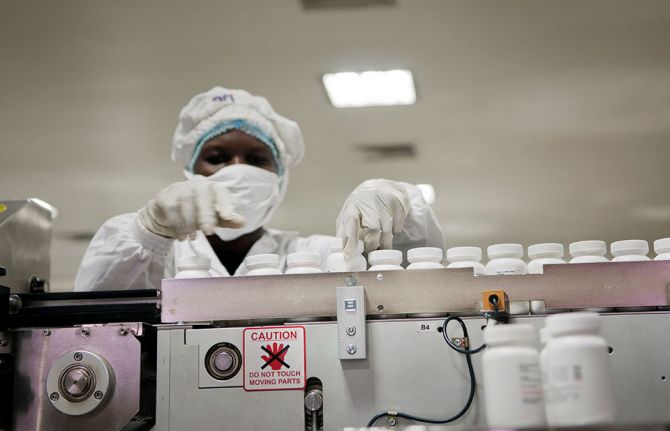
A delegation from Viet Nam visited the drug quality control division of a Thai factory that manufactures antiretroviral medicines. L to R: Dr Chu Quoc An, Head of Delegation, Mr Bang from Viet Nam Social Security, Mr Tien from Drug Administration of Viet Nam, Dr Nhan from Viet Nam Administration for AIDS Control Credit: UNAIDS/Bich.N
Mr Dong, a 37-year-old man from Hanoi, has been living with HIV for a number of years. He is in good health thanks to the antiretroviral treatment that is provided free of charge in Viet Nam and is a leading member of the Viet Nam Network of People Living with HIV (VNP+).
But Mr Dong, as well as many other colleagues in the Network, is worried. He knows that the donors who pay for nearly all of Viet Nam’s HIV treatment programme will soon leave. Who will pay for his antiretroviral (ARV) medicines in the future?
“The first-line of antiretrorival treatment I am currently on costs about US$ 98 per person per year. That is with imported generic medicines,” explains Mr Dong. “I can afford it for now if treatment is no longer free. But I don’t know until when I can stay this healthy and keep my job, while antiretrorival treatment is life-long. That is not to mention that treatment cost could be much higher if I have to shift to second-line treatment or buy non-generic drugs,” he noted.
At the end of 2012, Viet Nam was providing antiretroviral treatment for nearly 60% of all people in need, according to the Viet Nam Administration for HIV/AIDS Control (VAAC). However, 97% of the funds for antiretroviral medicines come from external funding, which is expected to significantly decrease after 2015.
This is the result of Viet Nam’s recent achievement of middle-income country status and the prolonged economic downturn in donor countries. The Government of Viet Nam is increasing its national budget allocations to the HIV response, but much more slowly than the expected decrease in donor support. Current projections of the amount of funding required to purchase antiretroviral medicines for all in need indicate there will be a significant gap by 2016.
Deputy Prime Minister Nguyen Xuan Phuc has called on VAAC to address this potential funding crisis, and VAAC has initiated the development of a “National Plan to Ensure the Sustainable Supply of ARVs Beyond 2015”, in collaboration with development partners, including UNAIDS.
South-south learning and political leadership is key
Collecting evidence and good practice from countries in the region was identified by VAAC as essential to inform the development of the plan. In April 2013, UNAIDS supported a study visit by a multi-sectoral Government delegation to Thailand.
The delegation learned how Thailand, as a middle-income country, is providing universal access to antiretrovirals and all HIV-related tests free-of-charge, financed by the state budget and provided to all in need through national health insurance schemes. They also learned how Thailand has issued compulsory licenses for two kinds of ARVs and centralized procurement and supply chain management of ARVs to keep costs down while also ensuring the Thais have access to high-quality first-line and second-line drugs.
We learned a lot about how Thailand went through a long process to achieve universal coverage of healthcare for all Thai people and antiretroviral treatment for those in need, and about their challenges.
Dr Chu Quoc An, head of the Viet Nam delegation
“We learned a lot about how Thailand went through a long process to achieve universal coverage of healthcare for all Thai people and antiretroviral treatment for those in need, and about their challenges,” said Dr Chu Quoc An, head of the Viet Nam delegation. “Yet, the most important lesson learned is that strong political leadership at the highest levels has been Thailand’s key to success.”
Positive outlook
Delegates agreed that leadership, determination and a strong multi-sectoral coordination will be critical for Viet Nam to adapt and adopt lessons learned from Thailand. As the study tour emphasized, adequate time is also needed to enable plans to come to fruition.
“I believe Viet Nam can do it,” said Steve Kraus, UNAIDS Regional Director for Asia and the Pacific. “We can see how the country is accelerating progress towards national targets and international commitments on HIV treatment. We can see the determination is there. UNAIDS is committed to continue supporting this South-South cooperation, and to assist Viet Nam in its quest to ensure life-long treatment for all in need.”
For Mr Dong, the progress towards a sustainable plan for treatment is encouraging, but concerted action is critical. “I am excited to hear about VAAC’s development of the ARVs sustainability plan and the engagement of many sectors,” he said. “I hope National Assembly and Government leaders will pay more attention to this issue so the plan can soon become a reality, for the benefits of people living with HIV and the wider community.”

Feature Story
Zimbabwe’s sustained progress towards “Getting to Zero”
14 May 2013
14 May 2013 14 May 2013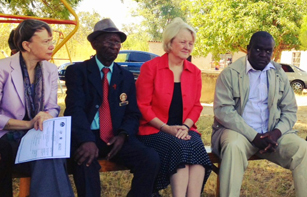
L to R: UNAIDS Country Coordinator Tatiana Shoumilina, Chief Chiveso, traditional leader, Ms Beagle, and Provincial Governor Martin Dinha, in the area of Bindura, Zimbabwe. Credit: UNAIDS
Zimbabwe is an example of political commitment and progress in the AIDS response. Although it is one of the countries most affected by the HIV epidemic in sub-Saharan Africa, with an adult HIV prevalence of 15%, the country has achieved and sustains universal coverage of treatment to prevent mother-to-child-transmission of HIV (93%) and adult antiretroviral therapy (ART) with 95% of adult Zimbabweans eligible for HIV treatment receiving it.
This scale up of comprehensive HIV prevention, treatment, care and support services in the country has resulted in the decline in the rate of new HIV infections from a peak of 5.21% in 1994 to 0.86% in 2012.
Zimbabwe’s progress in the AIDS response is largely credited to the country’s capacity to mobilize and sustain domestic resources for the response through its innovative AIDS levy—a 3% tax on all taxable individual and institutional income. In 2012 alone, the levy generated US$ 32 million. Zimbabwe also successfully mobilized US$ 311 million from the Global Fund to Fight AIDS, TB and Malaria under its new funding model. A further US$ 244 million, from Zimbabwe’s quality request, is pending the outcome of the upcoming Global Fund replenishment.
The communities are doing exemplary work, addressing issues related to gender equality and the empowerment of women, using community dialogue and facilitating community actions and solutions.
Ms Jan Beagle, UNAIDS Deputy Executive Director, Management and Governance
In early May 2013, UNAIDS Deputy Executive Director, Management and Governance, Jan Beagle, undertook a country visit to Zimbabwe to witness the progress made. She also looked at challenges ahead in achieving the targets of the 2011 General Assembly Political Declaration on HIV and AIDS and discussed the role of Zimbabwe, as a new member to the UNAIDS Programme Coordinating Board this year, in the governance of UNAIDS and the AIDS response.
During a meeting with the Vice President Hon Joice Mujuru, Ms Beagle commended the Government of Zimbabwe for its leadership in the AIDS response and encouraged the country to scale-up paediatric ART coverage, which by end of 2012 remained at 42%, and to accelerate efforts to reduce maternal mortality.
Communities leading the way
Ms Beagle travelled to Bindura, a rural area located about 90 km north-east of the country’s capital Harare, where she talked to community representatives, traditional leaders, local service providers, and district and provincial administrators. With support from the non-governmental organization PADARE, a movement of men advocating for gender justice, the community champions male involvement in preventing new HIV infections among children and increasing uptake of HIV prevention and treatment services. It also focuses on strengthening sexual and reproductive health services for young people, especially girls, and addressing gender-based violence.
PADARE concentrates on men in all settings and uses communication and networking tools, workshops and training, lobbying and advocacy to achieve social and behaviour change. The organization works through 65 chapters and has a membership of more than 3 000 in the country’s ten provinces.
“The communities are doing exemplary work, addressing issues related to gender equality and the empowerment of women, using community dialogue and facilitating community actions and solutions,” said Ms Beagle. She urged the communities to ensure that the needs of populations at higher risk of HIV infection—such as women, young people, people with disabilities, sex workers and men who have sex with men—are recognized and appropriately met.
NOTE: As part of her official programme in Zimbabwe, Ms Beagle also met Hon Dr H. Madzorera, Minister of Health and Child Welfare; Hon Dr O. Muchena, Minister of Women Affairs, Gender and Community Development; Hon Dr D. Parirenyatwa, Chair, Parliamentary Portfolio Committee on Health; leadership of the National AIDS Council; members of the Country Coordinating Mechanism; members of the Executive Committee of the Zimbabwe Parliamentarians against HIV network; and the Steering Committee of Zimbabwe GlobalPOWER Chapter. She also interacted with civil society representatives and young people, and engaged with the UN Resident Coordinator and the UN Country Team. She visited the Beatrice Road Infectious Disease Hospital, a public health care organization providing adult and paediatric Opportunistic Infections and ART services.
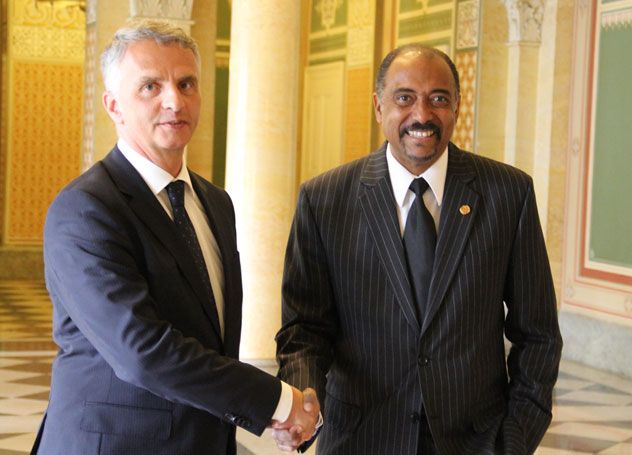
Federal Councillor for Foreign Affairs of Switzerland, Didier Burkhalter (left) and UNAIDS Executive Director Michel Sidibé. Bern, Switzerland, 13 May 2013.
Feature Story
Switzerland strengthens support to UNAIDS
14 May 2013
14 May 2013 14 May 2013The Federal Councillor for Foreign Affairs of Switzerland, Didier Burkhalter announced the government’s intention to increase its annual contributions to UNAIDS for 2013, 2014 and 2015 during the official visit of UNAIDS Executive Director Michel Sidibé to the Swiss capital of Bern. Such contribution reaffirms Switzerland’s position among UNAIDS' top 10 donors.
Since the beginning of the epidemic, Switzerland has been committed to the AIDS response and has shown strong leadership both domestically and at the global level. The country has been actively engaged in developing harm reduction policies, the protection of vulnerable groups and the promotion of treatment as prevention.
Mr Sidibé commended Switzerland’s contribution to the global AIDS response and celebrated the country’s critical role as a member of the UNAIDS Programme Coordinating Board (PCB) in shaping the future of AIDS within the post-2015 development agenda.
During his visit, Mr Sidibé also met with Pascal Strupler, Director of the Federal Office for Public Health, Maya Tissafi, Deputy Director of the Directorate for Development Cooperation of Switzerland, and other key partners from civil society and the private sector.
Quotes
Given that the issues of maternal and child health are among Switzerland's key priorities, UNAIDS' vision of zero new babies born with HIV by 2015 is an important and tangible objective. Switzerland would like to support this objective through its increased contribution to UNAIDS.
Switzerland’s commitment to supporting UNAIDS’s work and its political leadership and action in critical areas such as human rights and social protection is extremely important for a comprehensive response to HIV. I look forward to continuing to work with the Swiss government so that other countries can replicate the successes they have achieved with their progressive domestic HIV policies.
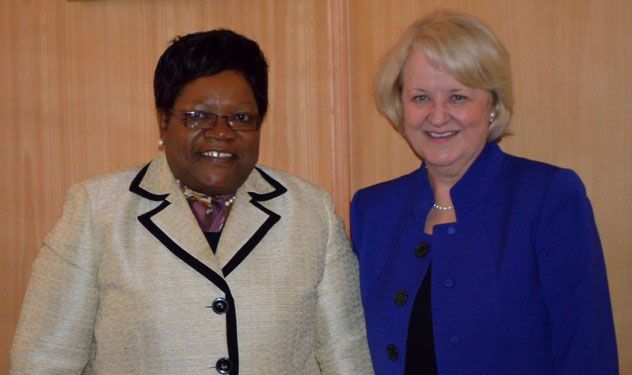
Vice President of Zimbabwe Hon Joice Mujuru (left) and UNAIDS Deputy Executive Director, Management and Governance, Jan Beagle.
Feature Story
UNAIDS Deputy Executive Director commends Zimbabwe for its strong political will, commitment and sustained progress towards Getting to Zero
10 May 2013
10 May 2013 10 May 2013In a meeting on 8 May 2013 with the Vice President of Zimbabwe, Hon Joice Mujuru, UNAIDS Deputy Executive Director, Management and Governance, Jan Beagle commended the Government of Zimbabwe for its leadership in the AIDS response. She congratulated the country on the successful mobilization of US$ 311 million from the Global Fund to Fight AIDS, Tuberculosis and Malaria (Global Fund) under the new funding model. A further US$ 244 million, from Zimbabwe’s quality request, is pending the outcome of the upcoming Global Fund replenishment.
Zimbabwe is one of the most affected countries by the AIDS epidemic in sub-Saharan Africa. The scale up of comprehensive HIV prevention, treatment, care and support has resulted in the decline of the HIV incidence rate from a peak of 5.21% in 1994 to 0.86% in 2012. The country is also committed to stopping new HIV infections among children.
Quotes
The mobilisation of additional resources under the Global Fund new funding model is an illustrative example of Zimbabwe’s ability to combine political leadership, sound technical underpinning and partnership with a broad array of partners
The elimination of mother-to-child transmission is a priority for Zimbabwe. We shall continue to champion the programme.
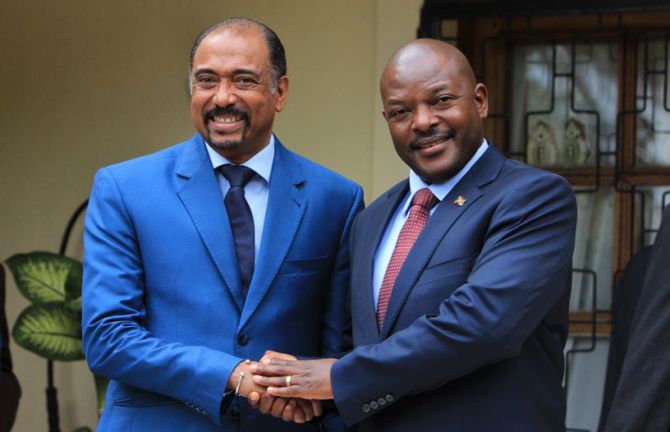
UNAIDS Executive Director Michel Sidibé met with Burundi’s President Pierre Nkurunziza in Bujumbura, Burundi on 9 May 2013.
Feature Story
Burundi to increase access to education and health services to improve its response to AIDS
09 May 2013
09 May 2013 09 May 2013Burundi’s President Pierre Nkurunziza said his country is trying to increase access to education and health services as key elements to effectively respond to AIDS in the country. He met with UNAIDS Executive Director Michel Sidibé on 9 May in Bujumbura, Burundi.
After 13 years of socio-political crisis marked by civil war and political instability the government of Burundi has committed to the reconstruction of the country by focusing its efforts on the rehabilitation of health services and schools destroyed during the armed conflict. The President has also made the response to AIDS a priority and recently adopted a decree which aimed to significantly scale-up services to prevent new HIV infections among children.
Burundi depends on external assistance to finance 95% of its AIDS response. During his meeting with President Nkurunziza Mr Sidibé encouraged him to invest more domestic resources to ensure an effective, efficient and sustainable response.
As part of his official two-day visit to Burundi, Mr Sidibé visited the health centre of the National Association of Support for People Living with HIV and AIDS Patients (ANSS), and he also met with a large group of representatives from civil society.
Quotes
Burundi has focused on the basic tools needed to fight AIDS: access to education, access to health services, access to HIV testing and mobilizing the general population, especially the youth.
I welcome Burundi’s progress in the field of AIDS. The country has gone from 600 people on ARV therapy in 2002 to 29 000 in 2012, HIV testing has increased 10 times in 10 years. I call on Burundi to put the emphasis on reaching the goal of zero children born with HIV by 2015.
Related
Feature Story
Burundi marks its National AIDS Day and commits to an AIDS-free generation
08 May 2013
08 May 2013 08 May 2013
L to R: Minister of Health of Burundi, Dr Sabine Ntakarutimana, UNAIDS Executive Director Michel Sidibé and United States Ambassador to Burundi, Dawn Liberi.
Burundi marked its National AIDS Day on 8 May and committed to stopping new HIV infections among children and keeping their mothers alive. The Minister of Health of Burundi, Dr Sabine Ntakarutimana who opened the event at the Kamenge health centre in Bujumbura said, “I am committed to bringing Burundi to zero new HIV infections, zero discrimination and zero AIDS-related deaths.”
Burundi’s health authorities report HIV prevalence in the country was 1.4% in 2010 with more than 98,000 people living with HIV in 2011. The country is struggling with a low HIV treatment coverage with only 49% of people eligible for antiretroviral therapy accessing it. Almost 2000 babies were born with HIV in 2011. The government has promised to improve treatment coverage especially for pregnant women living with HIV and recently Burundi’s President Pierre Nkurunziza adopted a decree which aims to significantly scale-up services to prevent new HIV infections among children.
I am committed to bringing Burundi to zero new HIV infections, zero discrimination and zero AIDS-related deaths.
Dr Sabine Ntakarutimana, Minister of Health
“AIDS is a strategic entry point for advancing Burundi’s social agenda at several levels: protecting women, children and human rights,” said UNAIDS Executive Director Michel Sidibé at the event.
The country will be receiving support for scaling-up services from the United States of America according to its Ambassador to the country, Dawn Liberi. “We will double our financial contribution to cover eight of the 17 provinces in Burundi with services to prevent new HIV infections among children,” she said.
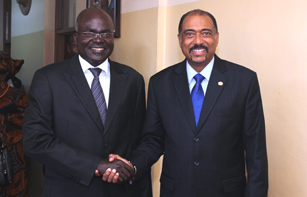
Burundi’s Second Vice-President, Gervais Rufyikiri (left) and UNAIDS Executive Director Michel Sidibé.
In 2011, UNAIDS and partners launched the Global Plan towards the elimination of new HIV infections among children by 2015 and keeping their mothers alive. Burundi is one of the 22 countries that the Global Plan focuses on, where 90% of new HIV infections among children occur.
Mr Sidibé also visited the centre of health and family welfare (ABUBEF). The centre provides medical and care and support services to people living with HIV, as well as conducting HIV prevention programmes.
As part of his official visit to Burundi, Mr Sidibé met with the Second Vice-President, Gervais Rufyikiri, who has championed the country’s drive to stop new HIV infections in children. In 2005, Burundi emerged from a long civil war and the Vice-President asked UNAIDS to support the country’s efforts towards greater development. He said, “I am asking the international community to pay more attention to Burundi. We are in the process of rebuilding our country and we need your support.”
The UNAIDS Executive Director continues his official mission on 9 May with a meeting with the country’s president.
Related
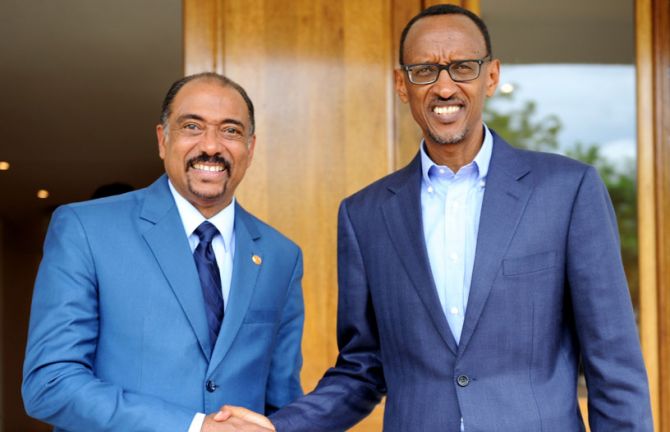
UNAIDS Executive Director Michel Sidibé and Rwanda's President Paul Kagame.
Feature Story
Rwanda’s President says young people are increasingly calling for a more inclusive and equitable society
07 May 2013
07 May 2013 07 May 2013Rwanda’s President Paul Kagame emphasised the importance of the active participation of young people in health and development during his meeting on 6 May with UNAIDS Executive Director Michel Sidibé. President Kagame said through virtual networks and social media young people are increasingly demanding change for a more inclusive and equitable society.
Mr Sidibé congratulated President Kagame on the significant progress Rwanda has made in its national AIDS response and the leadership the president has shown on Africa’s development agenda. With 91% coverage on prevention of mother-to-child transmission of HIV (PMTCT) services and 87% antiretroviral coverage for people living with HIV, who are eligible for treatment, the country is well on its way to meeting its HIV related goals.
Mr Sidibé and the President also discussed Rwanda’s critical role in pushing for the implementation of the African Union’s Roadmap on Shared Responsibility and Global Solidarity which aims to help countries build long-term and sustainable solutions to the AIDS response on the continent.
Quotes
Reducing dependency, looking for a self-reliance strategy and long-term sustainability are the keys for Africa’s transformation.
Feature Story
Leaders from China and Africa come together to strengthen partnership, cooperation and innovation
07 May 2013
07 May 2013 07 May 2013
Chinese and African leaders during the first day of the 4th International Roundtable on China-Africa Health Cooperation. 6 May 2013
Leaders from China and Africa met in Gabarone, Botswana this week for the 4th International Roundtable on China-Africa Health Cooperation in order to strengthen collaboration in health development and share knowledge and technology. The two day roundtable from 6-7 May was the first to be held in Africa.
Participants committed to develop concrete action plans to address pressing health issues including HIV, malaria, reproductive health, human resources and access to vaccines and commodities. The forum provided an opportunity for open dialogue about lessons learned as well as exploring South-South cooperation initiatives to overcome challenges such as guaranteeing safe products, ensuring adequate capacity, increasing transparency and strengthening health systems.
“China and Africa have a long history of collaborating on health, built on shared challenges and experiences addressing similar issues,” said Hon. Rev. Dr. John G. N. Seakgosing, Botswana Minister of Health. “China has a unique role in supporting African health progress. And with this roundtable, we look forward to deepening our partnership to benefit the health of our citizens.”
The AIDS response and other experiences paved the way for transformative progress on health and can help China and Africa to engage on a whole new level and innovate on a broad range of health issues.
Dr Luiz Loures, UNAIDS Deputy Executive Director, Programme.
South-South cooperation, where mutually beneficial partnerships between developing and emerging economies are adding new thinking and new resources to global health and development was a keynote of the roundtable. Such cooperation, creating a ‘win-win’ scenario, is based on shared experience of similar challenges and priorities: both Africa and China view healthcare as critical to their economic success.
“Africa’s future is closely linked with our own and improving health is a critical building block toward a common prosperity,” said Dr Ren Minghui, Director General of the Department of International Cooperation at China’s National Health and Family Planning Commission. “African countries have made tremendous gains to improve the health of their citizens. With China and Africa working hand-in-hand on health, we can have even greater impact.”
The forum examined ways in which China can share its advances in research and development, its commitment to producing high-quality, lower cost, safe health technologies and how it can forge new partnerships with African countries. In return China can learn from the continent’s best practices, including progress made in expanding AIDS treatment, responding to the epidemic in rural areas and stopping new HIV infections among children.
H.E. Dr Mustapha Sidiki Kaloko, Commissioner of Social Affairs of the African Union (left) and Dr Luiz Loures, UNAIDS Deputy Executive Director, Programme at 4th China-Africa Roundtable on Health, 7 May 2013
This exchange was analysed in detail during an HIV session, chaired by UNAIDS, which incorporated an update on the ground-breaking African Union roadmap on shared responsibility and global solidarity for AIDS, TB and malaria. Opportunities for strengthened China-Africa HIV partnership were explored, such as developing antiretroviral therapy drug manufacturing technology through joint ventures and technical support for local production.
“The global health landscape is changing with more partners than ever joining these efforts,” said Dr Luiz Loures, UNAIDS Deputy Executive Director, Programme. “The AIDS response and other experiences paved the way for transformative progress on health and can help China and Africa to engage on a whole new level and innovate on a broad range of health issues.”
In addition, the roundtable discussed pilot project proposals for collaboration in areas such as strengthening laboratory systems; training African health personnel and sharing China’s expertise in cold chain management and surveillance systems to boost immunizations.
It is hoped that the roundtable policy consultations will help to lay the groundwork for a long-term strategic collaboration plan around the upcoming Health Ministerial Meeting of the Forum on China-Africa Cooperation in August.
The 4th China-Africa Roundtable on Health Cooperation was hosted by the Botswana Ministry of Health, Peking University’s Institute for Global Health and China’s Chamber of Commerce and Ministry of Commerce. Joining African and Chinese Minsters of Health, Commerce and Foreign Affairs and their representatives were leaders of the African Union, the United Nations, international organizations, NGOs and major companies.
External links
Publications
Publications
- World leaders embrace the African Union Roadmap on AIDS, TB and malaria: Establishing Shared Responsibility and Global Solidarity as a vision for global health in the Post-2015 development agenda
- The Roadmap: Shared responsibility and global solidarity for AIDS, TB and malaria in Africa
- AIDS Dependency crisis: Sourcing African Solutions