Feature Story
US Congress and leading actors in the global AIDS response discuss shared responsibility in creating an AIDS- free generation
19 April 2013
19 April 2013 19 April 2013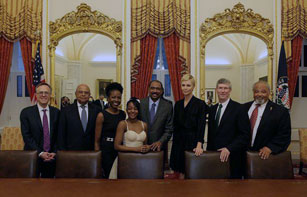
L to R: ONE Senior Advisor and Washington Post Columnist Michael Gerson, South Africa’s Minister of Finance, Honourable Pravin Jamnadas Gordhan, EGPAF Family Ambassadors Fortunata Kasege and her daughter Florida Mwesiga, UNAIDS Executive Director Michel Sidibé, CTAOP Founder and UN Messenger of Peace Charlize Theron, BD CEO, President and Chairman of the Board, Vincent Forlenza, US Global AIDS Coordinator, Ambassador Eric Goosby.
Credit: UNAIDS/C.Kleponis
Shared responsibility of the AIDS response must become part of a new global compact. This was the central message of a high-powered breakfast meeting that took place in Washington, DC on 18 April.
The event brought together leaders in the response to AIDS with members of United States Congress, the Administration, the private sector and AIDS advocates to emphasize how the adoption of the ‘shared responsibility’ approach is translating joint efforts into real results.
The Executive Director of UNAIDS, Michel Sidibé thanked the United States for its longstanding leadership in the AIDS response through such ground-breaking initiatives as the multi-billion dollar President’s Emergency Plan for AIDS Relief (PEPFAR) and its support to the Global Fund to Fight AIDS, TB and Malaria. “The continued leadership and investment from the United States is not only helping to leverage additional resources from donor governments but also from the domestic budgets of low-and middle-income countries,” said Mr Sidibé.”
South Africa’s experience, for example, shows how the shared responsibility is being translated into real results on the ground. The government now accounts for some three-quarters of the AIDS spending in the country and, under a Partnership Framework signed with the US, it will finance almost 90% of its response by 2017.
According to South Africa’s Minister of Finance, the Honourable Pravin Jamnadas Gordhan, “South Africans have turned the tide against AIDS. Our achievement is a tribute to the close collaboration between South Africans—government, business, researchers, and community workers—and the steadfast and generous support of our partners in the international community.”
South African film star, United Nations Messenger of Peace and founder of the Africa Outreach Project, Charlize Theron said, “The tipping point is upon us and we have an incredible opportunity to turn the tide on HIV and end the AIDS epidemic for good. I ask that you please take this opportunity to heart and from wherever you sit—Congress, corporate America, the community—that you continue to use your power and influence to keep creating hope and help moving the AIDS response forward. We can, we must, and we will overcome this epidemic together.”
Collectively, we've taken great strides in the global AIDS response. PEPFAR is proud of its close collaboration with host countries and other partners in supporting this transformational change.
US Global AIDS Coordinator, Ambassador Eric Goosby
Florida Mwesiga, Family Ambassador for the Elizabeth Glaser Pediatric AIDS Foundation, played a special role in highlighting the impact of HIV on young people. “I’m thankful that my mum was able to receive treatment that protected me from HIV while she was pregnant,” said Ms Mwesiga. “My mum continues her fight to ensure all mothers everywhere can experience the gift of an HIV-negative child,” she shared. “My mother’s courage to stand up and demand change inspires me every day. And it’s because of her that I feel so empowered to also make a difference,” added Ms Mwesiga reminding all participants that everyone has an important role to play in the response to AIDS.
It was clear by the end of the meeting that important contributions by the US to the AIDS response are crucial to achieving the ambitious but attainable goal of an AIDS-free generation. Ambassador Goosby concluded that, “Collectively, we've taken great strides in the global AIDS response. PEPFAR is proud of its close collaboration with host countries and other partners in supporting this transformational change. While much work remains to be done, through country ownership, smart investments, and shared responsibility, I am confident that we will create an AIDS-free generation.”
The event was co-hosted by the Charlize Theron Africa Outreach Project, the Elizabeth Glaser Pediatric AIDS Foundation, ONE, the United States Global Leadership Coalition, and UNAIDS.
Related
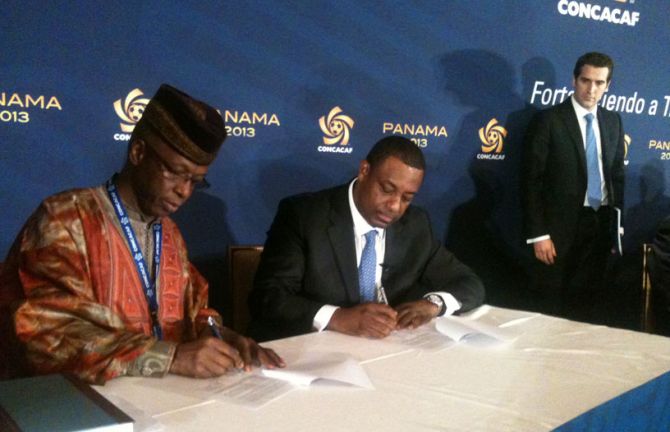
Signing of the MOU by Dr Djibril Diallo, representing UNAIDS Executive Director and Mr Jeffrey Webb, president of CONCACAF. Credit: CONCACAF
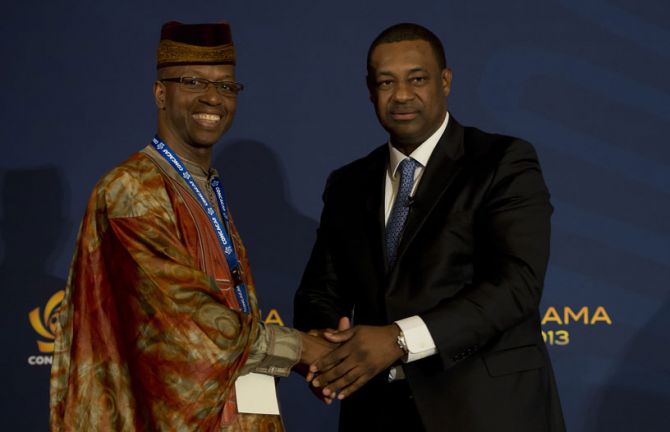
Dr Djibril Diallo, representing UNAIDS Executive Director (left) and Mr Jeffrey Webb, president of CONCACAF.
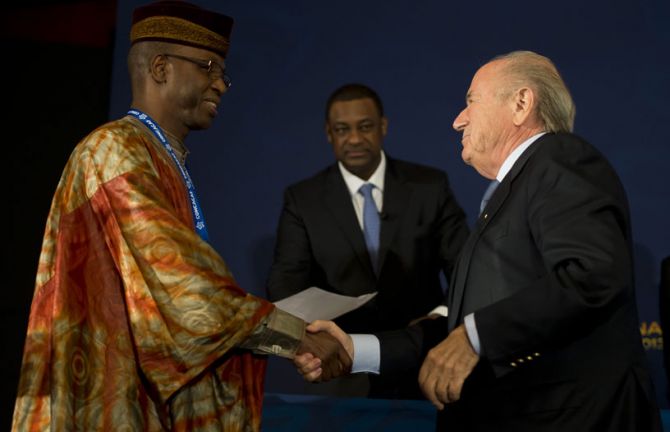
The agreement was signed on the sidelines of the 2013 CONCACAF Under-17 Championship in the presence of FIFA President Sepp Blatter. Credit: CONCACAF
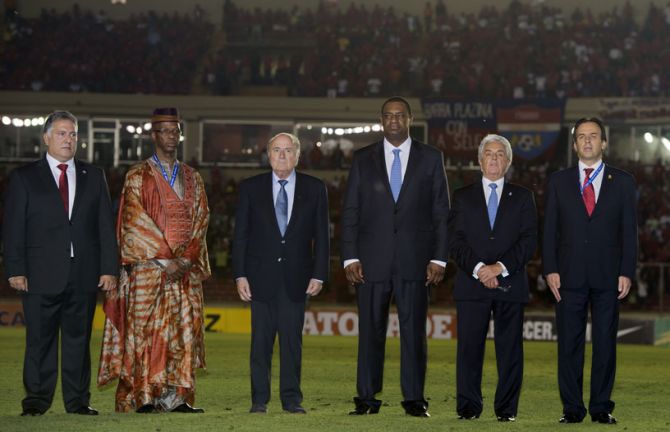
From left to right: Panamanian Football Federation President Pedro Chaluja; UNAIDS Senior Adviser Dr Djibril Diallo; FIFA President Joseph Blatter; CONCACAF President Jeffrey Webb; Mexican Football Federation President Justino Compean; and Mexican Football Federation General Secretary Fernando Cerrilla, during the Under-17 Championship Final in Panama on April 19.
Credit: CONCACAF
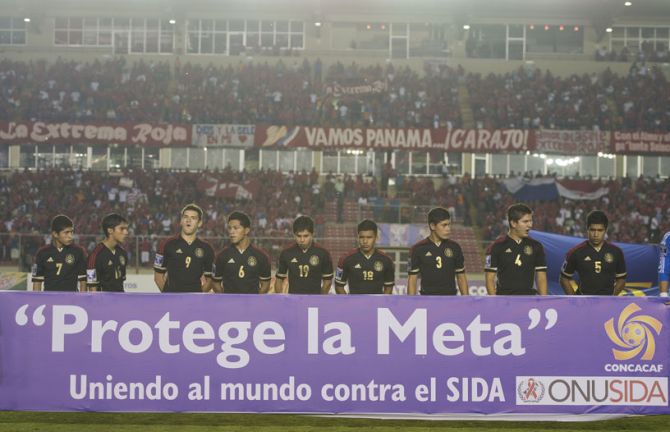
CONCACAF and UNAIDS agreed to carry out joint advocacy and communication activities in competitions organized by CONCACAF in support of the UNAIDS “Protect the Goal” campaign. Credit: CONCACAF
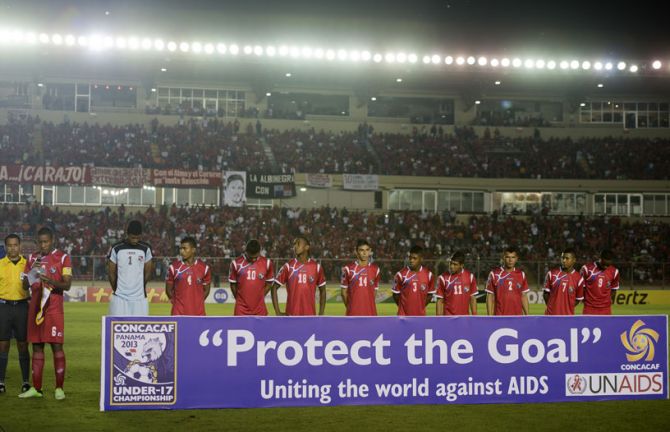
The “Protect the Goal” initiative was launched in January at the 2013 Orange Africa Cup of Nations in South Africa and is part of UNAIDS’ sport for global advocacy programme. The campaign promotes HIV prevention and treatment, in advance of the 2014 FIFA World Cup in Brazil. Credit: CONCACAF
Feature Story
CONCACAF and UNAIDS team up to engage football in the response to AIDS
19 April 2013
19 April 2013 19 April 2013The Confederation of North, Central America and Caribbean Association Football (CONCACAF) and UNAIDS signed a Memorandum of Understanding on 19 April in Panama City, Panama and agreed to engage football in the AIDS response, particularly among young people.
The agreement was signed on the sidelines of the 2013 CONCACAF Under-17 Championship in the presence of CONCACAF President Jeffrey Webb and Senior Adviser Dr Djibril Diallo, who represented UNAIDS Executive Director Michel Sidibé. It was signed in the presence of FIFA President Sepp Blatter, FIFA Secretary General Jerome Valcke and Confederation of African Football (CAF) Secretary General Hishram ElAmrani.
The two organizations agreed to carry out joint advocacy and communication activities in competitions organized by CONCACAF in support of the UNAIDS “Protect the Goal” campaign. This initiative was launched in January at the 2013 Orange Africa Cup of Nations in South Africa and is part of UNAIDS’ sport for global advocacy programme. The campaign promotes HIV prevention and treatment, in advance of the 2014 FIFA World Cup in Brazil.
Quotes
HIV prevention and football are a winning combination. Millions of young people are involved in football either as players or fans and CONCACAF is a key partner. Together we can reach millions of young people and ensure they have access to accurate information about HIV, so that they can protect themselves and lead healthy and productive lives.
We are keen to join forces with UNAIDS to reach out to millions of young people in the Americas with HIV protection messages. This signature will allow CONCACAF and UNAIDS to build coordinated efforts in order to help promote the “Protect the Goal” campaign in this region.
Multimedia
Multimedia
Related

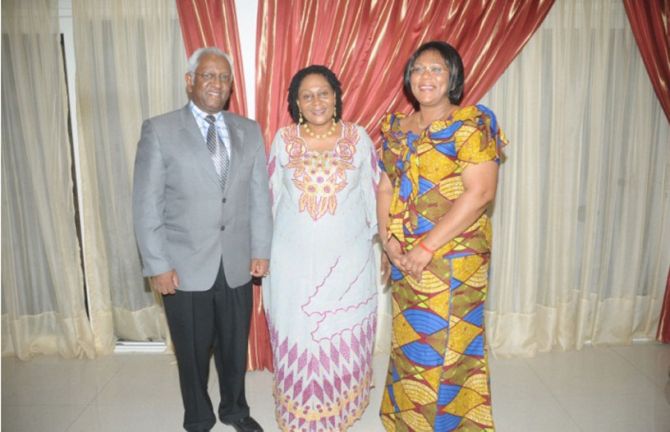
L to R: UNAIDS Country Coordinator, Girmay Haile, the First Lady of the Republic of Ghana, Mrs Lordina Mahama, the Director General of the Ghana AIDS Commission, Dr Angela El-Adas.
Feature Story
The First Lady of Ghana to lead country's drive to stop new HIV infections in children
18 April 2013
18 April 2013 18 April 2013The First Lady of Ghana, Lordina Mahama, has agreed to become UNAIDS premiere ambassador for the implementation of the Global Plan towards the elimination of new HIV infections among children by 2015 and keeping their mothers alive.
First Lady Mahama has committed to lead Ghana's push towards reaching an AIDS-free generation. In her new role, she will encourage political dialogue in the country ensuring that AIDS remains high on the political agenda. She will work towards empowering women and girls, challenging stigma, and helping national and community leaders understand that the AIDS response cannot be separated from the work to improve the health of mothers and children.
Quotes
I commit to ensuring that no child is born HIV positive, no child dies from the disease and no child is orphaned because of HIV. I would like to continue expressing the need to encourage men to take the prevention of HIV seriously and support women so that together we can stop new HIV infections.
Such high level political commitment would provide strategic contribution in the achievement of the Global Plan to virtually eliminate vertical transmission of HIV between now and 2015, both in Ghana and the African Continent.
Related
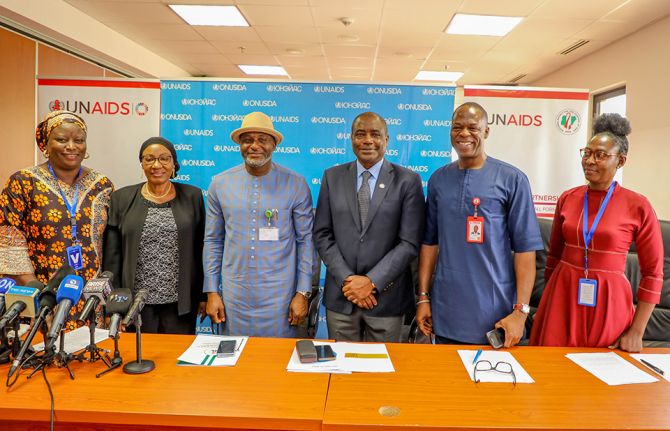
 Impact of US funding cuts on HIV programmes in Ghana
08 April 2025
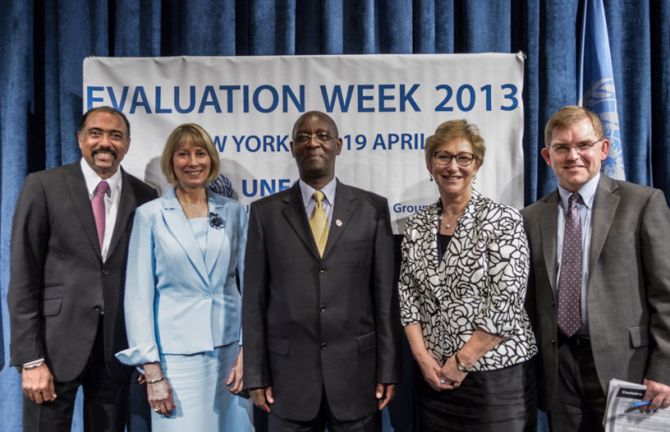
L to R: UNAIDS Executive Director, Michel Sidibé; UNEG Chair and Director of the Inspection and Evaluation Division, Office of Internal Oversight Services, Deborah Rugg; Permanent Secretary, Office of the Prime Minister of Uganda, Pius Bigirimana; Under-Secretary-General, Office of Internal Oversight Services, Carman Lapointe; and Director for Country, Corporate and Global Evaluations, World Bank, Nick York. Credit: UN/M.Reber
Feature Story
High-level panel reviews how the United Nations is measuring results
18 April 2013
18 April 2013 18 April 2013As part of the evaluation week organized by the United Nations Evaluation Group (UNEG) taking place from 15 - 19 April 2013 at the UN Headquarters in New York, a high-level panel event, entitled “UN Results – Are we achieving them? How do we know?” discussed whether or not the United Nations is achieving its objectives.
The main issues addressed by the panel members included how evaluation is contributing to the measurement of the results; if evaluation findings and recommendations are actually used for programme and policy improvements; and how the collective capacity of UN programmes can be built to improve evaluation.
Delivering the opening remarks United Nations Secretary-General Ban Ki-moon emphasized how the evaluation of programmes is a critical function of the work of the UN. UNAIDS Executive Director, Michel Sidibé presented the experience of UNAIDS in carrying out monitoring and evaluation to effectively respond to the AIDS epidemic.
UNEG is an interagency network that brings together the evaluation units of the UN system, including UN departments, specialized agencies, funds and programmes, and affiliated organizations. It currently has 43 such members and three observers.
Quotes
How do we know if the United Nations is doing the right things? And how do we know we are doing these things right? These are the questions that evaluation is supposed to answer. Evaluation is not easy. Nor is it popular. But it is essential.
The progress towards halting and reversing the epidemic would never have begun if a solid monitoring and evaluation process had not been embedded in the programme. Wisdom starts by knowing the facts. We must make information user friendly for people and decision makers alike. Things are changing quickly and we need to move into an era of real time evaluation.
We need to go beyond 'symbolic evaluation'. Measuring impact requires focusing on where programs are delivered, that is, by the countries themselves.
We need to develop an evaluation culture. Evaluation has yet to become a fully robust and comprehensive function and integral to how a programme works. Evidence-based evaluation on programme performance must guide how programmes are designed and implemented.
Related
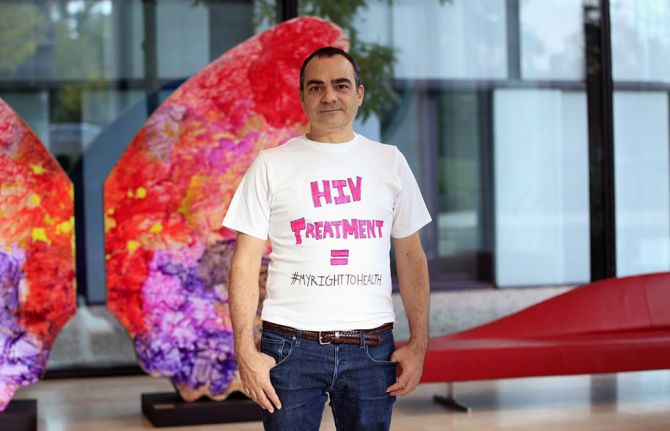
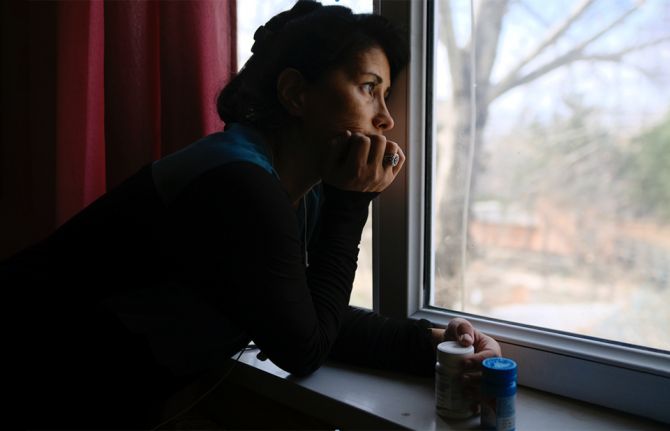
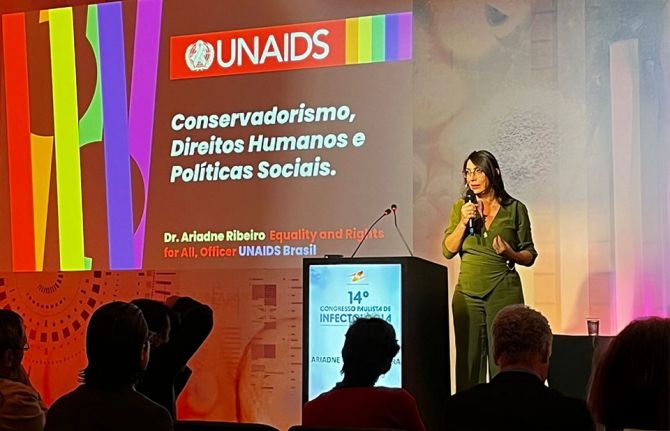 Upholding dignity for everyone: Ariadne Ribeiro Ferreira
21 November 2024
Feature Story
The Nordics: Keeping focused, getting results
16 April 2013
16 April 2013 16 April 2013The long-standing commitment of Denmark, Finland, Norway and Sweden to international development has rooted them firmly as leaders in international development assistance. They are strong advocates on human rights issues––addressing inequalities between and within countries––and have forward thinking policies for social development and health.
This week the Nordic countries came together with UNAIDS in Helsinki to determine how, individually and as a group, they could bolster the response to HIV. Their aim: to build on the unprecedented progress already achieved and attain UNAIDS’ vision of zero new HIV infections, zero discrimination and zero AIDS related deaths.
The Nordics have played a particularly critical role in responding to the AIDS epidemic, keeping focused on and being strong supporters of evidence-informed public health strategies, providing support to the most vulnerable people in societies.
I appreciate the frank and open dialogue with our Nordic colleagues on shared priorities in advancing the AIDS response and ensuring our work addresses broader development goals around equity and human rights
UNAIDS Executive Director Michel Sidibé
At the meeting the four Nordic countries discussed with UNAIDS the need for countries to take greater ownership of their national responses to HIV and how they can be supported in that transition; the importance of shared responsibility and global solidarity around HIV; and particularly the need for stronger partnerships to deliver results.
Opportunities beyond 2015 were also debated––including the role of the UN in a rapidly changing world. For UNAIDS, the meeting was a critical opportunity to ensure that UNAIDS’ and the Nordic countries’ priorities are aligned for maximum impact in responding to HIV.
“I appreciate the frank and open dialogue with our Nordic colleagues on shared priorities in advancing the AIDS response and ensuring our work addresses broader development goals around equity and human rights,” said Michel Sidibé, Executive Director of UNAIDS.
During the visit, Mr Sidibé also met with Maria Guzenina-Richardson, the Finnish Minister of Health and Social Services. They discussed Finland’s continued engagement in global health and the work of UNAIDS.
Following the discussions Mr Sidibé visited the Pro-tukipiste Centre, a registered non-profit organisation which promotes and supports the rights of people currently or previously involved in sex work. Pro-tukipiste was founded in 1990 and activities range from advocacy to social support, outreach work, health care and legal advice for migrant and resident female, male and transgender sex workers. They have social and health care service units in Helsinki and Tampere which include drop-in services and outreach work. Pro-tukipiste reaches up to 2 000 sex workers a year. All their services are anonymous and free of charge.
Related


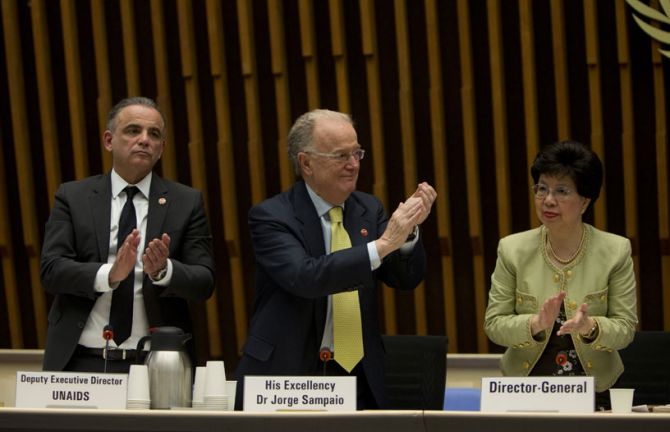
UNAIDS Deputy Executive Director Luiz Loures; Jorge Sampaio; and WHO Director General Margaret Chan. Photo courtesy of WHO.
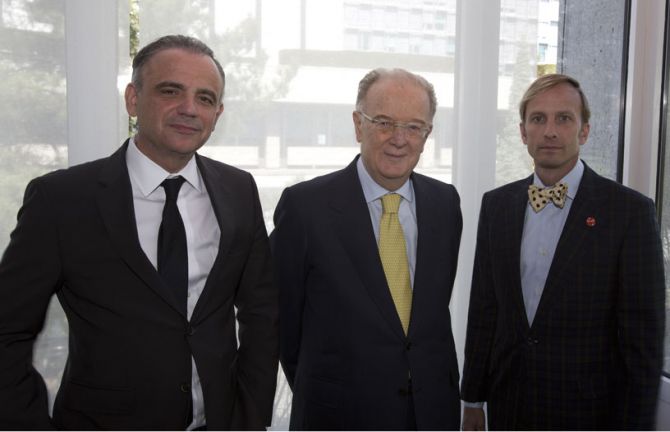
UNAIDS Deputy Executive Director Luiz Loures; Jorge Sampaio; and Global Fund Executive Director Mark Dybul. Photo courtesy of WHO.
Feature Story
Global health leaders honour UN Secretary-General Special Envoy to Stop Tuberculosis
15 April 2013
15 April 2013 15 April 2013A special event to celebrate former President of Portugal Dr Jorge Sampaio’s commitment and dedication to raising the profile of public health and tuberculosis took place at the World Health Organization’s premises in Geneva on 15 April 2013. WHO Director-General, Dr Margaret Chan, the Executive Director of the Global Fund to fight AIDS, Tuberculosis and Malaria, Mark Dybul and the UNAIDS Deputy Executive Director, Programme, Dr Luiz Loures among others honoured Dr Sampaio for his efforts to advocate among global leaders for improved tuberculosis control. A discussion about the future of high-level political advocacy followed the initial remarks.
Dr Sampaio was appointed as UN Secretary-General Special Envoy to Stop Tuberculosis in 2006 and since the beginning he embarked on an ambitious programme to raise the visibility of the disease. In 2008, Dr Sampaio convened the HIV/Tuberculosis Global Leaders' Forum where the co-infection of HIV/TB was defined as a major constraint to economic development and a barrier to social justice and human rights. The Forum managed to increase the engagement of global leaders in supporting the coordination of tuberculosis and HIV services.
Dr Sampaio has always been keen to highlight the crucial role played by civil society and affected communities in the response to HIV and TB. He expressed his personal support by visiting tuberculosis health centres in countries across the globe, including Brazil, Estonia, Ethiopia, Indonesia and Kenya amongst others.
Quotes
President Sampaio has been an envoy of the first order for TB, but also for the values of public health that WHO stands for. This means access to treatment and care for everyone in need, no matter how poor or marginalized.
One thing that has always struck me when talking to the President Sampaio is that grounding [on justice], that North Star for him that has propelled not only his work on public health but his fight for people suffering from tuberculosis focusing on those most at risk who don’t have access to services because of stigma and discrimination.
If we can report today that we can start to see the end of the AIDS epidemic is in a big part thanks to the leadership of people like President Sampaio during the last 10 years. But President Sampaio is also the future. We need the political leadership that can take a challenge like TB and put people at the center and he knows how to do that.
Related
Feature Story
Honduras reforms its penal code to end human right violations based on sexual orientation and gender identity
05 April 2013
05 April 2013 05 April 2013
Honduras has adopted a reform of the Penal Code that will ensure legal protection against discrimination based on sexual orientation and gender identity.
Honduras is moving a step closer to the UNAIDS vision of ‘zero discrimination’. Its Congress has recently adopted a reform of the Penal Code that will ensure legal protection against discrimination based on sexual orientation and gender identity.
"This has been a historic step for Lesbian, Gay, Bisexual, Transexual and Intersex (LGBTI) populations that have suffered from widespread violence and impunity in Honduras,” said Donny Reyes, Coordinator at Arcoiris, a civil society organization advocating for greater LGBTI rights. “Finally our right to freedom and to live in peace has been formally recognized,” he added.
Between 2009 and 2012, more than 90 homophobia-related killings were reported in the country, according to the Human Rights Observatory of Lesbian Cattrachas Network. These incidents, which are among the highest in the region, are attributed to the high levels of homophobia and transphobia that exists in Honduran society.
The high number of violent deaths and human rights violations against LGTBI people prompted Ana Pineda, the Minister of Justice and Human Rights to promote the reform of the Penal Code.
The amended code establishes as an offence with aggravating circumstances the “discrimination with hatred or contempt on the basis of sex, gender, religion, national origin, belonging to indigenous and Afrodescendant groups, sexual orientation or gender identity”. This offence may be punishable by up to 3–5 years imprisonment and a monetary fine. The penalty increases if it is a violent crime.
UNAIDS congratulates the State of Honduras for its commitment to promote and defend human rights. The challenge now is to ensure that all professionals are informed and trained on these new provisions to help ensure we reach zero stigma and discrimination.
Nicole Massoud, UNAIDS Country Coordinator for Honduras and Nicaragua
Dialogue between the government, civil society and UNAIDS led to the creation of special units within the General Attorney’s Office to strengthen the investigation of allegations of violence on the basis of sexual diversity. Each unit comprises a qualified legal advisor, an analyst and three investigators. The Units are currently investigating 17 cases of killings on the basis of sexual orientation and/or gender identity.
“Strengthening investigation, establishing a legal framework which sanctions discrimination and making sure that judges will apply the new provisions are both crucial steps to prevent and reduce violence against members of the LGTBI community,” said Ms Pineda.
Reducing vulnerability to HIV
The amended Penal Code is expected to improve access to HIV-related services, education and employment for LGTBI people. The discrimination, exclusion and violence against LGTBI people have exacerbated their vulnerability to HIV infection by discouraging them from accessing health services out of fear.
In Honduras the HIV epidemic seriously affects men who have sex with men (MSM), where the prevalence of HIV has reached 9.9% compared to the 0.6% among the general population.
A recent report in The Lancet highlights that transgender people have at least 50 times the odds of men and women in the general population of becoming infected with HIV—due to biological as well as structural risks for HIV infection such as social exclusion, economic marginalization, and unmet health-care needs.
"This ruling will provide LGTBI people with greater access to HIV related services" said Nicole Massoud, UNAIDS Country Coordinator for Honduras and Nicaragua. “UNAIDS congratulates the State of Honduras for its commitment to promote and defend human rights. The challenge now is to ensure that all professionals are informed and trained on these new provisions to help ensure we reach zero stigma and discrimination.”
Feature Story
Asia-Pacific parliamentarians urge sustained action on AIDS and to carry on the MDG agenda beyond 2015
03 April 2013
03 April 2013 03 April 2013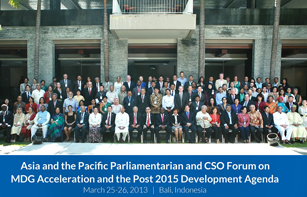
Parliamentarians from across Asia and the Pacific are urging sustained action on AIDS to ensure an AIDS-free generation in the region. The call came at a Forum held in Bali, Indonesia (25-26 March) where parliamentarians and civil society leaders from 35 countries in Asia-Pacific gathered to assess the progress made and the challenges remaining to achieve the Millennium Development Goals (MDG) in the region.
“We are just starting to see significant results in achieving the MDGs. We cannot abandon them; we must take the MDG agenda forward,” said Hon P Kamalanathan P Pancanathan, Member of Parliament from Malaysia. “We have seen important health, human rights and development gains through the AIDS response that can strengthen other work in global health and sustainable development,” he added.
Calls for a future based on human rights, equality and sustainability resonated throughout the Forum. Rapid increase of access to antiretroviral treatment, the meaningful engagement of communities in the design and roll out of programmes and the removal of laws, policies and practices that hamper access to HIV services for people living with HIV and key populations at higher risk were cited as critical priorities to ensure success in the response to AIDS.
“With political commitment, community mobilization, adequate funding and evidence-based approaches, the end of AIDS and the emergence of an AIDS-free generation can be a shared triumph of the post-2015 era,” said United Nations Secretary-General’s Special Envoy on AIDS in Asia and the Pacific, Prasada Rao.
We are just starting to see significant results in achieving the MDGs. We cannot abandon them; we must take the MDG agenda forward.
Hon P Kamalanathan P Pancanathan, Member of Parliament from Malaysia
Effective spending and shared responsibility were linked to results across health and development goals. “We have to ensure smart spending – making sure funds are focused where they are most needed and where they produce most efficiency – which in the Asia Pacific region means focusing on key populations at highest risk of HIV,” said Steven J Kraus, Director of UNAIDS Asia and the Pacific Regional Office at the Forum. “As representatives of the people—including and especially the most vulnerable—parliamentarians have a key role to play in giving voice to the voiceless,” he added.
The parliamentarian and civil society Forum took place alongside, and fed into, the fourth meeting of the High-Level Panel of Eminent Persons on the Post-2015 Development Agenda, hosted by the President of Indonesia as Panel co-chair. As part of the Forum, a selected delegation of 20 senior parliamentarians and local elected representatives shared with the UN Secretary-General’s High-Level Panel their recommendations about key priorities identified for consideration in the crafting of the post-2015 development agenda.
The Parliamentarians and Civil Society Forum was hosted by the Indonesian Parliament, Indonesian Forum of Parliamentarians on Population and Development (IFPPD), and UNORCID, and co-organized by United Nations Millennium Campaign and the Asian Forum of Parliamentarians on Population and Development (AFPPD) with support from the Rockefeller Foundation, and in collaboration with UNAIDS and a number of other UN agencies, global civil society networks, international nongovernmental organizations, and parliamentary networks.
Feature Story
A clinic in Niger uses an innovative and low-cost solution to keep babies alive
02 April 2013
02 April 2013 02 April 2013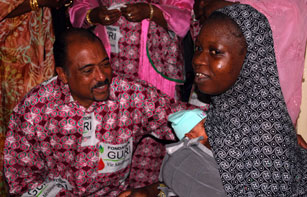
UNAIDS Executive Director Michel Sidibé visting the Issaka-Gazobi maternity clinic, which handles many complicated pregnancies and two years ago began providing services to pregnant women living with HIV. Niamey, Niger. Credit: UNAIDS
It is 10 am in the morning and the hot sun is already high in the sky above Niamey, Niger. Inside the Issaka-Gazobi maternity clinic a group of women are waiting expectantly for a meeting very few imagined they would ever have. The First Lady of Niger, Aïssata Issoufou Mahamadou and UNAIDS Executive Director, Michel Sidibé met the women during their visit recently to the maternity clinic, which is a model for the rest of the country.
The facility provided services to more than 20 000 patients and had nearly 6000 births last year. It handles many complicated pregnancies and two years ago began providing services to pregnant women living with HIV. The First Lady came to the clinic to officially donate food and medical supplies to the staff and she said, “This maternity is a model in the prevention of mother to child transmission services in Niger.”
Niger struggles with an extremely high infant mortality rate, which in 2012 the government estimated at 51 deaths per 1000 live births. Like many other maternity wards, Issaka-Gazobi struggles with providing quality care in a resource-poor setting. However, the big challenges facing the facility spurred the staff to become innovative and adapt a concept that has been used elsewhere to the local situation.
Kangaroo care is a wonderful concept. I am really impressed by how the maternity has adapted the idea to give life-saving warmth to premature babies and enable mothers to keep their infants alive.
UNAIDS Executive Director Michel Sidibé
The maternity lacks enough incubators to keep alive all the premature babies in its care. So the staff developed a pouch, which can hold a new-born snug next to his or her mother’s body, benefitting from a natural human incubator. While, the so called “kangaroo care” concept has been used in a number of other countries, the Issaka-Gazobi is the first place to promote it in Niger. The device is novel in a country where most mothers carry their babies on their backs.
After seeing the innovative human incubator, Mr Sidibé said, “Kangaroo care is a wonderful concept. I am really impressed by how the maternity has adapted the idea to give life-saving warmth to premature babies and enable mothers to keep their infants alive.”
The Issaka-Gazobi provides antiretroviral therapy for free to mothers living with HIV to prevent transmission of the virus to their children and almost all patients living with HIV give birth to healthy babies. However in much of the country this is not the case. In 2011 Niger estimates less than 65% of pregnant women received an HIV test and less than 30% of pregnant women living with HIV had access to ARVs to prevent transmitting HIV to their children. The rate of HIV infection among children was nearly 22% in 2011.
Niger faces many challenges to preventing new HIV infections in children. While the majority of pregnant women receive a prenatal consultation, only around 30% of women give birth with the help of a trained health worker. This is primarily because while prenatal visits are free, receiving professional assistance at birth costs money. Many pregnant women, who test positive for HIV are lost to follow up and do not receive the treatment they need.
The government of Niger is striving to expand its services for preventing mother to child HIV transmission (PMTCT) and increased the funds it allocated to PMTCT from 2.6% of the total budget in 2010 to 15.9% in 2011. However, the country still faces a huge gap of around $US1.17 million this year for PMTCT services.
Mr Sidibé commended the country for the efforts it is making to improve health services for mothers and urged the country keep pushing towards stopping new HIV infections in children by 2015 and keeping their mothers healthy.

Feature Story
Russia’s Presidency of the G20 discussed during high-level visit to UNAIDS
28 March 2013
28 March 2013 28 March 2013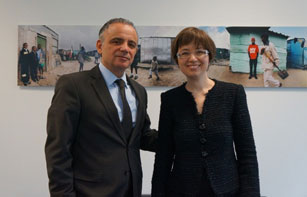
UNAIDS Deputy Executive Director (Programme) Luiz Loures (left) and Ksenia Yudaeva, G20 Sherpa, Office of the President of the Russian Federation.
In her first visit to Geneva as Russian G20 Sherpa, Ksenia Yudaeva visited UNAIDS Headquarters for a broad ranging discussion on global issues that are priorities for the Russian Presidency of the G20, including civil society participation, youth empowerment and development for all.
“Russia is using its Presidency of the G20 to strategically connect the dots on issues critical to the future of global governance,” said Ms Yudaeva, Chief of the Presidential Experts Directorate and the Russian G20 Sherpa. “UNAIDS’ experience is of special interest to Russia in how to promote civil society participation, transparency and accountability.”
Ms Yudaeva and her delegation from the Russian Sherpa’s Office were welcomed to UNAIDS by Dr. Luiz Loures, UNAIDS Deputy Executive Director (Programme). “UNAIDS welcomes Russia’s unprecedented leadership on global governance. As President of the G20 in 2013 and of the G8 in 2014, Russia has an unprecedented opportunity to leverage support of civil society and young people to advance its priorities of sustainable, inclusive and balanced growth and development for all.”
Russia is using its Presidency of the G20 to strategically connect the dots on issues critical to the future of global governance. UNAIDS’ experience is of special interest to Russia in how to promote civil society participation, transparency and accountability.
Ksenia Yudaeva, Chief of the Presidential Experts Directorate and the Russian G20 Sherpa