Feature Story
The Global Fund launches new funding model to support countries in responding to HIV, TB and malaria
01 March 2013
01 March 2013 01 March 2013
The new model announced by the Global Fund will focus on countries with high disease burden and low resources.
Credit: The Global Fund to fight AIDS. Tuberculosis and Malaria
The Global Fund to Fight AIDS, Tuberculosis and Malaria (Global Fund) has recently launched a new funding model for AIDS, tuberculosis and malaria. The launch follows a three-year period where funding for the three diseases was halted due to insufficient funds and calls for reforms of the institution and its business model. In this new wave of funding the Global Fund has announced that up to US$1.9 billion could be available in 2013 and 2014.
This is welcome news to the countries which have been most affected by HIV, tuberculosis and malaria and which have been struggling to produce truly effective responses due to a lack of funding. The new model announced by the Global Fund will focus on countries with high disease burden and low resources, allowing the Global Fund to support the countries with the most serious epidemics and least ability to pay.
“This new funding model will bring critical additional resources to the AIDS response,” said Luiz Loures, UNAIDS Deputy Executive Director of Programme. “UNAIDS is looking forward to continue working with the Global Fund to ensure that these resources are available to countries rapidly for scaling up HIV treatment and prevention services.”
UNAIDS is looking forward to continue working with the Global Fund to ensure that these resources are available to countries rapidly for scaling up HIV treatment and prevention services
Luiz Loures, UNAIDS Deputy Executive Director of Programme
The model focuses on strategic investments whereby applications will need to be based on solid scientific evidence using the best epidemiological data to determine where the investments will make most impact. The Global Fund has also announced that the new funding model will be firmly focused on results and that the countries which are producing high impact, well-performing programmes will be able to apply for additional funding on top of their initial allocation.
As well as investing more strategically to maximize on results, the new funding model will provide more predictable funding. All eligible applicants will receive an indication of the funds that will be made available for a three-year allocation period. This will allow for better planning as countries will have a good idea of what funds will be coming to them over the next years. They will then be able to seek funding from this allocation when it suits them best, according to their own national planning cycles.
The new funding model is expected not only to provide countries with more flexibility with the timing of their funding requests but also to encourage a solid country dialogue around coherent, strategic and high impact investments and strengthened national strategic plans. Each recipient country will be expected to engage a diversity of partners, including civil society, to ensure the most effective and inclusive response to each of the three diseases.
External links
External links
Multimedia
Multimedia
Press Statement
UNAIDS welcomes new paediatric HIV treatment license for the Medicines Patent Pool
28 February 2013 28 February 2013ViiV Healthcare signs agreement to help bridge a critical gap in HIV treatment for children
GENEVA, 28 February 2013—The Joint United Nations Programme on HIV/AIDS (UNAIDS) welcomes the new collaboration between the Medicines Patent Pool and ViiV Healthcare to increase access to antiretroviral therapy for children. The new agreement is a significant step forwards in HIV treatment for children as very few antiretroviral drugs are formulated for paediatric use. In 2012 UNAIDS estimated that 72% of children living with HIV who were eligible for treatment did not have access.
Under the collaboration, ViiV will allow the paediatric formulation of the antiretroviral medicine abacavir to be supplied to 118 countries under a license agreement. The 118 countries are home to more than 98% of all children living with HIV. ViiV have also agreed to negotiate further licences that will allow the manufacture of low-cost versions of promising new, better adapted paediatric medicines that ViiV is currently developing. Once approved for safety and quality, the new medicines could also be supplied to the 118 countries.
“The agreement between the Medicines Patent Pool and ViiV promises to narrow a substantial gap in access to HIV treatment and offer new hope for children,” said Michel Sidibé, Executive Director of UNAIDS. “I strongly urge other pharmaceutical companies, especially companies holding antiretroviral therapy patents, to join the Pool and help improve the lives of children and adults living with HIV around the world.”
ViiV has also pledged to work with other stakeholders to develop additional abacavir-based products for children and bring them quickly to market in developing countries. This is an important affirmation of the Medicines Patent Pool’s role in facilitating faster introduction of new, better-adapted and affordable medicines, particularly for developing countries.
The Medicines Patent Pool was founded in 2010 with the support of the innovative financing mechanism UNITAID to increase access to antiretroviral treatment. It works by creating a pool of patents that can be licensed by generic producers, thereby facilitating competition, fostering innovation and driving down prices. The United States National Institutes of Health and Gilead Sciences have previously contributed voluntary licenses to the Medicines Patent Pool.
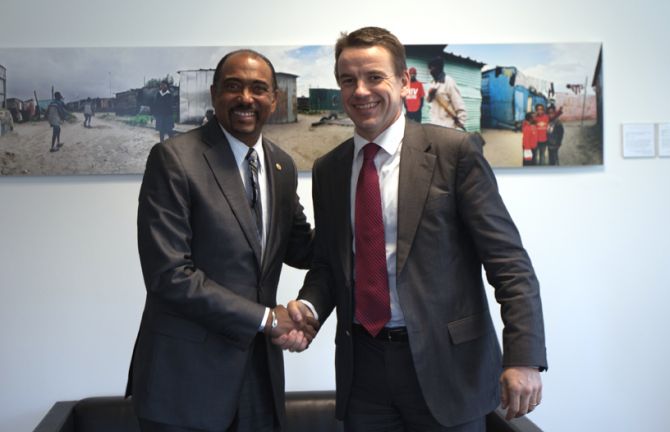
UNAIDS Executive Director Michel Sidibé (left) and Danish Minister of Development Christian Friis Bach at UNAIDS Headquarters in Geneva. 27 February 2013. Credit: UNAIDS
Feature Story
UNAIDS and Denmark to strengthen collaboration to advance health and human rights
28 February 2013
28 February 2013 28 February 2013UNAIDS Executive Director Michel Sidibé met with the Danish Minister of Development Christian Friis Bach on 27 February at the UNAIDS Headquarters in Geneva to find ways to further strengthen collaboration. They underlined the progress made in preventing new HIV infections among children and the important impact these efforts are having on women's health, in particular addressing the sexual and reproductive health and rights of women.
Minister Bach commented on the global consultation organized by Denmark on 18-19 February on addressing inequalities in the post 2015 development agenda where it was highlighted that gender disparities—from access to health and education to political participation, justice or jobs—still present a global challenge. Mr Sidibé emphasized that the AIDS response has been instrumental in reaching out to the most at risk and vulnerable populations and it continues to be a key channel to advance the broader rights agenda.
Quotes
UNAIDS remains extremely relevant to advancing global health and tackling sensitive issues on the path to reaching the Millennium Development Goals.
The AIDS response is an important entry point to address broader development issues such social exclusion, inequality and access to health services.
Related

Feature Story
Four-year evaluation of PEPFAR concludes
25 February 2013
25 February 2013 25 February 2013
On 20 February, the Institute of Medicine (IOM) presented the results of a four-year evaluation of the United States President’s Emergency Plan for AIDS Relief (PEPFAR). Led by Dr Robert E. Black, chair of the evaluation committee, the 700-page report is based on an extensive review of data from over 30 countries receiving PEPFAR funding, interviews with partner organizations and stakeholders, and findings from field visits to 13 countries.
The report serves as strong affirmation of PEPFAR’s significant impact on the AIDS epidemic, both in its partner countries and globally. It highlights PEPFAR’s continued relevance and progress in meeting its targets and in its staunch commitment to halting the spread of HIV and saving lives through investments in HIV prevention, treatment and care services.
The report also outlines the significant contribution PEPFAR has made to strengthening partnerships with governments, civil society, development partners and other stakeholders. Its increased attention and commitment to key populations and contribution to addressing the challenging nature of concentrated epidemics, and the overall transformative role in the global HIV response also come out strongly in the report. The report’s conclusions and recommendations for future action, reinforce the strong synergies between UNAIDS vision of zero new HIV infections, zero discrimination and zero AIDS-related deaths and the US goal of creating an AIDS-free generation.
We are also encouraged to see that this report emphasizes our common goals to see more country-owned and sustainable approaches achieved through greater shared responsibility.
UNAIDS Executive Director Michel Sidibé
“The United States of America has led a formidable response to the AIDS epidemic. Through PEPFAR the US has actively saved millions of lives and prevented millions of new infections around the world,” said UNAIDS Executive Director Michel Sidibé. “We are also encouraged to see that this report emphasizes our common goals to see more country-owned and sustainable approaches achieved through greater shared responsibility.”
The evaluation also shows the clear need for PEPFAR to sustain its progress and to continue being ambitious in achieving real results to halt the global AIDS epidemic. It urges PEPFAR to transition to new implementation models that enhance systems and build capable leadership in partner countries to sustainably and effectively manage their own responses to HIV. “As the HIV response becomes more country-driven, PEPFAR, like other external donors, will need to focus its contribution on national efforts, rather than direct provision of services and attribution of results,” said Dr Black.
The report concludes that PEPFAR has the potential to further transform the way health assistance is envisioned and implemented, with ultimate long-term positive effects for global health and well-being.
In response to report, the head of PEPFAR, Ambassador Eric Goosby, reiterated the importance of the study in shaping PEPFAR’s efforts to implement the Blueprint for Creating an AIDS-free Generation, "We are proud that the IOM stated that PEPFAR has played a transformative role in the global response to HIV. We stand ready to continue to play this role as we work with our partners across the globe to create an AIDS-free generation," he said. "While our work is far from finished, we believe our best days lie ahead as we work with the global community to help countries reach the tipping point in their epidemics, and sustain their AIDS responses over time." He also announced the formation of a US government committee to follow-up on the report’s recommendations.
External links
External links
Publications
Publications
Related
 A tribute to Maeve Kennedy Townsend McKean
09 April 2020
 Keeping up the momentum in the global AIDS response
24 April 2019
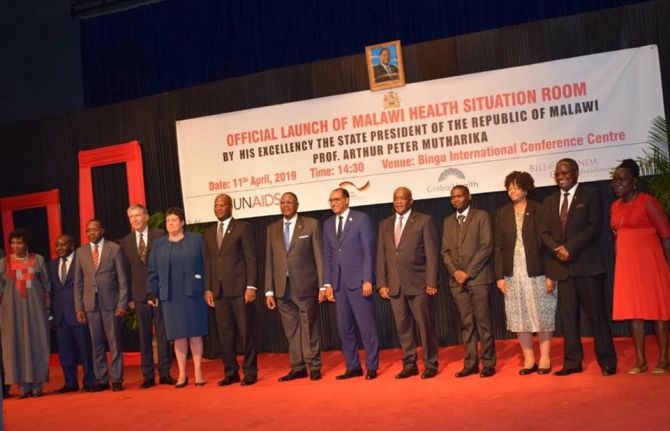 Malawi launches its health situation room
12 April 2019
Feature Story
Realising the potential impact of antiretroviral therapy
22 February 2013
22 February 2013 22 February 2013
Study confirms the urgent need for rapid and wide-scale roll out of antiretroviral therapy to communities which have been most affected by the epidemic.
The full results of a study on the effects of antiretroviral therapy in preventing new HIV infections have been published this week in the journal Science. The study, led by Professor Frank Tanser from the Africa Centre, spanned a seven year period (2004-2011), and followed nearly 17 000 people, the largest ever study completed at a population-level in a rural sub-Saharan African setting.
It was conducted in the sub-district of Hlabisa in the rural Province of KwaZulu-Natal, South Africa. The rolling hills of KwaZulu Natal are perhaps one of the most beautiful places on earth but it is also an area which has been particularly affected by the AIDS epidemic. KwaZulu Natal has one of the highest HIV prevalence rates in the world––one in four people over the age of 15 are living with HIV.
The province of KwaZulu Natal has been widely acknowledged as leading a strong provincial response to HIV. In Hlabisa for example, by mid-2012 the Hlabisa HIV Treatment and Care Programme had rolled-out antiretroviral treatment to more than 20 000 people across the area.
The 16 667 participants enrolled in the Professor Tanser’s study did not have HIV at the start of the trial and were regularly tested on average every two years. By the end of the study period 1 413 people had become infected with HIV. The people who tested HIV positive were offered antiretroviral therapy when they became eligible for treatment under national South African guidelines. Initially, adults with a CD4 count of 200 were offered treatment, this was extended to people with CD4 counts of 350, pregnant women and TB patients by April 2010.
What the study found was that the risk of acquiring HIV declined significantly if a person was living in an area where antiretroviral coverage was highest. For example in the areas where treatment coverage was between 30%-40% of all people living with HIV (which corresponds to about 60% of people eligible for treatment under current guidelines) people were nearly 40% less likely to become infected with HIV than in communities where coverage was much lower, at less than 10%. These results are yet further confirmation of the enormous impact antiretroviral therapy could have on morbidity, mortality and new HIV infections if access to treatment was scaled up to full impact levels in populations most affected by HIV.
This large scale population based study, the first in a hyper epidemic region in Africa, delivers powerful evidence that treatment is prevention and is an essential part of our combination prevention tool kit.
Bernhard Schwartlander, Director of Evidence, Innovation and Policy at UNAIDS
"This study is extremely significant. It is another piece in the puzzle that shows how treatment keeps people healthy and productive, and at the same time significantly reduces the likelihood to transmit the virus,” said Bernhard Schwartlander, Director of Evidence, Innovation and Policy at UNAIDS. “This large scale population based study, the first in a hyper epidemic region in Africa, delivers powerful evidence that treatment is prevention and is an essential part of our combination prevention tool kit.”
Concerns relating to the uptake of testing and treatment, retention, adherence, the development of drug resistance and other factors such as the capacity of health systems to deliver antiretroviral therapy have been long-debated, particularly since the findings of the HPTN052 trial were announced in 2011. The HPTN052 trial gave rise to great optimism amongst the HIV community––it showed that if a person living with HIV adheres to an effective antiretroviral regimen the risk of transmitting the virus to their uninfected sexual partner could be reduced by 96%. However larger, population based studies were yet to confirm how these findings apply to community settings.
While it is not unexpected that such a large scale and longer term population level study would pack the percentage punch of the HPTN052 trial, what it lacked in percentage points it made up for in the sheer scale and depth of the trial. What it has done is to bring us one step closer to finding out the true potential of antiretroviral therapy and the enormous impact it could have on preventing new HIV infections in real settings where HIV is part of daily life.
It has given further confirmation of the urgent need for rapid and wide-scale roll out of antiretroviral therapy to communities which have been most affected by the epidemic. And it has given yet another strong reason for countries to keep their commitments and meet the targets set out in the 2011 United Nations General Assembly Political Declaration on HIV/AIDS––to scale up access to treatment to reach 15 million people by 2015––and to halve the numbers of sexually transmitted HIV infections by 2015.

Feature Story
New UNAIDS platform highlights scientific advances
21 February 2013
21 February 2013 21 February 2013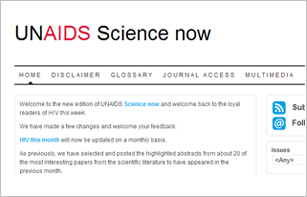
Screenshot from http://sciencenow.unaids.org
In 2012 alone there were more than 14 000 scientific papers published on HIV. With such an impressive amount of information, it can be challenging to keep abreast of all the new developments. UNAIDS has launched an online platform, UNAIDS Science now, which highlights some of those papers that are particularly relevant to the United Nations high level targets.
UNAIDS Science now is based on what used to be the HIV this week blog also produced by UNAIDS. The new platform however, consists of a bigger interactive site that not only includes access to what’s new in scientific journals, but also space for discussions and debates on current issues around HIV science.
Each month, every title of every paper published will be systematically screened and a selection of about 20 abstracts of the most interesting papers will be compiled in the monthly digest HIV this month. Guest editors will highlight the most exciting articles providing their perspectives on why findings from specific studies are important and where they fit into the broader context of HIV research.
“In the past, HIV this week was an integral part of the reading list, so the launch of HIV this month is welcome news indeed”, notes Dan Allman who teaches an undergraduate course on 'HIV Prevention Research' at the University of Toronto.
We hope that UNAIDS Science now will become the ‘go to’ place for all of UNAIDS staff, national AIDS offices, research institutions and university students with an interest in HIV.
Peter Godfrey-Faussett, UNAIDS Senior Science Adviser
The online discussions will be an open space for the exchange of scientific information. They will be chaired by UNAIDS and will have guest speakers/discussants experts in different areas. The discussions will be webcasted and recordings of the discussions will be made available in the multimedia section of the new platform. Some podcasts on relevant topics will also be forthcoming.
“We hope that UNAIDS Science now will become the ‘go to’ place for all of UNAIDS staff, national AIDS offices, research institutions and university students with an interest in HIV,” said Peter Godfrey-Faussett, UNAIDS Senior Science Adviser. “The new platform will enable readers to have a better-informed position on specific issues, which will in turn translate into a better response to the epidemic.”
Related
 An HIV vaccine: who needs it?
21 July 2021
 Science, HIV and COVID-19—where are we headed?
08 June 2021
Feature Story
Carnival queens call on Panamanian young women to take the lead and protect themselves from HIV
18 February 2013
18 February 2013 18 February 2013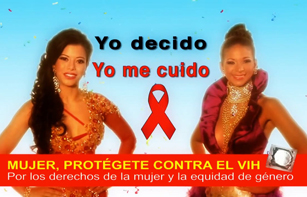
Image of one of the promotional images of the campaign featuring the Carnival queens.
Credit: UNAIDS
Last week was Carnival in Panama. As part of the celebrations during 11-12 February, the Queens of “Calle Arriba” and “Calle Abajo” —representing opposite neighbourhoods— competed against each other in a variety of contests. However when it comes to HIV, the two rivals joined forces to prevent new HIV infections among women.
UNAIDS, in partnership with the Panamanian Carnival Boards of “Calle Arriba” and “Calle Abajo”—the national institutions in charge of planning and coordinating activities related to this festivity— the National AIDS Programme, and PROBIDSIDA, launched a national campaign entitled “I decide, I take care of myself” (Yo decido, yo me cuido).
The campaign, which will run until the end of February, aims to help reduce gender inequalities, empower women and promote sexual and reproductive rights. One of the major goals is to ensure women can make informed decisions in relation to their sexual health, especially when it comes to preventing HIV.
“If we want that no more women get infected with HIV in Panama we need to join efforts at all levels, including institutions, civil society organizations and international agencies. This is why we decided to endorse this initiative,” said Pilar De Amores, Legal Representative of “Calle Arriba” Carnival Board.
In the last decade the number of new HIV infections has been on the rise among young women in Panama. A national survey on sexual and reproductive health held in 2009 and 2010 found that only 9% of women use condoms as a preventive measure during sex. Gender inequality is a major driving force behind the lack of reproductive and sexual rights of women in the country.
Gender inequalities affect women’s power to insist on and negotiate safe sex practices like condom use, and thus protect themselves from HIV
Ricardo Garcia, UNAIDS Country Coordinator for Panama and Costa Rica
“Gender inequalities affect women´s power to insist on and negotiate safe sex practices like condom use, and thus protect themselves from HIV” explains Ricardo Garcia, UNAIDS Country Coordinator for Panama and Costa Rica. “We have created this campaign to increase the recognition of women as having sexual rights and capable of exercising them, in line with the UNAIDS action framework on women, girls, gender equity and HIV”.
The campaign includes television spots that are being broadcast on national networks as well as posters in schools, organizations and on the streets featuring the Carnival queens calling on Panamanian young women to take the lead and protect themselves from HIV. As part of the campaign, the Queens received special training on issues related to HIV prevention and gender inequalities, in order to participate in public events and media programmes promoting the campaign.
“Women need access to HIV information, education, and services to have control over our bodies and be able to negotiate the use of condoms with our partners,” said Maruquel Madeleine González Velásquez, Queen of “Calle Arriba”. “I feel extremely accomplished to be part of this project,” she added.

Feature Story
UNAIDS addresses the 51st session of the Commission for Social Development
15 February 2013
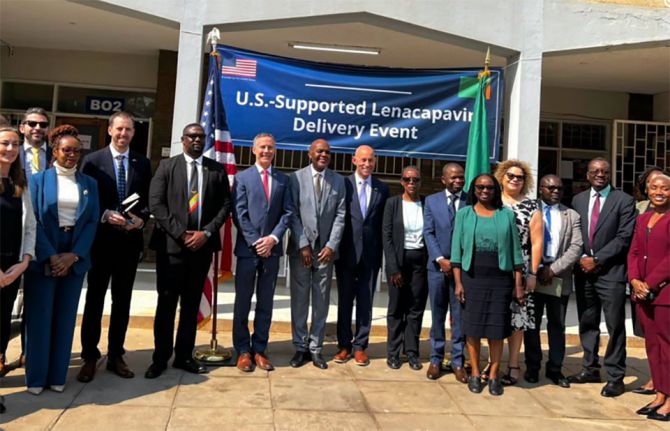
15 February 2013 15 February 2013How do we promote meaningful empowerment so people everywhere can achieve poverty eradication, social integration, full employment and decent work? This was the key theme of a UNAIDS statement delivered to the 51st session of the Commission for Social Development in New York on 12 February.
Echoing the priority theme of the entire session, the UNAIDS statement on empowerment highlighted the fact that HIV should be viewed through the prism of a wider development agenda. Citing the seminal 1995 Copenhagen Declaration of the World Summit on Social Development, the statement argued that communicable diseases hinder social progress and often cause poverty and exclusion.
According to the statement, a people-centred approach to the AIDS response will lead to more effective poverty eradication, better social integration and a greater likelihood of having a fulfilling work life. Despite the progress made in this direction to date, the statement also contended that stigma and discrimination are still major barriers to people’s empowerment and that in many countries and communities the human rights of the people living with and affected by HIV are often neglected or flouted.
UNAIDS called on the gathering to challenge stigma and discrimination in all its forms and promote and protect human rights. This was seen as an imperative not only for an effective challenge to the epidemic but also to achieve sustainable development, social integration and inclusion.
The 51st session of the Commission for Social Development is taking place from 6-15 of February and is organised by the Division for Social Policy Development, part of the UN Secretariat’s Department of Economic and Social Affairs.
Speeches
Speeches
External links


Feature Story
Ten years since PEPFAR’s launch: The United States continues its leadership in the AIDS response
14 February 2013
14 February 2013 14 February 2013Exactly ten years ago, President George W. Bush announced the creation of The Presidents Emergency Plan for AIDS Relief (PEPFAR) in his State of the Union Address. When it was created, back in 2003, PEPFAR’s initial aim was to provide antiretroviral treatment to 2 million people living with HIV in resource-limited settings, to prevent 7 million new HIV infections, and to provide care and support to 10 million people by 2010.
Since those early days PEPFAR has come a long way, far exceeding its initial goals. By 2012 PEPFAR was directly supporting life-saving antiretroviral treatment for more than 5 million men, women and children worldwide. In 2012 alone PEPFAR supported HIV testing and counselling for more than 11 million pregnant women and provided medicines to prevent new HIV infections in children to around 750 000 women who tested positive for HIV. According to PEPFAR, this allowed 230 000 children to be born free from HIV.
“The leadership of the United States of America in the AIDS response has been instrumental in achieving results for people living with and affected by HIV,” said UNAIDS Executive Director Michel Sidibé. “Over the last 10 years new HIV infections worldwide have fallen by more than 20%, and as more people have been able to access antiretroviral therapy, AIDS-related deaths have fallen by a staggering 25% since the peak of the epidemic. These gains would not have been possible without the financial and political commitment of the United States and particularly PEPFAR,” he added.
The United States’ continuing leadership in the AIDS response was further confirmed this week when President Barack Obama gave his annual State of the Union Address. In the hour-long address, President Obama directly talked about the United States’ commitment to achieving an AIDS-free generation.
The leadership of the United States of America in the AIDS response has been instrumental in achieving results for people living with and affected by HIV
UNAIDS Executive Director Michel Sidibé
“In many places, people live on little more than a dollar a day. So the United States will join with our allies to eradicate such extreme poverty in the next two decades: by connecting more people to the global economy and empowering women; by giving our young and brightest minds new opportunities to serve and helping communities to feed, power, and educate themselves; by saving the world’s children from preventable deaths; and by realizing the promise of an AIDS-free generation.”
In July 2012, Secretary Hilary Rodham Clinton called on PEPFAR to produce a blueprint outlining how the United States will contribute to reaching an AIDS-free Generation which was subsequently launched in December of that year.
The Blueprint: Creating an AIDS-free Generation, reflects on lessons learned from PEPFAR’s experience in supporting countries to rapidly scale-up HIV prevention, treatment and care services. It also highlights the unprecedented opportunity the world has to help move more countries towards and beyond the tipping point in their epidemics and put them on a path to achieving an AIDS-free generation.
The blueprint makes clear that the United States’ commitment to this goal will remain strong, comprehensive and driven by science and will serve as a roadmap for the United States’ response to HIV in the coming years.
External links
External links
Related

Feature Story
Changes in Peru’s penal code will enable more young people to access HIV services
12 February 2013
12 February 2013 12 February 2013
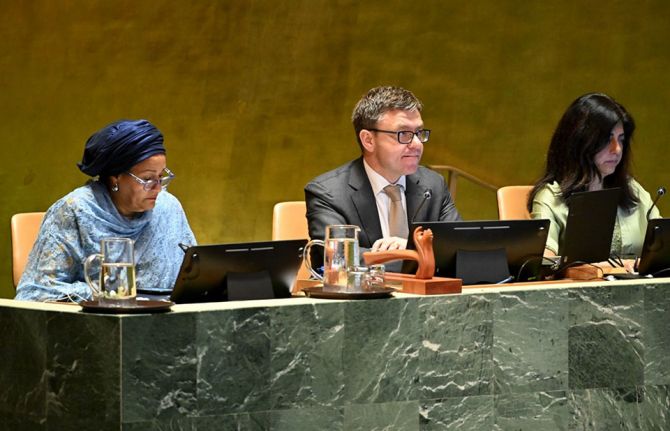
Under the revised penal code young people between the age of 14 and 18 years old will be able to exercise their sexual and reproductive rights.
Credit: UNAIDS
The Constitutional Tribunal of Peru is amending an article in its penal code which for many years had criminalized consensual sexual activity among young people. Sentencing was particularly severe with adolescents facing up to 30 years in prison. Article 173 of the penal code was also preventing young people from accessing essential health and reproductive services for fear of prosecution.
Under the revised penal code young people between the age of 14 and 18 years old will be able to exercise their sexual and reproductive rights providing the two parties are consenting. Non-consensual sexual relations will still constitute a crime in Peru with lengthy sentencing for people found guilty.
"The Constitutional Tribunal ruling generates a protective effect in relation to adolescents, because it provides them with greater access to sexual and reproductive health services as well as guidance and information to avoid sexually transmitted infections, including HIV," said Mima Barnechea from the United Nations Population Fund (UNFPA).
In 2012, UNFPA and UNAIDS presented a formal request before the Constitutional Tribunal advocating for the declaration of unconstitutionality of Article 173. This process was part of a wider effort particularly from the Office of Peru’s Ombudsman, Eduardo Vega Luna as well as legal demands presented before the Tribunal by more than 10 000 Peruvian citizens.
This decision is a milestone that sets the basis for plans and programs at national level to prevent teen pregnancy and reduce sexually transmitted infections including HIV and maternal mortality
Carlos Tacuri Calderon, youth activist in Peru and member of INPPARES
"UNAIDS welcomes the Constitutional Tribunal’s decision and congratulates the magistrates for their determination to protect adolescents’ human rights,” said UNAIDS Coordinator for Peru and Bolivia, Regina Castillo. “The Tribunal’s decision reinforces young people’s right to make decisions regarding their health and sexuality and the need to construct policies and programmes that recognize young people as active actors of change.”
According to a National Demography and Health Survey of 2011 a large percentage of Peruvians initiate sexual relations before the age of 18. More than 12% of female adolescents (ages between 15 and 19) have been pregnant at least once.
"This decision is a milestone that sets the basis for plans and programs at national level to prevent teen pregnancy and reduce sexually transmitted infections including HIV and maternal mortality," said Carlos Tacuri Calderon, youth activist in Peru and member of INPPARES.
UNAIDS estimates that around 74 000 people are living with HIV in Peru of which approximately half became infected before the age of 20. This situation stresses the need to raise awareness on HIV and its modes of transmission among teenagers. In December 2012, the Ministry of Health in collaboration with UNAIDS and other partners launched the campaign “take an HIV test––it’s better to know” which aimed to reach young men with key HIV prevention messages and provided free HIV tests.