

Feature Story
World Humanitarian Day: celebrating those who face danger and adversity to help others
17 August 2012
17 August 2012 17 August 2012
World Humanitarian Day, observed on August 19, is an opportunity to celebrate the spirit of people helping people. The day is dedicated to recognizing those who face danger and adversity to help others, regardless of who they are and where they are.
Every day millions of people around the world are affected by natural disasters and conflicts. Displacement and poverty combined with conflicts or natural disasters can lead to humanitarian crises and have the potential to increase the vulnerability of affected populations to HIV infection and disrupt AIDS services.
According to the Together we will end AIDS report released by UNAIDS ahead of the XIX International AIDS Conference in Washington, there were an estimated 34.2 million people living with HIV in 2011. More lives are being saved thanks to access to antiretroviral therapy: more than eight million people were receiving treatment in 2011, with coverage reaching 54% of all people eligible. Fewer people acquired HIV infection in sub-Saharan Africa in 2011 than in any year since 1997.
Despite significant progress, there is still much to be done. The global AIDS response needs the sustained contribution of humanitarian aid workers who bring assistance and relief to millions of people affected by HIV. “I salute all humanitarian workers, especially people working on the front lines of the AIDS response,” said UNAIDS Executive Director Michel Sidibé.
Nothing is too small
Everyone can play a role in humanitarian response. A campaign "I Was Here" launched by the United Nations and humanitarian aid organizations ahead of the World Humanitarian Day calls on all people to make a mark by doing something good, somewhere, for someone else. “Do one thing for another human being. Nothing is too small,” says pop singer Beyoncé in the video prepared for the campaign.
The campaign offers a list of simple things that people can do to make a difference. For example, helping someone with their shopping, cooking a meal for a new mother, comforting someone in hospital or tutoring a disadvantaged young person are a few actions that people can take.
To support the AIDS response you can also make a donation and spread the word by following UNAIDS on Twitter and Facebook.
Commemorating humanitarians who lost their lives in service
By helping others, many people sacrifice their most precious possession: their life. World Humanitarian Day pays tribute to those who have perished in humanitarian service globally.
UNAIDS was one of five United Nations organizations to lose staff members in the bomb blast at the UN building in Abuja in August 2011. Elisha Enaburkhan was killed when the explosion hit the UN building.
Speaking of his colleague and friend, the UNAIDS Country Coordinator in Nigeria, Kwame Ampomah, said: “Elisha was a highly committed staff member. Even though he lived about 45 kilometers from town, he was always the first person to get to the office and often the last to leave. Elisha was an attentive, courteous and very kind man. He was always smiling and laughing—we will miss Elisha’s smile.”
August 19 was designated as World Humanitarian Day by Resolution 63/139—‘Strengthening of the coordination of emergency humanitarian assistance of the United Nations’—adopted by the General Assembly after the terrorist bombing at the United Nations headquarters in Baghdad.
World Humanitarian Day is observed annually to contribute to increasing public awareness about humanitarian assistance activities worldwide and the importance of international cooperation in this regard. It honours all humanitarian personnel who have worked in the promotion of the humanitarian cause, as well as those who have lost their lives in the cause of duty.
UNAIDS condemns any deliberate violent attacks against humanitarian personnel and facilities and the negative implications of such attacks on the provision of humanitarian assistance to populations in need.
External links
External links
Feature Story
Angolan women say ‘no’ to discrimination and ‘yes’ to gender equality
16 August 2012
16 August 2012 16 August 2012
In her speech, Her Excellency Genoveva da Conceição Lino, Angolan Minister of Family and Promotion of Women, emphasized the role of women in families and communities and the importance of strengthening their position in society.
High-level women decision makers recently came together in the National Assembly of Angola to endorse the “Harare Call to Action” and discuss how the country will address HIV and gender-based violence. They engaged on issues related to domestic and sexual violence and the inclusion of women in decisions concerning their families, economic development, and sexual and reproductive health and rights.
Adopted in Zimbabwe in May 2012, the “Harare Call to Action,” is a unified action plan for women’s health in Africa and has a specific focus on sexual and reproductive health and rights in the context of HIV. It acknowledges that Africa’s development continues to be impaired by challenges in access to sexual and reproductive health as well as HIV services, and recognizes that gender inequality makes women and girls particularly vulnerable.
Gender equality and the empowerment of women are fundamental elements in the reduction of vulnerability of women and girls in issues relating to reproductive and sexual health, including HIV/AIDS
Minister of Family and Promotion of Women, Her Excellency Genoveva da Conceição Lino
African women and girls bear a large portion of the burden of the epidemic. More than 60% of adults living with HIV across Africa are women, and 76% of women living with HIV worldwide are in Africa. In sub-Saharan Africa, young women aged 15–24 years are as much as eight times more likely than men to be living with HIV.
Biological factors that render women and girls more vulnerable to HIV infection are aggravated by gender-based violence, harmful socio-cultural and legal practices, sex with multiple partners, age-disparate relationships, economic disparity, inadequate education and lack of access to quality sexual and reproductive health services.
The Angolan Ministry of Family and Promotion of Women organized the national consultation in Angola with the support of UNAIDS. The meeting brought together women government ministers, vice ministers, governors, vice governors, and 56 parliamentarians from both the ruling and opposition parties, as well as members of the national Network of Women Living with HIV (known locally as Rede Mwenho) and more than 100 other participants from the public and private sectors.
In her speech, the Minister of Family and Promotion of Women, Genoveva da Conceição Lino, emphasized the role of women in families and communities and the importance of strengthening their position in society. She called on everyone present at the meeting to take the commitment as seriously as possible to ensure positive results.
“Gender equality and the empowerment of women are fundamental elements in the reduction of vulnerability of women and girls in issues relating to reproductive and sexual health, including HIV/AIDS,” said Ms da Conceição Lino.
The United Nations Resident Coordinator for Angola, Maria do Valle Ribeiro, highlighted the importance of gender equality in reducing maternal mortality, eliminating new HIV infections in children, and reducing sexual transmission of HIV.
“The road to the complete emancipation of women is long and UNAIDS will continue to work with African countries to eliminate gender inequalities and all forms of social and economic injustices confronting African women and girls. I am inviting all of us to join forces to resolve all the issues that contribute to the vulnerability of women and girls to HIV infection,” said Dr Ribeiro.
At the end of the consultation, participants endorsed the Harare Call to Action and committed to implementing its recommendations. They pledged to work together to ensure that all women, and specifically women living with HIV, enjoy a dignified life with their families, in the workplace, and at all levels of society.
Resources
Resources
Related
Feature Story
Kenyan President commits more resources to the AIDS response
15 August 2012
15 August 2012 15 August 2012
(From left to right): Maya Harper, UNAIDS Country Coordinator for Kenya; and the Champions for an HIV-Free Generation: Prof Miriam Were, Benjamin Mkapa, Festus Mogae and Dr Kenneth Kaunda, with Mr Andrew Mondo, Permanent Secretary, Ministry of State for Special Programmes, upon receiving Kenyan gifts of spears and shields as warriors in the AIDS response.
Kenya’s government, under the leadership of President Mwai Kibaki, has allocated additional funding to its national AIDS response. The announcement came last Friday during a high level advocacy meeting in Nairobi with four members of the non-profit organization Champions for an HIV-Free Generation: Festus Mogae of Botswana, Dr Kenneth Kaunda of Zambia, Benjamin Mkapa of Tanzania—all former African presidents—and Prof Miriam Were of Kenya, former chairperson of Kenya’s National AIDS Control Council.
President Kibaki stressed in the meeting that despite a scarcity of resources in Kenya, the Government will not waver in its commitment to the national AIDS response. “We are committed to ensuring that the fight against HIV and AIDS goes on uninterrupted,” said the Kenyan President. More than 85% of resources for Kenya’s response to HIV currently come from development partners.
We are committed to ensuring that the fight against HIV and AIDS goes on uninterrupted
Mwai Kibaki, President of Kenya
The Champions lauded Kenya for the progress made in its HIV programmes. They commended the Government, specifically, for its efforts to prevent mother-to-child transmission (PMTCT) of HIV, roll out extensive voluntary medical male circumcision services, and rapidly increase HIV counselling and testing services. The Champions also praised Kenya’s leaders for their strong multi-sectoral approach in responding to the epidemic.
According to the Kenya Demographic and Health Survey (KDHS 2008/9), national HIV prevalence dropped from 7.1% in 2007 to 6.3% in 2010. Access to life- saving treatment has also improved considerably: By December 2011, over 500 000 people living with HIV in Kenya had been placed on antiretroviral therapy (representing 72% coverage)—up from just 3000 people in 2001.
During their advocacy visit, the Champions held discussions with the Cabinet sub-Committee on HIV under the authority of the Prime Minister of Kenya, Raila Odinga, as well as the Parliamentary Health Committee on Health. They advocated for the elimination of new HIV infections among children and lobbied for greater domestic resources for the AIDS response.
The Champions had an opportunity to interact with representatives from networks of people living with HIV, faith-based organizations, men who have sex with men, sex workers and the private sector. They also participated in a field visit to a community-based programme in Kibera—the largest temporary settlement in Eastern Africa—where the role of civil society in promoting and increasing demand for HIV services was emphasized.
At the end of the three-day visit, the Champions congratulated the country for its Rapid Response Initiative—a home-grown, innovative approach used to increase HIV counselling and testing levels, medical male circumcision rates and uptake of PMTCT services. They considered the initiative a “best practice” that should be replicated in other sub-Saharan Africa countries.
Cautioning against complacency in the AIDS response, the Champions called on the Kenya’s leaders to step up efforts to address the epidemic to ensure that it does not undermine national economic growth.
Feature Story
Young volunteers in Honduras strengthen UNAIDS efforts in the response to HIV
14 August 2012
14 August 2012 14 August 2012
UNAIDS country coordinator for Honduras Alberto Stella (left) with two volunteers during an outreach activity in Tegucigalpa during World AIDS Day 2011.
In 2007, UNAIDS helped youth participation in the national response to AIDS in Honduras with the creation of the UNAIDS Network of Young Volunteers. Members of the network are young people who are committed to changing the course of the epidemic in the country. The network works in partnership with the United Nations Volunteer Programme, local community-based organizations, and civil society.
“We believe that meaningful youth participation is crucial to a prevention revolution and to increasing HIV awareness among young people in Honduras,” says Alberto Stella, UNAIDS Country Coordinator for Honduras.
UNAIDS provides volunteers with technical support for the planning and implementation of community mobilization and outreach activities, as well as a physical space where volunteers can work independently. About 40 young people have taken part in this initiative since 2007, and through their work they have been able to reach young people at a national level.
We believe that meaningful youth participation is crucial to a prevention revolution and to increasing HIV awareness among young people in Honduras
Alberto Stella, UNAIDS Country Coordinator for Honduras
¨We built an information-sharing mechanism between UNAIDS and young people through social media and the UNAIDS website”, explains Edgardo Benítez, a volunteer with the network. “We felt that there was a lot of available information but no easy access to it. Through social media we regularly share key documents, announcements and updates”.
The Network also coordinates a documentation centre in the UNAIDS office, which has national and international publications on HIV and related issues, and is used frequently by young people for academic research.
UNAIDS organizes regular training for volunteers in HIV prevention, human rights, and related issues. This enables them to share their knowledge with their peers. The Network of Young Volunteers has partnered with universities and high schools to conduct workshops in urban and rural areas.
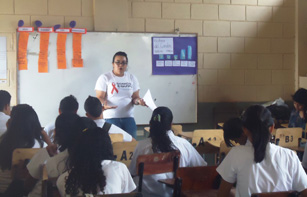
Outreach activity at a public school in Olanchito, a province in northern Honduras.
“In rural areas, most people still hold taboos and myths about HIV”, explains Sheila Serón, who has been an active volunteer since 2007. “While volunteering with the network I had the chance to inform girls that they could avoid HIV infection by using condoms in a correct and consistent manner, as well as emphasize the importance of taking an HIV test”.
The network also coordinates outreach activities to encourage young people’s participation. In the last two years volunteers have organized movie forums at which young people debate issues such as social inequalities, stigma and discrimination in relation to HIV. Such activities have become a common platform for young people to interact in a friendly environment and participate in discussions. In 2011 the Network used social media to mobilize young people to participate in a photo art competition to show the link between HIV and human rights. The best photographs became part of a travelling photo exhibition and toured several cities in Honduras. This initiative was supported by the Casas de la Cultura (Institutions of Culture).
Young people have become major actors in their own response. The network supported UNAIDS and other partners in the organization and follow-up of key national events, including a wide range of activities during World Aids Day in 2010 and 2011, which were planned in partnership with the Ministry of Health, civil society organizations and people living with HIV.
Network volunteers come from a broad range of cultural, social and geographical backgrounds and reflect the diversity of Honduran society. Volunteers are encouraged to visit civil society and community-based organizations. Marianela Muñoz spent one month in a community-based organization caring for AIDS-orphaned children. “With this experience I got a glimpse of the actions I want to take to help my country”, she says.

Young people have become major actors in their own response. Volunteers engaged with mime artists in the streets of the capital city showing messages related to HIV during World AIDS Day 2010.
“Taking part in the UNAIDS Volunteer Network has opened my mind to the fact that we all have the right to be healthy, regardless of gender, sexual orientation, or religion, and that HIV should not be a reason to stigmatize or discriminate others. I have learned so much alongside my fellow volunteers at UNAIDS; now I am informed and empowered”, says Violeta Mora, another volunteer with the network.
In 2011, the programme was awarded the National Cultural Volunteer Award by The Ministry of Culture, The Spanish Embassy in Honduras, UNDP and UNV for its outstanding work as a young volunteer organization that promotes social development.
Related

Feature Story
Empowering marginalized and vulnerable communities in Namibia
13 August 2012
13 August 2012 13 August 2012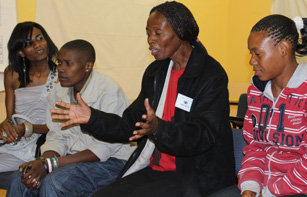
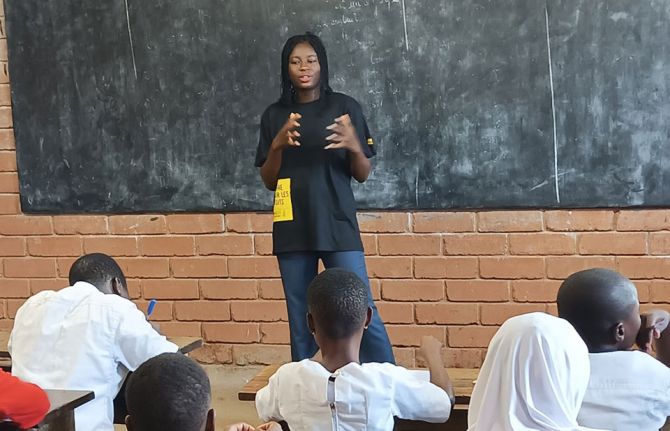
Thusnelda Guruses, Project Coordinator from Hui Da Re, a community-based organization, encourages participants through storytelling to critically think about multiple concurrent relationships and HIV transmission.
The Khaibasen Community Project in Namibia has been engaged in raising awareness, providing education and giving a voice to vulnerable communities, especially girls who are engaging in transactional sex to make ends meet.
“I have felt emotionally and mentally empowered by the talk sessions which the Khaibasen Community Project has given us. The psycho-social support group meetings gave me important knowledge about my rights and how to take care of myself,” said Gan-Gans, a 24-year-old sex worker and a regular attendee of these meetings. The community project supports vulnerable women and girls in the informal settlement of Keetmanshoop, to enable them to better articulate their rights and deal with critical issues, such as sexual and reproductive health, gender-based violence, and HIV prevention, care and treatment services.
“With the financial and capacity building support provided by UNAIDS we are able to reach vulnerable women in informal settlements in Keetmanshoop,” said Desiree Haman, Coordinator of the Khaibasen Community Project. The project provides HIV-related advice, training and support to women, including sex workers, transgendered women, lesbians and young people, especially in the Karas region.
This fund is extremely important and without this financial and capacity building support grassroots groups working with communities in informal settlements would not be able to sustain their work
Jennifer Gatsi Mallet, Director of Namibia Women’s Health Network
Information-sharing meetings and workshops are also organized to assist women to understand their basic rights in accessing public services and provides training on how to mobilize and educate other women in their settlements. “This fund is extremely important and without this financial- and capacity-building support grassroots groups working with communities in informal settlements would not be able to sustain their work,” said Jennifer Gatsi Mallet, Director of Namibia Women’s Health Network. According to Ms Mallet, community programmes supported by UNAIDS have seen significant progress in scaling up and promoting community ownership, leadership and continuity in changing small community-based groups, especially those led by young women and men.
Since 2002, UNAIDS has given small grants to more than 175 organizations in Namibia, which are implementing catalytic HIV prevention and care activities at the grassroots level. Namibia’s HIV response for communities in informal settlements continues to be primarily funded by development partners. The Government of Finland has donated 800,000 euros to UNAIDS for the implementation of grassroot level activities in southern Namibia during this period. Monitoring and evaluation mechanisms have also been put in place to ensure the funds are appropriately utilized to assist the poorest and the most vulnerable communities.
“Finland's human rights-based approach to development aims to ensure that even the poorest know their rights and are able to exercise them,” said Anne Saloranta, Chargé d'Affaires at the Embassy of Finland in Namibia. “Development entails more and better possibilities for people to influence and enhance their own lives.”
In 2011, this programme (also known as Small Grant Fund) was repositioned to fill a strategic niche in the HIV-related funding landscape in Namibia: to provide funding and capacity building support to community-based organisations working to address the vulnerability to HIV of marginalised populations in informal settlements in the Khomas, Karas and Hardap region. Special focus is placed on young women and girls, people with disabilities and people living with HIV.
Finland's human rights-based approach to development aims to ensure that even the poorest know their rights and are able to exercise them
Anne Saloranta, Chargé d'Affaires at the Embassy of Finland in Namibia
The programme has shown that it does not take billions of dollars to make a difference in people´s lives. Support provided by the initiative has enabled these organizations to reinforce the grassroots interventions to address issues relate to HIV at the community level.
Another beneficiary has been the Namibian National Association of the Deaf (NNAD). The association serves as an innovative, responsive and dynamic organization to ensure the protection and promotion of the rights, needs and concerns of deaf people in Namibia. Often marginalized due to their disability, they bring renewed hope for the deaf community in Namibia. They have been increasing awareness on issues affecting deaf people at all levels from making information available to raising awareness about issues on sexual reproductive health, family planning and gender based violence. A major goal is to reduce the burden of HIV in deaf communities in the Khomas, Hardap and Karas regions. Paul Nanyeni, Chairperson for NNAD, said he is thankful for the support. “We are happy with UNAIDS because we are able to offer the deaf community training on HIV and gender-based violence, which could otherwise be a big catastrophe in their lives,” said Mr. Nayeni. “With this support, the Association can provide better services for the deaf.”
Feature Story
Putting young people at the centre of the response to HIV
10 August 2012
10 August 2012 10 August 2012
This year, in the lead up to International Youth Day, the United Nations is organising six live Google+ Hangouts, aimed at sharing information and good practices, and to provoke discussion on the role of the UN, Member States and Civil Society on how to better develop partnerships with young people. One of the hangouts focuses specifically on Sexual and Reproductive Health.
International Youth Day will be celebrated around the world this Sunday, August 12, reminding us of the crucial role that today’s young people play in the global response to AIDS. Young people between the ages of 15-24 are the group most affected by AIDS, accounting for 40% of all adult HIV infections. About 5 million are living with HIV worldwide, with over 2,400 15-to-24-year-olds infected every day in 2011. Although these numbers show a decrease in HIV prevalence among young people in the last decade, there clearly remains a lot of work to be done.
There have been many positive changes in sexual behaviour among young people, with a significant decrease in the number of young people having multiple partners or having sex before their 15th birthday, as well as increased condom use – but this is not true of all countries. According to the most recent population-based surveys in low- and middle-income countries, only 24% of young women and 36% of young men have an adequate knowledge of HIV prevention and transmission. This lack of education is a cause for concern, particularly in areas that have an enduring high prevalence of HIV.
All young people, particularly those living with HIV, should have access to youth-friendly services for reproductive health and HIV prevention and care, with appropriate services for young women, who represent 63% of all youth living with HIV. Education is essential: when young people are given the tools and incentives to adopt safe behaviours, they consistently demonstrate the capability to make responsible choices, and encourage others to do the same.
Several youth activists reiterated the importance of involving young people in decision-making roles in the fight against AIDS. They called on governments globally to abolish travel restrictions for PLHIV, decriminalize LGBTI populations and ensure universal access to health services for all populations.
Gabriel Munene, volunteer at the International AIDS Conference, Washington DC, July 2012
Experience shows that HIV programmes that affect young people are more effective when youth are engaged as partners and can participate in their design and implementation. The 2011 Political Declaration on HIV/AIDS called on all countries to support the active involvement and leadership of young people in the global, regional and national responses. Although 150 countries have already reported the inclusion of young people in their national AIDS strategic plans, only 91 of them have allocated budgets for youth programmes and activities. By involving young people in the decision-making process, we are empowering the people who are more aware than anyone of what needs to be done.
This year’s International AIDS Conference, held in Washington at the end of July, saw a number of events focusing on young people’s involvement in the AIDS response, including a Pre-Conference organized by YouthForce, a Youth Pavilion, and the launch of Youth Score with UNAIDS Executive Director Michel Sidibé.
Young people had the opportunity to voice their concerns regarding their role in the epidemic and what has to be done. Gabriel Munene was one of the many young people volunteering at the conference: “The Youth Pavilion was buzzing with activity throughout the conference and there was a high participation of young people from all around the globe. Several youth activists reiterated the importance of involving young people in decision-making roles in the fight against AIDS. They called on governments globally to abolish travel restrictions for PLHIV, decriminalize LGBTI populations and ensure universal access to health services for all populations.”

This year’s International AIDS Conference, held in Washington DC at the end of July, saw a number of events focusing on young people’s involvement in the AIDS response, including Youth Score, which attracted more than 200 young people who came out to participate in workshops and clinics with Lorrie Fair of the U.S. Women’s National Soccer Team; Steve Zakuani of the Seattle Sounders FC; and Michael Adams, former NBA player. Credit: UNAIDS/Y.Gripas
UNAIDS recognises the importance of working with young people in order to achieve an AIDS-free generation, and has introduced a number of programmes aimed at empowering young people and involving them in the development of plans that affect them. CrowdOutAIDS was launched in October 2011 as a collaborative policy that enabled young people to define a set of recommendations on how the UNAIDS Secretariat can work more effectively to engage young people in the HIV response, an initiative which saw the participation of over 5,000 young activists from 79 countries. Last month in Washington, CrowdOutAIDS partnered with YouthForce to launch A Declaration for Change: How Young People will achieve an AIDS-free generation, encouraging young people to collaborate, through social media, on a list of priorities which will lay the foundation for how youth organizations, networks and activists will work together to reach the 2015 goals of the Political Declaration.
This year, in the lead up to International Youth Day, the United Nations is organising six live Google+ Hangouts, aimed at sharing information and good practices, and to provoke discussion on the role of the UN, Member States and Civil Society on how to better develop partnerships with young people. One of the hangouts focuses specifically on Sexual and Reproductive Health.
Young men and women, who represent one fifth of the world’s population, are the key to achieving the UNAIDS vision of zero new HIV infections, zero discrimination, and zero AIDS-related deaths.
Related
Feature Story
Empowering people with hearing impairments: a step towards three zeros
09 August 2012
09 August 2012 09 August 2012
Ephraim Baliya, Board Chairperson of the Zimbabwe National Association for the Deaf (ZIMNAD) explaining the use of signage to develop the HIV dictionary.
When Marwei (24) became pregnant she could not disclose her condition due to cultural taboos associated with pregnancy out of wedlock in Zimbabwe. To make her situation worse she was born with a speech and hearing impairment. Marwei died at age 25 neglected at her mother’s rural homestead. She never disclosed who had made her pregnant. Negative traditional beliefs leave people with disabilities unprotected from abuse by family members, relatives and other sexual predators. To make the situation worse people with hearing and speech impairments are often left out in HIV programmes.
The Forgotten Tribe, People with Disabilities in Zimbabwe published by Progressio in 2006 highlights that “Awareness-based interventions that have strong information, education and communication components have failed to look at the needs of those with visual and hearing impairments and those that are mentally disabled or severely physically disabled”.
In some African cultures, it is often difficult to discuss or freely verbalise sexual topics but sign language provides a new opportunity to deliberate on HIV issues openly without fear of taboo. Yet in Zimbabwe, this opportunity has been essentially under-utilised as people with speech and hearing impairments are often portrayed or perceived as perpetual minors with little sexual desires or none.
Despite the significant drawbacks in Zimbabwe, speech and hearing impaired adults have undertaken a major first step to self-empowerment by taking the lead efficiently to respond to their own unique needs that determine their access to HIV services through their organisation, the Zimbabwe National Association for the Deaf (ZIMNAD).
We have so many people with hearing challenges and the dictionary will go a long way in improving our communication on HIV issues
Ephraim Baliya, Board Chairperson of the Zimbabwe National Association for the Deaf
“HIV awareness programmes rarely take into account the specific needs of people with hearing and speech impairments,” said Christine Sithole, National Director of ZIMNAD.
“Providing information in itself is not adequate to change attitudes and behaviour, there is need to translate this information to suit the context and personal experiences of their lived realities,’ she added.
As a first creative step, the local organisation with assistance from the National AIDS Council and UNAIDS brought together instructors from all ten provinces of the country to develop a nationally harmonised HIV sign language dictionary that will serve as a strong basis for a specific national HIV programme.
‘We have so many people with hearing challenges and the dictionary will go a long way in improving our communication on HIV issues” said Ephraim Baliya, Board Chairperson of the Zimbabwe National Association for the Deaf, who has both a speech and hearing impairment.
According to Progressio, Zimbabwe has a population of 1.4 million disabled persons although no information is available on how many people have speech and hearing impairments.
“We want the vision of the three zeroes to be realised and everyone to be taken on-board. Many people with hearing challenges have been left behind,” urged Sithole. “This is a step forward towards achieving the three zeroes. We cannot achieve this vision while a significant part of the population is excluded.”
Raymond Yekeye, the Operations Director of the National AIDS Council, reiterated that the Government is fully aware of the unique needs of people with disabilities. He said that the Zimbabwe National AIDS Strategic Plan II (2011-2015) has been developed to promote an enabling policy and legal environment for vulnerable populations.
Hearing impairment and deafness is a major disability, which limits an individual's access to education, employment and general social integration. The World Health Organisation (WHO) estimated that 4.5% of the populations in developing countries have disabling hearing impairment.
Related

Feature Story
Women everywhere have the right to informed consent
08 August 2012
08 August 2012 08 August 2012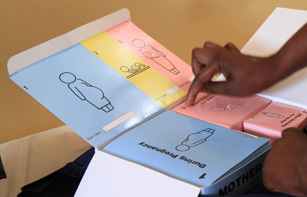
ARV treatment for pregnant women. Credit: UNAIDS/J.Naar
When in January 2008, staff from the International Community of Women living with HIV (ICW) initiated a series of focus group discussions with women living with HIV in Namibia about their experiences they were far from imagining what they would uncover. Of the 230 women interviewed, most reported some form of discrimination in health services and nearly 20% stated that they had been coerced or forced into sterilization. Several women reported being required to sign consent forms while in severe pain during or after labour and not having been properly informed prior to sterilisation. “We were shocked by what we heard” said Jenifer Gatsi-Mallet of the ICW and Director of Namibia Women’s Health Network. “The ability to reproduce plays a major role in women’s status and position in society”.
The publication of the findings of the Namibian study brought renewed attention to coercive practices against women living with HIV and led to similar investigations in other countries and regions. Since 2008, cases of forced sterilisation have been reported, among others, in Chile, the Dominican Republic, Kenya, Mexico, South Africa, Venezuela and Zambia. A multi-country study conducted in Bangladesh, Cambodia, India, Indonesia, Nepal and Vietnam by the Asian Network of People living with HIV also found that “overall, 30% of women surveyed were encouraged to consider sterilisation because of their HIV-positive status”.
“There is no justification for the forced sterilisation of women living with HIV,” said Michel Sidibé, Executive Director of UNAIDS. “With access to antiretroviral therapy, women living with HIV can continue living healthy and productive lives and bear children who are free from HIV.”
30 years of increased awareness on HIV and of significant breakthroughs in HIV prevention, treatment and care have resulted in enormous progress in reducing new HIV infections and expanding access to HIV services. In the last two years alone, new infections in children have fallen by an estimated 24% as more pregnant women living with HIV have had access to antiretroviral therapy which reduces the risk of transmitting the virus to their child to below 5%.
There is no justification for the forced sterilisation of women living with HIV. With access to antiretroviral therapy, women living with HIV can continue living healthy and productive lives and bear children who are free from HIV.
UNAIDS Executive Director Michel Sidibé
Despite this progress, stigma, discrimination and other human rights violations based on a person’s HIV status are still proving to be major barriers to scaling up the response.
Women who are living with HIV remain particularly vulnerable to human rights abuses, including unlawful breaches of confidentiality, denial of health services, compulsory HIV testing and in some cases forced sterilisation.
All too often, women living with HIV lack the means and support to challenge violation of their human rights. However in Namibia, with the help of the Legal Assistance Centre, a local human rights organisation, three women living with HIV took legal action for having been sterilised without their informed consent.
After four years of proceedings, the High Court of Namibia ruled on 30 July 2012 that medical practitioners have a “legal duty to obtain informed consent from a patient” and that consent obtained during labour does not represent informed consent. Although the Court found no link between the sterilisations and the women’s HIV status, its ruling clearly asserts the right of all individuals to informed consent to medical procedures including sterilisation. The case has attracted widespread global attention from the media, human rights groups and organisations working on women’s issues and HIV. The ruling has been hailed as a step forward in recognising the reproductive health rights of all women regardless of their HIV status.
“This is a landmark decision for women in Namibia and around the world,” said Mr Sidibé. “Countries must investigate and address all reports of forced sterilisation and other coerced practices against women, including women living with HIV. We will not reach our common goals for the AIDS response if people lose trust in the health care system because of fear of coercion.”
Related
Feature Story
Jamaica’s new HIV strategy: “Making Human Rights Real”
06 August 2012
06 August 2012 06 August 2012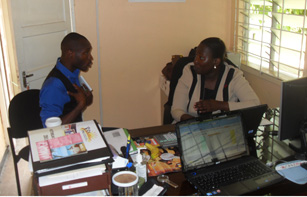
Dane Richardson (left), Programme Development Manager, and Kandasi Levermore, Executive Director of Jamaica AIDS Support for Life (JASL) discuss the use of the Human Rights Costing Tool while participating in the pilot project.
Jamaica’s new National HIV Strategic Plan (NSP) 2012-2017 focuses on an enabling environment and human rights. The plan was developed in 2011 through a highly consultative process involving the government, private sector, faith-based organizations, youth, people living with HIV and international development partners.
The Jamaica NSP makes human rights real. NSPs often include human rights as guiding principles or cross-cutting priorities. However, the Jamaica NSP includes concrete and costed programmatic actions to support human rights, reduce stigma and create an enabling legal environment for the HIV response. This was made possible with the use of the new UNAIDS Human Rights Costing Tool (HRCT).
The costing of the NSP was undertaken by the National HIV/STI Programme (NHP) with the technical support of UNAIDS and involved the use of UNAIDS financial tools including the National AIDS Spending Assessment (NASA), Resource Needs Model (RNM) and the HRCT.
According to Dr. Pierre Somse, UNAIDS Country Coordinator for Jamaica, the Bahamas, and Belize: “The Human Rights Costing Tool is a powerful connector which brings together all stakeholders working on human rights and facilitates effective dialogue among them while providing measurable targets. It allows people to see what the human-rights-based approach is in reality. It therefore makes it a tangible component of strategic planning while better articulating what the human-rights-based campaign is.”
The Human Rights Costing Tool was included in the process of costing of the NSP for three reasons: to estimate both spending and the resource needs on human rights more precisely so as to inform the Resource Needs Model (RNM); to promote the use of the tool by the civil society and stakeholders working on human right; and to facilitate the participation of civil society and stakeholders working on Human Rights in the development of the NSP.
The Human Rights Costing Tool is a powerful connector which brings together all stakeholders working on human rights and facilitates effective dialogue among them while providing measurable targets
Dr. Pierre Somse, UNAIDS Country Coordinator for Jamaica, the Bahamas, and Belize
The process to cost human rights activities involved several stages. Two workshops were organized, the first one with a core group of technicians and the second one with a broader group of stakeholders including representatives from civil society, international NGOs, members of the UN Joint Team, members of the academic sector, leaders of networks of people living with HIV & AIDS, representatives of Key Populations, and the directors of the National HIV/STI Programme. These workshops provided an opportunity for discussion around the process for the incorporation of the tool into the national HIV response, to seek buy-in and to streamline its application to the human rights component of the Jamaica National HIV Strategic Plan 2012-2017. Participating institutions found the tool useful and user-friendly and made the commitment to streamline the use of the tool so as to have a real estimate of the level of human rights spending in their own organizations and also as part of a collective effort to estimate the level of human rights spending and resource needs in the Jamaican response generally.
Some challenges were however encountered in the application of the tool. These included the limited number of programmes and activities available for input within the tool. Although the composition of the programmes and activities is customizable, the restriction to 7 Programmes and 6 Activities per programme was found to be a hindrance in some instances as simply reformulating the title of the programme or activity did not always successfully encapsulate the scope of the institution’s programme or its corresponding activities. To overcome this, entities were encouraged to modify the ‘List Menu’ as much as possible so as to find the best fit for their respective Programmes and Activities and this is believed to have been the way to overcome this challenge.
Use of the HRCT also proved beneficial to the NASA process as well as the RNM process. It served as an incredibly useful data collection tool for the human rights costs of the response and facilitated the identification of significant gaps in resource estimates as well as informed the updates that were made to the NASA 2010-2011.
The HRCT was originally designed for use by individual organizations in the estimation of the cost of their human rights programmes. However, the stakeholders in Jamaica decided to adapt the tool to estimate costs of human rights activities at the national level by making a composite of costs. This was very useful in the NSP development process. Moving forward, there has been significant buy-in for the implementation of the tool for use by civil society stakeholders. This will involve the collection of data which will be aggregated and used to update the costing of the NSP. This process will culminate in a national validation meeting where the results will be shared and consensus will be reached on the national figure for costing human rights.
Resources
Feature Story
Investing into the future- Ending AIDS through eliminating new HIV infections among children in Zimbabwe
03 August 2012
03 August 2012 03 August 2012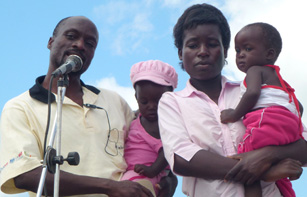
Mr and Mrs Chikonyora with their twins who have both tested negative for HIV.
Credit: UNAIDS
Madziva- Anoziva and Anotida Chikonyora are one-year old identical twins, born to a discordant couple (in which one person is HIV positive and the other is not) in Centenary, about 120 kilometres north of the capital of Harare. Smiling in the comforting hands of their parents, the twins have both tested negative for HIV - thanks to the government supported elimination of new HIV infections among children.
“We are grateful for the support that our community is receiving to prevent mother-to-child transmission. I also believe people should not be made dependent on long-term donations and subsistence, they should be empowered to establish their own projects,” said Innocent Chikonyora the father of the twins.
Elizabeth Tafira a friend of the Chikonyora family has a similar story. Their friendship dates back to the early 1990s when she was diagnosed with HIV and joined a support group for people living with HIV. According to Tafira much has changed since those days.
She said, “In the 1990s when I discovered my status there was little hope, treatment was very inaccessible, there was a lot of stigma and discrimination and delivering a baby was not an option for me.” She reckons lack of information as well as professional and community support stops women living with HIV from accessing services. “I was a little hesitant in the past to consider the options that became available for delivering babies without transmitting HIV,” confessed Elizabeth.
Elizabeth recently had a baby girl, Anashe, and is anxiously waiting for the results of the HIV test for her child. She enrolled in the government’s prevention of mother- to-child transmission of HIV (PMTCT) programme and is confident that the test will be negative and after the results she intends to visit the nearby health institution to speak to the some of medical staff who advised her against having a baby. “I want to show them that an HIV positive women can indeed have HIV negative babies.”
Zimbabwe’s government through the Ministry of Health and Child Welfare (MoHCW) and the National AIDS Council (NAC) is working with various partners at the community level to provide a broad range of HIV services.
The Zimbabwe National AIDS Strategic Plan II (2011-2015) prioritises PMTCT and aims to reduce the rate of mother to child transmission from 14% in 2010 to 7% in 2013 and less than 5% by 2015.
Chief Chiveso of Mashonaland Central Province in Zimbabwe says, despite the encouraging results, government authorities, communities and development partners should accelerate their efforts to reach more mothers with quality services.
“My people are no longer afraid of being tested. What we do not yet have are adequate services for HIV testing and counselling, CD4 count, TB screening and testing,” highlighted Chief Chiveso.
Information, education and behaviour change communication are also key elements of this effort, stressed the chief who added, “Home deliveries remain a challenge in addressing new infections in children.”