Feature Story
UNAIDS publication highly commended by British Medical Association
20 September 2012
20 September 2012 20 September 2012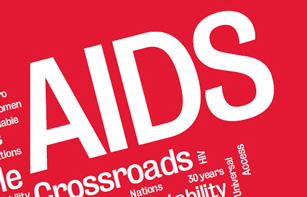
The British Medical Association (BMA) highly commended the UNAIDS publication AIDS at 30: Nations at the crossroads (AIDS at 30) at their annual Book Awards ceremony held in London on 13 September 2012. AIDS at 30 had been selected among more than 800 books and other documents and was competing in the public health category.
Evaluating the accuracy, currency, appropriateness, quality, originality and value of the publications, the judges considered AIDS at 30 as “an important book with great information.”
Launched ahead of the High Level Meeting on AIDS that took place in New York in June 2011, AIDS at 30 contains scientific analysis, personal insights and the results of extensive national and regional consultations with governments and civil society organizations working in the AIDS response.
Marking the 30 years of AIDS, the report takes stock of the changes occurred in the AIDS epidemic and responses since the condition was first diagnosed in 1981. It also features commentaries from 15 leaders in the global AIDS response, including South Africa’s President Jacob Zuma, former United States President Bill Clinton, former President of Brasil Luiz Inácio Lula da Silva, singer Angelique Kidjo and former UN Secretary-General Kofi Annan.
It is important for us to continue innovating in order to provide strategic information to the global AIDS community that is both accurate and visually enticing
UNAIDS Director of Evidence, Innovation and Policy, Bernhard Schwartlander
AIDS at 30 covers a wide range of areas, including the results achieved by HIV prevention efforts, the record number of people starting lifesaving treatment and the decline in resources for HIV. It also drew attention to the significant challenges remaining such as the gender inequalities and the increasing HIV prevalence among key populations at higher risk of infection.
The publication of the report was coordinated by UNAIDS Director of Evidence, Innovation and Policy, Bernhard Schwartlander. “We are very pleased that AIDS at 30 has been recognized by our peers as a valuable resource for information on the AIDS epidemic,” said Mr Schwartlander. “It is important for us to continue innovating in order to provide strategic information to the global AIDS community that is both accurate and visually enticing,” he added.
The BMA is a medical doctors’ professional organization established to look after the professional and personal needs of its members. The BMA represents doctors in all branches of medicine throughout the United Kingdom.
Publications
Publications

Feature Story
UNAIDS joins with Luxembourg to respond to the humanitarian crisis in the Sahel
19 September 2012
19 September 2012 19 September 2012
L to R : Mrs Fatoumata Daou, Collectif des Femmes pour l’éducation, la santé familiale et l’assainissement Yiriwaton, Minister of Cooperation and Humanitarian action Marie-Josée Jacobs and UNAIDS Executive Director, Michel Sidibé.
Credit: Ministère des Affaires étrangères du Luxembourg
The humanitarian crisis in the Sahel is affecting the lives of millions of people across the region. In eight countries stretching from Chad in the East to Senegal in the West, countries, communities and families are faced with a combination of political instability, drought, poverty, high grain prices, environmental degradation and chronic underdevelopment which has resulted in high levels of malnutrition and insecurity.
“The crisis is devastating the region I grew up in,” said the Executive Director of UNAIDS Michel Sidibé, originally from Mali. “Across the Sahel, I have family and friends whose lives, and communities and countries are directly affected. I will do everything I can to bring attention and resources to help end the crisis.”
There are many complex issues surrounding the crisis and similarities can be drawn with that of the impact and spread of HIV. Like AIDS, it is a humanitarian crisis with political and social origins, and people living with HIV and in need of treatment are particularly vulnerable.
The Grand Duchy of Luxembourg is one of the many countries working hard to further its relief efforts in the region. As part of its annual ‘Assises’, it held a special session on food insecurity in the Sahel. The Assises is a two day session held once a year which brings together politicians, members of the Commission of Foreign affairs, leaders from the departments of Development and Cooperation, representatives from partner countries and around 90 non-governmental organisations in Luxembourg to discuss current pressing issues in the humanitarian agenda.
I will do everything I can to bring attention and resources to help end the crisis
UNAIDS Executive Director, Michel Sidibé
This year’s discussions focused on three main topics; food insecurity in the Sahel; physical and political insecurity and judicial insecurity. The Executive Director of UNAIDS Michel Sidibé was invited to open the session on food insecurity.
“I am here to support Luxembourg’s efforts to give attention and support to the crisis in the Sahel. Luxembourg is a strong supporter of UNAIDS, but I am even bigger supporter of Luxembourg’s leadership on this particular issue,” said Mr Sidibé.
The United Nations Secretary-General Ban Ki-Moon has called for all United Nations Agencies to coordinate, advocate and advance the UN’s response to the crisis. The Secretary-General has called for a special meeting during the United Nations General Assembly to further advance the UN’s work in alleviating the human suffering caused by the disaster.
During his visit to Luxembourg Mr Sidibé had a chance to discuss both developments in the response to HIV and the issues surrounding the Sahel crisis with the Minister of health, Mars Di Bartolomeo and the Minister of Cooperation and Humanitarian action Marie-Josée Jacobs who officially opened the Assises.
For a number of years Luxembourg has been one of UNAIDS’ most important donors––providing funding for activities essential to an effective response to HIV. Earlier this year UNAIDS signed a memorandum of understanding with Luxembourg to further consolidate the partnership and strengthen efforts to end the disease.
Related

Feature Story
Finding an AIDS Vaccine in the Context of Combination Prevention
18 September 2012
18 September 2012 18 September 2012
William Snow, Executive Director of the Global AIDS Vaccine Enterprise, organizer of the conference, speaking during the opening ceremony. Credit: Rick Friedman
From 9-12 September, more than a thousand HIV researchers and advocates, meeting in Boston for the AIDS Vaccine 2012 Conference, discussed the contribution of vaccine science to achieving the goal of zero new HIV infections in an increasingly complex HIV prevention landscape.
Several HIV prevention approaches such as male and female condom use, voluntary medical male circumcision, prevention of new HIV infections in children, post-exposure prophylaxis (PEP), pre-exposure prophylaxis (PrEP) and treatment as prevention, are now established tools to enable people to avoid exposure to HIV or to reduce their infectiousness. Modelling studies predict that by scaling up access to strategic combinations of these approaches that are adapted to local needs, national HIV programmes can significantly reduce the number of new HIV infections.
Do we need a vaccine?
Despite recent evidence that HIV treatment prevents onward transmission of HIV as well as the fact that vaccine discovery and development is costly in time and funding (US$845 million in 2011 alone), leaders from across the spectrum of HIV research attending the conference unanimously agreed on the need to continue the quest for an HIV vaccine.
Our knowledge is more sophisticated and moving much faster toward approaches and products that have a high likelihood of success in clinical trials
Professor Glenda Gray, Executive Director of the Perinatal HIV Research Unit, University of Witwatersrand and Director of the HIV Vaccine Trials Network Africa programmes
Professor Myron Cohen of the University of North Carolina at Chapel Hill, who led the multi-country study by the HIV Prevention Trials Network that proved the efficacy of AIDS treatment for prevention (the HPTN 052 study), said that scale-up of treatment is both a human rights imperative and an effective public health measure. At the same time, he threw his full weight behind the quest for a more effective HIV vaccine. “We recognize that suppressive treatment of HIV infection drastically reduces the probability of onward HIV transmission, which should eventually slow the spread of HIV. But the urgent and widespread treatment of HIV is not a substitute for a preventive vaccine. We need an HIV vaccine,” said Dr Cohen.
Vaccine trials
The RV144 vaccine trial in Thailand, which tested a combination of two vaccines, reported a modest 31% efficacy in 2009. However, it sparked a wide array of new questions about how and when the human immune system may respond to HIV. “Our knowledge is more sophisticated and moving much faster toward approaches and products that have a high likelihood of success in clinical trials,” said Professor Glenda Gray, Executive Director of the Perinatal HIV Research Unit, University of Witwatersrand and Director of the HIV Vaccine Trials Network Africa programmes. Currently there is only one HIV vaccine trial under way, which is testing a combination of experimental vaccines in men who have sex with men and transgender women in the United States (HVTN 505). Additional studies are planned, including three studies to pursue an improvement on the RV144 results in South Africa and Thailand, but these are not likely to begin before 2014.
Synergies between vaccine and non-vaccine prevention strategies
According to scientists at the conference, to evaluate any new technologies in human trials, the new product first must be proved safe, and then must be tested against the standard of care or prevention. They noted that, as the standard evolves to include new tools such as medical male circumcision, PrEP and early AIDS treatment, more complex trial designs are needed to evaluate the efficacy of the new technology, and larger sample sizes will be required.
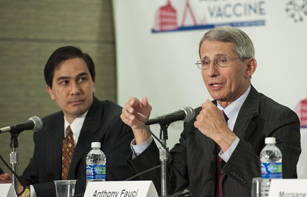
L to r: Dr Dan Barouch, Professor of Medicine at Harvard Medical School, Chief of the Division of Vaccine Research at Beth Israel Deaconess Medical Center, and Co-Chair of the AIDS Vaccine 2012 conference and Dr Anthony Fauci, Director of the National Institute of Allergy and Infectious Diseases. Credit: Rick Friedman
Dr Anthony Fauci, Director of the National Institute of Allergy and Infectious Diseases pointed out that given the availability of other partially effective prevention strategies, the world may not need a vaccine that provides 95% protection. According to him, a vaccine that reduces risk in combination with other prevention strategies may be sufficient. Researchers at the conference said that there are also indications that antiretroviral-based prevention approaches could increase the vaccine effects or offer protection during the post-vaccination period when the immune system has to ramp up production of a protective antibody response.
Building knowledge one trial at a time
Participants agreed that large scale production of a prophylactic HIV vaccine is well over a decade away under the best of assumptions. Vaccine discovery, development, obtaining official license and scaling up production and delivery take many years and large investments. Mathew Rose, Policy Chair for the Young Black Gay Men’s Leadership Initiative, used a boxing metaphor to explain the challenge ahead. To sustain enthusiasm and commitment until a more effective AIDS vaccine is discovered, “we need to stop waiting for a single, knock-out punch, and instead, we must perfect the art of the jab,” said Mr Rose. “Each clinical trial may produce the final answer, or it may open up more key questions,” he added. According to Mr Rose, each new question will require a strategic study—a new “jab” that will build general knowledge about how the human body recognizes and fights infection, and will build the scientific capacity to finally outwit HIV.
External links
External links

Feature Story
UNICEF report: AIDS remains a leading cause of under-five deaths despite progress
14 September 2012
14 September 2012 14 September 2012
A new progress report released by UNICEF titled "Committing to Child Survival: A Promise Renewed" is showing a sharp drop in the estimated number of deaths among children under the age of five worldwide. This number fell from nearly 12 million in 1990 to an estimated 6.9 million in 2011.
Releasing the report, UNICEF Executive Director Anthony Lake said, “The global decline in under-five mortality is a significant success that is a testament to the work and dedication of many, including governments, donors, agencies and families.”
The report combines mortality estimates with insights into the top killers of children under five and the high-impact strategies that are needed to accelerate progress.
An estimated 3.4 million children under 15 years old were living with HIV in 2011, 91% of them in sub-Saharan Africa. In the same year, about 230,000 died of AIDS-related causes. According to the report, access to antiretroviral therapy (ART) was still low in most countries, with only about 28% of children who needed treatment receiving it in 2011, in contrast to the 57% coverage among adults. However, the report was optimistic about progress being made especially in extending antiretroviral medicines to prevent mother-to-child transmission (PMTCT) of HIV.
In high-income countries, access to PMTCT services has cut rates of transmission to about 2%. In low- and middle-income countries however, 57% of an estimated 1.5 million pregnant women living with HIV in 2011 received antiretroviral therapy to prevent HIV transmission to their babies. Nonetheless the report notes that progress is being made in nearly every country.
Millions of children under five are still dying each year from largely preventable causes for which there are proven, affordable interventions
UNICEF Executive Director Anthony Lake
There is growing momentum behind a concerted scale-up of coverage of PMTCT and paediatric HIV care and treatment services. This success follows the launch in June 2011 of the “Global Plan towards the elimination of new HIV infections in children by 2015 and keeping their mothers alive”.
There are also new and emerging technologies which improve diagnosis and treatment of infants and young children. However, the report recommends a simplification of treatment regimens and medicines, as well as programmatic innovations for identifying children living with HIV and retaining them on antiretroviral therapy.
During the launch, Mr Lake also talked about "unfinished business", saying, "Millions of children under five are still dying each year from largely preventable causes for which there are proven, affordable interventions.”
Greater efforts are particularly required in populous countries with high mortality, the report says. In addition to medical and nutritional factors, improvements in other areas including education, access to clean water and sanitation, adequate food, child protection and women’s empowerment will also improve prospects for child survival and development.
External links
External links
Publications
Publications
Feature Story
Ukraine to lead the AIDS response in Eastern Europe
13 September 2012
13 September 2012 13 September 2012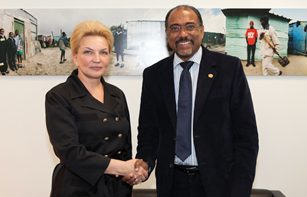
Vice-Prime-Minister and Minister of Health of Ukraine, Raisa Bogatyrova and UNAIDS Executive Director Michel Sidibé. UNAIDS Headquarters, Geneva. 12 September 2012.
Credit: UNAIDS
A senior delegation from Ukraine led by the Vice-Prime-Minister and Minister of Health, Raisa Bogatyrova met with UNAIDS Executive Director Michel Sidibé at the UNAIDS Headquarters in Geneva on 12 September 2012. During the meeting, they discussed the existing challenges and opportunities for an effective HIV response in the country.
With an HIV prevalence among people who inject drugs of 21.5 %, Ukraine is experiencing the most severe HIV epidemic in Eastern Europe. Mr Sidibé commended Ukraine’s efforts to address the situation and highlighted the positive outcomes resulting from the availability of harm reduction services, including needle-exchange and opioid substitution therapy for people who inject drugs.
“I am very impressed by the impact achieved by harm reduction programmes in Ukraine,” said Mr Sidibé. “This is clear evidence that a combination of leadership, good policies and resources, can halt even the most severe HIV epidemic,” he added. Mr Sidibé also welcomed the Government’s commitment to provide adequate financing for the sustainability of such prevention programmes. Currently, harm reduction programmes are externally funded and implemented by civil society organizations.
Ukraine can only overcome this epidemic in partnership with international organizations and civil society
Vice-Prime-Minister and Minister of Health of Ukraine, Raisa Bogatyrova
“Ukraine can only overcome this epidemic in partnership with international organizations and civil society,” said Ms Bogatyrova. The national AIDS response in Ukraine—one of the most comprehensive in Eastern Europe according to UNAIDS—is characterized by a strong inclusion and collaboration between national and international partners.
The Vice-Prime-Minister also highlighted the link between HIV and national security. “HIV has a disproportionate impact on young people. From the point of view of the national security – HIV is Ukraine’s top priority.”
The Government of Ukraine has increased the domestic investments for HIV by 10-fold in the last five years. During the meeting, ideas were exchanged on how to enhance the impact of HIV investments, scale-up HIV treatment, which currently only covers 25% of the people eligible and how to make procurement of HIV drugs more efficient.
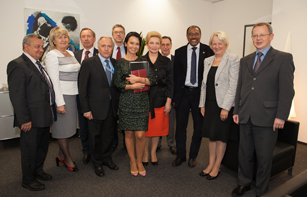
Members of the Ukrainian delegation visiting UNAIDS. UNAIDS Headquarters, Geneva. 12 September 2012.
Credit: UNAIDS
Mr Sidibé expressed the hope that Ukraine as a large, middle-income country in the heart of Europe could serve as a model to other countries in the region for the delivery of HIV prevention, treatment, care and support services.
The preparations for the upcoming visit to Ukraine of a delegation of the UNAIDS Programme Coordinating Board (PCB) on 4-5 October 2012 were also discussed. The first visit of the PCB to Ukraine will be led by the UNAIDS Deputy Executive Director, Management and Governance, Jan Beagle. The aim of the visit will be to learn about the country’s National AIDS Programme, which is currently being revised, as well as to experience first-hand the progress made in the AIDS response.
Related
 UNAIDS expands humanitarian support in Ukraine
16 September 2026
 Ukraine: Keeping people in care
23 February 2026
 Women, HIV, and war: a triple burden
12 September 2025
Feature Story
Breaking the cycle of stigma and discrimination in rural Uganda
10 September 2012
10 September 2012 10 September 2012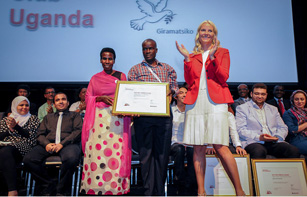
Her Royal Highness Crown Princess Mette-Marit of Norway presents the Red Ribbon Award for Stopping new HIV infections in children and keeping mothers alive, women's health to the Giramatsiko Post Test Club. XIX International AIDS Conference (AIDS 2012), Washington D.C. Credit: IAS/Ryan Rayburn
Justine, a 38-year-old Ugandan woman, tested positive for HIV during an antenatal visit at the local health centre when she was pregnant with her fourth child. After disclosing her HIV status to her husband, he left home and never came back.
She did not go through the pregnancy alone though. Justine had the support from her peers at Giramatsiko Post Test Club, a grassroots organization established in 2002 in Kabwohe, Uganda.
The organization was set up by seven women living with HIV with the aim to empower and educate their peers about HIV prevention, treatment, care and support. In addition to focusing on their health and physical well-being, Giramatisko also empowers women to understand their rights to health services.
Finding out you are HIV-positive brings physical and spiritual distress and the accompanying shame and discrimination have prevented many individuals from seeking treatment and leading a productive life
Fara Twinamatsiko, founder and chairperson of Giramatsiko
“Finding out you are HIV-positive brings physical and spiritual distress and the accompanying shame and discrimination have prevented many individuals from seeking treatment and leading a productive life,” notes Fara Twinamatsiko, a founder and chairperson of Giramatsiko.
A peer educator from Giramatsiko referred Justine to a health facility during her pregnancy where she received antiretroviral drugs to prevent HIV transmission to her child. The drugs helped ensure that Justine gave birth to a healthy, HIV-negative baby.
With a small staff and dozens of volunteers, the Giramatsiko Post Test Club currently reaches out to women in 19 centres in the Sheema district of western Uganda where they provide emotional and psychological support, HIV testing and counselling as well as referring women to health centres to access antiretroviral medicines, antenatal care and other services.
Countering stigma and discrimination
Though stories like Justine’s are not uncommon in Uganda—and in many other parts of the world—there are signs of hope as individuals and communities take action to counter HIV related stigma, discrimination and harmful social norms.
The Giramatsiko founders have confronted discrimination head-on by disclosing their own HIV status. In doing so, they have helped hundreds of other men and women in Uganda, young and old, openly discuss their experiences. They are breaking taboos and challenging the stigma associated with HIV.
“We have a very conservative attitude towards HIV in our community, but no social problem can be solved without open discussion and education,” says Tumushabe Sedrida, Coordinator at Giramatsiko.
According to the 2011 Uganda AIDS Indicator Survey, HIV prevalence in Uganda increased from 6.4% in 2004-5 to 6.7% in 2011. To-date, the HIV prevalence among women in the age group of 15-49 is 7.7% while that of men is 5.6%. Regarding pregnant women living with HIV, an estimated 53% receive services to prevent new HIV infections in their children and just 17% receive treatment for their own health. These gaps in access to HIV services emphasize the need for organizations like Giramatsiko.
Red Ribbon Award
Ten years on, Giramatsiko continues to prove that a small group of individuals can make a big difference in the lives of an entire community.
In recognition of its efforts to reduce new HIV infections in children, keep mothers alive and change community perceptions about people living with HIV, Giramatsiko received the UNAIDS Red Ribbon Award at the XIX International AIDS Conference in July 2012. The award recognized ten organizations worldwide that have undertaken innovative and outstanding community work in the response to HIV.
Despite recent accolades, Giramatsiko’s work is far from complete. “Our aspiration is to touch many and save more lives,” notes Ms Sedrida.
External links
External links
Related
 Communities, authorities and UNAIDS coordinate to maintain HIV care during emergencies in Colombia and Venezuela
23 September 2026
 Remembering King Oyo’s heartfelt leadership for young people and the fight to end AIDS
04 September 2026
 Built on trust - Community-led HIV responses in Thailand
26 August 2026
Feature Story
Regional forum highlights achievements and gaps in HIV responses across Latin America
31 August 2012
31 August 2012 31 August 2012
Panelists in the opening ceremony of the 6th Latin American and Caribbean Forum on HIV/AIDS and Sexually Transmitted Infections, including Dr Luiz Loures of UNAIDS (pictured second from right). Credit: UNAIDS
More than 4000 delegates—including government officials, health experts, community leaders, scientists, indigenous populations, youth and people living with HIV—convened from 28-31 August in Sao Paulo, Brazil, for the 6th Latin American and Caribbean Forum on HIV/AIDS and Sexually Transmitted Infections (STIs).
Hosted by the Government of Brazil in collaboration with the Horizontal Technical Cooperation Group, PAHO, UNAIDS, UNDP, UNESCO, UNICEF and civil society regional networks, the forum provided an opportunity to take stock of progress, challenges and lessons learned in HIV responses across the region. Participants engaged on a range of issues, from AIDS financing and new HIV prevention technologies to strategies for closing treatment access gaps.
Brazil widens treatment access
As delegates gathered in Sao Paulo, Brazil’s Ministry of Health announced that it will expand its national AIDS treatment programme to include at least 35 000 more people. Brazil currently provides free antiretroviral treatment to 223 000 people living with HIV—a coverage of 69%—according to government estimates.
AIDS is no longer seen as a major problem, especially in Latin America, where we have high treatment coverage. But the data are misleading because treatment is expensive. Several countries still have enormous difficulties in ensuring access for everyone.
Violeta Ross, Co-founder and Chair of the Bolivian Network of People with HIV and AIDS
Prior to this week’s announcement, Brazilians with a CD4 count of 350 cells per cubic millimeter were eligible for antiretroviral treatment. Under Brazil’s new policy, treatment eligibility will start at an earlier stage of HIV infection—at a CD4 count of 500. In a statement issued on 28 August, Brazil’s Minister of Health, Alexandre Padilha, explained that this decision was based on recent studies that have shown improvement in the quality of life of people living with HIV and a reduction of adverse effects in the immediate and long term.
“Brazil’s AIDS programme sets an example not only for Latin America, but for the world,” said Dr Luiz Loures, Director of the UNAIDS Political and Public Affairs branch and a participant in the opening ceremony of the forum. He noted that Brazil’s decision to provide earlier treatment for people living with HIV may trigger a “snowball effect” and influence health policies in other countries around the world.
Progress and gaps
Many other countries in Latin America have scaled up access to HIV treatment in recent years. According to the latest data from UNAIDS, an estimated 70% of people eligible for antiretroviral treatment in the region were receiving it at the end of 2011. Wide access to treatment has helped reduce the annual number of AIDS-related deaths: from 63 000 a decade ago to 57 000 in 2011.
Despite progress, key populations across the region, particularly men who have sex with men (MSM) and transgender people, continue to be disproportionately impacted by the epidemic and have limited access to HIV prevention and treatment services—a message that resonated throughout the forum in Sao Paulo.
An estimated half of all HIV infections in Latin America result from unprotected sex between men. According to national estimates, the reported HIV prevalence among transgender people in Argentina (34%) and Peru (20.8%) stands in sharp contrast to that of the general population: 0.4% and 0.23% in these two countries, respectively.
“AIDS is no longer seen as a major problem, especially in Latin America, where we have high treatment coverage,” noted Violeta Ross, Co-founder and Chair of the Bolivian Network of People with HIV and AIDS, in an article posted on the Brazilian Ministry of Health web site. “But the data are misleading because treatment is expensive. Several countries still have enormous difficulties in ensuring access for everyone," she added.
Voices of civil society

More than 4000 delegates convened at the forum in Sao Paulo from 28-31 August. Credit: UNAIDS
Advocates at the forum emphasized the importance of community mobilization in accelerating HIV responses among vulnerable populations. “Evidence-based strategies presented at the forum show that strengthening community work—including among sexual minorities—can transform national HIV responses,” said Simon Cazal, Executive Director of Somosgay, an organization that works to promote the human rights of lesbian, gay, bisexual, transgender and inter-sex (LGBTI) people. “The LGBTI movement has set priorities, giving rise to stronger activism. We have shown that with few resources, we can accomplish a lot if we are strategic and if we work alongside communities.”
Many delegates underscored the need to bridge the AIDS response with other social movements. "We have to evolve. We cannot just fight for more condoms and medicines,” said activist Enrique Chaves, Director of Advocacy for the non-profit organization AID for AIDS International. “We must acknowledge that the struggle for access to health and HIV services is also a matter of access to employment, housing and education. We have to connect our agenda with the broader agenda of development, the struggle for social justice,” he added.
Feature Story
Homophobia and punitive laws continue to threaten HIV responses and human rights
28 August 2012
28 August 2012 28 August 2012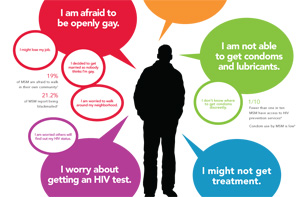
Nearly eighty countries have laws that criminalize same-sex sexual relations. UNAIDS Infographic: I am Gay--5 things I fear.
In many regions of the world, punitive laws and practices against lesbian, gay, bisexual and transgender and intersex (LGBTI)[1] individuals continue to block effective responses to HIV. A range of human rights violations have been documented, from denial of health services and freedom of association to harassment, violence and murder.
Last week, a youth organization in Cameroon is reported to have held an anti-LGBT rally; the news followed a series of arrests and detentions in recent years of Cameroonian men who have sex with men based on their sexual orientation.
In Zimbabwe, where sex between men is illegal, police officers arrested and later released 44 members of the organization Gays and Lesbians Zimbabwe (GALZ) on 11 August 2012 following the launch of a GALZ report documenting human rights violations of LGBT individuals.
In Europe, a report on the human rights situation of LGBTI people—published in May 2012 by the European Region of the International Lesbian, Gay, Bisexual, Trans and Intersex Association (ILGA-Europe)—documented many cases of violence, hatred and discrimination against LGBTI people.
Human rights violations based on people's real or perceived sexual orientation, gender identity or expression sanction the climate of hate and fear that keeps LGBTI people further in the closets. Such violations discourage health-seeking behaviour, deny access to key health services and sustain the increasing incidence of HIV infection among men who have sex with men and transgender people.
Human rights advocate Joel Nana, Executive Director of the non-profit organization African Men for Sexual Health and Rights (AMSHeR)
Studies in the United States, Canada, Europe and Australia have documented high levels of homophobic bullying in schools and lack of support from school authorities. A recent study conducted in the United States, for example, found that more than 84% of young LGBT learners had been called names or threatened, 40% had been pushed or shoved, and 18% had been physically assaulted at school.
Several cities in the Russian Federation recently passed laws prohibiting public information on sexual orientation and gender identity. Similar legislation is pending before the Ukrainian parliament. UNAIDS believes such laws discriminate against LGBT people by curtailing their freedoms of assembly and speech, threaten HIV outreach organizations supporting them, and may be used to justify homophobic bullying and violence.
A ‘climate of hate and fear’
Evidence and experience have shown that punitive laws and practices drive sexual minorities away from HIV services. A study conducted in Senegal, for example, found that prosecutions and harassment of LGBT individuals in 2008 led to “pervasive fear and hiding” among members of these groups. According to the study, some health providers suspended their HIV prevention work with men who have sex with men out of fear for their own safety; those who continued to provide health services noted a sharp decline in participation by men who have sex with men.
"Human rights violations based on people's real or perceived sexual orientation, gender identity or expression sanction the climate of hate and fear that keeps LGBTI people further in the closets,” said human rights advocate Joel Nana, Executive Director of the non-profit organization African Men for Sexual Health and Rights (AMSHeR). “Such violations discourage health-seeking behaviour, deny access to key health services and sustain the increasing incidence of HIV infection among men who have sex with men and transgender people," he added.
High HIV prevalence among men who have sex with men, transgender people
In many regions of the world, men who have sex with men and transgender people experience high HIV prevalence and low coverage of HIV prevention, treatment, care and support services.
Recent studies from sub-Saharan Africa show that HIV prevalence among men who have sex with men ranges from 6% to 31%. In Asia, the odds of men who have sex with men becoming infected with HIV are nearly 19 times higher than in the general population. In Latin America, an estimated half of all HIV infections in the region have resulted from unprotected sex between men.
Studies among transgender people have shown disproportionately high HIV prevalence ranging from 8% to 68%. Without access to HIV information and services free of fear, criminal sanction and homophobia, these trends cannot be addressed.
“World leaders are increasingly speaking out against discrimination and criminalization on the basis of sexual orientation and gender identity,” said Susan Timberlake, Chief of the Human Rights and Law Division at the UNAIDS Secretariat. “In launching its report in July, for example, the Global Commission on HIV and the Law issued a strong call for decriminalization of LGBT people and their protection in the context of the AIDS response.”
Some positive developments
Despite setbacks, there are some encouraging developments in favour of equality, non-discrimination and access to health services for sexual minorities.
On 12 July 2012, the President of Chile signed into law an anti-discrimination law that punishes hate crimes, including against LGBT people. Introduced some seven years ago, the adoption of the anti-discrimination law gained momentum following the brutal murder of Daniel Zamudio, a 24-year-old homosexual man.
On the International Day Against Homophobia and Transphobia, 17 May 2012, the European Region of Education International, the European Trade Union Committee for Education (ETUCE), the European Trade Union Confederation (ETUC) and ILGA-Europe committed to strengthen their collaboration to prevent and combat homophobia and transphobia at national and European levels in school, the workplace and society.
In February 2010, the Government of Fiji became the first Pacific Island nation to formally decriminalize sex between men. Fiji’s new Crimes Decree removes previous references to “sodomy” and “unnatural acts” and uses gender neutral language when referring to sexual offences.
In 2009, the High Court of Delhi held that criminalization of same-sex relations is unconstitutional and that it “pushes gays and men who have sex with men underground,” leaving them vulnerable to police harassment and impeding access to HIV services.
UN advocacy and action
In March 2012, the UN High Commissioner for Human Rights presented a report at the 19th session of the UN Human Rights Council documenting discriminatory laws and practices and acts of violence against LGBT individuals based on their sexual orientation and gender identity. The report called on all countries to decriminalize consensual same-sex relations and to ensure that individuals can exercise their rights to freedom of expression, association and peaceful assembly in safety and without discrimination.
At last year’s UN General Assembly High Level Meeting on AIDS, UN Member States committed to reviewing laws and policies that adversely affect the “successful, effective and equitable delivery of HIV services.” UNAIDS encourages all countries to translate this commitment into action to protect the human rights and health needs of LGBT people.
[1] The acronym “LGBTI” is used as an umbrella short-hand for groups and/or individuals whose sexual orientation or gender identity differ from heterosexuality and who may be subject to discrimination, violence and other human rights violations on that basis. Information and data presented in this article may not apply equally to all the groups represented by this acronym. [Back to top]

Feature Story
The Dominican Republic to confront its HIV treatment gap
23 August 2012
23 August 2012 23 August 2012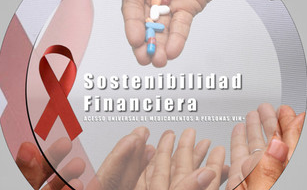
Image from an initiative by people living with HIV in the Dominican Republic launched to draw attention to the fact that the availability of generic drugs has significantly reduced treatment prices in the global market.
The Dominican Republic is one step closer to ensuring that all people living with HIV access treatment. The country’s National Social Security Council has established a commission to look into the technical, financial and operational implications of including antiretroviral therapy (ART) in the Basic Health Plan.
The establishment of the commission comes after a financial feasibility study about covering people living with HIV under the country’s family health insurance. The study was done in 2011 by the United Nations Development Programme (UNDP), United Nations Children’s Fund (UNICEF), Pan American Health Organisation (PAHO) and the Joint United Nations Programme on HIV/AIDS (UNAIDS).
The newly-established commission—whose membership includes several national health system offices in addition to regional and global partners such as PAHO and UNAIDS—is set to complete its work during the last quarter of 2012.
It is a step towards ensuring that treatment is maintained, and lives of Dominicans living with HIV are saved.
UNAIDS Caribbean Director, Ernest Massiah
According to UNAIDS Country Coordinator, Ana Maria Navarro, the development comes at a critical time and is a direct consequence of a feasibility study elaborated by United Nations agencies in the Dominican Republic. “This resolution brings us nearer to securing the sustainability of the AIDS response,” said Dr Navarro.
The Dominican Republic is classified as a middle-income country even though there are marked inequalities in income distribution. At present access to HIV treatment is completely financed by international donor agencies. While more than 20 000 people are currently receiving HIV treatment, more than 2 500 individuals known to be living with AIDS do not have access to life-saving drugs.
This is despite a guarantee of universal access to treatment for people living with HIV made in the country’s 2007 – 2015 National Strategic Plan on HIV and AIDS. The treatment gap also contradicts the principles of universality and equity that informed the 2001 reform of the Social Security System. Moreover, a new HIV law introduced last year provides for the comprehensive healthcare of people living with HIV.
But a 2002 regulation for the operationalization of the Basic Health Plan excludes coverage of antiretroviral drugs on the basis of their high cost. A primary objective of the feasibility study was to provide evidence that HIV treatment is not as expensive as local authorities believed.
“This is one giant step for the Dominican Republic,” said UNAIDS Caribbean Director, Ernest Massiah. “It is a step towards ensuring that treatment is maintained, and lives of Dominicans living with HIV are saved. People living with HIV can continue to work, support their families and participate in the simple joys of life to which we are all entitled. This is about respect, dignity and life.”
In April 2012, people living with HIV in the Dominican Republic launched an initiative to draw attention to the fact that the availability of generic drugs has significantly reduced treatment prices in the global market. The Dominican Network of People Living with HIV (REDOVIH+), Alianza Solidaria de Lucha contra el SIDA (ASOLSIDA), Fundación Grupo Paloma and Grupo Clara jointly launched a petition which called for the 2012 presidential candidates to address the financial sustainability issues related to their treatment ahead of elections at the end of May.
Feature Story
UNAIDS welcomes the '(RED) RUSH TO ZERO' campaign
20 August 2012
20 August 2012 20 August 2012
www.joinred.com
Delivering an AIDS-free generation is the goal of a new (RED) campaign unveiled this summer. In partnership with America Móvil, a leading wireless provider in Latin America, the (RED) RUSH TO ZERO campaign aims to raise awareness and mobilize resources to end new HIV infections among children by 2015.
Through the campaign, launched in June 2012, funds generated by the sale of wireless products with (Telcel)RED and (Claro)RED branding—two America Móvil networks—will benefit programs supported by the Global Fund to Fight AIDS, Tuberculosis and Malaria that prevent new HIV infections among children in Latin America and Africa. America Móvil has committed an annual contribution of up to US $2 million to the AIDS response from 2012 to 2015 through the support of all America Móvil subsidiaries and other Grupo Carso companies, as well as the Carlos Slim Foundation.
UNAIDS salutes the (RED) campaign and its partners for this important initiative. (RED) RUSH TO ZERO has helped bring us one step closer to our common goal of zero new HIV infections among children.
Dr César Núñez, UNAIDS Regional Director for Latin America
According to the latest data from UNAIDS, an estimated 40,000 children were living with HIV in Latin America in 2011. That same year, some 2,000 children in the region were newly infected with HIV.
“UNAIDS salutes the (RED) campaign and its partners for this important initiative,” said Dr César Núñez, UNAIDS Regional Director for Latin America. “(RED) RUSH TO ZERO has helped bring us one step closer to our common goal of zero new HIV infections among children.”
(RED) campaign
Since 2006, (RED) has engaged businesses and consumers in the global HIV response raising, to date, more than US $190 million in partnership with globally-recognized brands. For each product sold, (RED) partners contribute up to 50% of profits toward the Global Fund to Fight AIDS, Tuberculosis and Malaria.
Through the new campaign in Latin America, (Telcel)RED and (Claro)RED products will be displayed in Claro and Telcel stores throughout Latin America. Customers will be informed about how the campaign works and how they can help bring an end to AIDS.