Press Statement
Women and girls are critical agents of change in the AIDS response
09 March 2012 09 March 2012GENEVA, 8 March 2012—On this International Women's day the world has a lot more to do if it is to be a place where:
- Women and men, girls and boys are treated as equal
- Girls shape their own future
- Boys challenge social norms that block opportunities
- HIV does not take away people’s dignity and rights.
The reality is very different:
- Every minute, a young woman is newly infected by HIV
- At the same time, girls lack equal access to education
- Far too many women lack control over their finances and assets
- And too many women continue to lack control over their bodies and lives.
It is clear, governments and communities are failing women and girls. There are few sustainable solutions that enable women and girls to protect themselves from HIV, violence and poverty. This is grossly unacceptable, particularly because the world can do much better.
Empowered women and girls are critical agents of change in reversing the epidemic. If society invests in the health of women and girls, it is possible for them to have the future they want.
This is why UNAIDS prioritizes gender equality and why UNAIDS is calling for zero tolerance for violence. Together, we will reach the future we want: zero new HIV infections, zero discrimination and zero AIDS-related deaths among women and girls.
Feature Story
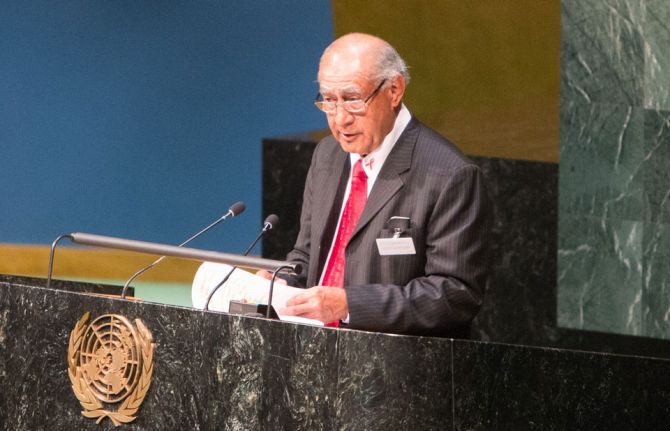
President of Fiji commits to easing HIV burden for women in the Pacific region
09 March 2012
09 March 2012 09 March 2012
(From left to right): United Nations Resident Coordinator Knut Ostby, UNAIDS Executive Director Michel Sidibé and the President of Fiji, Ratu Epeli Nailatikau, pictured here with Head Girls of various high schools in Suva at a joint stakeholders’ meeting in Suva on 8 March, International Women’s Day.
Credit: UNAIDS/A. Nacola
Speaking at a meeting on International Women’s Day in Suva, capital city of Fiji, UNAIDS Executive Director Michel Sidibé praised President Ratu Epeli Nailitikau for his “remarkable leadership” and personal engagement in the AIDS response at country, regional and global levels.
“President Nailitikau is helping to transform the UNAIDS vision of Zero new HIV infections, Zero discrimination and Zero AIDS-related deaths into a reality in the Pacific Island states,” said Mr Sidibé, addressing a range of partners in the national AIDS response, including women living with HIV, youth leaders, senior government officials, and representatives of the diplomatic community.
The UNAIDS Executive Director commended President Nailatikau for championing efforts to revise and remove punitive laws that hamper the AIDS response. He cited, in particular, Fiji’s decision in 2011 to lift travel restrictions for people living with HIV and a 2009 decision to decriminalize sex between men.
“Through your determination and commitment, you have changed laws and improved the lives of vulnerable people,” said Mr Sidibé. “This is not only a great benefit for Fiji, but an important example for the entire Pacific region, and the world.”
Mr Sidibé urged the President to harness this same commitment to stop gender-based violence—a risk factor for the continued spread of HIV among women in Pacific region.
“The Pacific Island States are facing a potential tsunami of new HIV infections, particularly among women and girls,” said President Nailatikau. “I am personally committed to working with UNAIDS to ensure that across the Pacific region, women and girls do not bear the burden of this epidemic,” he added.
According to the latest official data from Fiji, there were 53 newly reported cases of HIV in 2011—the highest annual number of cases in Fiji since the beginning of the epidemic.
“Despite our efforts, a large and growing number of people in Fiji are becoming infected with HIV,” said President Nailatikau. “We must redouble our efforts to ensure that this trend is stopped, and that all people affected by this epidemic have our full respect and support.”
President Nailitikau is a long-standing advocate and champion on HIV. During his time as Speaker of the House of Representatives in Fiji, he served as a UNAIDS Ambassador to the Pacific and was actively involved in promoting a strong AIDS response in the region.
I am personally committed to working with UNAIDS to ensure that across the Pacific region, women and girls do not bear the burden of this epidemic
President Ratu Epeli Nailitikau of Fiji
A leading voice at the June 2011 United Nations High Level Meeting on AIDS, President Nailitikau called for the elimination of new HIV infections among children and zero discrimination against people living with HIV. More recently, at conferences in the Asia-Pacific region, he has encouraged governments to commit to the targets of the 2011 Political Declaration on AIDS.
“From our experience in Fiji, we know that partnership between sectors, between people, drives strength and progress,” said President Nailatikau. “I urge all national partners including the various government sectors, civil society, affected communities, churches and faith-based organizations, the private sector and others to re-unite towards ending AIDS in Fiji, and across the region.”
UNAIDS is currently working with the Government of Fiji to translate recommendations from the June 2011 UN General Assembly High Level Meeting on AIDS into action. Key areas of focus include eliminating new HIV infections among children, ensuring the availability of HIV services for key affected populations, and implementing the newly-amended Fijian HIV/AIDS Decree.
Fiji has a low HIV prevalence: an estimated 0.1% of the national adult population is living with HIV. In recent years, efforts to prevent new HIV infections among children have been strengthened.
Despite progress, stigma and discrimination in Fiji continue to block access to HIV services for people living with and affected by HIV. Low levels of HIV testing and gender-based violence are added challenges in the national HIV response.
Related
Feature Story
Joint UN Statement calls for the closure of compulsory drug detention and rehabilitation centers
09 March 2012
09 March 2012 09 March 2012
The Joint Statement calls for compulsory drug detention and rehabilitation centres be replaced with voluntary, rights-based, evidence-informed programmes in the community.
Twelve United Nations entities have issued a joint statement calling for the closure of compulsory drug detention and rehabilitation centers. The existence of such centers—which have been operating in many countries for the last 20 years—raises human rights issues and threatens the health of detainees, including through increased vulnerability to HIV and tuberculosis (TB) infection.
In recent years, the numbers of such centers and of the people confined in them have been on the rise. In Asia alone, it is estimated that some 300 000 people are kept in compulsory drug detention and rehabilitation centers. People who use or are suspected of using drugs, people who have engaged in sex work and children who have been victims of sexual exploitation are detained without due process in the name of “treatment” or “rehabilitation”.
Human rights experts, health practitioners, civil society and UN entities have raised serious concerns about these centres, including on grounds that they violate a broad range of human rights and that they jeopardise the health of those detained.
Terms used to describe compulsory drug detention and rehabilitation centers, their legal basis, and their management varies among countries. Regardless of these differences, the situation of individuals confined in these centres is far too similar. They are often arrested and detained without the benefit of sufficient due process. Conditions in the drug detention and rehabilitation centres often involve forced labour, beatings, substandard conditions and lack of access to evidence-informed health care, including for HIV prevention and treatment and for drug dependence. Some of those detained in these centers are children under the age of 18.
States that maintain these centres often present them as necessary to address drug use dependence and sex work. There is however no evidence that compulsory drug detention and rehabilitation centres represent an appropriate and effective environment for the treatment of drug dependence or for the protection and rehabilitation of those detained.
In some countries, UN entities have already been working with authorities to address the concerns raised by the centres and find alternatives to them. The Joint Statement will enable coordinated and concerted efforts by the UN system at country, regional and global levels to support governments to close compulsory drug detention and rehabilitation centres and replace them with voluntary, rights-based, evidence-informed programmes in the community. In the coming weeks, UNAIDS Secretariat staff will be meeting with their government counterparts and UN and civil society partners to find the best ways to move forward on this important and urgent issue.
The UN entities that have signed on to the Joint Statement on Compulsory Drug Detention and rehabilitation Centres are: International Labour Organisation (ILO); Office of the High Commissioner for Human Rights (OHCHR); United Nations Development Programme (UNDP); United Nations Educational, Scientific and Cultural Organisation (UNESCO); United Nations Population Fund (UNFPA); United Nations High Commissioner for Refugees (UNHCR); United Nations Children’s Fund (UNICEF); United Nations Office on Drugs and Crime (UNODC); United Nations Entity for Gender Equality and the Empowerment of Women (UN Women); World Food Programme (WFP); World Health Organisation (WHO); and Joint United Nations Programme on HIV/AIDS (UNAIDS).
Publications
Feature Story
UNICEF: Children in cities facing neglect
05 March 2012
05 March 2012 05 March 2012
Many of the poorest children living in the world’s towns and cities are facing profound disparities in health, education and life chances.
Credit: UNICEF
Many of the hundreds of millions of young people living in towns and cities across the globe are facing poverty, social exclusion, health inequity and lack of access to vital services. This is the key finding in UNICEF’s latest flag ship report, The state of the world’s children 2012: Children in an urban world.
The report says that infrastructure and facilities are not keeping pace with urban growth and systems and services are not reaching the poorest children: cities are often the backdrop for some of the greatest disparities in children’s health, education and life chances.
According to UNICEF Executive Director Anthony Lake, “[Children] growing up in slums and shanty towns are among the most disadvantaged in the world, deprived of essential services that can mean the difference between life and death...between opportunity and despair.” This is clearly significant as latest available statistics suggest that nearly half the world’s children live in urban settings, with this proportion set to increase.
HIV services lacking
Children in an urban world cites lack of access to HIV services as a key area where children and young people are being failed. The virus places a heavy burden on the young with an estimated 2 500 people aged 15 to 24 infected every day and around 2 million 10 to 19 year olds living with HIV. Significantly, HIV prevalence is often higher in urban areas. For example, research has shown that girls in towns and cities in southern Africa are markedly more likely to be living with HIV than their rural counterparts.
To reinforce the finding that young people in urban settings can be highly vulnerable to HIV infection, the report also features a 2009 study carried out among adolescents living on the streets in four Ukrainian cities. It found that 15% injected drugs, 75% were sexually active (most before the age of 15) and nearly 60% of the girls had received payment for sex. Despite their greater vulnerability, it is noted that such adolescents were the most likely to be excluded from HIV-related services.
[Children] growing up in slums and shanty towns are among the most disadvantaged in the world, deprived of essential services that can mean the difference between life and death...between opportunity and despair
Anthony Lake, Executive Director, UNICEF
In addition, the report examines the role of sexual harassment and violence against girls and women in urban settings. Such violence can also heighten the risk of HIV infection as well as limiting rights to education, work, recreation and political expression.
Focus on successful initiatives
A large number of successful initiatives aimed at making cities better places for the most vulnerable children and adolescents are featured. For example, the UN-Women Global Programme on Safe Cities Free of Violence against Women and Girls is working with partners in five cities to help prevent and reduce gender-based violence in public spaces, emphasising good governance, political participation and urban planning.
Children in an urban world stresses the need to invest more in community-based action which allows young people to be central to the planning and implementation of interventions that most affect them. In Nepal, for instance, where drug use among young people is increasing, peer leaders from Kirat Yakthung Chumlung, a community organisation, help to provide services such as needle-syringe distribution programmes and HIV testing and counselling. In Nairobi, the Safe Spaces community initiative aims to create a secure and nurturing environment for adolescent girls growing up in deprived areas. Forging inclusive partnerships has led to better public infrastructure in Rio de Janeiro and Sao Paulo and more successful disaster preparedness in Manila.
On a global level, UNICEF and UN-Habitat have also been spearheading the Child-Friendly Cities Initiative, providing services and protected areas which seek to put children at the heart of the urban agenda. This is precisely where they need to be, according to the report, if they are to fulfil their potential and lead safer and healthier lives.
External links
External links
Partners
Partners
Publications
Related



Feature Story
UNDP and UNAIDS Leaders Begin High Level Joint Mission in New Zealand
05 March 2012
05 March 2012 05 March 2012
(From left to right): UNDP Administrator Helen Clark; Chief Executive and Secretary of New Zealand’s Ministry of Foreign Affairs and Trade, John Allen; UNAIDS Executive Director Michel Sidibé; and Amanda Ellis, Deputy Secretary, International Development Group.
Credit: UNAIDS
The Administrator of the United Nations Development Programme (UNDP), Helen Clark, and the Executive Director of the Joint United Nations Programme on HIV/AIDS (UNAIDS), Michel Sidibé, began a three day mission in New Zealand—the first joint mission by the two UN leaders in this Pacific country.
Highlighting the importance of continued vigilance in the AIDS response, Ms Clark and Mr Sidibé emphasized the leadership demonstrated by New Zealand in the HIV response and called on New Zealand to continue to play a strong role to achieve the targets of the 2011 UN Political Declaration on AIDS.
“I commend New Zealand for taking early, decisive action to keep the AIDS epidemic under control,” said Mr Sidibé in an address to staff at New Zealand’s Ministry of Foreign Affairs and Trade. “New Zealand can be the first country in the Pacific region to reach the UNAIDS vision of Zero new HIV infections, Zero discrimination and Zero AIDS-related deaths,” he added.
The world is making progress but we cannot end this epidemic if we keep AIDS in isolation
UNDP Administrator Helen Clark
Speaking at the Beehive Theatrette in the New Zealand Parliament, Ms Clark emphasized the link between HIV and core issues of human development. “The world is making progress but we cannot end this epidemic if we keep AIDS in isolation,” said Ms Clark. “We must help countries to address the underlying drivers, like poverty and gender inequality, that put people at risk for HIV.”
The New Zealand mission includes meetings in Wellington with Prime Minister John Key and other high-level government officials, such as the Minister of Women’s Affairs and the Associate Minister of Health, Honourable Jo Goodhew, Minister of Pacific Island Affairs and Education, Honourable Hekia Perata, and Chief Executive Officer of the Ministry of Foreign Affairs and Trade, John Allen.

UNDP Administrator Helen Clark and UNAIDS Executive Director Michel Sidibé join Tane Waetford, Policy Officer, Asia Regional Division, Ministry of Foreign Affairs and Trade (far left) and Martin Wikaira, Director, Maori Policy Unit, Ministry of Foreign Affairs and Trade (far right) at a Powhiri greeting ceremony in Wellington, New Zealand, on 5 March.
Credit: UNAIDS
While in Auckland, Ms Clark and Mr Sidibé will visit the New Zealand AIDS Foundation, where they will meet representatives of civil society, people living with HIV and other partners involved in the AIDS response. On the occasion of 8 March, International Women’s Day, Ms Clark and Mr Sidibé will open new offices for Positive Women Inc.—a support organisation for women and families living with HIV and AIDS.
New Zealand is recognized for having taken early domestic measures to protect the health and human rights of vulnerable populations. In 1987, New Zealand was among the first countries to introduce needle—syringe programmes for people who use drugs, and in 2003, New Zealand decriminalized sex work. These initiatives were essential to prevent the spread of HIV among key populations. Nationally, HIV prevalence remains low at 0.1% of the population.
New Zealand also provides critical international leadership in the HIV response, with a strong focus on AIDS in the Pacific Island States—particularly in Papua New Guinea, which has the largest epidemic in Oceania.
Feature Story
Archbishop of Canterbury: “AIDS is not just a question of epidemiology but a question of social life”
02 March 2012
02 March 2012 02 March 2012
L to R: UNAIDS Executive Director Michel Sidibé, Advocacy Officer with Christian Aid Winnie Ssanyu Sseruma, Archbishop of Canterbury Dr Rowan Douglas Williams. UNAIDS offices in Geneva, Switzerland. 29 February 2012.
Credit: UNAIDS/F. Chironi
The Archbishop of Canterbury Dr Rowan Douglas Williams made an official visit to UNAIDS Headquarters in Geneva on 29 February 2012. The aim of the visit was to build on the collaborative partnership established last year between the Anglican Communion and UNAIDS around a number of issues including sexual violence, human rights and HIV.
Archbishop Rowan also took the opportunity to participate in a town hall meeting with UNAIDS staff where he highlighted some of the critical linkages between HIV and the broader social challenges facing the global community today. The Archbishop commended UNAIDS staff for their work and pointed out that work on the HIV response has a far greater impact than we may realize.
“AIDS presents us with a cluster of issues that are not just a question of epidemiology but are a prism through which a whole range of social issues come into sharp focus,” said Archbishop Rowan. “AIDS can be the key that opens the way to address many other issues such as the role of women, the rights of minorities and the food security.”
AIDS presents us with a cluster of issues that are not just a question of epidemiology but are a prism through which a whole range of social issues come into sharp focus
Archbishop of Canterbury
UNAIDS staff posed questions to the Archbishop on a wide range of issues. He elaborated on the role of the Anglican Church in reducing stigma and discrimination of people living with HIV; young people and sexuality; dignity of key populations and the involvement of men to eliminate gender based violence.
Winnie Ssanyu Sseruma, Advocacy Officer with Christian Aid also participated in the conversation and provided the perspective of a person living with HIV and working with faith based organizations in the response to AIDS. Ms Sseruma highlighted the need to seek opportunities in times of crisis to ensure that all people living with HIV have access to treatment. “We need to find the money for HIV treatment,” said Ms Sseruma. “If we don’t, what we’ve been working on will unravel in front of our eyes.”
UNAIDS Executive Director Michel Sidibé highlighted the critical role the faith plays in the response to HIV. According to Mr Sidibé, the faith community has done excellent work in terms of care and support, and providing HIV services. At the same time, he agreed with Archbishop Rowan that faith leaders can also perpetuate negative attitudes that promote stigma and discrimination.
“The only way we’ll be able to address issues of human suffering and HIV will be by developing a people-centered approach to the AIDS response that calls for compassion,” said Mr Sidibé. “If we want to make the UNAIDS vision a reality, we need to think about global justice, redistribution of opportunities and a revision of the paradigm of solidarity existing today.”
Anglican responses to HIV
The Archbishop of Canterbury praised the UNAIDS’ Strategic Framework on Partnership with Faith-based Organizations (FBOs) and stressed the need to promote it as widely as possible among all faith communities. He recognized that conversations around AIDS issues at inter-faith level have still “a long way to go” and singled out the framework as a catalyst to bring faith communities together.
According to the UNAIDS’ Framework, FBOs have been, and are, major providers of HIV-related services, including to populations that are underserved by governments and other service providers.
In 2008, UNAIDS and WHO co-funded a study on the contribution of the Anglican Communion to achieving universal access to HIV treatment, prevention, care and support through their health structures. The study demonstrated the value of working through faith structures, which in the case of the Anglican churches have a membership of 40 million members in Africa. These are organized in an inter-connected hierarchy, from the continent, national, district to local community/parish level. HIV programme staff or trained focal people at different levels deliver on policy and advocacy, capacity building and community services for HIV prevention, treatment, care and support.
Meeting with UN Plus
Earlier in the day Archbishop Rowan met with UN Plus members—the group of UN staff living with HIV—to discuss issues around the role of the church in its response to AIDS. UN Plus members were keen to know how the Anglican Church and the FBO community would respond to HIV-related stigma and discrimination, in particular in cooperation with leaders of other religions.

The Archbishop of Canterbury Dr Rowan Douglas Williams met with representatives from UN Plus on 29 February 2012 at the UNAIDS offices in Geneva.
Credit: UNAIDS/F. Chironi
The Archbishop emphasized that any form of stigma and discrimination was unacceptable and they need to be fought against. According to the Archbishop Rowan, stigma and discrimination must continue to be addressed through messages and activities. For example, World AIDS Day serves as a good opportunity to communicate on HIV related issues to congregations. A few years ago, Canon Gideon Byamugisha from Uganda, a faith based leader living with HIV, made a significant intervention that mobilized the Church to begin to seriously address stigma and discrimination within the faith community. Nonetheless, it has sometimes proved challenging to garner support from other religious leaders and this remains an important issue for the Church to work on.
UN Plus and the Archbishop agreed to call for further collaboration among the networks of people living with HIV and the faith community to eliminate stigma and discrimination against key populations at higher risk.
Human rights, sexuality and reproductive rights
As part of his visit to Geneva, Archbishop Rowan also gave a lecture on Human Rights and Religious Faith at the World Council of Churches on 28 February 2012. The lecture suggested ways in which the discourses of human rights and religious conviction might be reconnected through concepts of human dignity and human relatedness. This analysis provides a new way to approach the increasing gap between the Human Rights discourse and that of culture and faith. The Archbishop articulated how the human rights dialogue can be situated as a crucial way of working out how people can belong together in society.
External links
External links
Publications
Related
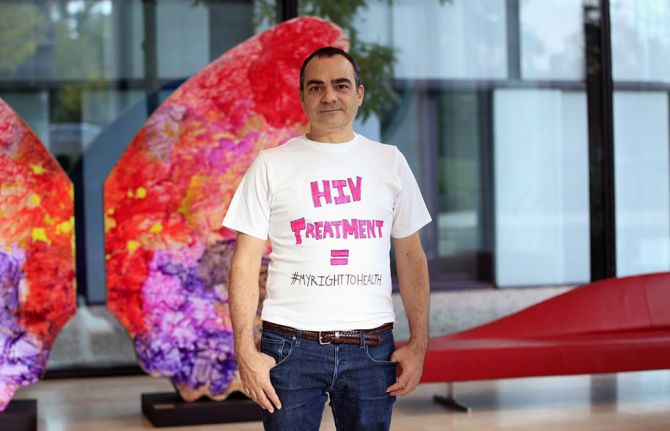
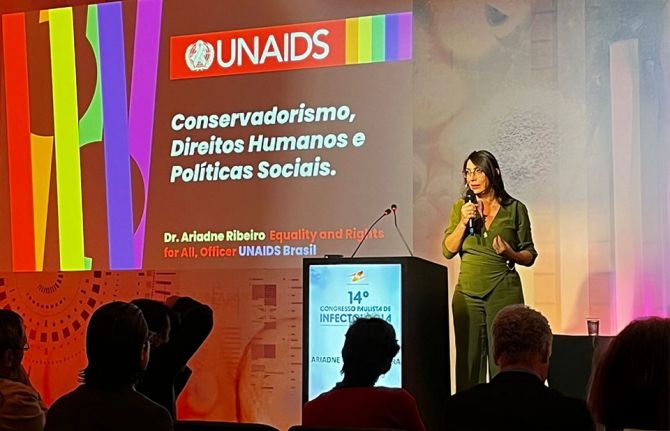 Upholding dignity for everyone: Ariadne Ribeiro Ferreira
21 November 2024
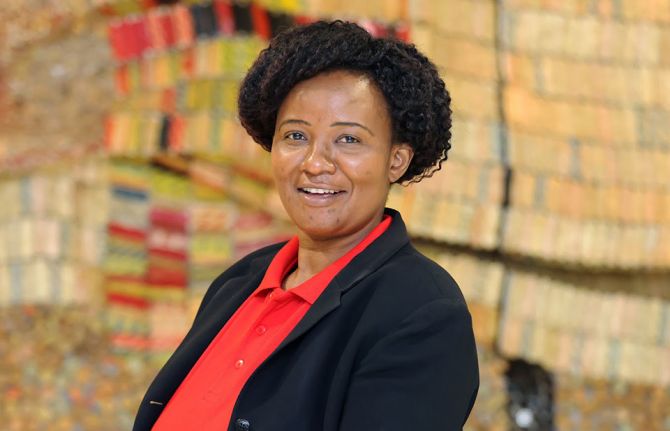 Evelyn Siula: A journey of strength and solidarity
18 November 2024
Feature Story
Increased domestic funding for AIDS is a ‘national priority,’ says the President of Côte d’Ivoire
28 February 2012
28 February 2012 28 February 2012
UNAIDS Executive Director Michel Sidibé (left) met with the President Alassane Ouattara of Côte d’Ivoire on 27 February in Abidjan.
Meeting on 27 February with President Alassane Ouattara of Côte d’Ivoire, UNAIDS Executive Director Michel Sidibé noted with concern that the country relies heavily on external aid to finance its national AIDS response—a trend seen in many countries across Africa.
Approximately 87% of HIV investments in Côte d’Ivoire are financed through external sources. A vast majority of HIV medicines used in the country are imported. The Government of Côte d’Ivoire recently reported a funding gap of approximately
US $20 million for its national HIV programme.
To bridge the HIV resource gap, Mr Sidibé urged President Ouattara and his government to explore more diversified sources of financing such as low-interest loans from the African Development Bank and taxes on the use of mobile phones.“Côte d’Ivoire needs home-grown solutions for a sustainable response to the national HIV epidemic,” said the UNAIDS Executive Director, while meeting with President Ouattara in Abidjan.
A call for the local production of HIV drugs
By manufacturing antiretroviral drugs within Africa, Côte d’Ivoire and neighboring countries across the region could avoid drug shortages and benefit from lower drug prices, said Mr Sidibé. The UNAIDS Executive Director also spoke of an urgent need for a single African drug regulatory agency to ensure the faster roll-out of quality-assured HIV medicines to the African population.
Stating that increased domestic financing for HIV is a “national priority,” President Ouattara said that his government would seek innovative funding solutions to reduce its dependency on external aid. He pledged to use his platform as President of the Economic Community of West African States (ECOWAS) to mobilize other African leaders to catalyze the local production of antiretroviral medicines.
Progress in the national response
Mr Sidibé commended the Government of Côte d’Ivoire for the more than four-fold increase in access to HIV treatment over the past five years—from approximately 18 500 to more than 75 000 people. He urged President Ouattara to build on these gains and close the remaining treatment gap of 150 000 people.
Côte d’Ivoire needs home-grown solutions for a sustainable response to the national HIV epidemic
UNAIDS Executive Director Michel Sidibé
The UNAIDS Executive Director praised the Government of Côte d’Ivoire for its efforts to reduce new HIV infections among children: As of end-2011, 54% of HIV-positive pregnant women in the country were able to access services that prevent HIV transmission from mother to child. Mr Sidibé called on the leadership of Côte d’Ivoire to champion the UNAIDS vision of “Zero new HIV infections in children.”
Remaining challenges
During his meeting with President Ouattara, Mr Sidibé noted that the dynamic flow of migrants between Côte d’Ivoire and neighboring countries poses a major challenge to the HIV response in West Africa. A failure to contain the HIV epidemic in Côte d’Ivoire would have negative consequences across the region, he warned. An estimated 3.4% of the population in Côte d’Ivoire is living with HIV—the second highest national HIV prevalence in West Africa.
The UNAIDS Executive Director spoke of the importance of addressing the widespread stigma and discrimination against people living with and affected by HIV. He said that reaching minority and vulnerable groups in Côte d’Ivoire with HIV services would be critical to reversing the epidemic—particularly men who have sex with men, sex workers and people who use drugs.
External links
External links
Related
Feature Story
UNAIDS Executive Director calls for greater local production of HIV medicines in Ghana
24 February 2012
24 February 2012 24 February 2012
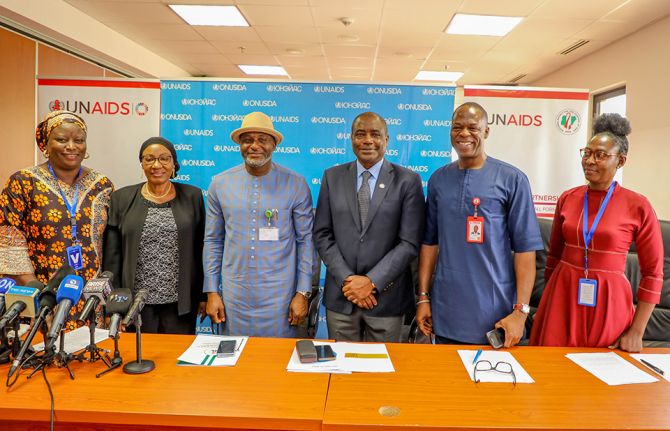
UNAIDS Executive Director Michel Sidibé (left) met with the President John Evans Atta Mills of Ghana on 24 February in Accra.
Credit: UNAIDS/R.Chintoh
Meeting today with John Evans Atta Mills, President of the Republic of Ghana, UNAIDS Executive Director Michel Sidibé sounded a theme from his recent missions in Bénin and Togo: sustainability of the AIDS response in Africa.
Noting that a vast majority of antiretroviral medicines consumed in Africa are imported from overseas, Mr Sidibé underscored the urgent need for home-grown solutions to ensure the long-term availability of these drugs at affordable prices.
“African countries must catalyse the local production of high-quality medicines,” said Mr Sidibé, while meeting with President Mills at his offices in Accra. “Ghana can develop centres of excellence and lead the way in an effective continental response to HIV,” he added.
President Mills said he looked forward to the day when Ghana was able to manufacture HIV medicines for its population at large and neighboring countries in the region. “This will a major boost for us,” he said.
Preventing HIV among children
During the meeting, the UNAIDS Executive Director expressed concern over the low coverage (51%) of services in Ghana to prevent HIV transmission from mother to child (PMTCT). He said that it is ethically unacceptable for any child to be born with HIV and emphasized the economic rationale for expanding PMTCT services: preventing HIV is far less costly than life-long treatment.
Mr Sidibé urged the President to champion the UNAIDS vision of “Zero new HIV infections among children” across the country. “No baby born with HIV by the year 2015—this can be your legacy for Ghana,” he said, adding that keeping their mothers alive is equally imperative.
Addressing stigma and discrimination
During his meeting with President Mills, the UNAIDS Executive Director noted with concern that stigma and discrimination continue to block an effective response to HIV in Ghana—especially for people living with HIV and key populations at higher risk of infection, such as sex workers, men who have sex with men, and people who use drugs.
The President said that he was hopeful a new nation-wide campaign called “Heart to Heart” would help reduce the widespread stigma and discrimination in his country. Launched on World AIDS Day 2011, the campaign aims to re-engineer deep-rooted beliefs and behaviors towards people living with HIV by giving a “human face” to the epidemic.
Roundtable discussion with partners
At a roundtable discussion earlier in the day with high-level representatives from government, civil society and the private sector, Mr Sidibé said that he was encouraged by the more than 25% reduction in new HIV infections among young Ghanaians between 2001 and 2010.
African countries must catalyse the local production of high-quality medicines
UNAIDS Executive Director Michel Sidibé
He commended the leadership of Ghana for the dramatic increase in national spending on AIDS, from a less than US$ 1 million contribution last year to a US $100 million pledge over the next five-year period. The UNAIDS Executive Director noted, however, that—even with the recent pledge—Ghana continues to rely on external aid to finance more than 70% of its national AIDS response.
As part of his three-day official visit to Ghana, Mr Sidibé participated in a series of events marking the 10th anniversary of the Ghana AIDS Commission. Additionally, he toured a hospital that provides comprehensive PMTCT services and visited a local production plant that manufactures antiretroviral medicines.
Mr Sidibé’s official visit in Accra was part of a four-country mission to Ghana, Bénin, Togo and Côte d'Ivoire.
External links
External links
Related
 Impact of US funding cuts on HIV programmes in Ghana
08 April 2025
Feature Story
UNAIDS Executive Director calls for increased national spending on AIDS in Togo
23 February 2012
23 February 2012 23 February 2012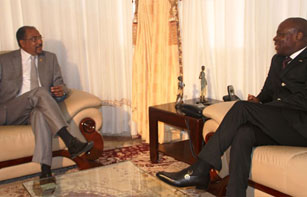
UNAIDS Executive Director Michel Sidibé (left),
photographed here with Prime Minister Gilbert Houngbo of Togo on 21 February.
Credit: UNAIDS/J-C Abalo
Sustainable financing for the AIDS response was a key topic of discussion in a meeting on 21 February between UNAIDS Executive Director Michel Sidibé and Prime Minister Gilbert Houngbo of Togo.
Noting with concern that Togo relies on external sources to finance more than 80% of its HIV response, the UNAIDS Executive Director urged the leadership of Togo to take on a greater share of national AIDS investments.
“We cannot put a person on antiretroviral treatment for 30 years and depend on external aid to cover the bill,” said Mr Sidibé, while meeting with Prime Minister Houngbo in LoMÉ, Togo’s capital city. “We need an African solution,” he added.
Mr Sidibé emphasized that HIV resources in Togo should be prioritized for populations at higher risk of HIV infection, such as sex workers and men who have sex with men. To that end, a comprehensive understanding of the national epidemic, including good data, was vitally important, he added.
We cannot put a person on antiretroviral treatment for 30 years and depend on external aid to cover the bill. We need an African solution
UNAIDS Executive Director Michel Sidibé
During the meeting, Mr Sidibé congratulated the leadership of Togo for progress in the national HIV response. According to government figures, knowledge on HIV prevention and transmission among the population is relatively high, at 80%. Access to antiretroviral treatment in Togo has more than doubled since 2008, from approximately 11 000 people to more than 25 000. Mr Sidibé urged the leadership of Togo to build on these gains and ensure treatment access for all people living with HIV.
The UNAIDS Executive Director expressed concern that a majority (56%) of pregnant women in Togo lack access to services that prevent HIV transmission from mother to child. He commended Togo’s leaders for their efforts to develop a national plan to eliminate new HIV infections among children.
Acknowledging the gaps in access to services for HIV-positive pregnant women, Prime Minister Houngbo said that the leadership of Togo was fully committed to the UNAIDS target of Zero new HIV infections among children. The Prime Minister expressed his commitment to achieving the targets in the 2011 Political Declaration on AIDS and echoed Mr Sidibé’s call for increased domestic spending on AIDS.
Mr Sidibé’s official visit in LoMÉ was part of a four-country mission to Togo, Bénin, Ghana and Cote d’Ivoire.
External links
External links
Feature Story
UNAIDS Executive Director meets with Bénin’s Head of State
22 February 2012
22 February 2012 22 February 2012
UNAIDS Executive Director Michel Sidibé met with President Boni Yayi of Bénin at the President’s Office in Cotonou on 20 February, pictured here with UN Resident Coordinator and UNDP Representative Ms Nardos Bekele.
Credit: UNAIDS
In an official meeting with President Boni Yayi of Bénin on 20 February, UNAIDS Executive Director Michel Sidibé called on the country’s Head of State to use his position and influence as President of the African Union to accelerate the HIV response across the continent.
“We are counting on you to help us push forward the HIV response in Africa,” said Mr Sidibé, in a meeting with President Yayi in Cotonou. “With your leadership, I know that Africa can achieve the targets in the 2011 Political Declaration on AIDS.”
Mr Sidibé urged President Yayi to encourage his peers to allocate a greater share of domestic resources to the AIDS response. The UNAIDS Executive Director and the President agreed on the need for a high-level debate on how to finance Africa’s AIDS response over the long term.
National progress
During the meeting, the UNAIDS Executive Director congratulated President Yayi and his government on achievements in the national response to HIV.
As President of the African Union, I would like to launch a vibrant appeal to other African Heads of State, urging them to continue investing in programmes that can eliminate mother-to-child transmission of HIV
President Boni Yayi of Bénin
According to government figures, HIV prevalence in Bénin has stabilized over the past decade at approximately 2%. An estimated 62 000 people are currently living with HIV across the country and there are some 3300 new HIV infections each year.
At the end of 2010, an estimated 19 000 people were accessing free antiretroviral treatment, up from about 15 000 the previous year. Access to voluntary testing and counselling (VCT) is also expanding at a rapid rate: 126 sites across the country now offer VCT services, up from just 28 sites in 2006.
Mr Sidibé underscored the importance of using scare resources with greater efficiency, transparency and accountability. He emphasized the need to prioritize HIV resources for key affected populations—particularly women and girls, young people, sex workers, men who have sex with men and people who use drugs.
Eliminating new infections among children
Despite progress, only half (49%) of pregnant women in Bénin have access to services that can prevent new HIV infections in their children. An estimated 350 000 children were newly infected with HIV in sub-Saharan Africa in 2010.
“As President of the African Union, I would like to launch a vibrant appeal to other African Heads of State, urging them to continue investing in programmes that can eliminate mother-to-child transmission of HIV,” said President Yayi. Following his meeting with Mr Sidibé, the President launched a national plan to eliminate new infections among children by 2015, at the Palais des Congrès in Cotonou.
During the mission, the UNAIDS Executive Director was honoured by Lord Chancellor Osseni Koubourath as a “Grand Officer” of the National Order of Bénin for his global leadership and engagement in the HIV response, and for his strong commitment to promoting human rights and dignity.
Mr Sidibé’s visit to Bénin was the first of a four-country mission in West Africa. He is scheduled to meet this week with high-level representatives from government and civil society in Togo, Ghana and Côte d'Ivoire.