

Feature Story
Integration of HIV/TB services (Infographic)
23 March 2012
23 March 2012 23 March 2012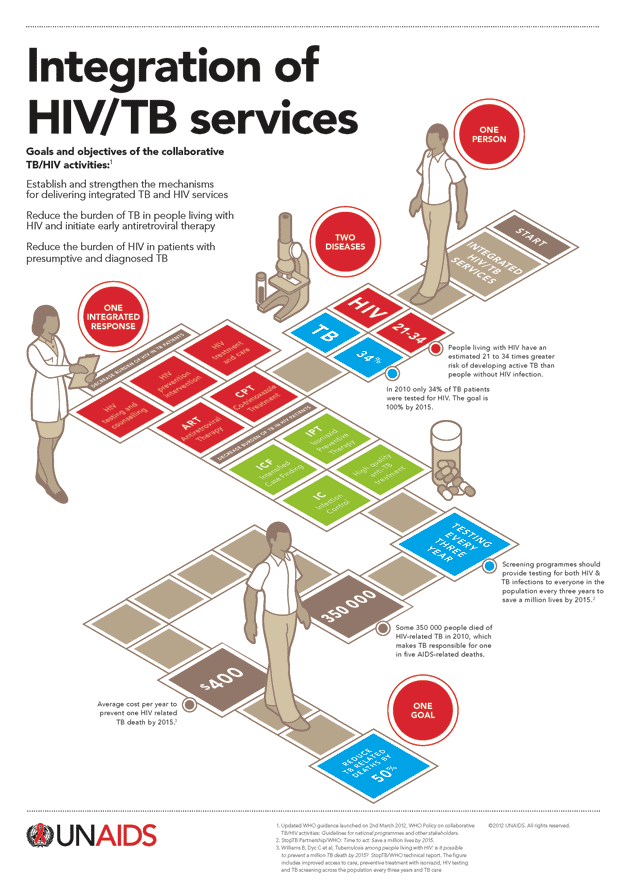
Resources
Resources
Related
Feature Story
World TB Day: Children with tuberculosis being failed
23 March 2012
23 March 2012 23 March 2012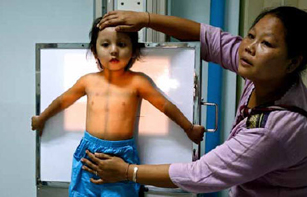
Much more needs to be done to prevent tuberculosis (TB) which affects at least half a million of the world’s children every year.
Credit: WHO/Stop TB Partnership
Much more needs to be done to prevent tuberculosis (TB) which affects at least half a million of the world’s children every year, with as many as 70 000 losing their lives. According to WHO and the Stop TB Partnership, most children can be saved from this curable illness with better diagnosis of the condition, greater access to health services and improved coordination of healthcare programmes.
One key area where such coordination is critical is in relation to HIV. Children living with the virus are highly vulnerable to TB infection given their compromised immune systems. HIV-positive people are 20 to 30 times more likely to develop tuberculosis, which is responsible for one quarter of AIDS-related deaths. The situation can be especially dangerous for children as TB is often not routinely considered as a possible diagnosis and can therefore remain undetected.
"We have made progress on TB. Death rates are down 40% overall compared to 1990 and millions of lives have been saved," said Dr Mario Raviglione, Director of the WHO Stop TB Department. "But unfortunately, to a large extent, children have been left behind, and childhood TB remains a hidden epidemic in most countries. It is time to act and address it everywhere," he added.
WHO and the Stop TB Partnership recognize that TB can be hard to diagnose, especially in developing countries where the method used to diagnose it—the analysis of a sputum sample—was developed 130 years ago. Nonetheless, a recent study in Bangladesh found that the detection rate of children with TB more than trebled when workers in 18 community centres received special training on childhood tuberculosis.
Addressing TB in children is relatively inexpensive. According to estimates, tuberculosis prevention for a child costs less than 3 cents a day and treatment around 50 cents a day.
Integrated services needed
Integration of maternal and child health services, HIV care and tuberculosis care to save the lives of children with TB is seen to be an absolute necessity, requiring bold political leadership. This is especially the case if the commitment made by countries in the 2011 Political Declaration on AIDS—to cut in half the number of deaths among people living with HIV by 2015—is to be realised.
We have made progress on TB. Death rates are down 40% overall compared to 1990 and millions of lives have been saved. But unfortunately, to a large extent, children have been left behind, and childhood TB remains a hidden epidemic in most countries. It is time to act and address it everywhere
Dr Mario Raviglione, Director, WHO Stop TB Department
According to WHO/Stop TB Partnership, all HIV-positive pregnant women, babies and children at clinic visits should be checked for signs of tuberculosis and given appropriate treatment if required. When detected in children living with HIV, TB treatment needs to begin immediately and, after two to eight weeks on such treatment, antiretroviral therapy (ART) should be started. Furthermore, relevant personnel need to be trained to check patients for TB risk, signs and symptoms and refer them for TB preventive therapy or TB treatment as needed.
Other recommendations to get to zero TB deaths among children are the inclusion of children and pregnant women among the participants of research studies on new TB diagnostics and drugs; more accurate national estimates of the number of childhood TB cases and deaths; and increased funding for TB diagnostics, drugs and vaccines.
According to Dr Lucica Ditiu, Executive Secretary of the Stop TB Partnership, the key to the ultimate goal of preventing TB deaths in children is for partners to work together to pinpoint those most in need: “Before we can give prevention or treatment we have to find the children at risk of TB, and this will only happen if governments, civil society and the private sector work together."
External links
External links
Partners
Partners
Publications
Press Statement
World TB Day 2012
23 March 2012 23 March 2012Message from UNAIDS Executive Director Mr. Michel Sidibé

UNAIDS Executive Director (center) visited the Prince Cyril Zulu TB and STD Clinic and the CAPRISA eThekwini Research Clinic on September 2011 during an official visit to South Africa. The Prince Cyril Zulu clinic treats about 8 000 new TB patients a year with an HIV prevalence of 74%. The SAPiT TB-HIV trial which provided the evidence for the current WHO TB-HIV co-treatment guidelines was conducted in the adjoining CAPRISA clinic.
Credit: UNAIDS/A. Debiky
GENEVA, 22 March 2012—On World TB Day, let’s celebrate a partnership, which in just a few years is helping to transform the AIDS epidemic.
By improving collaboration between HIV and TB services almost one million lives around the world have been saved in the past six years.
The number of people living with HIV screened for TB increased almost 12-fold from 2005 to 2010.
For patients, integrating HIV and TB services means a better quality of life. They spend less time going from clinic to clinic and waste less money on visits to multiple care providers.
It can also mean the difference between life and death.
Together we can be proud of our achievements.
But we haven’t reached our goal of stopping TB-related HIV deaths.
Every day a thousand people living with HIV die of TB.
These deaths just aren’t acceptable when TB is preventable and curable with inexpensive drugs.
We need to intensify the integration of HIV and TB services at every level of the health system.
We need a stronger focus on preventing, diagnosing and treating TB in children living with HIV, who are particularly vulnerable to TB infection.
All TB patients living with HIV must be put on antiretroviral therapy as quickly as possible.
Last year countries committed for the first time to cut in half the number of deaths among people living with HIV by 2015.
Having travelled so far together, I am sure we will reach the final mile.
Press centre
Download the printable version (PDF)
Feature Story
Men playing a role in eliminating new HIV infections among children and keeping mothers alive
21 March 2012
21 March 2012 21 March 2012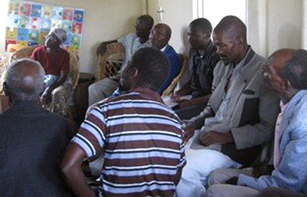
Men gather to discuss cultural and social issues related to gender justice and equality.
Sitting on a traditional stool at a Dare—a special meeting platform, Chief Chiveso of Mashonaland Central Province in Zimbabwe speaks to men about the possibility of having babies born HIV free and keeping their mothers alive. For that to happen, stresses the Chief, there is a need to challenge harmful cultural and religious practices that can affect community responses to HIV. "As a Chief, I am going to continue supporting and leading health issues in my village so that families can live better.”
Chief Chiveso has the support of Padare/Men’s Forum on Gender—a Zimbabwean organisation that works with traditional leaders in Mashonaland to influence public opinion on various community issues. These include the promotion of HIV services and mobilising men to actively participate in preventing new HIV infections among children.
Men play a significant role in defining community practices. Traditionally, Zimbabwean men would gather around a fire or under a tree to discuss community issues and make decisions about the community while excluding women and children. This practice fuelled gender inequalities since most decisions did not take into account women’s views.
Padare’s goal is to subvert this exclusive male practice and bring together traditional and local leaders, pastors, grandfathers, fathers, uncles and brothers to discuss cultural and social issues related to gender justice and equality, including the support for programmes to stop new HIV infections among children.
"In these communities men have positions, power and privileges that come from patriarchal values. We are harnessing their power so that they can be agents of social change in their communities," said Kevin Hazangwi, Director of Padare.
Zimbabwe’s National AIDS Strategic Plan aims to reduce transmission of HIV from mothers to children from 14% in 2010 to 7% in 2013 and to less than 5% by 2015. Currently, Government figures indicate 70% coverage of prevention of mother-to-child HIV transmission services in the country.
Rising community voices in HIV action
Through the Padare initiative, Chief Chiveso engages men in open dialogues where community members are encouraged to challenge low health seeking behaviours in the village and to understand HIV prevention, treatment and care services. These interactive dialogues—known as Community Conversations—enable community decision-making and actions concerning the elimination of HIV.
“This programme gave me a lot of knowledge about existing antiretroviral drugs and HIV prevention services,” said Tatenda, a proud father living with HIV. “I was supporting my wife when she was in labour. I now have twins who were born HIV negative.”
We are harnessing the power of men so that they can be agents of social change in their communities
Kevin Hazangwi, Director of Padare
Padare also conducts consultative meetings that tap into the local rich traditions. These meetings enable communities to identify gaps in knowledge and attitudes, behaviours and cultural practices that are harmful to the AIDS response. In these open discussions, community members are able to raise key issues and provide solutions without personalising the issues. Spousal inheritance and girl pledging for spirit appeasement—offering of a young girl to remedy criminal offences or to appease the spirit of a murdered person—are among the negative cultural practices that are discussed.
A higher-level platform known as Indaba is also used by Padare to engage the Chiefs themselves to advocate for greater action in their respective communities. Such dialogue enables the Chiefs to agree on sound HIV policies ensuring the involvement of men in preventing new HIV infections at community and national level.
“As Chiefs we should play a major role in sensitising our communities. Over and above the right of children to a dignified life, the babies we are losing are potential nurses, doctors and teachers for our society’s tomorrow,” added Chief Chiveso.
Traditional leaders as custodians of culture
Faith-based leaders in Mashonaland Central are also taking action to change negative religious and cultural practices and boost service uptake in their communities.
“Religion and the church have been accused for being the source of male chauvinism and patriarchy. We pledge to keep it as a fountain of hope, a source of information and health,” said Pastor Sifelani, of the Anglican Church in Bindura. “Gone are the days when we would encourage people to flush away antiretroviral drugs because they have been healed and we blamed witchcraft for sickness and death instead of HIV.”
Traditional leaders are considered the custodians of culture and are therefore critical to shift society’s attitudes. Bringing together communities to discuss issues in their own terms has a positive effect in increasing HIV service uptake. There is greater scope for replicating this programming model in sub-Saharan Africa where the idea of men’s forums is culturally appropriate and can be traced to past and current practices.
Feature Story
Arab countries to develop a unified AIDS Strategy to reach targets set in the 2011 Political Declaration on AIDS
15 March 2012
15 March 2012 15 March 2012
The HIV epidemic in the Middle East and North Africa (MENA) region has been on the rise since 2001.
Credit: UNAIDS/P.Virot
“We will save no effort to prevent new HIV infections and new AIDS related deaths in our region,” said H.E. Dr Abdel Latif Wreikat, Minister of Health of Jordan and the Chair of the 37th Session of the Council of Arab Ministers of Health held on 14-15 March 2012 in Amman, Jordan.
At the session, the Council of the Arab Ministers of Health, representing the member countries of the League of Arab States, officially launched the Arab AIDS Initiative. This initiative aims at accelerating national and regional AIDS responses to achieve the targets set in the 2011 Political Declaration on AIDS. “We are committed to maintain HIV prevalence low in the Arab countries” stressed Dr Wreikat.
At the heart of the new initiative are the development of a “Unified Arab AIDS Strategy on HIV and AIDS” and the constitution of a technical committee to follow up the development and implementation of the new strategy. Overall, the strategy will help countries in the region to better understand their epidemics; create stronger political commitment and higher investment on AIDS; and will contribute to streamline AIDS within the wider development agenda. The technical committee will review the global targets of the Political Deceleration and develop a regional roadmap to reach them by 2015.
Sima Bahous, Assistant Secretary General of the League of Arab States expressed their determination to “work with our Member States to meet the commitments they made in signing the Political Deceleration on AIDS.”
We will save no effort to prevent new HIV infections and new AIDS related deaths in our region
H.E. Dr Abdel Latif Wreikat, Minister of Health of Jordan
This unprecedented initiative culminates a growing partnership between UNAIDS and the League of Arab States. A series of regional and sub-regional consultations and workshops took place during 2011 to unite Arab countries in their responses to AIDS. These trainings, which took place under the umbrella of the League of Arab States, were facilitated by UNAIDS who helped develop the agenda as well as the recommendations. UNAIDS has also assisted countries throughout the year in reviewing their National Strategic Plans to ensure that human rights were included in their national AIDS responses.
“We are pleased to see AIDS at the top of the priorities of the Arab League at a time of competing political priorities in the rapidly changing Arab World,” said Hind Khatib, Director of UNAIDS Regional Support Team for Middle East and North Africa.
The HIV epidemic in the Middle East and North Africa (MENA) region has been on the rise since 2001. Although the overall HIV prevalence in the region is still low, the rise in new infections has put MENA among the top two regions in the world with the fastest growing HIV epidemic. Approximately 500 000 people are living with HIV in the region and AIDS-related mortality has almost doubled in the past decade among both adults and children.
The HIV epidemic is primarily concentrated among people who inject drugs, men who have sex with men and sex workers. However, the epidemic reflects the diversity of the region with different populations more heavily affected in different places. Such diversity is further amplified by differing attitudes, policies, political commitments and the availability of and access to HIV prevention and treatment services in the different countries.
Related
Feature Story
Inter-American Commission on Human Rights creates a specialized unit to address human rights of lesbians, gays, bisexual, trans and intersex people
14 March 2012
14 March 2012 14 March 2012
The HIV epidemic in Latin America is mainly concentrated among men who have sex with men (MSM) and transgender persons.
Credit: UNAIDS
The Inter-American Commission on Human Rights (IACHR) has created a specialized technical unit to strengthen its capacity to protect the rights of lesbian, gay, bisexual, trans, and intersex (LGBTI) people in the Americas.
The IACHR is an autonomous body of the Organization of American States (OAS), with a mandate to promote respect for human rights in the region and act as a consultative body to the OAS in this matter.
The specialized unit, created in January 2012, is part of IACHR’s comprehensive approach to promoting the interdependence and indivisibility of all human rights. It takes into account the specific needs of individuals and groups which have been historically the focus of discrimination. Among its functions, the unit analyzes and investigates individual petitions in which violations of human rights of LGBTI are alleged to have been committed by Member States of the OAS.
The HIV epidemic in Latin America is mainly concentrated among men who have sex with men (MSM) and transgender persons. The latter group has reported HIV prevalence rates of 27.6% in Argentina and of 29.6% in Peru in contrast to an estimated HIV prevalence among the general population of 0.5% and 0.4% in both countries respectively.
Trans women and men in the Americas face social exclusion that keeps them away from health care, employment and justice, increasing their vulnerability to HIV and human rights violations
Marcela Romero from REDLACTRANS
In addition, the region has experienced an alarming increase in violence and intimidation towards transgender people and MSM. The Inter-American Commission has received information about murders, rapes, and threats against LGBTI people. The Commission agrees that LGBTI persons face serious discrimination both at social and legal level.
UNAIDS has been working closely with the IACHR in recent years. “UNAIDS and the Inter-American Commission established a strategic alliance, based on a set of actions aimed at achieving zero discrimination and violence, with a human rights approach,” commented Víctor Madrigal-Borloz, Principal Specialist at the Inter-American Commission on Human Rights.
The UNAIDS Regional Director for Latin America Dr César Núñez commended the creation of such a specialized unit. He called upon all countries in the region to fully respect the human rights of men who have sex with men, lesbians and transgender people through “enforcing laws to protect them from violence, promoting campaigns that address homophobia and transphobia and ensuring that crucial health needs are met.”
Expert meeting on violence and impunity against LGBTI people
At the end of February 2012 and under the auspices of UNAIDS, the Commission brought together more than 20 independent experts from academia, human rights institutions, civil society, representatives of security forces, the UN and the IACHR to discuss issues around “violence and impunity against lesbians, gays, trans, bisexual and intersex people”.
The expert meeting was the second of six meetings that will contribute to the first ever Hemispheric Report on Sexual Orientation and Gender Identity. Marcela Romero from REDLACTRANS participated in the meeting and highlighted that “trans people, trans women and men in the Americas face social exclusion that keeps them away from health care, employment and justice, increasing their vulnerability to HIV and human rights violations.”
In 2013, the Commission will evaluate the unit's work and will decide whether to create an Office of the Rapporteur on the Rights of LGBTI Persons.
External links
External links
Related

Feature Story
UNAIDS and UNDP commend New Zealand’s leadership in the HIV response
13 March 2012
13 March 2012 13 March 2012
(L to R): UNDP Administrator Helen Clark, Prime Minister John Key and UNAIDS Executive Director Michel Sidibé.
UNAIDS Executive Director Michel Sidibé and UNDP Administrator Helen Clark praised New Zealand as a model for the AIDS response in a joint meeting on 6 March with the country’s Prime Minister, John Key.
New Zealand implemented early evidence-based programmes to ensure that vulnerable populations receive priority attention and support that was essential to control the spread of HIV. In 1987, New Zealand was among the first countries to introduce needle—syringe programmes for people who use drugs. It was also a regional pioneer in decriminalizing sex work (2003) and sex between men (1986). These programmes and reforms are widely credited with having prevented the spread of HIV among populations at high risk of infection in New Zealand. Nationally, HIV prevalence remains low, with about 0.1% of the population living with HIV.
During the meeting, Mr Sidibé urged Prime Minister Key to champion the UNAIDS vision of vision of Zero new HIV infections, Zero discrimination and Zero AIDS-related deaths in the Pacific region. "You have already made so much progress. Drawing on this experience, New Zealand can be the first country in the Pacific region to show that getting to Zero is possible,” said the UNAIDS Executive Director.
We can never relax—this is a deadly disease, and there is no cure. If you are complacent, HIV prevalence rates can take off
Helen Clark, UNDP Administrator
The UNDP Administrator warned of the need for continued vigilance in the HIV response, even in low prevalence countries like New Zealand. “We can never relax—this is a deadly disease, and there is no cure,” said Ms Clark. “If you are complacent, HIV prevalence rates can take off.”
Throughout the three-day mission to New Zealand, Mr Sidibé and Ms Clark encouraged senior government officials to lift travel restrictions for seasonal workers visiting New Zealand. “HIV-related travel restrictions have no public health rationale and are at odds with New Zealand’s outstanding record on HIV and human rights,” said Mr Sidibé.
Official opening of centre for women living with HIV
On the eve of International Women’s Day, and as part of their official visit to New Zealand, Mr Sidibé and Ms Clark opened Positive Women Inc’s new premises and community house in Auckland for women living with HIV. The organization aims to raise awareness of HIV in the community through educational programmes, with a particular focus on HIV prevention and de-stigmatisation.

Co-founders of Positive Women Inc. Judith Ackroyd (far left) and Suzy Morrison (far right) with UNDP Administrator Helen Clark, National Coordinator for Positive Women and Asia Pacific UNAIDS PCB NGO Delegate, Jane Bruning (centre) and UNAIDS Executive Director Michel Sidibé.
"It is an honour for me to join you in the opening of this impressive community house. Your efforts to support and empower women living with HIV are a true testament of your commitment to the AIDS response," said Mr Sidibé. "Women are critical agents of change and that by harnessing our collective strengths, we can end this epidemic."
The community house has been designed as a safe and welcoming space for women living with HIV and their families. It offers weekly member lunches, a relaxation lounge, a computer corner and printing facilities. Members are encouraged to organize knitting circles and conversation groups with their peers. An on-site social worker attends to the social and psychosocial needs of women and their families.
“Women represent the invisible face of the AIDS epidemic,” said Jane Bruning, National Coordinator of Positive Women Inc. “These are women who run households, cook dinner, have jobs and raise families. They are the ones keeping everything together. So to be able to offer them a place to come for advice or just a chat and a cup of tea is extremely important.”
External links
External links
Feature Story
Sex workers advocate for access to health care and legal services
12 March 2012
12 March 2012 12 March 2012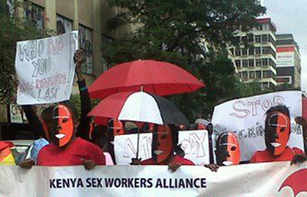
Male and female sex workers marching through the Central Business District of Nairobi, Kenya claiming respect for their rights. 3 March 2012.
More than 150 male and female sex workers marched through the Central Business District (CBD) of Nairobi, Kenya on 3 March claiming respect for their rights. Participants wearing masks signifying the hidden nature of their work walked from Koinange Street—Nairobi’s leading venue for sex work—to the Mayor’s office at City Hall.
One of the main issues highlighted at the event was the stigma and discrimination sex workers face in their work and lives, including while accessing health care and other legal and social services. “If a sex worker goes into a hospital, he or she should be treated with dignity and respect, just like anyone else,” said Fabian who identifies himself as a gay sex worker.
Sex workers often report their difficult experiences with public health care providers. Poor interpersonal communication and even insults from health care providers together with inaccurate diagnoses are some of the problems they confront on a daily basis.
Fabian, who is also a peer support counsellor for the Sex Worker Outreach Programme in Nairobi, stressed that gay sex workers face a ‘double stigma’ that hinders them from accessing health care services. Most male sex workers opt for self-diagnosis and medication, further complicating their health conditions.
According to the 2009 Modes of Transmission Study done by the National AIDS Council, UNAIDS and the World Bank, 14% of new HIV infections in Kenya occur among female sex workers and their clients. Data from the Sex Workers Outreach Program (SWOP 2011) shows an estimated HIV prevalence of 30% among female sex workers and 40% among male sex workers on enrolment (first visit).
The national response to AIDS uses a public health approach to provide HIV services based on evidence. However, only a fraction of sex workers are reached. Fear of stigma and discrimination drive sex workers underground and makes it more difficult for them to access HIV prevention services.
Social and legal protection is critical
In Namibia, sex workers also joined forces to demand their rights through an advocacy event held in Windhoek. During the event, three reports were launched focusing on sex work, HIV and access to health services in Namibia. The reports had been produced by UNFPA and UNAIDS in partnership with the African Sex Workers Alliance (ASWA) in Namibia and the Society for Family Health (SFH).
The publications noted that sex workers are disproportionately affected by HIV due to the nature of their work—most of the time they can not negotiate the use condoms with their clients. They also highlighted that the attitudes and behaviours of health service providers, authorities and the wider community toward sex workers make them even more vulnerable.
Most of our children cannot be legally registered because they do not have fathers and they risk becoming street kids
Moreen Gaweses, a former sex worker
The stigma and discrimination towards sex workers also extends to their children, exacerbating their health risks and isolation. Family members of sex workers suffer from negative attitudes by their communities, which often manifests through verbal and physical abuse, and deprivation of basic rights.
“Most of our children cannot be legally registered because they do not have fathers and they risk becoming street kids,” said Moreen Gaweses, a former sex worker affiliated with The King’s Daughters, an organization that aims to help women who wish to exit sex work.
The 2011 rapid assessment report—a study about sex work and HIV conducted in five towns of Namibia—shows that there are no national guidelines for effective, rights-based programming with sex workers in the country. “We have no place to go for help and the nation needs to recognize that we also have rights” said Ms Gaweses, who gave birth to a baby girl just a week ago.
The reports include recommendations for action by national and local stakeholders to address these challenges and protect the human rights of sex workers. Such recommendations include addressing violence, abuse and stigma towards sex workers as well as reducing legal and policy barriers that block their access to HIV services.
“Decriminalization is the only way to bring down the HIV and abuse of sex workers,” said Scholastica Goagoses, a former sex worker and Director of The Red Umbrella, an organization of sex workers. “Only rights can stop the wrongs in Namibia!”
Related

Feature Story
HIV increasingly threatens women in Eastern Europe and Central Asia
12 March 2012
12 March 2012 12 March 2012
Julia Lasker participated in a panel discussion entitled Achieving MDG6 in Eastern Europe and Central Asia: Focus on Women and Girls.
Credit: UNAIDS/Stan Honda
The glamorous world of pop music and the grim realities of the HIV epidemic in Eastern Europe and Central Asia may seem like strange bedfellows. However, Russian singer and AIDS activist, Julia Lasker, engages in both with full commitment.
Ms Lasker became interested in AIDS in 2009 as she had friends living with HIV. She realised how limited the understanding of AIDS was among young women and, since then, has used her public profile and popularity with young audiences to raise awareness of HIV. “I feel personally responsible for many young girls whom I may prevent from being infected just by providing them with knowledge about the virus and how to prevent it,” she said.
Last week, Ms Lasker returned from New York, where she participated in a panel discussion entitled Achieving MDG6 in Eastern Europe and Central Asia: Focus on Women and Girls organized as part of the UN Commission on the Status of Women. During the discussion she called for a new approach to HIV. “There is a huge need to openly discuss the issue in the society, encourage people to test for HIV, encourage young people to protect themselves and their loved ones, call for tolerance.”
Hosted by the Government of Russia together with the Governments of Finland and Sweden and UNAIDS, the panel discussion brought together government, civil society and UN representatives to find ways to effectively respond to the growing HIV epidemic in Eastern Europe and Central. The event was a follow up to the International Forum on MDG 6—to combat HIV/AIDS, malaria and other diseases—convened in October 2011 under the leadership of the Government of Russia.
Russia stands ready to put its leadership into action assisting countries in the region to achieve MDG6
Dimitry Maksimychev, Deputy Permanent Representative of the Russian Federation to the United Nations
“It is clear that countries in Eastern Europe and Central Asia need to act quickly to stop the growing HIV epidemic among women and girls,” said Dimitry Maksimychev, Deputy Permanent Representative of the Russian Federation to the United Nations. “With less than 1,000 days now until 2015, we need to work together—governments, donors, international organizations and civil society—to maximize our impact. Russia stands ready to put its leadership into action assisting countries in the region to achieve MDG6,” added Mr Maksimychev.
Julia Lasker, like many other women and men engaged in the HIV response in the region, remains determined. “If I can get this message to at least a few people, it's a step in achieving the goal of zero new HIV infections, zero AIDS-related deaths and zero discrimination.”
Women and HIV in Eastern Europe and Central Asia
“Women are especially at risk of HIV due to multiple factors such as economic vulnerability, fearing or experiencing violence, and difficulties in negotiating for safe sex,” said UNAIDS Regional Director for Eastern Europe and Central Asia a.i., Dr Jean-Elie Malkin. “In extreme cases women combine all vulnerabilities associated with drug use, sex work, social marginalisation and stigma and discrimination which prevent them from accessing HIV services,” he added.

Julia Lasker meeting with Deputy Secretary-General of the United Nations, Dr Asha-Rose Migiro
Credit: UNAIDS/Stan Honda
The number of people living with HIV in Eastern Europe and Central Asia almost tripled between 2000 and 2009. In 2010 there were an estimated 1.5 million people living with HIV in the region. The number of new HIV infections acquired through heterosexual contact has increased by 150% in the last decade. HIV represents a growing threat for women in the region. Women make up a rising proportion of people living with HIV—up to 50% in some countries in Eastern Europe and Central Asia. In Russia, for example, the number of young women with HIV aged 15-24 is two times higher than among men of the same age.
While significant progress has been made in some areas—in 2010, 88% of pregnant women living with HIV in Eastern Europe and Central Asia received treatment to prevent HIV transmission to their child—challenges remain. Recognising that not all women are reached by HIV services and programmes, the Government of Russia together with UNAIDS and partners are collaborating to develop guidance on how to increase access to HIV treatment, care and support services for all women—including people who use drugs, their sexual partners, sex workers, prisoners and other key populations at higher risk of infection.
“There is opportunity and space for addressing the HIV needs of women, using their sexual and reproductive health concerns as an entry point,” said Evgenia Maron, of the Astra Foundation, an AIDS service organization in Russia. “There is a need to meaningfully involve women living with and affected by HIV in all aspects of the AIDS response. We know what our realities are, we know what we need and we know what the solutions are,” she added.
Related
 Women, HIV, and war: a triple burden
12 September 2025
Feature Story
United States Congressional Staff first-hand view of Zambia’s AIDS response
09 March 2012
09 March 2012 09 March 2012
The delegation of United States Congressional staff members visited the ASAZA project, one of the main programmes in the country responding to gender violence and child sexual abuse.
A delegation of nine United States Congressional staff members travelled to Zambia from 18 – 24 February. The aim of the visit was to have a first-hand understanding of the progress made and challenges remaining in scaling up HIV treatment, care and prevention programs in one of the most heavily impacted countries Sub-Saharan Africa.
The trip, organized by UNAIDS in collaboration with the Office of the United States Global AIDS Coordinator and the American Embassy in Lusaka, provided Congressional staff with an overview about how the United States government and the United Nations system are working with the Government of Zambia to support the country’s AIDS response.
“What I have seen this week only reinforces my belief that the United States has a critical role to play in helping local communities address the many profound challenges posed by AIDS,” said Diana Ohlbaum, Democratic Congressional staffer co-leading the visit. “It’s inspiring to see how much of an impact what we do in Washington has here on the ground in Zambia,” she added.
What I have seen this week only reinforces my belief that the United States has a critical role to play in helping local communities address the many profound challenges posed by AIDS
Diana Ohlbaum, Democratic Congressional staffer
Zambia has an estimated HIV prevalence of 13.5% with more than a million people living with HIV. Each year there are an estimated 82 000 new HIV infections in the country. While there has been important progress in scaling up access to antiretroviral treatment and in reducing new infections among children, the delegation saw a need for greater efforts to address the structural causes of vulnerability to HIV such as gender disparities.
The delegation visited a variety of programs in Lusaka, Monze and Livingstone—including programs focused towards the elimination of new infections among children, male circumcision and access to HIV treatment. The group also learned about the opportunities to integrate HIV programs and other primary health services, including the recently launched Pink Ribbon-Red Ribbon Initiative which seeks to better integrate HIV and cervical cancer programs.
Gender violence and child abuse
The delegation visited one of the main programmes in the country responding to gender violence and child sexual abuse. The programme, hosted at the Mazabuka District Hospital outside Lusaka, has been supported by both United States and United Nations funding and is designed to mitigate the impacts of sexual and gender-based violence.

ASAZA also supports a men’s network which works through traditional leaders in both urban and rural settings to change behavior and set new social norms among men.
Known as the ASAZA program, short for “A Safer Zambia”, the project supports survivors of sexual and gender-based violence through integrated care and long-term assistance and by working with surrounding communities to make it less common. Some of the support provided includes the collection and preservation of forensic evidence, prosecution of perpetrators, provision of medical treatment and facilitation of links to safer houses and survivor support groups.
ASAZA also supports a men’s network which works through traditional leaders in both urban and rural settings to change behavior and set new social norms among men.
“We know that gender-based violence and abuse are contributors to the AIDS epidemic in many countries,” said Lisa Carty, Director of the UNAIDS office in Washington, DC. “To see the model developed at ASAZA, particularly the involvement of the men’s network, and to hear the courageous stories of gender-based violence survivors is proof that communities can take action to combat gender violence. We all need to support this type of innovative approach,” she added.
Related
 Communities, authorities and UNAIDS coordinate to maintain HIV care during emergencies in Colombia and Venezuela
23 September 2026
 UNAIDS works with partners and communities to support Zambia's rollout of Lenacapavir to prevent new HIV infections
09 September 2026
 Built on trust - Community-led HIV responses in Thailand
26 August 2026