Feature Story
The importance of comprehensive sexuality education for Africa’s young people
07 December 2021
07 December 2021 07 December 2021A message of support for the ESA Commitment from Professor Mbulelo Dyasi, Vice Chair, Board of Directors, INERELA+, delivered at ICASA 2021
As religious leaders, we have a trusting relationship between us and our congregations. As beholders of God’s truth and a belief system based on faith, our relationships with our congregants and communities are based on a strong basis of belief and as custodians of good values. This provides us with a platform to advocate and motivate for the betterment of our people from a faith perspective while we can also work together with our congregations in finding solutions to the challenges they face in their environments.
Today, we are in a situation where our nation and our continent are at the right place to advance in areas of economics, infrastructure and human resources. This is because we have young populations who are fast growing up to be productive citizens. These young people need direction and guidance to be able to make good decision, have positive family lives and be good citizens. And as religious leaders we play an important role in providing this guidance. Parents in our congregations know their role in providing this guidance. And we live in a modern society with modern education and health systems, so we need teachers, social workers and health workers to also provide this guidance. Each has a role to play in improving society.
We trust a government that acts in our best interests. Since 2000, the South African Government has been providing our children with the education and guidance they need. This education, called Life Orientation/Life Skills, where sexuality education is embedded, complements the values and direction that we provide as religious leaders through our sermons and that parents provide at home. We have to make sure that our children can negotiate issues of sexuality and relationships from a position of knowledge and power, rather than a position of ignorance and fear. From a position of truth and science, rather than a position of misinformation and helplessness.
There are those who try to spread fear and disinformation, creating panic and claiming to be the guardians of family values. The truth is that many of us who are believers, who are parents, who are teachers, are united on human dignity. And sexuality education promotes human dignity. Because sexuality education ensures that our children learn to treat each other with respect and dignity from an early age. It ensures that our children learn to think about what is right and safe for them, and how to avoid coercion, sexually transmitted infections, including HIV, and early and unintended pregnancies. It helps to keep our children safe from abuse by teaching them about their bodies.
Young Africans must have the facts and confidence to stay safe and healthy, live a dignified life and contribute positively to their community and countries. They must trust us, their elders, to tell them the truth. Therefore, as religious leaders we pledge our support today to the ESA Commitment, which seeks to enhance efforts in ensuring the health and well-being of our children and young people. We commit to work with our governments to accelerate action towards realizing the agreed upon targets so that in 2030 we can all see the vision of an AIDS-free generation.
As religious leaders we hereby endorse the ESA Commitment towards 2030 aiming to ensure that we close the gap of comprehensive knowledge of our young people to protect themselves from new HIV infections, early and unintended pregnancies and gender-based violence and early child marriages. We promise to engage with our constituencies to create an enabling environment for adolescents and young people to access sexual and reproductive health services and use our platforms to empower parents to be able to talk with their children on issues affecting their health and well-being. With the challenge of COVID-19, we also commit ourselves to work together with our communities in finding innovative ways to ensure access to information and essential services during times of crisis. Working together we will surely win the fight against HIV and other pandemics.
Thank you!
Professor Mbulelo Dyasi, Vice Chair, Board of Directors, INERELA+
Related


Feature Story
Commemorating World AIDS Day in the Central African Republic
06 December 2021
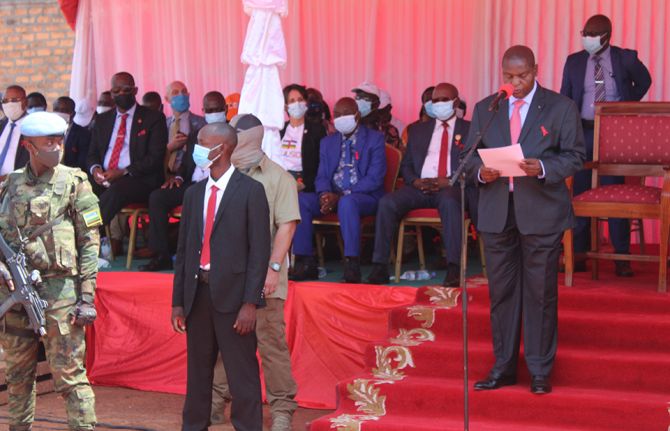
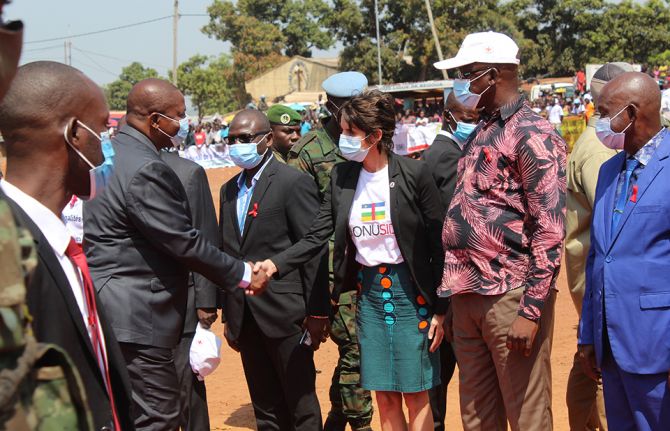
06 December 2021 06 December 2021World AIDS Day 2021 saw the authorities in the Central African Republic and others involved in the HIV response in the country come together to provide information on HIV, promote HIV prevention, treatment and care and show their solidarity in the face of the pandemic. This year, the President and Head of State of the Central African Republic, and President of the National AIDS Council, Faustin-Archange Touadéra, presided over the ceremony in the commune of Bégoua, near the capital, Bangui.
In line with the Dakar Call to Reinvent the Response to the HIV Pandemic, adopted at the recent High-Level Regional Summit on HIV/AIDS in Western and Central Africa, Mr Touadéra urged the Ministers of Health and Population and of Budget and Finance to ensure that 500 million central African francs is included in the government’s 2022 budget for the HIV response. He also tasked the Prime Minister to report on the actions taken in the HIV response. One of the four pillars of the Dakar Call to Action is to increase national and international resources devoted to HIV in the region by 33% by 2025.
Mr Touadéra also noted the importance of removing financial barriers to accessing health services for people living with HIV.
Bienvenu Gazalima, the President of the Network of People Living with HIV in the Central African Republic (RECAPEV), said that, “Access to antiretroviral drugs has improved, from 12% of all people living with HIV in 2013 to 58% by the end of 2020, but remains one of the lowest in the world. HIV treatment is available in only 10% of the country’s health facilities.”
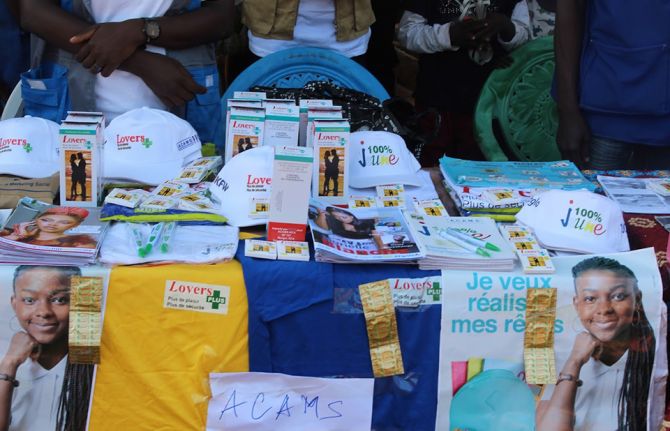
On the eve of the World AIDS Day commemoration, messages from the Minister of Health and Population and UNAIDS were broadcast on major radio stations and national television. Information on preventing new HIV and COVID-19 infections was given out, especially to young people, in several provinces of the country. With the support of UNAIDS, sensitization caravans criss-crossed the streets of Bangui for several days to spread messages on HIV transmission, HIV prevention, vulnerability to HIV and HIV-related discrimination.
“We are at a crossroads. Leaders have a choice between bold actions and half measures. The transformative approach we need to end AIDS will also protect humanity from future pandemics,” said Marie Engel, UNAIDS Country Director for the Central African Republic, a.i.
Region/country
Feature Story
Learning lessons from current and future pandemics
26 November 2021
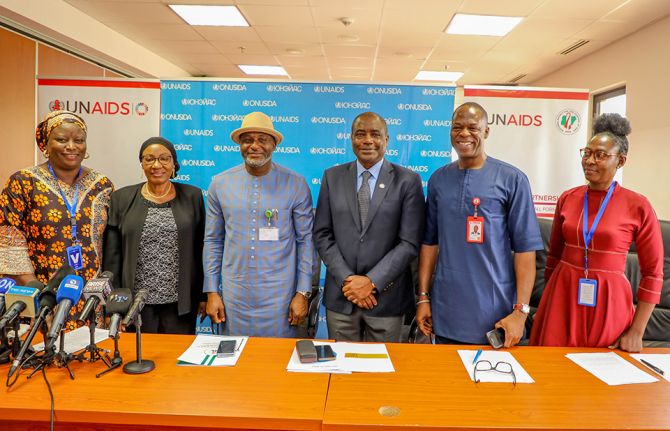
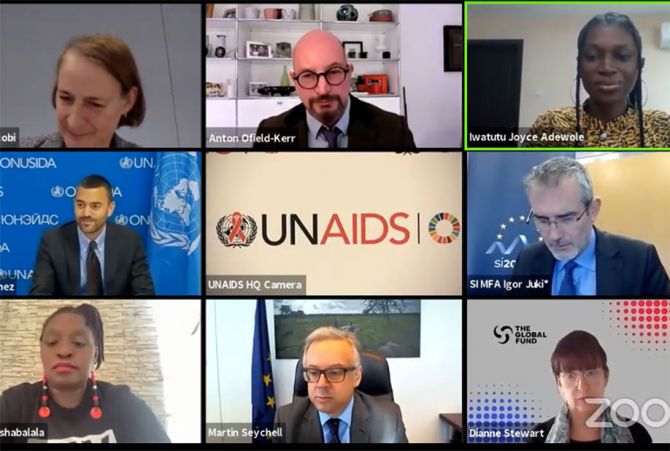
26 November 2021 26 November 2021An event hosted by the Slovenian Presidency of the Council of the European Union (EU), in conjunction with UNAIDS and Aidsfonds, recently brought together thought leaders and decision-makers with the goal of discussing the EU’s engagement in the AIDS response, the effects of COVID-19 and the role of communities.
The virtual session, organized as a lead-up to World AIDS Day on 1 December, moderated by youth activist Iwatutu Adewole, convened representatives of the European Commission, the European Parliament, the Slovenian Presidency of the Council of the EU, the Global Fund to Fight AIDS, Tuberculosis and Malaria (Global Fund) and HIV civil society leaders from South Africa and Kenya.
During the panel discussion, the speakers examined the progress made in the AIDS response and the numerous challenges that hinder the achievement of the 2030 targets. The Treatment Action Campaign’s Chairperson, Sibongile Tshabalala, underlined that the fight against HIV had not yet been won. “Although faced with serious challenges, such as lack in access to services, sexual and gender-based violence and persistent stigma and discrimination, we are talking today about the successes and progress we have made,” she said. She stated that community voices were important for the AIDS response and to fight COVID-19.
The severity of the challenges faced by the response was echoed by Helena Dalli, the EU’s Commissioner for Equality. During her keynote speech, she emphasized the importance of tackling inequalities to ending AIDS, advancing the human rights of people living with HIV and making societies better prepared to beat COVID-19 and other pandemics.
The panellists reaffirmed their commitment to ending inequalities, calling for the protection of the human rights of people living with and at risk of HIV, the repealing of outdated laws that criminalize HIV transmission and same-sex sexual relations, addressing sexual and gender-based violence, safeguarding the sexual and reproductive health and rights of girls and women and empowering community-led responses. Joyce Ouma, Influence and Engagement Advisor at Y+, stressed the need to meaningfully engage in all processes and let young women lead at all stages, from conception to evaluation. “We need to place people at the centre, we need to support community-led initiatives,” said Martin Seychell, the Deputy Director-General of the European Commission’s Directorate-General for International Partnerships.
The EU is a committed ally of the multisectoral global AIDS response, as reflected in its political commitments and contributions. It places gender equality and human rights protection at the centre of its external action, through mechanisms such as the Gender Action Plan 2021–2025, the Action Plan on Human Rights and Democracy 2020–2024 and the upcoming Youth Action Plan. To date, it has invested €2.6 billion in the response to HIV, of which €2.1 billion went to the Global Fund. The Global Fund’s new strategy for 2023–2028 will be crucially important to the achievement of UNAIDS’ new targets. “We know what we need to do, we just have not scaled the actions nor had sufficient funding,” said Dianne Stewart, Head of Donor Relations at the Global Fund.
Earlier this year, the European Parliament approved a resolution on accelerating progress and tackling inequalities towards ending AIDS as a public health threat by 2030. The Chair of the European Parliament’s Gender Equality and Women’s Rights Committee, Evelyn Regner, expressed the European Parliament’s “full support” to scaling up investments in UNAIDS and the Global Fund and to prioritizing the fight against stigma and discrimination, sexual and gender-based violence and the criminalization of same-sex sexual relations and other punitive and discriminatory laws and policies.
The UNAIDS Chief of Staff, Efraim Gomez, concluded by reminding the panel that the world is off track to end AIDS by 2030, as the 2020 targets had not been met, and called for sustained funding and investment into the HIV response. Referring to the EU’s leading role in pandemic preparedness, he said, “The HIV infrastructure is the backbone of pandemic preparedness, and so investing in HIV yields far beyond it in pandemic preparedness. Help us end inequalities. All AIDS-related deaths are avoidable, and all new HIV infections as well. It is just a question of mustering the will to beat AIDS.”
Watch
Feature Story
Ready to be the change
26 November 2021
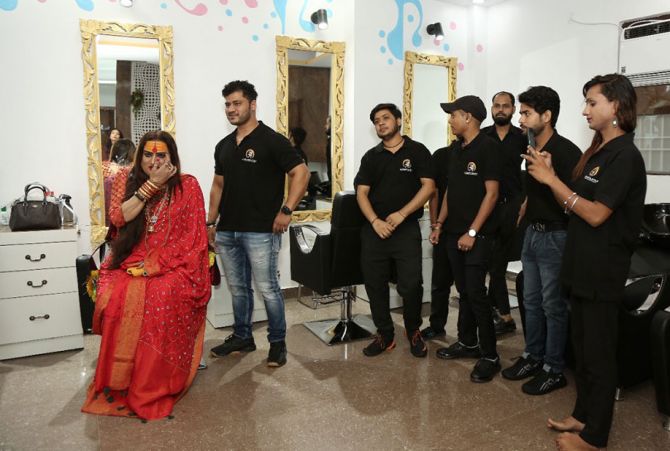
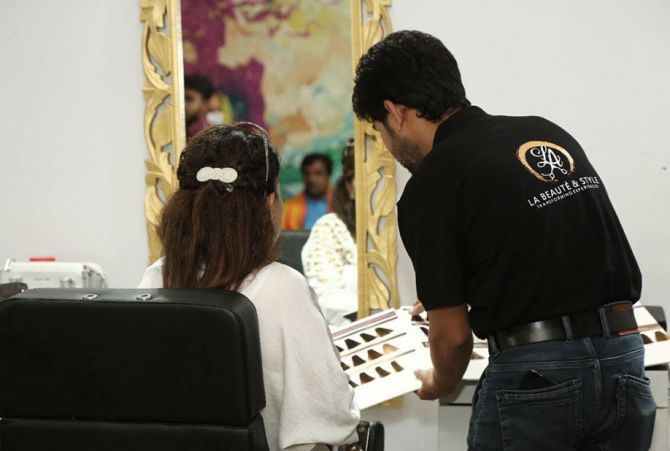
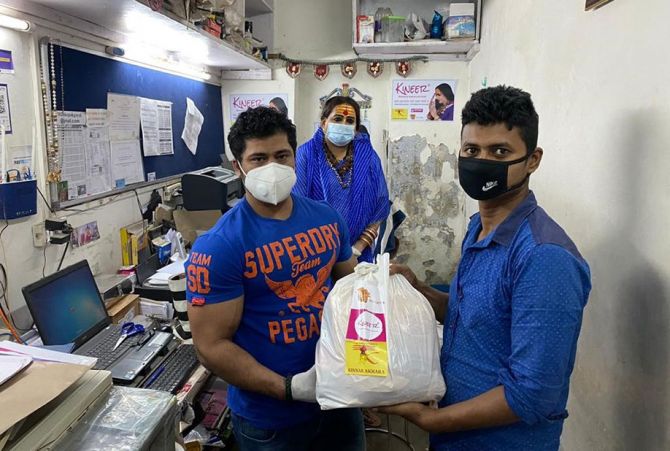
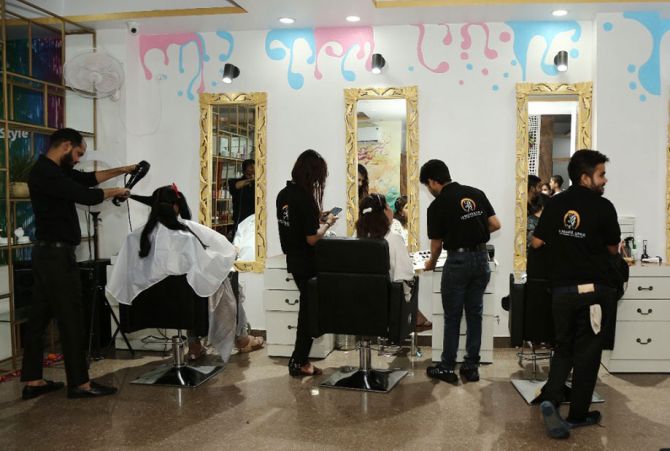
26 November 2021 26 November 2021La Beauté and Style salon, created by UNAIDS Solidarity Fund grantee Gaurav Trust, opened its doors to customers in September 2021. Located in Ghaziabad, Uttar Pradesh, India, it is one of the few Indian salons that is established, managed and run by members of the transgender community. The salon is a social enterprise set up to provide socioeconomic support and to address the age-old, yet deeply woven, stigma that the community faces in India.
“There are skilled and talented individuals from the community who fail to make a mark in the beauty industry because of stigma surrounding their identities. I know of a transwoman who was let go from a salon despite being an exceptional worker,” said Laxmi Narayan Tripathi, a key member of the social enterprise.
Despite the Transgender Persons (Protection of Rights) Act 2019, the transgender community continues to face denial and rejection in areas such as employment, health and public services.
Ms Narayan Tripathi has been a transgender activist since 1999 and has seen discourse evolve from HIV to now encompass funding opportunities and social enterprises led by the community. Aryan Pasha, who is a lawyer, activist and India’s first transgender man bodybuilder, and Ms Narayan Tripathi are both board members of the Gaurav Trust, a community-based organization working on the promotion and protection of the health and rights of sex workers, gay men and other men who have sex with men and the lesbian, gay, bisexual, transgender and intersex community, and young people. Its programmes specially focus on using its networks to strengthen project management, skills-building and livelihood support to nurture a self-sustaining community. Despite their collective advocacy and action over the years to advance the welfare, rights and health of transgender people, stigma remains a major challenge.
While the Gaurav Trust team acknowledge that breaking stigma is a long process, they also believe that change is inevitable. By recruiting and engaging community members, La Beauté and Style salon is an opportunity for the team to establish a platform promoting socioeconomic inclusion. It will provide a conducive space for many interested people to leverage beauty and grooming training facilities and develop essential skills, enabling them to earn a livelihood.
“During the COVID-19 pandemic, we saw people from the community who had lost jobs and had no place to live. So why not have a space where our own people can feel safe and comfortable and also create jobs and experts from within the community?” said Mr Pasha. To uphold this vision, 70% of people employed at the La Beauté and Style salon will belong to the transgender community.
The uplifting reaction from the community towards social entrepreneurship models encouraged Ms Narayan Tripathi to leverage her network to mobilize additional funding from partners and local bodies to sustain and grow the enterprise. Through the example of La Beauté and Style salon in Ghaziabad, they have been successful in creating a pipeline of other diverse social entrepreneurship projects led by the transgender community for the coming months. The team believes that interesting entrepreneurial ideas that exist within the community can succeed if funding is made available.
Established to support vulnerable populations to survive the immediate impact of the socioeconomic crises exacerbated by the COVID-19 pandemic, the UNAIDS Solidarity Fund is a critical instrument in building sustainable income mechanisms.
“Through these tools of self-reliance, we are nurturing a variety of leaders. Today, our diverse grantees are enhancing community leadership to set the path for future entrepreneurs. And the community-led social enterprises are ultimately working towards the collective objective of inclusion and socioeconomic prosperity,” said Nandini Kapoor Dhingra, Community Support Adviser at the UNAIDS Country Office for India.
For the fellow grantees of the Solidarity Fund, this project has set a precedent for sustainability and growth beyond the seed funding. As a message to the fellow grantees, Ms Narayan Tripathi said, “From the point of seed funding, it is important to think of sustainability. It remains essential to look for partners and local funders to enhance the project. It takes hard work and advocacy, but success is certain.”
Currently, the second cohort of community members is being trained in Pune, which will host the newest franchise of La Beauté and Style salon. Through this journey of hope, highs and lows, community members have been keen to grow and uplift the socioeconomic fabric of the transgender community in India.
Watch this social enterprise featured on Indian national television.
Watch
Region/country

Feature Story
Supporting people living with HIV with income generation in the Central African Republic
17 November 2021
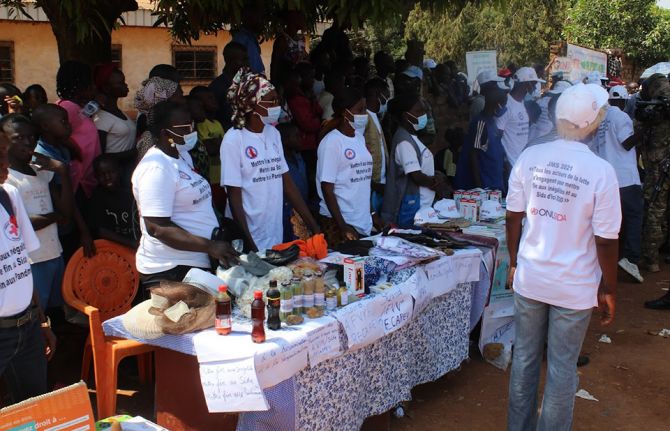
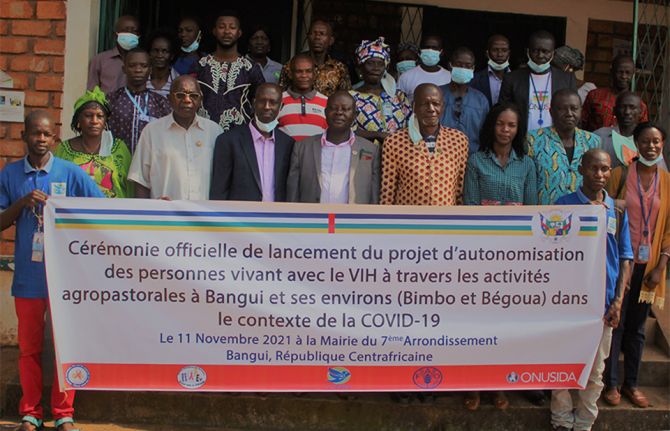
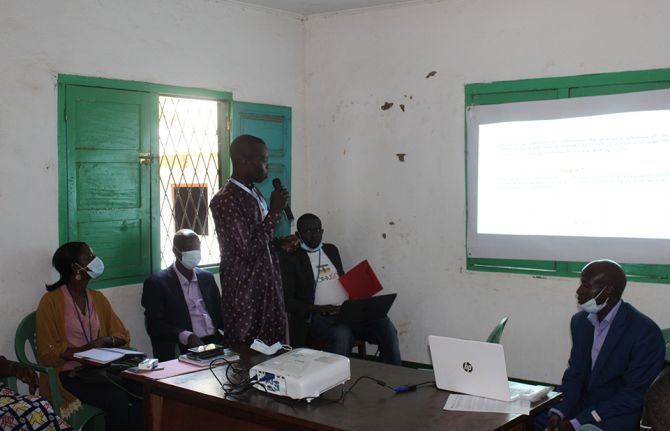
17 November 2021 17 November 2021On 11 November, a project to support the empowerment of nearly 400 people living with HIV through training and involvement in agropastoral activities was launched in the seventh arrondissement of Bangui, Central African Republic.
According to Joseph Tagbale, the Mayor of the seventh arrondissement, “This project is timely and comes as a breath of fresh air, as people living with HIV have paid a heavy price during the COVID-19 pandemic, firstly because of their high risk of infection due to their weak immune systems and secondly because of the collapse of their means of subsistence due to repeated confinements.”
The Multi-Partner Trust Fund granted the UNAIDS Country Office for the Central African Republic US$ 150 000 to support activities for people living with HIV in the context of COVID-19. These activities were chosen in collaboration with the Comité National de Lutte Contre le Sida (CLNS), the Ministry of Health and the Central African Network of People Living with HIV (RECAPEV) and will be implemented by the United Nations Food and Agriculture Organization and the international nongovernmental organization Solidarité pour la Paix et le Développement Intégré.
The activities consist of agropastoral activities (small-scale livestock farming and other farming activities), the production of face masks and income-generating activities, such as sewing, catering and the sale of soap and kitchen utensils. All these activities will enable people living with HIV to sustainably meet their needs and better adhere to their antiretroviral therapy, since due to the COVID-19 pandemic many people living with HIV have stopped taking their treatment because of problems in accessing food. “COVID-19 has destroyed all our progress in adherence to treatment, and people living with HIV have a lot of difficulty feeding themselves, as many are unemployed,” said Bienvenu Gazalima, the National Coordinator of RECAPEV.
The income-generating activities will be supported in four arrondissements of Bangui and in two surrounding communes, Bimbo and Bégoua, which were selected because they have large numbers of people on antiretroviral therapy.
Throughout the project, peer educators will educate people living with HIV on treatment adherence and other health issues, such as COVID-19 prevention and vaccination. Emphasis will be placed on involving women in the activities. “I am delighted that women living with HIV are so strongly integrated in this project, because it is they who have paid the highest price during this crisis,” said Marcelline Seremandji, adviser to civil society associations at CLNS.
“In the Central African Republic we are witnessing how structural inequalities and lack of income have direct impacts on health and HIV outcomes. The lower someone’s social and economic status, the poorer their health is likely to be. Addressing food insecurity and malnutrition, keeping adults earning an income and keeping children in school helps to ensure the efficacy of HIV treatment,” said Marie Engel, the Director, a.i., of the UNAIDS Country Office for the Central African Republic.
Region/country
Related
Feature Story
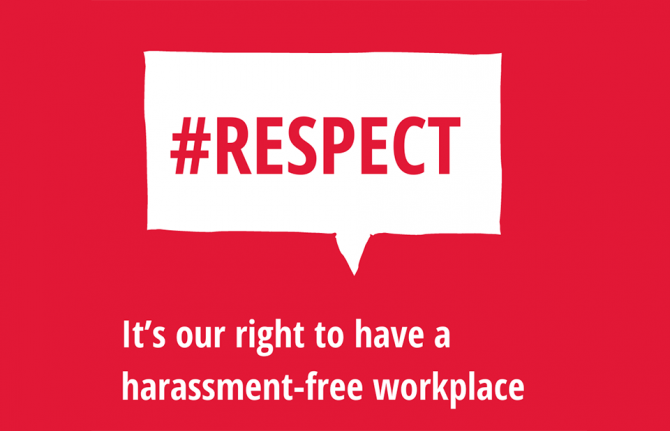
UNAIDS Respect campaign against abusive conduct
16 November 2021
16 November 2021 16 November 2021Launched by the UNAIDS Executive Director, Winnie Byanyima, in mid-September, the Respect campaign is raising awareness among UNAIDS staff of the UNAIDS/World Health Organization Policy on Preventing and Addressing Abusive Conduct, updated in early 2021.
“It is our right to work in a respectful environment, a right that each and every one of us is entitled to, as well as obligated to uphold. Together, we will make our workplace equal, safe and empowering,” wrote Ms Byanyima in a message to all staff.
The policy expanded the scope of protection to include interns and consultants and now describes, with examples, types of abusive conduct. The new policy also removed the requirement for complaints to be made within a specific time limit.
“A few colleagues came up to me to share their own stories and situations when they didn’t feel valued. They were appreciative that we are naming these issues. This is a way to show our support and explain avenues to address these situations to those who had to endure them. It also increases the stakes for those who act in this way because they know that all of us know this is not acceptable,” said Mumtaz Mia, who leads the culture transformation process at UNAIDS.
The campaign aims at improving knowledge and understanding of what is considered abusive conduct by using everyday examples and is based on six different experiences representative of abusive conduct, from discrimination, to abuse of authority, to sexual harassment and homophobia.
“Every staff member and consultant at UNAIDS is entitled to and has the right to expect a safe and respectful workplace. This is an obligation that each one of us, from the Executive Director to our ancillary staff, has to our workmates. Our staff surveys have told us that hasn’t always been the experience for everyone working in the organization and so the Respect campaign is a much-needed and positive development which the Staff Association hopes will contribute to building a better and healthier UNAIDS workplace for each and every one of us,” said Stuart Watson, Chair of the UNAIDS Secretariat Staff Association.
As part of the campaign, conversations on abusive conduct are taking place within UNAIDS teams, with staff invited to learn more about abusive conduct. Looking to the future, the campaign will continue, building on the current campaign and reflecting the lived experiences of staff across the organization.
The recent UNAIDS Global Staff Survey revealed that 55% of respondents feel that UNAIDS takes allegations of discrimination, abuse of authority, ill treatment and sexual harassment seriously. Half of the respondents also said that they feel comfortable to speak up and address colleagues about incivility or exclusionary behaviour they experience or observe. While these are above benchmark figures, UNAIDS’ management will keep monitoring the situation. The aim is to narrow the gap between experienced abusive conduct and reporting and action against the conduct, as well as the overall reduction of abusive conduct for a safe, equal and empowered UNAIDS for everyone.

Feature Story
Prioritizing human rights to end inequalities and end AIDS
09 June 2021
09 June 2021 09 June 2021Inequalities and human rights barriers, which have been magnified by the COVID-19 pandemic, are preventing progress towards ending AIDS as a global public health threat by 2030. They facilitate the transmission of HIV by increasing vulnerability to HIV and limiting access to health services, particularly for gay men and other men who have sex with men, transgender people, people who use drugs, sex workers, women and girls.
Ending inequalities is both a human rights imperative and a public health necessity. Yet, despite repeated commitments, human rights barriers that drive inequalities, such as stigma, discrimination, violence and punitive laws, continue to undermine the HIV response.
To highlight the critical need for progress on human rights barriers, and to call on all stakeholders to play their part to increase action, UNAIDS convened civil society partners, United Nations Member States, jurists and development organizations on the sidelines of the United Nations High-Level Meeting on AIDS in New York. At the event, From Promises to Action: Scaling Up Efforts against Human Rights Barriers, including HIV-Related Stigma and Discrimination, which took place on 9 June, the panellists emphasized the critical need to generate long-term investment and transformative action on human rights and stigma and discrimination, particularly on discriminatory criminal laws, in order to change structural and social barriers and, ultimately, reduce inequalities.
The panellists exchanged best practices, discussed how human rights-based and gender-transformative approaches could reduce inequalities and issued a call for a rapid scale-up of funding, commitment and action in this area to reach the people most left behind.
The event served as a reminder that 62% of new HIV infections in 2019 were among key populations, who are still criminalized in many countries, and their sexual partners, that due to gender inequality and harmful gender norms, AIDS is still one of the leading causes of death among adolescent girls and young women in sub-Saharan Africa and six out of seven new HIV infections among adolescents (aged 15 to 19 years) in the same region are among girls.
The event also provided hope that action and change is possible. During the event, the Governments of Angola, Costa Rica and the Gambia announced that they are joining the Global Partnership for Action to Eliminate all Forms of HIV-Related Stigma and Discrimination.
At the event, Winnie Byanyima, the UNAIDS Executive Director, called on the international community to rally behind the bold new targets and commitments laid out in the Global AIDS Strategy 2021–2026. She highlighted that the strategy was a crucial development, as it set for the first time specific targets to reduce the societal enablers driving inequality, giving them the same priority and commitment as biomedical interventions.
Having new targets means that there is a need for new tools and guidance, and Ms Byanyima unveiled a new series of human rights fact sheets to support action by all stakeholders on removing human rights barriers, such as criminal laws, stigma and discrimination. The series is available in multiple languages: in addition to English, French, Russian and Spanish (follow the language menu on the top right), it's also available in Portuguese (1, 2, 3, 4, 5, 6, 7).
Quotes
“Failure to make any progress across all societal enablers would undermine prevention, testing, treatment and viral suppression targets, resulting in an additional 1.7 million AIDS-related deaths and 2.5 million additional new HIV infections between 2021and 2030. Failure is therefore not an option.”
“Community leadership is an important component in empowering the community to speak out and raise their issues of concern as to the root causes and drivers of stigma and discrimination. These issues can only be addressed if stakeholders across all levels work together in strong partnership with the community.”
“Reaching this vision, however, requires increased and long-term funding for human rights programmes. We know that breaking down human rights-related barriers to health is key for a healthier, fairer and more resilient world. So let’s seize the opportunity and build back better.”
“If our actions in the AIDS response had been more focused on rights and non-discrimination, gender, socioeconomic integration and universal access, the response to COVID-19 would have been significantly stronger.”
“The HIV pandemic is not over. Our strategy to end it must focus on addressing stigma and eliminating inequalities that are impeding full access to health-care services.”
Our work
Related
Feature Story
Kingston declares World AIDS Day as a commemorative day of public interest
10 November 2021
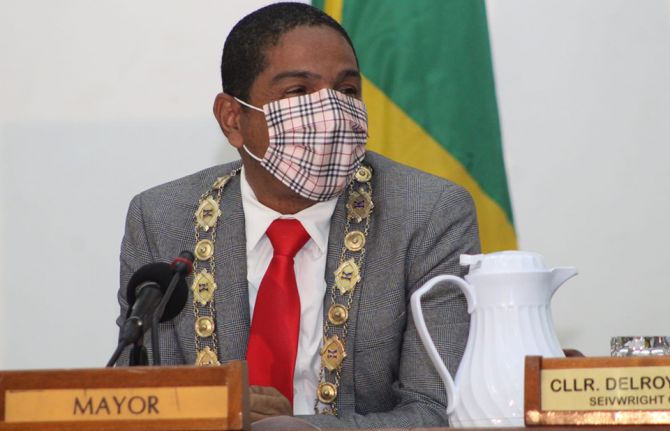
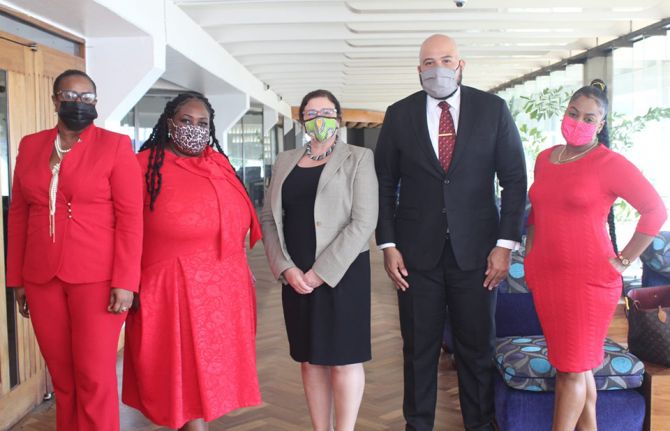
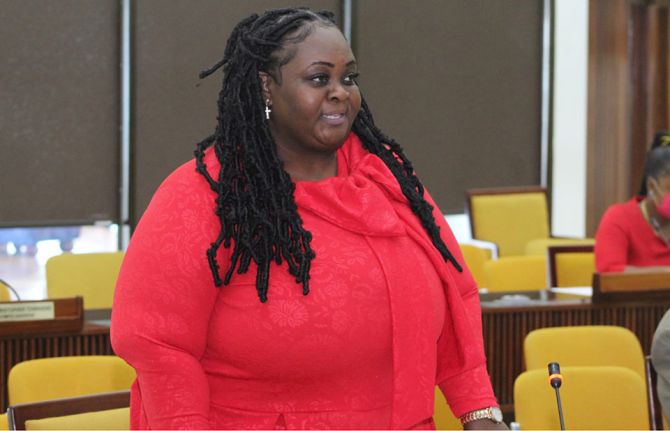
10 November 2021 10 November 2021A resolution calling on the Kingston and Saint Andrew Municipal Corporation to declare World AIDS Day as a commemorative day for the City of Kingston, received unanimous approval by the City’s Councilors today.
The resolution, which reaffirms Jamaica’s commitment with the Sustainable Development Goals, the Fast Track City Initiative, and the 2021 Political Declaration on HIV and AIDS: Ending Inequalities and Getting on Track to End AIDS by 2030, resolves that on December 1st of every year, the City of Kingston, in partnership with the public and private sector and affected communities, will commemorate World AIDS Day.
The Mayor of Kingston, Senator Councilor Delroy Williams lauded the resolution as an important step towards transforming Kingston into a stigma-free city. “This resolution stems from a commitment by the Municipality to keep contributing to the end of AIDS, which will only be possible if we effectively tackle the root causes, including stigma, discrimination, and violence that put Jamaicans at risk of acquiring HIV and not adhering to their medications”, stated Mayor Williams.
Acknowledging that “ending discrimination, stigma and marginalization will result in more persons getting tested, accessing treatment and reducing HIV in the municipality”, the resolution further resolves that “events be held each year within the Municipality of Kingston and St Andrew to raise awareness and to end discrimination, stigma, and HIV related violence”.
According to Jamaica’s latest People Living with HIV Stigma Index, launched in 2020, a third of people living with HIV have experienced at least one form of stigma and/or discrimination due to their HIV status in the last 12 months. Furthermore, more than half of the participants reported experiencing self-stigma, and the majority expressed that they find it difficult to tell others about their HIV status.
“Strong partnerships and commitments from local governments are critical to enhance our efforts to end discrimination. As we continue to work towards an equitable and enabling Jamaica for our brothers and sisters living with HIV who continue to be marginalized, I am heartened and welcome this move by the Municipality, led by the Mayor. The passing of this declaration brings awareness and local buy-in,” stated Jumoke Patrick, Executive Director of JN+.
Manoela Manova, UNAIDS Country Director, highlighted these commitments are a step in the right direction. “We have a lot of work to do to end inequalities, discrimination, and AIDS. The commitment shown by the Municipality and the Councilors, through the passing of this resolution, are both a gesture of solidarity and leadership that must be nurtured and replicated across all levels of government.”
Region/country
Feature Story
UNAIDS is deeply saddened by the sudden death of Ly Penh Sun
10 November 2021
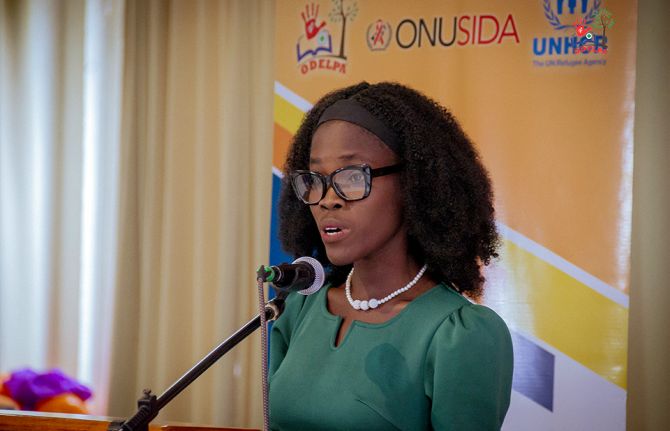
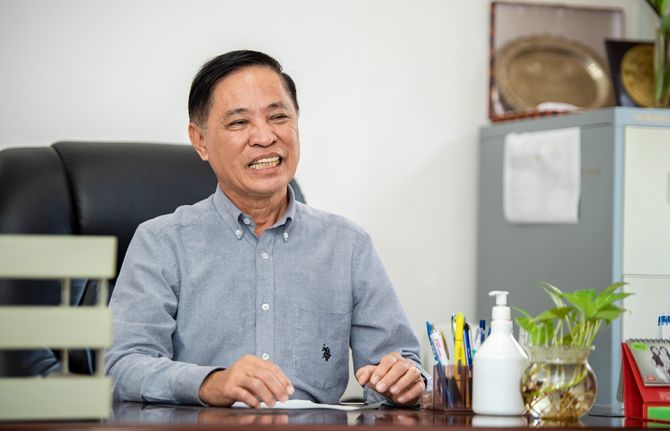
10 November 2021 10 November 2021UNAIDS is deeply saddened by the sudden death of Ly Penh Sun, Director of the National Center for HIV/AIDS, Dermatology and STD (NCHADS) Cambodia, who passed away on 9 November 2021. UNAIDS expresses its sincere condolences to his family, his friends and the country.
Ly Penh Sun was instrumental to the success of the commendable HIV response in Cambodia. He spearheaded and strived towards the last mile of ending AIDS through listening to science and embracing innovations. Under his leadership and in close partnership with civil society, Cambodia set the historical milestones of being one of the first countries globally to achieve 90-90-90 targets in 2017. Together, they set the ‘zero to roll-out PrEP’ model in the region, introduced HIV self-testing and scaled-up multi-month dispensing of ARV treatment to mitigate service disruptions during the COVID-19 pandemic.
“His leadership championed the welfare of people living with HIV and supported communities to be meaningfully involved in the HIV response,” says Khin Cho Win Htin, UNAIDS Country Director a.i. for Cambodia. Ly Penh Sun worked tirelessly to confront HIV-related stigma and discrimination and was a trendsetter for community engagement and people centred approaches. As part of his work, he supported community-led service delivery for HIV prevention tailored to the needs of key populations.
“Ly Penh Sun was a tireless champion for HIV prevention in Cambodia and Asia and the Pacific. He was very influential in the region. He has always promoted and fostered partnership, South-to-South collaboration and sharing of best practices and knowledge. He will forever be remembered as the friend of the community, an innovator and a legend of the AIDS response in Cambodia,” said Taoufik Bakkali, UNAIDS Regional Director for Asia and the Pacific. “He will stay in the memory of the UNAIDS family forever.”
Region/country
Feature Story
Brandy Rodriguez leaves legacy of courageous advocacy and community support
29 October 2021
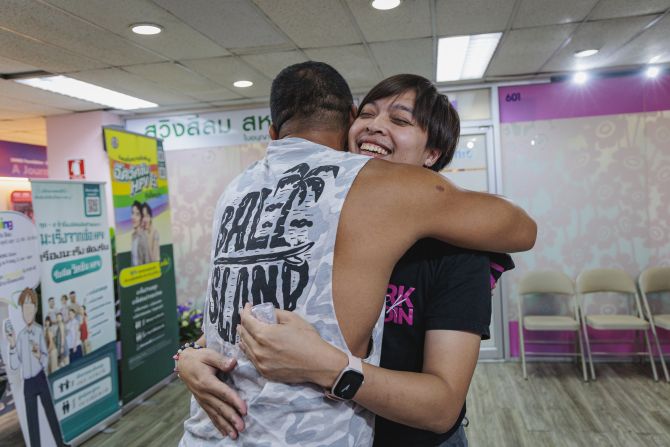
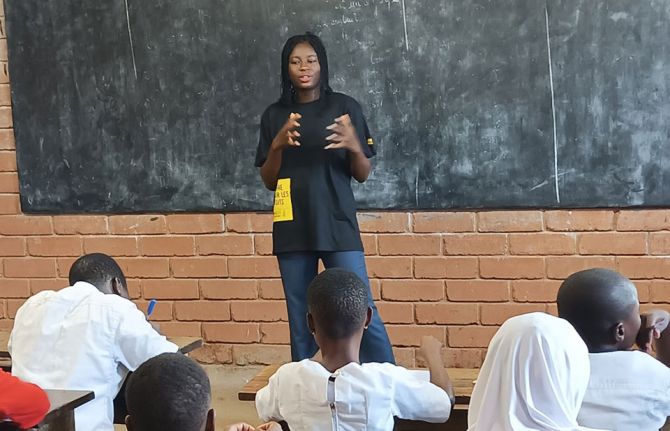
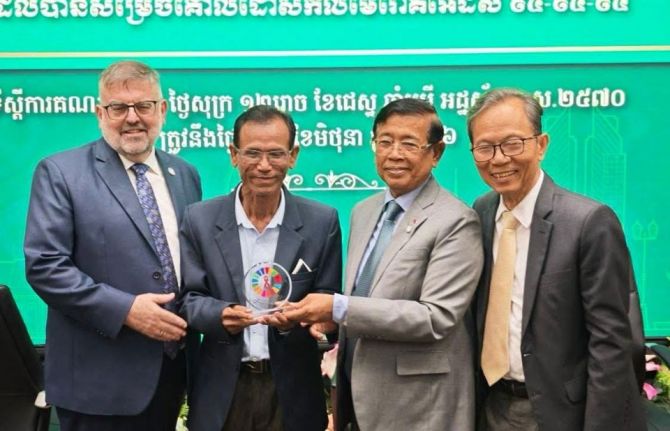
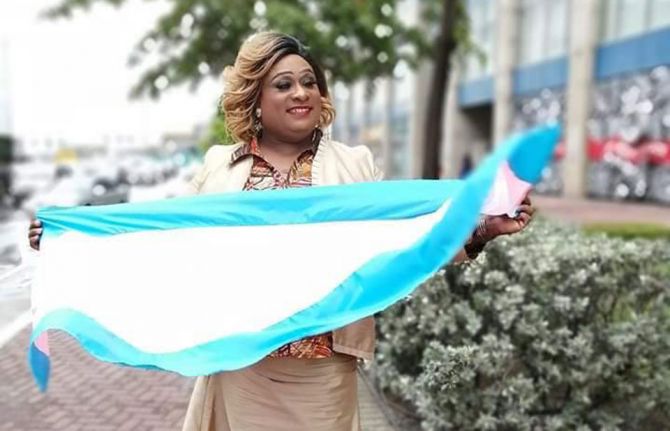
29 October 2021 29 October 2021The Trinidad and Tobago transgender activist and community leader Brandy Rodriguez has died.
Ms Rodriguez was a stalwart of national and regional efforts to advance the rights of lesbian, gay, bisexual and transgender people. She was the President of the Trinidad and Tobago Transgender Coalition (TTTC). Through her collaboration with the United Caribbean Trans Network (UCTRANS) and the Latin American and Caribbean Network of Transgender People, she contributed to the movement for increased visibility, advocacy and community organization around gender identity issues. She also contributed to policymaking and workplace engagement efforts, including as a member of the Pan Caribbean Partnership against HIV and AIDS.
But her impact went even deeper. As a peer navigator for many years at the Family Planning Association of Trinidad and Tobago (FPATT), Ms Rodriguez provided direct support to members of the transgender community, including street-based sex workers.
She also supported transgender people living with HIV to access testing, treatment and care services. Among Caribbean countries that have reported on HIV prevalence for transgender people, the median HIV prevalence is more than 27%, far higher than that among any other key population group. Ms Rodriguez worked to ensure that members of this community not only started treatment but stayed the course.
From the base of the TTTC in Tunapuna, Trinidad and Tobago, Ms Rodriguez worked to ensure that the most marginalized people in her community had access to food, health care and mental health support. During the COVID-19 pandemic, her organization coordinated relief for transgender people who had lost their means of generating income.
This May she was recognized by Queen Elizabeth II for her advocacy and service when she received the 180th Commonwealth Point of Light award.
“Brandy fought fearlessly against discrimination. And in this fight, she didn’t just ask for recognition or plead for equal access to quality health care, but she made the point that it was a right that must come without conditions. She was determined to settle for nothing less,” a release from FPATT said.
In 2018, she addressed journalists at a regional media sensitization hosted by the UNAIDS Caribbean Sub-Regional Office and the Caribbean Vulnerable Communities Coalition. For most of the reporters it was their first time speaking to a transgender person and hearing how stereotypes and prejudice in their reporting were harmful to the community.
“For 22 years it has been an uphill battle, especially in the Caribbean. My conviction to not be silenced and to help vulnerable people keeps me committed to my goal of a better, more inclusive future for all,” Ms Rodriguez said.
The Director of the UNAIDS Caribbean Sub-Regional Office, James Guwani, recognized Ms Rodriguez for her work as a voice for the voiceless.
“She shows why it is imperative that we support community organizations with the ability to connect to those who are hardest to reach. At a time that the global HIV response is focusing on ending inequalities and supporting community-led interventions, we draw inspiration from Ms Rodriguez’s life and work,” he noted.
“The mother of the LGBTI community of Trinidad and Tobago has gained her wings,” said Alexus D’Marco, UCTRANS’ Executive Director. “The work of Brandy Rodriguez will not be forgotten and we must ensure that it continues.”