Feature Story
Survey shows that many people lack multimonth HIV treatment in Latin America
24 June 2020
24 June 2020 24 June 2020Once the COVID-19 lockdown in her country was put in place, Marisela Mariño (not her real name), a transgender woman living with HIV, immediately contacted her treatment provider, convincing them to supply her with antiretroviral therapy to last at least two months.
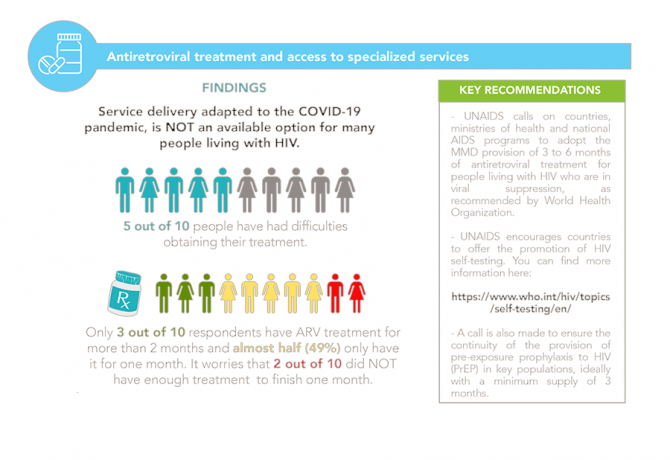
“I was saved by having the phone number of one of the health promoters at the clinic I attend,” said Ms Mariño. But now she, like seven out of 10 people who responded to a Latin American regional survey on the needs of people living with HIV during the COVID-19 pandemic, does not have enough antiretroviral medicines for a lockdown of more than 60 days.
From the online survey, which was answered by 2300 people from 28 countries in the region, it was seen that despite the communication efforts by national health authorities and the international organizations that are leading the response to COVID-19, 31% of people stated that they had not received sufficient information on preventing the transmission of the new coronavirus. More than half, 56%, expressed that they do not have sufficient personal protective equipment, while only 22% of people think that masks are a useful protection against COVID-19.
Claudia Cardenal (not her real name), another transgender woman in the region, says that the offer of services adapted to the COVID-19 pandemic is not reflected in the options for people living with HIV. Ms Cardenal only has antiretroviral treatment for one more month, despite the World Health Organization recommendation that people living with HIV have at least a three-month supply.
The survey also shows that five out of 10 people are having difficulties in obtaining their antiretroviral treatment during the pandemic and less than two out of 10 people had antiretroviral medicines delivered to their homes.
Only three out of 10 people have been offered the option of telemedicine, and four out of 10 people living with HIV in Latin America state that they need psychological support to address anxiety related to COVID-19.
Stigma and discrimination continues to be an important barrier for people living with HIV to fully access their rights. More than half of the people surveyed, 56%, believe that they could suffer physical, psychological or verbal violence due to living with HIV in the midst of the COVID-19 pandemic. Forty per cent answered that they do not know where to go or call in the event that they encounter violence or discrimination due to living with HIV and the fear of discrimination caused three out of 10 people to refrain from accessing services in the midst of lockdowns.
Confinement can increase and incentivize stigma and discrimination. For example, in countries that have rules on leaving one’s home under the lockdown based on gender, violence to people with a different gender identity or expression than that appearing on their official identification may increase.
Job loss or lack of income was a top concern in the findings of the survey. Mobility restrictions and compulsory quarantines have deprived four out of 10 people who needed to leave their homes for work of their income, which means that four out of 10 people require nutritional support and/or cash transfers.
From the results of the survey, it is clear that the response to COVID-19 should consider the realities of people’s lives and focus on removing the barriers that people face to protect themselves and their communities.
Countries, ministries of health and national AIDS programmes should ensure access to three months or more of antiretroviral therapy by all people living with HIV, including refugees and migrants. In addition, the provision of food and other social protection services, including temporary shelters for key populations, people living with HIV and other vulnerable people, must be ensured.
The provision of services and support to the populations most affected by violence, especially women and girls, also needs to be a key priority for governments.
“This evidence has been shared with Cosponsors, national AIDS programmes and civil society organizations. I urge them to push for multimonth dispensing of antiretroviral therapy, social protection measures focusing on key populations and people living with HIV and support for mental health initiatives,” said César Núñez, Director of the UNAIDS Regional Support Team for Latin America and the Caribbean.
Feature Story
Local skills and knowledge help Senegalese community-led organizations deliver
18 June 2020
18 June 2020 18 June 2020Face masks, sanitizers and soap. Food packages and money to pay the rent. Information about how to protect yourself and your loved ones from the virus—the list goes on.
The necessities of life during the COVID-19 pandemic can be hard to come by, but communities are organizing and delivering services and much needed commodities to the people that need them the most. And communities with experience of responding to other epidemics are turning their lessons learned to COVID-19.
“Organizations led by and for people living with HIV and key populations are now spearheading urgently needed programmes to combat COVID-19 and secure the health and well-being of their communities,” said Demba Kone, the UNAIDS Country Director for Senegal.
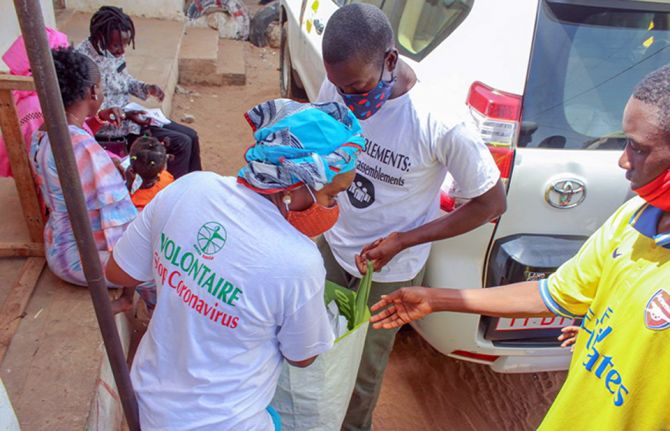
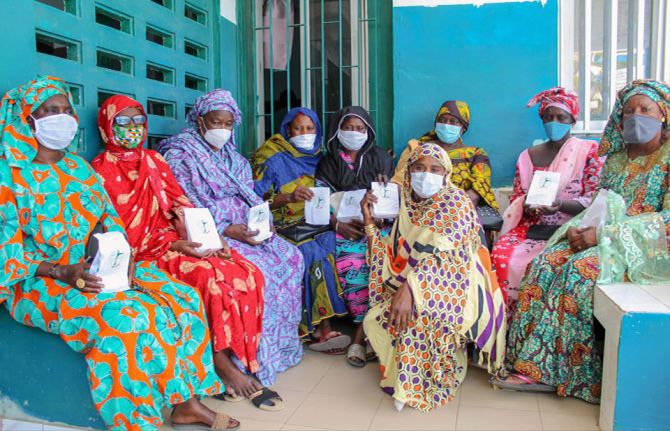
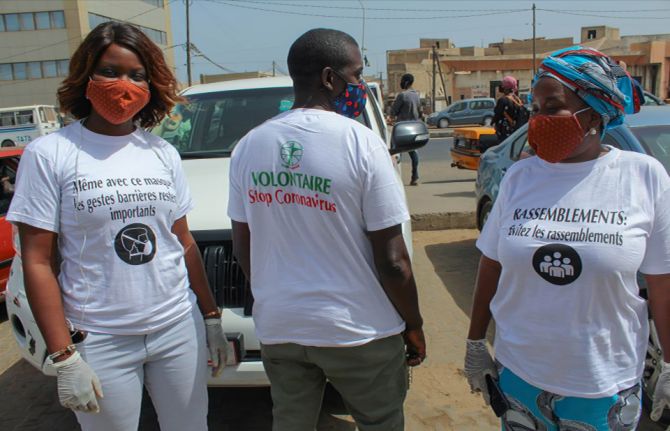
Like in many other countries around the world, face masks and other personal protective equipment are in short supply in Senegal. However, the Enda Santé nongovernmental organization had a quick and efficient solution—the many local tailors and dressmakers, who are highly skilled and had a ready access to supplies of fabric. Responding to the call of “come work with us”, the tailors and dressmakers produced thousands of high-quality masks in a record time, and at a very low cost. And the local production meant that the money stayed in the local economy, which had been badly affected by the pandemic.
Enda Santé has also begun negotiating with donors that fund HIV programmes. Funds that had been allocated to HIV-related activities that could not be carried out in the current context have been re-allocated to support COVID-19-related activities in the most-affected communities.
Focusing the right resources at the right place is crucial when responding to outbreaks that are travelling fast through communities. Enda Santé therefore went to work to identify the communities that were the most vulnerable and in the greatest need.
Drawing on statistics generated by the government, as well as their own knowledge about the demography and availability and accessibility of health services, Enda Santé looked at poverty levels among communities, the neighbourhoods where overcrowding was the worst and where people had difficulty in accessing health care. It was clear that the people who were the most vulnerable to HIV were also now very vulnerable to COVID-19.
Enda Santé focused on those communities, distributing prevention materials and mobilizing young and female leaders from the community, training them to go door to door explaining how people could protect themselves, how to identify cases and how to get people into treatment centres.
It was obvious that many of the people affected by HIV that Enda Santé worked closely with—people living with HIV, sex workers, people who inject drugs and young women and adolescent girls—had lost their incomes because of the lockdown and were now struggling with the triple impact of HIV, COVID-19 and poverty. In response, Enda Santé organized the delivery of food and cash transfers.
Daouda Diouf, the Executive Director of Enda Santé, reflected on the process. “We had already learned how to do all of this work in the context of HIV, so we were transferring the skills we learned in responding to HIV for 25 years, and we moved to apply them to COVID-19. The speed of action, engaging community members and putting them at the centre of the work, the door-to-door approach, pre-empting the risk of transmission, delivering prevention packages, and so on. We were able to act very quickly.”
Our work
Region/country
Related

Feature Story
Remembering human rights activist Yves Yomb
17 June 2020
17 June 2020 17 June 2020Yves Yomb, a human rights activist from Cameroon, died on 15 June 2020.
His journey to becoming an activist began in his home country, in 2006. At the height of a media campaign targeting gay men and other men who have sex with men, Mr Yomb was a founding member of Alternative Cameroun, one of the first human rights organizations in western and central Africa to advocate for tolerance and social inclusion. “We told ourselves that if we didn’t act, no one would,” he once said.
For more than a decade, Mr Yomb was at the forefront of the fight for the rights of sexual minorities and human rights in Africa, and wherever else the struggle took him. Ahead of the 2018 International AIDS Conference, he spoke at the launch of UNAIDS’ global report in Paris, France, calmly and with determination, recalling that the response to HIV is an uncompromising struggle for human rights and international solidarity.
Mr Yomb was the spokesperson of Africagay against AIDS, the first network dedicated to promoting access to rights and support for lesbian, gay, bisexual and transgender people in francophone Africa, which in 2019 became the Global Alliance of Communities for Health and Rights (GACS PLUS), a member of Coalition Plus. Always at the forefront of the fight, he called on UNAIDS to renew its support for civil society, an initiative that led to the birth of the Civil Society Institute for West and Central Africa.
“Without rights, the people most affected by the AIDS epidemic cannot have access to health services. This is what feeds the hidden epidemic we are fighting against. This is what fuels the hidden epidemic we are fighting,” he said.
"Yves Yomb was a great voice and argued in a way that left no one indifferent. I remember him speaking in 2018 in the Kofi A. Annan Conference Room at UNAIDS headquarters in Geneva, Switzerland, surrounded by senior management, representatives of UNAIDS Cosponsors and others. With the same tenacity he displayed at home in Cameroon, he advocated for the respect of human rights. He argued tirelessly for increased support for civil society in all its diversity. Rest in peace, brother. We will continue the common fight,” said Helene Badini, UNAIDS Senior Regional Community Support Adviser.
Region/country
Feature Story
Online games fighting HIV stigma and discrimination in the Islamic Republic of Iran
16 June 2020
16 June 2020 16 June 2020The UNAIDS Country Office for the Islamic Republic of Iran and the country’s branch of the International Federation of Medical Students’ Associations have been collaborating on new ways of making an impact on the national AIDS response since 2013.
In the past, the collaborations have included public awareness campaigns, educational workshops, field visits and week-long summer schools open to health-care students.
“The summer schools were more than inspiring, they made us confident about our next area of focus: acting against HIV-related stigma and discrimination,” said Aidin Parnia, one of the founders of the summer schools and of the Avecene Consultancy.
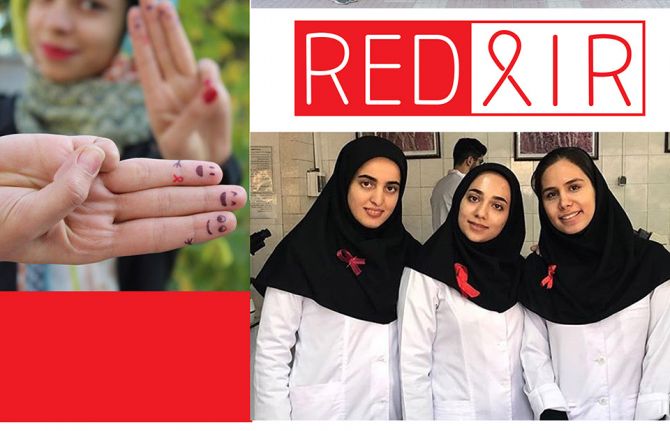
Started by people who had attended the summer schools, the Avecene Consultancy was formed to mobilize the accumulated knowledge and experience of the summer schools and to combine them with modern and up-to-date educational developments. The result is the REDXIR educational online platform, which uses games to change the attitude and behaviour of health-care students in order to bring about a future generation of discrimination-free health-care professionals.
Set in an imaginary world where the players are a young group that battles a mysterious enemy that symbolizes HIV-related stigma and discrimination, the goal of REDXIR is to fight back and defeat stigma and discrimination.
The 10 levels of the game are designed to challenge the students’ knowledge of HIV and their attitude and behaviour towards people living with the virus. For example, in the Blood Pressure level of the game, the students have to take the blood pressure of a person living with HIV to show that he or she can do so without discrimination. At higher levels, they should be able to take a blood sugar test and a blood sample for a routine laboratory test.
While some of the levels are performed virtually, others need action to be taken in the real world. For example, in the Do Not Be Silent level, the students must recognize discriminatory posts on social media, post #Zerodiscrimination below at least one of the social media feeds they see and comment on the reason why the content is discriminatory. In the Campaign level, the students participate as trainers in an HIV awareness campaign.
“New generations need new platforms. REDXIR, through its user-friendly approach where students are in direct contact with the target populations, has proved to be an effective way to help eliminate HIV-related stigma and discrimination in health-care settings,” said Parvin Kazerouni, the Head of the HIV Control Department of the Center for Communicable Disease Control of the Iranian Ministry of Health and Medical Education and the National AIDS Manager.
“REDXIR shows how creative and innovative approaches can embrace and support the novel ideas of young people to address issues such as stigma and discrimination,” said Fardad Doroudi, the UNAIDS Country Director for the Islamic Republic of Iran.
The UNAIDS country office provided technical and financial support for REDXIR.
Region/country

Feature Story
UNAIDS highlights six critical actions to put gender equality at the centre of COVID-19 responses
15 June 2020
15 June 2020 15 June 2020The AIDS response has taught the world the importance of protecting human rights and promoting gender equality when fighting a disease. COVID-19 has amplified that lesson.
Since the start of the COVID-19 pandemic, UNAIDS has repeated the call that governments must protect human rights and prevent and address gender-based violence—an issue that is even more vital now that lockdowns are putting women and girls at an even higher risk of intimate partner and sexual violence. Equally, UNAIDS has made it clear that sexual and reproductive health services should be recognized as the essential services they are.
To drive those messages to decision-making tables and to the front lines of the response, a new UNAIDS report shows how governments can confront the gendered and discriminatory impacts of COVID-19. Presenting six areas as imperatives to address the needs, and protect the rights, of women and girls during the pandemic, the report highlights the needs of women and girls in all their diversity, particularly the most marginalized, and the importance of access to essential health services. The neglected epidemic of gender-based violence, the misuse of criminal and punitive laws, the importance of education, health and well-being and the value of women’s work and making unpaid care work everybody’s work are also showcased.
“Just as HIV has held up a mirror to inequalities and injustices, the COVID-19 pandemic has put a spotlight on the discrimination that women and girls battle against every day of their lives,” said Winnie Byanyima, Executive Director of UNAIDS. “Many of the drivers of inequality in the HIV epidemic are the same as those driving inequality and injustice in the COVID-19 pandemic—both epidemics can only be successfully fought by putting gender equality at the centre of the response.”
The report underscores that sexual and reproductive health and rights are often the first to be sacrificed during epidemics and that the gains of the past decade must be protected. The report also makes it clear that scarce resources must be focused on the most marginalized women and girls, including sex workers, gender diverse people, women in prison and migrants and others without proof of employment or residence.
A selection of practical steps that UNAIDS has been taking with partners in countries to maintain essential health-care services, mobilize emergency legal protection and support populations facing human rights violations during the COVID-19 outbreak are presented.
For example, in Nigeria and Côte d’Ivoire UNAIDS is partnering with the International Community of Women Living with HIV to facilitate women living with HIV to work as community pharmacists, who help with the collection and home delivery of antiretroviral therapy and other medicines for people who were unable to access their treatment owing to COVID-19 restrictions.
In Latin America, the United Nations Population Fund and UNAIDS are offering contraceptives and HIV testing, as well as hygiene kits and information on gender-based violence and HIV, to women who are in compulsory quarantine after fleeing the Bolivarian Republic of Venezuela because of COVID-19.
In Morocco, UNAIDS, in partnership with the Ministry of Health, the Global Fund to Fight AIDS, Tuberculosis and Malaria and civil society, is mobilizing self-help groups, medical and psychosocial support and family mediation services for populations at higher risk of HIV. Collaborations between the government and civil society have helped to ensure continued access to antiretroviral therapy, opioid substitution therapy and food aid during the pandemic.
Above all, the report has the message that health, safety, dignity and rights, especially for women and girls, in all their diversity, must not be compromised and women should lead the call for change.
“Get out there and fight, use your voice to demand and take action for your communities,” added Ms Byanyima.
Six concrete measures to support women and girls in all their diversity in the context of the COVID-19 pandemic
Our work

Feature Story
New online resource for mental health services for key populations in Kazakhstan
15 June 2020
15 June 2020 15 June 2020The lockdowns and self-isolations imposed to fight the COVID-19 pandemic have affected everyone, key populations and people living with HIV included. Prolonged isolation and limited contact with family and friends have increased anxiety and depression and impacted quality of life, increasing the need for mental health services.
To respond to this need, an online platform that offers psychological services and support for people from key populations has been launched in Kazakhstan. On it, people can get answers to questions related to different aspects of mental health, request professional consultations with psychologists or psychotherapists and receive broader information about health and well-being.
“Anxiety, uncertainty, worries—these feelings are consequences of the quarantine and self-isolation during the coronavirus pandemic. For many people, the time spent in quarantine was difficult. Today, we see a greater need for psychological help and support. It was for this purpose that this platform was created for key populations,” said Nikolay Negay, Director-General of the Republican Scientific and Practical Center for Mental Health of the Kazakhstan Ministry of Health.
The platform was developed with the participation of people from community organizations, representatives of key populations and activists.
“During isolation, we supported each other as best we could through social networks, communication by phone, Skype, but there was a need for qualified professional help. We are glad that such assistance has become available, and for free. The resource is informative and answers many questions,” said Oksana Ibragimova, the acting President of the ALE Kazakhstan Union of People Living with HIV.
“An anonymous rapid needs assessment conducted by UNAIDS in Kazakhstan among people living with HIV and key populations found that around 60% of respondents needed psychosocial support during the COVID-19 lockdown. It was therefore decided to find a way to provide reliable information, advice and professional assistance to those who may need it,” said Gabriela Ionascu, UNAIDS Strategic Information Adviser for Central Asia.
The platform was created as an initiate of the Republican Scientific and Practical Center for Mental Health of the Kazakhstan Ministry of Health, with financial support from UNAIDS and technical assistance from the Kazakh Scientific Institute of Dermatology and Infectious Diseases of the Kazakhstan Ministry of Health.
Our work
Region/country
Related
 Women, HIV, and war: a triple burden
12 September 2025
Feature Story
New HIV community group in Guinea fighting COVID-19
12 June 2020
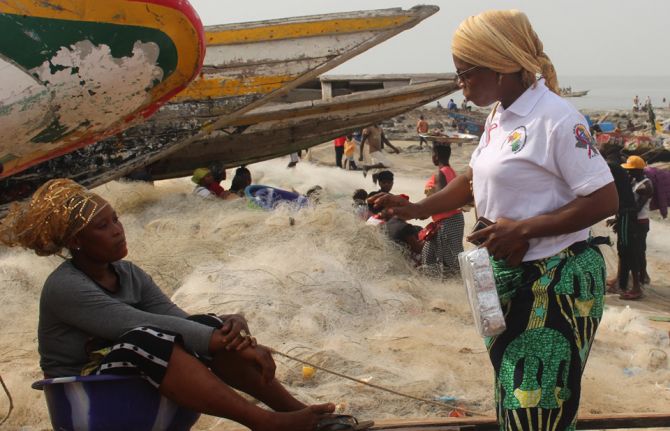
12 June 2020 12 June 2020Communities have always played an important role in the fight against epidemics in Africa. In the response to HIV, community involvement has been illustrated by a key principle: nothing for us without us. Since the beginning of the AIDS response, civil society has been on the front line, demanding access to treatment, calling for respect for human rights and supporting community-led HIV services.
In Guinea, community engagement has resulted in the continuous improvement of HIV programmes and to considerable progress in testing, prevention, treatment adherence and psychosocial support. The promotion and defence of human rights is also central to communities, and community engagement has contributed to tackling stigma and discrimination and to monitoring the quality of services and addressing challenges.
From the lessons learned from the 2013–2016 Ebola outbreak in the country, the need for the active participation of communities, alongside the public, in the COVID-19 response is clear. This is why the National Platform of Civil Society Organizations on HIV and TB (PNOSC-HIV/TB) was recently set up. Established with technical and financial support from UNAIDS and bringing together 28 associations, PNOSC-HIV/TB played a central role in the development of the Ministry of Health’s contingency plan to reduce the impact of COVID-19 on health services, particularly HIV services.
Focusing on populations that include prisoners, people in refugee camps and solidarity cities— places where people with disabilities live—PNOSC-HIV/TB is active in helping to prevent COVID-19, raising awareness about the importance of physical distancing through community mediators, local artists, the media and door-to-door outreach.
Psychosocial help is being given through a hotline run by two networks of people living with HIV, one of which is focusing on key populations. PNOSC-HIV/TB is also working to promote and scale up nationwide the multimonth dispensing strategy for antiretroviral therapy.
“PNOSC-HIV/TB will enable us to speak with one voice, to assert ourselves even more, to organize and strengthen our contribution to defeating COVID-19 and to the elimination of AIDS in Guinea by 2030,” said Mahawa Diallo Sylla, President of PNOSC-HIV/TB.
PNOSC-HIV/TB also participates in the Community Treatment Observatory, which monitors respect for human rights in the context of COVID-19 and reports violations to the government and the National Institute of Human Rights.
“I am impressed by PNOSC-HIV/TB’s willingness to close the gap in terms of their participation in the national response to HIV. I am confident that the momentum and energy generated since its establishment will have a lasting impact on the responses to HIV and COVID-19 in Guinea,” said Dado Sy Kagnassy, UNAIDS Country Director for Guinea.
Our work
Region/country
Related
Feature Story
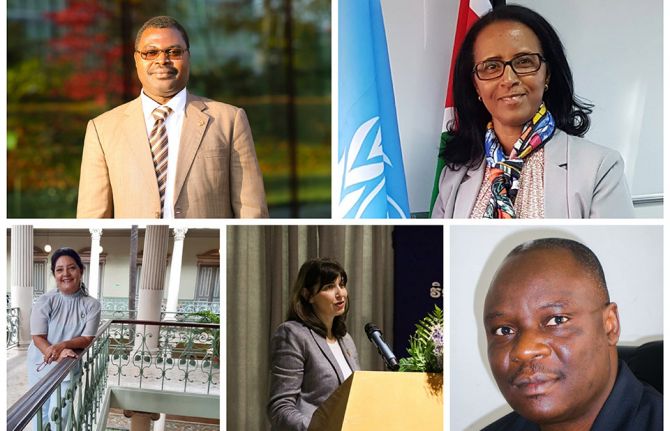
Five UNAIDS country directors taking the lead in the COVID-19 response
11 June 2020
11 June 2020 11 June 2020The experience of the UNAIDS Country Director for El Salvador, Celina Miranda, a trained medical doctor, has been very useful during the COVID-19 outbreak. When the United Nations Resident Coordinator nominated her to be the COVID-19 response team leader within the United Nations in the country, she was honoured.
“I accepted the challenge, since the experience of working at UNAIDS on HIV has given me the skills needed to handle these types of situations,” she said.
To date, she has handled six confirmed COVID-19 cases of United Nations personnel from different agencies. “Some went to hospital, while others self-quarantined, and all are already emerging from the acute stage,” Ms Miranda said.
A main task for COVID-19 coordinators is to determine whether local hospitals could admit and treat United Nations personnel and their dependents. El Salvador was not ready for the pandemic, she said, which added to the pressure.
Ms Miranda, along with four other UNAIDS country directors, has been nominated by the United Nations Country Teams as COVID-19 coordinators in their respective countries.
Vladanka Andreeva in Cambodia, Yafflo Ouattara in Chad, Job Sagbohan in Burkina Faso and Medhin Tsehaiu in Kenya have all felt honoured to take on such a responsibility.
Ms Andreeva explained how in early March the United Nations in Cambodia set up a United Nations Internal COVID-19 Preparedness and Response Team, and she was asked to lead the efforts in ensuring that more than 2500 United Nations staff and their dependents have access to the latest COVID-19 information, treatment, care and support. She developed a contingency plan for the United Nations family and supported the establishment of a medical evacuations process and mental health support services for staff.
Mr Sagbohan, a trained medical epidemiologist who has worked for the World Health Organization during Ebola and yellow fever outbreaks, said he spent a lot of time reassuring employees in order to overcome stress and fear. “Staff were scared, so during the lockdown period I got up to 300 calls a week despite the regular virtual town hall briefings for staff across Burkina Faso.”
He explained that despite UNAIDS’ size and lack of resources compared to other agencies, knowing about infectious diseases has helped greatly. He quickly requested focal points from different organizations and set up a United Nations taskforce against COVID-19. “I have been able to tap into a solid group of motivated people to help me and it has made all the difference.”
For Yafflo Ouattara, the COVID-19 coordinator role suits UNAIDS country directors perfectly. “We are used to getting buy-in from our Cosponsors, so joint teamwork is part of our DNA,” he said. His main task in Chad has been expanding intensive care units and setting up a strong referral system for the management of severe cases. Nearly 7000 United Nations employees and dependents are spread out across the country, some in places where there is no overnight care.
Like others, he also helped out with the national COVID-19 contingency plan to ensure that people living with HIV have access to treatment and care.
He said that the pandemic highlighted gaping holes in the country’s health system. “Not only were key investments in intensive care never made, some of the basics, like gloves, masks, soap, have been missing all along.”
Living in a COVID-19 world means a lot of readjustments. “We have an opportunity to step in and make our voices heard to overhaul systems,” Mr Ouattara said.
Medhin Tsehaiu agrees. She has been proud to see UNAIDS be part of the greater discussion.
“We are present and we are very actively and willingly doing our share,” she said. But she believes that COVID-19 has forever changed how people work.
All the virtual meetings and no travel has meant that people were much more available, so there was non-stop communication, but it was very time-consuming, she explained. “The crisis brought us together, whether we like it or not, and that has required a lot of collaboration,” Ms Tsehaiu said.
Aside from her long list of tasks as a COVID-19 coordinator, she and a few others started the United Nations Kenya solidarity fund. After much back and forth, they opened a bank account where staff can choose to contribute money during a three-month period that will be dispatched to people in need.
“It’s a way for employees to show empathy and support to the Kenyan people during these difficult times,” she said.
Speaking of solidarity, Ms Andreeva said that the pandemic really tested United Nations reform at the country level, not just in terms of responding to the pandemic but also regarding duty-of-care issues. According to a survey in May, 90% of the staff in Cambodia said that the United Nations leadership at the country level is making the right decisions managing the crisis.
During a virtual town hall meeting of 300 United Nations staff members in El Salvador recently, there was also positive feedback. Ms Miranda said she doesn’t ask for accolades or additional thanks. “I just enjoy helping people and seeing them recover, living their lives fully.”
Our work
Related
Feature Story
Peer consultants helping the AIDS response in Kyrgyzstan
10 June 2020
10 June 2020 10 June 2020When the son of Kymbat Toktonalieva (not her real name) was finally diagnosed with HIV after numerous visits to the hospital over many months, it was only the beginning of the fight.
Her husband left her, leaving her to look after their child on her own. She fought for her son and his rights, for justice. She went to court, attended rallies, wrote letters, worked with other like-minded people and helped other women in the same situation.
For the past six years, Ms Toktonalieva has channelled that campaigning zeal into working as a peer consultant in a multidisciplinary team in a family medical centre in Osh, Kyrgyzstan, helping people living with HIV to get services, providing support and motivating them to adhere to their HIV treatment. There are 10 multidisciplinary HIV teams in the country, which were formed by UNAIDS in 2013; they all include a specialist in infectious diseases or a family doctor, a nurse and peer consultants.
The peer consultants come from the same environments and backgrounds as the people who they work with and have faced similar problems. They may be people who are living with HIV or people who have been affected by HIV. They have decided to act, helping themselves and others, often serving as a bridge between the medical workers and people living with HIV.
“Working as a peer consultant has given me an opportunity to help people to overcome their problems, many of which I have come across myself in the past,” said Ms Toktonalieva.
The peer consultants work with the medical staff, directing, prompting, helping, talking and listening. They are trained to be non-judgemental and help people who have recently been diagnosed as HIV-positive to accept their status and to learn to live with the virus.
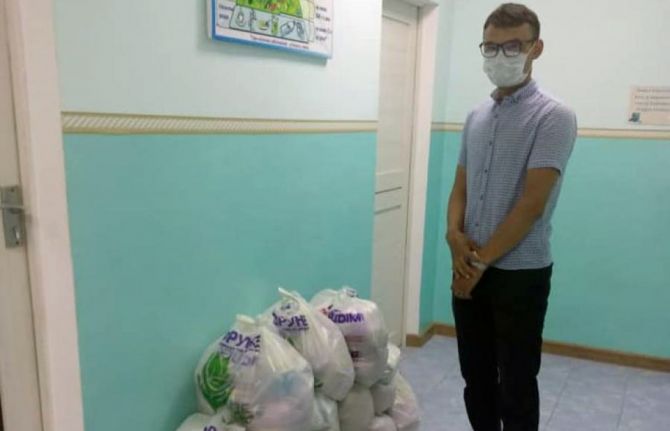
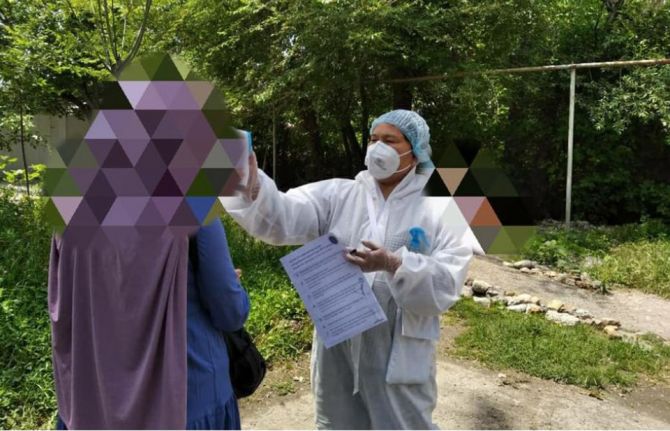
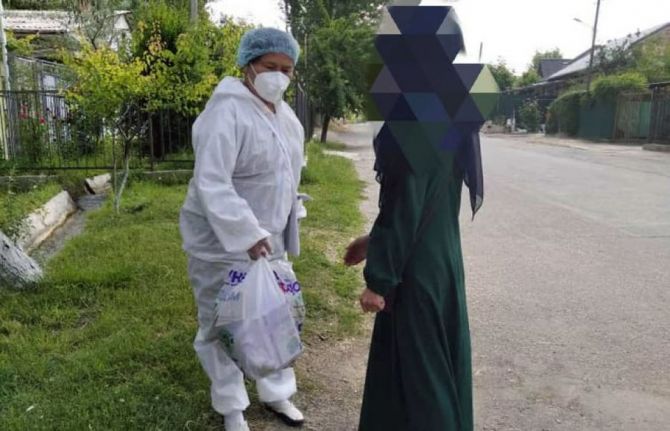
The role of the peer consultants is being expanded by the COVID-19 pandemic. From the very beginning of the pandemic they were in contact with people living with HIV, delivering medicine to people’s homes so they could stay on treatment during the lockdown, distributing food packages and providing psychological support.
Another peer consultant, Kalmurza Asamidinov, who works in Kyzyl-Kiya, said, “My work brings good, but I can’t say that everything works out perfectly. We work with different people. Some need to be persuaded to adhere to their HIV treatment because they don’t believe in the treatment, while others are tired of taking antiretroviral therapy—we have to find a different approach for everyone. People are increasingly in need of simple human communication. Many clients miss mutual help and the support groups, which we cannot provide during the COVID-19 lockdown.”
The peer consultants working in the 10 multidisciplinary teams each have a different story to tell. Mannap Absamov, one of the peers in the multidisciplinary team in Osh, said, “Initially it was difficult. We were not able to understand the medical staff, and they could not understand us. But slowly we found points of contact. The main thing is that almost simultaneously, both on our side and the doctors’ side, there became a clear understanding that we all have one goal. It is important that their patient and our client go to the medical facility and start getting treatment.”
Both during COVID-19 and after, one thing is certain—peer consultants will continue to play a vital role in bringing HIV services to people living with HIV in Kyrgyzstan.
Our work
Region/country

Feature Story
Targeting sex workers is not the answer
08 June 2020
08 June 2020 08 June 2020When the Government of Cameroon ordered everyone to stay at home as part of the COVID-19 response, Marie-Jeanne Oumarou (not her real name) rushed to buy groceries and to gather her three children and move them the countryside.
With her children in safe hands, she hoped she could still work.
“I didn’t realize how hard it would be during confinement,” she said. “It doesn’t make sense for us sex workers.”
Ms Oumarou has learned the ins and outs of the couloirs—the avenues of small hotels where sex workers work—in Cameroon’s capital city, Yaoundé, over the past 10 years. Abandoned with her young children, she became a sex worker in 2010. She has grown to know the various older women, former sex workers themselves, who she pays to access safe places to work. COVID-19 changed her life overnight, though.
“Hotels closed, clients were rare, the police constantly around, I cannot survive,” she said.
Denise Ngatchou, Executive Director of Horizons Femmes, a nongovernmental organization that helps vulnerable women, said she was shocked to see how sex workers suddenly became a target.
“Police arrested and held women, disclosing zero information,” she said. “We felt powerless because the government had the upper hand with all the COVID-19 measures.”
Rosalie Pasma, a manager at one of the Horizons Femmes drop-in health centres, shrugged her shoulders in agreement during a Skype interview.
“Everything became much more complicated during COVID-19,” she said. “From women missing health check-ups because of transport issues to our legal expert not being able to access the police stations to defend arrested female sex workers, we felt the confinement in more ways than one.”
Ms Ngatchou piped in, saying that there was no reason to give up. Horizons Femmes vowed to stay open. A skeletal staff with condensed hours still provided HIV testing and other services by respecting preventive measures.
“People told us to stop all our on-the-ground awareness visits, but we held on as long as we could, giving coronavirus tips to women so they knew of the potential dangers,” she said.
They also kept handing out masks and started a crowdfunding project to purchase more protective gear. What really bothers Ms Ngatchou is how so many things happened before their eyes and they could do so little.
“Easing laws against sex work and ending arbitrary arrests of sex workers would really make an impact,” she said.
In the end, she believes that chastising sex workers only worsens the situation.
“Don’t you think that if sex workers hide they are more likely to work and infect themselves or become infected than if there was an infrastructure to help them?” she asked.
Reflecting on what she said, she added that this applies to COVID-19 as well as HIV.
In early April, UNAIDS and the Global Network of Sex Work Projects sounded the alarm on the particular hardships and concerns facing sex workers globally. They called for countries to ensure the respect, protection and fulfilment of sex workers’ human rights.
“Authorities have got to understand that we are not promoting sex work, we are promoting good health,” Ms Ngatchou said. “That’s the priority.”