Feature Story
The value of integrating HIV prevention and contraceptive services
05 June 2020
05 June 2020 05 June 2020In 2019, the ECHO trial reminded the world of the very high HIV incidence among women in parts of southern Africa. Those high levels of HIV, and of sexually transmitted infections, were found among women accessing routine contraceptive services.
A new joint report by the World Health Organization (WHO) and UNAIDS sets out the steps needed to improve and integrate HIV prevention and contraceptive services in order to reduce new HIV infections among women.
“We need to reflect on the diverse needs of women, including adolescent girls, women with lower levels of education and key populations, who have often been neglected in contraceptive and broader sexual and reproductive health and rights programming. The new approach means more contraceptive choices, additional HIV prevention choices and complementary community activities beyond facilities,” said Paula Munderi, Coordinator of the Global HIV Prevention Coalition at UNAIDS.
The report clearly states that women at the highest risk of HIV and sexually transmitted infections in southern Africa and women from key populations should be the focus for the most urgent action.
Different approaches in places with different levels of HIV risk are suggested. For example, where there is a high incidence of HIV and sexually transmitted infections, HIV prevention choices, including male and female condoms, and prevention counselling need to be essential elements of contraceptive services and actively promoted. In settings with extremely high HIV incidence in southern Africa, the rapid introduction of pre-exposure prophylaxis (PrEP) within contraceptive services should be considered.
“Sexual and reproductive health and rights and HIV integration have been promoted for more than a decade, yet progress remains limited. Supporting women living with HIV to access contraception in HIV treatment clinics and providing HIV services in contraception services is a critical priority requiring committed funding for concrete action,” said Rachel Baggaley, Unit Head, Testing, Prevention and Populations, Global HIV, Hepatitis and STI programmes at WHO.
In order to understand what women need and want, the report suggests that women be at the centre of decision-making. “HIV prevention and contraceptive choices for women and girls are still not widely available. We need to ensure that the agency and choice of girls and women are promoted by making available a wide range of HIV prevention commodities, ranging from PrEP and microbicides to user-friendly condoms. Women and girls thrive when they are given an opportunity to choose,” said Nyasha Sithole, an advocate for the rights of girls and women from Zimbabwe.
Although people living with HIV who are on antiretroviral therapy and are virally suppressed cannot transmit HIV to their sexual partners, millions of women accessing contraception continue to have unprotected sex with men who do not know their HIV status. As the PopART trial showed, high HIV incidence among young women is also the result of men not accessing treatment. The report proposes concrete steps to strengthen partner prevention, testing and treatment services, including HIV self-tests for men combined with community outreach and gender-transformative prevention approaches.
“Effective integration requires multilayered prevention that can—and should—encompass both sexual and reproductive health and HIV services, including multipurpose prevention technologies. Siloed care, stock-outs and too little input from women themselves are among the long-standing barriers to women’s health care, and COVID-19 exacerbates these difficulties,” said Mitchell Warren, Executive Director of AVAC.
With the physical distancing necessary as a result of the COVID-19 pandemic reducing contact with health services, it will be essential that interactions with health-care providers be optimized through integrating services. “Prevention of HIV and sexually transmitted infections should be the standard of care for contraception information and services provided to women at a high risk of acquiring HIV,” said James Kiarie, Unit Lead, Contraception and Fertility Care, Department of Sexual and Reproductive Health, WHO.

Feature Story
Mitigating the impact of COVID-19 on key populations
04 June 2020
04 June 2020 04 June 2020The COVID-19 pandemic has affected everyone, including key populations at higher risk of HIV. And the gains made against other infectious diseases, including HIV, are at risk of being reversed as a result of disruptions caused by COVID-19. This is the background to a new report published by FHI 360, in collaboration with UNAIDS and the World Health Organization (WHO), which gives advice on how to minimize the impacts of COVID-19 on key populations.
“With a focus on key populations, this guidance complements ongoing efforts to sustain access to HIV prevention services and commodities, sexual health and family planning services, prevention of gender-based violence and HIV counselling, testing and treatment during the COVID-19 pandemic,” said Paula Munderi, Coordinator of the Global HIV Prevention Coalition at UNAIDS. “Preserving essential HIV services for key populations and promoting the safety and well-being of staff and community members during the COVID-19 pandemic is vital to maintaining the hard-fought gains of the AIDS response.”
With practical guidance on how to support the continuation of HIV services for people living with HIV and key populations, the report is aimed at helping the implementers of programmes to carry on their work.
“Key populations are particularly vulnerable to HIV service interruptions and additional harm during the COVID-19 pandemic. We urgently require rights-based solutions that maintain or increase key populations’ access to HIV services while minimizing potential exposure to COVID-19 and promoting individuals’ safety. These must support physical distancing and decongestion of health facilities, but in ways that respond to the current realities of key populations,” said Rose Wilcher, from FHI 360.
The report gives practical suggestions in three main areas.
The first is on protecting providers and community members from COVID-19. HIV services can only continue to be provided during the COVID-19 pandemic if steps are taken to prevent coronavirus infection among programme staff, providers and beneficiaries. Links to COVID-19-related screening and care, and services to support the mental well-being of providers and beneficiaries, can also be given as part of HIV services.
The second area is supporting safe and sustained access to HIV services and commodities. HIV programmes can integrate physical distancing measures, offer virtual consultations and give multimonth dispensing of HIV medicines. Physical peer outreach should be continued where possible.
Monitoring service continuity and improving outcomes is the third area covered by the report. Since there are likely to be service disruptions, HIV programmes will need to adjust their monitoring and evaluation systems in order to allow for regular assessments of continued HIV service delivery and of the impact of COVID-19 on HIV programmes and their beneficiaries. This may require setting up strategic information systems that use physical distancing measures such as virtual data collection and reporting tools.
“The COVID-19 pandemic shouldn’t be used as an excuse to slow momentum in the global response to HIV among key populations. Instead, the pandemic is a time to draw lessons from our work to end AIDS. It is also an opportunity to provide relief to health systems overstretched by COVID-19 by fully funding community-based organizations led by gay and bisexual men, people who use drugs, sex workers and transgender people to ensure improved access to HIV services for key populations,” said George Ayala, Executive Officer of MPact.
“It remains critical to ensure access to HIV prevention, testing and treatment services during COVID-19 and sustain access to life-saving services. This document provides practical guidance and know-how on maintaining essential health services for key populations in these challenging times,” said Annette Verster, the technical lead on key populations at the WHO Department of HIV, Hepatitis and STIs.
The report was developed by FHI 360 as part of the Meeting Targets and Maintaining Epidemic Control (EpiC) project, which is supported by USAID and the United States President’s Emergency Plan for AIDS Relief. UNAIDS, WHO, the Global Fund to Fight AIDS, Tuberculosis and Malaria and partners gave inputs and advice.
Related resources
FHI 360: Five strategies for preserving key population-focused HIV programmes in the era of COVID-19
Global HIV Prevention Coalition
Rights in the time of COVID-19 — Lessons from HIV for an effective, community-led response
Lessons from HIV prevention for preventing COVID-19 in low- and middle-income countries
Condoms and lubricants in the time of COVID-19
Maintaining and prioritizing HIV prevention services in the time of COVID-19
Our work
Feature Story
Lessons learned from HIV for COVID-19 in Senegal
03 June 2020
03 June 2020 03 June 2020Forty years of responding to the HIV epidemic has provided considerable experience on the importance of a human rights-based approach to all epidemics. UNAIDS spoke to Abdoulaye Ka, who is responsible for human rights issues at the Senegal National AIDS Control Council (known as the CNLS in the country), about the lessons that the CNLS has learned from the response against HIV that can be applied to the fight against COVID-19.
How is Senegal addressing stigma and discrimination during the COVID-19 pandemic?
The experience of the fight against stigma and discrimination related to HIV services has enabled the CNLS to draw the attention of the national COVID-19 management committee and public opinion to the importance of developing communication materials adapted to specific communities. The involvement of affected communities in the definition, implementation and follow-up of COVID-19 programmes has helped to reduce stigma around the disease.
The CNLS Executive Secretary has made several broadcasts to explain the importance of simplifying messages for communities, including to help them develop their own community responses.
The psychosocial care unit in Dakar is also being supported by the CNLS to draw lessons from the experience of HIV and stigma and discrimination in its work against COVID-19.
What measures are being taken to deal with the socioeconomic consequences of COVID-19 in Senegal?
To respond to the socioeconomic impact of COVID-19 on individuals and households, Senegal has deployed an economic and social resilience programme and has earmarked a budget of 1 trillion West African francs (about US$ 1.7 billion) to support the economic sectors most affected by the crisis and to provide food aid to the most vulnerable. A total of 59 billion west African francs (about US$ 100 million) has been earmarked to buy food for one million eligible households.
In particular, the CNLS is partnering with UN Women to increase the resilience of women living with HIV through the provision of food and hygiene kits.
How is the response to COVID-19 in Senegal responding to the specific needs of people living with HIV?
To respond to the needs identified by the national network of people living with HIV, the country is moving to multimonth dispensing of antiretroviral medicines, in accordance with the guidance of the World Health Organization. We are collaborating with service providers and communities in assessing needs in order to avoid stock-outs.
The CNLS has also set up a free telephone hotline for people living with HIV at the Antiretroviral Therapy Treatment Centre of Dakar. It has also set up a WhatsApp network for all antiretroviral therapy care site managers and gives them recommendations on how to adapt the provision of care for people living with HIV, including proceeding with the delivery of at least three months of HIV treatment.
What is the role of community-based organizations today?
Community-based organizations and networks have long been critical to the AIDS response because of their central role in raising awareness, informing, dispelling myths and misinformation and providing services to marginalized and vulnerable populations.
Now more than ever, community actors need to be supported to innovate and be recognized as providers of essential services for HIV and COVID-19.
Community service providers have innovated quickly in the context of COVID-19 in Senegal using appointment systems to prevent too many people being accommodated at the same time in an institution and holding educational sessions virtually.
The CNLS is currently providing logistical support to people living with HIV for the community-based distribution of antiretroviral medicines.
The right to information is a constitutional right in Senegal. What is the role of information in preventing and protecting against epidemics?
The CNLS very quickly developed messages, press releases and banners on social media to draw attention to the preventive steps to be taken against COVID-19, especially for people living with HIV. We also informed people living with HIV in real time regarding the evolving knowledge about HIV and COVID-19.
Information was developed to be expressed in simple terms and to prevent false/fake news that can undermine the use of health services, including vaccination services, that are useful to preserve the health of people, in particular children living with HIV.
Our work
Region/country
Related
Feature Story
Mobilizing COVID-19 relief for transgender sex workers in Guyana and Suriname
02 June 2020
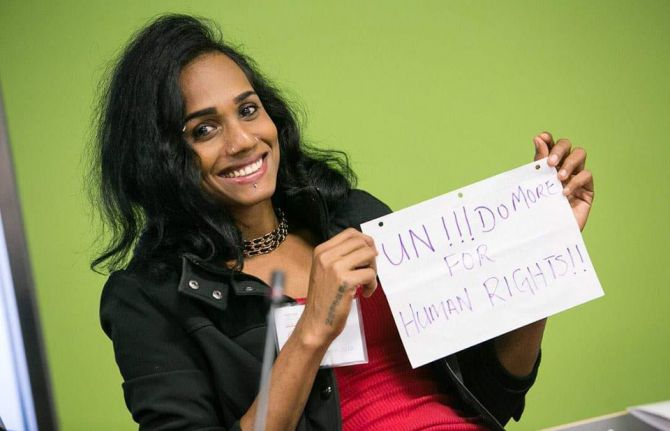
02 June 2020 02 June 2020Twinkle Paule, a transgender activist, migrated from Guyana to the United States of America two years ago. As the COVID-19 crisis deepened, she thought of her “sisters” back home and in neighbouring Suriname. For many of them, sex work is the only option for survival. She knew that the curfew would starve them of an income. And she was worried that some might wind up in trouble with the law if they felt forced to work at night.
After making contact with people on the ground, her concerns were confirmed. She made a personal donation, but knew it was not nearly enough.
“Being somebody who came from those same streets, I knew we had to mobilize to take care of our community. I know about lying down at home and owing a landlord … about getting kicked out because you can’t afford to pay rent,” Ms Paule said.
She collaborated with New York activists Cora Colt and Ceyenne Doroshow, founder of Gays and Lesbians in a Transgender Society (GLITS Inc), to start a GoFundMe campaign. After launching on 12 May they’ve already raised enough money to cover rent subsidies for one month for six transgender sex workers. The money has been forwarded to Guyana Trans United (GTU), the organization for which she worked as a peer educator when in 2015 she left sex work behind.
That she can now use her position of influence to mobilize emergency relief is itself a stunning success. When she migrated, she’d felt herself tottering on the brink of suicide. The emotional weight of exclusion and injustice was bearing down.
One successful asylum claim later, she’s now a full-time communications student at the Borough of Manhattan Community College. She completed her high-school education last year—something she hadn’t been able to do in Guyana. While studying she worked as an outreach officer for GMHC (Gay Men’s Health Crisis).
She seamlessly slipped into advocacy mode, addressing the city council last year about repealing New York State Penal Law § 240.37, a loitering law that is used to target transgender women. She immediately recognized that this was from the same tradition as the vagrancy laws she’d first been victimized by, and later fought against, in Guyana.
Ms Paule is acutely aware of how much her life prospects have changed due to migration.
“It just shows the difference it makes if somebody is given opportunities and the right tools to make other decisions in life. It showed me what I was lacking was adequate resources and the ability to go into an environment without having to worry about discrimination and violence. I am not saying everything is perfect here, but I don’t face the same level of injustice on a daily basis. I was able to access hormone therapy. And to me the most important thing,” she reflected, “is that I was able to go back to school.”
Her mother died when she was a child. Her father moved on with a new family. She was left in the care of his relatives. There wasn’t always enough money for her education. Some weekends she cleaned a church to earn some cash.
But poverty wasn’t the only challenge. Since she was very small she remembered feeling different. She did not have a label for what she felt, but instinctively knew it would not be accepted. At school she strained to stay under the radar. One day her heart skipped when a classmate said she sounded like an “antiman”—a Guyanese derogatory term for a gay person.
Over the years she repeatedly overheard adults in the household agreeing that she should be put out if she turned out to be gay. At 16 years old it happened. A relative spotted her “dancing like a girl” at a party. Now she was homeless.
Ms Paule sought refuge with other transgender women and, like them, used sex work to survive. The burgeoning regional movement to address the needs of vulnerable and marginalized communities had an impact on her life. From the newly formed Guyana Sex Work Coalition she learned about safer sex and accessed safer sex commodities. When some of her peers started going to conferences they found out for the first time that there was a word for their experience. They weren’t “antimen”. They were transgender.
But life on the street was brutal. If someone was robbed or raped they could not report the crime.
“The police tell you plain, “Why are you coming here when you know prostitution and buggery are against the law?”,” she remembered.
She said sometimes rogue police officers threatened to charge them and extort money from them.
Once the police locked up her and other transgender women together with men at the police station and threw condoms into the cell—a green light to the other detainees. She was a teenager at the time.
She accompanied a friend to the police station to make a domestic violence report one day. Instead a policeman told her, “You are involved in buggery. I am locking you up.”
In 2014, a group of them were arrested for sex work in Suriname. Among other indignities, a prison guard forced them to disrobe and squat outside their cell, in the presence of other detainees.
Seven years ago, one of her friends was killed, her body was thrown behind a church. There was no investigation.
Trauma after trauma. It takes its toll.
Even when nothing happens, there is lingering fear. Will I be put out the taxi? Will people insult me on the street? Will I be mistreated because of what I’m wearing?
“The girls take it like it’s their fault,” Ms Paule reflected. “Even in my personal experience I felt people had a right to do me things because I was not behaving in accordance with societal norms.”
Even as she stepped into advocacy, she didn’t feel whole. She attempted suicide once and began having a drink or smoke before turning up to work. Two years ago she was unravelling. Now she’s rallying forces in the service of her community.
Ms Paule credits the work of organizations like the Society against Sexual Orientation Discrimination and GTU for advancing the dialogue around inclusion in Guyana.
“What is still missing is safety and equity for the community,” she insisted. “We need a state response to say, “These people should be taken care of”. The trans community has no jobs, we are bullied out of school, we suffer police brutality. These things are wrong. We need more robust action from our elected officials.”
Our work
Related

Feature Story
Caribbean community organizations call for decisive action to end homophobic abuse and cyberbullying
29 May 2020
29 May 2020 29 May 2020Ulysease Roca Terry was a gay Belizean fashion designer living with HIV. He had recently lost his mother and was coping with depression. Even without a new pandemic, it was a difficult time.
He was arrested for breaching COVID-19 curfew laws in April. While in custody he suffered homophobic slurs and bullying by a police officer. A video of the abuse was posted to social media. He also claimed that he was physically attacked while detained. Days later he died.
This month in the Bahamas, a video circulated on social media of a gender non-conforming woman being beaten by three men hurling homophobic slurs. One man smashed a piece of wood onto her head. Others slapped and punched her. As the video circulated online, some made fun of the victim.
While countries in the Caribbean focus on combatting COVID-19, community organizations have been raising their voices against the casual verbal, physical and emotional abuse that is a feature of life in the region for far too many lesbian, gay, bisexual, transgender and intersex (LGBTI) people. And they are sounding an alarm that this cruelty is increasingly playing out online.
Caleb Orozco of the United Belize Advocacy Movement (UNIBAM) spoke about Mr Roca Terry’s case with a mix of sorrow and defiance. Mr Orozco is used to tough battles. He was the litigant who successfully challenged Belize’s law banning consensual sex between same-sex partners in 2016.
“The police cannot erode public confidence in its law enforcement role by showing disregard for the dignity and rights of individuals who are members of the most vulnerable groups: those with mental health challenges, those living with HIV and those with different sexual orientation,” Mr Orozco said. “It is the responsibility of the police department to enforce the curfew in a manner that is reasonable. Mocking people does not help to build public confidence that the police are there to protect ordinary citizens.”
UNIBAM is calling for a transparent investigation, a review of the autopsy report and action to improve how the police treat members of vulnerable and marginalized communities, particularly in the context of the COVID-19 restrictions.
In Belize, a national dialogue is under way around a proposed Equal Opportunities Bill. A UNAIDS public opinion survey conducted in 2013 found that Belize was among the more tolerant Caribbean countries, with 75% of respondents agreeing that people should not be treated differently based on their sexual orientation. But this incident is a reminder that notwithstanding strides made in social attitudes and the law, pervasive challenges remain around prejudice and the abuse of power.
The Bahamas Organization of LGBTI Affairs has called the attack circulated on social media a hate crime and demanded that the perpetrators be prosecuted.
“Around the world, this kind of hate crime—the targeting of a person with extreme violence because of who they are—is denounced as among the most reprehensible modes of human conduct imaginable,” Rights Bahamas said.
Alexus D’Marco, Executive Director of the Bahamas Organization of LGBTI Affairs, insisted that there must be a broader dialogue and action to address social attitudes.
“What does it say about us as a people that so many consider this a source of humour and entertainment? What are we to think when so many of the culprits are fellow women, who should be standing together in solidarity to oppose the many injustices faced in common as members of an oppressed gender in this society?” Ms D’Marco demanded.
The Bahamas is the only Caribbean country to have decriminalized sex between consenting adults of the same sex by an act of parliament. Still, lots more work needs to be done to bring social attitudes in line with the law. Advocates insist that hate crime legislation must urgently be enacted and enforced.
In both the Bahamas and Belize, state entities have joined civil society to denounce the attacks. The National AIDS Commission, the Office of the Special Envoy for Women and Children and the Ministry of Human Development, Social Transformation and Poverty Alleviation have called for Mr Roca Terry’s case to be thoroughly investigated. In the Bahamas, the Ministry of Social Services and Urban Development called for a swift prosecution to signal zero tolerance by the government and society for gender-based violence.
“Alongside legislative reform and key population programmes, we must continue the social dialogue and law enforcement to create more peaceful and inclusive Caribbean societies for all,” said James Guwani, UNAIDS Director for the Caribbean.
Related
Feature Story
“We cannot provide only HIV services while sex workers are hungry”: Thai community organization steps in
01 June 2020
01 June 2020 01 June 2020When the Thai government ordered the closure of entertainment venues in the country in March, it didn’t just signal an end to pulsating music and rounds of drinks shared with friends. It also signalled the start of difficult times for an estimated 145 000 sex workers living in Thailand.
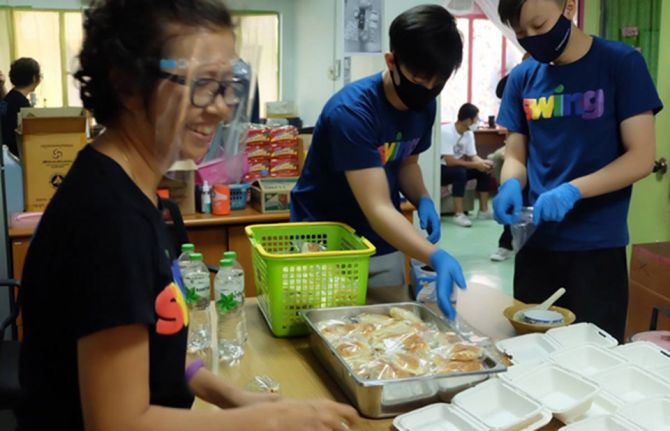
Initially, Service Workers in Groups (SWING), a Thai national organization providing HIV services and advocating for sex workers’ rights, received requests from sex workers for the most basic of needs—food. As requests began flooding in, it became clear that without a source of income many sex workers were unable to cover the cost of daily expenses, housing and medicine.
“When the COVID-19 outbreak began, nobody was talking about sex workers, and no measures were in place to help them,” said Surang Janyam, Director of SWING.
Spurred by growing concerns about how the outbreak has impacted the lives of sex workers, SWING, in collaboration with Planned Parenthood Association Thailand and Dannok Health and Development Community Volunteers, with support from UNAIDS, launched a community-led rapid assessment of 255 sex workers from Bangkok, Pattaya and Dannok and community-based organizations throughout the country.
The outbreak has had a severe socioeconomic impact on the lives of sex workers, further exacerbated by the lack of social protection measures. According to the findings from the rapid assessment, 91% of respondents became unemployed or lost their source of income following the start of the COVID-19 outbreak. Three quarters of the respondents could not make enough money to cover daily expenses and 66% could no longer cover the cost of housing.
Ms Janyam spoke about the difficulties faced by sex workers and how the priorities for SWING’s work have shifted. “As a sex worker-led organization, we cannot provide only HIV services while sex workers are hungry and lack the basic needs to survive,” she said. She explained that many of the sex workers expressed that they were not eligible for the government assistance of 5000 baht. Answering the call for help, SWING staff have taken to the streets to raise donations and deliver food to sex workers in their network.
Widespread coverage in the media and on personal blogs has catalysed a public conversation about the lack of social protections for sex workers. Ms Janyam also points to donations from local businesses and visits from younger people wanting to help as promising signs of how wider audiences are becoming more engaged on the topic of supporting sex workers in their communities.
The COVID-19 outbreak has also contributed to new challenges for HIV prevention. Fears of COVID-19 have deterred people from visiting clinics to be tested for HIV. Additionally, the rapid assessment findings revealed that almost half of the sex workers surveyed had difficulty accessing sexually transmitted infection screenings. In response to those observations, SWING partnered with a hospital capable of conducting COVID-19 testing, thereby drawing in sex workers interested in being tested for COVID-19 and creating an opportunity to counsel them about HIV tests. These changes in practice show possible synergies in prevention measures for both COVID-19 and HIV prevention and treatment.
“The results from the rapid assessment have proven to be a strong tool for advocacy and decision-making. Stakeholders of the AIDS response have collectively identified and started to implement priority actions as an immediate response to the needs of sex workers during the COVID-19 pandemic,” said Patchara Benjarattanaporn, UNAIDS Country Director for Thailand.
Ms Janyam reflects on what this will mean for SWING’s work and recalls the ways in which sex workers were not afforded the same social safeguards as others—they were forgotten. “We must transform ourselves. Community-led organizations must apply a holistic and comprehensive approach, providing immediate basic needs, integrating a package of prevention for both COVID-19 and HIV health services, as well as mental health support for sex workers,” she said.
She affirms that SWING and other charitable groups will continue to seek donations and provide basic provisions for sex workers, recognizing that the need for assistance will remain long after the situation eases, long after the bars and restaurants have reopened.
Our work
Region/country
Feature Story
“My biggest concern is to get my antiretroviral medicines”: HIV and COVID-19 in Latin America
28 May 2020
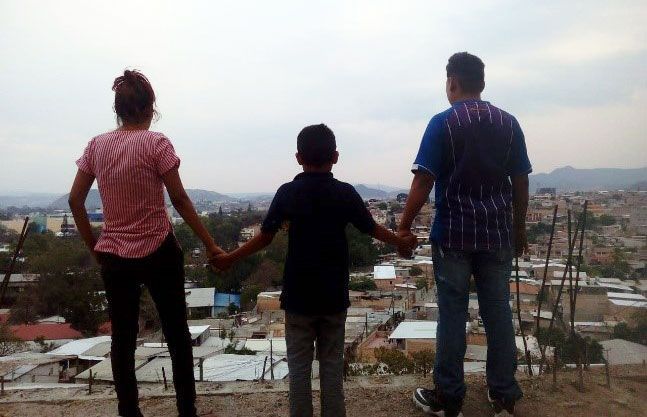
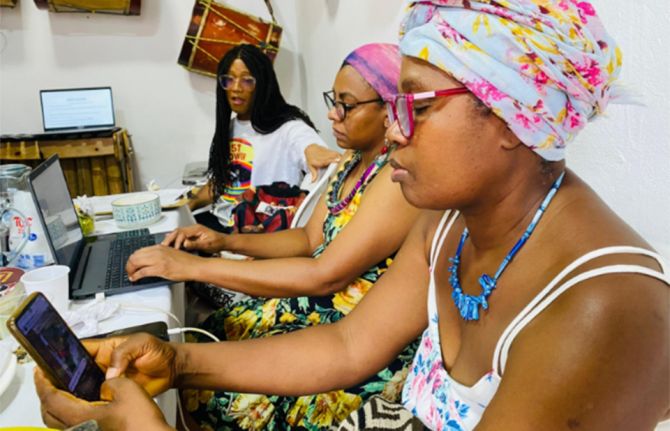
28 May 2020 28 May 2020Since the start of the COVID-19 pandemic, Marcela Alcina, of the Latin American and the Caribbean Movement of Positive Women (MLCM+), has received more than 20 calls a day asking for help, either for food, medicine or advice on how to cope with the lockdown.
Yesenia Rodriguez (not her real name) made one of those calls. A Colombian by birth, she lived for more than 24 years in the Bolivarian Republic of Venezuela, but owing to the humanitarian crisis in that country, she had to return to Cali, Colombia, six months ago to access her treatment for HIV.
“There’s eight of us: my four children, my husband, my two grandchildren and me,” she said.
Ms Rodriguez does not have a job and needs help to feed her family and to access antiretroviral medicine. “I came back to Cali only to find myself living another crisis. My biggest concern is to get my antiretroviral medicines, but I don’t have access to health care in Colombia,” she said. “It’s been extremely tough for me and my partner, since we’re both living with HIV. My children and my husband are unemployed. Kids can’t put up with hunger the way we grown-ups do.”
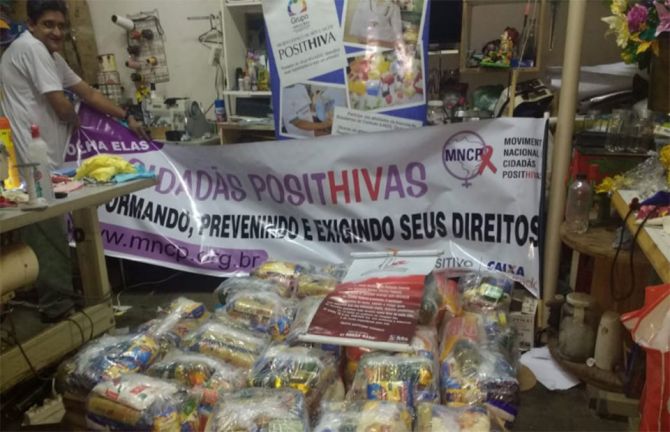
Ms Rodriguez was put in contact with Yani Valencia of the Lila Mujeres Organization, part of the MLCM+ network. She was given a food package for her and her family, and she is being put in contact with someone who is able to ensure that she can access antiretroviral therapy. “I was about to pass out when they brought me these groceries, I was extremely happy.”
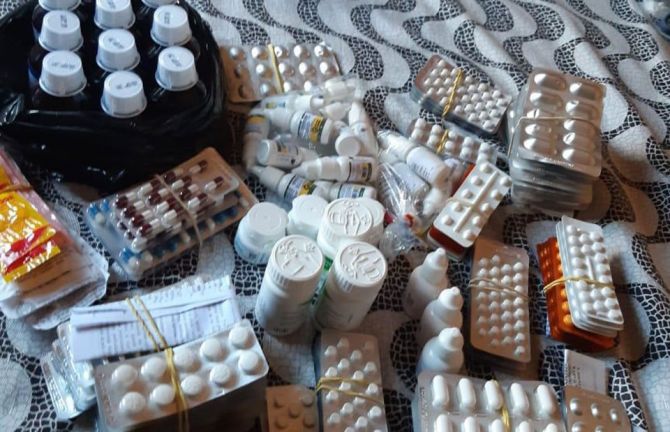
UNAIDS is recommending that, especially during the COVID-19 pandemic, people living with HIV keep necessary medical supplies on hand. The World Health Organization HIV treatment guidelines now recommend multimonth dispensing of three months or more of HIV medicines for most people at routine visits. However, according to a recent survey carried out by UNAIDS in Latin America and the Caribbean on the community needs of people living with HIV in the context of the COVID-19 pandemic, only one in 10 people reported having a three-month supply of antiretroviral therapy.
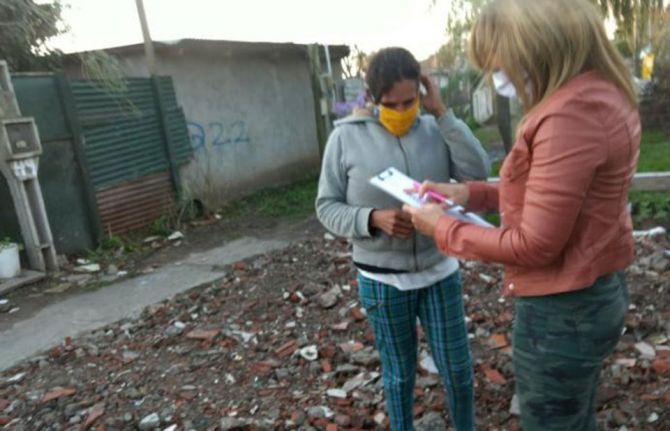
“We have met people who have no access to health care. A colleague of ours in Colombia borrowed a neighbour’s motorcycle to distribute medicines. We notice communities are overlooked quite often, but we must be a part of the answer. We couldn’t wait any longer, we had to do something,” said Ms Alcina.
Communities have played and continue to play a fundamental role in the AIDS response at the local, national and international levels. And now communities are playing a major role in the fight against COVID-19. MLCM+ has developed a network of 850 volunteers working in 17 countries in the region whose aim is to spread solidarity during the COVID-19 pandemic, keeping the focus on people living with HIV.
“We are distributing food and cleaning products, we are making masks that will later be distributed along with antiretroviral therapy, we are teaching people some prevention methods, we are giving condoms away and helping people find shelter in domestic violence situations,” said Ms Alcina.
MLCM+ is working across the region with UNAIDS, UN Women, the United Nations Population Fund and the United Nations Educational, Scientific and Cultural Organization, all of which are offering technical or financial support.
“UNAIDS provides us with resources, specialists and training webinars. The United Nations Educational, Scientific and Cultural Organization, on the other hand, helps us financially. That way, we are putting together a mechanism that intends to support the government’s actions, not replace them,” said Ms Alcina.
“We see how inequalities have become more evident during the COVID-19 pandemic. Inequality, and especially gender inequality, is exacerbated in times of crisis. Women living with HIV must be in the centre of the responses to both HIV and COVID-19, and must not be left behind,” said César Núñez, Director of the UNAIDS Regional Support Team for Latin America and the Caribbean.
Related links
Region/country
Feature Story
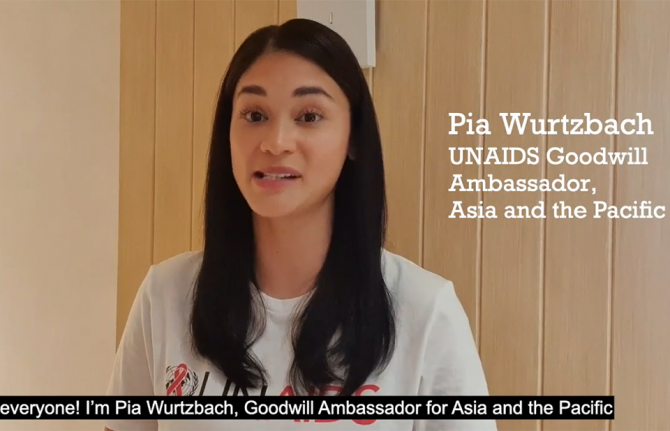
Pia Wurtzbach on how she is helping the response to COVID-19
27 May 2020
27 May 2020 27 May 2020Pia Wurtzbach, Miss Universe 2015 and UNAIDS Goodwill Ambassador for Asia and the Pacific, has long been an advocate for the AIDS response in the Philippines and the rest of the region. Recently, however, her work has taken in support for the COVID-19 response, including starting a fundraising effort with the aim of distributing 25 000 face masks to hospitals in Manila and supporting social media campaigns on preventing both COVID-19 and HIV.
UNAIDS spoke to Ms Wurtzbach about her work during this challenging time.
How did you organize the drive to donate face masks to health facilities in Manila?
To begin with, I ordered 5000 masks with my own money to identify an affordable and reputable supplier. I found one and ordered the masks and then delivered them to four hospitals. Once I was ready and confident, I started the fundraising drive, reaching out to the private sector in the Philippines and my network of contacts. So far, I have been able to donate masks to 30 hospitals in Metro Manila. We wanted to deliver masks to other hospitals outside the capital city, but because of the lockdown this hasn’t been possible yet. In addition, I have been able to donate meals to an intensive care unit in one of the hospitals in Metro Manila. Nurses and doctors working in the unit have been living in the hospital and do not go home. With the donations, I feel I am supporting them.
How do you continue to support the response to HIV in your role as a UNAIDS Goodwill Ambassador?
Every day I am in contact with LoveYourself, the civil society organization I volunteer for in the Philippines, to update each other on what is going on and to monitor the needs of people living with HIV. I post information on my social media platforms about HIV and COVID-19 prevention and how to stay healthy. I keep my followers informed of the services provided by LoveYourself to support people living with HIV during the COVID-19 pandemic, such as home delivery of antiretroviral medicines.
What questions do you receive from people living with HIV or from key populations in relation to HIV and COVID-19?
The most popular questions are how to access medicines and whether there are going to be enough refills. It is great that organizations like LoveYourself in the Philippines help people living with HIV to access their medicines. I am really impressed with Vinn (Ronivin Garcia Pagtakhan), the founder of LoveYourself, because he has been using his own car driving around everywhere delivering medicines to people’s homes. He is like a modern-day superhero.
How have you kept motivated to continue your work in these trying times?
I am so blessed because I have a lot of friends in the industry who are nurses too. You will be surprised that my makeup artist is a registered nurse, and there are photographers who are registered nurses. In the Philippines, there are so many nurses that somehow end up doing other careers, but they are all still in the medical field and they know people in the medical field. I hear so many stories from them, and I know these are real stories about what the hospitals are like and about their environment.
Hearing their stories made me feel like I needed to do something. I feel very fortunate that I am able to stay at home. So, I thought to myself, what can I do to make myself useful? This is why I started my donation drive. The medical staff sent me messages of appreciation and even a video of them saying thank you. When I see that the people on the frontline take the time to say thank you, I want to help even more.
The fundraising campaign gave me a sense of mission and purpose. That is what I tell people. If you are at home and you have followers on Instagram, or maybe you are an influencer or a celebrity, or maybe you are just popular in school, use it! Now is the time! We cannot just sit and wait for this to be over. The solution has to come from us.
What do you miss most from your life before the COVID-19 pandemic?
I feel like I took the little things for granted. I took for granted the little commute going to work, I took for granted the travelling, I took for granted how busy I was with my work. I remember before the lockdown I got burnout because I was doing so much work. I was not getting any free days or any weekends—I was working from Monday to Sunday. And I said to myself that I needed some time alone. And then suddenly this all happened. I am just taking the time now to reflect and think about what is really important to me.
I miss everything. I miss being able to walk outside, I miss the traffic, I miss seeing other people. I feel that the lockdown is really giving us time to think about what is important for us. I feel like when we get out of the quarantine and self-isolation, we will know what to prioritize.
How do you spend your leisure now being at home in quarantine?
You know, the good thing about the lockdown is that I have more time for myself. Every day I go to the roof deck of my building to work out, so I bring my yoga mat up there and spend a few hours trying to get some sunlight and exercise. I have a routine every day, and I feel like if you have a little routine, you will feel like your days have direction. When I wake up in the morning, I try to get emails done and some work done. In the afternoon, I will work out. And at night I can bake, or watch television, watch Netflix. So, it is work, sunlight and then “me time”. I feel like this is a nice balance, because it is making yourself productive and taking care of yourself.
What are your next steps after you reach the target of donating 25 000 masks?
It is not set in stone, but my team and I are thinking of ways to help people who need economic support and donate them food. In addition, I would like to focus on social media messages on mental health to give people tips on how to control or manage their anxiety. People are at home and on their phones, so maybe they can read something that will help them manage their stress.
Video
Region/country
- Asia and Pacific
- Australia
- Bangladesh
- Bhutan
- Brunei Darussalam
- Cambodia
- China
- Democratic People's Republic of Korea
- Federated States of Micronesia
- Fiji
- India
- Indonesia
- Islamic Republic of Iran
- Japan
- Kiribati
- Lao People's Democratic Republic
- Malaysia
- Maldives
- Marshall Islands
- Mongolia
- Myanmar
- Nauru
- Nepal
- New Zealand
- Pakistan
- Palau
- Papua New Guinea
- Philippines
- Republic of Korea
- Singapore
- Solomon Islands
- Sri Lanka
- Thailand
- Timor-Leste
- Tonga
- Tuvalu
- Vanuatu
- Viet Nam
- Samoa
Feature Story
“When people are asked to isolate themselves, we also need to make sure that they have food and medicine”
26 May 2020
26 May 2020 26 May 2020When non-essential shops and markets were closed in Senegal in response to the COVID-19 outbreak in the country, and movement between regions in the country was stopped, many people working in the informal sector, including people living with HIV, lost their income. Hunger was dangerously near for many.
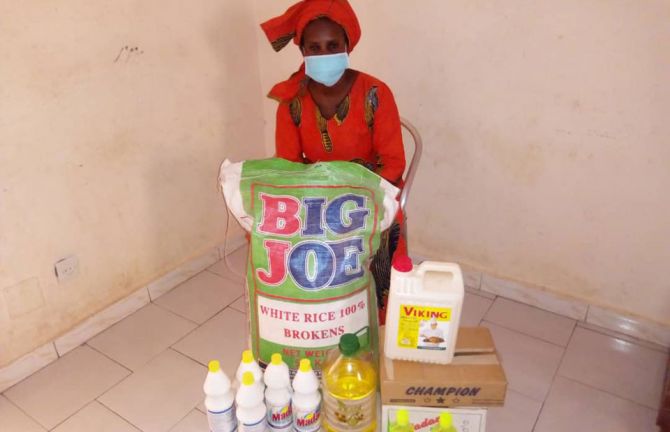
Within days, the National Network of Associations of People Living with HIV in Senegal (RNP+) mobilized, setting out to its members the food aid options available from the government for 1 million eligible households and offering advice on how people should prevent themselves from becoming infected by the coronavirus.
“When people are asked to isolate themselves, we also need to make sure they have food and medicine. Communities of people living with HIV help each other to take care of themselves, isolate themselves, access medication when needed and take care of each other’s families,” said Soukèye Ndiaye, the Chairperson of RNP+.
Community leaders and nongovernmental organizations are playing an active role in Senegal in giving out clear and accurate information in order to avoid panic and in combating stigma and discrimination, against both HIV and COVID-19. RNP+ is monitoring the response to COVID-19 as it unfolds, mapping how COVID-19 is affecting the most vulnerable and bringing urgent issues to the attention of the government and service providers.
Advocacy with the National Alliance of Communities for Health and ENDA Santé enabled RNP+ to distributed more than 200 food and hygiene packs to the poorest families of people living with HIV. The UNAIDS country office in the country has stepped in by providing a grant to ensure that the One Family–One Kit programme continues to distribute aid to the people most in need.
RNP+ is also advocating for funding for people living with HIV to help them to travel to health centres, since transport costs have increased, and for financial support for the scaling up of the work of community health workers, who are active in the delivery of antiretroviral therapy.
During the COVID-19 pandemic, ensuring continuity of HIV treatment by distributing multimonth supplies of antiretroviral therapy is vital. Although RNP+ has called on the government for all people living with HIV to get multimonth refills, weaknesses in the supply chain, including inadequate assessments of the needs at some clinics for supplies of antiretroviral therapy and irregular supplies centrally, has meant that not all people who need such supplies are getting them. UNAIDS is supporting the government in tracking orders of antiretroviral medicines and in strengthening the supply chain.
The role of communities, especially communities of the most vulnerable, is critical in the time of COVID-19. “The history of the HIV epidemic has made it clear that the response to an epidemic is only effective if affected communities are fully involved in the response, from its planning through to its implementation and monitoring. Only then can a response be based on the realities and needs of all,” said Demba Kona, the UNAIDS Country Director for Senegal.
Region/country
Feature Story
“We are in this together”: Uganda Young Positives respond to COVID-19
25 May 2020
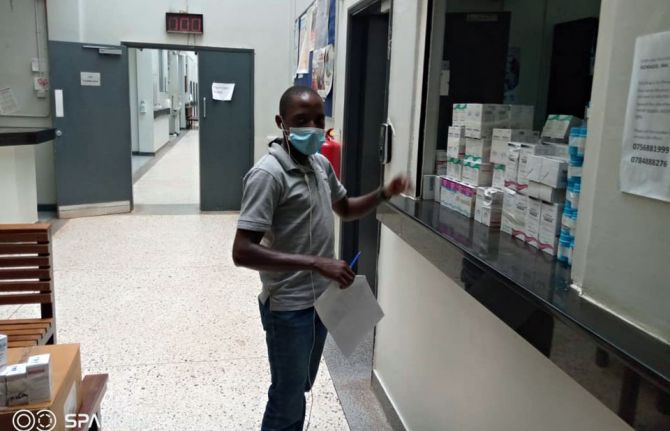
25 May 2020 25 May 2020Kuraish Mubiru wakes up at dawn every day to get refills of antiretroviral therapy from different health facilities before making deliveries to his peers and other members of the community living with HIV. This has been his routine for the past seven weeks.
Mr Mubiru is the Executive Director of Uganda Young Positives (UYP), a community-based organization that brings together young people living with HIV, mainly from the informal sector. With more than 50 000 registered members, UYP focuses on scaling up HIV prevention, care and support services for its members.
When Yoweri Museveni, the President of Uganda, first addressed the nation on 18 March on the global COVID-19 pandemic, among the measures put in place were restrictions on mass gatherings, the closure of most businesses and the cessation of public transport. Since then, people living with HIV and tuberculosis have found it difficult to access their routine medical care or essential medicine refills.
Following the measures, Mr Mubiru started receiving calls from young people whose livelihoods and HIV treatment were dependent on facilities that had been closed. The impact of the restrictions was beginning to be felt. Young people were no longer able to move to their respective health facilities to access care and treatment nor afford a meal.
Although there have been efforts by health centres and civil society organizations to transport antiretroviral medicines closer to the people, a good number, as reported by the community support groups and health centres, have not received their antiretroviral medicines owing to fear of stigma and discrimination by the community and family members.
“This was a trying time for the community and a huge test of our resilience because our peers needed us more than ever,” said Mr Mubiru. “We had to come out of our comfort zone, act and think fast not to lose all our gains in the national HIV response in the wake of COVID-19.”
Mr Mubiru volunteered to support his fellow peers to access HIV treatment using his own car. In the beginning, he used his own resources to fuel his car and purchase food, but he soon ran out of money.
Initially, one of his biggest challenges was being able to fuel his car to continue with the daily refills, but the further tightening of restrictions on private transport meant that Mr Mubiru could not continue with deliveries. Through the support of UNAIDS, the Infectious Disease Institute and the Ministry of Health, he obtained a permit granting him permission to enable him to continue supporting his community.
During one of his routine deliveries, Mr Mubiru’s car was impounded by the police for more than four hours and he was made to wait. It took the involvement of the police leadership to have the car and Mr Mubiru released. On many occasions, he has been stopped by the police, demanding to know where he is going—those delays at times force him to get home past the curfew time of 19:00.
Mr Mubiru’s resolve to support his community is unwavering. He knows that not everybody would be comfortable visiting the nearest health facility for their antiretroviral refills, disclosing the reason to the local authorities for them to be granted movement or have a community organization’s branded car parked outside their home.
“Instances like these propel me to get out of bed every morning. We are still in this together. COVID-19 will end, and life will continue,” he says.
On average, he delivers eight antiretroviral refills per day to his peers. Besides the long distances and hard-to-reach places he has to go to, food is one of the biggest challenges, since hunger compromises people’s adherence to their medication. Stigma and non-disclosure also pose a great challenge for people to access HIV treatment from a nearby facility.
“The COVID-19 outbreak is having a major impact on people living with HIV,” said Karusa Kiragu, UNAIDS Country Director for Uganda. “We must ensure that adherence to HIV treatment is not compromised. This can be achieved through multimonth dispensing of antiretroviral therapy, supported by a strong community-led response,” she said.