
Feature Story
UNAIDS employee to attempt world record of Murphs on World AIDS Day
29 November 2019
29 November 2019 29 November 2019UNAIDS employee Peter Koopmans will attempt to break the world record for the number of Murphs on World AIDS Day, 1 December, while fundraising for an HIV charity.
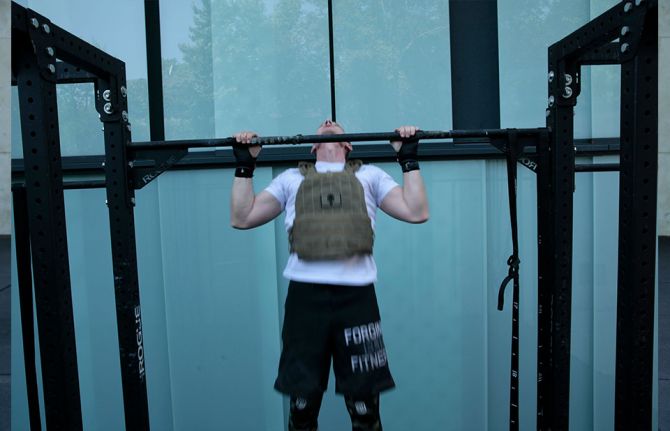
Named after a United States Navy officer killed in Afghanistan in 2005, the workout was one of Michael Murphy’s favorites. Originally called a Body Armor, a Murph consists of wearing a 10-kilo vest while:
- Running for one mile (1.6 km).
- Doing 100 pull-ups.
- Doing 200 push-ups.
- Doing 300 squats.
- Running for another mile.
Mr Koopmans will attempt to do 15 Murphs over a 24-hour period at UNAIDS headquarters in Geneva, Switzerland. Fifteen Murphs will see him run 30 miles and do 1500 pull-ups, 3000 push-ups and 4500 squats. He has been training for the record attempt for the past eight months, logging countless hours in the gym.
“I have always wanted to try this challenge, and this allows me to have a direct impact on the lives of others,” Mr Koopmans said. Staff and friends will cheer him on throughout, and some will even attempt to do Murphs with him.
All funds raised will go to Operation Bobbi Bear, a human rights organization committed to helping sexually abused children, and raising awareness about HIV, in KwaZulu-Natal, South Africa.
You can donate and/or follow Mr Koopmans as he accomplishes this amazing feat on this website, while this video gives a brief overview of the challenge.



Feature Story
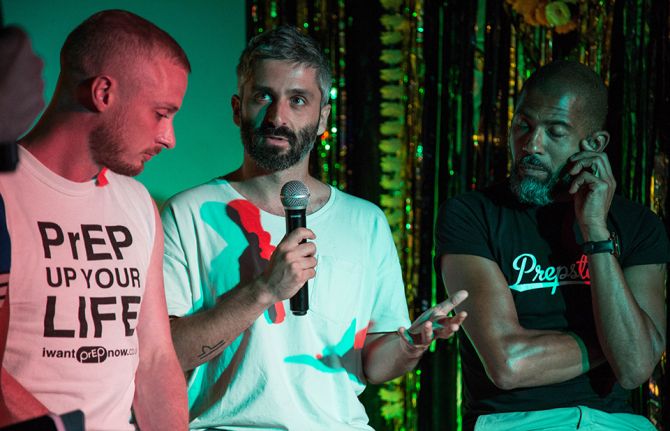
iwantPrEPnow website founded out of necessity
28 November 2019
28 November 2019 28 November 2019When Greg Owen started hearing about a medicine taken daily that could keep people from contracting HIV, he didn’t believe it. The British man, from London, asked around and his friends told him that pre-exposure prophylaxis (PrEP) was only available in the United States of America or through a clinical trial, the PROUD study, in England.
“I finally managed to get a hold of some via a friend in early August 2015,” he recounted. “The next day, I went for an HIV test and it came back positive.” In shock, he felt like the system had failed him.
“It was too late for me, so out of necessity and anger we decided we had to do something,” Mr Owen said. His friend Alex Craddock was on PrEP. He needed to keep taking the medicine, which he obtained from the United States, so they both set out to help themselves and their friends.
They gathered as much information on PrEP as they could and on 19 October 2015 the website iwantPrEPnow went live.
With a small budget and limited time, but with a lot of publicity, iwantPrEPnow attracted more and more people. Traffic exploded.
“We had no master plan, but clearly there was a need for advice and access to the medicine within the community,” Mr Owen said.
Through a PrEP trial in England, more than 10 000 people have access to PrEP. In Wales, Scotland and Northern Ireland, PrEP is available through National Health Service (NHS) sexual health clinics. Countless others have obtained PrEP by buying it online.
Mr Owen, a club promoter turned full-time activism coordinator, credits 30 years of AIDS activism for improving HIV awareness and bringing new medicines to the forefront.
“PrEP has been a game-changer because it’s like the final piece of the jigsaw puzzle that has been missing,” he said. “We had already stepped up testing regularly, encouraged increased condom use and started people on treatment as soon as possible. All of these are part of our combination prevention response needed to fight the fire.”
Will Nutland, co-founder of Prepster, a group advocating for PrEP to be integrated within NHS England, considers the medicine as one of the most effective and cost-effective HIV prevention tools ever.
“No other HIV prevention technology has had the impact on HIV diagnosis in a place like London,” Mr Nutland said.
Half of new HIV infections in the United Kingdom have been shouldered by gay men and other men who have sex with men. In the past two years, new HIV infections among gay men and other men who have sex with men have decreased more than 30% across the country, according to HIV data by Public Health England. And in London, there has been a 44% drop.
Prepster and iwantPrEPnow launched within a week of each other. The founders didn’t know each other, so when they realized the crossover between them, they met and now collaborate on most projects.
For Mr Owen, PrEP has also changed the narrative. “We now have whole generations talking about sex in a guilt-free way,” he explained. He believes that people feel more liberated after decades of shame, death and disease linked to sex without condoms.
Among HIV advocates, the sector feels reinvigorated. Mr Owen feels proud being part of this supportive, loving and vibrant community. He says their common goal has brought lots of different players together.
“PrEP needs to be made available to all and not just at sexual health clinics,” he said, echoing Mr Nutland.
Their ongoing objective involves further increasing awareness of and access to PrEP for everyone who could benefit, particularly women, transgender people and communities of colour.
“A community means no one is left behind,” Mr Owen said. “No one gets turned out, that’s a real community.”
Video
Region/country
Related
Feature Story
UN Cares: putting people first in Jamaica’s HIV response
02 December 2019
02 December 2019 02 December 2019Erva-Jean Stephens works as a Strategic Information Adviser in the UNAIDS Country Office in Jamaica. She describes her role as using evidence-informed data to shape programmes and policies that contribute to the country’s development.
Ms Stephen’s professional career is entwined with an activist’s desire to see better health outcomes for ordinary Jamaicans.
“I try to serve people first,” says Ms Stephens. “People reach out to me because I make myself accessible and I easily relate to their needs. I naturally build networks outside of the work environment that I think might be beneficial to the work we do.”
She supports the nongovernmental organization Eve for Life because she believes that young women and girls living with or affected by HIV are being left behind with regard to international funding and programmatic focus. Beyond providing technical support to help Eve for Life increase its funding, Ms Stevens has mobilized private sector organizations and UN Cares, the United Nations system-wide workplace programme on HIV, to raise funds and create care packages for young women and their children.
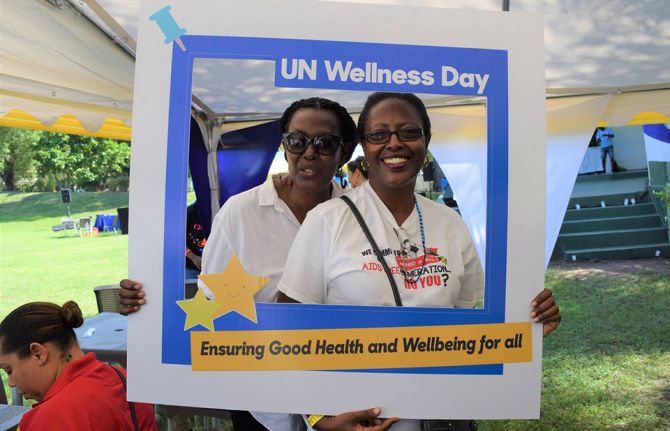
Under her leadership, UN Cares Jamaica has trained United Nations staff members in the country on issues such as unconscious bias and the human rights of lesbian, gay, bisexual, transgender and intersex people and of people who use drugs. In 2016, the United Nations team in Jamaica received an award from the United Nations Secretary-General for its work on raising awareness about HIV and noncommunicable diseases.
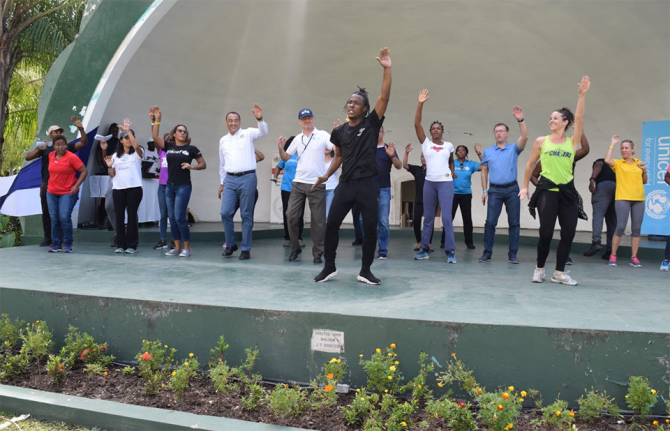
In 2018, UN Cares Jamaica launched UN Moves. This is an offshoot of a project led by the Ministry of Health that aims to harness the power of the private and public sectors to help create a healthier, happier population through nutrition, exercise and education. But for Ms Stevens, the most critical area of UN Cares’ work remains addressing HIV-related stigma and discrimination.
“There needs to be ongoing training on cultivating and maintaining a model work environment where stigma and discrimination have no place. Sometimes we may not realize to what extent people are looking at us in the United Nations and how important it is for us to walk the talk,” said Ms Stevens. She thinks about her own journey and how through the UN Cares programme she has learned to identify and uproot her own biases.
Ms Stevens has a degree in environmental health and food safety and a master’s degree in public health with a specialization in medical epidemiology. She began her career with the Ministry of Health, using monitoring and evaluation techniques to ensure outbreaks of malaria and food-borne illnesses were quickly brought under control.
She hopes to be part of the team that sees the end of the AIDS epidemic.
“When you look at the history of the Caribbean in terms of eradicating diseases, political commitment and community involvement have always intersected,” she explains. “To meet our commitments on controlling the transmission of HIV, we need to see more meaningful community engagement and leadership, supported by political will. I am here to provide the strategic information necessary to help realize that goal.”
Related
Feature Story
United Republic of Tanzania lowers age of consent for HIV testing
29 November 2019
29 November 2019 29 November 2019The United Republic of Tanzania has approved a change to the law that lowers the age of consent for HIV testing from 18 years to 15 years. The amendment to legislation also makes self-testing for HIV legal, also from the age of 15 years.
“These amendments will significantly accelerate our intention to meet the 90–90–90 goals, which aim at ending the AIDS epidemic by 2030,” said Ummy Mwalimu, Minister of Health, Community Development, Gender, Elderly and Children. The ministry was instrumental in tabling the amendments to the legislation.
The 90–90–90 targets are ambitious treatment targets to help end the AIDS epidemic. They aim to ensure that, by 2020, 90% of all people living with HIV will know their HIV status, 90% of all people who know their HIV status will be on antiretroviral therapy and 90% of all people on antiretroviral therapy will be virally suppressed.
The changes to the law will contribute to improved access to HIV testing for adults aged 15 years and over.
At the end of 2018, the progress on the 90–90–90 targets in the United Republic of Tanzania was 78–92–87. In 2018, there were 72 000 new HIV infections in the country. While this is a 13% reduction from 2010, it is below the 28% reduction across eastern and southern Africa.
“I congratulate the Government of the United Republic of Tanzania on its leadership and high-level political commitment to the AIDS response. UNAIDS will continue to work hand-in-hand with all our partners to ensure that access to HIV testing and treatment continues to expand,” said Leo Zekeng, UNAIDS Country Director in the United Republic of Tanzania.
Region/country
Related

Feature Story
HIV positive refugees support one another in Uganda
29 November 2019
29 November 2019 29 November 2019This story, by Duniya Aslam Khan in Imvepi refugee settlement, Uganda, is reproduced from UNHCR, a UNAIDS Cosponsor
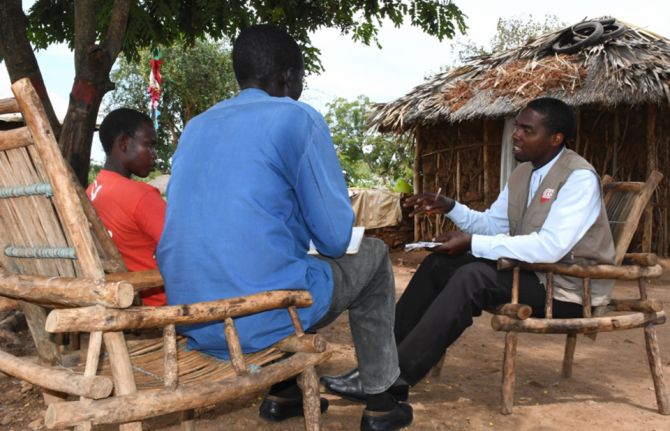
On a bright sunny day in northern Uganda’s Imvepi refugee settlement, Inga Viola and Rufas Taban sit comfortably under the shade of a jacaranda tree, leafing through an old register.
The pair are unrelated but share a unique bond – they were both diagnosed with HIV back in South Sudan, before civil war forced them to flee to Uganda in 2017.
“I was devastated when I found out,” says Inga, 32, who was diagnosed in 2014. “I felt like ending my life but I thought about my children and decided to live.”
Rufas, 49, nods solemnly, himself diagnosed in 2011.
Introduced to each other at Imvepi refugee settlement by their Ugandan nurse, Jedah Twebaze, they soon forged a friendship around their shared experiences – deep distress on finding out their status, leaving their homes behind and raising their families in exile.
They formed a support group, which they called the Friendship Serving Group, with Rufas, a former tax collector, as the secretary and Inga as the vice president. The group also doubles up as a savings cooperative and currently has 22 South Sudanese members, all HIV positive.
They contribute to the group’s kitty each month, sharing the accumulated savings at the end of the year. The group also helps spread HIV awareness in the community, while fighting the stigma associated with it.
“We use our meetings as an opportunity to talk about our wellbeing, check on members who are struggling with their status and provide counselling,” explains Inga.
She adds that they also educate each other on the importance of taking Antiretroviral therapy (ART) treatment – a life-saving course of medication that the conflict and the ensuing journey to safety disrupted, causing hers and Rufas’ health to deteriorate by the time they reached Uganda.
“I spent many days without taking medicine. Each new day without treatment meant getting closer to death,” she says.
Thanks to Uganda’s progressive refugee policy that has integrated refugees into the national HIV programme, refugees like Inga and Rufas are able to resume their treatment as soon as they arrive. They receive ART medication on a quarterly basis, free of charge.
The medications help suppress levels of HIV in the blood and slow damage resulting from the infection. It helps prevent progression from HIV to AIDS, thereby significantly extending life expectancy and reducing the risk of transmitting the virus to zero.
“I thought to be HIV positive meant dying soon but our kind nurse told us that with regular medication, we can live a very normal life,” says Inga, looking at nurse Jedah, who’s been nicknamed, ‘Dr. HIV’ by refugees for his advocacy and commitment to educate both refugees and Ugandans on HIV/AIDS.
Jedah works at UNHCR’s partner agency, Medical Teams International (MTI) and observes that the level of stigmatization among South Sudanese refugees has improved significantly.
“Educational sessions with the communities here have yielded positive results in fighting stigma,” he says.
According to UNAIDS statistics, by the end of 2018, an estimated 1.4 million Ugandans were living with HIV – 1.2 million were aware of their positive status and 72 per cent of them were on ART.
Currently, over 17,000 refugees receive ART treatment across all the health facilities in Uganda’s refugee settlements where both refugees and nationals can access healthcare.
Earlier this year, Uganda launched a multi-year, Health Sector Integrated Refugee Response Plan, aimed at strengthening refugee healthcare through an integrated approach. Health services to refugees are currently aligned to the country’s national health policy and Health Sector Development Plan.
Such progressive policies and programmes that support both refugees and their host communities will be among the topics under discussion at the Global Refugee Forum, a high-level meeting 17-18 December in Geneva. States, the private sector and others are expected to announce high-impact contributions that will give refugees a chance to thrive alongside their hosts.
For Inga and Rufas, unrestricted access to treatment and a positive attitude towards HIV patients has not only made their life in the refugee settlement easier but it has also alleviated stigma.
“People here treat HIV patients just like anyone who has any other illness,” says Inga.
Another key milestone is the decline in mother-to-child transmission rates. Eighty-nine per cent of pregnant women who visited health centres were tested for HIV to prevent transmission to the unborn child.
“It is through these interventions that Inga and Rufas’ children are all HIV negative,” explains nurse Jedah.
The strong advocacy role played by communities in fighting stigma and spreading awareness is recognized in the theme of this year's World AIDS Day on1 December, which is ‘Communities make the difference.’
While Inga and Rufas do their part to make a difference, more needs to be done to ensure that the AIDS response at national and international level remains an essential one.
“Let us control HIV because no one should contract this disease,” Rufas says. “As we know, prevention is better than cure.”
Region/country
Related

Feature Story
Community groups delivering medicines in remote Central African Republic
21 November 2019
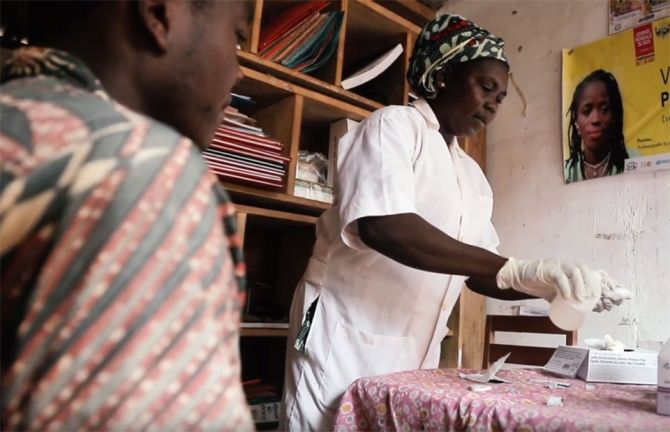
21 November 2019 21 November 2019Zemio is a city cut off from the world. In this remote area of south-eastern Central African Republic, few convoys pass and supplies are difficult to come by. Infrastructure barely exists and illegal checkpoints manned by armed men litter the roads.
Owing to conflict, more than 40 000 people are displaced in the area, and at least 30 000 people have been forced to flee to neighbouring South Sudan and the Democratic Republic of the Congo.
According to the government, the Haut-Mbomou region, where Zemio is located, has the highest HIV prevalence in the Central African Republic: at 12%, more than triple the rest of the country.
But community antiretroviral therapy groups, or CAGs, set up in 2016 by Medecins Sans Frontières, are helping people living with HIV to support and help each other.
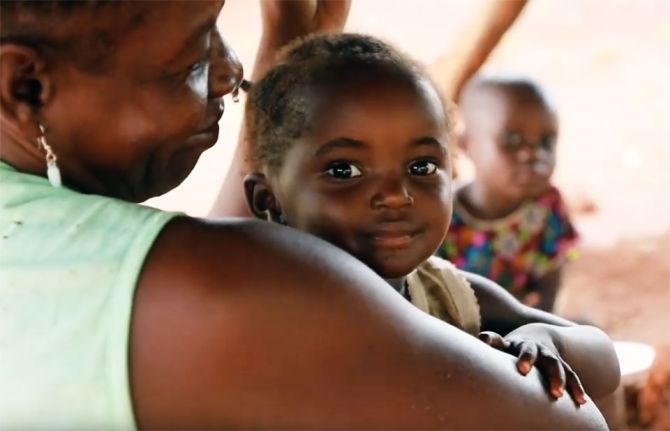
In Zemio, the CAGs represent hope in a forgotten conflict.
Region/country
Related



Feature Story
Jamaica: tackling HIV-related stigma and discrimination
19 November 2019
19 November 2019 19 November 2019Rachel Allen (not her real name), who lives in Kingston, Jamaica, was coming to terms with testing positive for HIV and trying to get on with her life. When she decided to go to nursing school, she was horrified to discover that the school required her to take an HIV test as part of the application process.
Jane Williams and Paul Brown (not their real names) were in love and wanted to start a family. But when health-care workers learned that Ms Williams was living with HIV, they expressed their disapproval. One nurse told her she shouldn’t have a child because of her status. One doctor called her “wicked”.
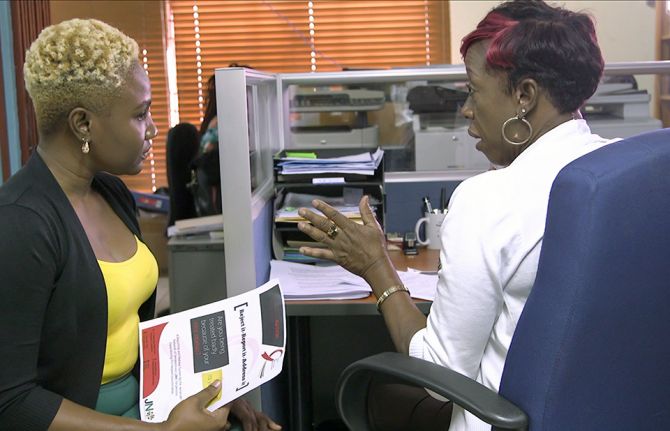
These are experiences that are all too common among people living with HIV, according to Jumoke Patrick, Executive Director of the Jamaica Network of Seropositives. The organization was set up in 2005 as a mechanism for people living with HIV to report rights violations. Now, the Jamaican Anti-Discrimination System (JADS) provides a system for the formal reporting of incidents and as well as a system of redress.
It’s an essential service, says Mr Patrick. He says that providing a channel for people to identify stigma and discrimination is a first step to allowing people living with HIV to access services and live full and productive lives.
“The fact that people are not accessing services has to do with stigma and discrimination,” Mr Patrick said. “That is why we have a fall-off in access to services. Stigma and discrimination is the main reason we are not where we are supposed to be in terms of getting people onto treatment. I have to know that when I disclose my status, you will not use it against me.”
People who have experienced prejudice in the health-care, education and employment sectors can report it to a JADS Redress Officer. Clients are often referred through a community facilitator in their health region, other civil society organizations or the Ministry of Health’s client complaint mechanism. Complainants fill out a form and are interviewed by one of the four redress officers in their district. A panel reviews each case and makes recommendations regarding an investigation. Agency and confidentiality are key. Some people opt out of seeing their complaints through, but those willing to go the distance have the benefit of an advocate.
“If you want redress you have to make a complaint, and you don’t have to be alone,” said Nadine Lawrence, a JADS Redress Officer. “It makes a lot of difference when you become empowered. You are able to get back into society and live a positive life.”
The most common cases are about treatment in health-care settings, breach of confidentiality and workplace harassment. Ms Lawrence has supported clients whose work colleagues disclosed their HIV status to their bosses. Others have had health workers from their community disclose their status.
What would she say to someone who has suffered an injustice but is reluctant to make a report? “Our organization exists so people who are HIV-positive can be more empowered. We sign a code of confidentiality. Trust the system,” she said. “Because it works.”
It worked for Ms Allen. JADS redress officers contacted the Ministry of Health to challenge the practice of requiring an HIV test to enrol in nursing school. The Ministry’s Legal Department intervened, sending a letter to the school advising it that the policy was illegal. The school’s board ultimately removed the HIV test requirement from its intake form.
The system also worked for Ms Williams and Mr Brown, who received a written apology. In addition, their complaint initiated a training programme for medical staff about the sexual and reproductive health rights of people living with HIV.
Related
Feature Story
Pace of decline in new adult HIV infections remains short of ambition
14 November 2019
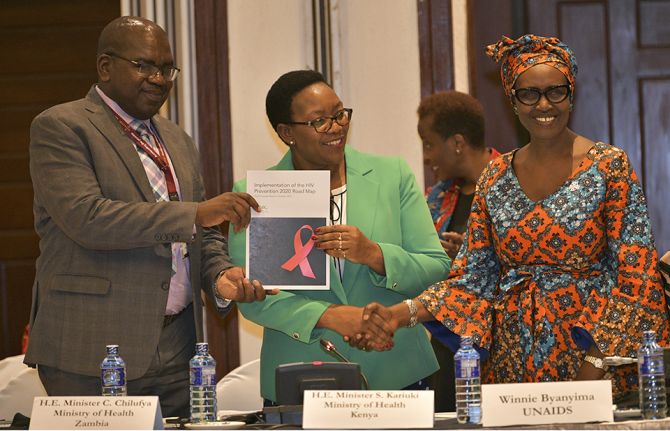
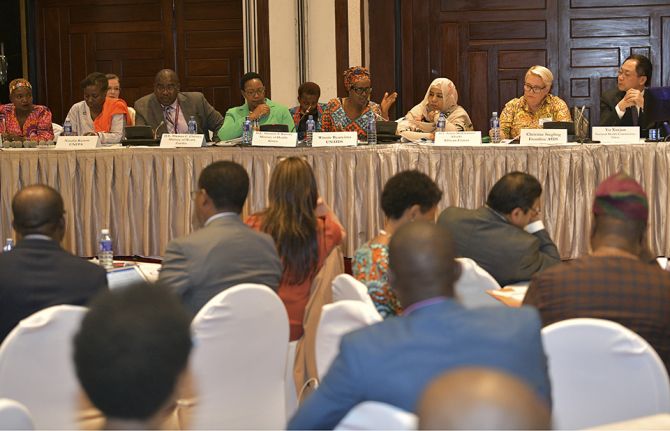
14 November 2019 14 November 2019The co-conveners of the Global HIV Prevention Coalition, UNAIDS and the United Nations Population Fund, have launched a new report on progress made in reducing new HIV infections across 28 countries that have been particularly affected by HIV. The report was launched at the High-Level Meeting of the Global HIV Prevention Coalition, held on 12 November on the sidelines of the Nairobi Summit on ICPD25.
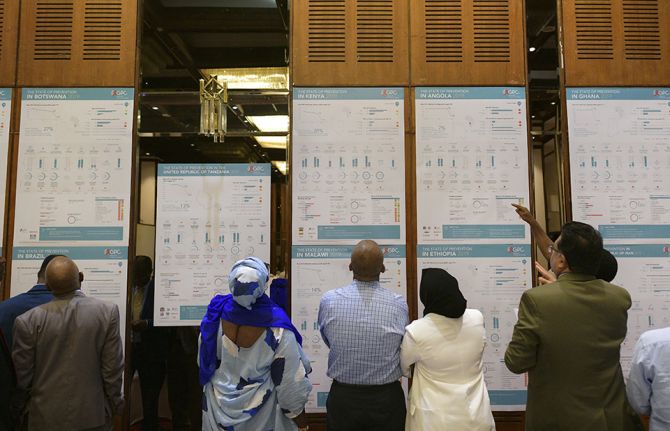
Together, the 28 countries account for 75% of all new HIV infections globally—1.2 million of the 1.7 million new HIV infections among adults in 2018. The report, Implementation of the HIV prevention 2020 road map, shows that among the coalition countries new HIV infections among adults declined on average by 17% since 2010, slightly higher than the global decline of 13%, but far short of the 60% decline needed in 2018 to meet global HIV prevention targets.
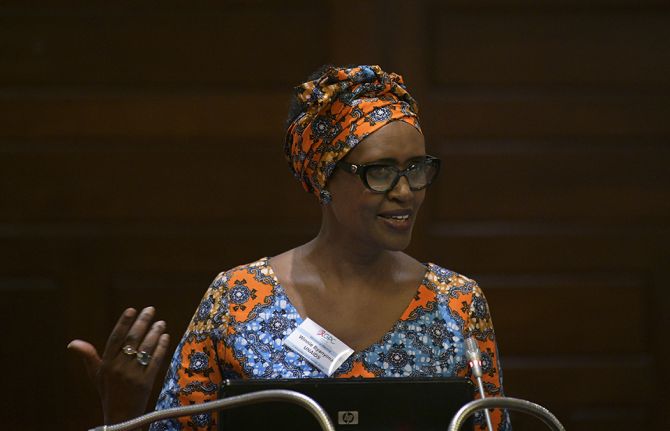
“We are nearly 40 years into the HIV epidemic and it is unacceptable that governments and leadership are still shying away from sensitive issues,” said Winnie Byanyima, Executive Director of UNAIDS. “Investments in HIV prevention do not match the needs of our people; in some countries, even the basic commodities like condoms are not available, accessible or affordable in rural areas, for young people or key populations.”
The report shows that some countries have made significant progress, with 12 countries reducing new adult HIV infections by 26% or more since 2010. They include countries with major epidemics, such as South Africa, with a 39% decline, the Democratic Republic of the Congo, with a 37% decline, Uganda, with a 36% decline, and Zimbabwe, with a 28% decline.
Some coalition countries, however, experienced concerning increases in new adult HIV infections, including Nigeria, where new adult HIV infections increased by 8%, and Pakistan, which is experiencing a rapidly growing HIV epidemic among key populations, where new adult HIV infections rose by a staggering 56%. On average, new HIV infections in non-coalition countries remained relatively stable between 2010 and 2018.
The report shows that while there has been some progress in developing programmes for adolescent girls and young women, the Global HIV Prevention Coalition estimates that in 2018 only 34% of the areas with high HIV prevalence had dedicated comprehensive HIV prevention programmes for women and girls—far short of the global target of reaching 90% of adolescent girls and women with these services by 2020. During the meeting, Nyasha Sithole, from the Athena Network, made a strong call for investment and engagement of adolescent girls and young women in HIV prevention and sexual and reproductive health programming.
The Global HIV Prevention Coalition was established in 2017 to galvanize greater commitment and investment in HIV prevention in order to achieve the 2020 prevention target of reducing new HIV infections among adults by 75% by 2020 (against the 2010 baseline). Its added value is clearly visible in a number of focus countries and beyond. Countries confirm that it has promoted a more systematic and structured approach to HIV prevention programming and built momentum in most of the 28 countries; however, much more needs to be done to meet global commitments.
“The coalition has been working as an important platform for countries to share their progress and experiences in HIV prevention, providing a very good opportunity for us to take joint actions to reduce new infections and curb the spread of the disease. This is the key to realize the Sustainable Development Goal target on ending AIDS by 2030,” said Yu Xuejun, Vice-Minister of Health of China and current Chair of the UNAIDS Programme Coordinating Board.
To accelerate progress in stopping new HIV infections, momentum urgently needs to be stepped up by increasing investment, addressing HIV-related stigma and discrimination, addressing the legal, policy and structural barriers to HIV prevention, especially for adolescent girls and young women, key populations and their sexual partners, and taking measures to expand community-based responses.
“I am convinced that community action is the key not only to HIV prevention, but prevention of all ill health. It is for this reason that we have made primary health care the focus of universal health coverage in Kenya,” said Sicily Kariuki, Cabinet Secretary of the Ministry of Health, Kenya.
By taking these critical steps and increasing efforts to address persistent gaps in programme coverage and ensuring that services and community programmes are available to everyone in need, significant progress can be made towards ending AIDS.
During the meeting, which was chaired by the Cabinet Secretary of the Ministry of Health of Kenya and the Minister of Health of Zambia, representatives of the coalition countries made bold commitments and pledges to scale up HIV prevention in their respective countries.
The Nairobi Summit on ICPD25

Feature Story
UNAIDS Executive Director holds first face-to-face meeting with key donors
13 November 2019
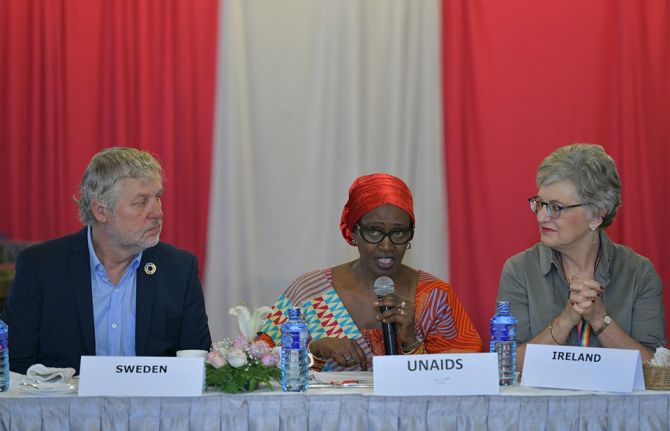
13 November 2019 13 November 2019Ahead of the opening of the Nairobi Summit on ICPD25, the Executive Director of UNAIDS, Winnie Byanyima, and Peter Eriksson, the Minister for International Development Cooperation of Sweden, co-hosted a ministerial breakfast meeting with key donors and partners to highlight the need for a strong UNAIDS to lead the global response to HIV.
It was Ms Byanyima’s first face-to-face meeting with some of UNAIDS’ key donors and partners in her capacity as the Executive Director of UNAIDS, during which she pledged to take a feminist approach in taking the organization forward.
“UNAIDS is at a critical juncture as it emerges from the challenges of the past two to three years, and the staff will be my first priority; we need healing, trust-building and closure. I want to bring back the joy in the great work of UNAIDS,” said Ms Byanyima.
Katherine Zappone, the Minister for Children and Youth Affairs of Ireland, Christopher MacLennan, Canada’s Assistant Deputy Minister of Global Issues and Development, and other heads of delegations applauded UNAIDS’ intention to make meaningful culture change happen at UNAIDS.
“UNAIDS has been at the frontline of the AIDS response for years. Canada has been a strong supporter and we are so pleased that Winnie has joined,” said Mr MacLennan.
Ministers and representatives of Australia, Belgium, Canada, Finland, Germany, Ireland, Luxemburg, the Netherlands, Norway, Sweden and Switzerland encouraged UNAIDS to continue its leading role in promoting community-led solutions and responses. They also highlighted the need to leverage the unique capacity of UNAIDS and build on its human rights expertise to address the social and political barriers that are hindering progress on HIV.
“We must integrate sexual and reproductive health and rights better into the HIV response in order to reach our targets,” said Mr Eriksson. “The Joint Programme has a very important role in driving sexual and reproductive health.”
The meeting was also attended by representatives of several UNAIDS Cosponsors―the United Nations Population Fund and the United Nations Development Programme (UNDP). “UNDP is committed to working with UNAIDS in supporting governments to establish enabling legal, policy and regulatory environs for effective and rights-based HIV responses,” said Achim Steiner, the Administrator of UNDP.
UNAIDS, donors and partners agreed on the need to forge partnerships with the Global Fund to Fight AIDS, Tuberculosis and Malaria to ensure a sustainable response to HIV.
The meeting was the first in a series of events planned as part of UNAIDS’ enhanced collective engagement and strengthened collaboration as it embarks on the process of developing a new strategic plan on HIV.
The Nairobi Summit on ICPD25
Feature Story
Confronting the link between HIV and gender-based violence in Jamaica
07 November 2019
07 November 2019 07 November 2019Monique McDonald is an HIV peer educator who tells the story of her childhood with unflinching courage. “I was sexually abused by my uncle at the age of 12 and contracted HIV.”
Ms McDonald has written about her experiences in a book called I am now free. It uses her old diary entries to describe the abuse she suffered as a child and her journey to recovery. Today, she supports young women living with HIV, helping them to come to terms with their status and advising them on adhering to treatment. She has also founded the Ashley Fund to help other sexual abuse survivors to continue their education.
She admits that it’s been a long road.
“I was so depressed, I didn’t know who to trust,” she remembers. “How could this happen, and everybody turned their eyes?”
Rushell Gray reflects on her past with a similar mix of sorrow and disbelief.
“As a young girl everybody turned a blind eye and blamed me. I was the AIDS girl walking around in the community. Nobody said, “this man needs to go to jail.” At one point I almost gave up because the stress was too high,” she said.
Ms Gray now works as a Mentor Mom. The Mentor Mom programme enlists young mothers living with HIV to share their experiences and help other young women coping with similar situations. Mentor Moms answer questions and offer reassurance, accompany young women and girls on their health visits and reinforce clinical guidance on the importance of taking medicines regularly.
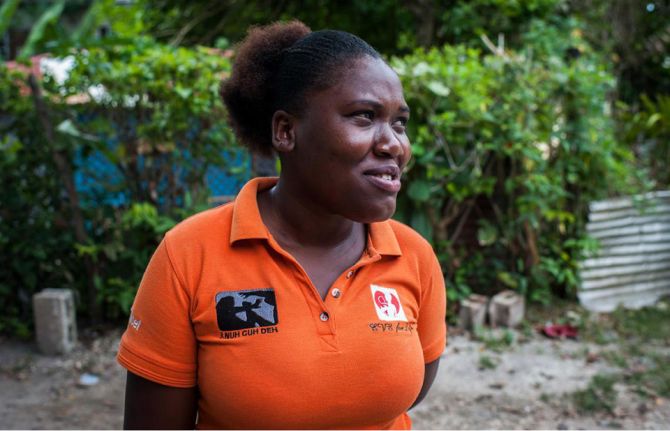
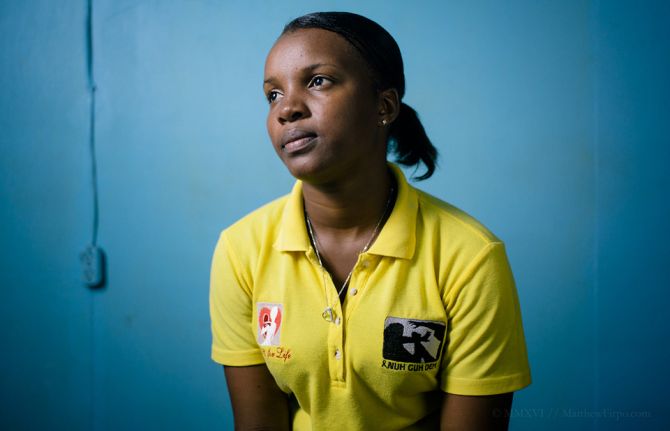
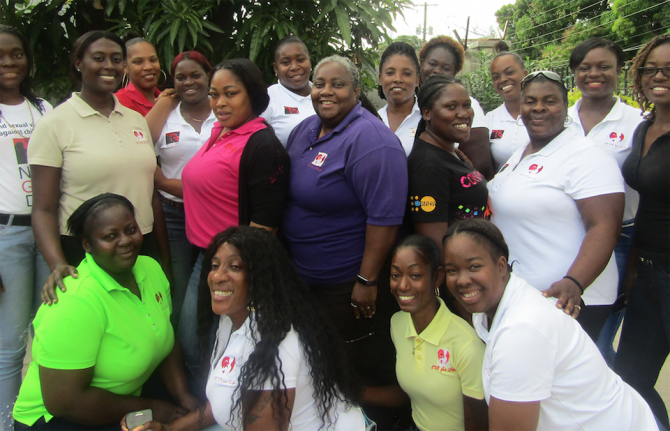
Both Ms McDonald and Ms Gray are employees and past clients of Eve for Life, a Jamaican nongovernmental organization that helps to prevent new HIV infections and improve the quality of life of women and children living with or affected by HIV. Clients benefit from peer support groups, psychological care and empowerment programmes.
Joy Crawford and Patricia Watson founded Eve for Life 11 years ago. While supporting young women and girls affected by HIV, they quickly learned that there was a clear link between HIV infection, adolescent pregnancy and child sexual abuse. According to Situation analysis of Jamaican children, a 2018 report by the United Nations Children’s Fund (UNICEF), more than one in five (21%) adolescent girls in Jamaica said that they had survived sexual violence.
As a long-standing provider of technical support and capacity-building around sustainability for Eve for Life, UNICEF is keen not only on supporting girls, but addressing the cultural norms that make them vulnerable.
“There is this pervasive idea that adult men should have some level of access to a girl’s body if they are in their life, supporting the family or something like that,” explains Novia Condell, UNICEF Jamaica’s Adolescent Health and Empowerment Specialist. “Of course, the girl has no power to negotiate any protection in a situation where she has been abused or exploited.”
High on UNICEF’s agenda is supporting the community engagement necessary to shift attitudes around child sexual abuse. Eve for Life has spearheaded the “Nuh guh deh” (don’t go there) campaign, which aims to stop sexual abuse. They use complementary strategies—everything from community meetings to music videos—to get the message out.
The UNAIDS country office in Jamaica also provides technical support to Eve for Life and has helped the organization build partnerships for resource mobilization. The UNAIDS Caribbean subregional office is also working with Eve for Life to create safe spaces for young survivors and leaders to raise awareness about the link between gender-based violence and HIV.
There is also a focus on meeting young women’s basic needs, including food, clothes and health care. But beyond these services, work continues to provide teenage girls and young women living with HIV with a deeper level of emotional support and mentorship.
“Jamaica’s Ministry of Health has found a strong partner in Eve for Life—one that is able to focus on resilience and life skills-building. They get the girls’ lives on track so they can improve their lot and the lot of their children,” says Ms Condell.