Feature Story
Treating HIV-positive children with speed and skill
26 December 2019
26 December 2019 26 December 2019How innovations in rapid testing and child-friendly medicines are saving lives in Uganda.
By Karin Schermbrucker and Adrian Brune — Originally published by UNICEF
Last year, nearly 450 infants acquired HIV every day – most of them during childbirth. These children are at extremely high risk of dying in the first two years of life. But so many of them are never diagnosed or treated.
Inadequate HIV testing and treatment for children is a widespread challenge. Although the 2019 global treatment rate for HIV-positive mothers stands at 82 per cent, the diagnosis and treatment of children with HIV is just 54 per cent in most regions.
This gap in coverage is often because diagnostic processes tend to be more complicated and cumbersome for children. Infants require a special type of testing for HIV (virological), which is not readily available in most low- and middle-income countries.
And although there are age-appropriate antiretroviral medicines for children, they can be hard to find in many areas largely due to a lack of investment in testing them.
This delayed diagnosis and treatment doesn’t have to happen. UNICEF and Uganda’s Ministry of Health recently enacted HIV treatment reforms for children to great success. With the help of partners and innovative diagnostic tools, 553 facilities across the country were able to provide antiretroviral therapy for children – up from 501 in 2017.

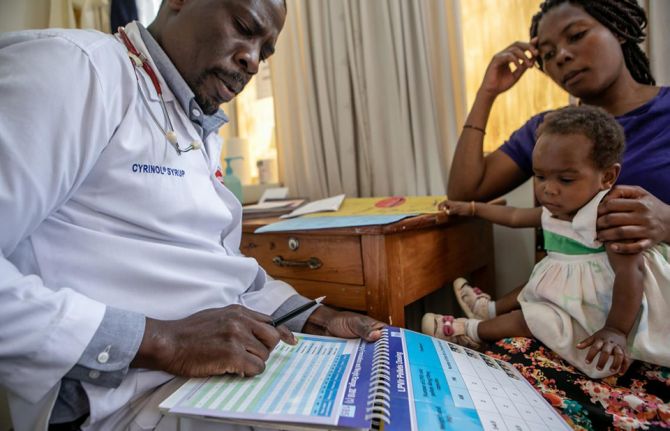
Dr. Denis Nansera, a paediatrician, examines Kansiime Ruth, 25, and her daughters aged 1 and 4 years, at the Mbarara Regional Referral Hospital in Mbarara District, Western Region, Uganda on 20 August 2019. "A good number of mothers used to fall out of antenatal care. But with (medical advancements), we see a huge reduction in the time taken to diagnose a child, and time taken to get child on medication,” Dr. Nansera says. Photo: UNICEF/UNI211885/Schermbrucker

Kansiime's one-year-old daughter is weighed and measured at the Mbarara Regional Referral Hospital on 20 August 2019. UNICEF, in partnership with the Ministry of Health of Uganda and the Clinton Health Access Initiative has implemented Point of Care Early Infant Diagnostic (POC EID) testing. This rapid testing process uses devices that are easy to transport, operate and maintain, allowing more health centres to diagnose infants. With early diagnosis, infants can immediately start anti-retroviral therapy. Photo: UNICEF/UNI211886/Schermbrucker

Enoch Turyatemba, a laboratory technician at Mbarara Regional Referral Hospital, takes a blood sample from a baby for early infant diagnosis testing, which screens for HIV and determines results on the same day. "Before the Point of Care [POC] machines, we collected dry blood samples and had to send them away. The turn-around time was sometimes months,” Enoch says. “With a POC machine, HIV-positive children can start treatment the next day. “We are saving lives,” Enoch adds. Photo: UNICEF/UNI211916/Schermbrucker

Enoch Turyatemba tests a sample of blood with the POC machine. In addition to the rapid testing, the Ministry of Health has approved the use of oral pellets of pediatric HIV medicine, which can be mixed with food and/or breast milk to disguise the bitter taste of the medication. The pellets also do not require refrigeration – a huge advancement. Photo: UNICEF/UNI211884/Schermbrucker

Kenyonyozi Joseline holds her baby inside the POC clinic at the Mbarara Hospital. Adolescent girls are more vulnerable to HIV infection because their reproductive systems are not fully developed. Gender inequality and patriarchal norms in Uganda also make it difficult for girls and young women to negotiate safe sex, predisposing them to early pregnancies and HIV. Photo: UNICEF/UNI211905/Schermbrucker

Kenyonyozi carries her baby on her back outside the the POC clinic. Paediatric HIV services lag considerably behind those for adults and pregnant women. While 82 per cent of mothers living with HIV receive treatment, only 54 per cent of children living with HIV are accessing life-saving drugs. Just 59 per cent of babies born to mothers living with HIV are tested for HIV within the first two months of life. Photo: UNICEF/UNI211891/Schermbrucker

Kansiime and her daughters arrive at the Mbarara Hospital. The three family members all live with HIV and go to the clinic regularly to collect their medication. "When I go to hospital, I am surrounded by other women who have come for treatment. We are there for the same reason,” Kansiime says. “This has helped me overcome stigma and given me strength." Photo: UNICEF/UNI211907/Schermbrucker

Kansiime gives her one-year-old daughter her paediatric HIV medicine at home in western Uganda. Her daughter now takes the oral pellets instead of the bitter syrup she used to use, which has helped her viral load. "It is much easier to give her the pellets mixed into food so she doesn’t struggle with the taste,” Kansiime says. “My advice to other mothers: Give your children the medication they need so they can live longer and educate others." Photo: UNICEF/UNI211882/Schermbrucker

Kansiime's four-year-old daughter peeks her head outside the door to her house. She was born with HIV and needs to take medication on a daily basis. But she has survived past the critical period for young children and infants, making her survival into adolescence and beyond more likely. “I love singing – my favorite song is a song called Sconto,” she says. Photo: UNICEF/UNI211903/Schermbrucker

Kabiite Ajara, 32, helps her baby take her paediatric HIV medication in their home in Isongo, Uganda. They are both living with HIV. "I give my baby medication once a day,” she says. “Initially medicine used to make her weak and vomit. But currently she is ok with the drug – I crush the tablet and put it into water, which she takes easily." Photo: UNICEF/UNI211928/Schermbrucker

Kabiite plays with her daughter outside their home. Kabiite is HIV-positive, but regular medication keeps her strength – and spirits – high. "I love playing with my children – taking them to play in the banana plantation, cooking together,” Kabiite says. “[My daughter] loves playing football a lot! And she is good!” Photo: UNICEF/UNI211933/Schermbrucker
This World AIDS Day, UNICEF is calling on all governments and partners to urgently close the testing and treatment gap for children and adolescents living with HIV-AIDS; to establish supportive, stigma-free communities that provide opportunities for testing and care; and to enact improved policies and rights for people living with this survivable epidemic.
UNICEF resources
Region/country
Feature Story
Health kiosks expanding HIV services in Zimbabwe
18 December 2019
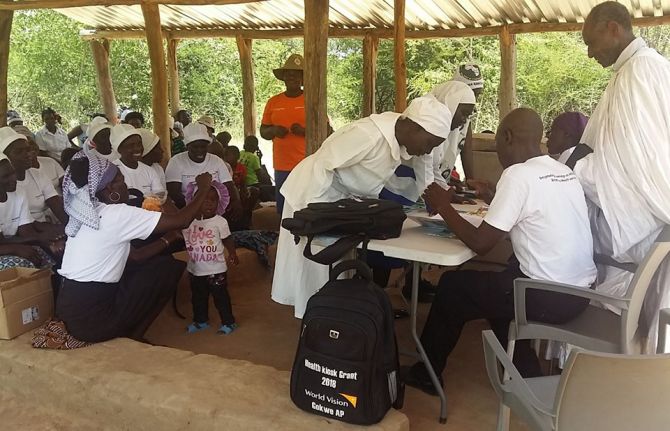
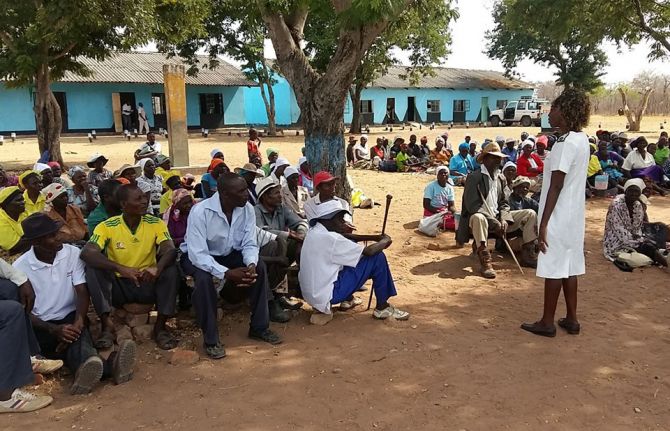
18 December 2019 18 December 2019If you drive through Zimbabwe on a typical Saturday or Sunday, you will see many places of religious worship. Some are static structures, while others are mobile. Some services are held under trees or in open spaces.
Many people in Zimbabwe follow a religious faith. The Apostolic community is a major religious sect that discouraged its members from seeking medical care, including HIV services, preferring to use prayer for healing―this led to many people becoming ill and dying from preventable diseases. However, with the implementation of so-called health kiosks, the community is now encouraging its members to access medical care.
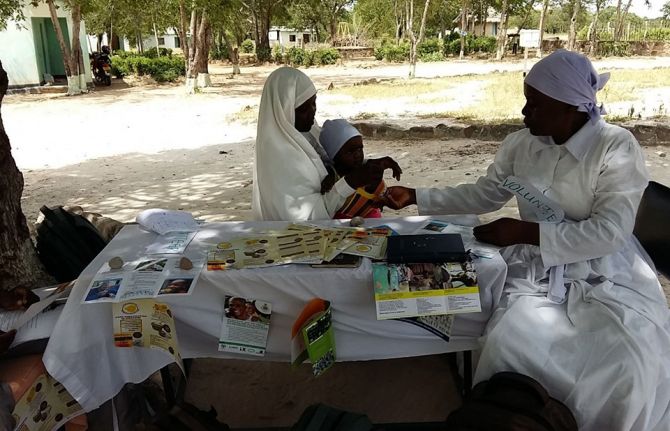
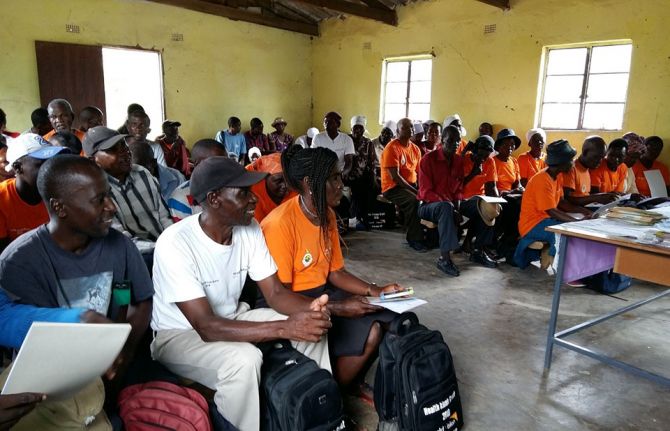
David Adashe (not his real name), an Apostolic leader in Gokwe North, explained that health kiosks staffed by church volunteers trained by the Zimbabwe health ministry helped his congregation to access much needed information on HIV prevention. He described it as like, “Going from a thick cloud of darkness into a plane of light of splendour.”
Ms Adashe said that his congregation’s views about seeking medical assistance from health facilities have changed. They now seek out medical care, receive counselling from trained volunteers and are referred to a health facility for additional services, if needed. “I was naive and reluctant to take health issues seriously, but since the emergence of the health kiosk programme, I am now more empowered. I’m now encouraging my family to access health services from the clinic,” he said.
Since March 2018, World Vision Zimbabwe, in collaboration with the Ministry of Health and Child Care, has been empowering faith leaders like Mr Adashe and church volunteers through training and creating safe spaces to bring health information and services to their congregations.
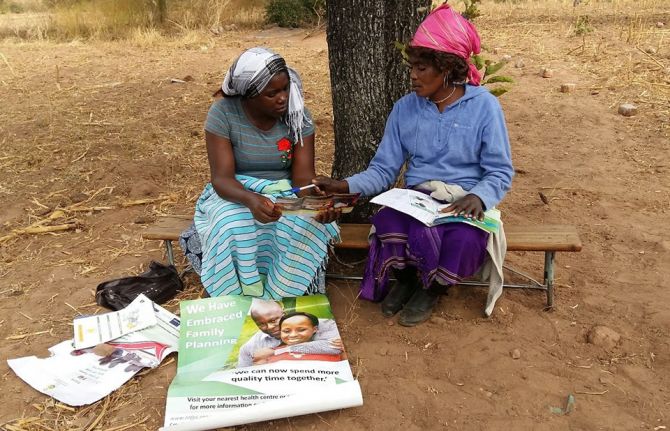
A health kiosk volunteer in Gwanda said, “As a volunteer, I observed that previously it was difficult for some individuals to travel to the local clinic on their own to seek medical advice, but since the programme started it is easy now, since they can access the information on their doorstep through the health kiosks.”
Many faith worship centres participating in the health kiosk programme have seen a threefold increase in the uptake of HIV and health information. Half of the people requesting information on HIV take an HIV test and receive their results. People who test positive for HIV are referred for antiretroviral therapy and supported to stay in care through the help of the trained church volunteers.
Faith leaders and church volunteers are essential in controlling the HIV epidemic. They provide care for their members, create safe space for information-sharing and are trusted by their members. Regular contact with the congregations enables the volunteers to bridge the gap in services for those who need them the most. The health kiosks also serve as effective and sustainable platforms to bring together both faith and non-faith communities to address the health needs of their members and to provide safe spaces to engage on other health matters.
“The findings from the health kiosk programme are promising for addressing the HIV epidemic. This is a key example of community-led responses by, for and within faith communities providing safe spaces and support for their members. These kinds of responses are essential for ending new HIV infections and AIDS-related deaths and critical for reaching universal health coverage,” said Laurel Sprague, Chief of the UNAIDS Community Mobilization, Community Support, Social Justice and Inclusion Department.
Region/country
Feature Story
Communities are making the difference in the HIV response
18 December 2019
18 December 2019 18 December 2019For young women and girls, for marginalised, vulnerable groups of people such as gay men and other men who have sex with men, transgender people, sex workers, people who use drugs, prisoners and migrants, the pathway to health is not always as clear-cut as it should be.
Stigma and discrimination, repressive laws, ignorance and even hate, can all prevent vulnerable people from accessing life-saving prevention, treatment and care.
Communities are fighting for HIV services
This is where communities often step in. Communities of people living with HIV, of marginalised and vulnerable groups, of women and of young people, lead and sustain the delivery of peer-to-peer HIV services. They also defend human rights and advocate for access to essential services. They fight every day to keep people at the centre of decision-making and implementation and help to make sure that no one is left behind.
Women and girls are the backbone of care support in their families and communities, providing unpaid and often undervalued work in caring for children, the sick, the elderly and the disabled. They often underpin fragile social support systems. The involvement and leadership of women is vital in the response to HIV and we must support them to leverage their potential.
Community-based services often support fragile public health systems by filling critical gaps; they are led by, or connect, women and other marginalised populations; they provide services that complement clinic-based care and they extend the reach of healthcare to groups that would otherwise fall through the gaps.
Reduced funding is a barrier to HIV
At a time when reduced funding is putting the sustainability of HIV services in jeopardy, community activism remains critical. Indeed, a greater mobilisation of communities is urgently required and barriers that prevent them delivering services and seeking funds must be dismantled. Communities must have the space and power to voice their demands and write their own solutions.
In 2016, world leaders signed the United Nations Political Declaration on Ending AIDS, which recognised the essential role that communities play in advocacy, participation in the coordination of AIDS responses and service delivery. Moreover, they recognised that community responses to HIV must be scaled up and committed to at least 30% of services being community-led by 2030.
Most countries are nowhere near reaching that commitment and where investment in communities is most lacking, there is often weaker progress against HIV and other health challenges.
Communities stand ready to play their part in building healthier and more resilient societies, but they need our support. On World AIDS Day, let’s celebrate communities, recognise the essential role they play in the response to HIV, and commit to meeting the promises made to them.
Feature Story
Remembering the leadership of Charlot Jeudy
03 December 2019
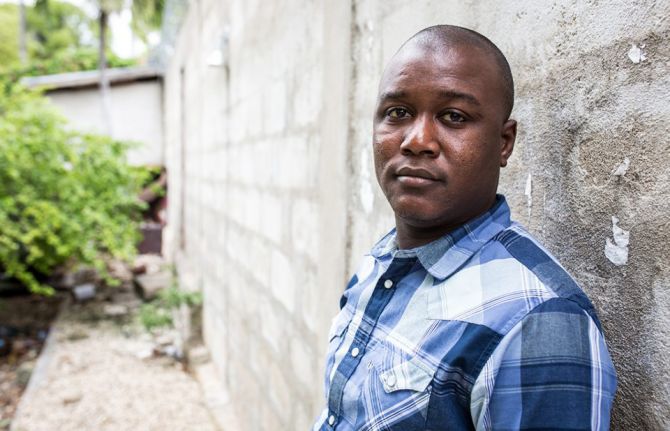
03 December 2019 03 December 2019Charlot Jeudy, the President of Haiti’s lesbian, gay, bisexual and transgender (LGBT) community organization Kouraj, was found dead at his home in November. Investigations into the circumstances of his death are ongoing. UNAIDS remembers Mr Jeudy as a fearless campaigner for human rights.
In the aftermath of the devastating earthquake in 2010, the people of Haiti worked to overcome the loss of homes, businesses, public services and more than 100 000 lives. But amid the shared trauma and determination, a harmful narrative emerged.
Some people began to blame the masisi—a derogatory Haitian Creole term for gay men. They thought that the disaster was a divine punishment for the sins of the LGBT community. Members of sexual and gender minorities found themselves subject to intensified exclusion and abuse. Human rights organizations documented cases of LGBT people being denied access to emergency housing, food, health care and work. There were also reports of physical assaults and homophobic rape.
Rather than accept the situation, Charlot Jeudy decided to act. He created Kouraj, which means courage in Haitian Creole. In the struggle for equal rights, Kouraj emphasized the importance of community empowerment and aimed to inspire pride and confidence among LGBT people.
“We wish to put forward an alternative discourse on homosexuality in Haiti because for too long only homophobes have discussed our reality and proposed their own interpretation,” Mr Jeudy said in 2011.
Over the next eight years, Kouraj evolved to offer community training, legal and psychosocial services and sexual health education. It became one of Haiti’s leading advocates for ending discrimination against LGBT people and has played a key role in resisting the introduction of discriminatory laws.
The organization was aptly named. Its members have contended with verbal abuse and death threats. Three years ago, it had to cancel a festival to celebrate the Afro-Caribbean LGBT community after numerous threats of violence. According to friends, Mr Jeudy resisted their pleas to leave the country at the time. In response to a spike in reports of anti-LGBT street violence last year, he worked with the United Nations on a project to promote tolerance and equal rights.
John Waters, Programme Manager of the Caribbean Vulnerable Communities Coalition, paid tribute to Mr Jeudy’s leadership.
"I have watched Charlot Jeudy grow from a young, impatient and impassioned activist into a thoughtful, strategic leader, capable of using human rights not as a sword, but as a shield,” said Mr Waters. “He won over the hearts and minds of others to create allies. Mr Jeudy has left a huge gap in human rights work in the Caribbean. He raised the bar for those who must now follow in his footsteps.”
Mr Jeudy was also an active civil society representative on the body that oversees the management of Haiti’s response to HIV, tuberculosis and malaria.
“Under Charlot Jeudy’s leadership, Kouraj was a model partner,” said Fritz Moise, Executive Director of the Foundation for Reproductive Health and Family Education. “His death is a big loss for the response to HIV in Haiti.”
UNAIDS has added its voice to the expressions of grief and also paid tribute to the leadership of Mr Jeudy.
“Charlot Jeudy exemplified the power of communities to be the voice for the voiceless and to make meaningful change in people’s lives,” said UNAIDS Country Director for Haiti, Mame Awa Faye. “This World AIDS Day we celebrated the power of communities to make a difference. Mr Jeudy did just that.”
Region/country
Feature Story
Commemorating World AIDS Day in Belgium
05 December 2019
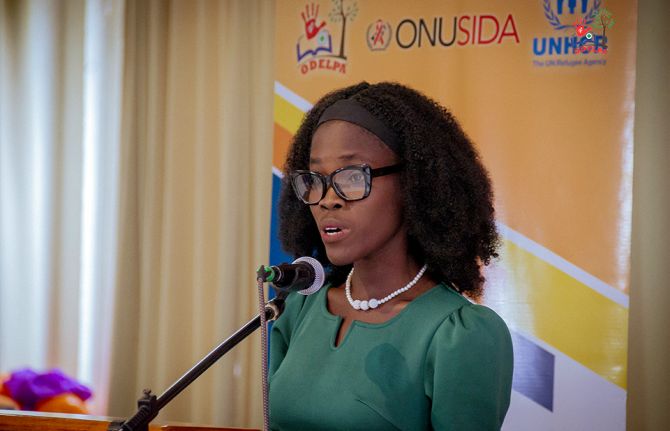
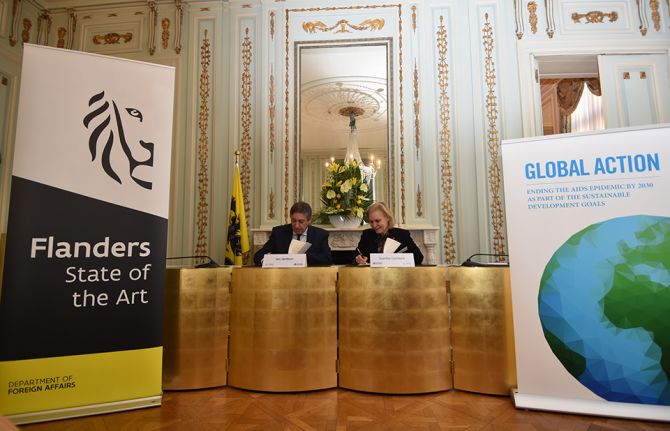
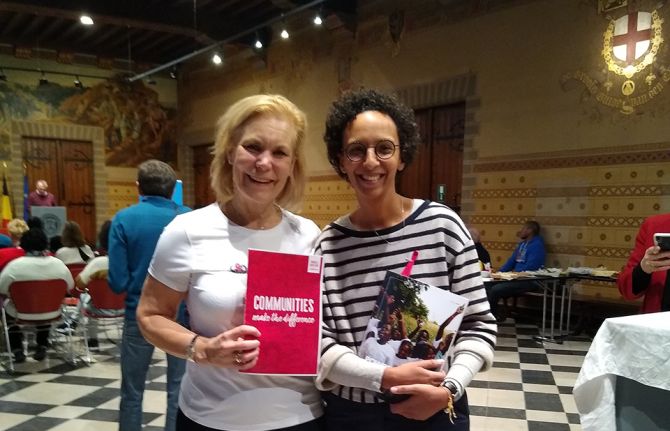
05 December 2019 05 December 2019Gunilla Carlsson, the UNAIDS Deputy Executive Director, Management and Governance, commemorated World AIDS Day in Brussels, Belgium, celebrating the power of communities with civil society and Barbara Trachte, the Secretary of State of the Brussels-Capital Region.
Ms Carlsson presented some of the key messages from Power to the people, UNAIDS’ new report, which shows that when people have the power to choose, to know, to thrive, to demand and to work together, lives are saved, injustices are prevented and dignity is restored.
“The AIDS response shows that when communities are empowered and have agency, change happens. Now more than ever we need a fully funded community-led response,” said Ms Carlsson.
She thanked the Regional Government of Brussels and the Federal Government of Belgium for its support for people living with HIV and the organizations working on HIV and related sexual and reproductive health and rights. For many years, Belgium has invested energy and resources to meet the needs of the most vulnerable and communities affected by HIV around the world, with a strong focus on human rights, gender equality, key populations, strengthening health systems and sexual and reproductive health and rights.
"Today, on 1 December, it is important to reinforce that undetectable = untransmittable in order to change society’s view of people living with HIV,” said Thierry Martin, Director of Plateforme Prévention Sida.
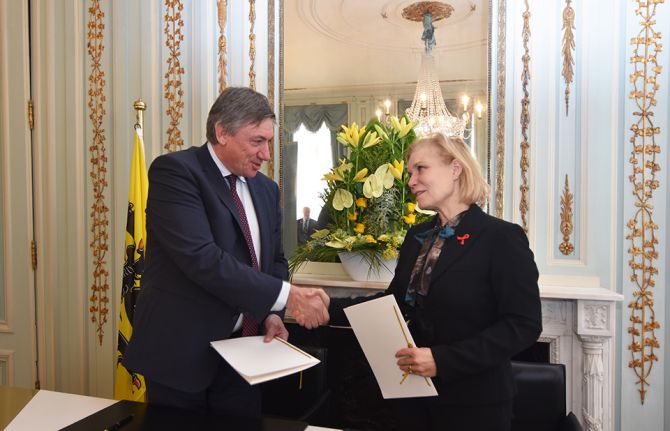
During her visit to Belgium, Ms Carlsson also met with the Minister-President of Flanders, Jan Jambon, and signed a new two-year partnership agreement with UNAIDS. Flanders has been a valued and prominent partner since the founding of UNAIDS and has invested energy and resources to meet the needs of communities affected by HIV, with a focus on vulnerable populations and girls in southern Africa.
Mr Jambon expressed confidence in renewing the long-term partnership agreement with UNAIDS. “Since its inception, UNAIDS has been working towards a multisectoral, rights-based and people-centred approach that addresses the determinants of health and well-being for the AIDS response, especially the most vulnerable populations, including the LGBTQI+ communities, and this is now more relevant than ever,” he said.
Mr Jambon also welcomed the reforms within UNAIDS to reinforce a positive workplace culture. “I am confident that with the new policies in place and the new leadership, this will enable staff to deliver at their best and maximize their collective results,” he said.
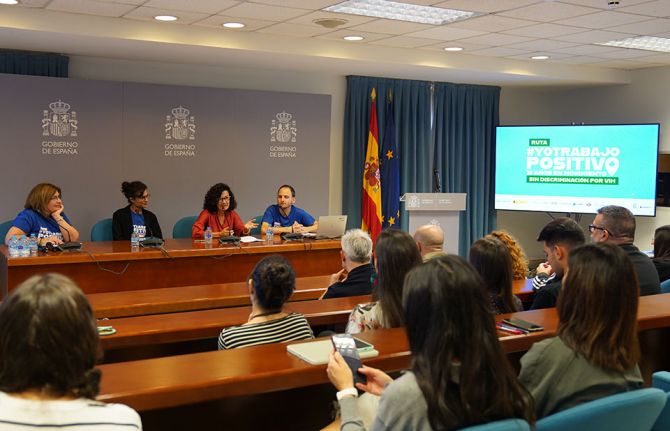
Ms Carlsson also attended a panel discussion with members of the parliament and representatives of civil society and the United Nations, where she provided an update on the status of the HIV epidemic and response, highlighting key actions for support by the European Parliament and European Union. She emphasized the important role that parliamentarians play in the global response to HIV.
Region/country
Related


Feature Story
Desert AIDS Project delegation visits health-care centre on the sidelines of ICASA
05 December 2019
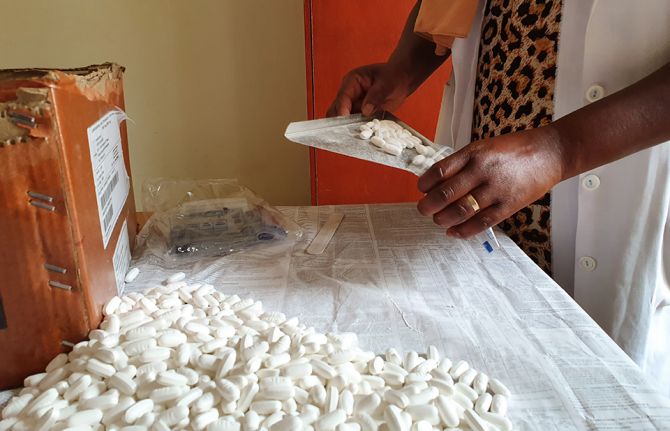
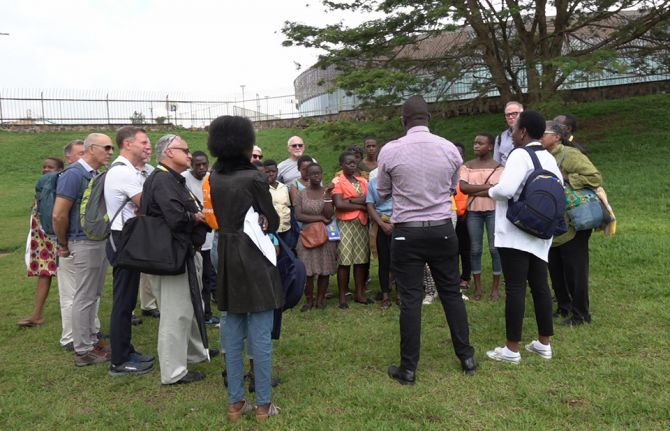
05 December 2019 05 December 2019Stepping into the Remera Health Centre in Kigali, the Desert AIDS Project (DAP) delegation visited one of the 552 integrated health centres in Rwanda. The clinic offers everything from primary care to clinical care for all ages, as well as HIV services.
The head of the centre, Emile Musabyimana, led the group around the facility, which includes a laboratory where HIV, viral load and tuberculosis testing are carried out. He is particularly proud that Remera has adopted the test and treat approach, which means that anyone who tests positive for HIV is immediately offered treatment.
The Remera Health Centre serves about 3000 people living with HIV, of which 2400 are virally suppressed. The clinic monitors patients on a monthly basis until their viral loads drop to undetectable levels.
Established by a group of volunteers in 1984, the DAP provides HIV prevention, treatment and care services to people living with and affected by HIV across the Palm Springs, California, area. It has expanded its primary care facility to include a dental clinic and affordable housing.
The delegation, in Kigali for the International Conference on AIDS and STIs in Africa (ICASA), discussed some of the challenges the Remera centre faces. Mr Musabyimana explained that too few young people come to the clinic.
“We need to address the issues of why they don’t come and get tested,” he said. “And when they do know their HIV-positive status, they don’t always stay on treatment.”
As a result, the centre organized an informal chat with young people living with HIV with the delegation.
“A lot of these kids were born with HIV and a lot of them are stigmatized and so they’re fighting it and fighting through it,” said Patrick Jordan, DAP Vice-Chair. He added, “To see them in their valiant efforts and how strong they are is inspiring.”
David Brinkman, DAP Chief Executive Officer, couldn’t agree more. He applauded the health centre’s work as well as Rwanda’s low HIV prevalence rate compared to neighbouring countries in the region.
“We really have to acknowledge what Rwanda is doing,” he said. “People on the ground have all the knowledge they need, it’s now about resources so that when we combine knowledge and resources, we will end the epidemic by 2030.”
Over the past year, a partnership between DAP and UNAIDS has been growing, with the idea of joining forces to support grass-roots and community-led HIV efforts worldwide.
Region/country

Feature Story
ICASA conference opens in Rwanda with an emphasis on African leadership
03 December 2019
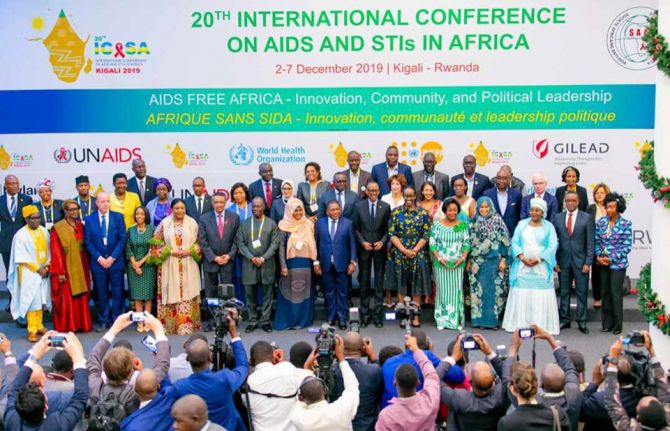
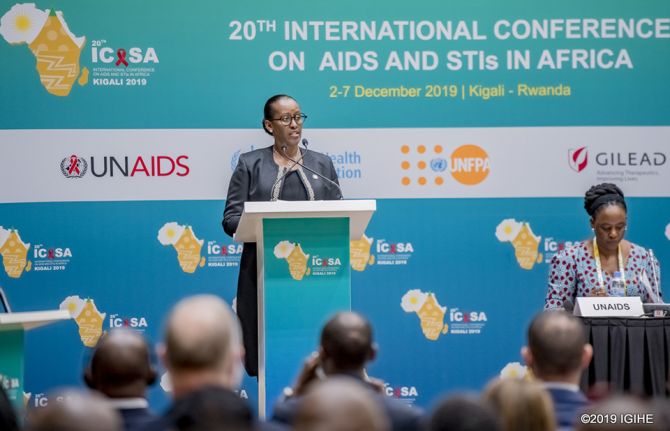
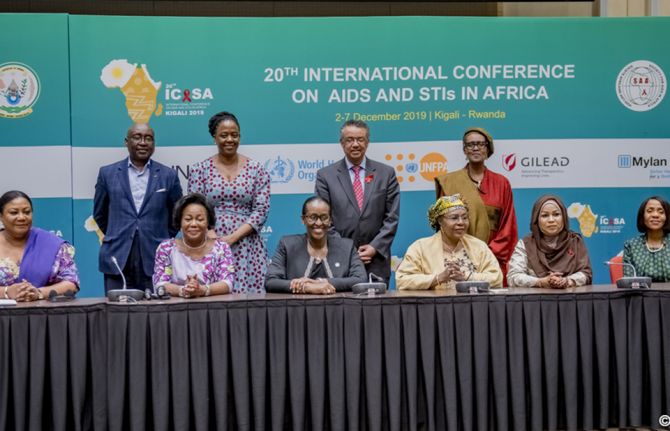
03 December 2019 03 December 2019The 20th International Conference on AIDS and STIs in Africa (ICASA) opened in Kigali, Rwanda, on 2 December, under the theme “AIDS-free Africa―innovation, community and political leadership”.
Researchers, governments, civil society and other stakeholders, such as UNAIDS and its Cosponsors, are gathering for a week to share scientific advances, best practices and lessons learned, and to galvanize political leadership and action.
The President of Rwanda, Paul Kagame, encouraged African leaders to prioritize domestic financing for health care. “Good politics and governance have everything to do with health,” said Mr Kagame. “There is no substitute for building an inclusive and caring society.”
Rwanda, a country of 12 million people, has an HIV prevalence of 2.5% and 220 000 people living with HIV. Some of its sub-Saharan African neighbours have an HIV prevalence as high as 20% and millions of people living with HIV, making HIV very much a reality for the continent.
At the opening ceremony, the President of Mozambique reiterated the importance of political leadership. “We need leadership to convey the right messages and our brothers and sisters to test for HIV and seek treatment,” said Mr Filipe Nyusi. He added that a community approach can improve service uptake.
This was a sentiment echoed by the World Health Organization (WHO). “Since the early days, communities have been the driving force of the AIDS response,” said the WHO Director-General, Tedros Adhanom Ghebreyesus. He added, “Our job as leaders is to listen to communities and what they need, not to tell them what they need.”
The conference opened a day after World AIDS Day 2019. This year’s theme recognized the essential role that communities have played and continue to play in the AIDS response at all levels. UNAIDS highlighted the essential role of communities at a time when reduced funding and a shrinking space for civil society have put the sustainability of services in jeopardy.
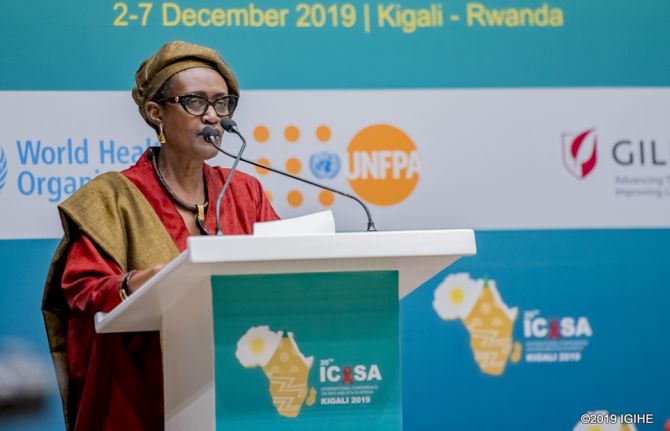
Winnie Byanyima, the UNAIDS Executive Director, stressed throughout the day’s sessions that resources must flow to communities and civil society. “To people living with HIV, the question of resource mobilization is a question of life and death,” Ms Byanyima said at an African leadership meeting on investing in health. “When the money from donors dries up, will there be enough money for people’s treatment?” she asked. “This is why the prevention agenda is critical.”


Feature Story
UNAIDS staff member breaks gruelling world record
03 December 2019
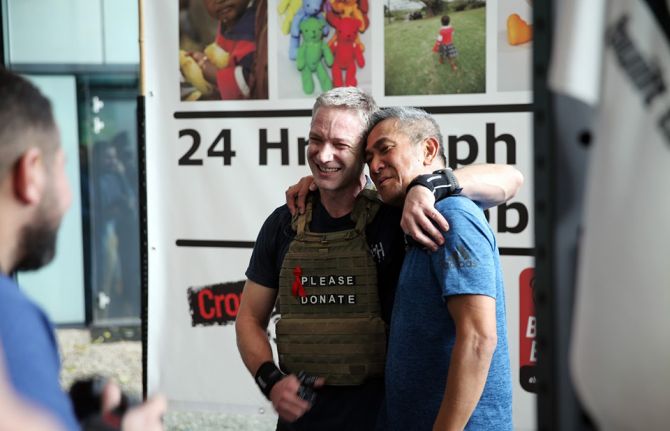
03 December 2019 03 December 2019A UNAIDS staff member has broken the record for Murphs completed over a 24-hour period. Peter Koopmans, who has been working for UNAIDS for 10 years, began the record attempt on World AIDS Day, 1 December, to raise money for a South African charity working to support sexually abused children and to increase awareness around HIV in the province of KwaZulu-Natal.
Mr Koopmans completed 15 Murphs just ahead of the 24-hour deadline after a gruelling ordeal that in total saw him run 30 miles (48 km) and do 1500 pull-ups, 3000 push-ups and 4500 squats. Each of the 15 Murphs consisted of running for one mile (1.6 km) and doing 100 pull-ups, 200 push-ups and 300 squats, followed by a further one-mile run—all while wearing a 10 kg vest.
“I have always wanted to try this challenge, and this allows me to have a direct impact on the lives of others,” said Mr Koopmans, who has been training for the record attempt for the past eight months.
The record attempt took place at UNAIDS headquarters in Geneva, with staff on hand throughout the night to encourage Mr Koopmans in his efforts.
Mr Koopmans has so far raised US$ 21 000 for the South African charity Bobbi Bear, which was supplemented by funds from UNAIDS World AIDS Day fundraising activities, bringing the total to well over US$ 25 000. Donations can continue to be made on the special funding page Murph for Bobbi Bear until 4 December.
Feature Story
Communities hailed during South Africa’s World AIDS Day commemoration
05 December 2019
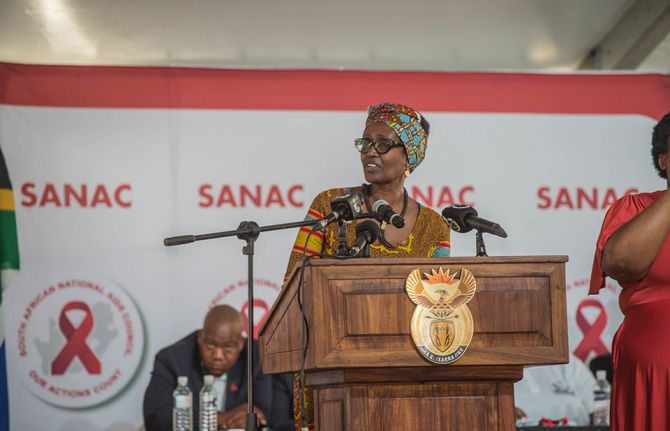
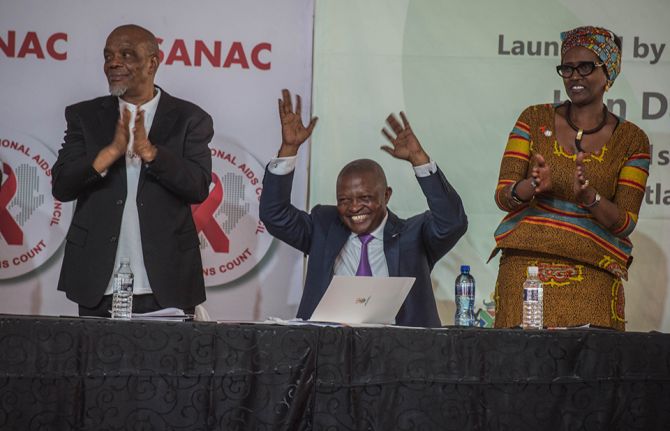
05 December 2019 05 December 2019Communities played a central role in the commemoration of World AIDS Day in South Africa, which was held in the rural community of Orkney, in the North West Province.
At the invitation of the Government of South Africa, the UNAIDS Executive Director, Winnie Byanyima, commemorated her first World AIDS Day as UNAIDS Executive Director in the local community. Ms Byanyima paid tribute to the role of communities in the AIDs response, including communities of people living with HIV and communities of women, girls and others at higher risk of, or affected by, HIV.
Ms Byanyima told the audience of several thousand people that it was an honour to mark World AIDS Day in South Africa—a country that was late to respond to HIV but that had made huge strides over the past decade and now had more than 5 million people on treatment. She noted, however, that there was still a long way to go, especially to protect women and girls.
“Enough is enough. All women and girls must have the right to choose if they have sex and with whom, and how they protect themselves. We need to bring power, equality and agency to all young women and girls,” she said.
Ms Byanyima said we must never accept that people living with HIV are still dying of AIDS. “It is not a question of science. It is a question of inequality, powerlessness and exclusion. The system is still failing for those who are marginalized,” she said.
South Africa’s Deputy President and Chair of the South Africa National AIDS Council, David Mabuza, told the World AIDS Day event audience that South Africa’s AIDS response had succeeded thanks to the work of communities and the contributions of activists and development partners.
“We could not achieve this without partnerships and support from our global partners,” he said. “That is why we must appreciate the contribution of the global campaign by UNAIDS that has galvanized political leadership, civil society and the private sector into coherent action. Community action remains an important pillar in making change happen, and in shaping the policy agenda and outcomes.”
He noted that there was still much work to be done, including intensifying HIV prevention and tackling contributing factors, including providing comprehensive sexuality education and ending gender-based violence.
Mr Mabuza also said he was pleased to be joined by Ms Byanyima. “She is an activist of note and a distinguished advocate for human rights and development,” he said.” We have no doubt that her vast experience in political leadership and human development will take us forward in the struggle to end the AIDS epidemic.”
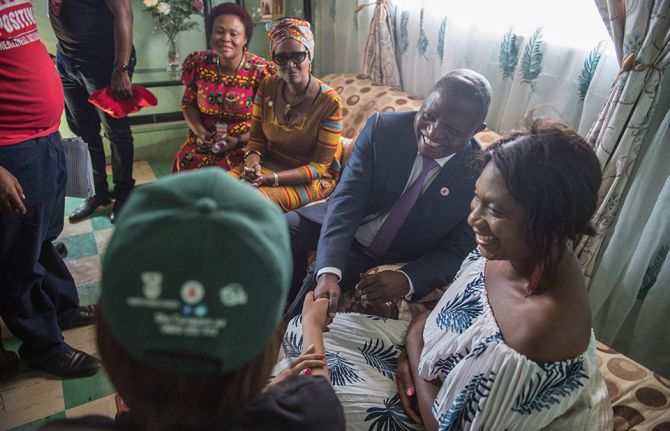
In the days prior to the World AIDS Day commemoration, Ms Byanyima met with political and civil society leaders, women activists and others to hear their concerns and understand the challenges and opportunities facing South Africa.
She also visited a clinic in Soshanguve, outside Pretoria, to see in action the project Ritshidze (“saving our lives”), which aims to improve the quality of HIV and tuberculosis service delivery in South Africa by empowering people living with HIV to monitor the health services they receive and to advocate for changes needed. The project is funded by the United States of America with support from UNAIDS.
"We can spend billions building beautiful clinics to distribute millions of pills,” Ms Byanyima said. “But only if we empower communities at the grass roots to hold service providers accountable and call out injustices will we make a real difference for people."
Region/country
Feature Story
Ending stigma and discrimination is critical to expanding HIV services in Jamaica
04 December 2019
04 December 2019 04 December 2019In 2017, a Jamaican actress starred in an educational video about HIV treatment adherence. It was an upbeat, innocuous reminder to people living with the virus to eat healthily, exercise and take their medicine every day.
After she made the film, the young woman faced some strong reactions—bookings dried up, strangers in the street pointed at her and her daughter faced teasing at school. Although she herself is HIV-negative, it was a sharp reminder concerning the stigma and discrimination faced by people living with HIV.
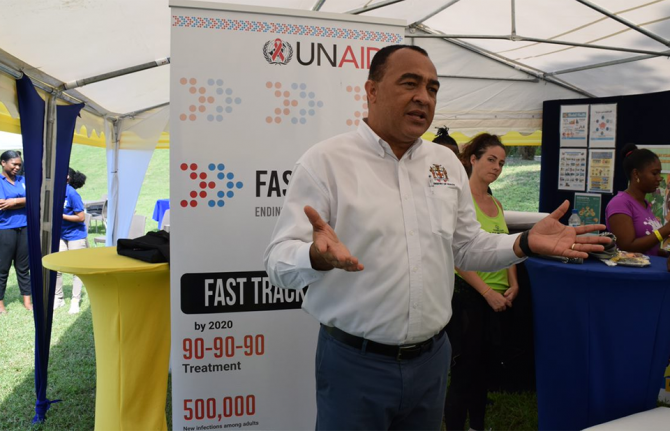
Earlier in 2019, Jamaica’s Minister of Health, Christopher Tufton, appeared in a public service announcement with the young actress to tell people that a person’s HIV status was no reason to discriminate against them. “There is still a lot of work to be done and while I was disappointed by the reactions to the video, I have seen and heard enough to understand that HIV-related stigma and discrimination is still a big challenge in the community and something we have to work on,” he said.
Jamaica’s 2017 HIV/AIDS Knowledge, Attitudes, Behavior and Practice survey found that just 12% of respondents were accepting of people living with HIV. Over the years, Mr Tufton has had his own journey from fear to acceptance.
He was a teenager in Manchester, United Kingdom, when the first HIV cases were diagnosed in Jamaica during the early 1980s. During the decade that followed, as a post-graduate student in the United States of America and the United Kingdom, he heard how advances in the scientific and social response to HIV were creating new pathways toward prevention and stigma reduction. He describes his current spell as Minister of Health as “peak awareness.”
“Over time, I have evolved from fear to actively advocating for greater levels of tolerance. I’ve been more interactive with people affected by HIV and with vulnerable groups. I have become an advocate both for anti-discrimination and for prevention. HIV does not have to be a death sentence. It can be treated. It can be controlled. If you take your medicines you can live a long and fruitful life,” says Mr Tufton.
Thousands of Jamaicans living with HIV are still not accessing treatment. As it updates its National Strategic Plan, the Ministry of Health and its partners are focused on addressing the challenges around connecting people to care and keeping them on treatment. For example, they are working to increase testing and outreach to men. Men are far more likely than women to be diagnosed late and to die from AIDS-related illnesses.
Having drawn the connection between relatively low levels of treatment coverage and discriminatory public attitudes, the government has boosted efforts to change hearts, minds and behaviours. Health-care discrimination is monitored through the Client Complaint Mechanism, as well as the Jamaica Anti-Discrimination System managed by the Jamaica Network of Seropostives. The Ministry of Health is also deploying strategies to reduce stigma and discrimination by training health-care workers, engaging with the faith community and running additional campaigns aimed at the general public.
These efforts come as the country prepares to transition away from a substantial degree of international funding for the AIDS response to greater national ownership. Along with its
commitment to provide free HIV treatment for all who need it in 40 facilities across the country, the government will also ensure that vulnerable communities currently served by donor programmes are included in domestic budgetary planning.
Partnering with civil society is a critical strategy for ensuring that the most stigmatized groups—people living with HIV, transgender people, gay men and other men who have sex with men and sex workers—are able to successfully access treatment.
“Civil society organizations are key partners. As part of the process we will identify which groups are best suited to deliver services. There are government systems in place for engaging with service providers,” says Mr Tufton.
The UNAIDS Country Director, Manoela Manova, welcomes this commitment to working with civil society to address prejudice and increase access to services.
“Jamaica has done a good job at HIV testing,” says Ms Manova. “Now new strategies are needed to reach those who are not aware of their status and to connect people diagnosed with HIV with treatment. The more we do to ensure that people feel safe and respected, the closer the country will come to ending AIDS.”