Feature Story
The pros and cons of being small
27 September 2019
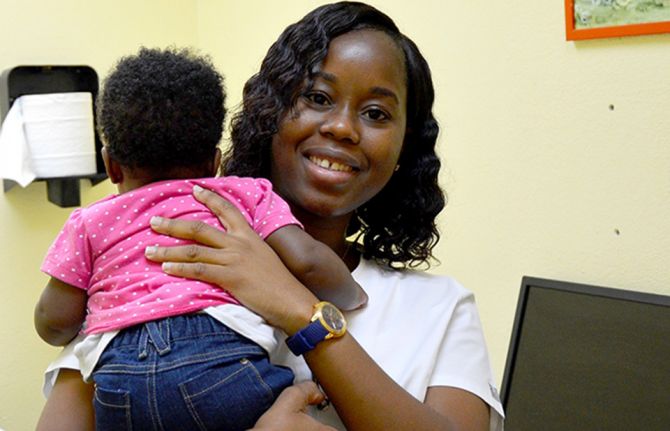
27 September 2019 27 September 2019Being small has its advantages. In most Caribbean countries, a local clinic or hospital isn’t very far away. Strong primary health-care systems and high levels of health-care access for pregnant women are at the heart of the region’s success in preventing new HIV infections among children. Seven Caribbean islands have been validated by the World Health Organization as having eliminated mother-to-child transmission of HIV. They range from the British overseas territory of Montserrat, with a population of 5000, to Cuba, home to more than 11 million people.
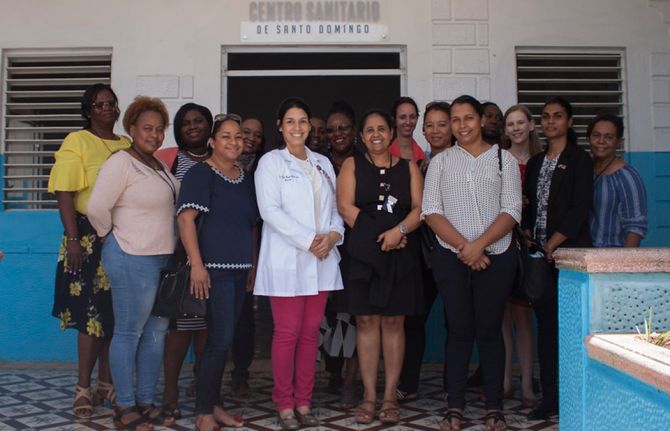
Antigua and Barbuda received its elimination of mother-to-child transmission of HIV validation in 2017. According to its Chief Medical Officer, Rhonda Sealey-Thomas, the Ministry of Health devised strategies to make certain that all pregnant women feel empowered and supported to start antenatal care as early as possible. The twin-island state employs a community nursing model in which district nurses conduct home visits to encourage women to go to health centres near the start of their pregnancies and to keep their appointments. The country uses its 26 community clinics to ensure that every woman had easy geographical access to antenatal care.
In the Bahamas, the Ministry of Health and the wider AIDS response are working towards validation. It was among five Caribbean countries that achieved 100% coverage for early infant diagnosis in 2018.
Nikkiah Forbes, Director of the National HIV/AIDS and Infectious Disease Programme at the Bahamas Ministry of Health, points to the importance of having a robust health-care system with available and free antenatal care and strong laboratories. Antenatal care is universal in the Bahamas and available at community clinics throughout the island chain. Mothers are encouraged to access care as early as possible and an HIV test is offered during the first visit. Laboratory screening is repeated at 32 weeks. Dedicated nurses ensure that all mothers and infants are retained in care and receive the additional support they need.
“You have to get out in the field if you are going to provide HIV care. We go to clinics to meet the women so we can provide support and counselling. We go into the field and test their partners. We really follow up to ensure they come to the clinic, feel comfortable and are expedited. We ensure they are getting their medication, all their labs are in and that they have nutrition support. If they don’t come to us,” one nurse explained, “we go to them.”
But a small population size also comes with challenges. For migrants, there is often the added vulnerability of standing out when accessing services. Antigua and Barbuda provides health care to all migrants. “Services in the community health clinics are free of cost. Nationality does not matter. If migrants are not afforded health care, it costs more in the long run. By protecting the health of migrants, you are indirectly protecting the health of your own population,” Ms Sealey-Thomas explained.
In the Bahamas, there are also mechanisms for Haitian migrants to access care. “We have translators that speak Haitian Creole at a one-stop-shop clinic. Translations of education materials are also available in Haitian Creole,” said Ms Forbes.
But for citizens who are members of close-knit communities, special care had to be taken to strengthen confidentiality and address stigma and discrimination in health-care settings. Throughout the region, health-care providers have received anti-stigma and discrimination training to address issues that include unconscious bias and confidentiality.
Still, in any Caribbean country the likelihood of people knowing or recognizing others where they access care is relatively high. It’s a challenge that countries must overcome in order to accelerate results across the continuum of care, for adolescents, women and men alike.


Feature Story
HIV in small island developing states
27 September 2019
27 September 2019 27 September 2019“I am not ready to share my status or disclose myself to the public. I am afraid of being isolated, stigmatized and discriminated against. For me, it’s good for only me to know my status, rather than disclose it to other people,” said Mara John (not her real name), who comes from a Pacific island and is living with HIV. Similar stories of isolation, self-stigma, poverty and lack of human rights can be heard from many people living with HIV in small island developing states (SIDS).
On 27 September, United Nations Member States meet for a high-level review on SIDS at the United Nations General Assembly in New York, United States of America. In his report published ahead of the summit, the United Nations Secretary-General highlights that SIDS, particularly Caribbean SIDS, continue to be challenged with “high levels of youth unemployment, poverty, teenage pregnancy, and high risk for HIV infection.”
A group of 38 countries, including islands in the Pacific, the Caribbean and elsewhere, the SIDS have been provided with dedicated support owing to the specific constraints they face―for example, the size of their territory, remoteness or exposure to climate change―as a result of the United Nations Conference on Sustainable Development, also known as Rio+20, held in June 2012. In 2014, the SIDS Accelerated Modalities of Action Pathway was adopted by United Nations Member States to outline actions for sustainable development in the SIDS, including a commitment to achieving universal access to HIV prevention, treatment, care and support and to eliminating mother-to-child transmission of HIV.
While the SIDS have seen progress, there are wide differences between, for example, Cuba, the first country globally to be certified as having eliminated mother-to-child transmission of HIV, in 2015, and Mauritius, where 30% of people who inject drugs are reported to be living with HIV.
“The Sustainable Development Goals highlight the importance of leaving no one behind. This is particularly meaningful for people living with HIV in small island developing states, who face isolation, stigma and discrimination and inequalities. We need to do more to ensure that they receive the services they need,” said Gunilla Carlsson, UNAIDS Executive Director, a.i.
Generally in small islands, key populations, including gay men and other men who have sex with men, transgender people, sex workers and people who inject drugs, bear a disproportionately high burden of HIV. In some SIDS, however, HIV also significantly impacts the general population―while key populations and their sexual partners accounted for 47% of new HIV infections in the Caribbean in 2018, more than half of all new HIV infections were among the general population. Stigma and discrimination by health-care workers is still a major challenge in the Pacific. For example, 60% of female sex workers surveyed in Fiji reported avoiding HIV testing owing to fear of stigma from health-care providers, as did more than 30% of gay men and other men who have sex with men.
Another aspect that SIDS have in common is the strength of communities of people living with HIV and the presence of exceptional political will, often at the highest levels. Ratu Epeli Nailatikau, the former President of Fiji and current Speaker of the Fiji Parliament, has been speaking out against stigma and discrimination for many years.
Networks of people living with HIV and of key populations are at the centre of the movement to end AIDS in the SIDS. In the Pacific, people living with HIV came together to publish a report in 2018 describing their situation in their own words. Similarly the Mauritius Network of People Living with HIV has provided vocal leadership to the response and clearly outlines the challenges of the community in its 2018 People Living With HIV Stigma Index report. In the Caribbean, the late activist and academic Robert Carr is credited for helping to shape global thought around the importance of addressing the human rights of vulnerable and marginalized communities as part of the AIDS response. In 2005, he helped to establish the Caribbean Vulnerable Communities Coalition, which works on behalf of the groups most often left behind.
UNAIDS is working to support SIDS through its team for the Caribbean, based in Jamaica, for the Pacific islands from its Fiji office and for the Indian Ocean islands from the UNAIDS office in the Seychelles. Priority is given to SIDS with a higher prevalence of HIV, through programmes targeting the most vulnerable populations.
Small Island Developing States
Feature Story
Without sustainable financing the AIDS response will fail
26 September 2019
26 September 2019 26 September 2019This week, the United Nations General Assembly committed itself to achieving universal health coverage by 2030. It also pledged to accelerate efforts to achieve the Sustainable Development Goals, including ending AIDS, by 2030. Those commitments show that there is political will to respond to the gravest crises facing the world.
In 2016, the General Assembly agreed, in the Political Declaration on Ending AIDS, to a steady scale-up of investment in the AIDS responses in low- and middle-income countries, increasing to at least US$ 26 billion by 2020. At the end of 2018, however, only US$ 19 billion (in constant 2016 US dollars) was available. And, worse, that US$ 19 billion was almost US$ 1 billion less than a year before.
Instead of a steady increase, global financing for HIV is decreasing. The political commitment is simply not being matched with the financing required to turn the vision of an end to AIDS into reality. With a little more than a year to go until the 2020 target of US$ 26 billion, finance for the AIDS response falls short by US$ 7 billion. This shortfall is particularly alarming because we know that investments in the AIDS response save lives―investing in the AIDS response is a great investment.
“The world can’t afford to backslide on investment in the AIDS response,” said Gunilla Carlsson, UNAIDS Executive Director, a.i. “Countries must honour their pledge to steadily increase their investment in the response to HIV if the world is to meet its obligations to the most vulnerable and disadvantaged.”
Funding declines were seen in all sectors in 2018: domestic resources (a 2% decline), the Global Fund to Fight AIDS, Tuberculosis and Malaria (Global Fund) (a 20% decline, explained by fluctuations in its three-year grant cycle), other multilateral channels (a 2% decline), the Government of the United States of America’s bilateral programmes (a 3% decline), the bilateral programmes of other donor countries (a 17% decline), philanthropic organizations (an 18% decline) and other international sources (a 4% decline).
Low- and middle-income countries are increasingly financing their AIDS responses themselves. Between 2010 and 2018, domestic resources invested by low- and middle-income countries in their AIDS responses increased by 50%, while international investments increased by just 4%.
Domestic financing in 2018 in low- and middle-income countries accounted for 56% of total financial resources, although there were wide variations among regions. In eastern and southern Africa, the region with the highest HIV burden, 59% of HIV resources came from donors in 2018―this rises to 80% if South Africa is taken out of the analysis. Between 2010 and 2018, all major donors except the United States reduced their bilateral direct contributions to the AIDS responses of other countries.
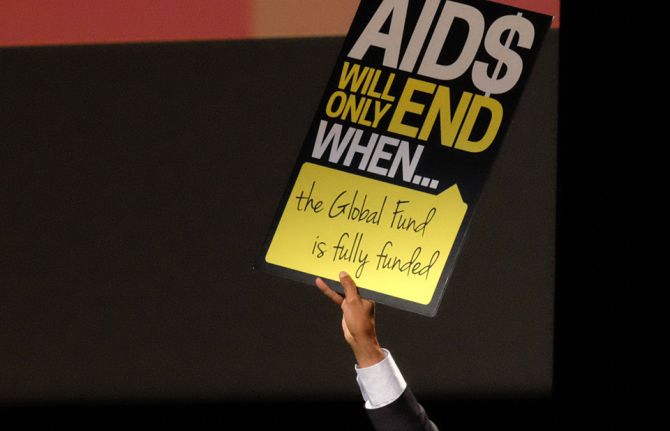
This October is a critically important time for finance and HIV. In Lyon, France, on 10 October, governments and other partners will meet for the Global Fund’s sixth replenishment pledging conference. Seeking to raise at least US$ 14 billion for the response against HIV, tuberculosis and malaria for 2020–2022, the Global Fund estimates that 16 million lives will be saved by its programmes if fully funded, building on the 27 million lives saved since its inception in 2002.
“I urge countries to fully fund the Global Fund to Fight AIDS, Tuberculosis and Malaria in its upcoming replenishment―16 million men, women and children are counting on it,” said Ms Carlsson.
Related information

Feature Story
Communities of faith―helping to find the missing men and seeking justice for children
26 September 2019
26 September 2019 26 September 2019Bobby was born in 1996 in the small, mountainous country of Lesotho. His mother was living with HIV, and, unknown to him, he was born with the virus. He lost his little brother when he was just four years old and his little sister when she was just six to meningitis—a devasting blow to Bobby. Life was hard, and at 12 years old he received news that was to change his life forever. He was diagnosed with tuberculosis and found out that both his mother and father were living with HIV.
But Bobby didn’t give up. “Some people wanted to break me, but they only made me stronger. Some people wanted to exploit me, but they only made me smarter,” said Bobby. “Taking pills and going from an HIV-positive child to an HIV-positive activist has not been easy. I faced a lot of stigma and discrimination. But one of my biggest dreams is to live and to contribute, which is why I’m here today.”
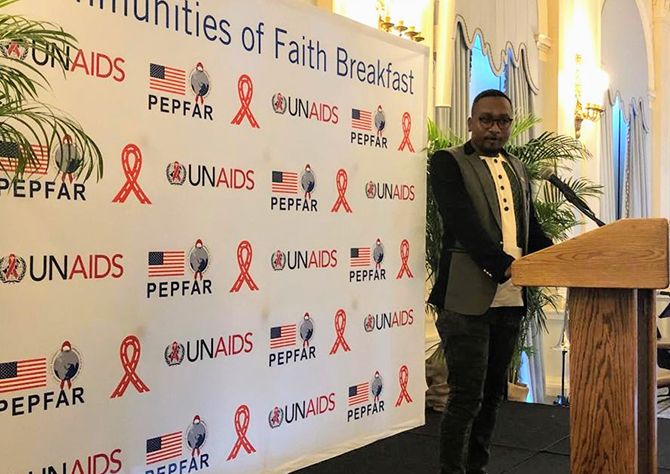
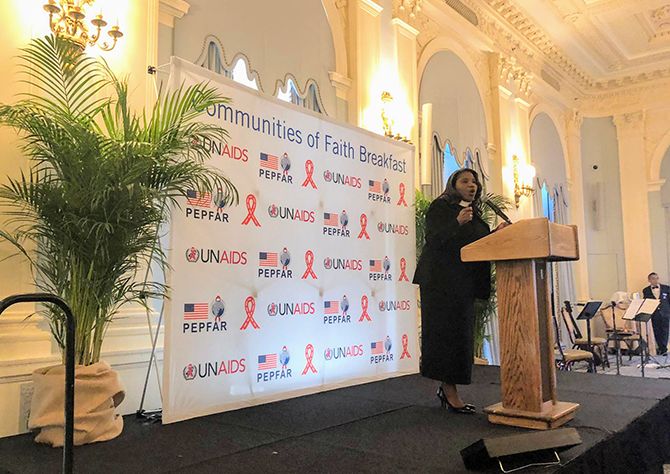
On 26 September, Bobby shared his journey with an audience of more than 150 faith leaders and partners working on HIV at the Communities of Faith Breakfast, held at the Yale Club, on the sidelines of the United Nations General Assembly in New York, United States of America.
Bobby’s story and the thousands of others like his have inspired faith groups around the world to take action to stop new HIV infections and support people living with and affected by the virus. Speaking at the event, the Minister of Health of Zambia, Chitalu Chilufya, shared how faith leaders in his country are playing an important role in improving the health and well-being of their congregations, particularly by reaching men.
“We have several ministers that hold health Sundays, bringing in doctors to engage their congregation on health matters,” said Mr Chilufya. “Men are in the marketplaces and men are in the churches—and this is how we are reaching them. Through these efforts we have seen the percentage of men who have not been tested for HIV reduce from 50% to 30%.”
The importance of reaching men was echoed by many of the speakers, as was the urgent need to ensure that children have access to optimal HIV services and justice.
“In 2018, we lost 100 000 children to AIDS-related deaths and only 54% of the 1.7 million children living with HIV worldwide were accessing treatment. These are very sad statistics,” said Gunilla Carlsson, UNAIDS Executive Director, a.i. “Engagement of faith-based health partners will be critical to help governments transform their commitments on HIV into real action on the ground.”
The breakfast provided a space for partners to come together and share ideas and experiences of innovative approaches to reach young men, adolescent girls and young women and children living with HIV with HIV prevention and treatment services. It also fostered positive discussions on how to prevent and respond to sexual violence against children, which significantly increases their risk of HIV infection.
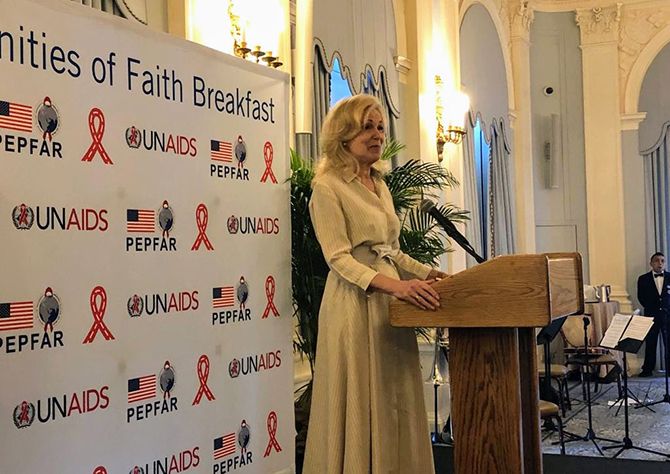
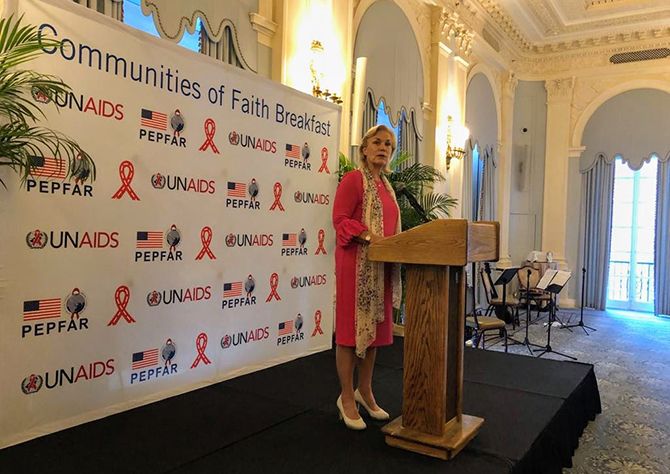
“Our discussions here will shed light on what is possible and once we know what is possible there is no excuse to make it possible for everyone, everywhere, at all times,” said Deborah Birx, United States Global AIDS Coordinator and Special Representative for Global Health Diplomacy.
Related


Feature Story
Young people taking action, inspiring change
25 September 2019
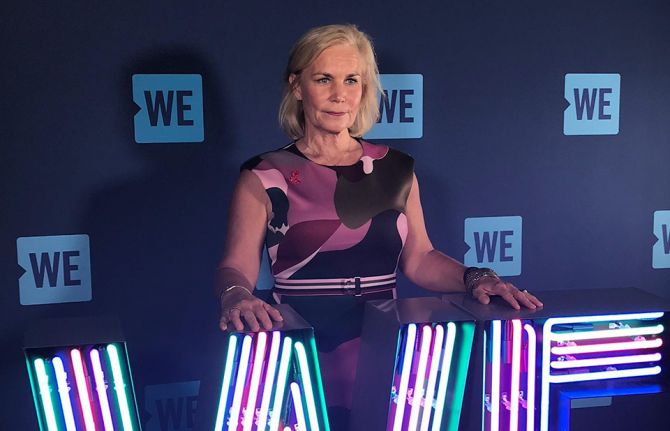
25 September 2019 25 September 2019Around 19 000 inspirational young people gathered at WE Day UN on 25 September to celebrate the incredible work they are doing to make positive change in their communities and around the world. All the young people who attended the event had earned a free ticket by taking action on one local and one global cause of their choice. Taking place in New York, United States of America, during the seventy-fourth session of the United Nations General Assembly, this year’s WE Day UN was held in partnership with UNAIDS, the UN Global Compact and UN Women.
UNAIDS has enjoyed a long-standing partnership with WE Day, helping to educate young people about HIV and to support them in their socially conscious efforts to make a sustainable impact in their societies and around the world. Through the important work of WE Day, UNAIDS is able to reach more than 20 000 schools across the United States, the United Kingdom and Canada.
Speaking to the young audience in the Barclays Center Stadium in New York, Gunilla Carlsson, UNAIDS Executive Director, a.i., said, “AIDS is not over, but it can be! You can be the generation that ends AIDS and leads the world in achieving the Sustainable Development Goals, creating a better world for generations to come.”
Ms Carlsson used the opportunity to remind young people of the importance of achieving the Sustainable Development Goals and how critical it is to talk about HIV to break down the stigma around the epidemic. Her remarks were preceded by a newly released animation from UNAIDS that demonstrates the interlinkages and interdependence of HIV and the Sustainable Development Goals and how efforts to end AIDS can lead to a wider, people-centred social transformation.
Related

Feature Story
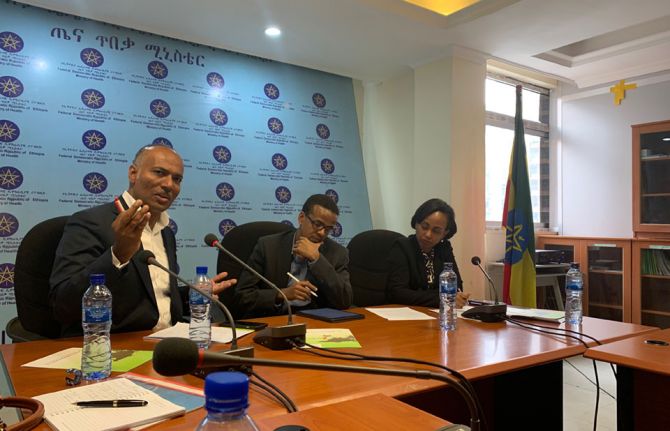
Making a difference in Ethiopia one district at a time
24 September 2019
24 September 2019 24 September 2019Ethiopians travelling to seek medical care outside the country cost the Ethiopian economy US$ 250 million per year. Around 40% of Ethiopia’s health centres have no electricity and 50% are without access to clean water. But despite these challenges, Ethiopia is striving to improve its health-care system so that it can meet the needs of all its citizens, in line with the global commitment made at the United Nations General Assembly High-Level Meeting on Universal Health Coverage on 23 September to achieve universal health coverage by 2030.
Ethiopia has taken an innovative approach to managing priorities and is setting ambitious targets. Finding new technologies and innovations for the health, energy and other sectors is critical.
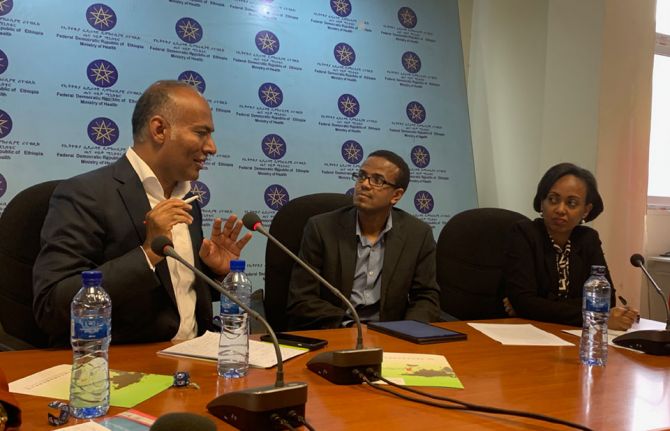
The government will launch a programme in October that will see 10 ministries work together to define and address priorities on a district-by-district level. This will require partnership across the private sector, communities and international development partners. The Ethiopian Minister of Health, Amir Aman, is committed to making a change by working with UNAIDS and other international partners to identify and apply the right innovations.
“I appreciate the commitment of UNAIDS and the Health Innovation Exchange to support Ethiopia in the use of innovation, especially for tuberculosis, HIV, hepatitis B diagnosis, the use of solar panels for health facilities and incorporating artificial intelligence to fast-track access to health-care services, as well as facilitating local production of medicine and medical supplies,” said Mr Aman.
This partnership with UNAIDS was sparked when Mr Aman visited the innovation exhibition at the launch of the UNAIDS-led Health Innovation Exchange platform in Geneva, Switzerland, in May. The Health Innovation Exchange is a platform led and founded by UNAIDS that identifies the challenges faced by health providers and connects them with high-impact innovations. It also links with investors to scale up innovations and develop sustainable solutions.
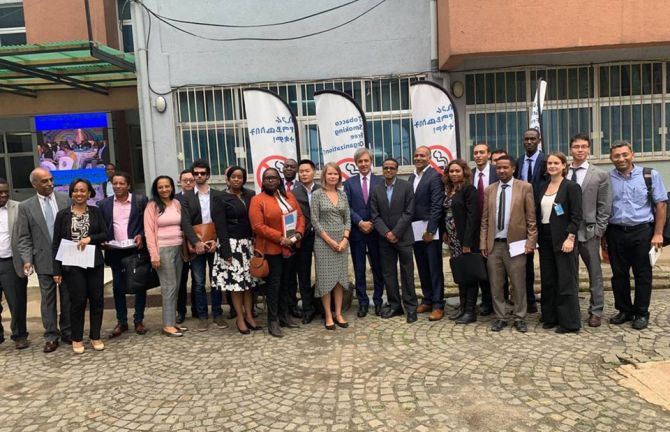
Mr Aman challenged the Health Innovation Exchange to work with the country to identify a variety of potential solutions to its priorities and to facilitate connections across the government and local partners. UNAIDS brought together a delegation of innovators and investors in Ethiopia from 3 to 6 September to explore opportunities for integrating innovative solutions and technologies for health into the country’s development efforts. The delegation included innovators and companies that brought solutions in various areas, such as HIV and tuberculosis diagnostics, solar energy for health-care settings, artificial intelligence for diagnostics and research, pharmaceutical manufacturing and needle safety in hospitals, as well as blended education models to build the Ethiopian health workforce.
The solar energy solutions proposed by members of the Health Innovation Exchange delegation were welcomed, as access to efficient modern energy is a critical enabler for essential maternal and newborn health services. Without energy, many life-saving maternal health services cannot be utilized effectively, which poses critical barriers to reaching the maternal mortality targets and other heath targets of the Sustainable Development Goals.
“Through UNAIDS’ facilitation, we have made direct connections with key ministers and decision-makers in Ethiopia. We have been able to map out a way ahead in bringing technology with potential for impact to Ethiopia and the African market. We are committed to making a difference and appreciate the energy and leadership of the Ethiopian Government in driving such unprecedented change,” said Mauro Pantaleo, Chief Executive Officer, P&P Patents and Technologies.
Meeting with the delegation, Mr Aman committed to supporting the integration of a number of the proposed solutions into the country’s programmes, ensuring that policies and processes will support the new private sector partners working with the country.
Related information
Feature Story
Botswana extends free HIV treatment to non-citizens
24 September 2019
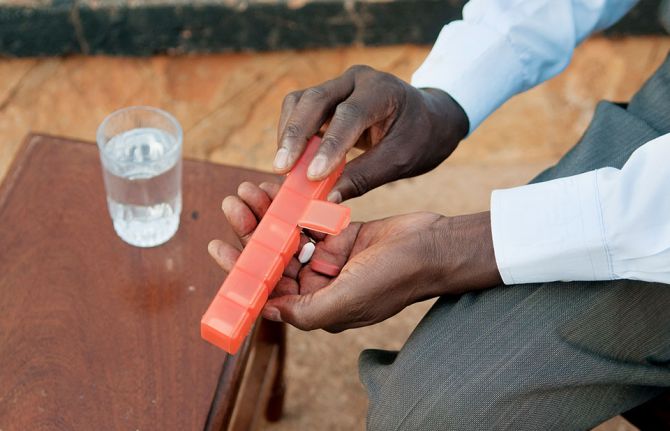
24 September 2019 24 September 2019The Government of Botswana has decided to extend free HIV treatment to foreign residents in a major policy shift that closes a significant gap in the country’s response to the epidemic. The President of Botswana, Mokgweetsi Masisi, announced the intended shift in policy last month after the issue was raised by the Champions for an AIDS-Free Generation in Africa during their visit to the country.
There are an estimated 30 000 foreign residents living with HIV in Botswana, but less than a quarter of them currently have access to treatment. Many foreign residents are simply unable to afford medicines or return home to seek medical help.
Botswana has the third highest HIV prevalence in the world, with more than one in five of the adult population aged 15–49 years living with the virus. In 2016, the country decided to adopt a treat all strategy by extending free treatment to all citizens living with HIV, a step that has been yielding significant results. Since 2010, AIDS-related deaths have decreased by a third, with new HIV infections down by 36% over the same period.
“I commend Botswana for extending free treatment to foreign residents living with HIV,” said Gunilla Carlsson, UNAIDS Executive Director, a.i. “This measure will save lives and help the entire country progress towards ending the AIDS epidemic―it is another example of Botswana’s leadership and its determination to leave no one behind in the response to HIV.”
The Botswana Ministry of Health and Wellness consulted closely with UNAIDS, the United States President’s Emergency Plan for AIDS Relief, the International Organization for Migration, other United Nations agencies and other development partners to develop the new policy.
Based on the government’s decision, the Ministry of Health and Wellness will issue a special government directive to allow health facilities to provide treatment to all people living with HIV residing in the country.
Region/country
Feature Story
Reduce, reuse, recycle: young Ghanaians say yes to less
20 September 2019
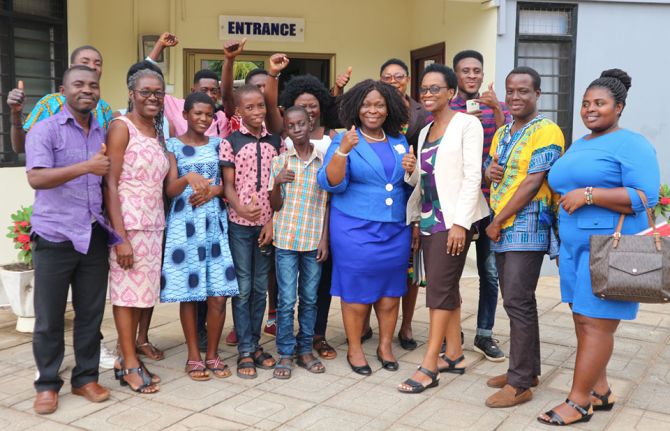
20 September 2019 20 September 2019Young people in Ghana have committed to help promote a sustainable environment by reducing the amount of waste they generate, both at home and in school.
“Reduce, reuse, recycle,” was the theme when the advocates met the UNAIDS Ghana Country Director, Angela Trenton-Mbonde, in Accra, Ghana. The advocates took turns to make personal pledges to adopt better waste management practices in order to promote environmental sustainability.
“I commit to acquiring a personal reusable water bottle and to avoiding single-use plastic bottles. This, I believe, will safeguard the planet for everyone,” Pricilla Addo said.
Another advocate, Samuel Nyarko, said, “I pledge to personally ensure that waste generated in my household is well separated so that plastics can easily be collected and recycled. I will educate my schoolmates and community to do the same.”
Ms Trenton-Mbonde encouraged the young people to ensure that their commitments to the planet are fulfilled. “For a sustainable environment, each of us must take personal responsibility and make one commitment, no matter how small and insignificant it may seem in the beginning, because in the end we are all connected: people and planet,” she said.
The youth advocates comprised young people from Hope for Future Generations, a Ghanaian not-for-profit nongovernmental organization focused on empowering women, children and youth.
Region/country
Related


Feature Story
Unwavering care for people who inject drugs on the streets of Glasgow
18 September 2019
18 September 2019 18 September 2019In Scotland, United Kingdom, the widespread availability of HIV prevention and harm reduction programmes and the expansion of antiretroviral treatment have been effective in controlling the spread of HIV since the 1980s. However, in 2015 there was a worrying outbreak of HIV among people who inject drugs in Glasgow, with the number of new HIV diagnoses tripling in just three years.
UNAIDS spoke to Ruth McKenna from Waverley Care, Scotland’s leading charity providing HIV, hepatitis C and sexual health care and support to people across Scotland, who explained some of the work that the charity has being doing to respond to the outbreak.
“Glasgow has a good needle–syringe exchange programme, so initially there was uncertainty as to why the increase was happening,” said Ms McKenna. “However, evidence published recently shows the rise to be associated with homelessness, incarceration and a major shift to the injection of cocaine in Glasgow. The hit from cocaine doesn’t last very long, which can lead to people injecting more often. Using more needles also means a higher risk of sharing and therefore a higher risk of contracting HIV.”
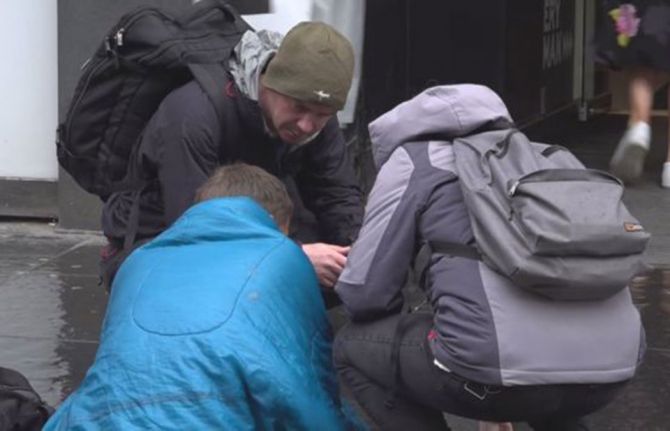
Waverley Care operates a street support team, which began working in December 2018 after special, albeit temporary, funding came through from the National Lottery Community Fund. The street team operates in pairs, walking up and down Glasgow’s grid system of streets to check on people who are begging, offering them health services, support, a friendly chat and a listening ear.
Ms McKenna explains that poverty and trauma are often at the root of why people are using drugs and have become homeless. Many of the people the street team speak to have experienced trauma, often from a very early age. Most have similar stories she says—brought up in care, having experienced physical, sexual or emotional abuse and a cycle of offending and spells in prison. The drugs are a way of coping with and escaping the trauma, if only for a short while.
There is also still a lack of knowledge about HIV in Glasgow. Many people the Waverley Care street team meet still don’t know that people who are on treatment for HIV and who have a suppressed viral load cannot transmit the virus. They found that people are much more informed about hepatitis C, because it is more prevalent among people who inject drugs.
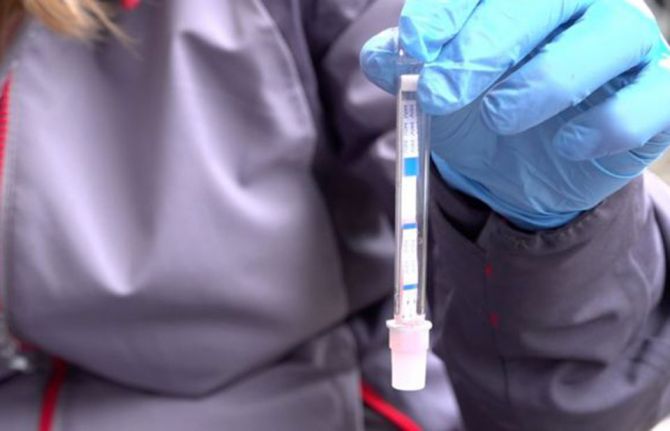
Before setting out, the pair of street support workers make sure they have their rucksacks, which are equipped with the tools they will need for the day ahead: foil, sterile injecting equipment, citric acid to clean the skin, condoms, sanitary towels, naloxone (for overdose prevention) and HIV testing kits.
“There are around 500 people who inject drugs in public places in Glasgow,” said Ms McKenna. “If we think they may be at risk of HIV we offer them a test. The 10- to 15-minute wait for the result also gives us time to chat, to let them know that the advances made in treatment mean that HIV isn’t the death sentence that people often think it is.”
The team carry out an average of three tests per week and since January 2019 the team has supported 17 people living with HIV in the city. They have had 28 referrals, but unfortunately not everyone is contactable or wants support.
HIV treatment is free on the National Health Service (NHS) in the United Kingdom and the team at Waverley Care work closely with NHS outreach nurses to ensure that necessary referrals are made and to keep people engaged with treatment.
“We’re always there to walk alongside anyone affected by HIV or hepatitis C,” says Ms McKenna. “Although they may not want our help this month, next month it might be another matter. We never give up on people.”
Related information
External links
Feature Story
How climate change is affecting people living with HIV
20 September 2019
20 September 2019 20 September 2019On the eve of the United Nations Climate Action Summit, taking place in New York, United States of America, on 23 September, it is clear that climate change is now affecting every country on every continent. Often, the impact is greatest in regions already facing other challenges, with vulnerable groups of people, including people living with HIV, the most affected.
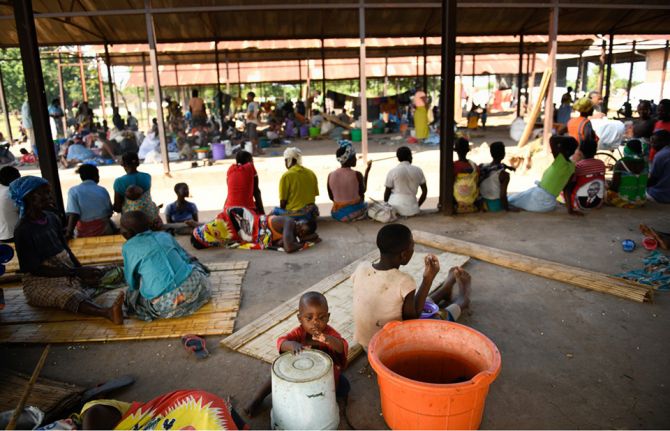
When Cyclone Idai made landfall near Beira, Mozambique, on 15 March 2019, heavy rain and strong winds caused flash flooding, hundreds of deaths and widespread damage to homes and infrastructure. By 19 March, it was estimated that 100 000 people were needing rescue. Communications in the city were down and all 17 of the city’s hospitals and health clinics suffered severe damage.
It would have been a devastating blow anywhere, but even more so in the province of Sofala, where around one in six of the adult population is living with HIV. When the floodwaters surged, many people simply saw their medication washed away.
Less than six weeks later, on 25 April, Cyclone Kenneth smashed into northern Mozambique. Overall, catastrophic flooding from the two storms affected around 2.2 million people in Malawi, Mozambique and Zimbabwe.
Warmer sea surface temperatures and rising sea levels are contributing to an increased intensity and destructive capacity of hurricanes and tropical cyclones such as Idai and Kenneth in many countries already inclined to extreme weather events.
When Hurricane Kenneth hit Zimbabwe, the acting UNAIDS Country Director, Mumtaz Mia, said that her priority was to make sure that people living with HIV, including pregnant women enrolled in prevention of mother-to-child transmission of HIV programmes, could access HIV treatment.
“In Zimbabwe, where emergencies are not a new phenomenon, people living with HIV were left stranded when their medicine got washed away.”
After the cyclone hit, Ms Mia and her team met with representatives of the government, civil society, donors and other partners to discuss the response. They quickly ensured that the specific needs of people living with HIV were embedded in relief operations. This included coordination with partners, including UNAIDS Cosponsors, the Ministry of Health and Child Care and the National AIDS Council, to ensure the distribution of antiretroviral medicines and condoms, food packages for people living with HIV and safe deliveries for pregnant women. They also established assessments to address additional health and HIV needs related to the disaster.
In Malawi, Cyclone Idai affected almost 1 million people and forced more than 100 000 to flee their homes. Many people hit by the storm in Mozambique crossed the border to seek food and shelter.
For people living with HIV, concerns about their health and access to medication compounded an already difficult situation. For many, their first thought was how to save their medication.
“When the floods came, my house was destroyed. But I managed to reach for my plastic bag, where I keep my antiretroviral medicines, because they are one of my most precious possessions,” said Sophia Naphazi.
Elizabeth Kutendi said her medicines were safe only because she stores them in the roof of her home.
Both women found safety in Bangula, a settlement in the south of Malawi, which offered refuge to thousands of displaced people from surrounding villages. The settlement’s small clinic provided HIV counselling and testing, refills of HIV treatment and psychosocial support.
In other parts of Africa, a lack of rainfall is the main challenge for many people, causing severe drought and disrupting access to essential services, such as health care. Southern Africa has experienced only two favourable agricultural seasons since 2012. Angola, Botswana, Lesotho and Namibia have all declared drought disasters.
Competition for drought-depleted resources in the Horn of Africa has led to conflict, making it more difficult to reach groups of people in need of emergency assistance, including health care. Many have no choice but to flee to urban centres, placing increased pressure on service providers there. As conditions deteriorate, large-scale migration may result.
“Climate change is a threat to all of us,” said Gunilla Carlsson, UNAIDS Executive Director, a.i. “But vulnerable groups of people, including people living with and affected by HIV, are particularly exposed to the increased intensity of extreme weather events happening in areas of the world where coping mechanisms are already threadbare. Climate change must now be regarded as one of the most significant challenges to people’s health and well-being.”