Feature Story
The Third Pan-African Youth Leadership Summit opens in Burkina Faso
20 December 2012
20 December 2012 20 December 2012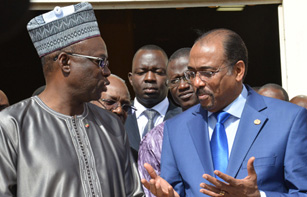
(L. to R.) Burkina Faso Prime Minister Luc Adolphe Tiao and UNAIDS Executive Director Michel Sidibé at the Third Pan-African Youth Leadership Summit on 20 December 2012 in Ouagadougou, Burkina Faso.
Hundreds of youth leaders gathered in Ouagadougou, Burkina Faso on 20 December for the Third Pan-African Youth Leadership Summit. The meeting is focusing on how young people can contribute to a post-2015 development agenda and reach the UNAIDS vision of zero new HIV infections, zero discrimination and zero AIDS-related deaths.
The three-day meeting was organised by the West African Youth Leadership Network for the United Nations (ROJALNU-OMD) in cooperation with UNAIDS. Burkina Faso’s Prime Minister, Luc Adolphe Tiao, inaugurated the summit on behalf of President Blaise Compaoré together with UNAIDS Executive Director, Michel Sidibé.
“More than any other key group, young people are the chief architects and master builders of Africa’s future,” said Mr Sidibé. “By 2035, Africa‘s working population will be the largest in the world. This means the world’s principal labour force will be African.”
Speaking on behalf of President Blaise Compaoré, Prime Minister, Luc Adolphe Tiao said that Africa will never win without investing in its young people.
More than any other key group, young people are the chief architects and master builders of Africa’s future
UNAIDS Executive Director, Michel Sidibé
While young people are Africa’s hope, they are also a major challenge for the continent, which needs to invest rapidly and strategically in young people so that they can reach their potential.
Mr Sidibé emphasized ways for ensuring that young people become a positive force for change. He said the continent must invest in education and job training, particularly in a new economy based on information and communication technology. He stressed at the same time it was important to implement social protection networks to reduce the insecurity of young people and stop them from falling into the grips of alcohol and drug addiction. Finally, he called for a new social movement with greater participation from young people on the debate about development and social justice.
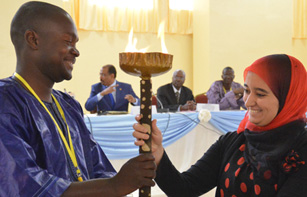
A Moroccan youth leader passes the flame to a Burkina Faso youth leader at the Third Pan-African Youth Leadership Summit on 20 December 2012 in Ouagadougou, Burkina Faso.
The President of the Commission of the West African Economic and Monetary Union, Cheik Hadjibou Soumaré said that he fully agreed with UNAIDS on the importance of young people and their engagement in the HIV response.
President of the West African Youth Leadership Network, Alioune Gueye said that UNAIDS three zero strategy was an indispensable part of any reflection on a post-2015 development agenda and thanked Mr Sidibé for taking young people into account.
The Summit is organized in the overall framework of CrowdOutAIDS, an innovative youth-led policy project initiated by UNAIDS. Leveraging crowdsourcing technology and new media tools, the project enabled young people to develop recommendations to work more effectively with each other in the AIDS response.
Globally, an estimated 4.6 million young people (15-24 years of age) are living with HIV. About 2300 young people are infected with HIV each day.
External links
External links
Speeches
Related


Feature Story
Friends of UN Plus launched in Liberia
19 December 2012
19 December 2012 19 December 2012
The launch of the ‘Friends of UN Plus’ at the UNAIDS Country Office in Monrovia. Credit: UNAIDS
The United Nations (UN) in Liberia has joined Mozambique, Swaziland, Rwanda and Ghana in launching the ‘Friends of UN Plus’ as part of its efforts to achieve a work environment that is free from stigma for all UN staff living with HIV and their families.
UN Plus is a global group of UN staff living with HIV which has more than 200 members worldwide from across different UN agencies. Its members advocate for issues that are of concern to staff living with HIV such as access to healthcare, ensuring no discrimination based on HIV status and maintaining confidentiality.
Despite the advocacy efforts that UN Plus has made to date, many staff members living with HIV still feel fearful of talking about their status. The Friends initiative, therefore, is meant to provide a supportive environment to staff living with HIV by all UN staff members regardless of their HIV status. It aims to be a forum through which the needs of HIV-positive staff and those caring for HIV-positive friends and family can be articulated and addressed.
The establishment of the ‘Friends of UN Plus’ was proposed and approved by the UN Theme Group in Liberia based on reports showing that 21 UN staff members tested positive between 2009 and 2012 out of 300. This HIV prevalence (17%) is significantly higher than the Liberia’s national HIV prevalence which currently is 1.5%.
The ‘Friends of UN Plus’ will implement various activities for staff living with HIV, including events and campaigns to sensitize the UN community around HIV-related stigma and discrimination and support groups for staff living with HIV. The group will also partner with the national network of people living with HIV to address issues that are of concern to staff living with HIV such as access to HIV treatment.
The launch of the ‘Friends of UN Plus’ took place at the UNAIDS Country Office in Monrovia and was attended by more than 70 guests including the Resident Coordinator (a.i.), the UNAIDS Country Coordinator, Heads of UN Agencies in Liberia, representatives from the National AIDS Commission and civil society organizations as well as family members of UN staff.
Sensitizing UN staff members on all forms of HIV-related stigma and discrimination will help our colleagues living with HIV to overcome their fear of potential repercussions of disclosing their HIV status at work
Dr Betru Woldesemayat, UNAIDS Country Coordinator in Liberia
The UN Resident Coordinator (a.i.), Madam Esperance Fundira, described the initiative as a key mechanism through which the UN can renew its commitment to provide financial and human resources to staff living with HIV. According to her, it provides an opportunity to strengthen the anti-stigma campaign in Liberia, and work towards a stigma-free work environment for UN staff.
Dr Betru Woldesemayat, UNAIDS Country Coordinator in Liberia, termed the launch of the Friends of UN Plus as a significant milestone in the AIDS response in Liberia, especially in its on-going efforts to reduce stigma and discrimination within and outside of the UN. “Sensitizing UN staff members on all forms of HIV-related stigma and discrimination will help our colleagues living with HIV to overcome their fear of potential repercussions of disclosing their HIV status at work,” he said.
Prior to the launch, UNAIDS and UN Cares met with the National AIDS Commission and a national network of PLHIV (LIBNET+) to identify ways to reach out to more employees living with HIV in Liberia, providing them with support and creating an enabling environment for them and their families.
External links
External links

Feature Story
UNAIDS Executive Director applauds Ethiopia on its remarkable progress in the AIDS response
18 December 2012
18 December 2012 18 December 2012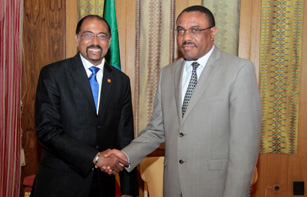
Michel Sidibe meeting with Prime Minister Hailemariam Desalegn in the Prime Minister's Office, Addis Ababa, Ethiopia, on December 17, 2012
Credit: UNAIDS/A.Fiorente
UNAIDS Executive Director Michel Sidibé congratulated the country on the dramatic decline in new HIV infections it has achieved during the past ten years on 17 December, while on an official visit to Ethiopia. Between 2001 and 2011, the rate of new HIV infections in Ethiopia among adults has been reduced by 90%.
“This drop in new HIV infections is a huge breakthrough,” said Mr Sidibé. “Ethiopia’s achievement demonstrates to the world that it is possible to prevent HIV in sub-Saharan Africa.”
Mr Sidibé met with Ethiopia’s new Prime Minister Haile Mariam Desalegn, who took over as the country’s leader when Prime Minister, Meles Zenawi died in August this year. UNAIDS Executive Director congratulated Prime Minister Haile Mariam on his appointment and expressed confidence that he will continue the legacy of his predecessor, who was known as an important advocate for the AIDS response.
Prime Minister Haile Mariam said that his country’s development agenda was people centered and that it was designed to improve the health status of families with their full participation, using local technologies and community skills and wisdom.
Mr Sidibé called on the prime minister, as the incoming Chairperson of the African Union and as the chair of AIDS Watch Africa (AWA), to strengthen AWA as an accountability mechanism. Mr Sidibé also asked for the prime minister’s help in translating into action a new roadmap adopted by African heads of State at the 19th summit of the African Union held in Addis Ababa in July. The roadmap charts a new course for the continent’s responses to AIDS, tuberculosis and malaria and emphasizes the importance of shared responsibility and global solidarity.
Ethiopia’s drop in new HIV infections is a huge breakthrough and demonstrates to the world that it is possible to prevent HIV in sub-Saharan Africa
UNAIDS Executive Director Michel Sidibé
The Minister of Foreign Affairs, Dr Tedros Adhanom, acknowledged the support of UNAIDS in helping Ethiopia make a dramatic reduction in new HIV infections. He also stressed that the new road map on shared responsibility was an innovative approach that encouraged African leaders to own the transformation of health responses on their continent.
While Ethiopia has made huge progress in reducing new HIV infections, it still faces challenges in stopping new HIV infections among children. UNAIDS’ latest World AIDS Day Report finds only 24% of pregnant women living with HIV receive antiretroviral therapy to reduce HIV transmission. Mr Sidibé met with Dr Kesetebirhan Admassu, Minister of Health, who briefed him on the country’s new accelerated plan for eliminating new HIV infections in children and providing paediatric antiretroviral treatment to children. Dr Kesetebirhan Admassu emphasized that preventing new HIV infections among children will be given more focus in Ethiopia’s health programme.
During his one day visit to Ethiopia, Mr Sidibé also met with Commissioner for Social Affairs at the African Union Commission, Mustapha Sidiki Kaloko. The Commissioner requested UNAIDS support to the African Union Commission in developing a cross-cutting programme for the AIDS response involving all sectors of the African Union Commission.
Mr Sidibé met with Commissioner for Peace and Security at the African Union Commission, Ramtane Lamamra and called for the commissioner’s support in pushing for the implementation of the United Nations Security Council Resolution 1983, which was adopted in June 2011. The resolution calls for HIV prevention efforts among uniformed services to be aligned with efforts to end sexual violence in conflict and post-conflict settings.
Related
Feature Story
Eliminating new HIV infections among children and keeping their mothers alive is not just about pills
14 December 2012
14 December 2012 14 December 2012
Credit: UNAIDS/D.Kwande
A mid-term review on the implementation of the Global Plan Towards the Elimination of New HIV infections among Children by 2015 and Keeping their Mothers Alive took place in Nairobi, Kenya from 6-7 December. The two-day workshop discussed the way forward in overcoming three key bottlenecks to achieve the Global Plan targets, including early infant diagnosis, human resources for health and supply chain management.
In June 2011, UNAIDS and the President’s Emergency Plan for AIDS Relief (PEPFAR) unveiled the Global Plan with two main targets for 2015: a 90% reduction in the number of children newly infected with HIV and a 50% reduction in the number of AIDS-related maternal deaths. The Global Plan focuses on 22 priority countries with the highest estimated numbers of pregnant women living with HIV.
Opening the meeting, US Deputy Global AIDS Coordinator Deborah Von Zinkernagel noted the momentum that has been gained in the 18 months since the launch of the Global Plan. “Strong political leadership, progressive policy change, and accelerated programmatic scale up at various levels are helping to significantly reduce new HIV infections among children and AIDS-related deaths among mothers,” said Ms Von Zinkernagel. “While the job is far from done, the intensified efforts of many partners under the Global Plan are advancing our progress towards the goal of achieving an AIDS-Free Generation”, she added.
Speaking about the challenges, participants highlighted that immediate confirmation of HIV infection in children is urgent to ensure timely initiation of antiretroviral therapy, as half of the children infected with the virus die before the age of two years. UNAIDS estimates that in 2010, among 65 reporting countries, only 28% of infants born to mothers living with HIV received an HIV test within the first two months of life. In 2011, 230 000 children died from HIV-related causes worldwide and only 28% of children eligible for treatment were receiving it, compared to 54% of adults.
Participants also stressed that, despite progress made in the provision of services to prevent mother-to-child transmission of HIV, access to appropriate diagnostics and/or treatment for pregnant women still remained inadequately low. According to UNAIDS, the percentage of treatment-eligible pregnant women living with HIV who were receiving antiretroviral therapy for their own health in 2011 was an estimated 30%.
In countries like the Democratic Republic of Congo, Chad, and Nigeria, less than 20% of pregnant women received HIV testing and counselling in 2010. Participants noted that, in some cases, the lack of access to these services is caused by uninformed or misguided government policies that do not prioritise the provision of this life-saving treatment.
Overall supply chain challenges, and in particular, the cost of commodities have overarching implications. Participants agreed that without an effective supply chain, the goals of the Global Plan are impossible to meet. Strategies such as pooling and integrating procurement, strengthening and harmonizing regulatory systems, systems transparency, and improving the accuracy of commodity forecasting to reduce stock wastage are critical to maximize supply chain efficiency. The meeting also discussed the importance of predictable funding and skilled personnel to enable efficient logistics management while lowering costs.
A shortage of human resources for health, including doctors, nurses and midwives was discussed as a major bottleneck in rapidly expanding HIV prevention, treatment and support services for mothers and children. Many of the participating countries are experimenting with task-shifting and task-sharing, as well as working with community and lay health workers in order to stretch the reach of health care services. Strategies that can accelerate the recruitment, retention and retraining of health care providers were shared, such as formalizing the role of community health workers, the development of a formal professional management cadre to oversee health facilities, and accelerated pre-service training schemes.
While the job is far from done, the intensified efforts of many partners under the Global Plan are advancing our progress towards the goal of achieving an AIDS-Free Generation
US Deputy Global AIDS Coordinator Deborah Von Zinkernagel
Participants agreed that eliminating new HIV infections among children and keeping their mothers alive is not, and should not be, just about pills. It is first and foremost about protecting the health, dignity and security of mothers living with HIV and their children. They heard reports of human rights violations of women living with HIV such as mandatory HIV testing, forced sterilizations, as well as stigma and discrimination especially in the health care setting. Networks of women living with HIV demonstrated how they have been overcoming these challenges including sensitizing communities on their rights, demanding action and accountability from governments and other stakeholders, and playing a central role within their country programs to end vertical transmission. During the workshop, participants agreed on key actions required for progress to be made against the targets of the Global Plan in these areas. Participants also discussed the global financing architecture, and how to maximize towards available resources such as Global Fund and PEPFAR, but beginning with their own domestic funding.
Closing the meeting, the Director of the Department of Evidence, Innovation and Policy at UNAIDS Dr Bernhard Schwartlander, commended countries for their rapid momentum. “The call for elimination of new HIV infections among children by 2015 and keeping their mothers alive has been widely heard”, he said, “and countries are now making important and sustained investments for their populations. It is now time to notch up our efforts as we enter the second phase of the Global Plan, and be better accountable to our governments and the people we serve.”
The meeting was attended by government representatives from 16 of the 22 priority countries under the Global Plan, as well as representatives from PEPFAR, the UN, and several global implementing agencies. Others present included Women Fighting AIDS in Kenya (WOFAK), The International Community of Women with HIV/AIDS (ICW), and the Inter-Agency Task Team on the Prevention and Treatment of HIV among Pregnant Women, Mothers and Children.
Related

Feature Story
UNAIDS board promotes non-discrimination of people affected by HIV
13 December 2012
13 December 2012 13 December 2012
(From L to R) Keynote Speaker Reverend MacDonald Sembereka from Malawi and UNAIDS Executive Director Michel Sidibé interacting during the Thematic Segment on Non-Discrimination at the 31st PCB.
Credit:UNAIDS/V.Martin
UNAIDS Programme Coordinating Board (PCB) met in Geneva this week. In his report to the board the Executive Director of UNAIDS Michel Sidibé called on members to maintain commitment for the 1000 days leading to the 2015 target deadline and opportunities post 2015.
“Clearly, we are doing the right things, and are doing them faster smarter and better,” said Mr Sidibé. “But make no mistake––the epidemic is not over. We have an agenda to complete and must embrace the opportunity––not only to achieve an AIDS-free generation, but also to rewrite the future of global health and development.”
A stronger response for women and girls
UN Women participated in the board meeting for the first time after becoming a Cosponsor of UNAIDS last June. Emphasising the urgent need to empower women the Executive Director of UN Women Michelle Bachelet said, “Women must be equal citizens; have a life free from violence; have equal access to and control over productive resources; have greater access to education, information and prevention; and their work in the care economy must be counted, valued and supported.”
The board members also recognised the need to strengthen the response for women and requested that UNAIDS works to ensure that women and networks of women living with HIV are meaningfully engaged in all stages of planning, implementation and monitoring of the AIDS response.
Non-discrimination
The third day a special thematic discussion on non-discrimination took place, moderated by BBC journalist Nisha Pillai. Speakers underlined that HIV-related discrimination is all too often experienced by people who are already marginalized and vulnerable, and can be devastating. Acting as a major obstacle to HIV testing, prevention and treatment, the goal of zero discrimination is essential to advancing the response to HIV.
Discrimination is alive and kicking in our societies – a painful and silent killer. If we don’t address the vice of discrimination the three zeros will remain a pipe dream.
Reverend MacDonald Sembereka
Mr Sidibé highlighted the importance of achieving zero discrimination: “We cannot continue to address discrimination in the same way we have until now. The people we are not reaching today are the most difficult to reach because they feel they can’t come forward for fear of discrimination.”
Mr Sidibé welcomed Reverend MacDonald Sembereka from Malawi as the keynote speaker for the segment. A civil and human rights activist living with HIV, Reverend Macdonald has experienced HIV-related discrimination first hand, “Discrimination is alive and kicking in our societies – a painful and silent killer. If we don’t address the vice of discrimination the three zeros will remain a pipe dream,” he said.
He gave a moving speech on his personal struggles with dealing with discrimination, and how society should support, rather than ostracize, people affected by HIV. “The blame for continued discrimination lies with all of us––when we fail to challenge cultural practices that exclude people, ignorance that drives people from families villages and communities, old and archaic rules that lead to men who have sex with men being denied basic health care services, religious beliefs that hold people hostage to rigid interpretations sacred texts and that deny women access to education and encourage child marriage and ingrained prejudice that allows sexual violence to flourish.”
Following Reverend Macdonald’s speech, the moderator invited participants to engage in an open discussion on the response to HIV-related stigma and discrimination in different sectors, including health care, employment, education, justice and the community.
The board agreed that the theme of the next PCB would be HIV and young people. India was elected as the next Chair of the PCB with Australia as Vice-Chair and Congo as Rapporteur.
Speeches
Related
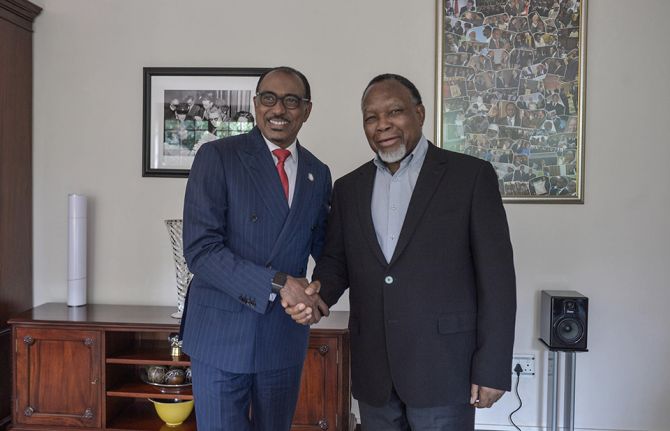 Keeping up the momentum in the global AIDS response
24 April 2019
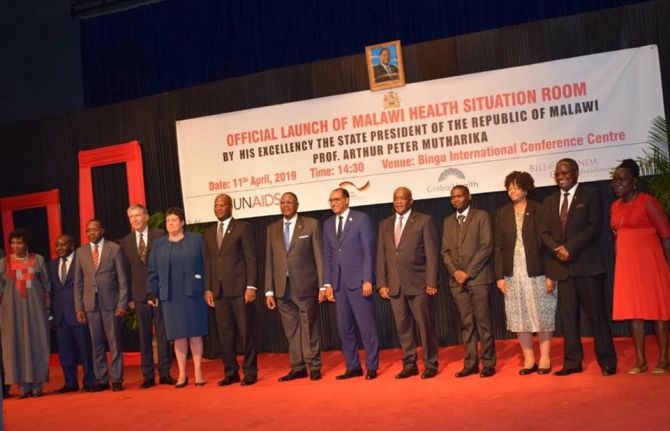 Malawi launches its health situation room
12 April 2019
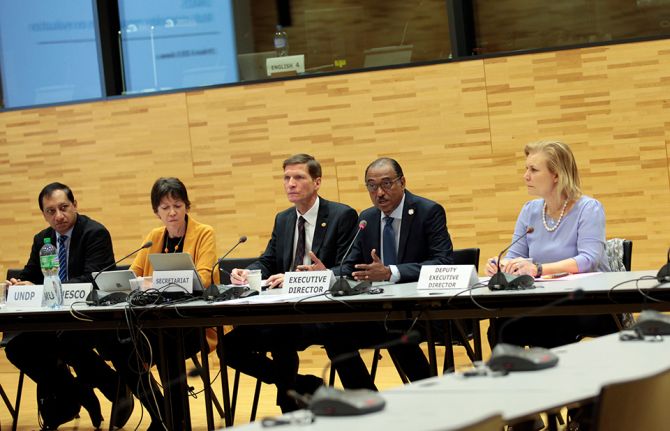 Learning lessons on evaluation
02 April 2019
Feature Story
New guidelines to better prevent HIV in sex workers
11 December 2012
11 December 2012 11 December 2012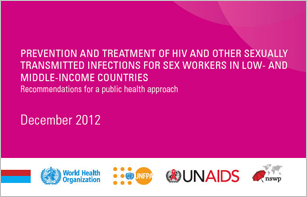
The World Health Organization (WHO) in partnership with UNFPA, UNAIDS, and the Global Network of Sex Work Projects, have developed new guidelines to better protect sex workers from HIV and other sexually transmitted infections (STIs).
Sex workers in many places are highly vulnerable to HIV and other sexually transmitted infections (STIs) due to multiple factors, including large numbers of sex partners, unsafe working conditions and barriers to the negotiation of consistent condom use. Moreover, sex workers often have little control over these factors because of social marginalization and criminalized work environments. Alcohol, drug use and violence in some settings may further exacerbate their vulnerability and risk.
“The risk of a sex worker becoming infected with HIV and STIs is far higher than for other people,” said Dr Gottfried Hirnschall, Director of the WHO Department of HIV/AIDS.
The objective of the guidance document, Prevention and treatment of HIV and other sexually transmitted infections for sex workers in low- and middle- income countries, is to provide technical recommendations on effective programmes for the prevention and treatment of HIV and other STIs among sex workers and their clients.
Preventing infection among sex workers has the potential to both improve the health of individual sex workers as well as to slow HIV and STI transmission among wider populations. Early actions in countries as diverse as Brazil, India, Kenya and Thailand have succeeded reducing STI transmission in sex work by increasing condom use, leading to improved health outcomes for sex workers and rapid control of HIV and STI epidemics.
The new WHO guidelines recommend that countries work towards decriminalization of sex work and urge countries to improve sex workers’ access health services. They also outline a set of actions to empower sex workers and emphasize that correct and consistent condom use can reduce transmission between female, male and transgender sex workers and their clients.
Evidence indicates that where sex workers are able to negotiate safer sex, HIV risk and vulnerability can be sharply reduced. The guidelines call for voluntary periodic screening and treatment of STIs for sex workers to both improve their health and control the spread of HIV and STIs.
According to WHO, the evidence-based guidelines are designed for use by national public health officials and managers of AIDS and STI programmes, nongovernmental organizations including community and civil society organizations, and health workers. These guidelines may also be of interest to international funding agencies, the scientific media, health policy-makers and advocates.
Publications
Publications
Related
Feature Story
“HIV and Sex Work Collection”: Innovative responses to sex work and HIV in Asia and the Pacific
11 December 2012
11 December 2012 11 December 2012
In Yangon, a young woman relaxes at a drop-in centre set up by the Targeted Outreach Programme, or TOP Myanmar, which has made remarkable progress in scaling up integrated sexual and reproductive health and HIV services for sex workers since it was launched in 2004. “If I feel frustrated, I come to this centre and rest or talk to friends or sing songs or watch movies. We can raise issues with our peers and get information on how to resolve problems” she says.
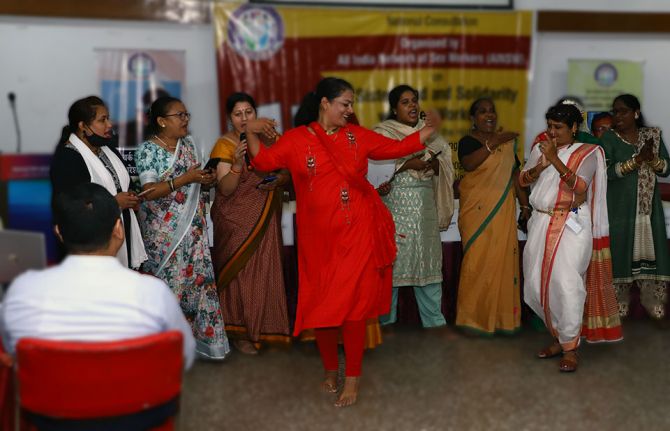
In India, the Veshya Anyay Mukti Parishad or VAMP Plus, facilitates access to HIV testing and treatment services through raising awareness, education and outreach. It has also created a community care and safety net that helps sex workers living with HIV to advocate, seek and receive treatment, care and support while addressing problems related to health and well-being including nutrition and shelter.
And in Bangladesh, Durjoy Nari Sangha is empowering its 3 500 registered female sex workers to demand their rights to equality, dignity, health and safety among. “The extent and severity of violence against sex workers does not result in public outcry; rather it is normalised,” says Durjoy Nari Sangha. “Often prevailing stigma against sex workers means they are not considered worthy of support and protection.” Their anti-violence initiative is changing this. Their efforts have led to a reduction of violence against sex workers and a greater understanding among sex workers about their rights.
New and emerging groups can get help from the network of organizations, sex workers can learn from other sex workers about everything from problem solving to proposal writing
Asia-Pacific Network of Sex Workers spokeswoman Tracey Tully
Sex workers have been severely affected by HIV in many parts of the world including Asia and the Pacific region. But they are also among the key populations at higher risk that have best responded to HIV prevention campaigns, undertaken advocacy strategies and engaged in peer to peer initiatives to respond to the epidemic.
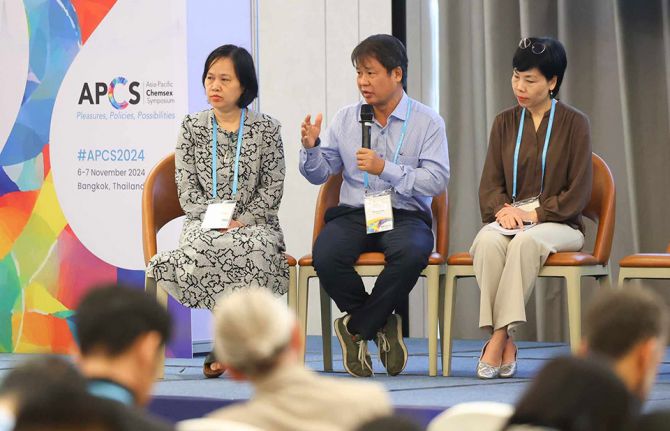
TOP Myanmar, VAMP Plus and Durjoy Nari Sangha are among 11 organizations whose work has been featured in The HIV and Sex Work Collection – Innovative responses in Asia and the Pacific, a compelling collection of case studies jointly produced by UNFPA, UNAIDS and the Asia-Pacific Network of Sex Workers (APNSW).
The case studies provide details about how HIV and sex work programmes and advocacy have been undertaken, including insights from sex workers about what is effective and why. They illustrate how these efforts have empowered sex workers to assert their human rights, take control over their work environments and improve their health and social conditions.

Pradeep Kakkattil, UNAIDS Deputy Regional Director for Asia and the Pacific and Tracey Tully spokeswoman for the Asia-Pacific Network of Sex Workers during the launch of the ‘HIV and Sex Work Collection’
Credit:UNAIDS
“There is a rich experience in Asia and the Pacific about what works in responding effectively to HIV in the context of sex work, yet there has been a dearth of documentation and analysis of this experience,” said Julia Cabassi, Regional Adviser, HIV & MARPs, UNFPA Asia and Pacific Regional Office. “‘The HIV and Sex Work Collection’ contributes to closing this gap.”
Pradeep Kakkattil, UNAIDS Deputy Regional Director for Asia and the Pacific said the Collection was an important resource in reaffirming commitments including reducing sexual transmission of HIV by 50 percent by 2015. “From a United Nations perspective, it’s great to have such a powerful tool to share,” said Mr Kakkattil. “It provides us with a framework and community-based credibility to take to policy makers. It is a great advocacy tool, a great planning tool, a great community tool for us,” he added.
APNSW spokeswoman Tracey Tully said the collection demonstrated the effectiveness of peer to peer engagement. “New and emerging groups can get help from the network of organizations, sex workers can learn from other sex workers about everything from problem solving to proposal writing,” she said.
Feature Story
Women out loud: How women living with HIV will help the world end AIDS
11 December 2012
11 December 2012 11 December 2012
In a new report, entitled Women out loud, UNAIDS explores the impact of HIV on women and the instrumental role women living with the virus are playing to end AIDS. It includes the latest data and commentary from some of the leading advocates on women and HIV.
The report includes the voices of some 30 women living with HIV who have given their personal insights into how the epidemic is affecting women and on how women are actively working to reduce the spread and impact of AIDS.
HIV is continuing to have a disproportionate effect on the lives of women. It is still the leading cause of death for women of reproductive age, and gender inequalities and women’s rights violations are persistent in rendering women and girls more vulnerable to HIV and preventing them from accessing essential HIV services.
“Achieving zero new HIV infections, zero discrimination and zero-AIDS related deaths will require accelerated action for women and girls,” said Michel Sidibé, Executive Director of UNAIDS. “Women must have access to education and knowledge as well as being empowered to protect themselves from HIV. We must listen to their needs, their voices and transform their words into action.”
Every minute, one young woman is infected by HIV
The infection rates among young women aged 15-24 are twice as high as in young men, highlighting the impact HIV is having on young women’s lives. The disparity is most pronounced in sub-Saharan Africa, where 3% of young women are living with HIV.
Comprehensive sexuality education is critical for all young people to ensure that they can protect themselves from HIV, especially young women. However the percentage of young women who can correctly identify ways of preventing HIV is still very low in many countries with high HIV prevalence.
“Today around 60% of adults living with HIV in the most affected regions are women––we need to take urgent action,” said the Executive Director UN Women Michelle Bachelet. “To make our response more effective, we need more women in decision-making, more access to information and services for sexual and reproductive health, and more focus on promoting and protecting the rights of women and girls.”
Gender inequalities critically influence the risk of HIV infection
Much progress is needed is in ensuring gender equality and respect for women’s sexual and reproductive health and rights, especially those of women living with HIV. Harmful gender norms and a lack of economic empowerment are rendering women more vulnerable to acquiring HIV through sexual transmission.
“Improving women’s social and economic status and enhancing their decision making power reduces the risk of HIV infection,” said Jennifer Gatsi, Executive Director of the Namibian Women’s Health Network.
To make our response more effective, we need more women in decision-making, more access to information and services for sexual and reproductive health, and more focus on promoting and protecting the rights of women and girls
UN Women Executive Director, Michelle Bachelet
Marginalised women remain the most impacted by HIV
Sex workers and people who use drugs are particularly vulnerable to HIV. When sex is exchanged for money or drugs, women often exert little influence over a partner’s condom use. Female sex workers are 13.5 times more likely to be living with HIV than other women. Some countries reported an HIV prevalence rate of more than 20% among female sex workers in capital cities. Studies conducted in nine European Union countries have indicated on average a 50% higher prevalence of HIV among women who inject drugs than in men who inject drugs.
End new infections among children and keep their mothers alive
Since UNAIDS launched the Global Plan to stop new HIV infections in children and keep their mothers alive, new infections in children in sub-Saharan Africa have fallen by nearly 25% (2009 to 2011). This represents a huge step towards achieving zero new HIV infections in children by 2015.
However, stigma and discrimination or the threat of stigma and discrimination are still preventing many women from accessing prenatal care services. Almost two of every three pregnant women in low- and middle- income countries do not know their HIV status.
It is critical to protect the sexual and reproductive health and rights of all women living with HIV. This includes their right to access voluntary and confidential HIV testing and counselling, accurate and non-judgemental information, quality treatment and services, and to bear children in a safe environment, free of stigma, discrimination and violence.
Laws and policies to protect the rights of women living with HIV
Laws and policies should protect women and girls, however there are many that exist that actually punish, stigmatize and discriminate against women living with HIV, creating a significant barrier to women accessing both harm-reduction and HIV-related services. The report highlights the need for changes in laws, policies, programmes and practices, and calls for women to be an integral part of policy-making and programming.
Improving women’s social and economic status and enhancing their decision making power reduces the risk of HIV infection
Jennifer Gatsi, Executive Director of the Namibian Women’s Health Network.
Women out loud provides an in depth insight into the many challenges faced by women and particularly women living with HIV. It also offers a snapshot of how women are shaping the response to HIV and the importance of their active involvement in decision making and programming.
The foreword of Women out loud is signed by Michel Sidibé, Executive Director of UNAIDS, Michelle Bachelet, Executive Director of UN Women and Jennifer Gatsi, Co-founder and Executive Director of the Namibian Women’s Health Network. The report was formally launched at the Polish mission in Geneva on Tuesday 11 December 2012 by the Under Secretary of State, Ministry of Health of Poland and Chair of the 31st PCB, Igor Radziewicz-Winnicki and His Excellency Remigiusz A. Henczel, Ambassador Extraordinary and Plenipotentiary, Permanent Representative of the Republic of Poland to the United Nations Office and other international organizations in Geneva.
Publications
Publications
Feature Story
The 31st meeting of the UNAIDS Programme Coordinating Board opens
11 December 2012
11 December 2012 11 December 2012
Credit: UNAIDS
The 31st UNAIDS Programme Coordinating Board (PCB) meeting is taking place in Geneva from 11-13 December.
During the opening session, UNAIDS Executive Director Michel Sidibé will present his report outlining the progress made since the last Board meeting in June 2012, as well as the challenges ahead. At the invitation from Mr Sidibé, Dr Richard Horton, Editor in Chief of the Lancet, will share his views on the AIDS response in the Post-2015 Framework and its contribution to global health and development.
The Executive Director of UN Women, Michelle Bachelet will participate in the meeting for the first time since the UNAIDS Board approved the appointment of UN Women as the 11th Cosponsor to the Joint Programme in June 2012. The UNAIDS Board will also receive a mid-term review on the implementation of the Agenda for Accelerated Action for Women, Girls, Gender Equality and HIV.
The thematic segment of the meeting will take place on Thursday and will focus on Non-Discrimination. Participants will examine policy and programmatic actions that reduce HIV-related discrimination in various sectors, including health care, employment, education, justice and the community. The segment will also be an opportunity to discuss strategies for expanding these policies and programmes in the context of national HIV responses.
The 31st meeting of the UNAIDS Board is being chaired by Poland.
Speeches
Multimedia

Feature Story
Interview with John Edward Greene, UN Secretary-General’s Special Envoy for AIDS in the Caribbean
07 December 2012
07 December 2012 07 December 2012The United Nations Secretary-General’s Special Envoys for AIDS are committed individuals selected by the United Nations Secretary-General to help advance the AIDS agenda at global level and to ensure that AIDS is kept high as a political priority in their respective regions. In a series of interviews with Unaids.org, the Special Envoys for AIDS share their views on the state of the AIDS epidemic and their own role in the global effort to end the epidemic.

John Edward Greene, United Nations Secretary-General’s Special Envoy for AIDS in the Caribbean
John Edward Greene was appointed the United Nations Secretary-General’s Special Envoy for AIDS in the Caribbean in November 2011, following his role as Assistant Secretary-General for Human and Social Development at the Caribbean Community (CARICOM) Secretariat.
Professor Greene has a long regional and international career in the fields of academia, social sector development, poverty alleviation, organizational development and AIDS. During his time at CARICOM, he crafted the blue-print for the establishment of the Pan-Caribbean Partnership against HIV and AIDS (PANCAP) which was recognized in 2004 as an international best practice in the response to HIV.
In 2010 he was honored by the Government of Suriname, which named him Grand Officer in the Order of the Yellow Star for his contributions to social development and health in the Caribbean, and particularly to the response to AIDS. He was also awarded the Lifetime Youth Award by the Caribbean Youth Ambassadors Corp for his pioneering role in the region’s youth and development agenda.
As one of the Secretary General’s Special Envoys for AIDS, what do you consider to be your role in the response to AIDS?
My role as Special Envoy is to advocate for the targets and commitments laid out in the 2011 Political Declaration on HIV/AIDS. In particular, I aim to promote the concepts of shared responsibility and sustainability of the AIDS response, and putting human rights at the centre of the response. These concepts have been identified as priorities by the Caribbean constituency.
What motivates you in this role?
I am working with UNAIDS to strengthen the Pan Caribbean Partnership Against HIV and AIDS (PANCAP), a unique partnership between governments, the private sector, NGOs and development agencies across the English, French, Dutch and Spanish-speaking Caribbean.
Many of the small states that make up the Caribbean lack the capacity to respond to AIDS effectively at a national level. PANCAP brings together national HIV programmes with international and regional organisations to achieve collective success in all areas of the AIDS response.
Young people are the new generation of leaders. They are the essence of the change that we are promoting to achieve the goal of an AIDS-free generation.
John Edward Greene, United Nations Secretary-General’s Special Envoy for AIDS in the Caribbean
At the community level, the challenge of reducing stigma and discrimination is being supported by the Champions for Change, a group of committed and well-respected individuals who act as project advocates and work to address these issues in their countries.
In addition, the Caribbean could be the first region in the World to achieve the elimination of new HIV infections among children and this is an exciting prospect.
What improvements are you seeing in the response to AIDS in the Caribbean?
Governments in the Caribbean are becoming increasingly aware of the need to invest in the AIDS response to avoid a regression on the progress that has been made in providing access to HIV treatment and prevention. They are also increasingly receptive to advancing the human rights agenda, and especially to removing punitive laws from the books.
What key issues and challenges remain in the region?
The biggest challenges we face in the region revolve around sustainability of HIV programmes, to sustain and scale up access to antiretroviral drugs as well as advancing the human rights agenda to reduce stigma and discrimination. The latter involves not only promoting the elimination of punitive laws, but also changing overall values and attitudes. This involves sustaining a dialogue for building on the concept of basic rights for all, based on the Universal Declaration of Human Rights.
In addition, while taking AIDS out of isolation has become a recurrent theme in the post-2015 agenda, it is important to stress the fact that AIDS is the only disease so strongly affected by stigma and discrimination.
During your time at CARICOM you actively supported and encouraged youth involvement in AIDS programmes. What is the role of young people in today’s AIDS response?
I am happy to say that young people are engaged in the development and implementation of HIV policy within the framework of PANCAP. The CARICOM Youth Ambassadors Programme has been very effective in engaging youth in the decision-making process in the region. As Special Envoy, I will work passionately with youth leaders and their groups to identify more creative approaches to discouraging risky behaviour, such as drug use and having multiple sexual partners, among young people.
Young people are the new generation of leaders. They are the essence of the change that we are promoting to achieve the goal of an AIDS-free generation.