
Feature Story
YouTube influencers campaign to increase PrEP uptake among Mandarin-speaking people in Australia
05 July 2021
05 July 2021 05 July 2021ACON, one of Australia’s largest HIV organizations, working to promote HIV prevention strategies among gay men and other men who have sex with men in New South Wales, Australia, has recently launched a new campaign video that enlists some of Asia’s most popular social media influencers.
The campaign aims to raise awareness and promote the uptake of pre-exposure prophylaxis (PrEP), particularly among Mandarin-speaking gay men and other men who have sex with men. The campaign addresses frequently asked questions about PrEP and features Fufu and Josh, also known on social media as FJ234, YouTube personalities with a following of 350 000 subscribers. The pair appear alongside a leading doctor and PrEP advocate, Stephane Wen-Wei Ku, who in the campaign breaks down information on PrEP through relatable and humorous conversations.
“PrEP is a good tool to protect yourself, even if you are not ready to talk about sex with your partner. So, we could all have a great sex life without worrying about HIV,” Josh and Fufu explained.
In Asia and the Pacific, civil society organizations in countries such as Thailand and the Philippines have turned to social media platforms and other innovative solutions to offer new ways to link communities to PrEP and other prevention options. For example, in Thailand, the PrEP in the City campaign, launched by the Institute of HIV Research and Innovation and supported by the UNAIDS Regional Support Team for Asia and the Pacific and other key partners, aimed to increase PrEP uptake among transgender women by challenging negative perceptions. Likewise, in the Philippines, civil society organizations used innovative programmes to deliver antiretroviral therapy to clients, and PrEP and condoms were frontloaded to community champions for distribution.
“Raising awareness of PrEP, which is an extremely effective strategy for preventing HIV transmission, is fundamental to our efforts in eliminating the virus,” said Nicolas Parkhill, the Chief Executive Officer of ACON, reflecting on the critical role of the campaign in scaling up PrEP among Mandarin-speaking gay communities in New South Wales.
PrEP has had an enormous impact on HIV transmission rates in New South Wales and Australia as a whole since it was first made available in 2016 through various state-based trials, and later in 2018 when it was subsidized under the national Pharmaceutical Benefits Scheme. Currently, there are three main ways to access PrEP in Australia. The most common is through the Australian health-care system at a subsidized cost. Other options include purchasing PrEP from a pharmacy using a private prescription from a doctor or purchasing it from a reputable pharmacy and importing it into Australia under the Personal Importation Scheme. These last two options are particularly important for people who are not covered under the Australian health-care system, such as international students.
“PrEP is now the most commonly used HIV prevention strategy for gay men, but if we are to realize its full potential on reducing HIV transmission in New South Wales, we need to break down barriers and ensure that PrEP is easily accessible to all men in every community. By working with Fufu, Josh, Stephane Wen-Wei Ku and Hotline, we hope the video will be able to help raise awareness and show how effective it is, how easy it is to get and its benefits,” Mr Parkhill added.
The campaign video was developed in partnership between ACON and the Taiwan Tongzhi Hotline Association, a sexual health organization. A vital feature of the campaign was that the content was developed with the Mandarin-speaking community, so that the messaging is authentic to Mandarin-speaking men. The video is available in Traditional and Simplified Mandarin, with English subtitles.
“To close the gaps and ensure that no one is left behind, we must foster innovation and scale up access to HIV prevention and treatment services. Strong national commitment to scale up PrEP, adopting national PrEP policies and guidelines, setting ambitious PrEP targets and allocating sufficient resources for PrEP will help countries across the region to get the HIV response back on track. We have the tools to end AIDS. Now we must use them,” said Eamonn Murphy, Director, UNAIDS Regional Support Team for Asia and the Pacific.

Feature Story
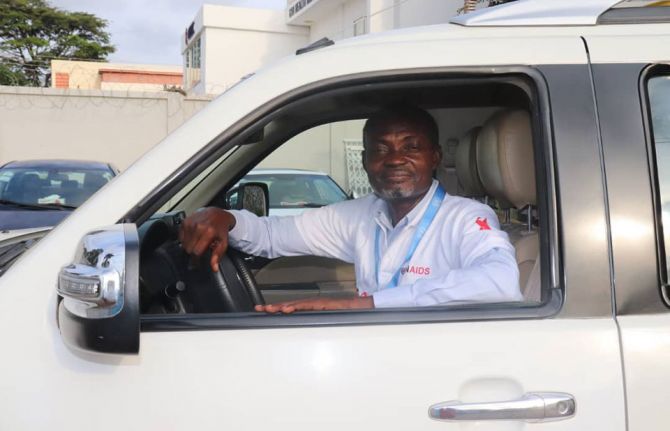
Ending AIDS on wheels: a drive with Samuel Larkai
05 July 2021
05 July 2021 05 July 2021In 1999, when he started working for UNAIDS, Samuel Larkai committed himself to using his driving experience to contribute to ending AIDS by 2030. He started his career in driving as a shipping assistant in a timber firm, after which he moved to the United Nations Development Programme to serve as a driver. He was then recruited by the UNAIDS Country Office for Ghana as a chauffeur. He has driven not only the length and breadth of Ghana but also neighbouring countries, Togo, Benin and Burkina Faso, on official assignments.
Mr Sam, as he is affectionately called, recalls how Ghanaians received the news about HIV in Ghana in the early 1990s. “At the onset, most people heard about HIV via television and radio education. Also, education in schools was intense,” he said.
Looking back, he attributes the rise in new HIV infections to the non-adherence of people to the education they received on HIV prevention. “I also recollect the opposition of religious institutions to condom usage among young people. They felt young people were being encouraged into promiscuity, but of course this was not the case. What they failed to realize was that the spread of HIV needed to stop urgently!” He added that, “Condom negotiation should be encouraged, as having protected sex remains one of the ways to prevent the transmission of HIV.”
Over the years, one issue has continued to cause him sleepless nights—HIV stigma. He recollects an experience at the Korle Bu Teaching Hospital, where he was refused entry into the HIV clinic, while the UNAIDS country director was allowed in. An official at the clinic explained that his status as an indigen, a native of the town, might allow him to identify some of the people living with HIV locally, with a risk of stigma for anyone he could identify. Reflecting on the negative effects of HIV stigma, Mr Sam believes in the value of education on sexual and reproductive health, which can be an effective weapon in fighting HIV stigma.
Having worked with UNAIDS in Ghana for such a long time, Mr Sam has seen the progress that has been made. “I am filled with joy when I see people living with HIV exude confidence and power after all they have been through. Many now serve as examples and mentors to the younger generations. This is the way to go!” he said with a smile.
Mr Sam applauds the strides made towards ending AIDS as a public health threat and is confident that it can be achieved by 2030, if everyone keeps trying their very best.
Region/country
Related
 Impact of US funding cuts on HIV programmes in Ghana
08 April 2025
Feature Story
Training on data on the location and size estimates of key populations in western and central Africa
25 June 2021
25 June 2021 25 June 2021Since key populations and their sexual partners account for 69% of new HIV infections in western and central Africa, reaching 95–95–95 among key populations will result in a significant impact on the overall HIV epidemic in the region. However, programmes focusing on key populations are insufficient. In western and central Africa, funding for programmes for key populations represented only 2.4% of the region’s overall HIV funding between 2016 and 2018, according to Frontline AIDS.
Having strategic information—quality data and analysis—is vital for an HIV response, for ensuring accountability and since it allows ambitious and measurable time-bound targets for monitoring progress to be set.
“The old adage “What gets measured gets done” may be a cliché, but it is still very true for the HIV response. Over the years, data collection, analysis and dissemination have led to a better understanding of the HIV epidemic and helped programmes to reach the right people in the right place at the right time,” said Marie Engel, Adviser at the UNAIDS Regional Support Team for Western and Central Africa.
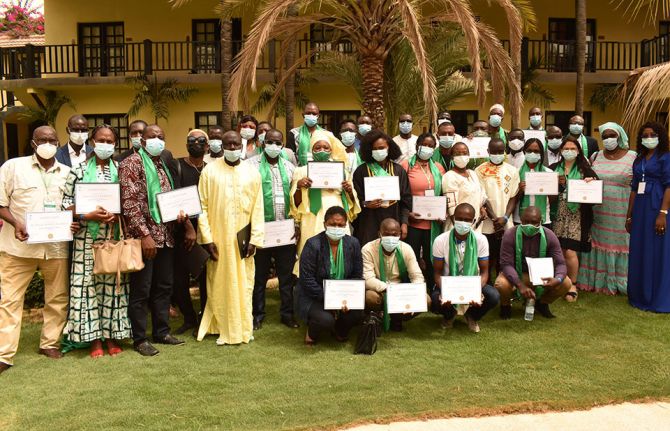
In order to strengthen their skills in building and analysing data on the location and size estimates of key populations, approximately 30 people from four countries—Senegal, Côte d’Ivoire, Guinea and Guinea Bissau—and who were mainly from organizations for key population recently attended a training session in Saly, Senegal. During the training, which was part of a subregional project called RECCAP, funded by Expertise France, the Enda Santé nongovernmental organization, in collaboration with Johns Hopkins University, trained the participants on basic statistical analysis methods, population size estimation, health mapping tools and the analysis and presentation of collected data. UNAIDS and the World Health Organization sponsored the participation of several participants.
“The development of local capacities will allow for programmes that are best adapted to contextual changes by locating the dynamics of HIV vulnerability and analysing how sociospatial combinations influence epidemiological data. The diversity of the selected participants’ profiles and the plurality of the training team’s experiences guarantee a transfer of know-how and true sharing,” said Daouda Diouf, Enda Santé’s General Manager.
It is hoped that the training will empower key populations to exercise leadership—an essential mainstay of HIV responses to ensure that they are inclusive, equitable, effective, efficient and sustainable.
Region/country

Feature Story
The importance of young people’s sexual and reproductive health and rights to the global HIV response
21 June 2021
21 June 2021 21 June 2021More than a quarter of the world’s population is between the ages of 10 and 24 years—and in some parts of the global South the proportion is two thirds or higher. This is a generation caught between biology and society—between curiosity, questions and concerns about their emerging sexual and reproductive selves and the controls, constraints and conditions imposed by laws, policies and community practices.
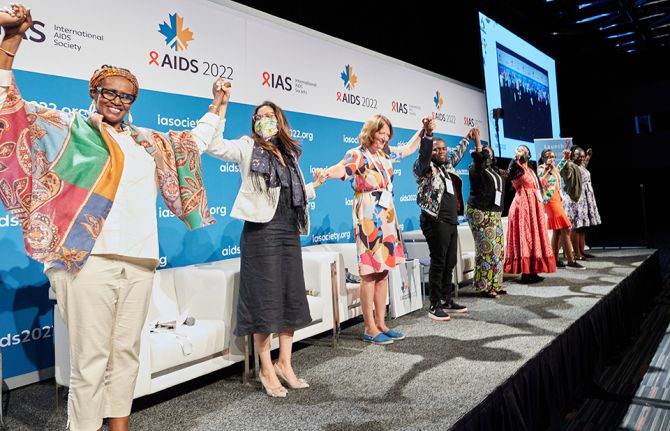
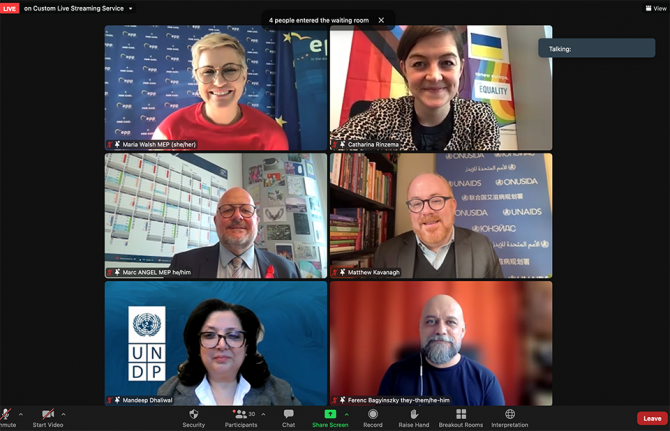
On the sidelines of the United Nations High-Level Meeting on AIDS, a group of young activists, government representatives and experts came together in a virtual event on 10 June to discuss the Facts of Life: Youth, Sexuality and HIV.
The meeting, co-hosted by UNAIDS and the International Planned Parenthood Federation (IPPF), brought home the urgency of action. Nearly half of all new HIV infections worldwide occur among young people aged 15 to 24 years, with young women being twice as likely to become infected. Globally, AIDS-related illnesses are the second leading cause of death among young people (aged 10–24 years) and the most common cause of mortality of young people in Africa.
The new Global AIDS Strategy 2021–2026 highlights the urgent need to empower young people to build today’s and lead tomorrow’s HIV response—for themselves and their communities. Nipun Srivastava, a young HIV activist from India, pointed to the challenges ahead. “We have an ambitious target to end AIDS by 2030, but it is not achievable with these regressive policies on sex and sexuality. We lost a lot of people in the 1980s and 1990s because we didn’t talk about sex. We need to stop talking about cows’ and goats’ and bees’ reproduction and speak about sex.”
Efforts to help young people reach their potential in public life need to be mirrored in their private, intimate lives. Alvaro Bermejo, the Director-General of IPPF, emphasized the connection between the physical and emotional well-being of adolescents (including those living with HIV)—and their societies—and access to accurate, age-appropriate sexual and reproductive information and services, allowing them to avoid unwanted pregnancy and unsafe abortion, sexually transmitted infections, including HIV, and all forms of sexual violence and coercion.
And yet, young people’s sexual and reproductive health and rights remain highly controversial. “Case-in-point is the High-Level Meeting on AIDS itself,” said Shereen El Feki, the Director of the UNAIDS Regional Support Team for the Middle East and North Africa. “Some of the most contentious negotiations, and pushback from Member States, on the United Nations Political Declaration on AIDS was on sexual and reproductive health and rights and comprehensive sexuality education.”
The participants heard that the same governments praised for initiatives on young people’s employment or civic engagement often founder when trying to bring the same spirit of youth empowerment to access to youth-friendly sexual and reproductive health and rights services or sexuality education. Amery Browne, the Minister of Foreign and CARICOM Affairs for Trinidad and Tobago, spoke about the delicate act that governments face in balancing conservative forces and youth voices, and urged those working for greater openness to continue their struggle.
Among them is Nadia Abdalla, the Chief Administrative Secretary at the Ministry of ICT, Innovation and Youth in Kenya. A young person herself, she spoke about her country’s efforts to help young people to organize and mobilize for their intimate rights, including their ability to prevent, or live with, HIV. Half-a-world away, sexual and reproductive health and rights activist Ponny White described her work with Advocates for Youth, a nongovernmental organization in the United States of America that lobbies state governments for legal reform to enable young people to access their full sexual and reproductive rights. “A lot of young people are experiencing sexual encounters they don’t understand because someone else is introducing it to them,” she warned, “We want to equip young people with tools and education so they can be autonomous and living a fulfilling life.”
The Internet is one such tool of empowerment. Abir Sarras, the co-founder of Love Matters Arabic, a pioneering social media platform reaching millions of young people across the Middle East and North Africa, pointed to the importance of sex-positive messaging—emphasizing the pleasures, rather than just the problems, associated with sex—as a key means of communicating with young people. But not all young people yet have access to such online resources—Stefania Gianinni, the Director-General for Education at the United Nations Educational, Scientific and Cultural Organization, described the successes and setbacks faced in implementing the United Nations guidance on comprehensive sexuality education in school curricula. “There is no knowledge pill we can give young people,” she said. “But education, hand in hand with access to youth-friendly services, is the most powerful tool for ending AIDS as a public health threat and giving rights to the new generations.”

Feature Story
The journey towards comprehensive sexuality education
28 June 2021
28 June 2021 28 June 2021School-based comprehensive sexuality education plays a vital role in promoting the health and well-being of children and adolescents, both now and in their future. It improves sexual and reproductive health outcomes, including for sexually transmitted infections and HIV, promotes safe and gender equitable learning environments and improves access to and achievement in education.
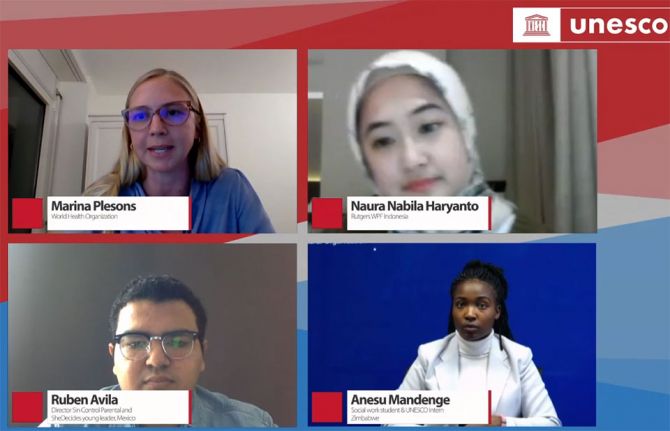
In a preview of the upcoming global report on the status of comprehensive sexuality education, more than 700 people joined an online event opened by Stefania Giannini, the Assistant Director-General, Education, for the United Nations Educational, Scientific and Cultural Organization (UNESCO). While some progress has been made, she noted that there’s still a long way to go and underscored comprehensive sexuality education as one of the key priorities for action to achieve gender equality.
People attending the event heard the perspectives and recommendations of young activists for sexual and reproductive health and rights and case studies from Sweden, Tunisia and Namibia, together with engagement from policy-makers on how they are working towards ensuring quality comprehensive sexuality education for all young people.
“Like all journeys, the road towards comprehensive sexuality education is long, and sometimes winding, but it is leading us on the path to brighter, healthier futures for our young people,” Ms Giannini said.
The panel of young people collectively called for the recognition of education as a fundamental right, the need for strong implementation with proper financing and sufficient monitoring and evaluation and truly comprehensive curricula that respond to the needs of all young people.
Shannon Hader, the UNAIDS Deputy Executive Director, Programme, addressed the meeting, referring to the new Global AIDS Strategy 2021–2026 and the 2021 United Nations Political Declaration on AIDS and the importance of comprehensive sexuality education to both. “Comprehensive sexuality education is a necessary core intervention—to prevent HIV among young people and also to empower young people to recognize and address issues of violence, sexual abuse and elements of their overall sexual health and well-being. Importantly, gaps in comprehensive sexuality education knowledge are not equal. Inequalities exist based on where young people live, levels of family income or education, digital access and degrees of gender inequality in the community. The global AIDS strategy recognizes we must end inequalities to end AIDS.”
The comprehensive sexuality education global status report is a collaboration between UNESCO, UNAIDS, the United Nations Population Fund, the United Nations Children’s Fund, UN Women and the World Health Organization (WHO), with support from governments and civil society. The report provides a snapshot of the status of school-based comprehensive sexuality education around the world, which can help to inform advocacy and resourcing efforts, as governments and partners work towards the goal of ensuring that all learners receive good quality comprehensive sexuality education throughout their schooling.
“For governments and international stakeholders, we want you to stand up, speak out, change the rules and allocate resources for comprehensive sexuality education,” said Reuben Avila, the Director of Sin Control Parental and a She Decides young leader from Mexico.
The event was held in the lead-up to the Generation Equality Forum (GEF), which will be held from 30 June to 2 July and which will launch a series of concrete, ambitious and transformative actions to achieve immediate and irreversible progress towards gender equality.
”Bodily autonomy and sexual and reproductive health and rights” is one of six Action Coalitions that will be established during the GEF. Among the three actions agreed to for the Action Coalition, the first is to ”Expand comprehensive sexuality education”, with the goal of increasing the delivery of comprehensive sexuality education in and out of school to reach 50 million more children, adolescents and youth by 2026. The goal is fully supported by the Global AIDS Strategy 2021–2026, which has a target to reach 90% of all young people with comprehensive sexuality education.
“For meaningful engagement of young people, we have to make sure they have ears, eyes and teeth. The ears mean that young people are aware of their entitlements, voice means that they can advocate for these rights and entitlements to be met by duty-bearers and the teeth means that young people can hold the duty-bearers accountable for doing so,” said Marina Plesons, a technical officer on adolescent sexual and reproductive health and rights at WHO.
Related


Feature Story
Small steps towards a big goal
21 June 2021
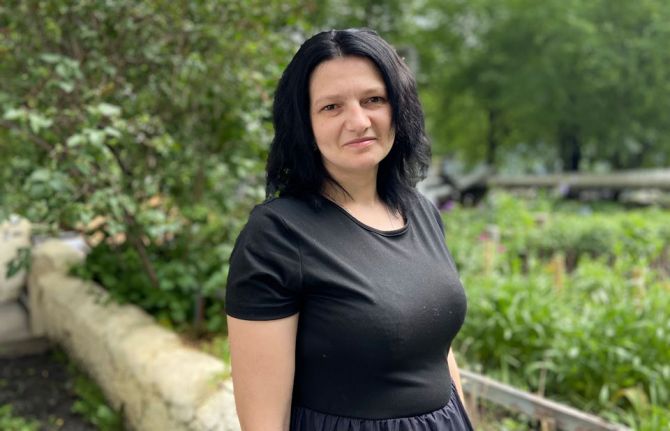
21 June 2021 21 June 2021On 29 June, one of the largest non-profit organizations based in Saint Petersburg, Russian Federation, is celebrating its twentieth anniversary. Humanitarian Action provides comprehensive medical and social assistance to people who use drugs, including services for the prevention of HIV, viral hepatitis and tuberculosis, following the principle of working with everyone, regardless of their lifestyle.
Humanitarian Action is the successor to Doctors of the World, which worked in the Russian Federation in the 1990s during an economic crisis that saw an increase in drug use and HIV and other infections.
Today, the main mission of Humanitarian Action is to improve the lives and health of people who use drugs, restore their dignity and raise public awareness about drug use. Its vision is, “A world in which people who use drugs do not die from an overdose, HIV, hepatitis, tuberculosis or suicide, have equal rights and opportunities, are not stigmatized and discriminated against and do not experience self-stigma.”
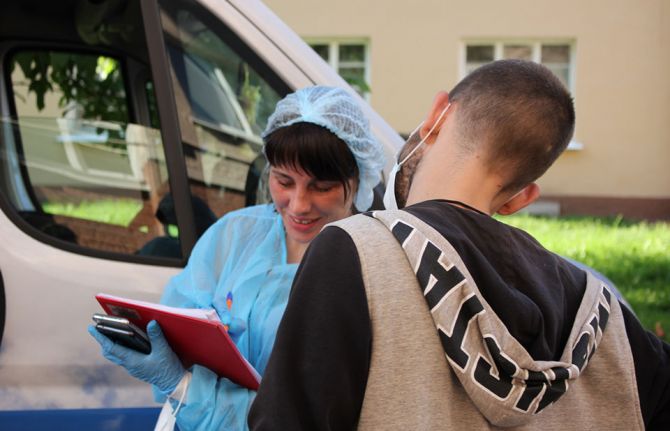
A converted tourist bus, known as the Blue Bus owing to its colour, and a converted minibus, the Little Bus, allow Humanitarian Action to work as close as possible to where people who use drugs live and congregate. A joint project with the Saint Petersburg AIDS centre provides home visits via mobile units to seriously ill people living with HIV, many of whom are former drug users who have been left behind by mainstream services.
The organization offers personal protective equipment against bloodborne and sexually transmitted infections, including sterile syringes and needles, condoms, etc., and exchanges syringes. In its medical centre—a first of its kind in the Russian Federation, since it provides help through low-threshold programmes—doctors provide anonymous and free medical services in a range of specialities for people who use drugs, sex workers, homeless people and migrants.
People also can also get psychological services from Humanitarian Action. Legal advice on the restoration of documents, guardianship or problems with the law and medical and social support for HIV, hepatitis or tuberculosis diagnosis and treatment are also available.
“Not everyone is ready to change their life immediately. We help people learn to take responsibility for their health and change gradually, moving from one tiny victory to another,” said Alexey Lakhov, the Development Director of Humanitarian Action. “We are a kind of bridge between people who use drugs and various government and nongovernment services. It’s just that with us, it becomes easier to get such help thanks to partnerships with multiple social and medical services.”
The process of helping people who use drugs is based on the principle of taking small steps and is aimed at gradually introducing safer behaviours: do not start using drugs; if you have started, stop; if you use drugs, stop injecting them; if you do inject drugs, always use a sterile syringe; if it is not possible to use a sterile needle every time, at least never use someone else’s; if using someone else’s syringe, always disinfect it.
Some of Humanitarian Action’s employees are themselves former drug users, who share their stories with clients, helping those who wish to quit by referring them to appropriate services.
“We congratulate Humanitarian Action on its twentieth anniversary. We hope that by its thirtieth anniversary we will also be able to celebrate the end of AIDS and the elimination of all forms of stigma and discrimination against people affected by HIV,” said Alexander Goliusov, Director, a.i., of the UNAIDS Regional Support Team for Eastern Europe and Central Asia.
Region/country
Related
Feature Story
Listening to the voices of migrants living with HIV in the Russian Federation
15 June 2021
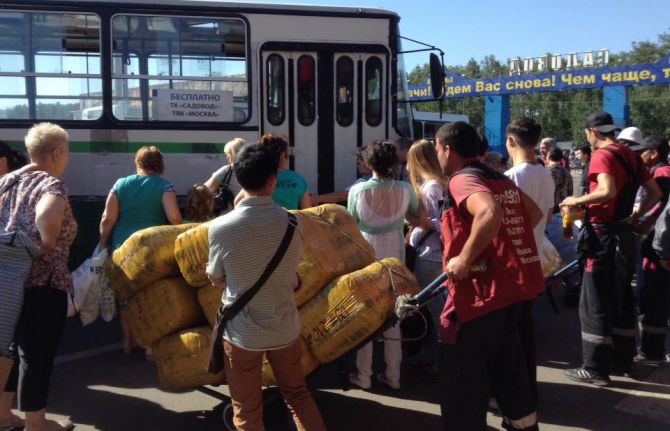
15 June 2021 15 June 2021Sevara Khalimova (not her real name) moved from Uzbekistan to the Russian Federation to earn money to pay for her children’s education. After living in the country for many years, living with a relative and working in a shop with her, her relative discovered that Ms Khalimova was living with HIV. She was thrown out of her home, leaving her not only homeless but also without work and support.
Ms Khalimova was one of many migrants living with HIV in the Russian Federation who participated in a series of studies conducted by the Regional Expert Group on Migrant Health (REG).
“Migrants, especially migrants living with HIV, are among the most vulnerable and marginalized groups. Health issues are not a priority for migrant associations,” said Daniel Kashnitsky, Academic Relations Coordinator. “The stigma and discrimination that accompanies HIV is a serious barrier to their access to health services and their ability to defend their rights. The study was the first attempt to give a voice to migrants. We hope that the results of the study will not only equip us with a better understanding of the barriers to health services for migrants but will also contribute to a change in legislation.”
According to the Ministry of Internal Affairs, more than 5 million foreign citizens migrate to the Russian Federation annually, although with undocumented migrants the number is likely much higher. However, the Russian Federation remains one of the few countries in the world that deports migrants who are living with HIV, so they face a stark choice: go home and lose their income or stay in the country illegally, risking deportation, and without HIV treatment. Foreign citizens living with HIV cannot legally buy or be given antiretroviral therapy in the Russian Federation.
The study found that migrant women are at a higher risk of HIV infection—they often have less access to HIV-related information, are often dependent on their spouse, are at a higher risk of forced sex work and are more stigmatized. Pregnant migrant women living with HIV in the Russian Federation who have a residence permit have the right to receive antiretroviral therapy, but that treatment is stopped immediately after childbirth. Undocumented migrants have no right to treatment.
According to the REG study, lack of information, legal uncertainty, language barriers, stigma and discrimination, gender inequality and inability to return to their country of origin prevent migrants in the Russian Federation from accessing HIV prevention and testing services and information on HIV.
The study calculated the cost of treating people living with HIV, based on the prices charged by private medical centres and laboratories in the Russian Federation. The researchers estimated that the cost of outpatient consultations and the provision of antiretroviral therapy is about US$ 1200 per year, which at present is not covered by the state and is not allowed to be paid for by individuals or the health-care schemes of foreign governments. They also calculated the cost of treating an opportunistic HIV-related infection as a result of someone living with HIV not accessing antiretroviral therapy. Inpatient treatment for 21 days would cost US$ 3200, which would be paid for by the government. The researchers did not estimate the significant non-medical costs associated with the deportation of migrants living with HIV, which are borne by the state.
The study shows that migrants living with HIV should be able to access antiretroviral therapy and not be subject to deportation from the Russian Federation. Such a change in legislation would help to reduce new HIV infections and would reduce expenditure on medical care and non-medical expenses.
In the past two decades, many countries, including Armenia, Bulgaria, the Republic of Korea and the United States of America, have removed legal provisions that discriminate against migrants living with HIV. Reducing barriers to migrants accessing antiretroviral therapy brings about significant results for public health.
“Lifting restrictions on the long-term stay of people living with HIV and removing barriers to people seeking health and social care will improve overall public health outcomes, support the most vulnerable and create a more robust, effective and equitable response to the HIV epidemic,” said Alexander Goliusov, Director, a.i., of the UNAIDS Regional Support Team for Eastern Europe and Central Asia.
Learn more
Region/country
Related

Feature Story
City leaders unite to regain momentum in the urban HIV response
11 June 2021
11 June 2021 11 June 2021Mayors from four cities, together with a representative of civil society and the core partners of the Fast-Track cities initiative—UNAIDS, the International Association of Providers of AIDS Care (IAPAC), the United Nations Human Settlements Programme (UN-Habitat) and the city of Paris—participated in a virtual side event on urban settings on 10 June, held during the United Nations High-Level Meeting on AIDS.
The participants reflected on the progress made in urban HIV responses and disruptions related to COVID-19, the importance of sustained political leadership and commitment during public health crises and the critical role of communities in strengthening HIV and other health services.
“A Fast-Track city is a city embracing human rights and advocating for more equality and freedom. The freedom to be true to yourself, to live where you want, to live free of prejudice, and with equal chance to stay healthy,” said the Mayor of Paris, Anne Hidalgo, in her opening address.
In her message, Maimunah Mohd Sharif, the Executive Director of UN‐Habitat, highlighted that, “Reducing inequalities is central to both UN-Habitat’s mission broadly and to ending urban HIV epidemics given the unacceptable disparities we see with respect to HIV among sexual and ethnic minorities, including the LGBTQ+ populations, migrants and refugees, and other marginalized populations, such as those in slums and informal settlements.”
Sibongile Tshabalala, the national Chairperson of the Treatment Action Campaign in South Africa, emphasized the importance of community leadership if we want to end AIDS, and called for communities to be at the centre of the HIV response within the context of ending social marginalization and health inequalities.
Attending mayors from Baton Rouge, Johannesburg, Kyiv and Quezon City presented their experiences in exercising public health leadership in HIV responses at the city level and in mitigating the impact of the COVID-19 pandemic. Many cities have made significant progress in accelerating their urban HIV responses since the beginning of the Fast-Track cities initiative on World AIDS Day 2014. In Kyiv, for example, according to national data the percentage of people who know their HIV status and are on antiretroviral therapy rose from less than 50% in 2015 to 83% in 2019, with 95% of those being virally suppressed. In Paris, according to national data the number of new HIV infections dropped by 16% between 2015 and 2018. And in Johannesburg, a targeted testing approach during the COVID-19 pandemic led to an increase in the percentage of people living with HIV knowing their status, from 86% in March 2020 to 91% in 2021, according to national data.
Maria Josefina Belmonte, the Mayor of Quezon City, called on mayors to use the “Power and resources at their disposal towards the common good, including eradicating HIV and addressing issues that others are afraid to address because they are controversial or they may not be acceptable or not be politically sound.” She added that, “It is every person’s right to live freely, humanely and justly in the world they were born in and it is our duty as mayors elected by the people to make that happen for them.”
The moderator of the event, IAPAC President/Chief Executive Officer José M. Zuniga, recognized the progress made by Fast-Track cities, even within the context of the COVID-19 pandemic. “City public health leadership is translating into countless lives saved and enhanced, including as Fast-Track cities grapple with an emerging COVID-19 pandemic and simultaneously work to maintain a continuity of HIV and other essential health services for all of their citizens,” he said.
In many cities, the 90–90–90 targets for 2020 were not achieved, partly because of COVID-19-related disruptions, but also due to persistent inequalities and social exclusion. A prioritization of social enablers is therefore required to regain momentum against HIV across the Fast-Track cities network.
In her closing statement, Winnie Byanyima, the UNAIDS Executive Director, called on cities and municipalities around the world to recommit to accelerated urban HIV responses, to exercise public health leadership to achieve the 2025 targets, to end inequalities and social exclusion and to end AIDS as a public health threat by 2030.
Related
Feature Story
Putting people and communities at the centre of the HIV response
10 June 2021
10 June 2021 10 June 2021Communities living with and affected by HIV, including communities of key populations, are the backbone of the HIV response. They have campaigned for their rights, expanded the evidence base for effective action against HIV, supported the design and implementation of programmes and enhanced the reach and quality of health services. They ensured that the greater involvement of people living with HIV principle became an organizing norm for HIV programmes and that rights-based approaches were widely adopted.
A panel, Putting People and Communities at the Centre of the Response to AIDS, held on the sidelines of the United Nations High-Level Meeting on AIDS on 9 June, saw a high-level discussion on the opportunities and challenges for moving towards the global AIDS targets and realizing the political commitments and policy adaptations needed to support community-led responses as the world moves towards ending AIDS by 2030, and does so in the context of COVID-19.
The panel discussed supporting key population-led, women-led and other community-led responses, new priorities emerging from the community-led response to COVID-19 and fair payment for the community workforce, in particular for women living with HIV and women from key and vulnerable populations.
The panellists heard that more than three decades of experience has clearly shown that communities are at the centre of efforts to end AIDS as a public health threat, but their significant contribution is too often set aside or made more difficult by politicians or public health officials who have little or no knowledge of the lives and experiences of the people they are charged to serve.
They also heard that the response to the COVID-19 pandemic has further underscored the importance of communities in navigating difficult and rapidly changing environments and in reaching affected communities with essential services, such as COVID-19 testing and vaccination and HIV prevention, testing and treatment and other health and social services.
During their discussions, all panellists stressed that communities can deliver when there is an enabling legal environment, operating space for civil society organizations and funding and capacity-building.
Quotes
“The government needs to implement the policies and remove the legal barriers that can enable implementation of the required initiatives. There need to be financing mechanisms and technical support for community-led services, as this is crucial to ensure the quality and sustainability of services, and trusting multisectoral partnerships among stakeholders need to be forged so that there is a united front towards achieving the same goal by putting people at the centre of implementation.”
“Whilst communities are best placed to reach their members, governments have the capacity and resources to support and accelerate progress by ensuring a safe space for civil society through law and policy reform to decriminalize key populations, reduce discrimination and prevent hate crimes, to enable everyone to live peacefully and to enjoy their human rights.”
“Lessons learned from community-led and centred service delivery have strongly shown us that communities have the experience, ability and knowledge on how to best serve their own communities. Communities have a lot to teach us.”
“We cannot end AIDS without investing in harm reduction, community-led responses and the rights of people who use drugs.”
Our work
Feature Story
UNAIDS is deeply saddened by the death of Manuel da Quinta, a great professional and activist in the response to HIV and the promotion of human rights and equality
14 June 2021
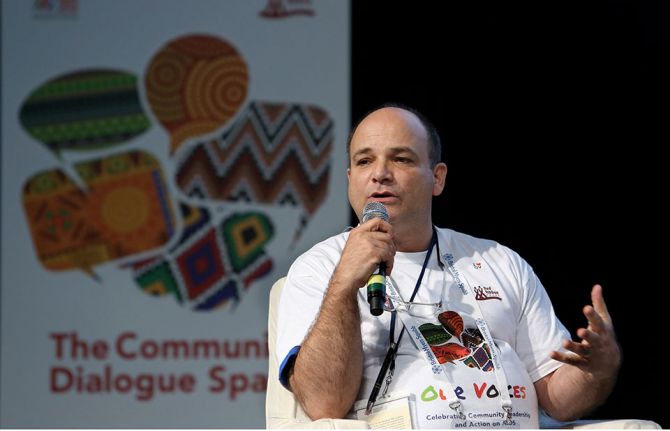
14 June 2021 14 June 2021The UNAIDS family is deeply saddened by the death from COVID-19 of our dear colleague and friend, Manuel de Quinta. We offer our deepest condolences to his husband Ricardo and to his family and friends in general.
Since 2017, Manuel worked as a UNAIDS Community Support and Human Rights Adviser for the multicountry UNAIDS Office for Argentina, Chile, Paraguay and Uruguay. But many of us knew him in the many roles he held and the tremendous work he did around the world as part of the UNAIDS family for more than 24 years advocating for the rights and leadership of people living with HIV and the populations most vulnerable to HIV, including the lesbian, gay, bisexual, transgender and intersex community, migrants and refugees, sex workers, indigenous peoples and young people.
Manuel represented the essence of UNAIDS’ mission and vision and the reason why all of us get up every day to fulfil our duties and purpose. As a strong advocate for human rights and social equality, he always stood up against all forms of injustice, including internally at UNAIDS, where for many years he was the Chair of the UNAIDS Staff Association.
Manuel was an HIV activist since 1990 and accumulated a vast experience of community work with organizations working on behalf of people living with HIV in several countries in Africa, Asia and Latin America.
He joined UNAIDS in 1997, starting in the Communications Department, managing multimedia projects on HIV. Later, in 2005, he co-founded UN Plus, an initiative that brings together United Nations system staff living with HIV. Since then, he has worked in UNAIDS teams in Geneva, Bangkok, Dakar and Buenos Aires.
Manuel was a person with great positive energy, an enormous willingness to make even the impossible possible, bringing a deep passion to everything he undertook. He was also a loyal friend to many of us.
Manuel left us at the early age of 59 years and will be deeply missed.
We wish to express our deep sorrow at his passing and to reiterate our solidarity and warmth to the great community that has worked with Manuel in the HIV response over so many years, and to all those who have known him around the world and who mourn his departure.