
Documents
UNAIDS PCB Bureau 8 September 2025
19 September 2025


Press Release
UNAIDS is encouraged by the United States’ new strategy on global health and its strong commitment to continue to support people living with and affected by HIV
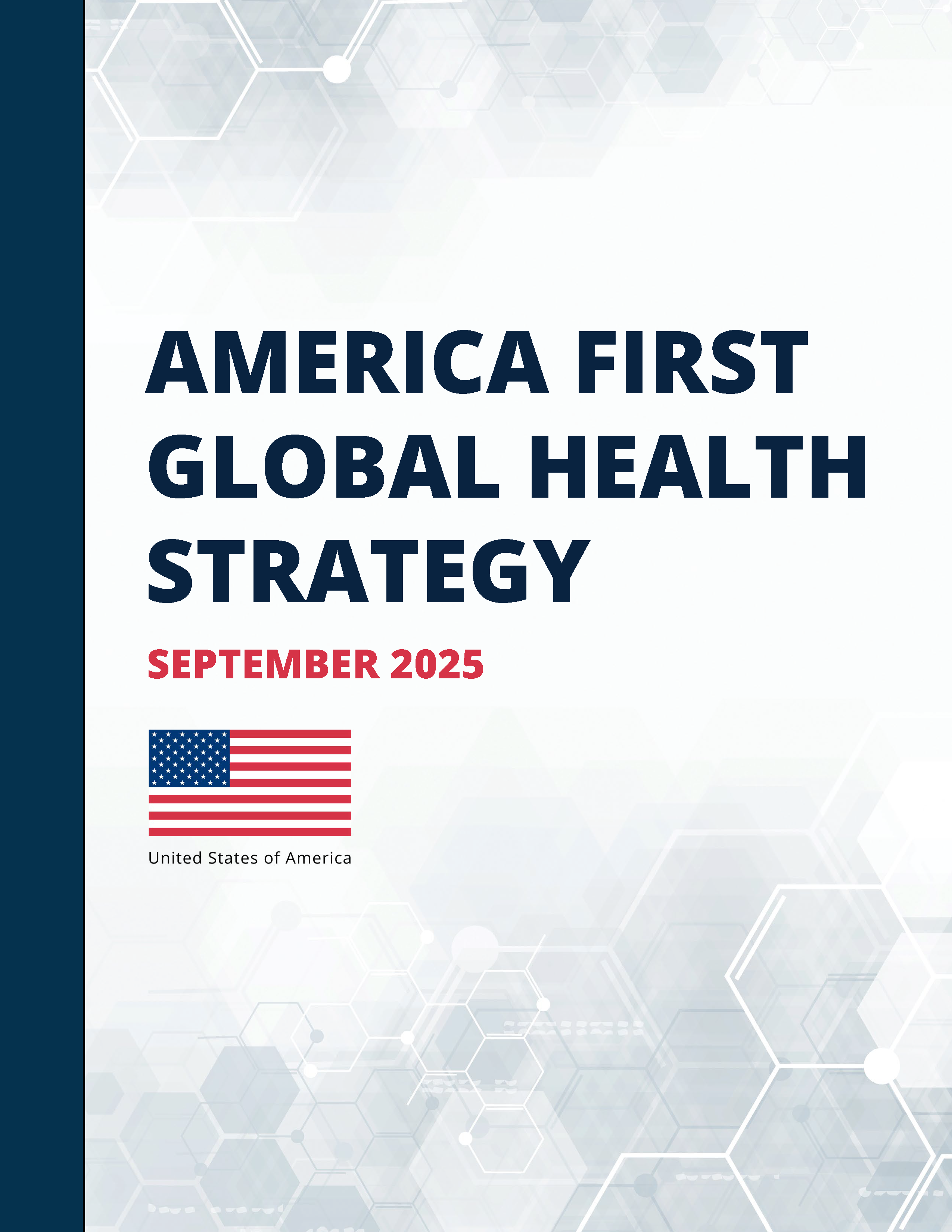
19 September 2025 19 September 2025The United States has launched a new ‘America First Global Health Strategy’ which sets out a new and tailored focus for PEPFAR, working closely with countries most affected by HIV
GENEVA, 18 September 2025—UNAIDS welcomes reaffirmed leadership from the United States in the AIDS response and its continued commitment to saving lives through the United States President's Emergency Plan For AIDS Relief (PEPFAR). In its new strategy, released today, the US is placing emphasis on global HIV targets, country partnerships and resilient and durable health systems. It stresses that national self-reliance is critical to achieving and sustaining the shared global objective of ending AIDS as a public health threat.
The new strategy highlights several of UNAIDS’ global HIV targets as key benchmarks for US foreign health assistance, including:
- Ensuring that 95% of people living with HIV are aware of their HIV status, 95% of those who know their status are receiving lifesaving HIV treatment, and 95% of those on treatment achieve viral suppression
- Achieving a 90% reduction in new HIV infections by 2030 (compared to 2010 levels)
- Achieving a 90% reduction in AIDS-related deaths by 2030 (compared to 2010 levels)
- Eliminating mother-to-child transmission of HIV in high-burden countries
This timely initiative underscores the continued support of the American people and the US Government in the historic effort to end AIDS—one of the greatest public health challenges of our time. By prioritizing results-driven targets like the UNAIDS 95-95-95 and 90% reduction in new infections by 2030, the US Government will help save millions more lives and accelerate progress to end AIDS.
UNAIDS remains firmly committed to advance and strengthen its long-standing, strategic partnership with the US Government and will continue to work hand-in-hand with PEPFAR to support countries to sustain durable, country-led HIV responses. UNAIDS will work closely together with the US Government in this historic effort to end AIDS—one that saves lives, strengthens global partnerships, makes the world safer and stronger, and brings us all closer to a world without AIDS.
UNAIDS
The Joint United Nations Programme on HIV/AIDS (UNAIDS) leads and inspires the world to achieve its shared vision of zero new HIV infections, zero discrimination and zero AIDS-related deaths. UNAIDS unites the efforts of 11 UN organizations—UNHCR, UNICEF, WFP, UNDP, UNFPA, UNODC, UN Women, ILO, UNESCO, WHO and the World Bank—and works closely with global and national partners towards ending the AIDS epidemic by 2030 as part of the Sustainable Development Goals. Learn more at unaids.org and connect with us on Facebook, Twitter, Instagram and YouTube.
Read the America First Global Health Strategy
Region/country
Documents
Consultation on the Projected Impact and Cost-Effectiveness of Long-Acting Injectable Lenacapavir as Pre-Exposure Prophylaxis
06 June 2025
UNAIDS and the Gates Foundation convened a meeting on 5-6 June, 2025 to consider mathematical modelling evidence on the anticipated epidemiologic impact and cost-efficiency of long-acting injectable lenacapavir (LEN) for HIV prevention in low- and middle-income countries.
Documents
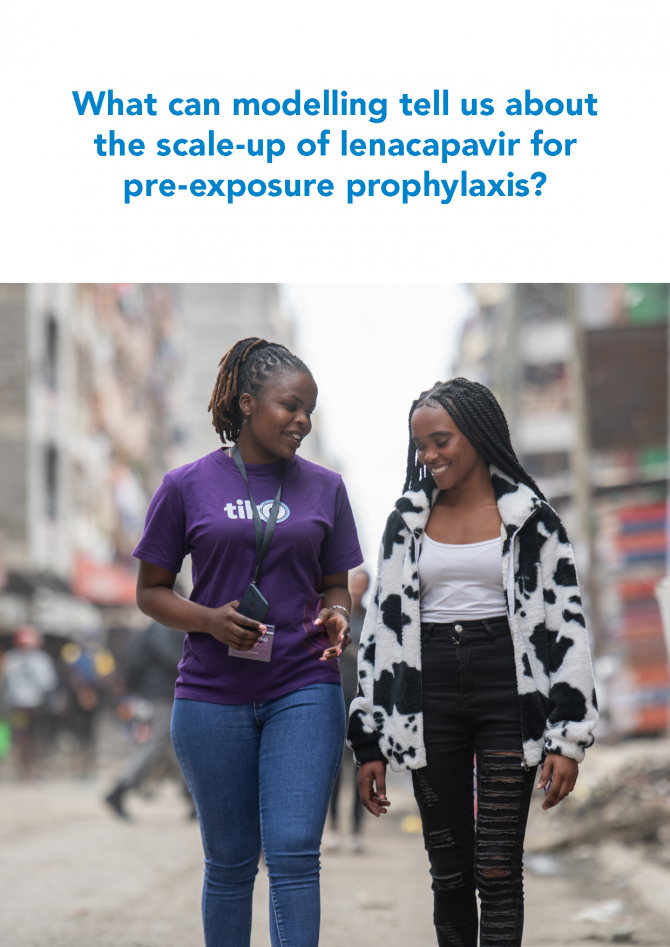
What can modelling tell us about the scale-up of lenacapavir for pre-exposure prophylaxis?
18 September 2025
Scaling up primary HIV prevention, including pre-exposure prophylaxis (PrEP), is essential to closing the prevention gap and reducing the number of new HIV infections, especially as countries approach the 95–95–95 treatment targets1 but continue to face a stagnant or rising incidence of HIV among people from key and priority populations. Injectable lenacapavir is a new long-acting injectable antiretroviral medicine given every six months for HIV prevention. In clinical trials, lenacapavir was found to be safe and effective, with 96–100% reduction in HIV acquisition compared with background rates.
Feature Story
UNAIDS at the 80th United Nations General Assembly
17 September 2025
17 September 2025 17 September 2025At the 80th session of the UN General Assembly (UNGA) global leaders will convene to build consensus and confront complex global challenges. The 80th Session will be presided by Ms Annalena Baerbock of Germany. Her vision: “Better Together - Joining efforts to forge a better future for all."
UNAIDS, as the steward of the global HIV response and a long-standing advocate for people-centered and inclusive approaches, will reaffirm how the voices of communities remain central to the dialogues at the UNGA. High-Level Week offers a critical platform to advocate for integrated, multisectoral approaches that advance health, rights, and resilience.
THREE KEY MESSAGES UNAIDS WILL BRING TO #UNGA80
REVERSE THE FUNDING CUTS AND EXPAND ACCES TO HIV MEDICINES
Massive cuts to HIV funding are putting lives in jeopardy. The 40 million people living with HIV need antiretroviral treatment yet cuts to funding are reducing access – putting millions of lives in danger. This must be reversed particularly as breakthrough new medicines are coming to market that can prevent transmission of HIV with injections just twice a year. Research shows the medicine – lenacapavir - can be made for just US$ 25 per person per year, but the current cost is US$ 28,000 – unaffordable and out of reach for the people who need it most including young women and girls in sub-Saharan Africa. We will be advocating for access to medicines for all!
RELATED EVENTS:
Friday 19 September 2025 - 09:00 – 17:30 (ET)
Global Council on Inequality, AIDS and Pandemics, convened by UNAIDS
This session will provide an overview of research showing that inequality is driving pandemics; pandemics increase inequality; and that we are more vulnerable because of it.
Tuesday 23 September 09:00 – 11:00 (ET)
G20 Social Summit Side Event "Advancing Inclusive Growth, Social Justice and Human - Centered Development" hosted by South Africa in partnership with UNDP and Open Society Foundation
This event will explore how the G20 can lead inclusive and just responses to global crises, aligned with South Africa’s G20 priorities on climate resilience, debt sustainability, a just energy transition, and the governance of critical minerals. It will also highlight the role of the G20 Social Summit as a platform for inclusive engagement with youth, civil society, women, labour, and grassroots movements.
Tuesday 23 September 16:00 – 17:00 (ET)
From Accra to the World - Launching the High-Level Panel on Reimagining Global Health Governance
H.E. President John Dramani Mahama, President of the Republic of Ghana, will host a Presidential Side Event to formally announce and launch a bold new High-Level Panel on Reimagining the Global Health Governance.
Wednesday 24 September 07:00 – 09:15 (ET)
Annual Prayer Breakfast: Protecting Every Child, Upholding Every Life
Wednesday 24 September 2025 - 09:00 – 11:00 AM (ET)
Equity and integration: Reshaping health systems through people-centred primary care – a call for convergence and co-investment
Leaders will gather to discuss how integrated, people-centred primary health care can build stronger health systems, improve access to diagnostics & treatment, bridge NCDs, mental health & infectious diseases and advance universal health coverage.
Registration link here.
Wednesday 24 September 20:00 – 22:00 (ET)
The Global Fund’s Eighth Replenishment Reception: Honoring Bold Leadership, Committing to Impact
This event will convene leaders to reaffirm a shared commitment to saving lives, strengthening health systems and advancing equity. As the Global Fund’s Eight Replenishment approaches, it is a moment to celebrate achievements, spotlight new commitments and honour the leadership of donors and partners.
Thursday 25 September 08:00 – 09:30 (ET)
Access to Medicines: The Fight for Health Justice in an Age of Retreat
Event organized by Public Citizen, UNAIDS and People’s Medicines Alliance (PMA) access to medicines and moving forward together.
Thursday 25 September 11:00-12:00
Nizami Ganjavi International Center (NGIC) High-Level Meeting – Panel 6 Global Health and Pandemic Preparedness
Keynote speech by the Executive Director of UNAIDS.
FIGHT THE BACKLASH AGAINST GENDER INEQUALITY
Thirty years ago, thousands of women came together in Beijing demanding action for gender equality. Yet today, we are seeing a well-funded, globally-coordinated backlash against gender equality and the human rights of women and girls. Women’s rights are human rights - we need to fight the targeted restrictions on the rights of women and girls, LGBTQI+ people and ensure sexual and reproductive health and rights for everyone.
RELATED EVENTS:
Monday 22 September 10:00 – 20:00 (ET)
High-level Meeting on the 30th Anniversary of the Fourth World Conference on Women
Click here for more information.
Monday 22 September 12:00-13:30 (ET)
Women Rise for All Lunch convened by the United Nations Deputy Secretary-General Amina J. Mohammed
Building on the success of past Women Rise for All Lunches, the event will continue to celebrate transformative leadership in advancing the SDG’s. This event will connect influential leaders globally, providing a platform to share insights, strategies, and strengthen networks aimed at driving sustainable development.
Tuesday 23 September 09:30 – 12:00 (ET)
Building Resilience for Women and Girls in the Face of Climate Change and Conflict
This gathering, organized by the Organization of African First Ladies for Development will bring together First Ladies, policymakers, global advocates, youth leaders, and partners to drive collective action to protect and empower women and girls in climate-affected and conflict-prone settings.
UN80 – AN OPPORTUNITY TO REDEFINE GLOBAL COOPERATION
The world is in crisis. But the UN was born in crisis, and the UN Charter sets out a roadmap to a better world. Today, we should take the next leap forward. UNAIDS is already undergoing a two-phase transformation in line with the ambition of UN80. UN80 is our opportunity to rise and redefine global cooperation. Our time to rebuild a multilateral system that is more just, inclusive and truly fit for the complex, intersecting crises of our time.
RELATED EVENTS:
Monday 22 September 09:00 – 10:00 (ET)
High-level Meeting to Commemorate the 80th Anniversary of the United Nations
Click here for more information.
Monday 22 September 14:00 – 16:00 (ET)
SDG Moment
The Sustainable Development Goals Report 2025 reminds us that the SDGs have already transformed millions of lives. But to fully realize their promise, we need to pick up the pace. To reflect on successes that can inform action in the next five years, the UNSG will convene the SDG Moment during #UNGA80 which will be streamed live on UN webtv.
Thursday 25 September 12:30 – 14:00 (ET)
Rescuing health-related SDGs in times of crisis: aligning multilateral collaboration for country impact, co-sponsored by the governments of Thailand, Angola and Spain
Progress on health-related SDGs is badly off track and the global health ecosystem must evolve and adapt to be fit-for-purpose. This event will convene leaders to find innovative approaches to sustainable health financing, and concrete ways to make multilateralism more efficient and coherent.
ADDITIONAL KEY EVENTS
Monday 22 September
Prince Harry, Charlize Theron, Magic Johnson, and Thuso Mbedu deliver a compelling call to action in new UNAIDS film to be screened at the United Nations
UNAIDS is partnering with acclaimed Hollywood writer and producer Ron Nyswaner to highlight the impact of the global AIDS funding crisis in a new short film to be screened at the United Nations’ global gathering on September 22nd. The short film features longstanding advocates in the global fight against HIV, including Prince Harry, Duke of Sussex, Charlize Theron, Earvin “Magic” Johnson and actress Thuso Mbedu. Together they highlight the need for global solidarity and sustained support to end AIDS as a public health threat by 2030.
Documents
Summary - System-wide evaluation on progress towards a "new generation of United Nations country teams"
12 September 2025
Documents
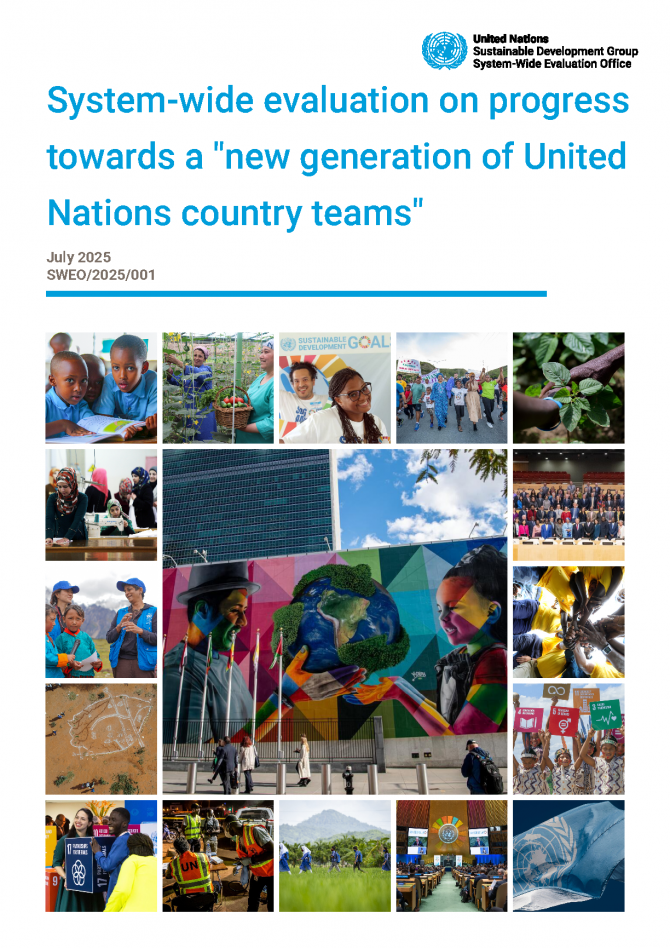
System-wide evaluation on progress towards a "new generation of United Nations country teams"
12 September 2025
This evaluation examined progress towards a “new generation of United Nations country teams” mandated by A/ RES/72/279. It assessed the alignment/derivation of UNSDG entity programming from Cooperation Frameworks, and the (re)configuration of UNCTs. It covered the period 2019-2025, all UNSDG entities and the Resident Coordinator system (including the Development Coordination Office) at country, regional and global levels. Read summary report | Management Response overview
Feature Story
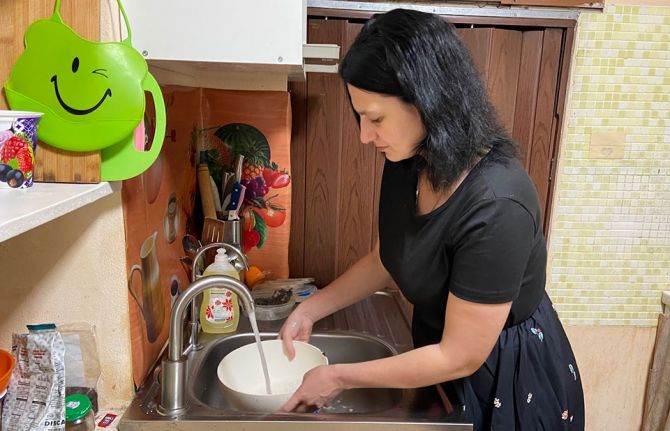
Women, HIV, and war: a triple burden
12 September 2025
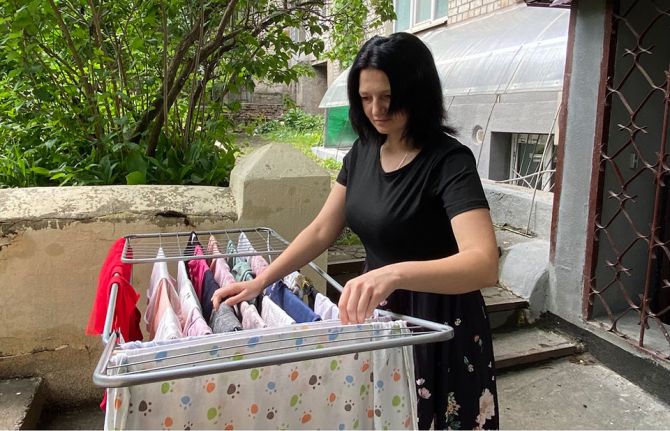
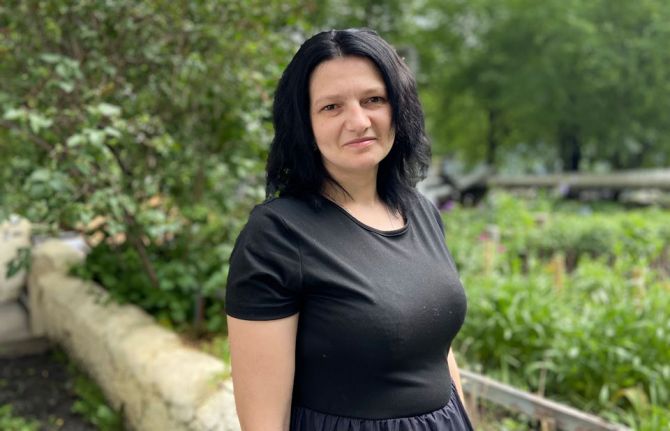
12 September 2025 12 September 2025Lidiia comes from the Zaporizhzhia region, just steps away from Ukraine’s front line. After the full-scale invasion in 2022, her village fell under occupation. She lived in uncertainty for several long months.
“Staying there was unbearable — especially for women. It was constant fear — a nightmare,” she said. “The humanitarian situation was dire: aid vehicles couldn’t reach us, and some were simply shot at.”
Cut off from humanitarian assistance, Lidiia struggled to find basic supplies — food and hygiene products for herself and her young daughter. Most critical for her was not knowing where she could get her supply of antiretroviral therapy for HIV. People living with HIV take a daily pill to keep the virus at bay.
When medicine shortages reached a critical point, she fled her village. Before the war, the road to the eastern city of Dnipro took just three hours; this time, it took three days. Lidiia carried her baby daughter in her arms while pregnant with her son. Exhausted, she had no clear destination.
After days of uncertainty they reached Dnipro, where they found shelter run by the community-based organization “100% Life. Dnipro”. This safe haven welcomes primarily displaced people living with HIV or at high risk of infection, with a special focus on women and mothers with children. The shelters opened as part of the UNAIDS Emergency Fund 2022-2024 thanks to donor support. This shelter is among three in the Dnipropetrovsk region. They offer housing, food, hygiene products, and access to antenatal, pediatric, and HIV care. For mothers like Lidiia, it is not just shelter — it is a lifeline.
“I’m grateful we’re safe,” she said three years after arriving there. “But I still dream of going home — of walking through our front door again and knowing the war is over.”
According to UNHCR, 3.7 million people remain internally displaced within Ukraine, while another 6.9 million have sought refuge abroad. A large proportion are women and children, including many living with HIV and other vulnerable groups. Community-led research by community organisation, “Positive Women”, supported by UNAIDS and UN Women, surveyed 320 women living with HIV across Ukraine in late 2023–early 2024. It confirmed that women living with HIV are facing a triple burden: displacement, gender-based violence, and barriers in access to essential health services.
More than 70% of respondents reported worsening household economic well-being, and over a third lost property. One in six lost their jobs or businesses. Many women described being unable to meet even the most basic needs for themselves and their children. Barriers to health care have also increased as the war drags on. A third of women reported greater difficulties in reaching HIV services due to destroyed infrastructure, insecurity, or lack of resources. Women also reported high levels of anxiety, depression, and post-traumatic stress, compounded by caregiving responsibilities and separation from family.
Despite this, most managed to continue their life-saving medicine thanks to emergency distribution and community support.
For many this is a testament to the resilience of Ukraine’s health system and its civil society.
“The resilience of women like Lidiia, together with the findings of community-led research, highlight both the urgency and the possibility of action,” said Gabriela Ionascu, UNAIDS Country Director for Ukraine.“With sustained international support, community engagement, and rights-based approaches, access to vital services can be preserved—even in the most challenging of times.”
Region/country
Related
 UNAIDS expands humanitarian support in Ukraine
16 September 2026
 Ukraine: Keeping people in care
23 February 2026
 Displacement and HIV: doubly vulnerable in Ukraine
11 August 2025
Feature Story
Lower prices needed for new HIV prevention medicine in Brazil
09 September 2025
09 September 2025 09 September 2025Civil society representatives are demanding an urgent price reduction for long-acting injectable HIV medicines which prevent HIV.
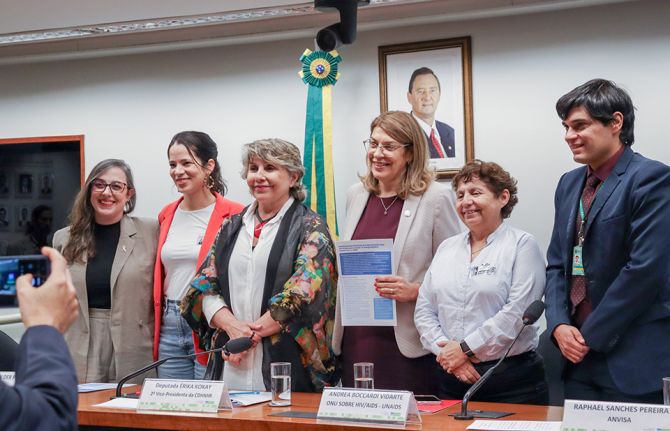
During a public hearing at the Chamber of Deputies in Brazil, representatives called for strategies to expand access to innovative injectable HIV medications, including lenacapavir and cabotegravir, which have demonstrated more than 95% efficacy in preventing HIV infection.
The discussion was organized by The Committee on Human Rights, Minorities, and Racial Equality and brought together representatives of pharmaceutical companies, the government, and civil society.
“We are talking about rights,” stated Congresswoman Erika Kokay. “It is not a consumer relationship, it is a relationship of human rights and health that allows the population to take ownership of their own research. We are talking about a country where more than 10,000 people die every year due to AIDS-related illnesses.”
Despite Brazil being one of the countries which participated in the lenacapavir clinical trials (together with Argentina, Mexico, and Peru) it has been excluded from the list of countries that have received a licence to produce its generic version.
“Brazil was excluded from the licence because it is considered a middle-income country, which does not reflect the intense inequalities that exist in Brazil,” pointed out Susana Van der Ploeg, coordinator of Working Group on Intellectual Property. “In 2022, 23% of new HIV infections occurred in countries that were excluded from the licence, including countries that participated in clinical studies,” she added.
According to UNAIDS, Latin America is one of three regions in the world where the annual number of new HIV infections has increased, representing 13% of all new HIV infections between 2010 and 2024.
“When an innovation can save people’s lives but does not reach the people who need it, can we really consider it an innovation?” said Luciana de Melo, HIV/AIDS Coordinator at the Ministry of Health. “Price is a key issue in the incorporation of medicines to the country’s health system”
Cabotegravir, registered by ViiV Healthcare, is an injection administered once every two months to prevent HIV. The drug was approved by the Brazilian Health Surveillance Agency (ANVISA) in 2023 and launched on the Brazilian private market in August 2025. Currently, its average cost is R$ 4,000 per dose (U$ 740), around 2,5 times the minimum wage in Brazil. According to Brazilian Institute of Geography and Statistics, 31.8% of the population lived on an income between one and three minimum wages in 2023. There is still no date for the drug to be offered through Brazilian health system.
Lenacapavir, from the pharmaceutical company Gilead, is administered once every six months and is in the process of being registered for use in HIV prevention. Gilead has not yet announced the price of the drug to be used for HIV prevention in Brazil but its cost in the United States for treatment was recorded at over US$ 28,000 per person per year.
An article published in The Lancet magazine presents a different perspective for the generic version. The study projects that the cost of generic lenacapavir could range from as low as US$ 35 to US$ 46 per person per year. In addition, growth in demand could reduce this amount to US$ 25 per person per year if there were a committed demand of five to ten million people.
“We will not be able to reach our goals if we do not view access to health as a human right,” said Andrea Boccardi Vidarte, UNAIDS Country Director, Brazil.
Watch the full hearing (in Portuguese): https://www.youtube.com/watch?v=bcBecwT-WzY
Watch the full hearing (in Portuguese)
Region/country

Press Release
UNAIDS welcomes US announcement to expand access to medicine to prevent HIV and urges greater global ambition to reach all in need
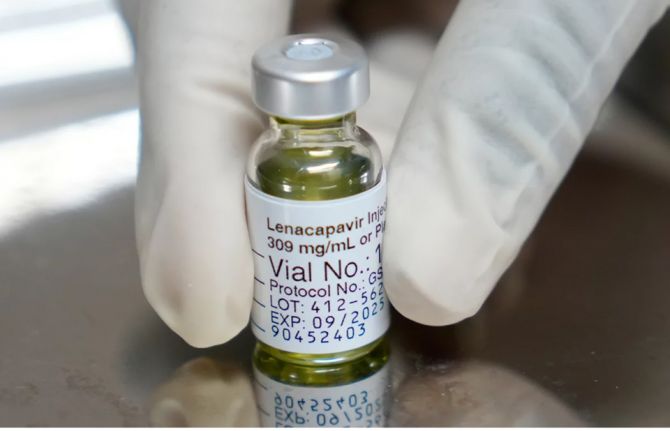
05 September 2025 05 September 2025GENEVA, 5 September 2025—UNAIDS welcomes the announcement by the US State Department that the President’s Emergency Plan for AIDS Relief (PEPFAR) will be supporting an initiative by the Global Fund to Fight AIDS, TB and Malaria to provide lenacapavir to up to 2 million people in countries with high burdens of HIV.
Lenacapavir, an American-based innovation, is one of the most promising new HIV prevention tools that has emerged in the HIV response, offering protection against HIV with just twice-yearly injections. The breakthrough medicine will save thousands of lives if made widely available for all people and populations at risk of HIV including young women and adolescent girls as well as sex workers, people who inject drugs, and men who have sex with men in high burden countries and geographies.
"This deal offers hope that many more people around the world who are at risk of HIV will have access to this revolutionary HIV medicine. More global work will be needed to increase scale and rapidly make lenacapavir available, affordable and accessible in all low and middle-income countries. But at this critical moment, the United States’ backing of this breakthrough medicine is an important signal to the world that by investing in the HIV response we can stop new infections,” said Winnie Byanyima, Executive Director of UNAIDS.
An initial roll-out of 2 million is an important start toward a broader ambition and i t is important that lenacapavir be available to all people in need, not only to some. UNAIDS estimates that 20 million people will need to be reached with antiretroviral-based prevention such as lenacapavir as part of efforts to achieve the 2030 global HIV prevention targets. UNAIDS also estimates that for every US$ 1 invested in HIV prevention, US$ 7 will be saved in treatment and care costs later.
The price for lenacapavir in France, Norway, Spain and the United States in late 2024 exceeded US$ 28 000 per person per year. For this initiative, manufacturer Gilead has pledged to supply the medicine at no profit. Research published earlier this year showed that lenacapavir can be made and sold for just US$ 40 per person per year, falling to US$ 25 with sufficient scale.
To successfully expand access to lenacapavir, community engagement will be essential. To advance progress in the roll-out, populations most impacted by HIV must play a central role in its delivery and people most at risk of HIV must have access.
UNAIDS will continue to support countries and partners in driving the response to HIV forward to ensure that everyone, everywhere has access to the HIV services they need and that AIDS is ended as a public health threat by 2030.
UNAIDS
The Joint United Nations Programme on HIV/AIDS (UNAIDS) leads and inspires the world to achieve its shared vision of zero new HIV infections, zero discrimination and zero AIDS-related deaths. UNAIDS unites the efforts of 11 UN organizations—UNHCR, UNICEF, WFP, UNDP, UNFPA, UNODC, UN Women, ILO, UNESCO, WHO and the World Bank—and works closely with global and national partners towards ending the AIDS epidemic by 2030 as part of the Sustainable Development Goals. Learn more at unaids.org and connect with us on Facebook, Twitter, Instagram and YouTube.