Feature Story
Much more than just sterile needles
12 March 2018
12 March 2018 12 March 2018The biggest question I always ask clients is, "Are you willing to change?". Charles describes his role at the Saskatoon Tribal Council Health Centre as "here to help". "We have the resources that can and will help, if and when people want and need them. I know where to point people to for housing, food and shelter. If they want detox, I know where to go—I’m very familiar with the treatment centres and I’m very familiar with the treatment cycle."
Charles is an addictions counsellor at the centre and is himself a former addict.
After almost 16 years as an alcoholic, and six years using drugs, Charles understands the issues first-hand. Charles is particularly aware of the challenges his clients endure as single parents. A single father of three, his deteriorating relationship with his children was the catalyst for him to seek help. "I didn’t really realize I had a problem, because it was so normalized. Alcohol was normal, drugs were normal, it was all normal. I went to treatment in 2007. But I knew it would be a struggle to get out."
Saskatoon is the largest city in the Canadian province of Saskatchewan, a province where young indigenous people are more likely to end up in jail than to graduate from high school and suicide rates are five to seven times higher than among the nonindigenous population. There are high rates of drug and alcohol addiction and complex mental health conditions.
HIV and tuberculosis (TB) are also major health concerns among many indigenous communities. Among First Nations people in Saskatchewan, TB is 31 times the national average and the HIV rate is 11 times the national rate. Around 50% of HIV infections are through injecting drug use.
There are also high levels of stigma and discrimination in the mainstream health-care system, which is why the Saskatoon Tribal Council Health Centre is an important link to health care that the clients feel safe accessing.
At the clinic, Charles sees around six to 18 people a day. His clients come from all over the Saskatoon area, from different backgrounds and different ethnicities, with ages ranging from 18 to 60 years.
"Each and every one of them has a problem with alcohol and drugs. They come from poverty, from homelessness. They can be street people and come from very intense backgrounds. Their stories are unique, sometimes devastating to the core in terms of what they have been exposed to. But they all share one thing, they’re here because they trust us."
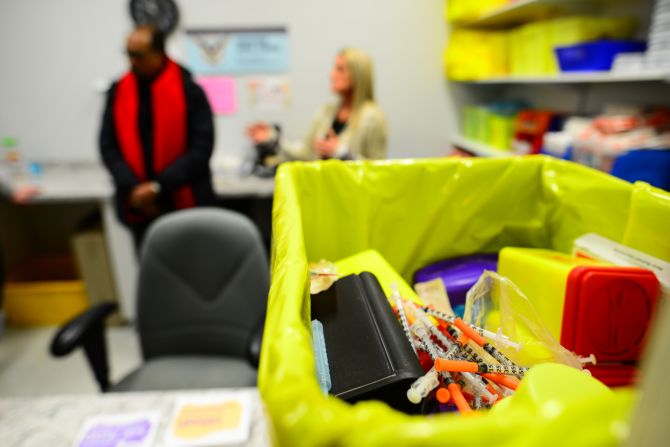
The centre is open 365 days a year offering health and support services. The centre offers a needle and syringe programme, providing people with sterile injecting equipment to ensure that people who inject drugs do not share syringes and needles. The clinic also offers a safe space for clients to dispose of used needles and syringes. The centre gets through more than 1.5 million sterile needles every year and has a growing client base of 2600 people, with more joining every day.
The Saskatoon Tribal Council is tackling a chronic drug and mental health crisis among indigenous people. The main objective of the centre is that it is a comprehensive, multidisciplinary drop-in clinic at the heart of Saskatoon’s low-income neighbourhoods, providing a wide range of services to treat HIV and other sexually transmitted infections and hepatitis C, particularly for people of aboriginal ancestry.
The Saskatoon Tribal Council Centre is much more than just a place to get sterile needles. It is a hub, an important centre for resources and connections, a safe space and discrimination-free zone to go for help and advice. It is somewhere clients know they will be welcomed with a warm smile, a hot drink and something to eat. Staff member Twila sums it up, "People need us, and we’re making a difference."
The 61st session of the Commission on Narcotic Drugs (CND) is taking place in Vienna, Austria, from 12 to 16 March 2018. The CND is the United Nations organ with prime responsibility for drug control. In line with its mandates, the CND monitors the world drug situation, develops strategies on international drug control and recommends measures to address the world drug problem.
UNAIDS urges all countries to adopt a people-centred, public health and human rights-based approach to drug use and for alternatives to the criminalization and incarceration of people who use drugs. Evidence shows that harm reduction approaches such as the Saskatoon needle–syringe programme reduce the health, social and economic harms of drug use to individuals, communities and societies. They do not cause increases in drug use. UNAIDS urges all countries to ensure that people who inject drugs have access to harm reduction services, including needle–syringe programmes and opioid substitution therapy.
Commission on Narcotic Drugs
Feature Story
Measuring homophobia to improve the lives of all
08 March 2018
08 March 2018 08 March 2018A new index to measure levels of homophobia that can show the impact that homophobia has on countries has been developed.
Homophobia—defined here as any negative attitude, belief or action towards people of differing sexual orientation or gender identity—has long been known to affect public health. Gay men and other men who have sex with men who face stigma are more likely to engage in sexual risk behaviours, are less likely to adhere to antiretroviral therapy and have lower HIV testing rates. Knowledge of levels of homophobia, especially in low- and middle-income countries, is scant, however.
The new index, published in the European Journal of Public Health, combines both data on institutional homophobia, such as laws, and social homophobia—relations between people and groups of people. Data for the index were taken from a wide range of sources, including from the United Nations, the International Monetary Fund and the International Lesbian, Gay, Bisexual, Trans and Intersex Association. More than 460 000 people were asked questions on their reactions to homosexuality through regionwide surveys that were also used as sources for the index.
The Homophobic Climate Index gives estimates for 158 countries. Western Europe was found to be the most inclusive region, followed by Latin America. Africa and the Middle East were the regions with the most homophobic countries, with the exceptions of South Africa and Cabo Verde, which were among the top 10 most inclusive low- and middle-income countries. Among low- and middle-income countries, Colombia was the most inclusive, and Sweden was the most inclusive of all countries.
From comparing the results of the index with other data, the researchers found that countries with higher levels of homophobia were the same countries that face higher levels of gender inequality, human rights abuses, low health expenditures and low life satisfaction. Increases in a country’s Homophobic Climate Index were found to be associated with a loss of male life expectancy and a lower economic output.
The index therefore shows the damaging effects that homophobia has on the lives and well-being of everyone in a county, not just gay men and other men who have sex with men. “This index provides communities with sound data that can help them in their advocacy for more inclusive societies,” said Erik Lamontagne, Senior Economist Adviser at UNAIDS.
With knowledge of the harmful effects of homophobia, countries will be in a much better position to respond to it and improve the lives of all.
European Journal of Public Health
Feature Story
UNAIDS a top-nine gender-responsive organization
08 March 2018
08 March 2018 08 March 2018UNAIDS has emerged as a top performer in the first Global Health 50/50 report.
Global Health 50/50, an initiative that monitors the gender-responsiveness of influential global health organizations, reviewed 140 major organizations working in or influencing global health. According to the new report, UNAIDS is among the top nine health organizations in the world.
Published on 8 March, International Women’s Day, the Global Health 50/50 report was inspired by a growing concern that too few global health organizations define, programme, resource or monitor gender in their work on health or in the workplace. The report aims to show both the challenges and the way forward.
The report shows that UNAIDS has not only policies that address gender, but also concrete and time-bound gender parity targets, as set out in its Gender Action Plan. Under the plan, UNAIDS has seen the proportion of female staff rise, so that women account for 54% of UNAIDS staff. And female leaders in the field are increasing, with women accounting for 48% of UNAIDS country directors, up from 27% in 2013.
“The Global Health 50/50 survey has shown that UNAIDS’ commitment to gender equality is strong. I am resolved to building on our results and achieving all the targets of the UNAIDS Gender Action Plan,” said Michel Sidibé, Executive Director of UNAIDS.
In addition to its commitment to gender equality and its workplace gender policy, UNAIDS was marked highly for having a definition of gender in its public statements, strategies or policies and having a programmatic gender strategy that seeks to improve health for everyone.
UNAIDS has long strived for gender equality and women’s empowerment, both within the UNAIDS Secretariat and elsewhere, and has recently started to review its practices and recommitted to ensuring adherence to them.
Guaranteeing the rights and empowerment of women and girls is not only a moral obligation, but a development imperative and a smart investment that safeguards the health of women and girls. Eliminating gender inequalities is one of the 10 Fast-Track commitments that Member States made at the 2016 United Nations General Assembly High-Level Meeting on Ending AIDS.
UNAIDS
The Joint United Nations Programme on HIV/AIDS (UNAIDS) leads and inspires the world to achieve its shared vision of zero new HIV infections, zero discrimination and zero AIDS-related deaths. UNAIDS unites the efforts of 11 UN organizations—UNHCR, UNICEF, WFP, UNDP, UNFPA, UNODC, UN Women, ILO, UNESCO, WHO and the World Bank—and works closely with global and national partners towards ending the AIDS epidemic by 2030 as part of the Sustainable Development Goals. Learn more at unaids.org and connect with us on Facebook, Twitter, Instagram and YouTube.
Global Health 50/50
Feature Story
Communities at the heart of the AIDS response in Zambia
07 March 2018
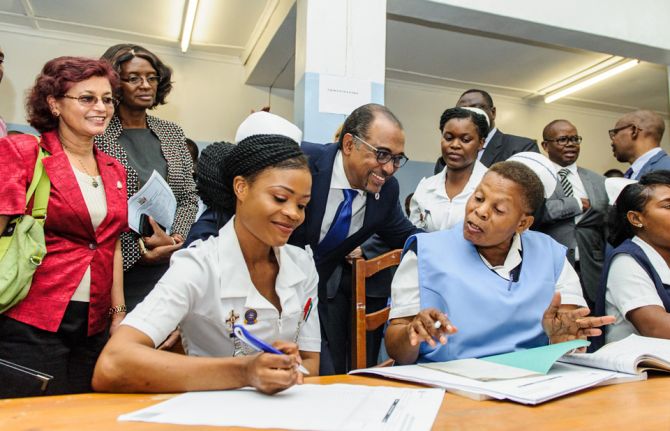
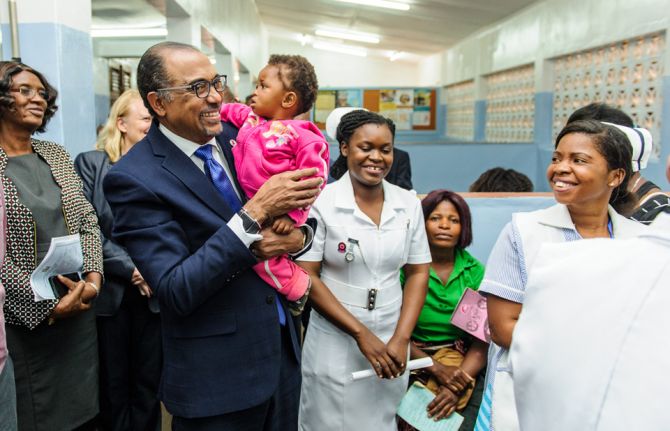
07 March 2018 07 March 2018Zambia has made good progress in its AIDS response. In 2016, the country had more than 800 000 people on HIV treatment, with 83% of pregnant women living with HIV accessing it. To better understand the progress, and the challenges, Michel Sidibé, UNAIDS Executive Director, visited the Chilenje health facility in Lusaka, Zambia, during a visit to the country from 5 to 7 March.
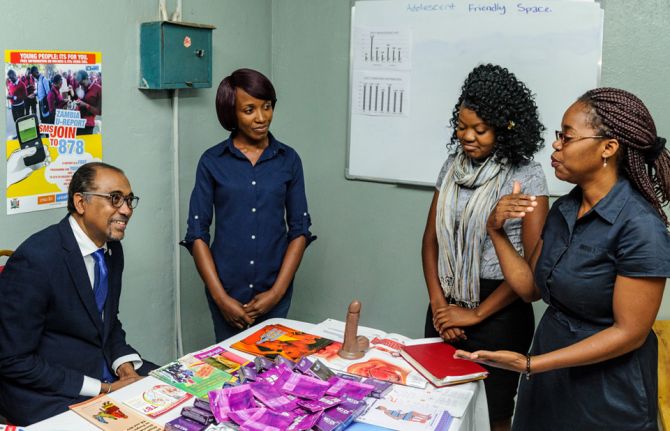
The Chilenje facility offers HIV treatment, a prevention of mother-to-child transmission of HIV programme and tailored services for adolescents and young people. At the facility’s youth-friendly space, peer educators facilitate service uptake by young people and reach out to schools and other groups within their community with counselling and sensitization.
“We need to build cities of the future where services are not only available to people, but they are also tailored to their needs. This is the rationale behind the Fast-Track cities initiative, of which Lusaka is an excellent example,” said Mr Sidibé during his visit.
The facility offers extended hours in the evening and weekends so that people who are unable to access health services outside of standard operating hours can access HIV treatment and other services.
“Young people often fall through the cracks of the health system for fear of judgement or stigma. Owing to the large number of adolescents and young people in our community, we have set up a youth-friendly space,” said Malinba Chiko, the Superintendent of the Chilenje health facility.
Earlier in the day, Mr Sidibé met with members of civil society, who raised the issue of access to HIV and sexual and reproductive health services for key populations, especially gay men and other men who have sex with men and sex workers. Mr Sidibé reiterated that civil society is at the heart of the AIDS response and, for it to be sustainable, the voice and decision-making of civil society are essential.
Region/country
Related
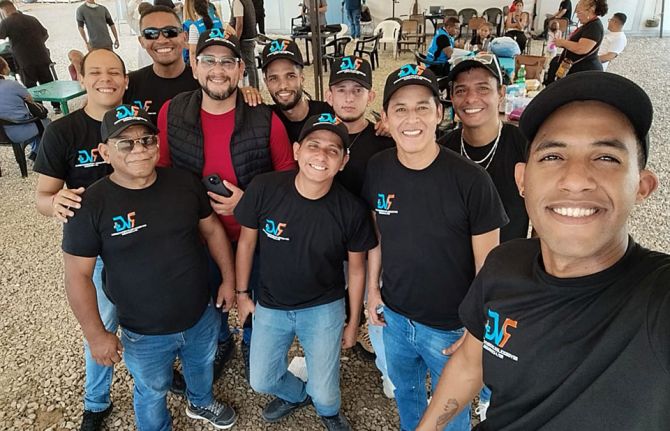 Communities, authorities and UNAIDS coordinate to maintain HIV care during emergencies in Colombia and Venezuela
23 September 2026
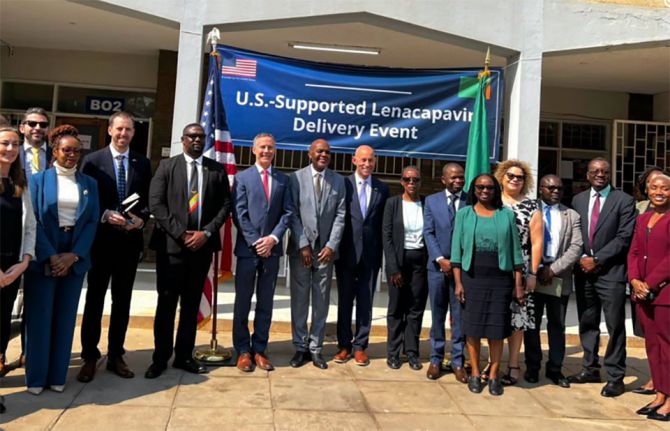 UNAIDS works with partners and communities to support Zambia's rollout of Lenacapavir to prevent new HIV infections
09 September 2026
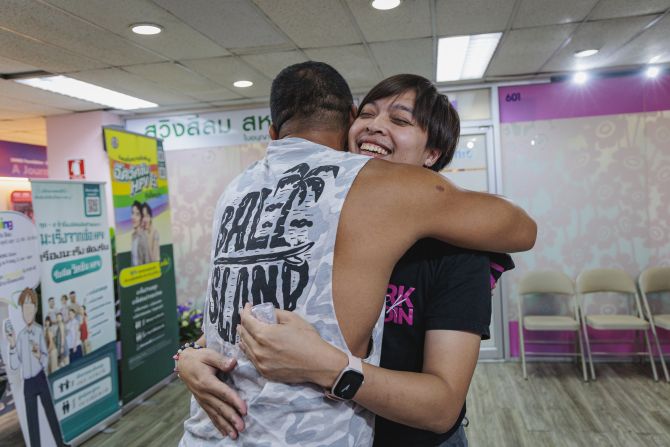 Built on trust - Community-led HIV responses in Thailand
26 August 2026
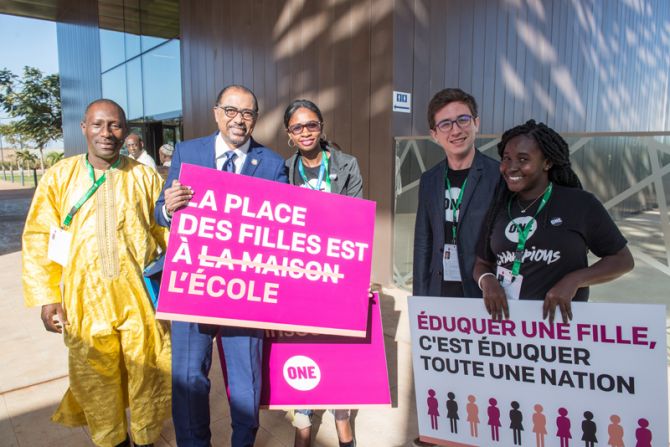
Feature Story
Leveraging education to improve health and end AIDS
02 February 2018
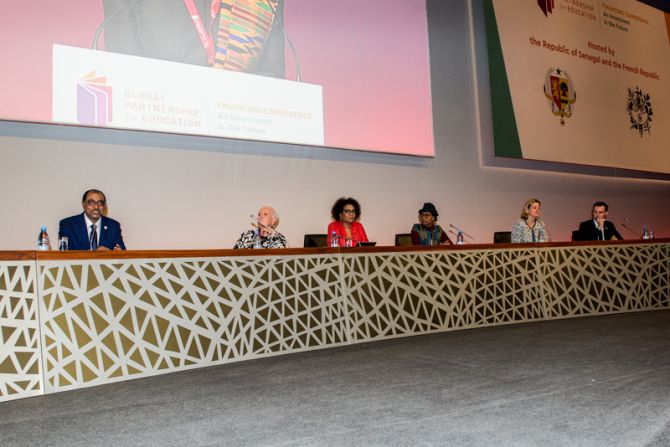
02 February 2018 02 February 2018During the Global Partnership for Education meeting on 2 February, hosted by Senegal and France, UNAIDS Executive Director Michel Sidibé discussed the importance of education and health. “Integrating education and health is key for our success in controlling the epidemic among young people. Without effective, quality and sustainable health and education systems we are failing young people”, Mr Sidibé said. Credit: UNAIDS/B. Deméocq.
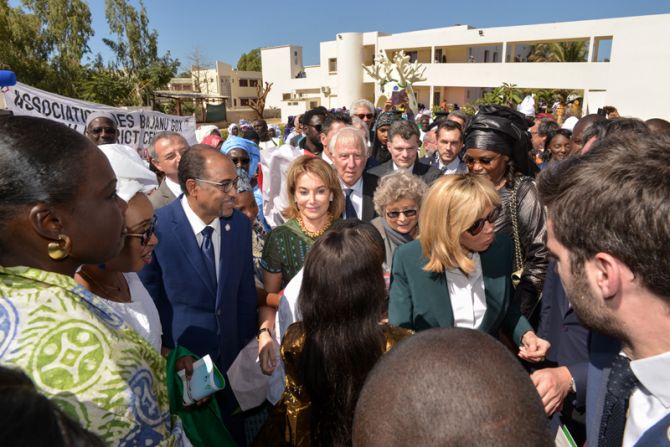
The First Lady of Senegal, Marieme Faye Sall, and the First Lady of France, Brigitte Macron, inaugurate a cardio-paediatric centre that provides surgical treatment for children affected by cardiologic diseases. The centre, funded by the Cuomo Foundation in Monaco, supports women and children in Senegal. Credit: UNAIDS.
Preventing mother-to-child transmission of HIV is crucial, as is community involvement, stressed Mr Sidibé during his meeting with Ms Sall. The western and central Africa region lags behind in access to treatment and prevention, which is why UNAIDS and partners launched a western and central Africa catch-up plan. Credit: UNAIDS/B. Deméocq.
Mr Sidibé also met with the Minister of Health and Social Action of Senegal, Abdoulaye Diouf Sarr, stressing that no matter who you are or where you are from, everyone has the right to health, the right to an education, the right to equal opportunities and the right to thrive. Credit: UNAIDS/B. Deméocq.
The Secretary General of the Organisation Internationale de la Francophonie, Michaëlle Jean, will raise the issue of counterfeit medicines at the upcoming World Health Assembly in May. Credit: UNAIDS/B. Deméocq.
Minister of International Development of Norway, Nikolai Astrup, and Mr Sidibé met on the sidelines of the meeting. Credit: UNAIDS/B. Deméocq.
Mr Sidibé, along with the Ambassador of Luxembourg, Nicole Bintner. Luxembourg has been an active participant and donor in the western and central Africa catch-up plan. Credit: UNAIDS/B. Deméocq.
Good health enables a girl to thrive, to grow, to think, to explore and to contribute to her community. Knowledge of how to stay healthy and access to quality health services enable her to prevent illness, to eat well, to manage her sexual health, to have healthy babies when and if she chooses to and to nurture her own well-being. Education and health are two of the most transformative elements of a girl’s life. Credit: UNAIDS/B. Deméocq.
Region/country
Feature Story
Hundreds of thousands of people commemorate Zero Discrimination Day on OK.ru
06 March 2018
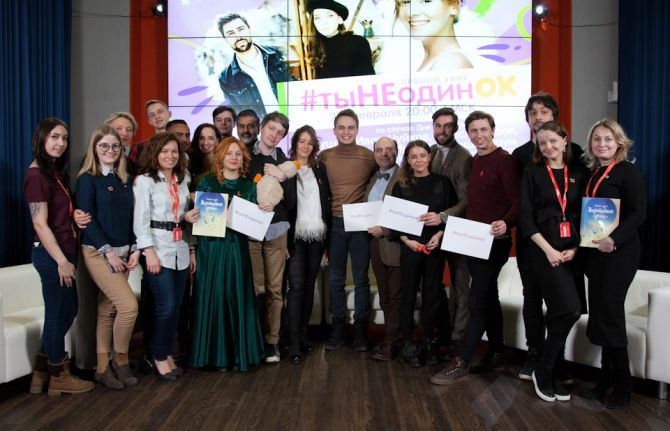
06 March 2018 06 March 2018On the eve of Zero Discrimination Day on 1 March, more than 890 000 viewers joined the online platform OK.ru/test to discuss zero discrimination and join the launch of the UNAIDS regional #YouAreNotAlone campaign. The discussion was live-streamed on Odnoklassniki, the leading Russian-language social media platform for countries across eastern Europe and central Asia.
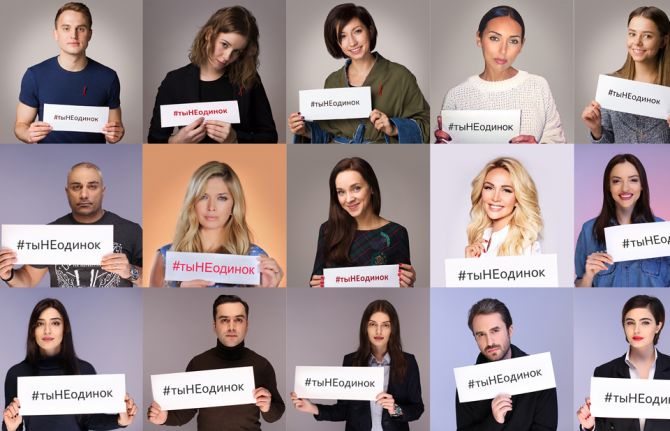
The #YouAreNotAlone campaign is raising awareness about the stigma and discrimination faced by children, adolescents and families affected by HIV in eastern Europe and central Asia. The campaign features young Russian artists who each retell the personal story of an adolescent living with HIV in the Russian Federation. Most adolescents in eastern Europe and central Asia still face stigma and discrimination that prevents them from being open about their HIV status.
The broadcast also featured an interactive online film, It’s Complicated. Based on the lives of adolescents and young people living with HIV in the Russian Federation, the film tells the story of Katya, a Russian girl born with HIV who faces stigma and discrimination but also finds love and support as she grows up and adjusts to life with HIV. Some of the film’s crew and lead actors joined UNAIDS and United Nations Educational, Scientific and Cultural Organization staff in the OK.ru discussion.
“The goal of the #YouAreNotAlone campaign is to promote solidarity with children, adolescents and families affected by HIV in eastern Europe and central Asia for them to live with safety and dignity,” said Vinay P. Saldana, Director for the UNAIDS Regional Support Team for Eastern Europe and Central Asia.
The campaign has been promoted through social media by Vera Brezhneva, UNAIDS Goodwill Ambassador for Eastern Europe and Central Asia, Victoria Lopyreva, UNAIDS Ambassador for the 2018 FIFA World Cup, and others. Everyone is encouraged to support the campaign by posting a photo on social medial with the hashtag #тыНЕодинок (#YouAreNotAlone).
“These young people are inspiring and strong,” said Ms Brezhneva. “Something is very wrong with a society where the human rights and dignity of people living with HIV are not respected. Every person living with HIV should feel our support, #YouARENotAlone!”
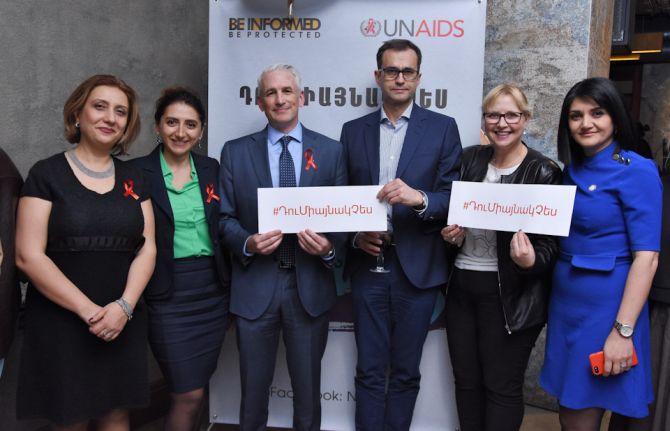
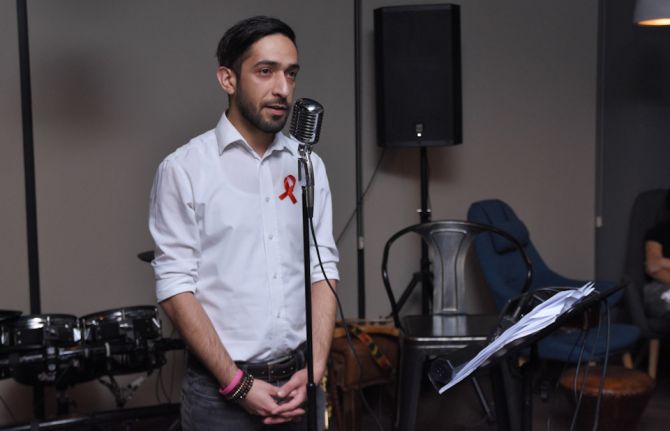
The campaign was also launched in Armenia, where it was supported by actors, television presenters and others. Armen Aghajanov is the first person living with HIV in Armenia who publicly disclosed his HIV status during the launch of the #YouAreNotAlone campaign on Zero Discrimination Day. He said: “People are not dying from HIV, they die from discrimination, late diagnosis, lack of access to treatment or from not taking medicines.”
Film
Region/country
- Eastern Europe and Central Asia
- Albania
- Armenia
- Azerbaijan
- Belarus
- Bosnia and Herzegovina
- Bulgaria
- Croatia
- Cyprus
- Czechia
- Estonia
- Georgia
- Hungary
- Kazakhstan
- Kyrgyzstan
- Latvia
- Lithuania
- Montenegro
- Poland
- Republic of Moldova
- Romania
- Russian Federation
- Serbia
- Slovakia
- Slovenia
- Tajikistan
- North Macedonia
- Türkiye
- Turkmenistan
- Ukraine
- Uzbekistan
Related
Feature Story
The moment of truth in breaking down barriers
27 February 2018
27 February 2018 27 February 2018When Robinah Babirye was at boarding school, her secret was difficult to hide. Sleeping in an all-girls dormitory, everyone knew everyone else’s business, especially around bedtime. “It was hard to bring out my medicine,” she said. “It would raise questions.”
Ms Babirye and her twin sister were hiding their HIV-positive status. Before starting at boarding school, the daughters and their mother would take their medicine daily at 10 p.m., and that was all there was to it.
Once she enrolled at university in Kampala, Uganda, in 2013, hiding became more difficult. Her room-mate was suspicious and spread rumours. Having been born with HIV, she couldn’t help feeling that life was unfair.
“At the time, I hadn’t accepted that I was living with HIV and that I had to live with it for the rest of my life,” said Ms Babirye. She described years and years of avoiding ever speaking to anyone about her regular visits to the clinic or about taking treatment. Then her mother died from cancer and she didn’t know how to cope.
Glancing above her eyeglasses, she added, “When I saw my mother fighting, it gave me strength, but when she died that became a terror.”
Ms Babirye more or less gave up. She stopped taking her medicine and drifted.
Asia Mbajja, founder and director of the People in Need Agency (PINA), a nongovernment organization for young people living with HIV in need, described appeals from distraught teenagers. She had helped many of them as children while working as a treatment coordinator at the Joint Clinical Research Centre children’s clinic.
“I kept promising them that life would change and get better, but as they grew up, their needs changed,” she said. “I needed to do something that would make a difference.”
In 2012, Ms Mbajja quit her job to start PINA. Among her first clients was Ms Babirye, whom she has known since the age of 10. She hammered over and over the importance of taking the daily dose of antiretroviral therapy.
“The problem is that all of Asia Mbajja’s upbeat encouragement would come tumbling down once she was no longer around,” Ms Babirye said. The young woman felt defined by HIV.
“When you're told that you have to take medicine for the rest of your life, coupled with the rumours and stigma, I feared I would forever be stuck,” she said. “Despite living with HIV, I am still a woman with feelings.”
Through her involvement with PINA, in 2014 Ms Babirye travelled to the International AIDS Conference in Melbourne, Australia. The young woman felt elated to discover a world where her status seemed a non-issue, but upon her return she couldn’t help feel like there was a line she could not cross.
Ms Babirye felt tired. She wavered between ending her life and changing her life for good.
Donning an I am HIV Positive t-shirt she posted a photograph of herself on Facebook. “My heart started to beat so fast, I couldn't bear to see the comments,” she said. She paused and let out a gasp and said, “I was expecting a lot of negativity, but the comments were largely positive.”
Her twin sister, Eva Nakato, couldn't believe what she had done. After some thought, she decided she couldn’t let her sister fight alone, so she also disclosed her status.
“When people said we need more people like her it motivated us,” said Ms Nakato.
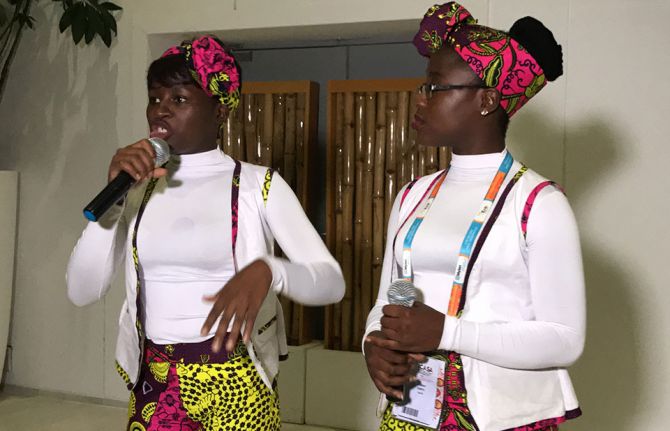
One of the first people to congratulate the twins was Ms Mbajja. Ever since, the duo have been at the forefront of PINA, testifying, mentoring and singing. Ms Nakato explained that at the children’s clinic they used to sing as a group, and at PINA they brought it to a whole new level.
“We started using music to convey HIV awareness messages," she said. Songs like Never Give Up, Yamba (Help) and ARV. Their latest projects now include launching a television series around HIV and relationships and documenting gender-based violence.
“When we met survivors of sexual abuse, that pushed me to make a movie,” Ms Nakato said, adding that videos and music can get messages across.
Ms Babirye finished her university degree last year and dreams of independence.
In the long term, she said her vision is a generation that is AIDS-free and stigma-free. “To accomplish an AIDS-free world, each individual has a responsibility to do something and break down cultural and societal barriers,” she said.
Region/country
Related
Communities, authorities and UNAIDS coordinate to maintain HIV care during emergencies in Colombia and Venezuela
23 September 2026
 Remembering King Oyo’s heartfelt leadership for young people and the fight to end AIDS
04 September 2026
Built on trust - Community-led HIV responses in Thailand
26 August 2026
Feature Story
Becoming an activist to overcome discrimination
28 February 2018
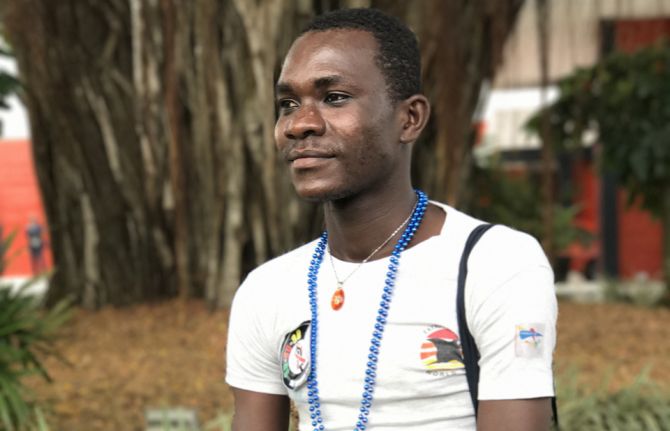
28 February 2018 28 February 2018Thrown out of the house by his parents when they found out he was gay, Ezechiel Koffi didn’t give up.
“My parents said I shamed them and that I lived the life of a sinner,” the young man from Côte d’Ivoire said. What hurt him the most were his mother's insults, saying he had no respect for their religious values. He begged them to understand that he was their son and that they should accept him as he was.
Mr Koffi, 24 years old at the time, stayed for a while at Alternative, a lesbian, gay, bisexual, transgender and intersex (LGBTI) people nongovernmental organization in Abidjan, Côte d’Ivoire, where he had started volunteering three years earlier. He kept going to classes, although admits that at times he went on an empty stomach. Psychologically he felt beaten. “It was hard, but I couldn't hide anymore,” he said.
With the help of his older sister, his parents let him move back home after six months. Although he now had a steady roof over his head and regular meals, Alternative became his second home. He has been dedicated to it ever since. Now an HIV educator and community health worker, he proudly showed his certificates on his mobile phone.
Alternative’s project coordinator, Philippe Njaboué, describes Mr Koffi’s tireless energy. “You can call him at whatever time, day or night, he always lends a hand and he often goes out of his way to include people who have been shunned.” When asked about being a substitute family for many LGBTI people, Mr Koffi gave a hesitant smile.
The many discussion groups and support groups have helped, he said, allowing him to share his experience and help others. The once shy boy has emancipated himself. He also no longer shies away from revealing his HIV status. “It’s been 10 years now that I have been living with HIV,” he said.
Looking back, he explained, in the beginning he couldn’t always negotiate the use of a condom. He now makes a point of telling everyone that HIV is a reality. “Use condoms, there is help, you are not alone,” he exclaimed.
He described feeling fully alive among the city’s tight-knit LGBTI crowd. “I am at ease, I can express myself and it’s fulfilling,” he said. His brow furrowed, however, when he mentioned the constant discrimination he and his peers lived with. On top of the taunting and the finger pointing, Mr Koffi said social media was rampant with homophobic comments.
“We deserve the same rights as everyone else and that’s what keeps me motivated,” Mr Koffi said.
Mr Njaboué remarked that society, religion and the state all play a big part in keeping homosexuality taboo in Côte d’Ivoire. “A recent speech by Alternative’s director was tagged by a website as “The king of the homosexuals speaks”, which led to countless death threats,” he said.
Noting that this case was one of many, he believes the situation can only change if the government tackles human rights.
“Most of the population doesn’t know their rights or the law, including a lot people in charge of state security,” Mr Njaboué said. “Not only does the government need to educate people, it should also condemn unlawful behaviour,” he added.
For Mr Koffi, his visibility puts him at risk, he said, but he forges ahead. “I want to live in a world where there is no discrimination based on one’s race, one’s religion or one’s sexuality.”
Region/country
Feature Story
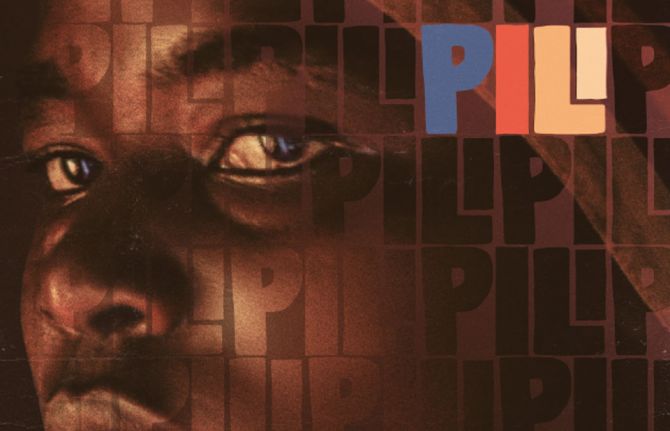
Pili movie focuses on the universal aim for a better life
28 February 2018
28 February 2018 28 February 2018Carrying a hoe over her shoulder as she ambles along a dirt road, Pili, a young Tanzanian woman, eyes an empty market stall. Talking to her friend while clearing a field, she says, “Digging all day, fighting for money, I can't do this my whole life.”
So begins the movie Pili, which focuses on a single mother with two children trying to make a better life for herself and her family. Farm work pays less than US$ 2 a day and the 25-year-old has a hard time keeping up with childcare, school supplies and medical check-ups. Pili lives with HIV and struggles to keep her HIV status a secret. She fears stigma and is scared that she will not get a loan to pay for the market stall she dreams of renting.
Produced by Sophie Harman and directed by Leanne Welham, the movie draws you into Pili’s daily struggles to gather money to become her own boss. Spoiler alert: she succeeds, but at a cost.
Ms Harman, an academic at the Queen Mary University of London, never dreamed of making a film. But she realized that a movie could be a collaborative project that would enable her to highlight the plight of many women.
“When I teach, I often have used film, which is very impactful, so I wanted to do my own film, but as a realistic feature based in Africa,” Ms Harman said.
In 2015, she won an AXA Insurance Outlook Award in recognition for her work in global health politics and HIV governance. The award gave her the money, but she needed a movie director—film-makers were wary about producing a film with untrained actors on a shoestring budget in the middle of nowhere. Within a year, though, she met Leanne Welham, a short-film director with years of experience in Africa.
What clinched the deal was Ms Harman’s access to the communities among which the film was to be made. Having started a nongovernmental organization in 2006 called Trans Tanz, Ms Harman had been inspired by women’s stories. Trans Tanz provides free transport for people living with HIV in rural areas so they can go to clinics.
Ms Welham and Ms Harman pitched their movie idea to the community and started compiling stories based on real-life experiences.
“To protect the women, we stressed to everyone that this would be a story based on our 80 interviews and my research,” Ms Harman explained. The community approved and gave feedback on the screenplay.
They now needed characters and to cast the leading actress, Pili. During an audition, Ms Welham met Bello Rashid, who had come to the session out of curiosity with her older sister. The young woman overcame her shyness and responded well to direction and landed the role.
Because of the language of the movie (Swahili), and the varying degrees of literacy, the British film crew mixed improvisation with a script. The film was set in Miono, a village near the Tanzanian coast.
“The cast are all real people, with only one trained actor, and 65% of them are living with HIV,” explained Ms Harman. “I wanted to protect the women and make this as anonymous as possible while still reflecting the daily grind.”
The five-week shoot in early 2016 taxed everyone.
“We not only had a very tight budget, we also dealt with illness, funerals and attempted extortion,” Ms Harman said. Reflecting on this, she said it created a heightened sense of camaraderie.
What struck Ms Welham was the amount of time it takes for people to get around. “The concept of time and the impact it has on one’s life cannot be stressed enough,” she said.
“As a filmmaker, I wanted to show the tranquil pace of Miono, but also the frustration and isolation too,” Ms Welham said. Pili walks to the field for 40 minutes then walks back the same distance. To get to a health clinic where no one will recognize her from the village she has to take a bus. It breaks down on the way back so she is late to pick up her children and nearly misses her meeting with the council of women who approve micro-loans. All of this in the blistering heat.
The movie premiered in September 2017 and then played in Geneva, Switzerland, as part of the World AIDS Day celebrations on 1 December. It won two awards at the Dinard British Film Festival and was part of the official selection at the Pan African Film and Arts Festival. The movie will be screened in British cinemas in the first half of 2018, with all the proceeds being given to the Miono community.
Since filming the movie, Ms Rashid has decided that she wants to stop working in the fields and to study to become a nurse.
Ms Welham is particularly proud that the movie allows viewers to step into a world they may not know about and see that, despite the poverty, the issues remain the same. Her producer agrees. “The important part of Pili is that it’s a universal story,” Ms Harman said. “You might not be HIV-positive or live in rural Africa, but everyone can associate with wanting something better for their life and their children.”
Multimedia
Region/country
Feature Story
Supporting the rights of sex workers in Côte d’Ivoire
01 March 2018
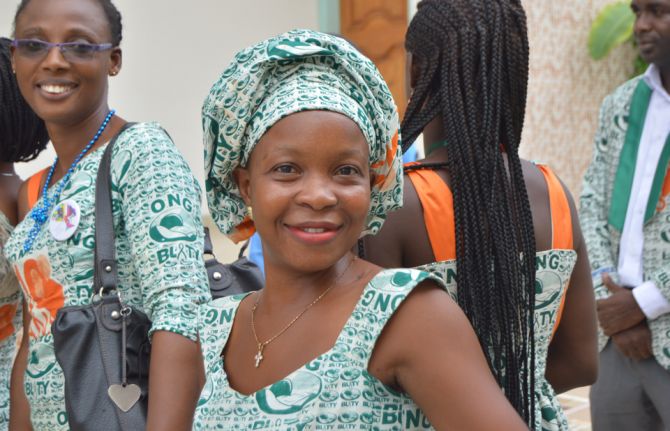
01 March 2018 01 March 2018Singing “akouaba” (welcome), a group of young women crowded around Josiane Téty, the director of Bléty, a Côte d’Ivoire organization led by sex workers, as she arrived.
Located in Yopougon, a suburb of Abidjan, Ms Téty explained that in the centre one of the first things they do is give each other nicknames. Names such as Joy, Hope or Chance, because women, she said, often need a confidence boost and a sense of a new beginning.
“We take the time here to work on self-esteem, so that all the girls believe in themselves,” she said.
Most of the women at Bléty are current or former sex workers who carry out peer outreach, ranging from HIV awareness-raising and education about HIV prevention to promoting sex workers’ rights and continuing education.
“We seek to give young women opportunities and alternatives so that they are less vulnerable,” Ms Téty said. Pointing towards a young woman, she said that Happiness had started beginner accounting classes.
Ms Téty and other sex workers founded Bléty in 2007 because they realized that they had little information regarding their health or their rights and hated feeling stigmatized.
“Getting an HIV test doesn’t mean that you are living with HIV, but that is how we were perceived when we were seen leaving a clinic,” she said.
They set out to correct that and have implanted themselves in the community.
Marie-Louise Sery came to Abidjan to work following her parents’ death. She didn’t have much schooling and finding a job was difficult, so she started sex work. The 30-year-old, wearing braided pigtails, admitted being completely clueless about the risks she took.
“Bléty got me out of that situation,” Ms Sery said. This past year she became one of Bléty's peer educators.
Most of the time, she said, peer educators target bustling street corners to talk to sex workers, of which there are estimated to be more than 9000 in the country. Aside from handing out condoms, they also conduct rapid HIV tests and hand out cards with the contact details of Bléty’s various focal points, who can be reached day and night in the event of an emergency.
“My work involves giving a lot of support and hand-holding,” Ms Sery said.
Sex work is not illegal in Côte d’Ivoire, but the laws on it are vague. As a result, there is abuse and sex workers are vulnerable to violence. “We really stress to our friends out there that because they’re sex workers, it doesn’t mean people can take advantage of them,” Ms Téty said. If they have been abused they can call a Bléty peer educator and are accompanied to the police station or to the hospital.
Ms Téty said a recent victory had been to negotiate with doctors and health-care providers to provide a medical certificate free of charge, instead of for a US$ 35 fee. The law in the country requires a medical certificate in order to pursue a criminal case.
In its 10-year existence, Bléty has fended off pressure from the police and residents to change their attitudes towards sex work. Bléty has educated the police as well as sex workers in order to break the climate of mistrust between them.
“We have established good relationships with uniformed police, but there is a high turnover, so it can get frustrating to start all over again,” Ms Téty said.
Overall, she remains optimistic. Testing for HIV and sexually transmitted infections among sex workers is up, lawyers have stepped in to give legal advice and she sees her centre growing further.