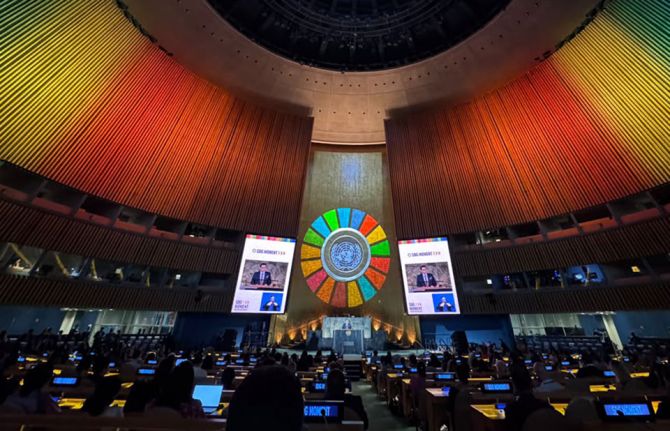
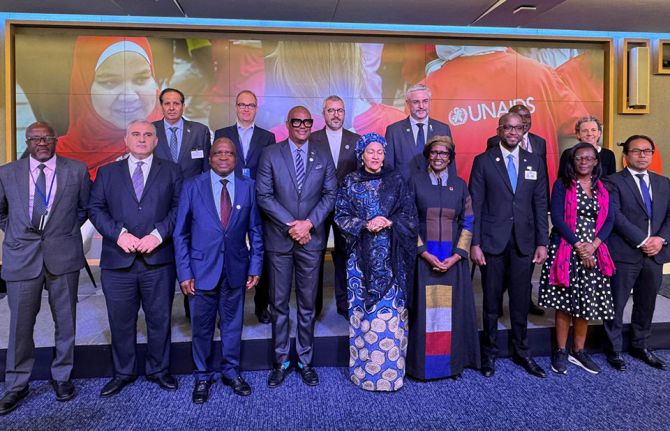
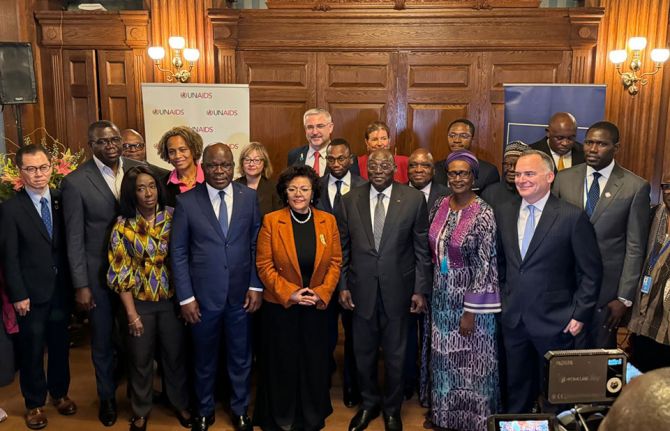
UNAIDS at the 81st United Nations General Assembly


21 June 2016
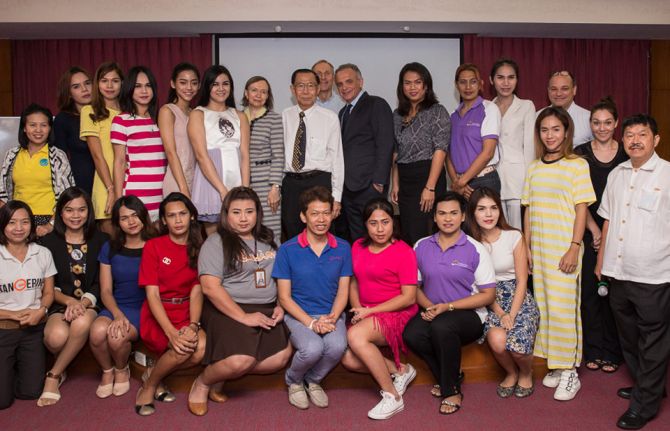
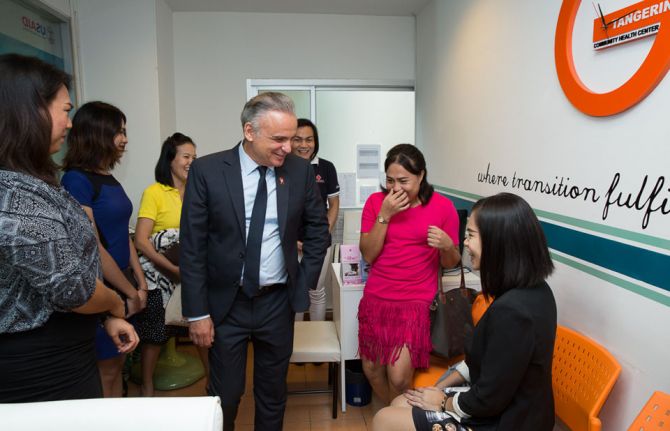
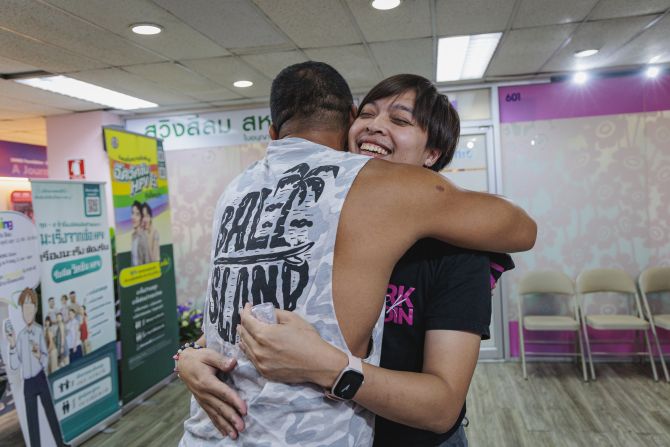
21 June 2016 21 June 2016The Tangerine Community Health Centre is Asia’s first clinic to provide a full range of health-care and counselling services specifically for transgender people. Transgender people need access to a range of health, social protection and other support services that are tailored to them.
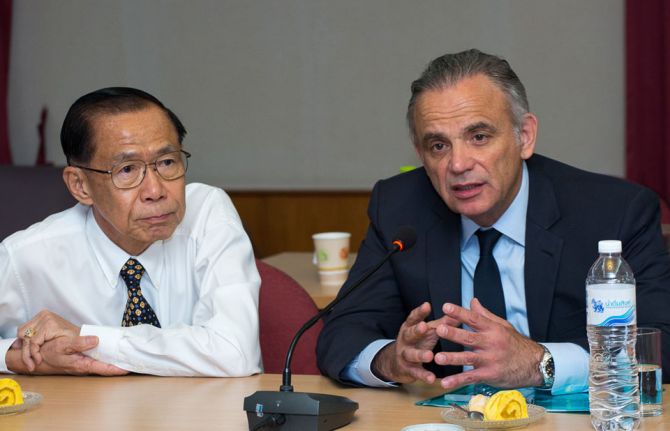
“At the Thai Red Cross Tangerine Community Health Centre we are committed to providing the highest attainable standard of health in an affordable and accessible manner for all transgender people,” said Praphan Phanuphak, Director of the Thai Red Cross AIDS Research Centre, in which the clinic is located.
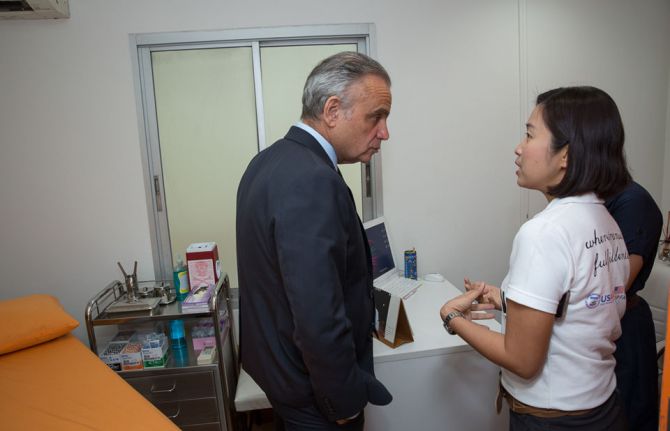
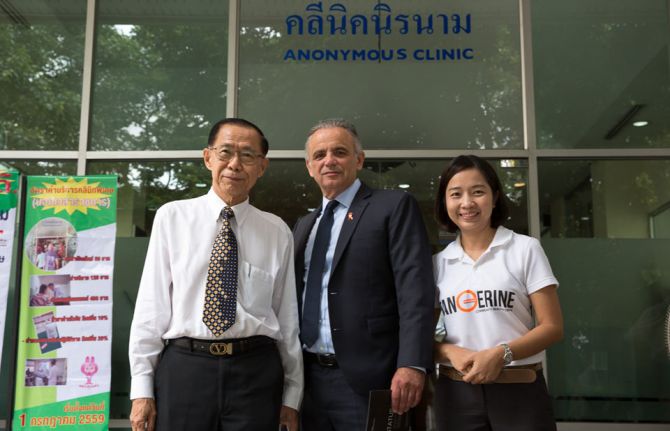
UNAIDS Deputy Executive Director Luiz Loures visited the clinic with Mr Praphan, its founder, on 21 June. The clinic provides hormone counselling and therapy, sexual and reproductive health services, psychosocial counselling and HIV testing. Trained transgender personnel and gender-sensitive medical professionals manage and provide the services. While the clinic offers a full range of services, it encourages all clients to have an HIV test.
“We like to encourage everyone to have an HIV test and learn more about HIV prevention and treatment as part of a holistic approach to health care for transgender people,” said Krittima Samitpol, Supervisor of the Tangerine Community Health Centre.
According to Thailand’s Bureau of Epidemiology, epidemiological surveys of transgender women at five sites report high HIV prevalence, ranging from around 9% to 17% in 2014. Despite the risk of HIV infection, many transgender people do not get tested for the virus and studies find only about a third know their HIV status.
Most transgender people in Thailand self-administer hormones they commonly purchase on the Internet or in local pharmacies. Without professional medical care, incorrect use of hormones can lead to liver, kidney and cardiovascular problems. At the Tangerine Community Health Centre, medical professionals oversee testosterone injections for transgender men and transdermal hormone creams and oral hormone therapy for transgender women.
The Political Declaration on Ending AIDS adopted in early June by United Nations Member States noted with alarm the slow progress made in reducing new HIV infections among specific populations.
“To end AIDS, the health and rights of key populations need to be at the centre,” said Mr Loures. “The Tangerine Community Health Centre is transforming the health choices for transgender people.”
The clinic opened in November 2015 and in its first five months received visits from nearly 250 transgender people. Around 80% of the visitors were tested for HIV and the 10% who tested positive were linked to treatment at either the Thai Red Cross AIDS Research Centre or public hospitals.
During his visit to the clinic, Mr Loures spoke with representatives of three community groups: the Thai Transgender Alliance, Service Workers In Group and Rainbow Sky.
25 May 2016
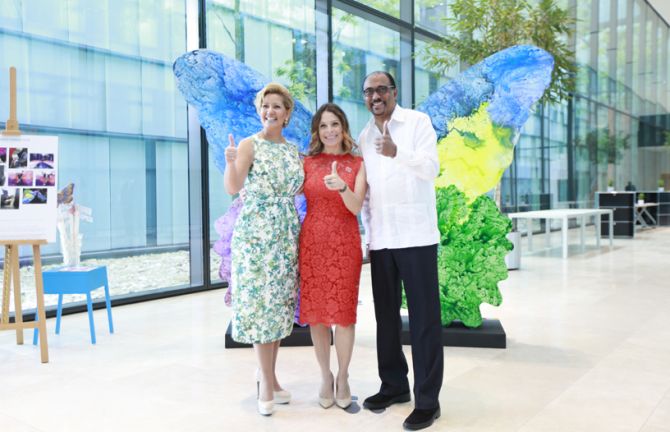
25 May 2016 25 May 2016Ananda, a butterfly sculpture Panamanian artist Marisabel Bazán created for the zero discrimination campaign, celebrates the inherent contentment, joy and fulfilment of existence. Standing two metres tall, Ananda is a colourful artwork that symbolizes the transformation that each person can bring to society.
“The butterfly represents a human being and the power we all have to transform ourselves and our world,” said Ms Bazán.
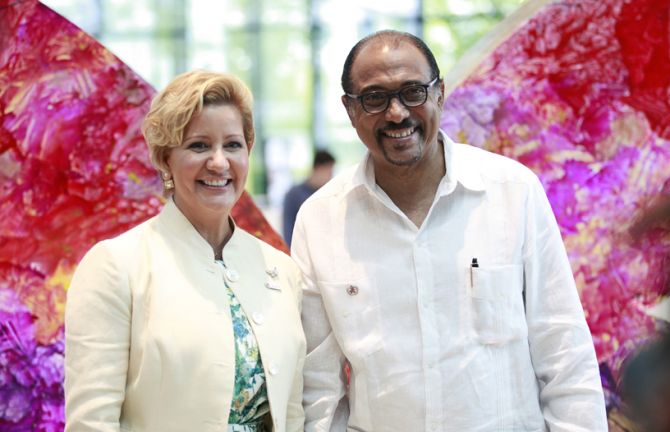
A gift from Ms Bazán, with support from the Office of the First Lady of Panama, Ananda will be part of the UNAIDS permanent art collection. First Lady Lorena Castillo de Varela and UNAIDS Executive Director Michel Sidibé unveiled the sculpture on 24 May. He praised Ms Bazán for her commitment to the zero discrimination movement and said the sculpture is an important part of her legacy. Ms Bazán introduced her work at the unveiling event.
Ms Bazán’s art is influenced by “the juxtaposition of life’s realities and the beauty of the human condition that exists in every city and every walk of life.” Butterflies prevail in her artwork for their transformative message.
Her paintings and sculptures are created through a mixed-media technique, three-dimensional effects and a colour synergy that describe her own urban–avant-garde style.

25 May 2016
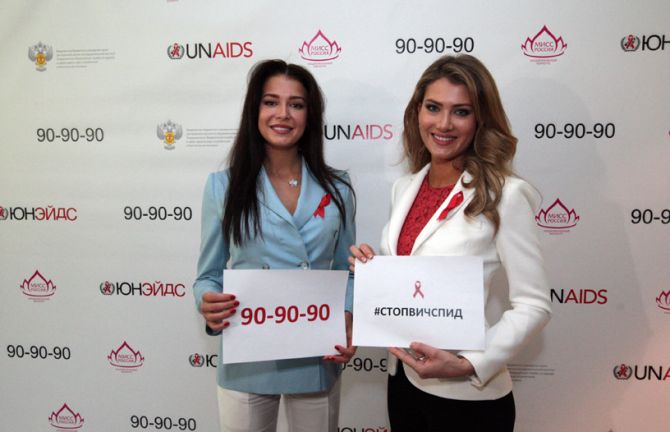
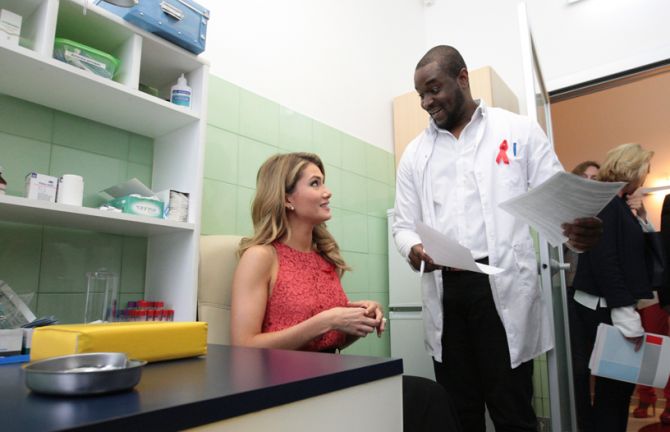
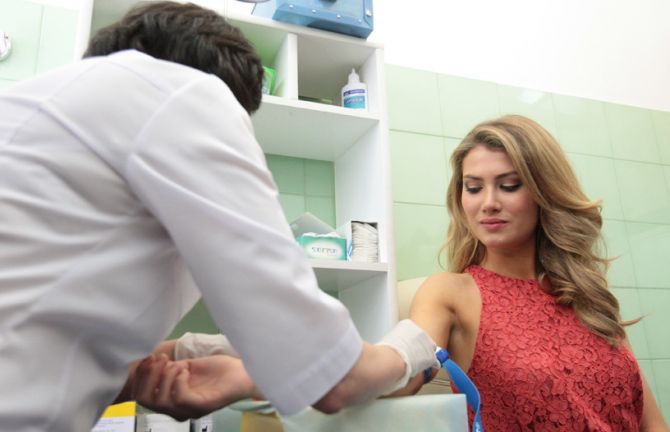
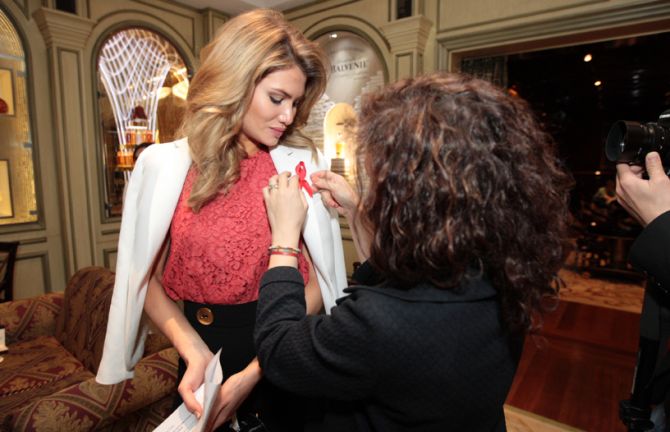
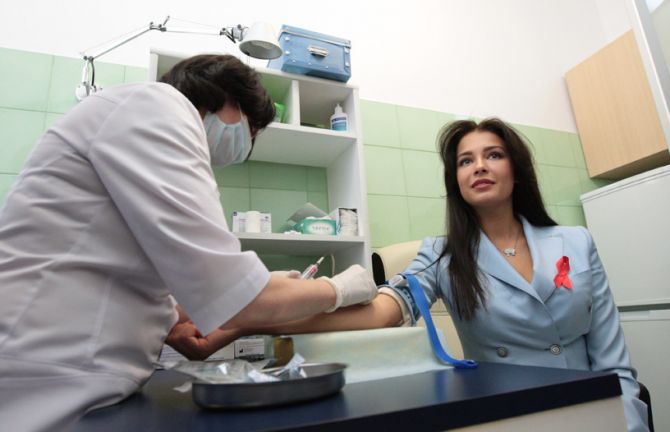
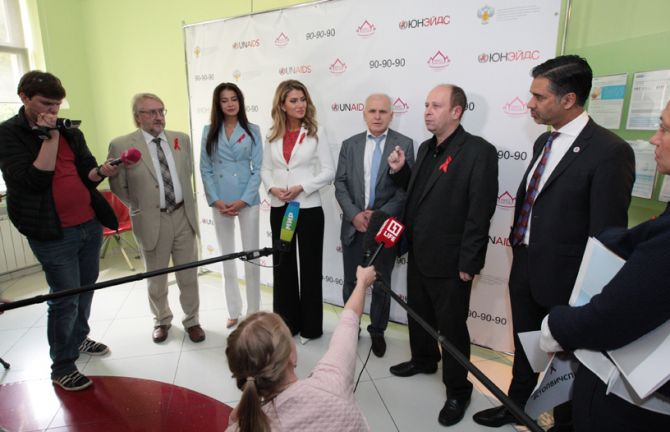
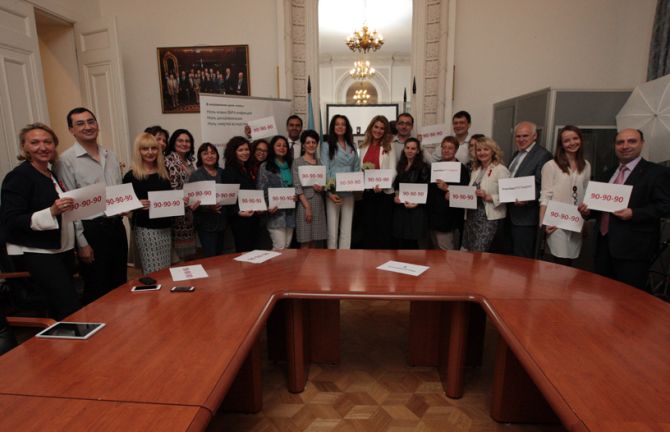
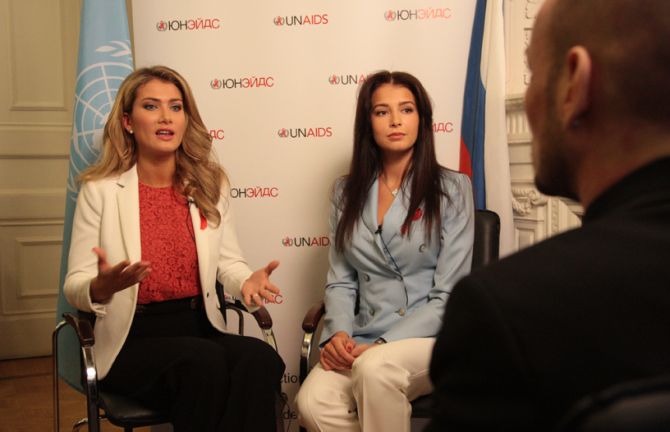
25 May 2016 25 May 2016During her first visit to the Russian Federation, the reigning Miss World, Mireia Lalaguna of Spain, and runner-up, Miss Russia 2015, Sofia Nikitchuk, showed their support for the 90–90–90 HIV treatment target by getting tested for HIV in Moscow. They encouraged everyone to do the same and know their HIV status.
The treatment target aims to ensure that, by 2020, 90% of people living with HIV know their HIV status, 90% of people who know their HIV-positive status are accessing treatment and 90% of people on treatment have suppressed viral loads.
"I know how important it is for the world to end the AIDS epidemic by 2030,” said Ms Lalaguna. “This goal may seem ambitious, but if each of us does what we can—starting with learning our HIV status—then we will succeed.”
Ms Nikitchuk said, “I am proud to join the efforts of organizations and people in the Russian Federation and around the world who are working together to end the AIDS epidemic.”
On behalf of the Miss World Organization, Steve Douglas said, “Miss World is a contest that promotes beauty with a purpose and we support the important message of getting tested for HIV as the first step towards 90–90–90.”
The UNAIDS Regional Director for Eastern Europe and Central Asia, Vinay Saldanha, underscored that the world is witnessing a transformation in public attitudes to HIV infection, people who are living with HIV and HIV testing. “Everyone who is diagnosed with HIV should be provided with immediate access to HIV treatment and achieve viral suppression, so that HIV is no longer transmitted,” Mr Saldanha said.
“Our task is to ensure that everyone knows how to protect themselves from HIV. And if HIV infection has occurred, we need to provide treatment for people living with HIV to ensure that they live long and fruitful lives,” said Vadim Pokrovsky, Head at the Russian Center for AIDS Prevention and Treatment.
06 May 2016
06 May 2016 06 May 2016When the train pulled into the Beijing railway station, Mei Zi’s heart was pounding. She had travelled from a small village near Shenzhen in south-eastern China to the capital. It was the winter of 2009 and Mei Zi was about to have her first glimpse of the man she was planning to marry.
“I will always remember the exciting and emotional moment when we first met,” said Mei Zi. “He picked me up at the railway station. He had bought me a red down jacket.”
Mei Zi met her husband through an online chat group for people living with HIV.
“After I found out I was HIV-positive in 2007, I thought that I would never be happy again,” said Mei Zi, who preferred not to use her real name for this story. Soon after getting married, she became pregnant. “At that time, I had been diagnosed with both HIV and hepatitis C and my husband was also living with HIV,” she said. “So I decided to have an abortion and not to have any children in the future.”
But in March 2014, she became pregnant again. This time she was receiving care from the Beijing You’an Hospital STD/AIDS Clinical Centre and Director Sun Lijun put her fears to rest. The doctor said that by taking antiretroviral medicine, Mei Zi could prevent the transmission of HIV to her baby and that there was also effective treatment for hepatitis C.
“The doctor’s guidance and encouragement spurred me on,” said Mei Zi.
Six months into her pregnancy, her bile acid level became dangerously high and she was hospitalized.
“Throughout the entire process, the doctors and nurses at You’an hospital did not discriminate or treat me as different,” said Mei Zi. “I was deeply moved.”
In her 34th week, the doctor told her that she would have a caesarean section the next day. Mei Zi gave birth to a baby boy in November 2014. He was free of HIV and weighed 2.2 kilograms.
“He doesn’t talk much, so everyone calls him Calm Angel,” said Mei Zi. “I think my Calm Angel is a gift from God. Now, when he is cheeky, I ignore him just to tease him a little and then he runs to hide in my arms.”
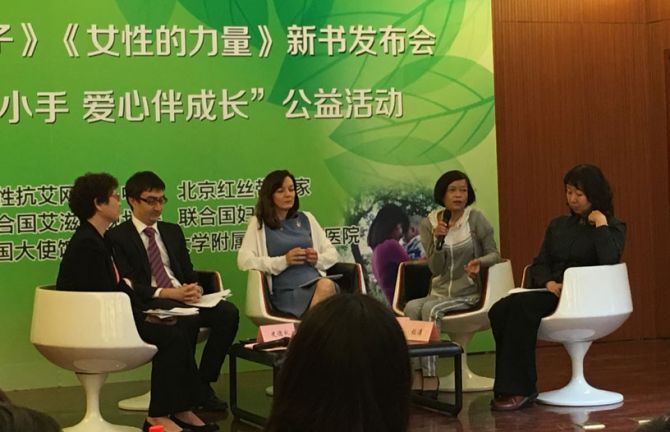
Mei Zi is one of 15 mothers living with HIV in China who have shared their stories after they successfully gave birth to healthy children. Their voices and photographs are featured in two books, My child and I and Women’s power, which were launched on 6 May at an event held in Ditan Hospital, Beijing, organized by the Women’s Network against AIDS in China and the Beijing Home of Red Ribbon.
Women living with HIV in China are often caught between an immense social pressure to become mothers and the reverse pressure to remain childless because of the possibility of passing on the virus to their babies. With antiretroviral treatment that risk has been significantly reduced.
The first pilot programme to prevent mother-to-child transmission of HIV in China began in 2001 in Shangcai County, Henan Province, and was scaled up across the country. According to government estimates, 82.6% of mothers living with HIV were receiving antiretroviral medicine by 2014 and mother-to-child transmission had fallen to 6.1% from 34.8% a decade earlier. In 2010, the government expanded its prevention of mother-to-child transmission of HIV programme to include the prevention of syphilis and hepatitis B, which can also be transmitted from mother to child during pregnancy and delivery.
The women featured in the book come from many different parts of China and most were telling their stories publicly for the first time. There is Tang Juan (also not her real name), who is the mother of an eight-year-old girl. She was the first person to receive treatment to prevent HIV transmission to her baby in Xiangfang in Hu Bei Province.
She had a message for other women living with HIV, “I want you to know that there is hope. You only need to hold on to it bravely.”
UNAIDS, UN Women and the embassy of the United Kingdom of Great Britain and Northern Ireland supported the production of the books, and their representatives participated in the launch.
Catherine Sozi, UNAIDS Country Director for China, said, “These stories show that women living with HIV can have healthy babies born free from HIV as long as they have access to friendly health services geared to ensuring that they get treatment early and are supported throughout their pregnancy and after delivery.”
While some women featured in the books reported experiencing discrimination from health-care workers, many shared Mei Zi’s positive experience.
Chen Hang, Secretary of the Beijing Home of Red Ribbon, said, “The Beijing Home of Red Ribbon is committed to supporting people living with HIV and making sure all people are treated with dignity.”

02 May 2016
02 May 2016 02 May 2016HIV activists in Sri Lanka are celebrating a landmark decision by the country’s Supreme Court that which prohibits HIV discrimination in education settings.
Princey Mangalika, Executive Director of the Positive Women’s Network in Sri Lanka, said, “I would like to express my appreciation to the Supreme Court. This marks a momentously progressive step forward for the people living with HIV community in Sri Lanka.”
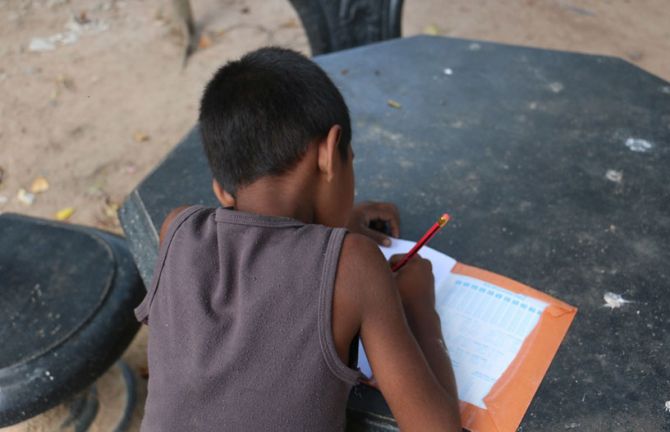
The Supreme Court issued the directive in response to a fundamental rights violation petition filed by Chandani De Soysa in February 2016. Ms De Soysa is from the rural community of Illukhena, Kuliyapitiya, in western Sri Lanka. She was left in difficult circumstances when she lost her husband last September. Ms De Soysa believed strongly that her five-year-old son was entitled to an education and tried to enrol him in the local school. However, the school system denied the boy entry because a rumour was circulating that his father had died of AIDS-related causes and that the boy was HIV-positive.
“I felt dead inside, when my child was not accepted into school, when my own neighbours discriminated against me without any human consideration, I felt lost,” said Ms De Soysa.
Even though it was a violation of her son’s human rights, Ms De Soysa agreed to him taking an HIV test. Although his status was confirmed as negative, the boy was still denied enrolment. Ms De Soysa visited a number of other schools in the area, but they all refused admission.
“It was not an easy decision to make, but I decided that for my child I would fight. I did not want any other parent or child to face such an unbearable situation,” said Ms De Soysa. With support from UNAIDS and the Positive Women’s Network, she filed her petition with the Supreme Court.
The court’s directive, which was released on 28 April, stated that the right to an education of children living with or affected by HIV must be upheld, based on the country’s constitutional directive of universal access to education for children between the ages of 5 and 14 years old.
The Supreme Court also went a step further, reminding the state of its obligation to take necessary measures to protect, promote and respect the human rights of people living with HIV. This is the first court decision in South Asia to make a general pronouncement recognizing the human rights of all people living with HIV and sets a precedent for future cases in Sri Lanka challenging HIV discrimination experienced in settings other than education.
“I would like to give a special note of thanks to all the people out there who offered their support in various forms, from money, food, scholarships, to a simple word of encouragement. I cannot express in words my gratitude for this kindness,” said Ms De Soysa. “My son has a dream to be a doctor one day and I hope he will be an HIV specialist.”
While Ms De Soysa has won the right for her son to attend his local school, she has decided to send her son to a private school, Trinity College in Kandy, which prior to the court’s decision had offered a full scholarship. The school is the alma mater of cricket champion Kumar Sangakkara, who has championed people living with HIV and visited the school to raise awareness of HIV as part of the Think Wise campaign, a joint initiative by UNAIDS, the United Nations Children’s Fund and the International Cricket Council.
“This is a great day for social justice,” said Steve Kraus, Director of the UNAIDS Regional Support Team for Asia and the Pacific. “Sri Lanka’s highest court has stood up in support of people who are being left behind. From now on, no child can be denied access to education based on HIV.”
There have been other cases of children being denied school admission because of their association with HIV, which have been settled through mediation.
HIV-related stigma and discrimination continues to prevent people from accessing key education and health services and reduces employment opportunities. Research conducted by people living with HIV in 13 countries in Asia between 2009 and 2014 found that an average of 12% of HIV-positive people surveyed reported exclusion from social gatherings and activities and 23% said they had been verbally insulted, harassed or threatened.
Sri Lanka’s legal milestone is a big step forward for the rights of people affected by HIV in South Asia. Sindh Province in Pakistan has a comprehensive HIV law, but there is no such protection across the country. India’s courts have ruled to recognize the right to non-discrimination in several specific contexts, including schools; however, a national HIV law has yet to be passed by the parliament.

20 April 2016
20 April 2016 20 April 2016The challenges of responding to HIV in western and central Africa have been outlined in a new report from Médecins Sans Frontières (MSF). The report, Out of focus: how millions of people in west and central Africa are being left out of the global HIV response, describes how stigma and discrimination, stock-outs of diagnostics and medicines, and unaffordable or poor-quality facilities are presenting major hurdles to access to HIV testing and treatment services.
Around 6.6 million people are estimated to be living with HIV in western and central Africa, more than half residing in Nigeria alone. The region accounts for one in five new HIV infections globally, one in four AIDS-related deaths and close to half of all children newly infected with the virus worldwide. An estimated 5 million people living with HIV in western and central Africa do not have access to life-saving HIV medicines.
UNAIDS is working with countries in the region to identify the locations and populations where HIV services need scaling up. Data from the region show that many people affected by HIV in western and central Africa live in and around city areas and that people at higher risk of HIV infection, include men who have sex with men, sex workers and people who inject drugs.
“The world will only end the AIDS epidemic by 2030 through an intelligent and focused deployment of resources that identifies the people and places most in need,” said UNAIDS Deputy Executive Director Luiz Loures. “We must reach people affected by HIV wherever they live and whoever they are, including in western and central Africa.”
UNAIDS is helping countries in western and central Africa to build the foundations for a better coverage of services to match needs. UNAIDS is also working with countries on a Fast-Track approach over the next five years to end the AIDS epidemic as a public health threat by 2030.
The Fast-Track approach includes achieving the 90–90–90 treatment target for 2020, whereby 90% of people living with HIV know their HIV status, 90% of people who know their HIV-positive status are accessing antiretroviral treatment and 90% of people on treatment have suppressed viral loads. Other Fast-Track Targets include zero infections among children and that 90% of women and men, especially young people and people living in high-prevalence settings, have access to HIV combination prevention and sexual and reproductive health services.
To achieve the targets, a rights-based approach that reaches everyone in need will be essential, particularly to overcome the barriers of stigma and discrimination that continue to prevent people from accessing HIV services. Global solidarity and shared responsibility will also be critical to respond to the particular challenges faced in western and central Africa to ensure that no one is left behind.
“Closing the treatment gap in western and central Africa will happen either now or never,” said Mit Philips, health policy adviser at MSF. “But it is unrealistic to think they can break the deadly status quo alone.”
08 April 2016
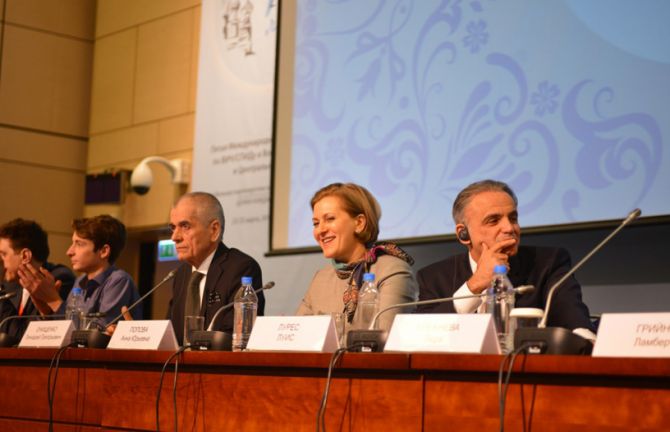
08 April 2016 08 April 2016The fifth Eastern Europe and Central Asia AIDS Conference took place in Moscow, Russian Federation, from 23 to 25 March and concluded by calling on governments, international organizations, the business community and religious and civil society organizations to Fast-Track the AIDS response in the region.
In his closing remarks, UNAIDS Deputy Director Luiz Loures made a strong call for the provision of evidence-informed HIV prevention and treatment services to close the gap in access to coverage for key populations.
The conference outcome statement, which was debated by the participants and the co-chairs of the three conference tracks—medicine and science, international cooperation and civil society—includes specific references to the need for evidence-informed HIV prevention programmes, including harm reduction, increased domestic funding and further support for civil society organizations. It also calls upon the governments of eastern Europe and central Asia to reaffirm their commitment to the target of ending the AIDS epidemic by 2030 as part of the Sustainable Development Goals at the United Nations General Assembly High-Level Meeting on Ending AIDS, which will take place from 8 to 10 June in New York, United States of America.
Three panel discussions were organized during which speakers from Belarus, Brazil, Kazakhstan and the Russian Federation, as well as Ndaba and Kweku Mandela, engaged in a public discussion on key HIV issues, including HIV and sport, HIV and the mass media and the challenges of HIV public information campaigns today.
The conference brought together 2500 participants from 79 countries and featured more than 350 plenary and parallel presentations. The conference outcome statement included the proposal of the Government Russian Federation for the sixth Eastern Europe and Central Asia AIDS Conference to be held in Moscow in 2018.

05 April 2016
05 April 2016 05 April 2016A version of this story was first published on UNESCO.org.
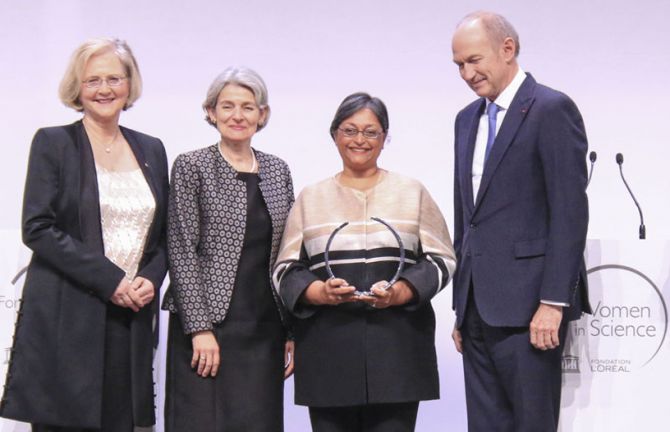
Quarraisha Abdool Karim has been presented with a l’Oréal–UNESCO For Women in Science award for her contribution to the understanding of HIV and for her efforts to empower women to help prevent HIV infection in Africa.
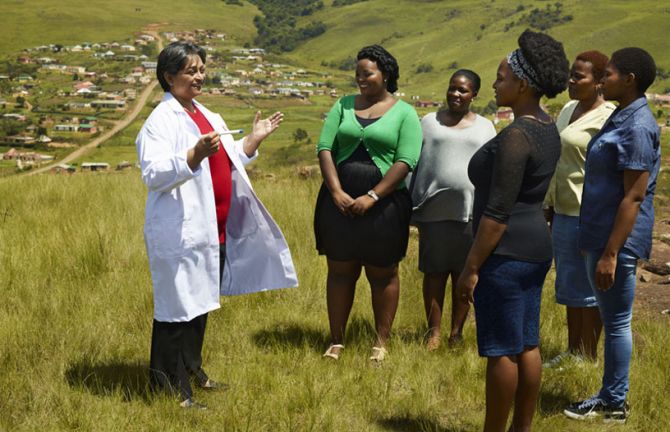
Ms Abdool Karim has worked on HIV research for the past 25 years and her work has provided new insights into how the HIV epidemic spreads and affects adolescent girls and young women in Africa. Her knowledge of the science and the people affected by HIV in her native South Africa, which has the highest number of HIV infections in the world, has reinforced her determination to put HIV prevention in the hands of women, particularly adolescent girls and young women.
In 2002, at the height of AIDS denialism in South Africa, she and her husband cofounded CAPRISA, the Centre for the AIDS Programme of Research in South Africa.
Ms Abdool Karim has undertaken research on an anti-HIV gel for use by women before, during and after sex. In 2010, the CAPRISA 004 study, led by Ms Abdool Karim, showed that a gel containing the antiretroviral medicine tenofovir reduced the risk of HIV infection among women by 39%. Today, she continues to study HIV prevention options that will give women in higher-risk populations sustained protection against HIV.
“Until we have eradicated AIDS by finding a vaccine or a cure, then I think my job is not done,” said Ms Abdool Karim.
The L’Oréal-UNESCO For Women in Science programme was founded in 1998 with a simple aim: to ensure that women are fairly represented at all levels in science. Each year, the programme’s award is presented to five outstanding women researchers in recognition of scientific excellence and their potential for leading the global community in positive, productive directions.
“I would encourage young women who feel passionate about changing the world and making a difference to pursue a career in science,” said Ms Abdool Karim at the French Academy of Sciences, where she was presented with the award.
04 April 2016
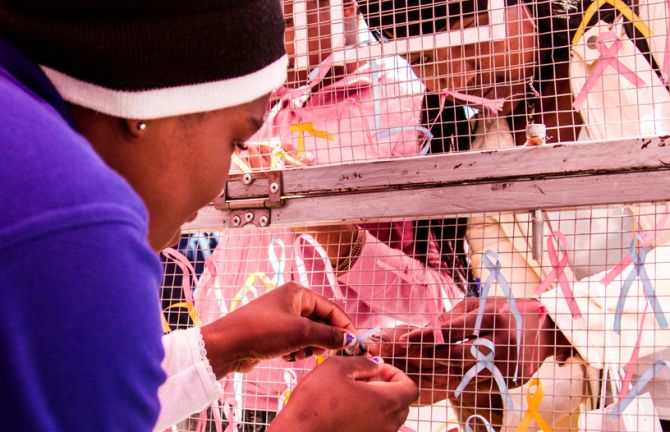
04 April 2016 04 April 2016Since the start of the AIDS epidemic civil society has been at the forefront of the response to HIV—demanding access to treatment and HIV services, calling for the respect of human rights and supporting community-led HIV services.
Today the role of civil society remains more relevant than ever as the success of community efforts in providing HIV services, particularly to key populations, is becoming more widely recognized as essential to ending the AIDS epidemic.
Community efforts have proven critical in overcoming many of the major challenges in the AIDS response, including reaching people most affected by HIV with life-changing HIV services, providing support for adherence to treatment and other essential health services. Civil society engagement has also been critical in advocating for new resources, improving HIV programming, and moving progress forwards on human rights issues.
Despite the wide recognition of the important role communities play in responding effectively to HIV, community organizations are facing severe financial challenges and many are closing their doors.
A total of 40% of organizations responding to a recent UNAIDS survey reported that their funding had decreased since 2013. Two thirds expected flat or reduced funding in the future. The decline in funding is resulting in a decline in community services—89% of those who reported a decrease in funding also reported they had to scale down their services as a result.
Greater investment in civil society and community-based service delivery is critical to the Fast-Track approach. Outreach to key populations in low- and middle-income countries should grow to about 7.2% of total investments by 2020, and the estimated resource needs for community-based delivery of antiretroviral therapy should grow to about 3.8% of total investment.
By 2020, investment in community mobilization should increase three-fold to 3% of total resources in low- and middle-income countries to help civil society represent the interests of communities affected by HIV, and to drive ambition, financing and equity in the AIDS response. Social enablers—including advocacy, political mobilization, law and policy reform, human rights, public communications and stigma reduction—should reach 6% of total expenditure by 2020.
UNAIDS has issued two new reports highlighting the importance of investing in community action. Invest in Advocacy details important contributions by community based advocates and points to the need to increase investment to drive an accelerated and more equitable response to HIV. It also notes that a report from the UNAIDS-Lancet Commission on Ending the AIDS Epidemic described advocacy as a “global public good” deserving of support commensurate with its importance.
Stronger Together provides details of the evidence base for community-provided services achieving scale, delivering quality services, and producing results. The report notes guidance from the World Health Organization and others calling for increased engagement of communities to provide a range of HIV and other health-related services.*
In order for community-led services to continue it is essential that international organizations, development partners, governments, private funders and other partners increase investment in community advocacy and services in order to continue and scale up HIV services.
The crucial role of community responses will be among the issues highlighted at the Civil Society Hearing taking place on 6 April in New York. The Hearing is part of the lead up to the United Nations High Level Meeting on Ending AIDS which will take place from 8 to 10 June at the UN headquarters in New York. At the hearing, civil society representatives from around the world will speak to UN Member States about major issues in the AIDS response, including the need for increased financing, leaving no one behind, integration, innovation, and partnering between governments, the private sector and communities.
* The new reports build on other recent publications, Communities deliver and Community-based ART delivery which include more details on the success of community responses.
Watch the civil society hearing live on Wednesday 6 April from 10:00 EDT on webtv.un.org/
23 September 2026
14 September 2026
26 August 2026