UNAIDS at the 81st United Nations General Assembly

12 September 2016
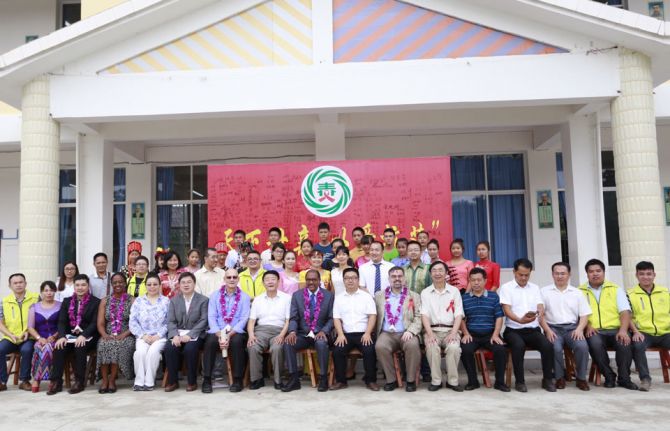
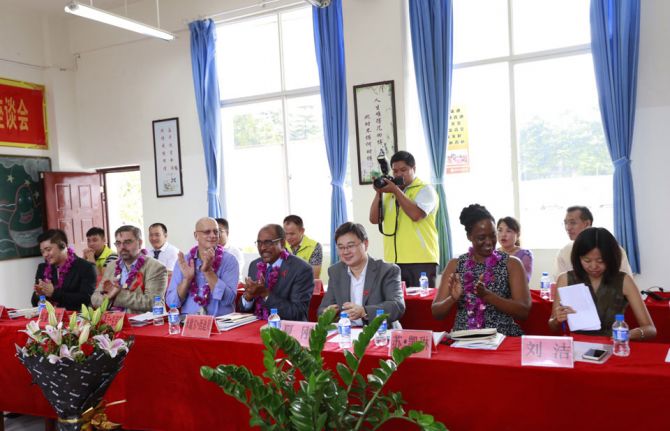
12 September 2016 12 September 2016The village of Jiele is where China’s first HIV cases were reported in 1989. Located in Dehong prefecture in Yunnan province, the village experienced an AIDS epidemic that resulted in almost 200 deaths. However, a quarter of a century later, the village is now brimming with hope and renewed energy.
“In the past, everyone was so scared of HIV, but now we are getting great health services and we are living normal healthy lives. We are not afraid of HIV anymore,” said a resident of Jiele.
The more than 100 people currently living with HIV in the village are receiving regular check-ups and almost all are on HIV treatment. The village’s success is echoed across Dehong prefecture, which was at the heart of China’s early AIDS epidemic.
Located near the opium producing areas of the Golden Triangle and the major drug trafficking routes, Dehong’s initial HIV cases were among people who inject drugs, as well as sex workers and their clients. In the past 15 years the prefecture has worked with community organizations, the central government and international organizations and has implemented a wide range of innovative measures, leading to a remarkable turnaround in the AIDS epidemic.
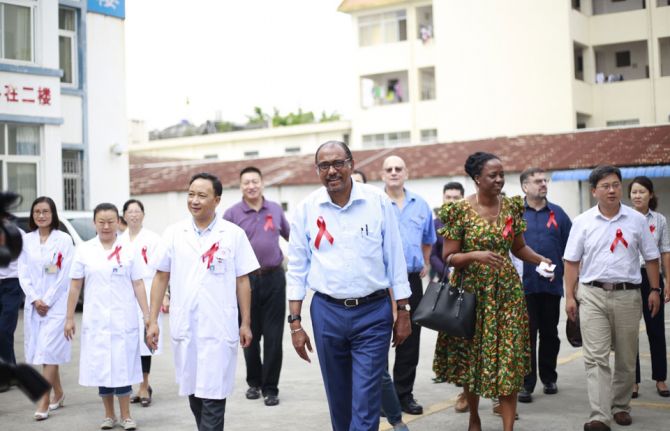
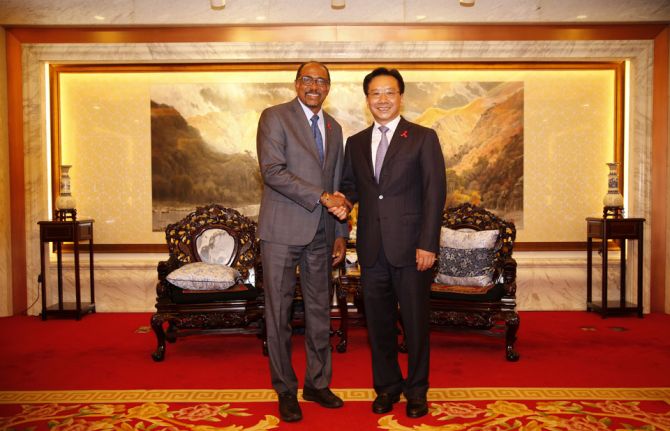
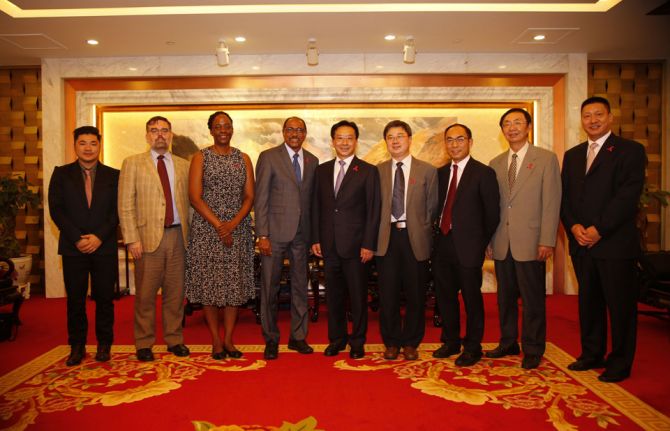
During a week-long mission to China, UNAIDS Executive Director Michel Sidibé witnessed the achievements made in Dehong. He met with officials and community groups and visited a range of sites, including Ruili Hospital on 7 September. He saw how the city hospital provides one-stop-shop HIV prevention and treatment services, including health education, HIV testing, methadone for people who inject drugs and prevention of mother-to-child transmission of HIV services.
In 2009, Dehong started to decentralize antiretroviral therapy management down to the community level for people living with HIV who had been accessing treatment for more than a year. Ruili Hospital provides assistance and technical support to the community-level antiretroviral therapy sites, which in 2014 were providing treatment to more than 600 people living with HIV.
“Ruili Hospital is a model of how one-stop-shop HIV services save lives and money,” said Mr Sidibé. “It’s remarkable how the hospital is spreading its know-how down to the community level and ensuring that quality health care is available in even the most remote corners of China.”
“The fourth round of the People’s War against AIDS has just been launched in Yunnan,” said Gao Feng, Vice-Governor of Yunnan. “We are confident we will achieve the 90–90–90 targets by 2020 in Yunnan.”
Dehong’s HIV response has evolved to meet the new challenge of providing quality health care to cross-border migrants. While in most parts of China access to key HIV services, such as treatment and methadone, require a Chinese identification card, in Dehong, HIV treatment is available to non-Chinese people who can present residence and employment permits and health certificates.
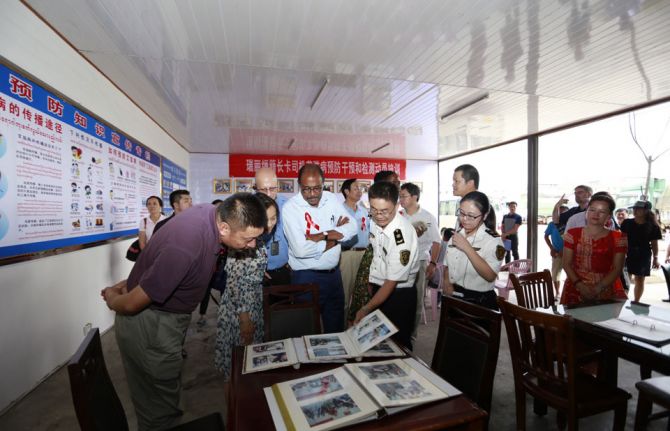
Mr Sidibé visited Jiegao, which is a district of Ruili where around 50 000 Burmese people are estimated to live. The Needle Exchange and Methadone Maintenance Treatment Extension (MMT) sites provide services to mainly migrants who inject drugs. Truck drivers crossing the China and Myanmar borders are provided with comprehensive services at a government-funded truck driver action spot. The services include health education, HIV counselling and testing, condom distribution, and referral to HIV treatment.
The local government in Dehong has a strong partnership with community-based organizations, which have played a key role in reaching migrants and people who use drugs, engage in sex work or are living with HIV.
Owing to these effective strategies, Dehong is the only prefecture in Yunnan province to receive public recognition for having reversed its AIDS epidemic. Health authorities report that HIV treatment coverage is around 60% of all people living with HIV, while prevention of mother-to-child transmission of HIV programme coverage is 100%. In Ruili, among people living with HIV eligible for antiretroviral therapy, the mortality rate has decreased by 95% compared to 2005. There were zero new HIV infections reported among people who use drugs attending MMT clinics from 2008 to 2014 and no babies born to pregnant women living with HIV have been reported to be HIV-positive since 2008. Dehong’s success is all the more remarkable as neighbouring prefectures in Yunnan province continue to experience expanding epidemics.
“Political leadership and engagement with communities and programmes based on scientific evidence can inspire other communities in China to end the AIDS epidemic,” said Mr Sidibé.
07 September 2016
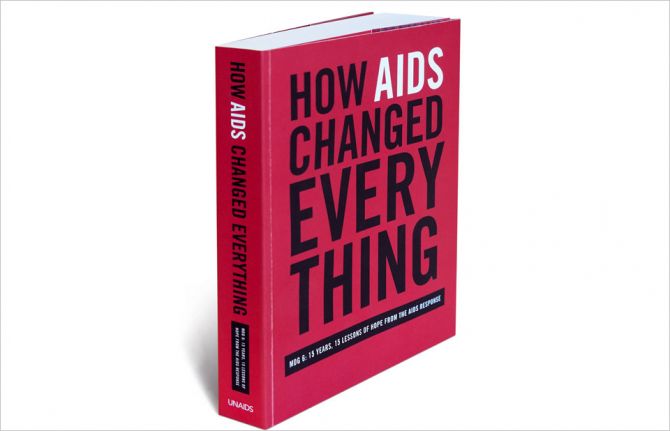
07 September 2016 07 September 2016For the second year in a row and for a third time, UNAIDS has been awarded prizes in the British Medical Association (BMA) Book Awards for its book How AIDS changed everything, which was runner up in the BMA President’s Choice Award and was Highly Commended in the Public Health category. A personal award from the BMA’s past President, Sir Al Aynsley Green, the President’s Choice Award is for the two books in the past year that most impressed him.
How AIDS changed everything—MDG 6: 15 years, 15 lessons of hope from the AIDS response is about how the world achieved and exceeded the AIDS targets of the Millennium Development Goals (MDGs) in 2015.
The book covers the 15 years of the MDGs and was launched in July 2015 as the world reached 15 million people on HIV treatment, a major milestone met ahead of schedule.
“The world has delivered on halting and reversing the AIDS epidemic,” said Ban Ki-moon, Secretary-General of the United Nations, at the launch. “Now we must commit to ending the AIDS epidemic as part of the Sustainable Development Goals.”
The BMA judges noted that, “This is an excellent book, written and presented to a high standard. It contains a comprehensive history of AIDS, its prevention and the suggested plans for the future.”
Michel Sidibé, UNAIDS Executive Director, said, “This award recognizes the achievements the AIDS response made under the Millennium Development Goals and the men and women who worked to help bring those achievements about.”
UNAIDS Director of Communications and Global Advocacy Annemarie Hou, accepting the award on behalf of UNAIDS, said, “The AIDS response brought the world together and this award is for all the people who are making a difference to end this epidemic.”
Major milestones met
Released in Addis Ababa, Ethiopia, on the sidelines of the Third International Conference on Financing for Development, the report demonstrates that the response to HIV has been one of the smartest investments in global health and development, generating measurable results for people and economies. It also shows that the world is on track to meet the investment target of US$ 22 billion for the AIDS response by 2015 and that concerted action over the next five years can end the AIDS epidemic by 2030.
How AIDS changed everything—MDG 6: 15 years, 15 lessons of hope from the AIDS response celebrates the milestone achievement of 15 million people on antiretroviral treatment—an accomplishment deemed impossible when the MDGs were set in 2000. It also looks at the incredible impact the AIDS response has had on people’s lives and livelihoods, on families, communities and economies, as well as the remarkable influence the AIDS response had on many of the other MDGs. The report includes specific lessons to take forward into the Sustainable Development Goals, as well as the urgent need to increase and front-load investments and streamline programmes.
Achieving MDG 6: halting and reversing the spread of HIV
In 2000, the world witnessed an extraordinary number of new HIV infections. Every day, 8500 people were becoming newly infected with the virus and 4300 people were dying of AIDS-related illnesses. How AIDS changed everything describes how, against all odds, huge rises in new HIV infections and AIDS-related deaths were halted and reversed.
Countries invested heavily in monitoring and evaluating their responses to HIV. In 2014, 92% of United Nations Member States reported HIV data to UNAIDS. State-of-the-art epidemic monitoring, data collection and reporting have made HIV data the most robust in the world, far more complete than data for any other disease. This has not only enabled the world to have a clear picture of HIV trends, it has also enabled HIV programming to be tailored to the specific dynamics of each country’s epidemic.
How AIDS changed everything—MDG 6: 15 years, 15 lessons of hope from the AIDS response is both a look back on the journey of the 15 years and a look forward to the future of the AIDS response and the path to ending the AIDS epidemic by 2030.
The flagship publication from UNAIDS was released at a community event at Zewditu Hospital in Addis Ababa on 14 July 2015 by United Nations Secretary-General Ban Ki-moon, the Ethiopian Minister of Health, Kesetebirhan Admassu, the Executive Director of UNAIDS, Michel Sidibé, and Abiyot Godana, Case Manager at the Entoto Health Center.
The prestigious awards were announced at a ceremony on 7 September 2016 at BMA House in London, United Kingdom. An annual event, the awards aim to encourage and reward excellence in medical publishing, with prizes given out in categories and an overall BMA Medical Book of the Year Award and a President’s Choice Award made from the shortlisted books.
05 September 2016
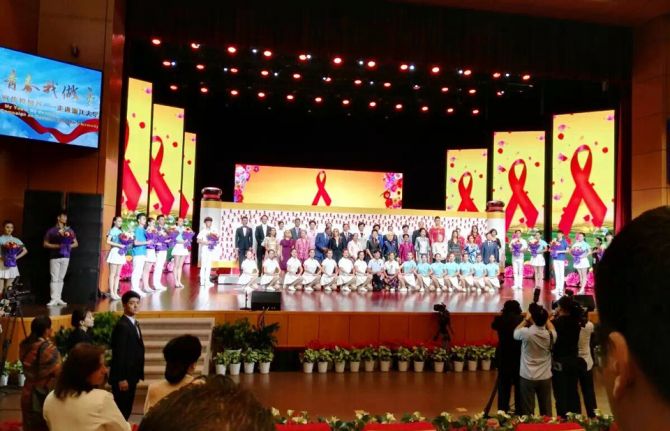
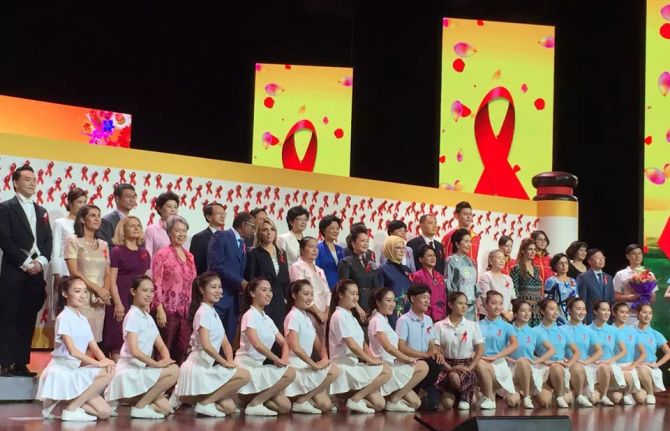
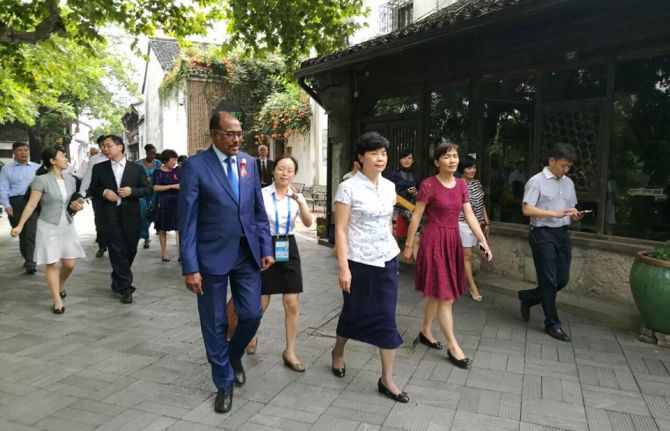
05 September 2016 05 September 2016The First Lady of China, Peng Liyuan, and her counterparts from other Group of 20 (G20) countries have taken part in an event at Zhejiang University in Hangzhou to raise awareness of HIV among students. The Red Ribbon Health Ambassador’s Campus Tour campaign event took place on the sidelines of the 2016 G20 summit, where leaders of the world’s foremost economies have gathered for their annual meeting.
The first ladies, China’s Minister of the National Health and Family Planning Commission, Li Bin, and UNAIDS Executive Director Michel Sidibé also participated in the event. They met students and made a symbolic gesture of placing red ribbons on a banner.
“This meeting is another expression of China’s strong commitment towards ending AIDS by 2030,” said Ms Li.
Mr Sidibé expressed his appreciation for China’s efforts following the event. “We will not end the AIDS epidemic unless we stop new HIV infections among young people. China’s HIV campaign in universities is a great start,” he said.
The Red Ribbon Health Ambassador’s Campus Tour campaign was launched in November 2014 to improve knowledge of HIV prevention and to promote a healthy lifestyle among students. Nearly 20 colleges and universities and 10 medical schools have participated in the campaign, reaching around 400 000 students.
Young people are at higher risk of HIV. In 2015, globally there were 3.9 million young people aged 15 to 24 living with HIV and there were 670 000 new HIV infections among this age group. To reach the global commitment of ending AIDS by 2030, countries have pledged to ensure that, by 2020, 90% of young people have the skills, knowledge and capacity to protect themselves from HIV and have access to sexual and reproductive health services.
Mr Sidibé is on a week-long mission to China and participated in the G20 summit, which focused on promoting stable economic growth. He also met with international business leaders at the B20 summit, which looked at how the business community could contribute to sustainable and balanced growth in the global economy.
While in China, Mr Sidibé also discussed the financing challenges for the global HIV response with Roberto Azevêdo, Director-General of the World Trade Organization, Jim Yong Kim, President of the World Bank Group, and Christine Lagarde, Managing Director of the International Monetary Fund.
20 July 2016
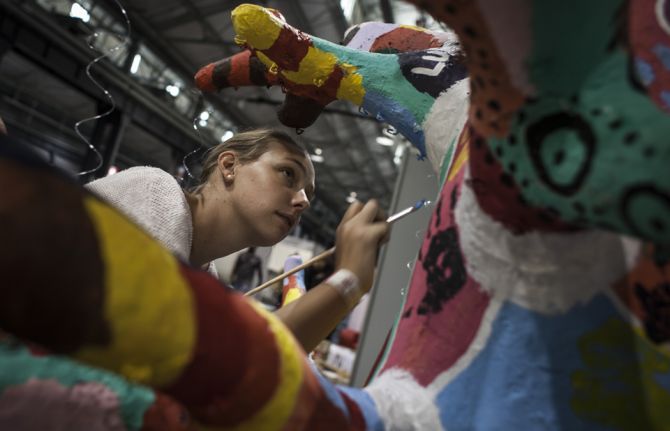
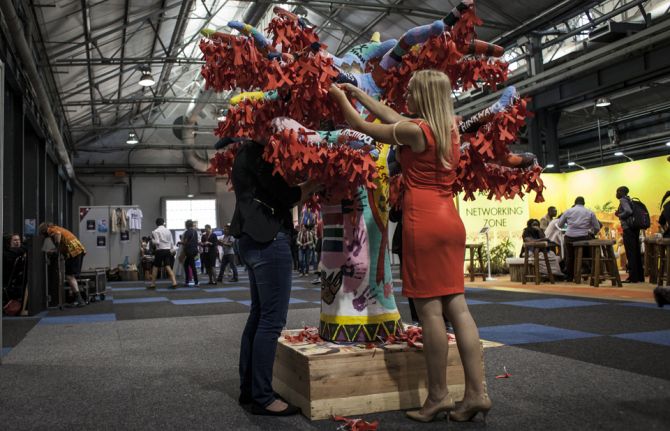
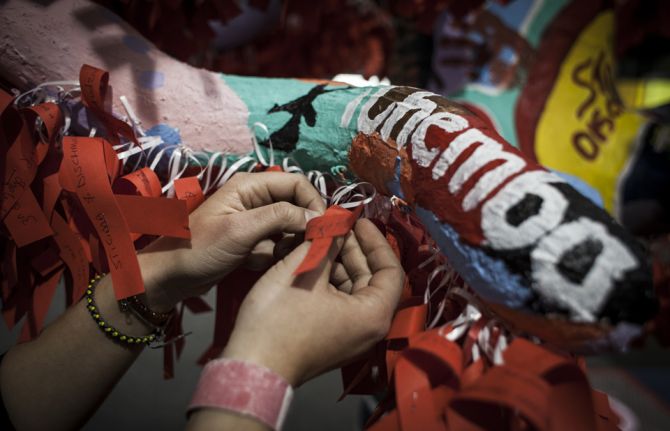
20 July 2016 20 July 2016Red paper ribbons with inscriptions hang like leaves from a baobab-like papier mâché tree. Standing by her creation in the middle of the Global Village at the 21st International AIDS Conference, being held in Durban, South Africa, Michelle Vogelzang is beaming. Her AIDS SolidariTree has travelled far.
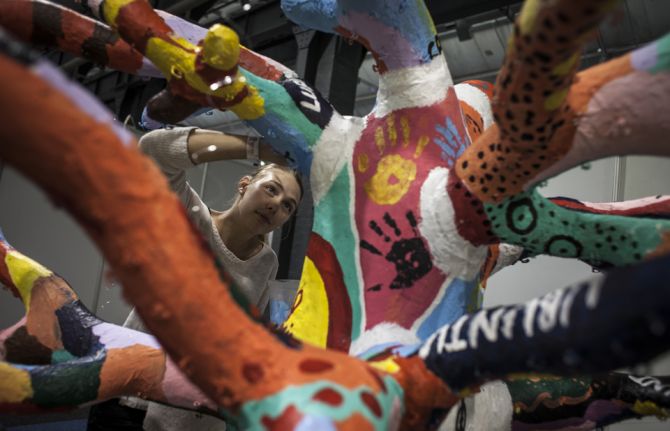
Made of the dense foam used to make surfboards, children in Lesotho covered the 11-part sculpture with paper, giving it a bark-like exterior. School students painted the tree in Pretoria, South Africa, writing words related to solidarity in the 11 official languages of both countries.
Unity, stop discrimination and ubuntu wind their way around the branches in multicoloured lettering.
“SolidariTree is a visual declaration designed by youth as a way for them to communicate on how to end HIV stigma and for everyone else to add their voice,” said Ms Vogelzang.
Originally from Durban, she now works in Lesotho. She said the idea of the interactive ribbon sculpture came to her because, in her opinion, HIV is not the killer, discrimination is.
“There is no way we should not be ending this epidemic because we have treatment and health-care facilities, but if you have stigma you are not going to get people tested, treated or even sharing their status,” she said as passers-by stared at the multiple ribbon leaves.
On opening day, the SolidariTree had 500 “leaves”—red ribbon messages from children who could not attend the conference.
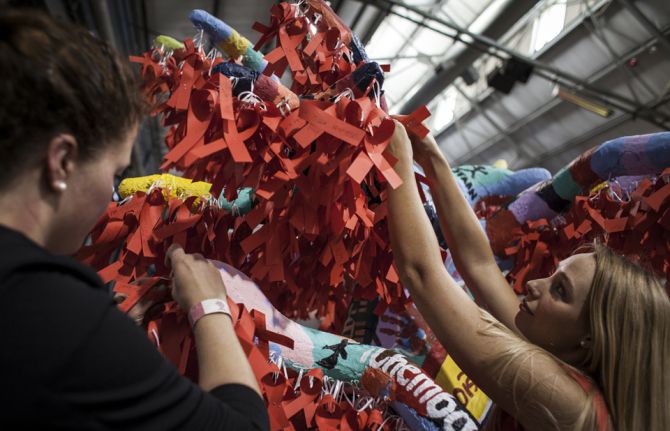
Albertina Nyatsi took one of the red paper strips lying on a table. Without hesitating, she wrote something down quickly. The Durbanite stapled the strip, creating a ribbon, and pinned it on the sculpture.
“I was one of the first women in Swaziland to show what HIV looked like, so I wanted to make sure that I got my message across that we should not discriminate,” she said. “I am here because in 1997 I had tuberculosis and then I was tested for HIV and was found to be HIV-positive.”
The tree has grown and now has more than 4000 ribbons hanging from it. The project, entirely crowdfunded, cost around US$ 4000.
“Contributions came mostly from the United States of America and Canada,” Ms Vogelzang explained. In a way, all those people who supported the art exhibition are in South Africa with the tree,” she added. A true sign of solidarity.
Ms Vogelzang is hoping her tree will grow roots beyond the conference and will live on to inspire children, teenagers and adults alike.

17 November 2016
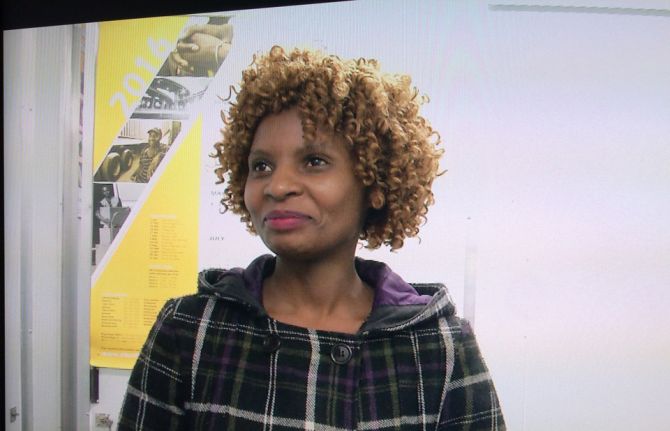
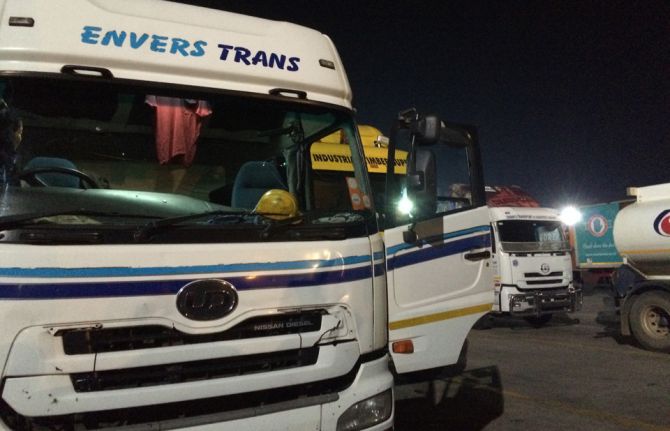
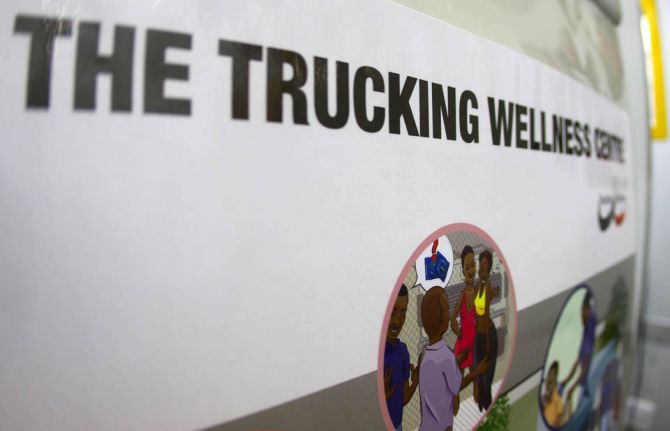
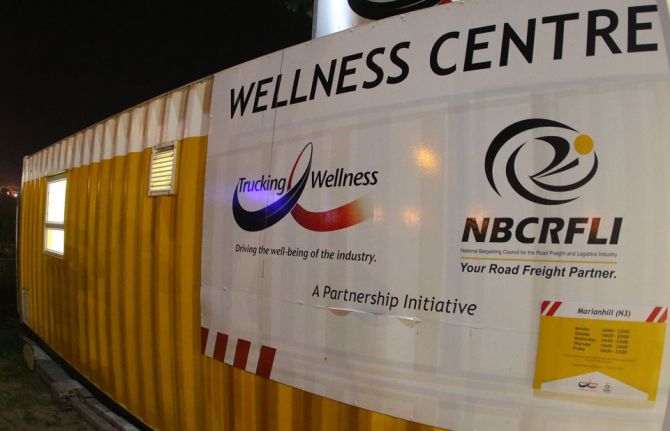
17 November 2016 17 November 2016Mandie Pakkies is shivering outside in her thin black coat on a chilly Durban winter’s night at a truck stop in the suburb of Marianhill on one of the main trucking routes out of Africa’s busiest port. The steady stream of trucks passing by on the highway do not disturb her. She’s actually eager for some of them to pull in for diesel and even a chat. Her job is to encourage truck drivers to take care of their health, and when they park up for the night she invites them into a clinic constructed out of shipping containers at the far end of the truck stop.
“These drivers have such pressing health needs! It’s encouraging to see them come to have their blood pressure taken or want to know their HIV status,” Ms Pakkies said. “I am even teaching them the basics like “drink water”, or “walk 20 minutes to get exercise before you go to sleep in the parking lot.””
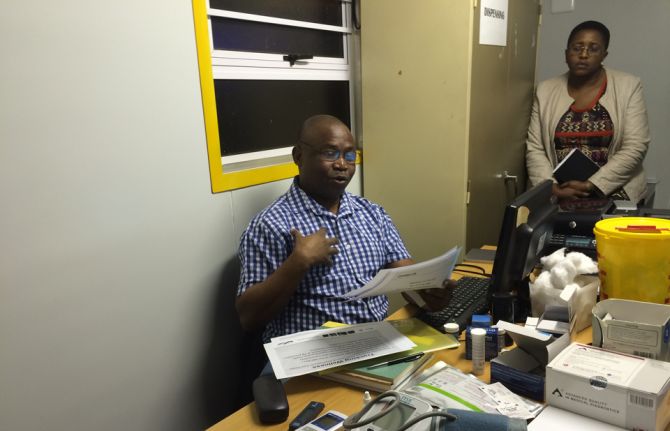
The clinic opens in the evenings to coincide with the overnight stop that many truckers make before loading up at the port first thing in the morning. Ms Pakkies, the peer educator, and Thuthuka Xulu, a professional nurse, work side by side welcoming truck drivers and the sex workers from the surrounding streets, who come into the parking lot with the drivers. “We not only provide basic health services, but we test for HIV, tuberculosis and sexually transmitted infections, and of course we distribute a lot of condoms,” said Mr Xulu.
With 2000 trucks passing weekly at the Marianhill site and about 500 trucks parking overnight, the team has plenty to do. Truck drivers come from all over South Africa and neighbouring countries. Owing to their erratic schedules and mobility, truckers face many challenges in accessing basic health services. To respond to these needs and those of the sex workers who work around the truck stop, Truckers Wellness established a network of clinics along the major trucking routes around South Africa.
The Marianhill Trucking Wellness Centre is one of 22 such clinics in the country within a larger network of trucker outreach projects across the region. This programme, launched in 1999, is funded by the freight industry and truck owners and linked to Department of Health services. In the last five years they have tested more than 10 000 people for HIV, averaging around 30 tests per week.
“We are seeing more people get tested and seek our services,” added Mr Xulu, seated behind a cramped desk covered with folders, a box of surgical gloves and HIV testing kits.
The next step for his centre is to be able to adopt the World Health Organization’s guidelines, so that patients can start antiretroviral therapy immediately if they test positive. Grinning he said, “That will really enlarge the scope of our centre.”
20 July 2016
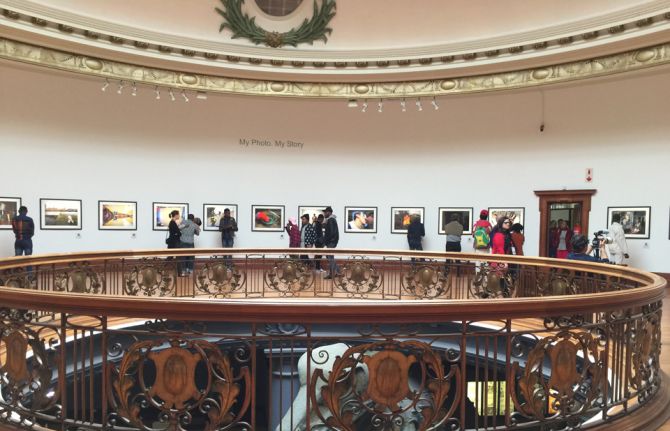
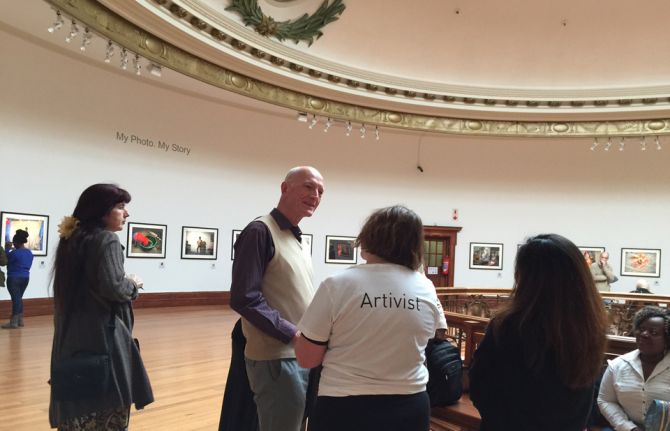
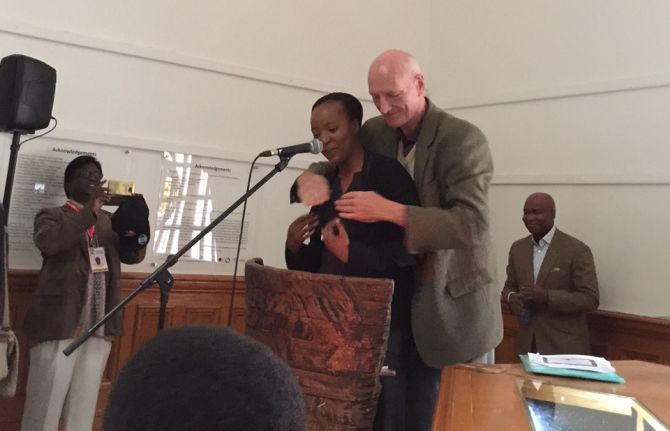
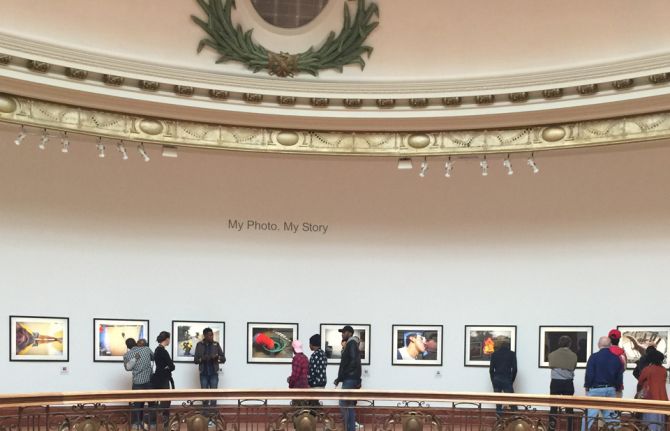
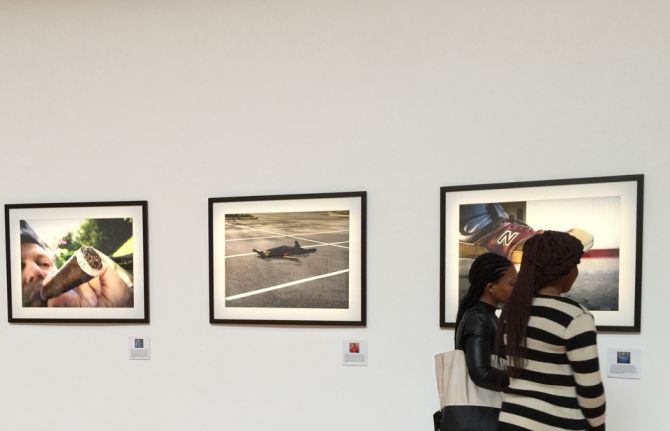
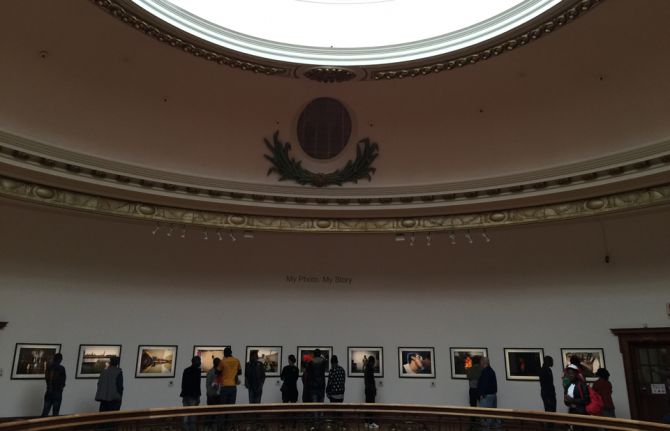
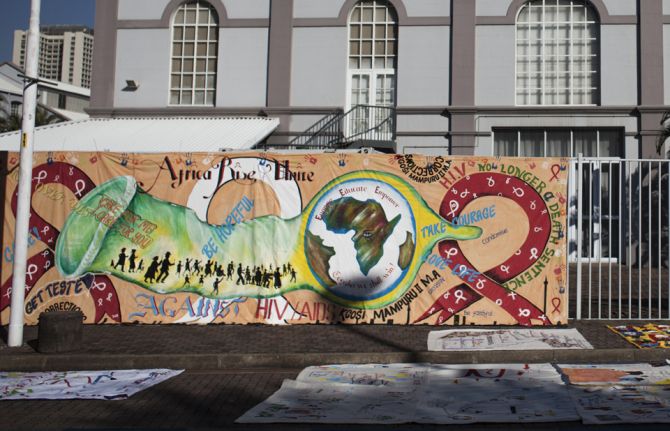
20 July 2016 20 July 2016Photographs line the walls of the rotunda in Durban’s City Hall. The light streams in from the windows of the cupola and recorded voices of the “artivists,” as they are known, speak to all who enter. The exhibition is called Through Positive Eyes: 10 Years. 9 Cities. My Photo. My Story.
Storytelling is revealed in several forms as visitors immerse themselves in the exhibition. Over the course of 10 years, co-directors of the Through Positive Eyes project David Gere and Gideon Mendel have brought together from around the world people living with HIV.
In each of the nine cities, the process began the same way—a group of people, strangers to each other, were given a camera. What started as a foreign object quickly became an extension of themselves.
Mr Mendel, an award-winning photographer, leads photo education workshops alongside his associate, Crispin Hughes. Mr Gere, a professor at the University of California, Los Angeles, conducts the story interviews.
“It was therapeutic to hear other people’s stories,” said artivist Simiso Msoni of Durban. “Overall, it was just fun to tell your story and what it means to live with HIV through pictures.”
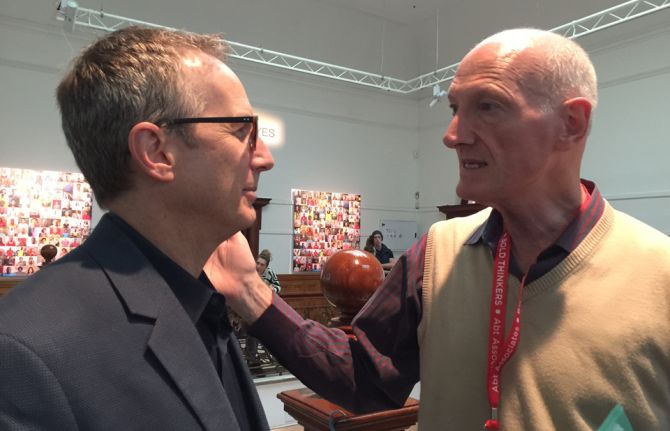
The Durban exhibition brings many of the past participants together, as well as their art. An innovative feature is the live dialogue sessions, in which two of the participants speak to each other about their experiences and visitors can listen as their stories unfold.
Edwin Cameron, a Judge of the Constitutional Court of South Africa, called the exhibition extraordinary. “This exhibition is important for what it does for visibility, for what it does for voices,” he said. He underlined the need to listen and learn from people living with and affected by HIV and the need to break down barriers caused by stigma and discrimination.
The exhibition includes works by Adriana Bertini, Mandisa Dlamini, Daniel Goldstein, Ross Levinson, Gordon Mundie and Parthiv Shah and is co-curated by Stan Pressner, Carol Brown and Mr Gere.

22 July 2016
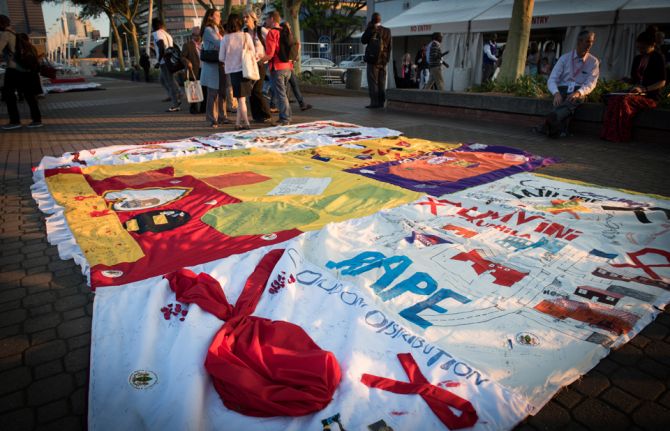
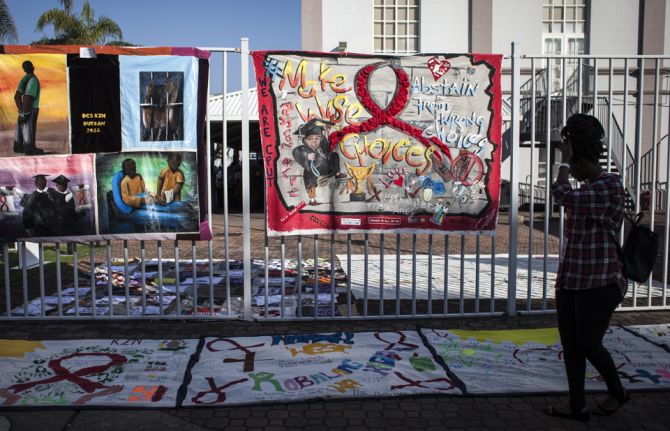
22 July 2016 22 July 2016Quilts of various sizes, colours and shapes ripple like waves by the various entrances to the Durban International Conference Centre, hosting the 21st International AIDS Conference. Laid out or hung up, inscriptions vary from “Empower together we shall win” to “Positive link.” The AIDS Quilt Project is back in South Africa telling the story of the journey from Durban 2000—the last time the AIDS conference took place in the city—to Durban 2016.
In 2000, fewer than one million people had access to life-saving treatment and South Africa had the greatest number of people living with HIV.
“In 2016, we wanted to tell this journey and how we came from a time of loss and death and stigma and discrimination to where we are now, where we can talk about treatment and HIV, and we are much more open,” explained Kanya Ndaki, from the South African National AIDS Council. She added, “The quilts visually tell the story.”
Communities, schools, nongovernmental organizations, the health department and civil society partners submitted their decorated cloth panels from across the country. More than 450 in total were collected. Many grace the grounds of the conference, with a few quilts dating back to 2000.
“Blesser”
One quilt told the story of the sugar daddy phenomenon, known in South Africa as “blessers,” depicted schoolgirls in pigtails with an iPhone in hand and big purses next to a grey-haired man in a fancy car.
Young women and adolescent girls make more than 70% of new HIV infections in Sub-saharan Africa. A rate two and a half times greater than boys of the same age. Many point the finger at the fact that young women are having sex with much older partners unlike their male peers.
Prison story full of optimism
Ms Ndaki proudly showed off a quilt hanging prominently outside the entrance to the Global Village—a space open to the general public. “This quilt came from the Department of Correctional Services, a prison in Pretoria,” she said pointing to the long orange-hued panel. “Care for me, I care for you,” “Take courage,” “Love life” and “Condomize” grace the panel. Initially, prisoners were to sew different panels together, but in the end they designed their very own creation.
“It is a very powerful quilt and it was one of the ones displayed when government officials handed over the quilts to the South African National AIDS Council for the Durban AIDS Conference,” she said as two women posed for selfies with the quilt in the background.
04 July 2016
04 July 2016 04 July 2016The United Nations Human Rights Council (UNHRC) has established the position of independent expert on protection against violence and discrimination based on sexual orientation and gender identity. In a resolution, adopted on 1 July, the UNHRC created the first ever global human rights mechanism specifically dedicated to the human rights of lesbian, gay, bisexual, transgender and intersex (LGBTI) people.
“UNAIDS welcomes the establishment of this position. The independent expert will be critical for advancing the human rights and health of lesbian, gay, bisexual, transgender and intersex people,” said Michel Sidibé, UNAIDS Executive Director. “We look forward to working closely with the independent expert to end violence and discrimination based on sexual orientation and gender identity and to ensuring that no one is left behind in ending AIDS.”
In all regions of the world, acts of violence, discrimination and other forms of human rights violations are committed against LGBTI people. These violations have a far-reaching impact on society, including by contributing to increased vulnerability to HIV among LGBTI people and limiting their access to health and other social services. Compared with adults in the general population, gay men and other men who have sex with men are 24 times more likely to acquire HIV, and transgender people are 49 times more likely to be living with HIV.
The independent expert is mandated to address all violence and discrimination faced by people on the basis of their sexual orientation and gender identity. He or she will engage in dialogue and consult with states and other relevant stakeholders to address the root causes of violence and discrimination and will provide technical assistance and capacity-building in support of national efforts. In fulfilling the mandate, the independent expert will help shed light on the serious health challenges faced by LGBTI people.
21 June 2016
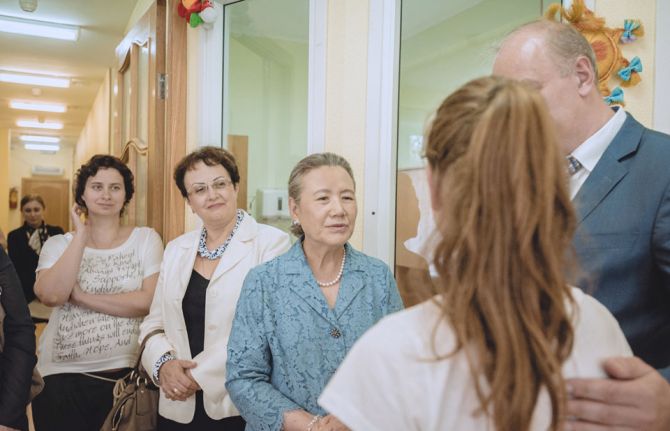
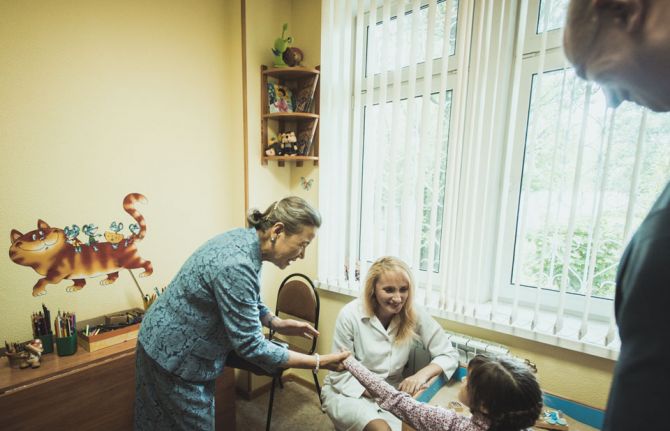
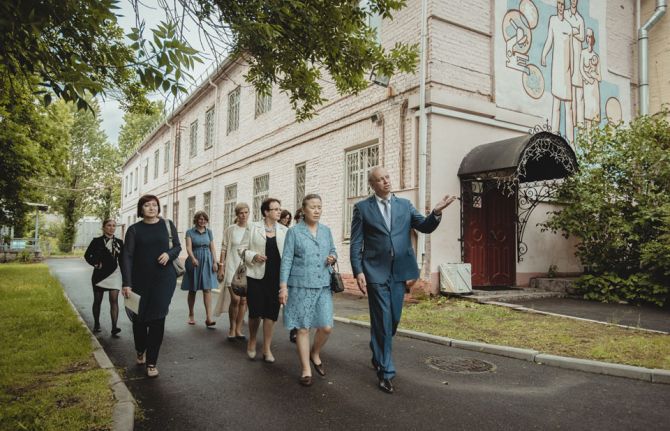
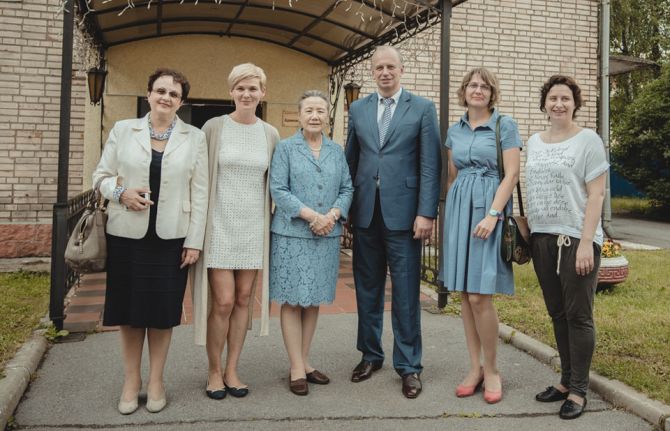
21 June 2016 21 June 2016Yoo (Ban) Soon-taek, the wife of the Secretary-General of the United Nations, visited the clinic for children living with HIV at the Republican Clinical Infectious Diseases Hospital in Saint Petersburg, Russian Federation, on 16 June and met with women affected by HIV. During her visit, Ms Ban was familiarized with how the clinic helps children living with HIV with medical and psychological problems.
Ms Ban was deeply moved by the special care provided to the children at the HIV clinic. She learned that more than 300 abandoned children living with HIV had been adopted over the years. Yevgeny Voronin, the hospital’s chief physician, shared the story of a girl who was preparing to leave after 13 years.
The Director of the Women’s and Children’s Health Department at the Ministry of Health, Yelena Baibarina, stated during the meeting with Ms Ban that the Russian Federation had significantly reduced mother-to-child transmission of HIV. Ms Baibarina also stressed that it was important for the Ministry of Health to collaborate with nongovernmental organizations representing people affected by HIV.
Maria Godlevskaya and Irina Yevdokimova, of the non-profit-making partnership EVA, told Ms Ban about their social network of women affected by HIV and the challenges they faced. They stressed the need for closer interaction between public health and nongovernmental organizations working with women at higher risk of HIV for early diagnosis of HIV and to prevent mother-to-child transmission.
Yulia Godunova, Executive Director of EVA, told Ms Ban she was expecting her second child. She said that her wish was that neither she nor her children would ever face stigma and discrimination associated with HIV.
Ms Ban, a mother of three and grandmother of four, said that women should be leaders for change, “because it’s hard to find better motivation than children. I admire what you are doing for the sake of your children. You bring about change in society. Thank you.”