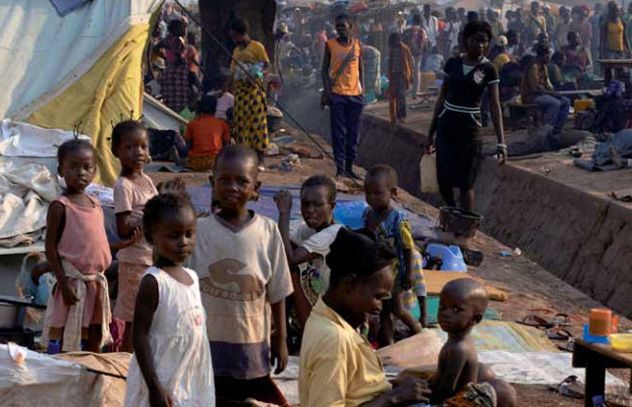
Displaced people at a makeshift camp site at the international airport in Bangui, the Central African Republic. Credit: UNHCR
Feature Story
Number of people forced to flee their homes is the highest in recent history
20 June 2014
20 June 2014 20 June 2014The number of the world’s refugees, asylum seekers and internally displaced people has risen dramatically, topping 50 million for the first time since the Second World War, says a report released by UNHCR, the United Nations refugee agency.
According to UNHCR global trends 2013, published to coincide with World Refugee Day, marked annually on 20 June, 51.2 million people have been forcibly displaced, up 6 million from 2012.
The war in the Syrian Arab Republic is given as the main reason for this increase, as a growing number of individuals and families join 2.5 million Syrian refugees and 6.5 million internally displaced people. Conflicts in South Sudan and Central African Republic are also highlighted as the cause of widespread forced movement.
The plight of internally displaced people, a record 33.3 million, is highlighted as a special concern by UNHCR. It is hard to reach the many that remain in conflict zones and they lack the international protection received by refugees. Given this situation, the report describes 2013 as one of the most challenging years in UNHCR’s history.
United Nations High Commissioner for Refugees António Guterres said, “We are seeing here the immense costs of not ending wars, of failing to resolve or prevent conflict. Peace is today dangerously in deficit. Humanitarians can help as a palliative, but political solutions are vitally needed. Without this, the alarming levels of conflict and the mass suffering that is reflected in these figures will continue.”
People who are forcibly displaced often become more vulnerable socially, economically and in terms of their health. For example, contracting HIV may be more likely if they engage in transactional sex to meet their basic needs. In addition, access to health and education services can be very limited and the use of rape as a weapon of war also heightens vulnerability.
The global trends report contends that UNHCR remains committed to safeguarding the rights and well-being of those forced to flee their homes and continues to work to find long-term solutions, such as voluntary return, local integration or resettlement in a third country. According to Mr Guterres, the countries of the world also have to redouble efforts to both end conflict and support people in need.
“The international community has to overcome its differences and find solutions to the conflicts of today in the Central African Republic, South Sudan, Syrian Arab Republic and elsewhere. Non-traditional donors need to step up alongside traditional donors. As many people are forcibly displaced today as the entire populations of medium-to-large countries, such as Colombia or Spain, South Africa or Republic of Korea,” he added.
Related
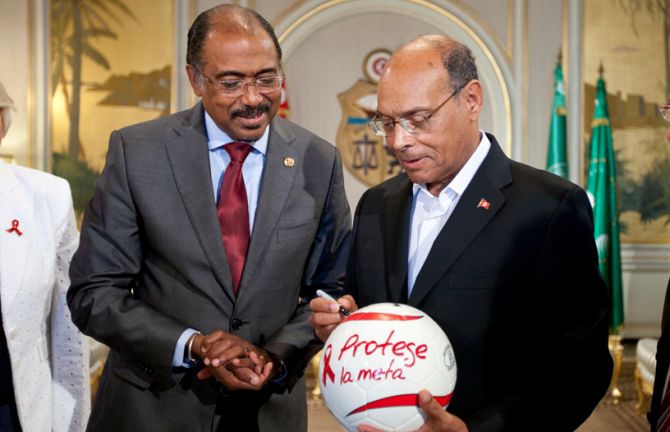
UNAIDS Executive Director Michel Sidibé with Tunisian President Moncef Marzouki, who signed the Protect the Goal campaign ball. Tunisia, 20 June 2014. Photo: O.Abid/UNAIDS
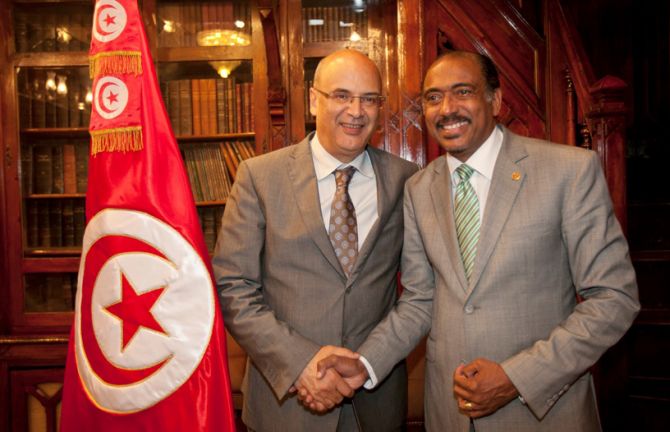
UNAIDS Executive Director Michel Sidibé with the Tunisian Minister of Finance Hakim Ben Hamouda. Tunisia, 19 June 2014. Photo: O.Abid/UNAIDS
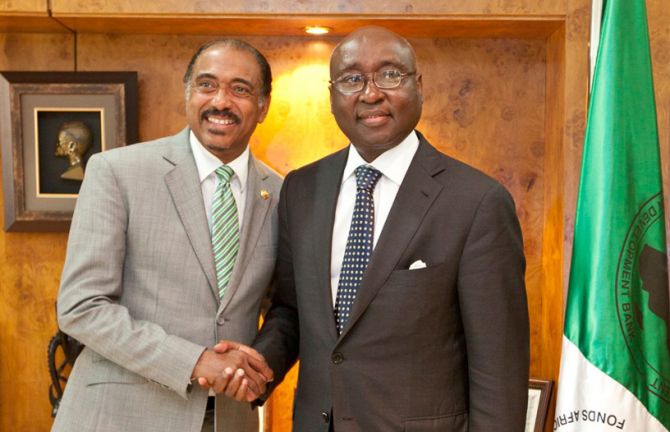
UNAIDS Executive Director Michel Sidibé with Donald Kaberuka, President, African Development Bank. Tunisia, 19 June 2014. Photo: O.Abid/UNAIDS
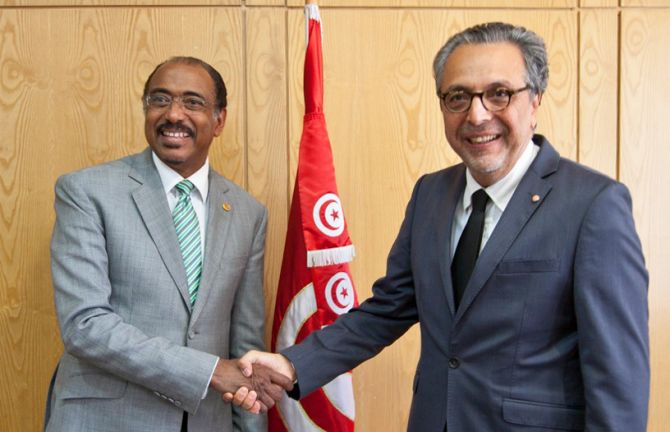
UNAIDS Executive Director Michel Sidibé with the Tunisian Minister of Health Mohamed Salah Ben Ammarwho. Tunisia, 19 June 2014. Photo: O.Abid/UNAIDS
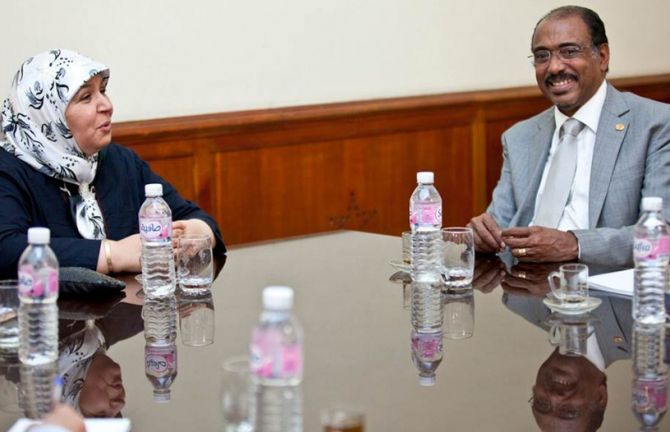
UNAIDS Executive Director Michel Sidibé with Vice President of the National Constituent Assembly Mehersia Labidi. Tunisia, 19 June 2014. Photo: O.Abid/UNAIDS

Meeting in Tunisia with civil society organisations. 18 June 2014. Photo: O.Abid/UNAIDS
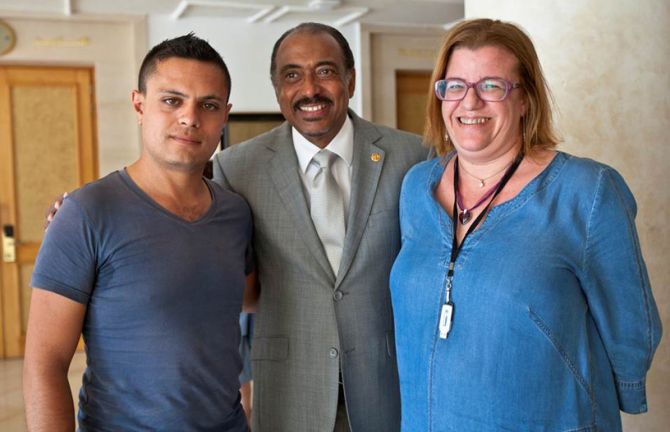
UNAIDS Executive Director with MENARosa focal point in Tunisia and the representative of the MSM community. MENA-Rosa is a regional association dedicated to women affected by HIV in the Middle East and North Africa. Photo: O.Abid/UNAIDS
Update
Tunisia commits to take a leadership role in the response to AIDS in the region
20 June 2014
20 June 2014 20 June 2014UNAIDS Executive Director Michel Sidibé commended Tunisia for its leadership role in the AIDS response in the Middle East and North Africa region during his meeting with President Moncef Marzouki on 20 June in Tunis, Tunisia. Mr Sidibé also congratulated the country for its selection to host the 18th International Conference on HIV/AIDS and STI’s in Africa (ICASA) in 2015.
President Marzouki placed Tunisia among the pioneer countries to ratify the Arab Convention on HIV Prevention and Protection of the Rights of People Living with HIV—adopted in March 2012 by the Arab Parliament—and promised to push for AIDS to remain on the post-2015 development agenda. At the end of the meeting, President Marzouki signed the Protect the Goal ball, pledging his commitment to raise global awareness of HIV.
During his three-day visit to the country, Mr Sidibe also met with representatives of civil society and affected communities, the Vice-President of the National Constituent Assembly, Mehersia Labadi, the Minister of Health, Mohamed Salah Ben Ammar, the Minister of Finance, Hakim Ben Hamouda, and Donald Kaberuka, President of the African Development Bank.
In discussions with community leaders, Mr Sidibé stressed the important role of civil society in advocating for a rights-based approach in the AIDS response and the need for governments to engage them more in the political dialogue. He also emphasized the urgent need for legislative reform and a public health approach towards people who use drugs, to avoid criminalization and ensure access to HIV services.
Mr Sidibé also reiterated the importance of domestic funding to ensure a sustainable response to the epidemic, while stressing the need to establish a concrete investment plan that focuses resources where they are most needed.
Quotes
“The signing of the Protect the Goal ball marks a new movement to ensure that no one is left behind in the AIDS response. UNAIDS is committed to supporting Tunisia effort towards ending the epidemic.”
"Strong governments should not be afraid of strong civil society".
"Every key population is the key solution. We don’t work for the community, but with it and under its leadership."
"Advocacy and awareness raising with parents and young people to protect themselves is needed to curb the HIV epidemic among our youths."
Region/country
Related
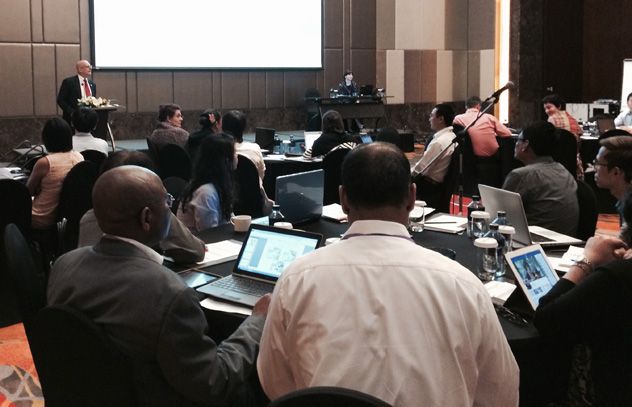
The regional consultation brought together more than 50 participants, including representatives of governments from China, Fiji, India, Indonesia, Myanmar, Thailand and Viet Nam; regional communities of people living with HIV; men who have sex with men; sex workers; transgender people; people who use drugs; UNAIDS Cosponsors, and development partners.
Update
Asia and the Pacific committed to setting ambitious HIV prevention and treatment targets
16 June 2014
16 June 2014 16 June 2014Significant progress has been made in the Asia and the Pacific region towards reaching the targets of the 2011 United Nations Political Declaration on HIV and AIDS, and the region can aspire to ending the AIDS epidemic by 2030. This was one of the main conclusions of the two-day consultation held on 12 and 13 June in Bangkok, Thailand, to discuss the challenges and opportunities for accelerating the scale-up of HIV prevention and treatment programmes in the region post-2015.
With less than 500 days to go to reach the targets of the 2011 Political Declaration, the meeting reinforced the need for concerted action to reach the 2015 targets as well to set ambitious new targets for 2020 and 2030. In a bid to leave no one behind and realize zero new HIV infections, zero discrimination and zero AIDS-related deaths, it was agreed by participants that scaling up HIV testing, focusing on key populations at higher risk, innovation in service delivery and increased funding are key to ending the AIDS epidemic by 2030.
The regional consultation brought together more than 50 participants, including representatives of the Governments of China, Fiji, India, Indonesia, Myanmar, Thailand and Viet Nam, regional communities of people living with HIV, men who have sex with men, sex workers, transgender people and people who use drugs, UNAIDS Cosponsors and development partners.
Following the regional consultation, country dialogs will be organized with key stakeholders to agree on a set of national HIV prevention and treatment targets.
Quotes
"In Asia and the Pacific, remarkable progress has been made over the past 10 years in the HIV response, but we need to keep the momentum going so we can build on gains and finish the job."
"The prevention and treatment targets for 2020 and 2030 are ambitious, but it’s good to set the bar high as it encourages health professionals, governments and civil society to refocus, innovate and collaborate."
"This is not just about being ambitious, rather working out a way to deliver prevention and treatment, in partnership with communities, to maximize impact and save lives. This is in line with how Indonesia is working, and having an aspirational set of targets will give focus to those efforts."
"We are not merely numbers. The new targets for post-2015 have to ensure universal access to quality prevention and treatment services, including hepatitis C diagnosis and treatment for people who use drugs. And we should also develop indicators for community-led HIV testing and services."

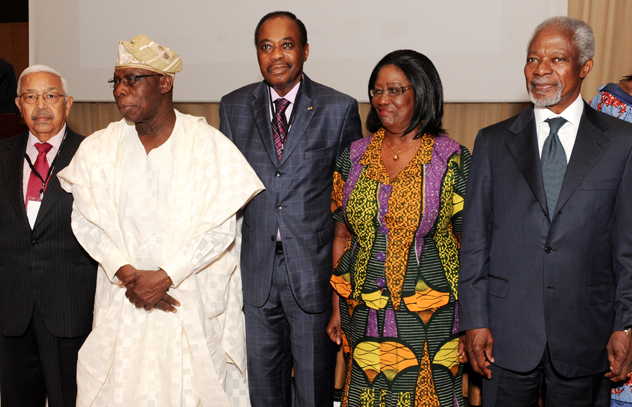
From left to right Pedro Pires Former President of Cabo Verde; Olusegun Obasanjo Chair of the Commission and Former President of Nigeria; Edem Kodjo Former Prime Minister of Togo; Mary Chinery-Hesse member of the African Union Panel of the Wise; Kofi Annan Chair of the Kofi Annan Foundation and former Secretary –General of the United Nations; the lady (half) is Christine Kafando, Founder, Association Espoir pour Demain.
Update
Treating drug use as a public health issue
12 June 2014
12 June 2014 12 June 2014A new report by the West Africa Commission on Drugs (WACD) says that drug trafficking, consumption and production in West Africa is undermining institutions, threatening public health and damaging development efforts. The report, Not Just in Transit: Drugs, the State and Society in West Africa, particularly highlights the importance of addressing drug use in as a public health issue rather than criminalizing people who use drugs.
Not Just in Transit: Drugs, the State and Society in West Africa states that the criminalization of drug use and possession has a range of negative consequences, such as over-burdening already stretched justice systems, exacerbating social problems, increasing human rights violations and encouraging corruption. It also worsens major epidemics such as HIV and Hepatitis C, as people who use drugs often fear accessing the health and harm reduction services they need in case of legal reprisals. This is especially important for people who inject drugs who can be highly vulnerable to HIV through the use of non-sterile equipment.
The report cites data to highlight the extent of the problem in a region where drug consumption is said to be increasing. For example, in Senegal an estimated 9.1% of people who inject drugs are living with HIV, compared to less that 1% of the general population.
As well as treating drug use as a public health issue with socio-economic causes and consequences, the report also advocates for the reform of relevant laws; decriminalization of drug use and low-level, non-violent drug offences; adopting harm reduction approaches and encouraging research, including the gathering of baseline data on trafficking and consumption.
The West Africa Commission on Drugs is convened by former UN Secretary-General Kofi Annan, and chaired by former Nigerian President Olusegun Obasanjo.
Quotes
"We call on West African governments to reform drug laws and policies and decriminalize low-level and non-violent drug offences. The glaring absence of treatment facilities for drug users fuels the spread of diseases and exposes an entire generation, users and non-users alike, to growing public health risks. We must all take hope in the findings of this report."
"Criminalising drug users should be replaced by a public health approach. We have concluded that drug use must be regarded primarily as a public health problem. Drug users need help, not punishment. Therefore we must deal effectively and humanly with this problem by adopting a health oriented approach and civil society must be fully engaged as a partner in this effort."
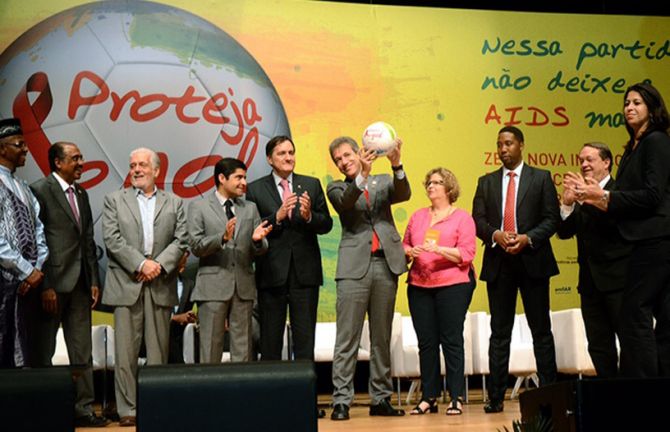
UNAIDS Protect the Goal campaign reached Brazil on the eve of the 2014 FIFA World Cup. The campaign kick-off was announced at a special event, supported by the United Nations Population Fund, the government of the State Bahia, the Salvador City Hall and the Brazilian Health Ministry, held in the emblematic Castro Alves Theatre, in Salvador on 9 June.
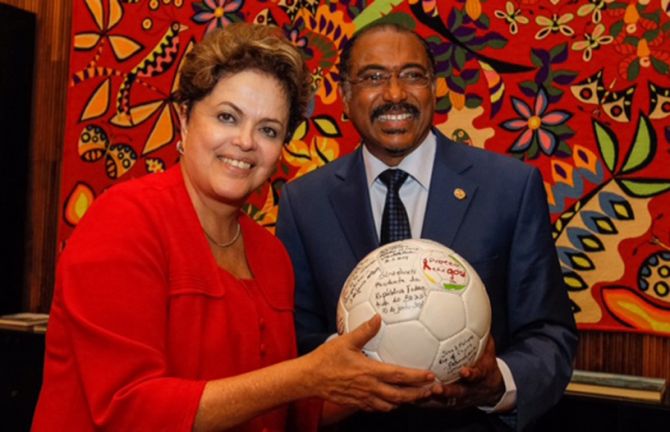
Brazil's President Dilma Rousseff (left) and UNAIDS Executive Director hold the Protect the Goal ball, a campaign aimed to raise global awareness of HIV and encourage young people to commit to HIV prevention.
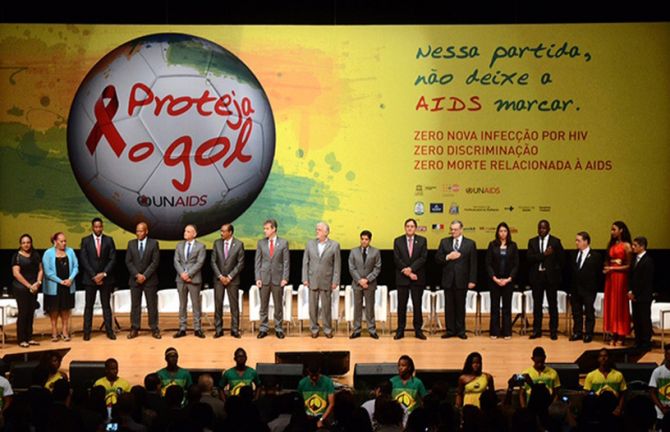
UNAIDS Protect the Goal campaign reached Brazil on the eve of the 2014 FIFA World Cup. The campaign kick-off was announced at a special event, supported by the United Nations Population Fund, the government of the State Bahia, the Salvador City Hall and the Brazilian Health Ministry, held in the emblematic Castro Alves Theatre, in Salvador on 9 June.

UNAIDS Protect the Goal campaign reached Brazil on the eve of the 2014 FIFA World Cup. The campaign kick-off was announced at a special event, supported by the United Nations Population Fund, the government of the State Bahia, the Salvador City Hall and the Brazilian Health Ministry, held in the emblematic Castro Alves Theatre, in Salvador on 9 June.
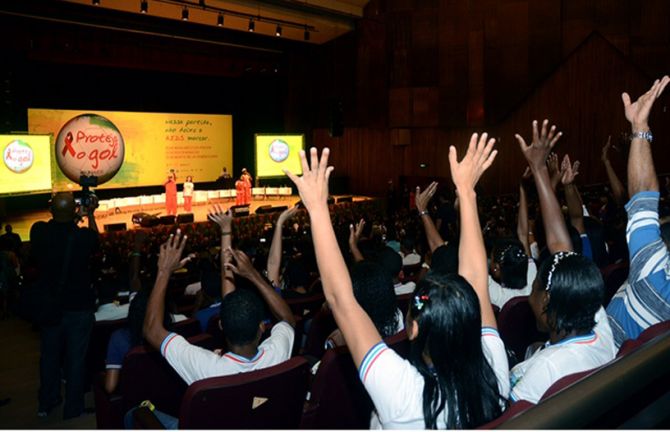
UNAIDS Protect the Goal campaign reached Brazil on the eve of the 2014 FIFA World Cup. The campaign kick-off was announced at a special event, supported by the United Nations Population Fund, the government of the State Bahia, the Salvador City Hall and the Brazilian Health Ministry, held in the emblematic Castro Alves Theatre, in Salvador on 9 June.
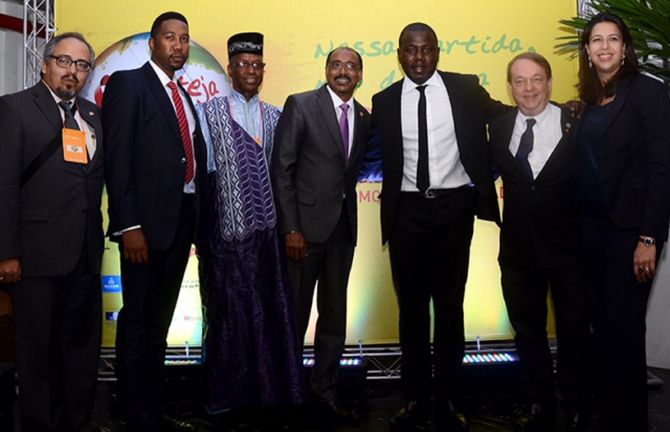
UNAIDS Protect the Goal campaign reached Brazil on the eve of the 2014 FIFA World Cup. The campaign kick-off was announced at a special event, supported by the United Nations Population Fund, the government of the State Bahia, the Salvador City Hall and the Brazilian Health Ministry, held in the emblematic Castro Alves Theatre, in Salvador on 9 June.
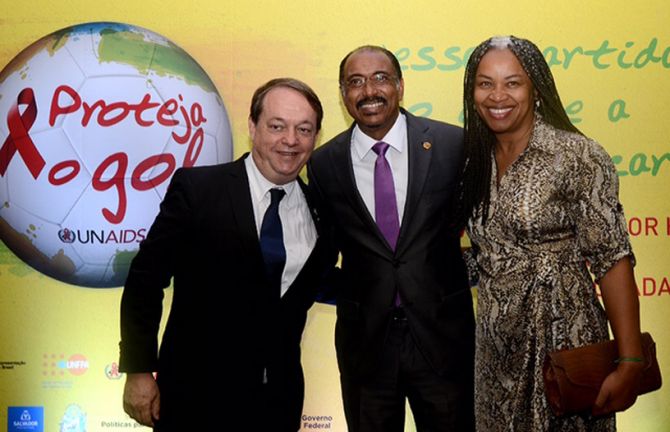
UNAIDS Protect the Goal campaign reached Brazil on the eve of the 2014 FIFA World Cup. The campaign kick-off was announced at a special event, supported by the United Nations Population Fund, the government of the State Bahia, the Salvador City Hall and the Brazilian Health Ministry, held in the emblematic Castro Alves Theatre, in Salvador on 9 June.
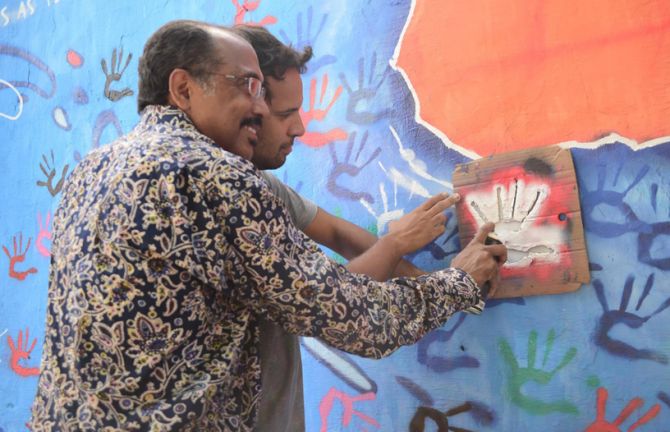
UNAIDS Protect the Goal campaign reached Brazil on the eve of the 2014 FIFA World Cup. The campaign kick-off was announced at a special event, supported by the United Nations Population Fund, the government of the State Bahia, the Salvador City Hall and the Brazilian Health Ministry, held in the emblematic Castro Alves Theatre, in Salvador on 9 June.
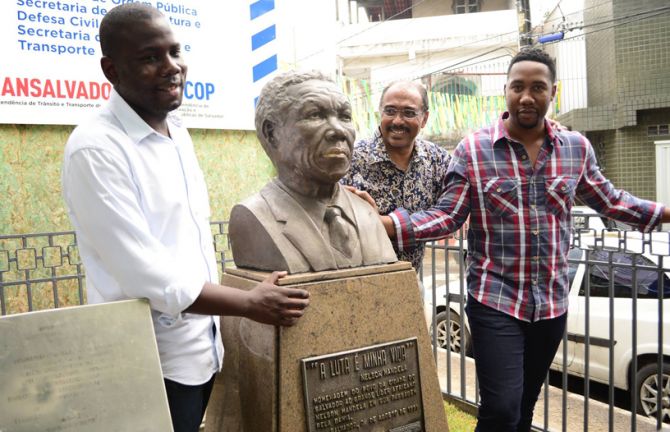
UNAIDS Protect the Goal campaign reached Brazil on the eve of the 2014 FIFA World Cup. The campaign kick-off was announced at a special event, supported by the United Nations Population Fund, the government of the State Bahia, the Salvador City Hall and the Brazilian Health Ministry, held in the emblematic Castro Alves Theatre, in Salvador on 9 June.
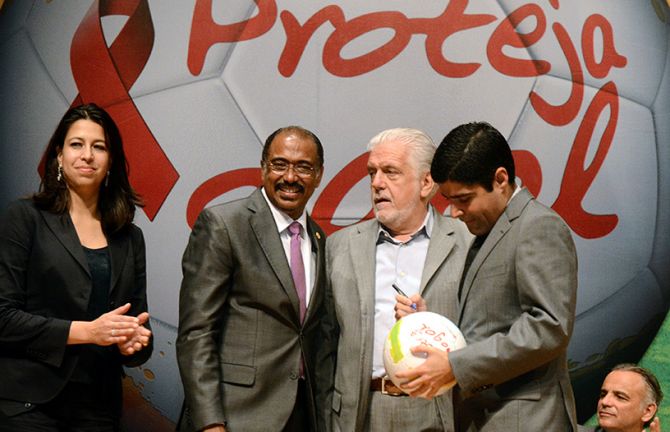
UNAIDS Protect the Goal campaign reached Brazil on the eve of the 2014 FIFA World Cup. The campaign kick-off was announced at a special event, supported by the United Nations Population Fund, the government of the State Bahia, the Salvador City Hall and the Brazilian Health Ministry, held in the emblematic Castro Alves Theatre, in Salvador on 9 June.
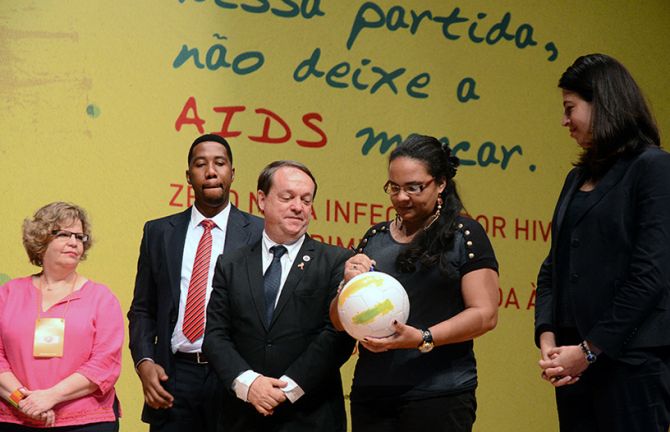
UNAIDS Protect the Goal campaign reached Brazil on the eve of the 2014 FIFA World Cup. The campaign kick-off was announced at a special event, supported by the United Nations Population Fund, the government of the State Bahia, the Salvador City Hall and the Brazilian Health Ministry, held in the emblematic Castro Alves Theatre, in Salvador on 9 June.
Update
UNAIDS Protect the Goal campaign kicks-off in Brazil
10 June 2014
10 June 2014 10 June 2014UNAIDS ‘Protect the Goal’ campaign is a global social movement, mobilizing the power of sport to empower young people to access HIV services
UNAIDS Protect the Goal campaign has been launched in Brazil on the eve of the 2014 FIFA World Cup. The campaign kick-off was announced at a special event on 9 June at the emblematic Castro Alves Theatre in Salvador, Brazil. UNAIDS Executive Director Michel Sidibe was joined by global and local partners, including the Government of the State Bahia, the Salvador City Hall, the Brazilian Health Ministry, the United Nations Population Fund (UNFPA) and the Protect the Goal spokespersons, Ndaba and Kweku Mandela.
As part of the Protect the Goal campaign during the World Cup in Brazil, 2 million condoms and Protect the Goal leaflets are being distributed across the 12 World Cup host cities and free rapid HIV tests will be offered at local Fan Fests. Other cities such as Aracajú, Porto Seguro, Ribeirão Preto, Santos and many more are joining the campaign and schools in the state of Bahia are participating with contests and HIV training programmes.
Protect the Goal was first launched at the 2010 FIFA World Cup in South Africa. To symbolize the strong links between Latin America and Africa, the ‘Protect the Goal World tour’ was launched during the friendly match between South Africa and Brazil in March 2014. The tour saw the passing of the ‘Protect the Goal’ football through the countries participating in the 2014 FIFA World Cup. In recent weeks, the Protect the Goal ball was signed by the Heads of State of Algeria, Argentina, Cameroon, Chile, Colombia, Costa Rica, Ivory Coast, Ghana, Honduras, and Nigeria, and Uruguay. The United Nations Secretary-General, Ban Ki-moon, has signed the Protect the Goal football as have many heads of UN agencies and the former UN Secretary-General Kofi Annan.
The Protect the Goal campaign aims to raise global awareness of HIV, encourage young people to commit to HIV prevention; and to emphasize the need to ensure universal access for all eligible for HIV treatment by 2015, the deadline for the UN Millennium Development Goals.
Quotes
"Protect the Goal is more than just a global HIV awareness campaign. It is a bold social movement, uniting people from around the world with the power of sport and social change. It is an honour to launch the Protect the Goal campaign in Salvador with global partners and our hosts here in Salvador, Brazil."
"This project, carried out in partnership with UNAIDS, is how the Ministry of Health of Brazil is implementing innovative HIV prevention strategies for young people."
"People will be looking at my country, wanting to see great football during the World Cup. This is a great opportunity, so I want to help UNAIDS and be part of the winning team against HIV."
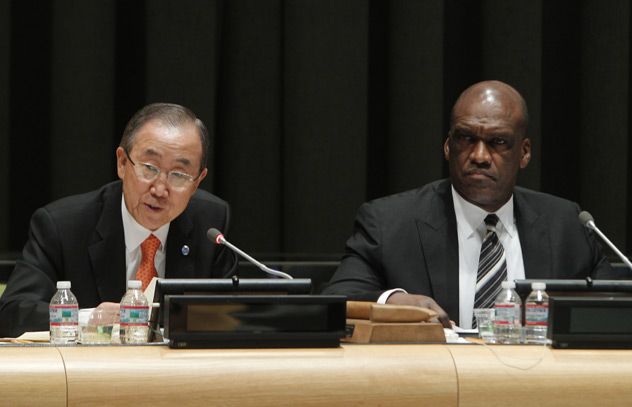
Ban Ki-moon, United Nations Secretary-General and John W. Ashe, President of the 68th Session of the United Nations General Assembly. Credit: UN Photo/Devra Berkowitz
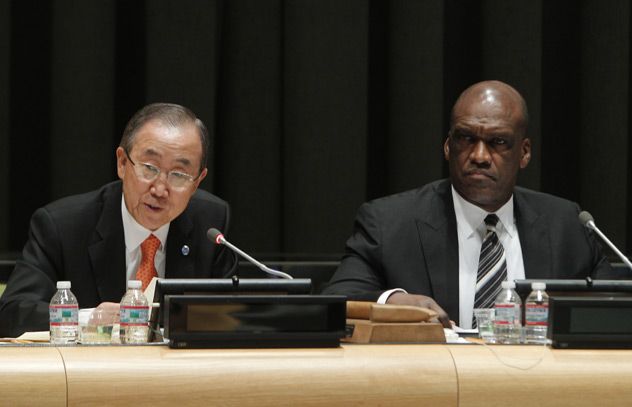
The United Nations Secretary-General Ban Ki-moon presented his report on HIV to the sixty-eighth United Nations General Assembly in New York on 6 June 2014.
Update
United Nations Secretary-General presents progress report on AIDS at the sixty-eighth session of the General Assembly
06 June 2014
06 June 2014 06 June 2014The United Nations Secretary-General Ban Ki-moon presented his report on HIV to the sixty-eighth United Nations General Assembly in New York on 6 June 2014.
The report Towards ending the AIDS epidemic: meeting the 2015 targets and planning for the post-2015 era takes stock of progress made in implementing the targets set out in the 2011 United Nations General Assembly Political Declaration on HIV and AIDS. The report provides an update on developments in the AIDS response and recommends key actions to accelerate progress towards achieving the goals and targets to be met by 2015. The report also urges a commitment to ending the AIDS epidemic as a development priority in the post-2015 development agenda.
UNAIDS Executive Director Michel Sidibé will also participate in an interactive panel discussion on the side-lines of the General Assembly plenary meeting to exchange views on what it will take to end the AIDS epidemic.
*Note: On 30 July a decision was adopted by the General Assembly calling for a High-level meeting on HIV/AIDS in 2016. Read the draft decision submitted by the President of the General Assembly.
Quotes
"I thank Michel Sidibé and UNAIDS for their leadership along with the efforts across the United Nations system and beyond to mobilize the global response [to AIDS].”
“As Member States proceed in their deliberations, I hope they will consider the importance of ending the AIDS epidemic as a priority [post-2015]. The success of the HIV response can also offer useful lessons for addressing other health and development issues.”
"I thank Michel Sidibé and UNAIDS for their leadership along with the efforts across the United Nations system and beyond to mobilize the global response [to AIDS].”
“As Member States proceed in their deliberations, I hope they will consider the importance of ending the AIDS epidemic as a priority [post-2015]. The success of the HIV response can also offer useful lessons for addressing other health and development issues.”
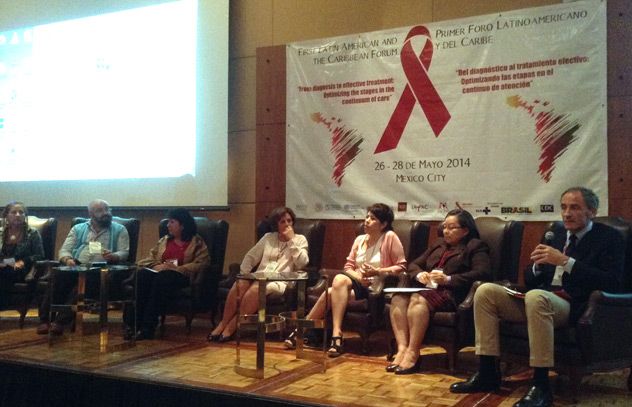
The First Latin American and Caribbean Forum on the HIV Continuum of Care was held in Mexico City from 26 to 28 May 2014.
Feature Story
New targets set for 2020 for reducing the HIV epidemic in Latin America and the Caribbean
06 June 2014
06 June 2014 06 June 2014The Latin America and Caribbean regions have set new targets for expanding HIV testing and treatment by 2020 to reduce new HIV infections, late diagnosis and AIDS-related deaths, as well as to improve the quality of life of people living with HIV.
Named 90–90–90, the new benchmarks were adopted during the First Latin American and Caribbean Forum on the HIV Continuum of Care, which was held in Mexico City, Mexico, from 26 to 28 May. During the meeting, the participants endorsed a call to action to adopt the UNAIDS and Pan American Health Organization (PAHO) 2020 treatment cascade targets for the two regions. These targets include increasing to 90% the proportion of people living with HIV who know their diagnosis, increasing to 90% the proportion of people living with HIV receiving antiretroviral treatment and increasing to 90% the proportion of people on HIV treatment who have an undetectable viral load.
Representatives of national HIV programmes, civil society, people living with HIV, academia and the scientific community were among the 141 people from 26 countries who participated in the forum. The meeting was organized by a coalition of partners, including UNAIDS, PAHO, the Governments of Mexico and Brazil and other regional partners.
The bold targets are a response to recent scientific evidence that diagnosing HIV and starting treatment earlier can prevent its transmission and dramatically improve health outcomes. Suppressed viral load is critical for reducing both the harmful effects of HIV infection on people’s health and the risk of infecting others.
“The expansion of early diagnosis and treatment combines individual clinical benefits of early treatment with the benefits of preventing transmission in the community,” said César Núñez, UNAIDS Regional Director for Latin America. “Many people living with HIV first learn they are infected late in the course of infection, undermining the effectiveness of HIV treatment and facilitating the continued spread of HIV.”
According to the participants, increasing demand for HIV testing is essential to reducing the number of new HIV infections and requires robust and sustained investment in community-based HIV literacy programmes as well as strengthened community systems. To do this, countries agreed to review their models of care in order to make them more accessible to patients.
“If we want more people undergoing treatment with an undetectable viral load, it is essential that they know their diagnosis and begin treatment early,” said Massimo Ghidinelli, head of the HIV, Hepatitis, Tuberculosis and Sexually Transmitted Infections Unit at PAHO.
During the last three years, HIV responses have been scaled up in several Latin American and Caribbean countries. According to new PAHO/WHO 2013 estimates, about 70% of the population currently knows their HIV status. However, 35% of new HIV diagnoses present late with a CD4 count below 200. At present, 48% of eligible people living with HIV are on HIV treatment, and, of these, 66% are virally suppressed.
UNAIDS Caribbean Director Ernest Massiah emphasized that although reaching the new targets will be challenging, the regions have a good track record of working towards ambitious goals.
“The Caribbean and Latin America treat a higher proportion of people living with HIV than any other low- and middle-income region. In most of the Caribbean we are close to eliminating HIV in children because of the excellent rates of antenatal testing and treatment. With the combined efforts of HIV programmes, civil society and international partners on these new targets, we can accelerate progress towards ending the AIDS epidemic,” said Mr Massiah.
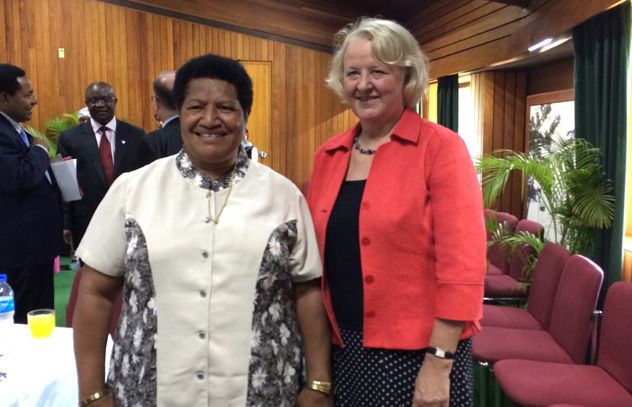
UNAIDS Deputy Executive Director Jan Beagle with Honourable Julie Soso, Governor of Eastern Highlands province and MP Member of Parliamentary Working Group on Population and Sustainable Development.
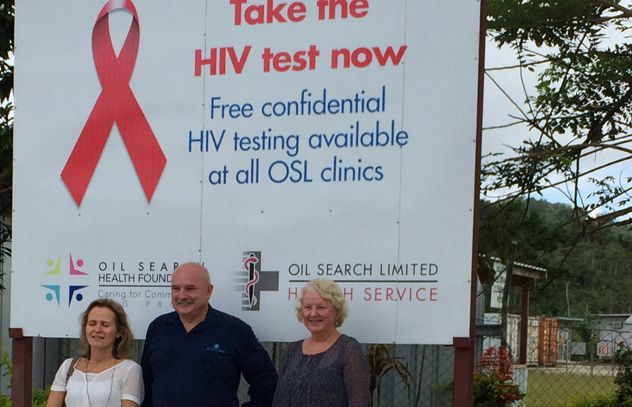
UNAIDS Deputy Executive Director Jan Beagle; with Professor Sharon Lewin, local co-chair of AIDS 2014; and Peter Botten, Managing Director of Oil Search Limited
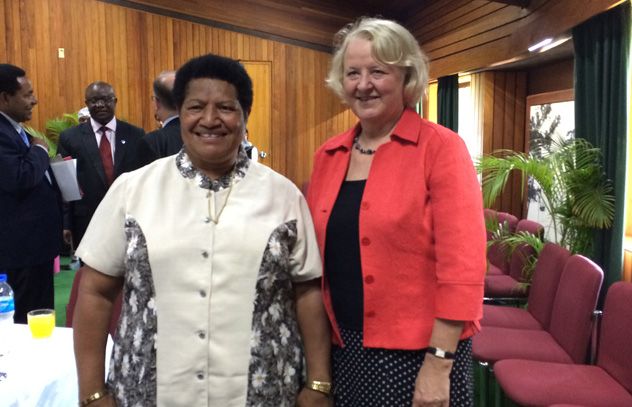
UNAIDS Deputy Executive Director Jan Beagle with Honourable Julie Soso, Governor of Eastern Highlands province and MP Member of Parliamentary Working Group on Population and Sustainable Development.
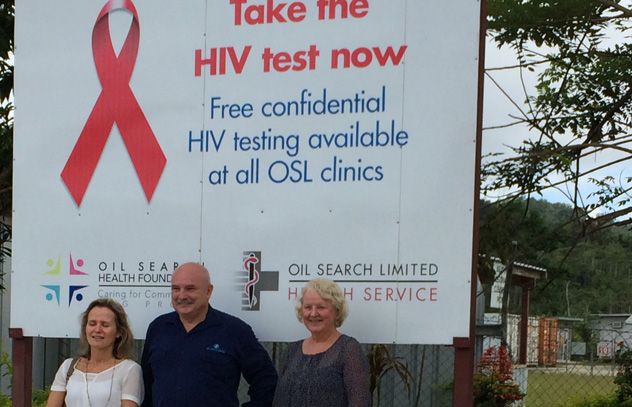
UNAIDS Deputy Executive Director Jan Beagle; with Professor Sharon Lewin, local co-chair of AIDS 2014; and Peter Botten, Managing Director of Oil Search Limited
Update
Papua New Guinea: the centrality of a multisectoral approach to the AIDS response
06 June 2014
06 June 2014 06 June 2014Papua New Guinea has the highest prevalence of HIV in Oceania (0.5% in 2012) and is experiencing an epidemic concentrated in key population groups and in certain geographical locations. During an official visit to the country, UNAIDS Deputy Executive Director Jan Beagle met with a variety of stakeholders—including representatives of the government, parliamentarians, development partners, civil society, the private sector and faith-based organizations—which were opportunities to highlight that one of the strengths of the AIDS movement globally has been its ability to build coalitions of stakeholders across disciplines and sectors. “AIDS is much more than a health issue, it is a development, human rights and gender issue. To get to zero in Papua New Guinea we need the power of a coalition of all sectors to ensure that no one is left behind,” said Ms Beagle during a meeting with members of the parliamentary working groups on HIV and population and sustainable development.
In Hela Province, Ms Beagle saw first hand the work of the Oil Search Health Foundation. The Foundation, in partnership with the government, civil society and communities, is providing HIV-related services and using HIV as an entry point for broader health and development outcomes—an example of a public–private partnership delivering quality services in a cost-effective way in a challenging environment.
Women are vastly underrepresented at all levels of the government (only three women sit in the national parliament), which limits their power to influence public policy at all levels. Violence against women is extremely high, and is experienced by an estimated two thirds of women. UN Women, as part of its Safe Cities Global Initiative, is promoting a safer working environment for women in two pilot marketplaces in the National Capital District of Papua New Guinea—where 80% of market vendors are women—enabling women to keep their earnings safe and to be safer physically. In the markets, infrastructure is being upgraded, market stalls renovated and potable running water made available. New innovative cashless methods for the collection of fees are being implemented to prevent extortion and theft, market vendor associations established and a referral system for survivors of family and sexual violence in the markets piloted. With support from UNAIDS, health mobile clinics will be established in these pilot markets to provide basic health services, including HIV-related services.
Related
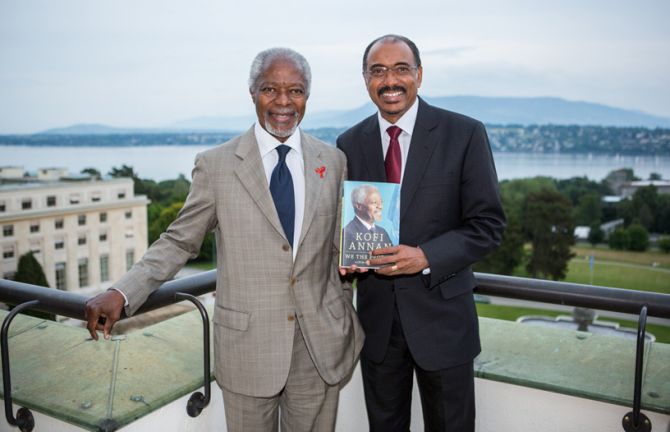
A Conversation with Kofi Annan and Michel Sidibé, Geneva, 3 June 2014, co-hosted by UNAIDS, the Kofi Annan Foundation and UNOG, to mark the publication of "We the Peoples: a UN for the Twenty-first Century", a book by Kofi Annan.
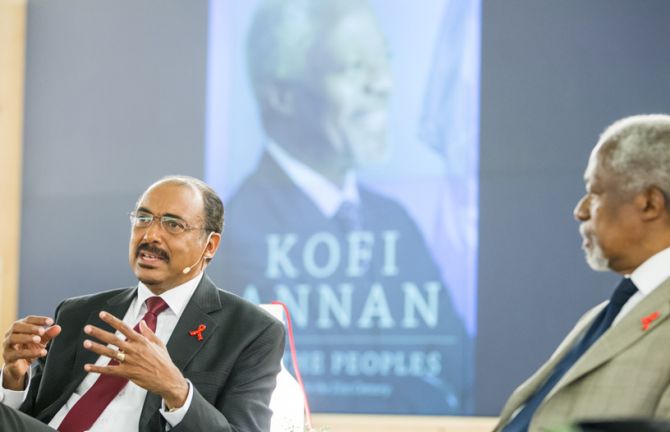
A Conversation with Kofi Annan and Michel Sidibé, Geneva, 3 June 2014, co-hosted by UNAIDS, the Kofi Annan Foundation and UNOG, to mark the publication of "We the Peoples: a UN for the Twenty-first Century", a book by Kofi Annan.
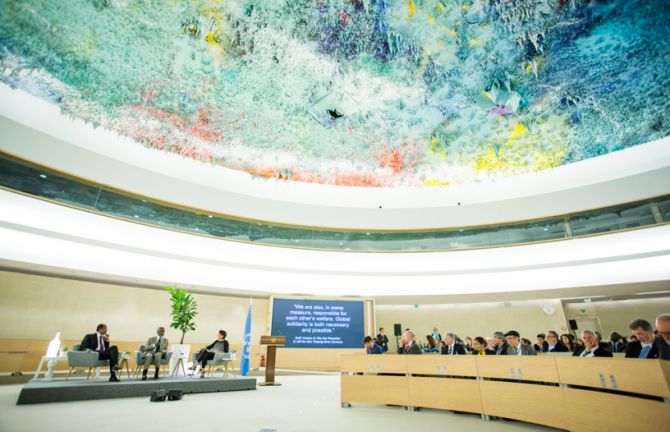
A Conversation with Kofi Annan and Michel Sidibé, Geneva, 3 June 2014, co-hosted by UNAIDS, the Kofi Annan Foundation and UNOG, to mark the publication of "We the Peoples: a UN for the Twenty-first Century", a book by Kofi Annan.
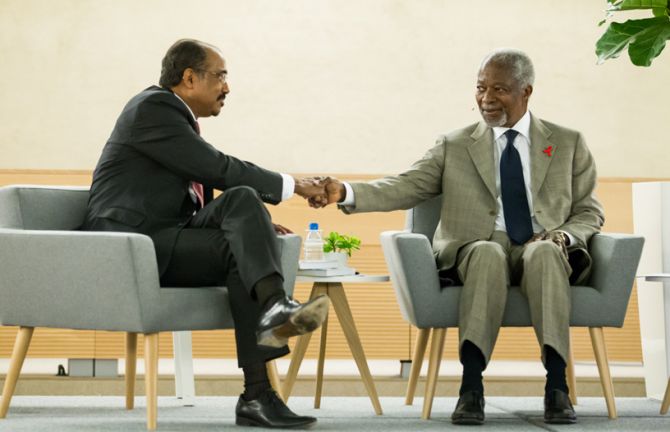
A Conversation with Kofi Annan and Michel Sidibé, Geneva, 3 June 2014, co-hosted by UNAIDS, the Kofi Annan Foundation and UNOG, to mark the publication of "We the Peoples: a UN for the Twenty-first Century", a book by Kofi Annan.
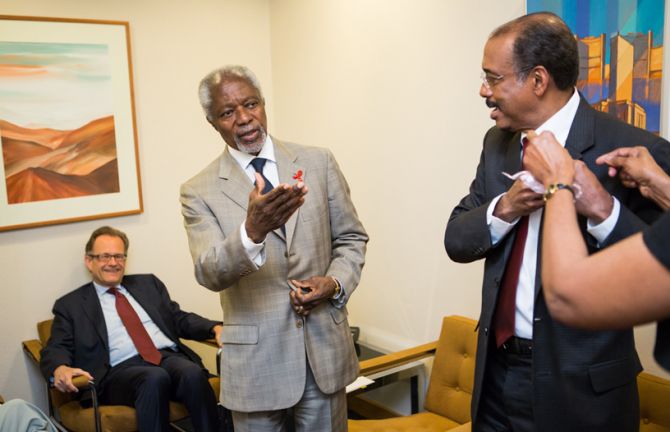
A Conversation with Kofi Annan and Michel Sidibé, Geneva, 3 June 2014, co-hosted by UNAIDS, the Kofi Annan Foundation and UNOG, to mark the publication of "We the Peoples: a UN for the Twenty-first Century", a book by Kofi Annan.
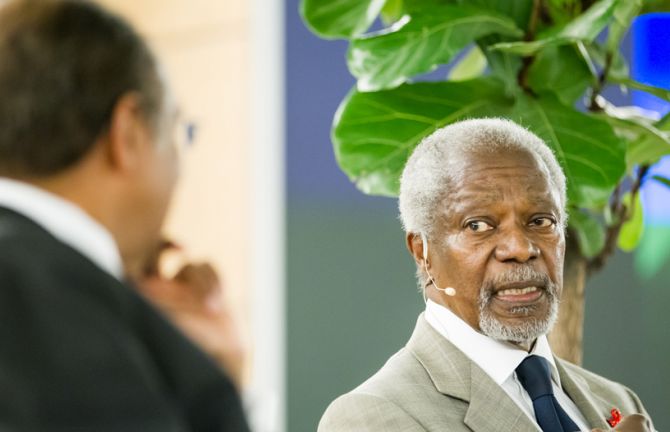
A Conversation with Kofi Annan and Michel Sidibé, Geneva, 3 June 2014, co-hosted by UNAIDS, the Kofi Annan Foundation and UNOG, to mark the publication of "We the Peoples: a UN for the Twenty-first Century", a book by Kofi Annan.
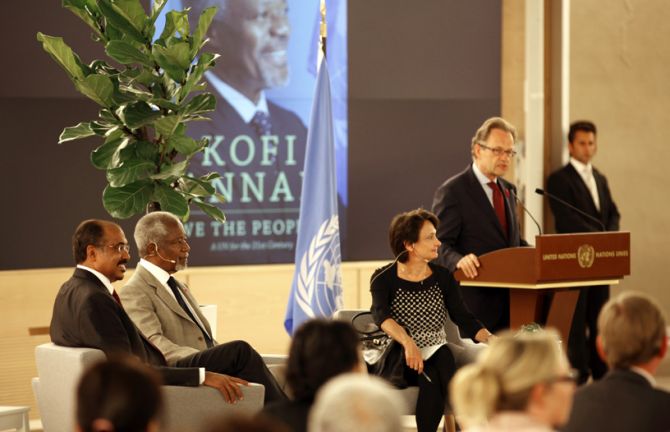
A Conversation with Kofi Annan and Michel Sidibé, Geneva, 3 June 2014, co-hosted by UNAIDS, the Kofi Annan Foundation and UNOG, to mark the publication of "We the Peoples: a UN for the Twenty-first Century", a book by Kofi Annan.
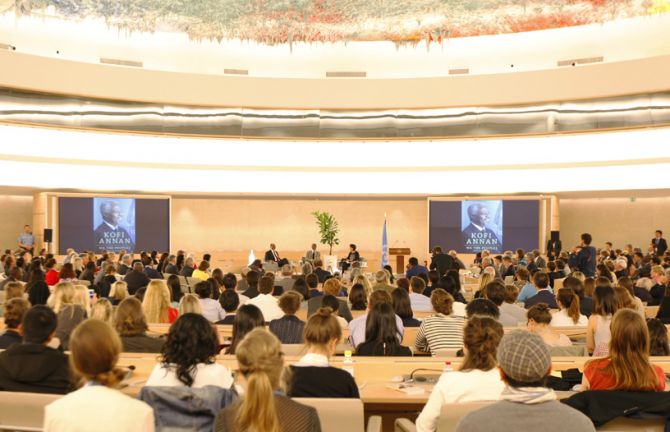
A Conversation with Kofi Annan and Michel Sidibé, Geneva, 3 June 2014, co-hosted by UNAIDS, the Kofi Annan Foundation and UNOG, to mark the publication of "We the Peoples: a UN for the Twenty-first Century", a book by Kofi Annan.
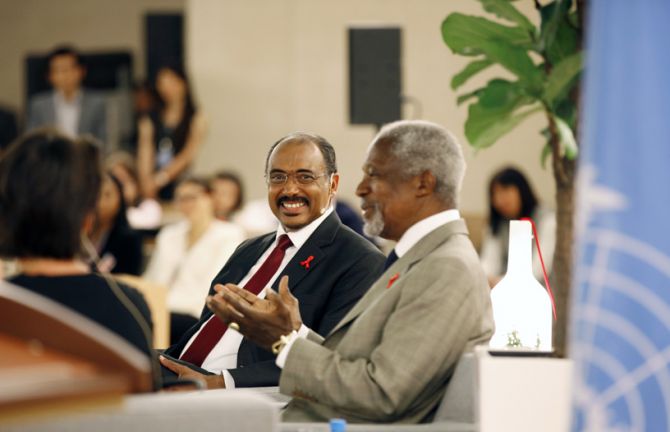
A Conversation with Kofi Annan and Michel Sidibé, Geneva, 3 June 2014, co-hosted by UNAIDS, the Kofi Annan Foundation and UNOG, to mark the publication of "We the Peoples: a UN for the Twenty-first Century", a book by Kofi Annan.
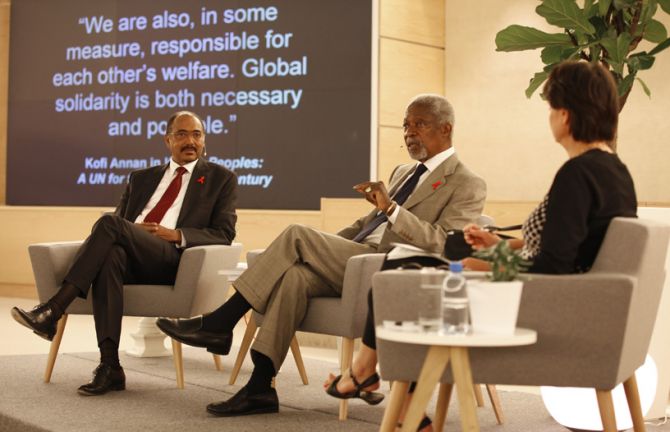
A Conversation with Kofi Annan and Michel Sidibé, Geneva, 3 June 2014, co-hosted by UNAIDS, the Kofi Annan Foundation and UNOG, to mark the publication of "We the Peoples: a UN for the Twenty-first Century", a book by Kofi Annan.
Feature Story
A conversation with Kofi Annan and Michel Sidibé
04 June 2014
04 June 2014 04 June 2014To mark the launch of his new book of speeches, We the Peoples: A UN for the 21st Century, former United Nations Secretary-General and Nobel Peace Prize Laureate Kofi Annan invited the Executive Director of UNAIDS Michel Sidibé to hold a public discussion with him on the future of the United Nations and global health. The event was held on 3 June at the Palais des Nations in Geneva before an audience of 700.
Mr Annan and Mr Sidibé were welcomed to the stage by the Acting Head of the United Nations office in Geneva Michael Møller who emphasized the significance of his efforts in re-imagining the public agenda and role of the UN. During his tenure as UN Secretary-General Mr Annan led many important reforms and opened the UN to a modern and changing world.
Mr Annan began the frank discussion talking about how the UN has to continue to adapt to a changing world. Referring to the post-2015 development agenda Mr Annan stressed that, "The new sustainable development goals should be workable and understandable by people so they can ask governments to act."
Under his leadership, the Millennium Development Goals were adopted by Member States in 2000, of which the sixth goal is to halt and reverse the spread of HIV. As attested through many of his speeches in We the Peoples: A UN for the 21st Century, the AIDS epidemic weighed heavily throughout Mr Annan’s mandate as a challenge but also a path for development and human rights and freedoms for all.
Mr Sidibé said he had been inspired by Mr Annan’s sincere compassion for people and his commitment to human rights which reflected his own values and vision. "We won't have a sustainable development framework if there are people left behind," he said. Talking about the future of global health Mr Sidibé added. "To deal with health of people we need to move from a disease approach to a people centred approach." Mr Sidibé also praised Mr Annan’s call to bring women to the centre.
A strong supporter of UNAIDS since its inception, Mr Annan announced that the proceeds of his book of speeches will be dedicated to UNAIDS. In recognition of his work and commitment to the future of the AIDS response Mr Sidibé said, “It is an honour for UNAIDS and the AIDS response to receive this donation—from a leader and mentor who continues to speak out for the millions of people living with HIV.”
Mr Annan concluded the discussions with reflections on ongoing conflicts around the world. “No country can prosper without rule of law and respect for human rights,” he said.
In 2001, Mr Annan was co-awarded the Nobel Peace Prize for revitalizing the UN and for having given priority to human rights. The Nobel Committee also recognized his commitment to the struggle to contain the spread of the HIV in Africa. At the first ever Special Session on HIV/AIDS, he led the creation of the Global Fund to Fight AIDS, Tuberculosis and Malaria.
Since leaving the United Nations, Mr Annan has been active in pressing for policies that will meet the needs of the poorest and most vulnerable, particularly in Africa. And in 2007, he set up the Kofi Annan Foundation to promote better governance and strengthen the capacity of people and countries.
From peace and security to development and the global community, We the Peoples: A UN for the 21st Century explores some of the most challenging issues the world has faced in the new century. We the Peoples: A UN for the 21st Century is Mr Annan’s second book, following the acclaimed memoir, Interventions: A Life in War and Peace, published in 2012.
Resources
Related
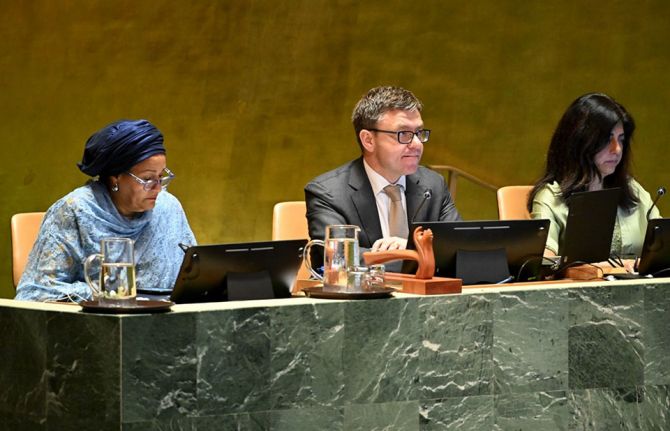

State of the World's Midwifery 2014 charts the way forward to ensure that fewer women and newborns lose their lives in preventable ways.
Feature Story
Greater investment in midwifery needed to save millions of women and newborns
03 June 2014
03 June 2014 03 June 2014The lives of millions of women and their newborn babies are being needlessly lost due to chronic lack of investment in midwife services, a new landmark report claims.
In the State of the World's Midwifery 2014: A universal pathway, a woman’s right to health, 73 countries in Africa, Asia and Latin America are shown to account for 96% of the global burden of maternal deaths, 91% of stillbirths and 93% of newborn deaths. Yet they have only 42% of the world’s midwives, nurses and doctors. The report urges these countries to invest in enhancing midwifery services, including education and training, to close this life-threatening gap.
"Midwives make enormous contributions to the health of mothers and newborns and the well-being of entire communities. Access to quality health care is a basic human right. Greater investment in midwifery is key to making this right a reality for women everywhere," said UNFPA Executive Director, Babatunde Osotimehin.
According to the report, the range of midwifery services needed to care for women and newborn babies includes maternal and reproductive health activities such as obstetric services, family planning and services to preventing mother-to-child transmission of HIV.
The State of the World's Midwifery 2014 highlights progress made since the first 2011 report and examines four critical areas of provision: availability, accessibility, acceptability and quality of midwifery services. Since 2011 a number of countries have made considerable improvements. For example, nearly a third of the 73 nations have increased recruitment and deployment of midwives. However, there still remains a critical shortage of trained personnel which is taking an unacceptable death toll among women and children, says the report. In 2013 alone an estimated 289 000 women and 2.9 million newborn babies died.
There are a series of recommendations set out under the Midwifery2030 vision expounded in the publication which call for all women of reproductive age to have universal access to midwife services. Key planning and policy measures include professional, supportive and preventative midwifery and at least four care visits where birth preparedness and emergency planning are discussed; access to emergency care when needed; maintaining a women’s health while pregnant; ensuring the availability of HIV-related services; comprehensive sex education and delaying marriage.
United Nations Secretary-General Ban Ki-moon, in the report’s foreword, fully commends Midwifery2030. “This vision is within reach of all countries…..Its implementation will help governments to deliver on women’s right to health, ensure that women and newborn infants obtain the care they need, and contribute to our shared, global ambition to end preventable maternal and newborn deaths.”
The report was released by UNFPA, the United Nations Population Fund together with the International Confederation of Midwives (ICM), the World Health Organization (WHO) and partners and was launched on 3 June during the 30th ICM Triennial Congress in Prague, Czech Republic.