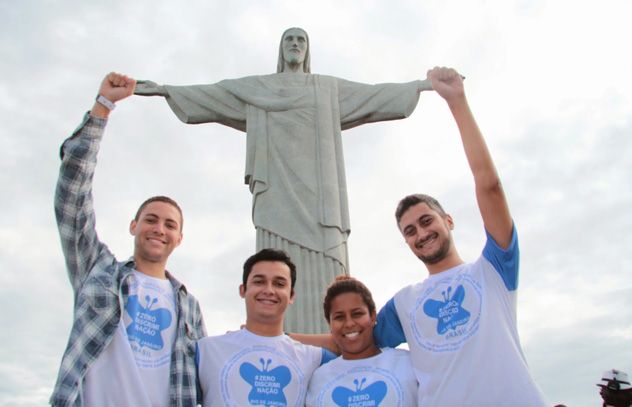
The iconic Brazilian landmark of Christ the Redeemer was the venue for an event hosted on 24 May to promote respect and human rights.

The ceremony was part of the UNAIDS’ Zero Discrimination campaign—which aims to eliminate discrimination that hinders the right to a full, dignified and productive life—and the Archdiocese of Rio de Janeiro’s campaign Somos Todos Iguais which seeks to promote respect for human rights.

Participants at the event to promote a society free from stigma and discrimination.
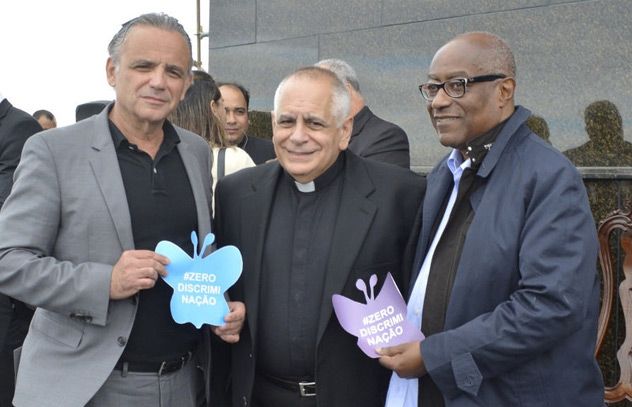
L to R: UNAIDS Deputy Executive Director Luiz Loures, Monsignor Robert Vitillo, from Caritas Internationalis and Márcio Tadeu Ribeiro Francisco coordinator of the Zero Discrimination campaign in Rio de Janeiro.
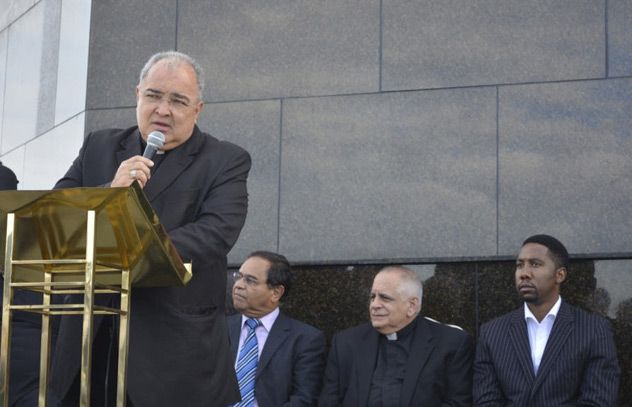
Archbishop of Rio de Janeiro Orani Tempesta.
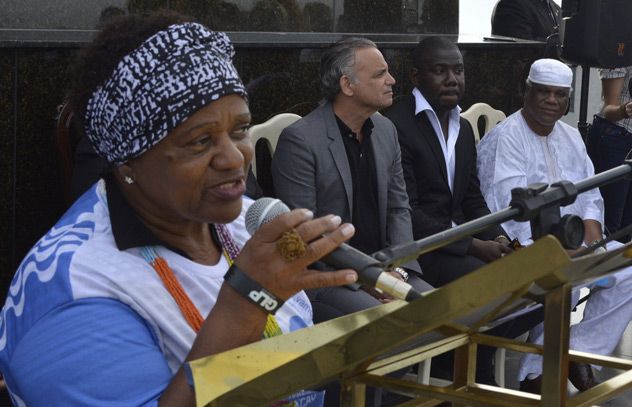
Sônia Regina Gonçalves, representing the communities of Rio de Janeiro.
Update
Brazil: A model against discrimination
30 May 2014
30 May 2014 30 May 2014Note: On 2 June 2014, Brazilian President Dilma Rousseff enacted a new law that prohibits discrimination against people living with HIV. The law provides penalties for anyone who:
- Denies, delays, cancels or prevents the enrolment or retention of a student living with HIV in educational establishments of any level, whether public or privat;
- Denies employment or work; dismisses from office or job; or segregates within the work or school environment based on HIV status;
- Discloses the condition of the person living with HIV; or
- Denies or delays health care.
The iconic Brazilian landmark of Christ the Redeemer was the venue for an event hosted on 24 May to promote respect and human rights. Organized by UNAIDS in a partnership with the Archdiocese of Rio de Janeiro, the event brought together United Nations and government representatives, religious leaders and other partners to call for a society free from stigma.
The ceremony was part of the UNAIDS’ Zero Discrimination campaign—which aims to eliminate discrimination that hinders the right to a full, dignified and productive life—and the Archdiocese of Rio de Janeiro’s campaign Somos Todos Iguais which seeks to promote respect for human rights.
The event was attended by Luis Lourez, UNAIDS Deputy Executive Director; Cardinal Dom Orani Tempesta; Ndaba and Kweku Mandela; Sônia Regina Gonçalves, representing the communities of Rio de Janeiro; Monsignor Robert Vitillo, from Caritas Internationalis; Babalawo Ivanir dos Santos, from Rio’s Commission Against Religious Intolerance; father Omar Raposo, rector of Christ the Redeemer; canon Marcos William Bernardo, episcopal vicar for Social Communication; Adele Benzaken, Deputy Director, STD/AIDS Department, Brazilian Ministry of Health; and civil society representatives.
Quotes
"We have the technology, and we have the knowledge to bring this epidemic to an end. What hinders us today are the prevailing stigma and discrimination."
"The world we desire and want is a world in which people can move around, in which they can come and go without feeling threatened by their way of thinking, by their religion, their ideas, by the disease they may carry; a life in which dignity is present. It is knowledge, brotherhood, the love for your neighbours that make the difference."
"It's important to talk about discrimination not only because Brazil is hosting the World Cup, but also because Brazil reflects much of the world. There are [in Brazil] many people from different cultures, backgrounds, different skin colors. If we can move forward here in Brazil, we can definitely progress around the world."
"The worst kind of discrimination is the lack of respect for others, and Pope Francis has asked us to use social networks and the media to talk about loving our neighbours."
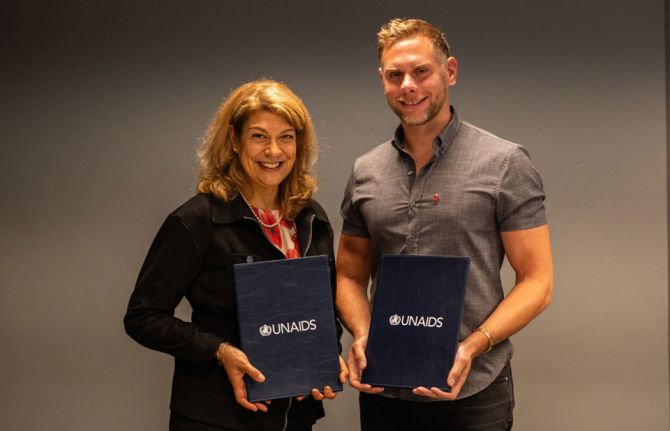


Julio Montaner, Director, British Columbia Centre for Excellence in HIV/AIDS; Terry Lake, Minister of Health, Government of BC; Christy Clark, Premier, Government of BC, Tiko Kerr, artist living with HIV; and UNAIDS Executive Director, upon presentation of artwork by Tiko Kerr depicting the change in 10-C Ward at St. Paul’s Hospital in Vancouver.
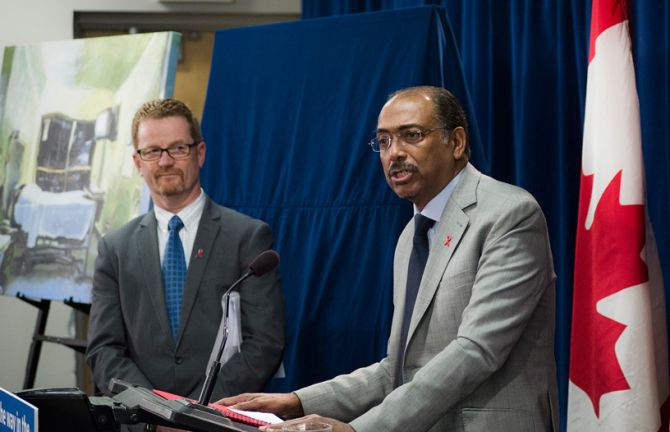
UNAIDS Executive Director addressing the 10-C Ward event in Vancouver, with Terry Lake, Minister of Health, Government of British Columbia.
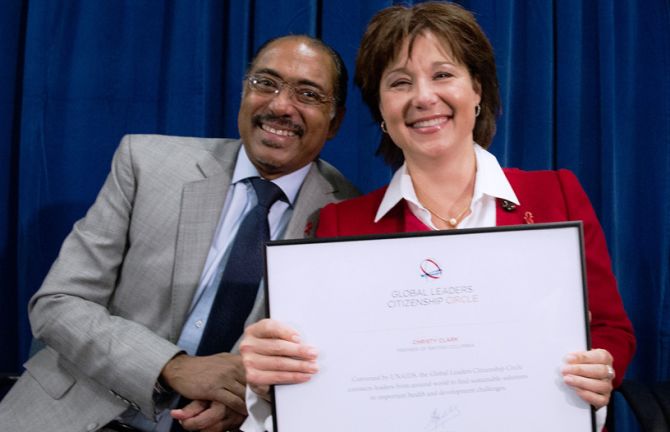
UNAIDS Executive Director with Christy Clark, Premier, Government of British Columbia, upon the Premier’s introduction to the UNAIDS Global Leaders Citizenship Circle.
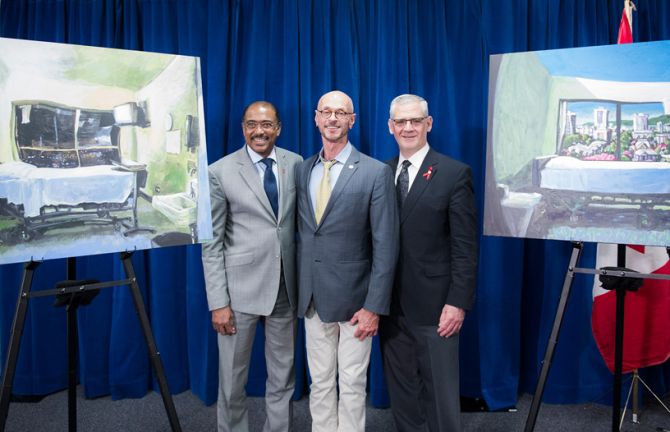
UNAIDS Executive Director; Tiko Kerr, artist living with HIV; and Julio Montaner, Director, BC Centre for Excellence in HIV/AIDS; upon presentation of two paintings by Tiko Kerr depicting the changes in 10-C Ward at St. Paul’s Hospital in Vancouver.
Feature Story
British Columbia repurposes its AIDS Ward, opening new opportunities for HIV treatment
28 May 2014
28 May 2014 28 May 2014They called it Ward 10C. Never “the AIDS ward.” But it was understood that this was the place where patients went if they had HIV. Stigma and despair overshadowed the limited medical interventions that could be provided. Opened in 1997, the ward saw an average of one AIDS-related death every day during its darkest days.
But today, in a historic symbolic move, St. Paul’s Hospital in Vancouver announced that Ward 10C has outlived its role as the place where life ended.
British Columbia Premier Christy Clark and other officials led an official ceremony on Tuesday lauding the ward’s metamorphosis as a sign that AIDS is no longer a death sentence, and that HIV is virtually under control in the province.
The ward’s new purpose will be to provide cutting-edge care and treatment for people living with HIV, as well as treatment related to bacterial and viral infections like chronic hepatitis B and C among people at risk for HIV.
According to the government, AIDS deaths have fallen by more than 80% in the past decade and new HIV infections have been cut by two-thirds in the province.
Julio Montaner, a leader in the movement for early treatment and his team at the BC Centre for Excellence in HIV/AIDS, showed that by receiving early antiretroviral treatment, people living with HIV can not only survive and thrive—but also reduce their risk of transmitting the virus to partners.
At Tuesday’s ceremony on Ward 10C, Dr Montaner said that when he proposed HIV treatment could prevent new infections, “I was not a popular kid, they told me I was crazy, not only in my backyard but all around the world—now we are seeing AIDS begin to disappear. We did it and everybody else can do it.”
“Thanks to the expansion of access to treatment, people are living longer, healthier lives and we’re starting to see HIV clinics close, it’s a significant step towards ending the epidemic.” said Michel Sidibé, Executive Director of UNAIDS. At the ceremony, he also announced Dr Montaner’s appointment as UNAIDS’ Global Advisor for Treatment.
Mr Sidibé praised Premier Clark for what she and her government have done for the AIDS response in British Columbia and internationally. And he reminded the audience that some 18 million people, in low- and middle-income countries, still do not have access to antiretroviral treatment, “Only with global solidarity, can we ensure that no-one is left behind.”
Multimedia
Region/country
Documents
3rd Eastern European and Central Asia AIDS Conference (EECAAC)
The 3rd HIV/AIDS Conference in Eastern Europe and Central Asia opened in Moscow today with a ceremony attended by senior representatives of Russian Duma, Russian Ministry of Foreign Affairs, Russian Academy of Sciences and the US Ambassador to the Russian Federation.
Related
 When survivors speak: How Esther's story is helping fight Ebola and protect HIV care in the DRC
25 September 2026
 From forerunner to future-maker: partners affirm the value of a transformed UNAIDS Joint Programme
24 September 2026
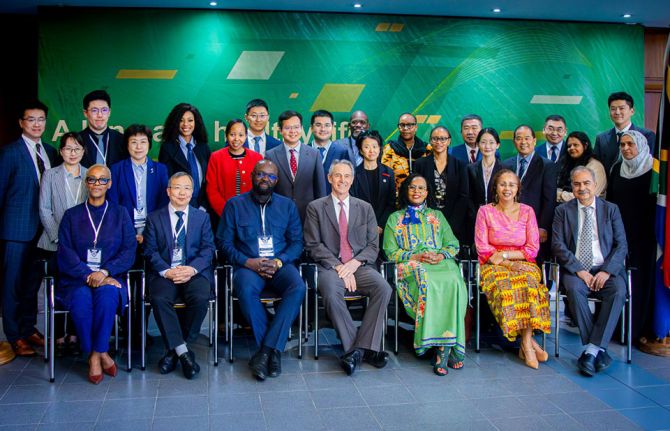
 UNAIDS convenes African leaders to build health sovereignty and regional production of essential medicines
24 September 2026
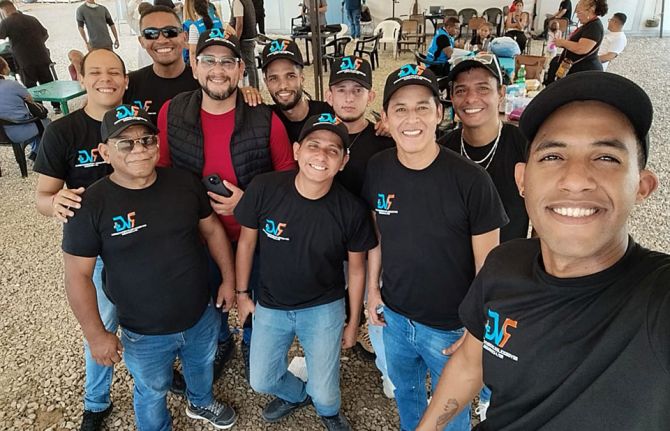 Communities, authorities and UNAIDS coordinate to maintain HIV care during emergencies in Colombia and Venezuela
23 September 2026
 UNAIDS at the 81st United Nations General Assembly
18 September 2026
 UNAIDS expands humanitarian support in Ukraine
16 September 2026
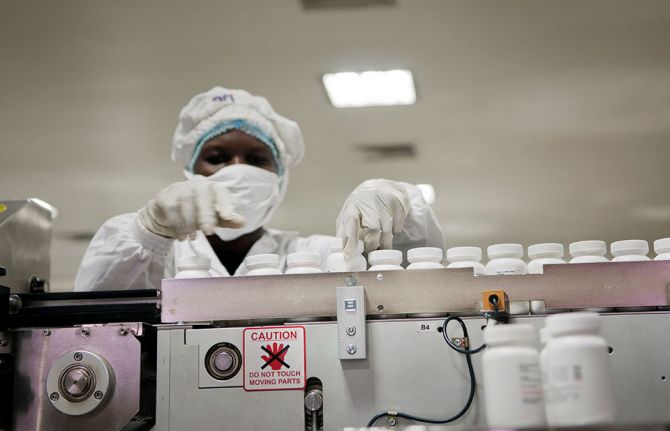 UNAIDS, WHO and Unitaid bring manufacturers and governments together in Geneva as HIV financing enters a new era
14 September 2026
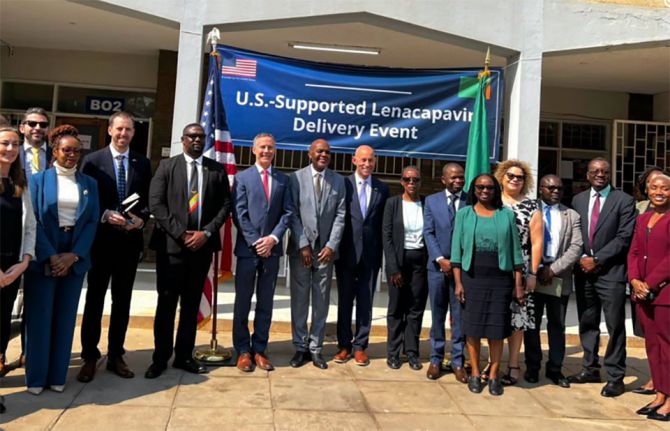 UNAIDS works with partners and communities to support Zambia's rollout of Lenacapavir to prevent new HIV infections
09 September 2026
Documents
Michel Sidibé, UNAIDS Executive Director visits China
During his visit to the People’s Republic of China, UNAIDS Executive Director Michel Sidibé addressed the opening of the Fifth Conference for the International Cooperation Programme on AIDS in Shanghai. Mr Sidibé congratulated the country, saying, “China’s progress can invigorate an AIDS response that teaches and inspires the world.”
Related
When survivors speak: How Esther's story is helping fight Ebola and protect HIV care in the DRC
25 September 2026
From forerunner to future-maker: partners affirm the value of a transformed UNAIDS Joint Programme
24 September 2026
Communities, authorities and UNAIDS coordinate to maintain HIV care during emergencies in Colombia and Venezuela
23 September 2026
UNAIDS at the 81st United Nations General Assembly
18 September 2026
UNAIDS expands humanitarian support in Ukraine
16 September 2026
UNAIDS, WHO and Unitaid bring manufacturers and governments together in Geneva as HIV financing enters a new era
14 September 2026
UNAIDS works with partners and communities to support Zambia's rollout of Lenacapavir to prevent new HIV infections
09 September 2026
 Remembering King Oyo’s heartfelt leadership for young people and the fight to end AIDS
04 September 2026
 Built on trust - Community-led HIV responses in Thailand
26 August 2026
Feature Story
UNAIDS saddened by the death of Abel Shinana
23 May 2012
23 May 2012 23 May 2012
Abel Shinana participating at a national HIV combination prevention workshop where he offered insights and recommendations on how to address the needs of key populations at higher risk.
Until recently, the needs and rights of sex workers were largely ignored in Namibia. Over the past year, however, this situation has changed. Sex workers have been organizing themselves, they have been speaking out about the abuses and barriers they face to access HIV services and people have been listening.
Abel Shinana, the late Coordinator of African Sex Workers Alliance in Namibia, was instrumental to this change. A young, male sex worker, Abel was open, thoughtful and committed to the movement. When he first started as the ASWA coordinator over a year ago he was somewhat shy and reserved. Within a few months Abel developed into a courageous and vocal advocate for the rights of sex workers, people living with HIV and the LGBTI population. He was also a critical partner for both UNFPA and UNAIDS on efforts to address HIV among sex workers at both country and global levels.
Just 2 weeks ago, Abel was a presenter and an active participant at a national HIV combination prevention workshop and offered valuable insights and recommendations on how to address the needs of key populations at higher risk. He also recently co-authored a Community Assessment Report on HIV and Sex Work and was the lead author of the related abstract that has been accepted for presentation at the 2012 International AIDS Conference to be held in Washington in July.
In March this year, Abel coordinated the first ever commemoration of the International Sex Worker Rights Day in Namibia which generated considerable press coverage and led to increased public understanding that sex workers have rights too. Indeed Abel was one of the new and strong voices of the human rights of sex workers in Africa, bringing the lived experiences of sex workers to the center of policy debates.
The untimely and tragic death of this committed young leader due to a car accident represents a major loss for the nascent sex worker movement in Namibia and beyond. The outpouring of sympathy from partners at all levels is testimony to this fact. For us at UNAIDS and UNFPA in Namibia, we have also lost a dear friend.


Feature Story
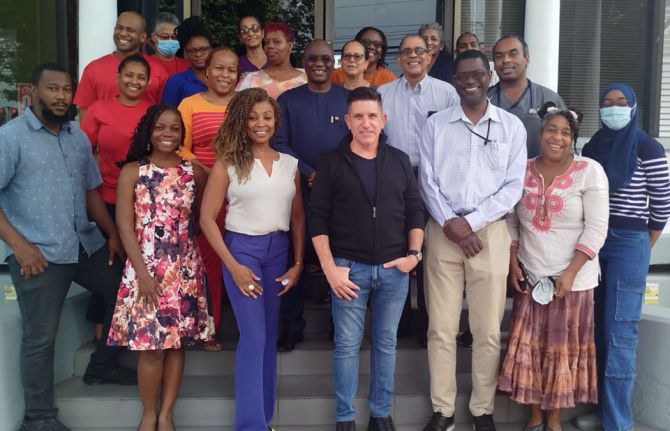
Q&A with Ambrose Rachier, Chair of the HIV Equity Tribunal in Kenya
23 February 2012
23 February 2012 23 February 2012
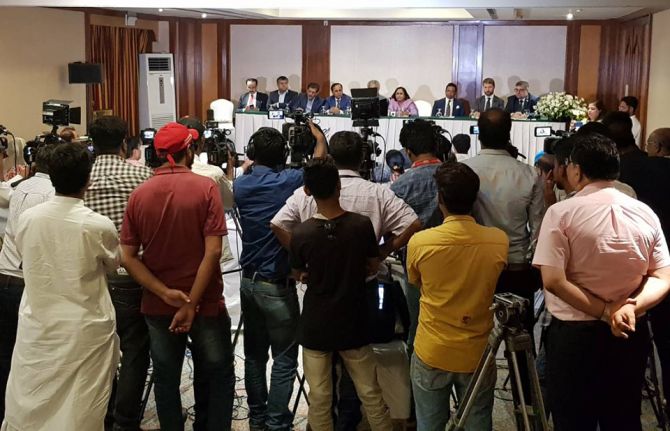
Press conference to announce the swearing in of the HIV Equity Tribunal. Panelists from left to right: Prof Mary Getui, Chair of Kenya's National AIDS Control Council (NACC) board; Ambrose Rachier, Chair of the HIV Equity Tribunal in Kenya; Hon Esther Murigi , Minister of Special Programmes in Kenya; Hon Mohammed, Former Assistant Minister, Special Programmes.
Credit: UNAIDS
At the June 2011 High Level Meeting on AIDS, world leaders pledged to eliminate stigma and discrimination against people living with HIV by promoting laws and policies that advance human rights and fundamental freedoms. The recent creation of an HIV Equity Tribunal in Kenya—the first of its kind globally—represents a bold step towards achieving this goal.
An estimated 1.6 million people are living with HIV in Kenya. The seven-member Tribunal will provide access to justice for Kenyans who face stigma, discrimination or criminalization based on their HIV status. It will also seek to advance the rights of women and girls, who are disproportionately affected by the HIV epidemic in Kenya.
The Joint UN Team on HIV and AIDS in Kenya, through UNDP and UNAIDS, will support the Tribunal by building its capacity to operate effectively, providing technical support, and creating demand within communities through advocacy.
UNAIDS spoke with Ambrose Rachier, Chair of the Tribunal, about the opportunities and challenges that lie ahead.
What is the mandate of the Tribunal? How will the Tribunal carry out its mandate?
The mandate of the Tribunal is outlined in the 2006 HIV/ AIDS Prevention and Control Act.* The Tribunal has jurisdiction to hear and determine complaints arising out of any breach of the Act and any matter or appeal as may be made pursuant to the provisions of the Act. The Tribunal can also perform functions related to the Act, excluding criminal jurisdiction.
Court proceedings can take years in Kenya. The Tribunal can quicken access to justice for people living with HIV. What are the other expectations of the Tribunal?
The Tribunal has the power of a court and can receive evidence, hear witness accounts, conduct full hearings and pass judgments on the above matters. With this in mind, it is expected that the Tribunal will focus on the protection of human rights of people living with HIV. It therefore encourages those infected with and affected by HIV that have been violated in any manner that is a breach of the HIV/AIDS Prevention and Control Act of 2006 to come forward and air their grievances.
How do you plan to discharge your mandate?
The Tribunal has established a registry that receives complaints and grievances in writing. The different complaints are reviewed and assigned as appropriate. The Tribunal also assists members of the public who may be illiterate to record their complaints.
What actions have been undertaken by the Tribunal so far?
Since the swearing in of the members, the Tribunal has received various matters, reviewed them and categorized them based on the general complaints as follows:
- A majority of the complaints received relate to workplace issues that discriminate and stigmatize employees on the basis of their real and/or perceived HIV status. These range from termination of employment, demotion and irregular transfer of employees based on their HIV-positive status.
- The second category of cases relate to denial of access and difficulty in access to HIV treatment, mainly arising from claims of persons being transferred to remote areas of the county where antiretrovirals, medications for opportunistic infection and HIV prevention services and commodities cannot be readily accessed.
- The last category involves cases that arise from family relations and primarily affect women who, on the grounds of their HIV-positive status, may have suffered domestic violence, abandonment or the disinheritance of property.
What are the immediate plans for the Tribunal?
The immediate plan is to build the capacity of Tribunal members to enable them hear and resolve matters, as only three of the seven members are officers of the court. The Tribunal first sat and dealt with two complex cases on 31 January. A campaign to publicize the Tribunal and the access to social justice is planned so as to enlighten the public and create awareness of the services of the Tribunal.
How do you envision the Tribunal will contribute to the national response to HIV?
The Tribunal will help discourage discriminatory practices, encourage inclusivity and uphold involvement of people living with HIV. It will also increase the space for social dialogue on HIV-related stigma, increase knowledge and awareness, and reduce stigma. This will help increase access to HIV prevention services and practices, increase uptake of services, and create demand for HIV prevention, treatment, care and support services.
What opportunities lie within the Tribunal to address stigma and discrimination—a persistent bottleneck to achieving universal access?
The Tribunal will be an excellent vehicle for reaching out to other institutions that knowingly or unknowingly exacerbate stigma and discrimination, including the insurance sector, employers and even institutions of learning. The Tribunal can complement and provide awareness around ethical and legal issues surrounding HIV and on how to treat those in your charge that could be affected.
What do you expect are the anticipated challenges for the Tribunal?
The Tribunal is currently experiencing a lack of goodwill and resistance by some parties with specific interests. This has hampered our work. The bureaucracy is also a hindrance affecting the optimal performance of the Tribunal, and it delays the legal redress that is needed. Those affected may continue to suffer as they await justice and may lose faith in the Tribunal. It is known that Justice Delayed is Justice Denied. We do not want to set such precedence, but the bureaucracy is a big limiting factor.
The Tribunal will help discourage discriminatory practices, encourage inclusivity and uphold involvement of people living with HIV
Ambrose Rachier, Chair of the HIV Equity Tribunal in Kenya
The other challenge will be to operationalize the Tribunal and discharge our duties effectively in the coming devolved structure of governance. Currently the intention is for the Tribunal members to hold rotational sittings by province. However with the devolved structure, the seat of governance will be at the proposed 47 counties, and this may overwhelm our seven-member Tribunal to adequately discharge justice.
Despite these challenges, I am optimistic and proud to have been part of this unique Tribunal that is the first of its kind in the world. I hope that other countries will emulate our experiences and learn from our successes and challenges.
Other countries may be interested in how this idea came about, and how long it took to bring to fruition.
In 1999, HIV was declared a national disaster. This led to the establishment of the National AIDS Control Council. A taskforce on HIV and the law was also instituted.
The mandate of the taskforce was to provide legal guidance on what laws are necessary to facilitate HIV prevention, treatment and care. I was the chair of that taskforce. In 2000, we began our work and completed a report in July 2002. At the time, we identified three key issues that could be addressed: i) Stigma and discrimination were factors that escalated the spread to HIV ii) There was a need to address issues of access to HIV prevention, treatment and care services iii) Access to justice for people living with and/or affected by HIV as a means to improve the national response. After the submission of the report, the drafting of the HIV/AIDS Prevention and Control Act began and was passed in 2006. This Tribunal was enshrined in the said Act and, in June 2011, the Tribunal members were sworn in.
*Object and purpose of Kenya’s HIV and AIDS Prevention and Control Act of 2006:
(a) Promote public awareness about the causes, modes of transmission, consequences, means of prevention and control of HIV and AIDS;
(b) Extend to every person suspected or known to be infected with HIV and AIDS full protection of his human rights and civil liberties by:
- (i) Prohibiting compulsory HIV testing save as provided in this Act;
- (ii) Guaranteeing the right to privacy of the individual;
- (iii) Outlawing discrimination in all its forms and subtleties against persons with or persons perceived
or suspected of having HIV and AIDS; - (iv) Ensuring the provision of basic health care and social services for persons infected
with HIV and AIDS;
(c) Promote utmost safety and universal precautions in practices and procedures that carry the risk of HIV transmission; and
(d) Positively address and seek to eradicate conditions that aggravate the spread of HIV infection.
Related
Feature Story
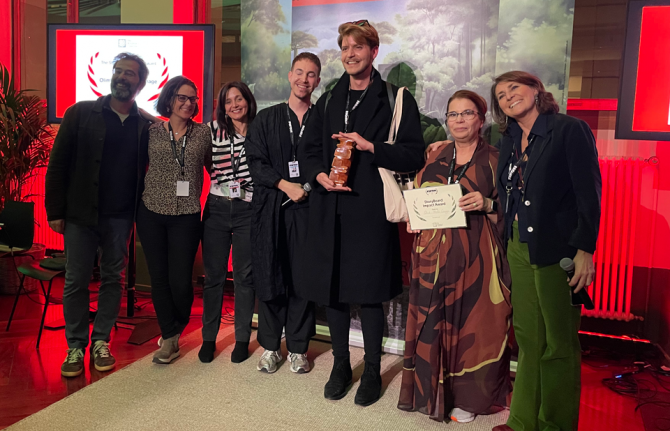
The Missing Face of Children and AIDS: Progress on Ten Years of Commitments
10 June 2011
10 June 2011 10 June 2011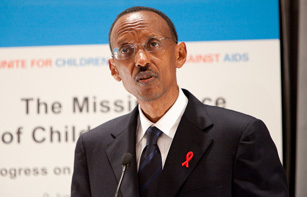
President of Rwanda Paul Kagame speaking at The Missing Face of Children and AIDS: Progress on 10 years of Commitments held at Millennium Hotel, NYC, June 9, 2011. Credit: UNAIDS/B. Hamilton
Considerable progress has been made in putting children at the heart of the global AIDS response. Eliminating new HIV infections among children by 2015 has become an international priority and there has been a decrease in HIV incidence among the young. However, the High Level Meeting on AIDS heard this week that much more still needs to be done to ensure an AIDS-free generation.
During a side-event on 9 June called The missing face of children and AIDS: Progress on ten years of commitment, delegates explored how all children, everywhere can be assured access to good quality HIV prevention, treatment, care and support services. The meeting, which brought together heads of state, ministers, international organizations and representatives of affected populations, including youth groups, was co-hosted by UNICEF, UNAIDS and the governments of Australia and Botswana. Guests included President Paul Kagame of Rwanda and Dr Asha-Rose Migiro, UN Deputy Secretary-General.
The major goals of the event were to encourage national and global decision makers to follow through on their commitments to eliminate new HIV infections among children, to reflect on progress made towards global targets and to keep children central to the agenda throughout the High Level Meeting.
It also provided an opportunity to announce the continuation of the Unite for Children, Unite against AIDS campaign as a global multi-partner platform championing children’s issues in the challenge to HIV.
All children need to be a global priority, and not left to the lottery of geography
Michel Sidibé, UNAIDS Executive Director
In his opening remarks, Dr Anthony Lake, UNICEF Executive Director said: "We have the knowledge, we have the science and we have the power to achieve an AIDS-free generation. We can do this—and because we can, we must do it. And I believe that together, we will do it."
Participants discussed the importance of clearly defining objectives as part of a rights-based, results-focused drive to reach all those in need. These include millions of women and children still falling through the gaps. Health indicators show that there are massive inequities based on income, geography and education. Gender disparities continue to place a greater HIV burden on young women and girls and children with disabilities often have very limited access to services and protection.
It was agreed that efforts to reach the poorest, most marginalized and least served with HIV interventions must be redoubled.
Addressing the event, Michel Sidibé, UNAIDS Executive Director made an impassioned plea: "All children need to be a global priority, and not left to the lottery of geography. Unfortunately, that's what is happening."
"If we fail for children, I don't believe that we can be successful for any development agenda…If we cannot deliver for our children, if we cannot establish a society which will allow the proper redistribution of opportunity, a society in which we really deal with inequities, a society in which we really make sure that social justice will be helping us to reach those children, don't tell me that you will achieve the Millennium Development Goals, you will transform this world, you will make it better.”
Nabbumba "Princess" Nuru from Uganda who was born with HIV also addressed the assembly: "I stand here before all of you today, as a young leader in the AIDS response, to challenge you as established leaders to fully commit to the virtual elimination of mother to child transmission.”
We have the knowledge, we have the science and we have the power to achieve an AIDS-free generation. We can do this—and because we can, we must do it. And I believe that together, we will do it.
Dr Anthony Lake, UNICEF Executive Director
“I understand many of us here in this room are parents. None of you would want your child to grow up with HIV, or you would feel really bad if your child fell sick. That is how it feels for many women in Africa, very many women all over the world, who can't have access to HIV treatment in order to prevent their babies from catching the virus," she said.
The meeting concluded on an optimistic but sober note: achieving the goal of an AIDS-free generation is now within reach but only if the world sticks to the necessary commitments and takes the necessary action to make this a reality.
UN General Assembly High Level Meeting on AIDS
Thirty years into the AIDS epidemic, and 10 years since the landmark UN General Assembly Special Session on HIV/AIDS, the world has come together to review progress and chart the future course of the global AIDS response at the 2011 UN General Assembly High Level Meeting on AIDS from 8–10 June 2011 in New York. Member States are expected to adopt a new Declaration that will reaffirm current commitments and commit to actions to guide and sustain the global AIDS response.
External Links
Publications
Publications
Feature Story
Release of the Global Health Governance Special Issue on the global AIDS response, guest-edited by Executive Director Michel Sidibé
23 December 2010
23 December 2010 23 December 2010
Innovations in governance are among the signature achievements of the AIDS response and these innovations have transformed the lives of people living with and affected by HIV. This is one of several key points covered in a compilation co-guest-edited by UNAIDS Executive Director, Michel Sidibé, published on 20 December in a special issue of Global Health Governance.
The overview paper, People, Passion & Politics: Looking Back and Moving Forward in the Governance of the AIDS Response, by Mr Sidibé and colleagues, presents a seven-point AIDS governance action agenda. At the core of the agenda are three mutually reinforcing principles: first, the exceptional role that affected people play to radically alter the construction of vulnerability; second, the pivotal importance that responses are essentially owned by the people that they are meant to serve, and; third, the force of movements and coalitions to tip the scales of power through creative approaches to framing, litigation and transnational political strategies.
Over the years, the greater participation of vulnerable groups in the global political arena has resulted in more relevant prevention programmes and unprecedented expansion of access to HIV prevention, treatment, care and support services. However, as the article highlights, fundamental shifts in the political and economic context call for yet new approaches; for example, engaging with the academic community to critically review the governance of HIV programmes and services and explore opportunities for advancing the AIDS agenda across all sectors.
The idea for this special issue of Global Health Governance was inspired by widespread recognition of the changes brought about to governance approaches as a result of the AIDS response and how other global challenges can benefit from the lessons learned in addressing the epidemic. Furthermore, the gradual shifts in global power, from the G8 to the G20, and from collective action to ‘hyper-collective action’, require advancements in the manner in which the AIDS response is governed.
Over the past three decades, the HIV response has been an engine of innovation. In so doing, it has delivered tangible results for people while opening and protecting space for more inclusive and rights-based governance of all challenges of the global commons.
Michel Sidibé, UNAIDS Executive Director
“Over the past three decades, the HIV response has been an engine of innovation,” reflects Mr Sidibé. “In so doing, it has delivered tangible results for people while opening and protecting space for more inclusive and rights-based governance of all challenges of the global commons. The changing global order demands that this engine doesn’t stop.”
Working together with the development community, the HIV response can continue to transform the way that it governs the complex challenges in advancing human development, rights and dignity, assert the authors. The papers in this special issue, contributed by people living with HIV, national AIDS programme managers, civil society activists, leading academics and others, provide a concrete step forward in strengthening the norms, rules, institutions and practices to solve long-standing collective action problems.
“We are extremely pleased to see the release of this special issue,” said Prof Yanzhong Huang, Senior Fellow for Global Health at the Council on Foreign Relations and editor of the journal. “Thanks to this special issue, we have a much better idea of how global health governance itself is being constantly shaped by the practice, programmes, and projects aimed at fighting HIV.”
The special issue of Global Health Governance can be accessed at: http://ghgj.org/Volume%20IV%20Issue%201.htm
Related

The technical update provides an analysis of the potential benefits and risks of HIV self-testing, as well as programmatic approaches, policies and regulatory considerations. It also emphasizes that UNAIDS and WHO strongly oppose any instance of compulsory or mandatory testing of individuals.
Feature Story
Scaling up access to HIV testing through new technologies
27 May 2014
27 May 2014 27 May 2014What is HIV self-testing and what could it accomplish? This is the first question that a new UNAIDS/WHO technical update on self-testing for HIV addresses. The update aims to synthesize experiences, research and policies on HIV self-testing in order to inform stakeholders who are considering or already implementing such an approach.
Stigma, discrimination, lack of privacy and long waiting times and travelling distances are among the common disincentives for HIV testing. New screening tools, such as HIV self-testing, overcome these barriers, making HIV testing simpler and more convenient.
Countries are at different states of readiness with regard to self-testing. Kenya, for example, has included self-testing into national policies and guidelines. Malawi, South Africa and Zimbabwe are considering its introduction. The United States Food and Drug Administration approved in 2012 over-the-counter sales of the first oral self-test for HIV. The United Kingdom of Great Britain and Northern Ireland legalized the sale of self-test kits as of 1 April 2014, and France has announced plans to approve over-the-counter sale of HIV self-test kits in 2014. In some other countries, HIV self-testing remains explicitly illegal or there are no formal regulations or policies.
The technical update provides an analysis of the potential benefits and risks of HIV self-testing, as well as programmatic approaches, policies and regulatory considerations. It also emphasizes that UNAIDS and WHO strongly oppose any instance of compulsory or mandatory testing of individuals.
HIV self-testing should be viewed as an initial, user-controlled, self-screening approach, to be followed by appropriate referral and confirmatory tests. HIV self-testing is an evolving approach that has the potential to increase access to testing and to meet the needs of key populations, who remain underserved by existing modalities of HIV testing.
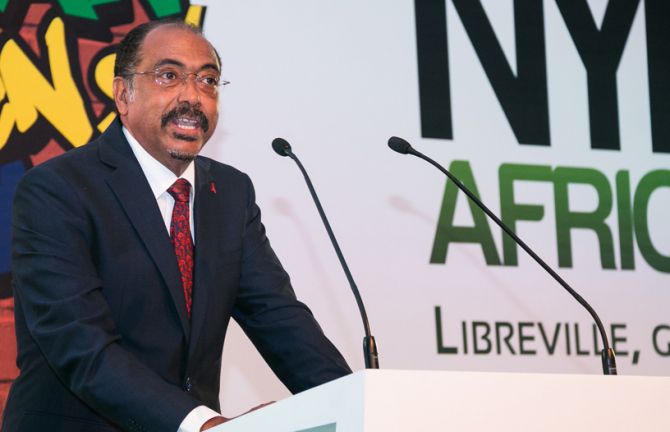
UNAIDS Executive Director Michel Sidibé speaking at the New York Forum Africa in Gabon, 23 May 2014.
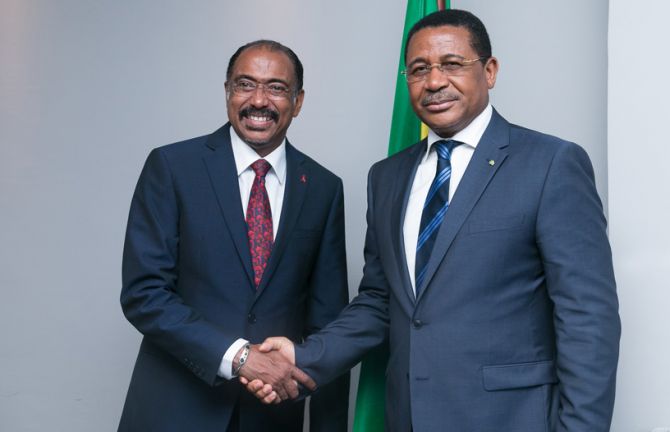
UNAIDS Executive Director Michel Sidibé shaking hands with Prime Minister of Gabon Daniel Ona Ondo.
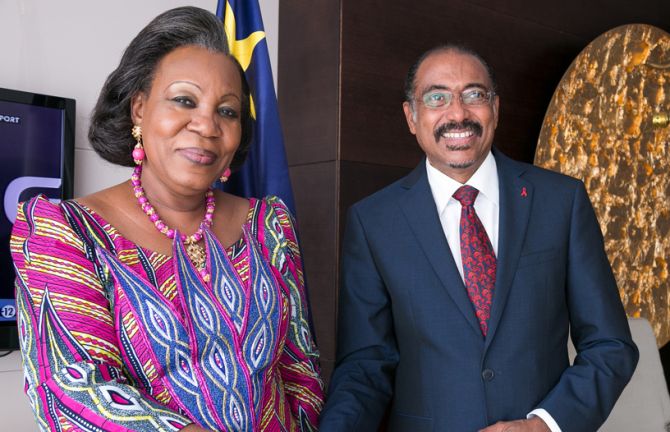
UNAIDS Executive Director Michel Sidibé shaking hands with Catherine Samba-Panza, President of the Central African Republic.
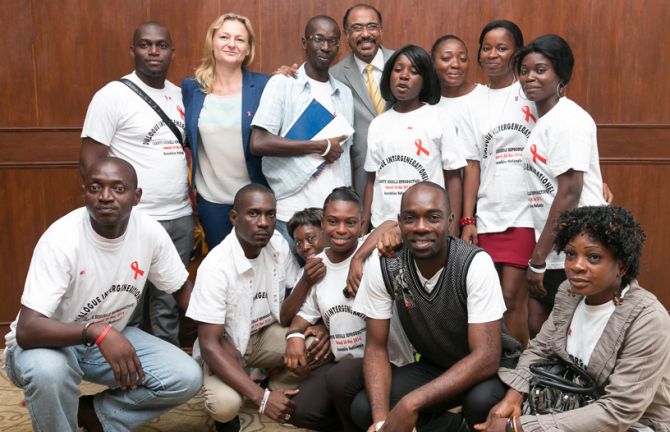
UNAIDS Executive Director with young people. Gabon, 24 May 2014.
Feature Story
African young people are shaping their future
27 May 2014
27 May 2014 27 May 2014More than 1500 young people, entrepreneurs, government representatives and heads of state gathered in Libreville, Gabon, on 23 May for the African Citizens’ Summit. The event was an opportunity for participants to reflect on how to improve the future of Africa while investing in youth and to establish dialogue between youth and decision-makers.
During the past decade, African economies have been among the fastest growing in the world, and this trend is expected to accelerate over the coming decades. Nevertheless, the challenge of high growth rates but low levels of investment in people pose a challenge to Africa’s development. “We would like to show to youth that they are at the centre of our preoccupations, and dialogue must be permanently maintained between us in order to anticipate and share with them the ambition of their development,” said Ali Bongo Ondimba, President of Gabon, who opened the Summit.
UNAIDS Executive Director Michel Sidibé reminded the participants that “Africa is going through rapid transformation and the continent must choose its own paradigm.”
The discussions were drawn directly from the findings of a survey carried out by Train my Generation, the vocational training fund created and set up by New York Forum Africa, on the opinions of young Africans.
The results showed that 90% of young people think that their lives are better than those of their parents. They are optimistic and believe that education is the key to their future. Even though most young people think that they possess a real spirit of entrepreneurship, access to capital to start businesses remains difficult, and economic problems and unemployment are recurrent worries.
To face all these challenges, Jeff Martin, founder and Chief Executive Officer of Tribal Brands and Tribal Technologies, encouraged youth in Africa to “Think like global citizens.” “It will allow you to see trends and opportunities that other people will not see,” he added.
During his visit to Gabon, Mr Sidibé also attended the opening ceremony of the New York Africa Forum and met with the Prime Minister of Gabon, Daniel Ona Ondo, and the interim President of the Central African Republic, Catherine Samba-Panza.