


Feature Story
UNAIDS World Cup for Ending AIDS and Discrimination kicks off in the Russian Federation
18 April 2018
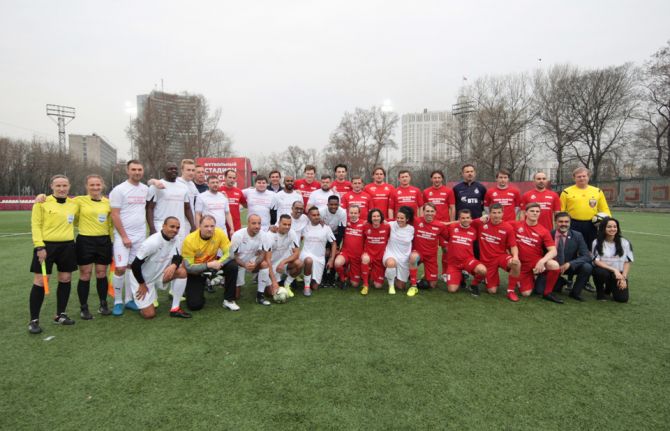
18 April 2018 18 April 2018Russian and international football legends and Russian players living with HIV joined forces on 17 April to play the first football match of the UNAIDS World Cup for Ending AIDS and Discrimination. International and national football stars draw attention to the stigma faced by people living with HIV and demonstrated the value of goodwill, solidarity, and human values towards ending stigma and discrimination.
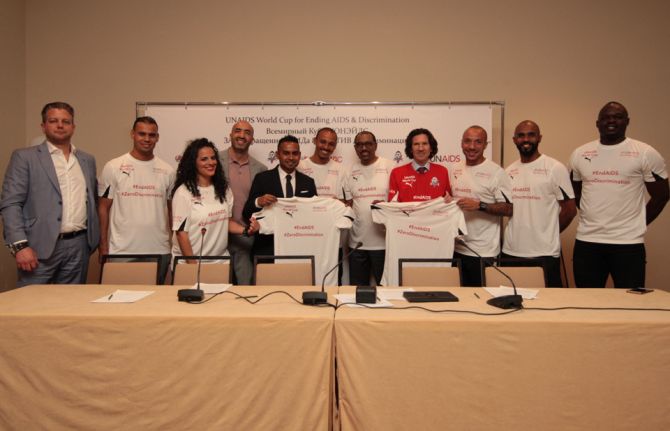
The match took place in Moscow on the eve of the opening of the Sixth Eastern Europe and Central Asia AIDS Conference. This was the first of a series of matches to be held with support from FIFA in several different countries in the lead up to the 2018 World Cup which will be held in the Russian Federation from 14 June to 15 July 2018. The initiative highlights the need for zero discrimination on the basis of race, nationality or HIV status, both on and off the pitch.
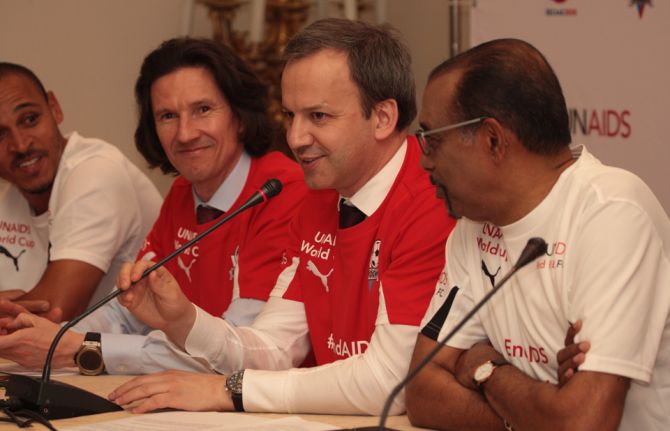
The Russian FC “Rosich” team was led by its captain, Deputy Prime Minister and Chairman of the Organizing Committee for the FIFA World Cup 2018, Arkady Dvorkovich. Team members included the Minister of Energy, Alexander Novak, the former Russian international and FIFA Anti-Discrimination Officer for the 2018 World Cup, Alexey Smertin, as well as former Russian internationals Dmitry Bulykin, Roman Shirokov, Evgeny Aldonin, Dmitry Sennikov, Oleg Kornaukhov, Marat Makhmutov, Vladimir Leonchenko and Roman Berezovsky.
Michel Sidibe, UNAIDS Executive Director, coached the UNAIDS “Red Ribbon” team, which was captained by former Cameroon international Samuel Eto’o. The Red Ribbon team featured former Senegal international, Abdoulaye Diagne-Faye, former French and Martinique international, Julien Faubert, former French under-21 international, Florent Sinama-Pongolle, former Nigerian international, Peter Odemwingie, former Moroccan international, Jaouad Zairi, Brazilian-born former Bulgarian international, Marcelo da Costa, former Palestinian women international and FIFA official, Hone Thalidjieh, and former Madagascar international, Alister Veerasamy.
Quotes
“I think the AIDS conference is a good basis for intensifying the efforts against HIV in Russia and worldwide. We are happy to contribute to the response by attracting football players, politicians and other famous people. I hope that our efforts will have an impact in preventing discrimination in any sphere.”
“Football is more than just a game. It is a vehicle for connecting people and building a bold social movement for change. It is an honour to launch the UNAIDS World Cup for ending AIDS and Discrimination campaign together with partners from the Russian Government, the FIFA World Cup 2018 and international football stars here in Moscow.”
“We perceive football as much more than simply a game of 90 minutes of play. It also brings very important feelings of respect, fraternity and togetherness into our lives. The simple fact that Russian and international players together with Russian HIV positive players have chosen to play in this match clearly shows that we stand united in working towards achieving zero discrimination regardless of race, colour, faith, gender or HIV-status. We will do everything we can to make that all the players and fans coming to Russia for the FIFA World Cup 2018 feel welcome, at ease and at home.”
“I am very happy to be back to this wonderful country, to this amazing city. It is an honour for me to be engaged in this noble work of ending AIDS and against discrimination.”
Region/country
Related
 Women, HIV, and war: a triple burden
12 September 2025
 Displacement and HIV: doubly vulnerable in Ukraine
11 August 2025

Feature Story
Thank You, Mrs Bush
18 April 2018
18 April 2018 18 April 2018By Tom Rosshirt — Originally published in Creators Syndicate on 20 June 2012
My brother Matt died of AIDS 26 years ago today, passing away in his bed in my parents' home in Houston.
It was a benighted time for people with AIDS. There were no antiretrovirals then. There was nothing much you could do for an AIDS patient but hold his hand. And many people still thought you could get AIDS by touching. My parents knew of individuals who'd been fired from their jobs for volunteering for AIDS organizations. That's how crazy the fear was.
As Matt was dying, we were befriended by a man named Lou Tesconi, a volunteer from the local AIDS organization. Lou came by to visit with Matt and to offer whatever service and kindness he could to my mom and dad.
Shortly after Matt died, Lou began studies to become a Catholic priest. Within the year, he was diagnosed with AIDS and kicked out of the seminary. Lou was a lawyer by training and temperament. He appealed the judgment to a Catholic bishop, who then asked Lou to found and head a ministry for people with AIDS. It was called Damien Ministries and was established in a poor part of Washington, D.C.
In early 1989, when the country was still very ignorant and fearful of AIDS, Lou got a call from the White House. First lady Barbara Bush was planning to visit Grandma's House, a home for infants with AIDS. It was one of the very first outings in her tenure as first lady, and Lou was asked to join a team of people to brief her privately before the event.
During the briefing, Lou told me later, he said: "Mrs Bush, it is a fantastic thing that you are holding these babies with AIDS. But the country sees them as innocent and the rest of us with AIDS as guilty. The whole suffering AIDS community needs a collective embrace from you today."
Lou thought he was speaking metaphorically. Apparently, Mrs Bush doesn't do metaphor. She stood up, walked over to Lou and gave him a big hug.
After the briefing, Mrs Bush took a tour of the facility as she talked to the press. She hugged, kissed and played with three little girls and then nailed the message: "You can hug and pick up babies and people who have ... HIV. ... There is a need for compassion."
At the news conference afterward, Lou stood by his point on Mrs Bush's visit: "I'm afraid that it may send a message that babies are innocent and can be helped," he said, "but that the rest of us aren't." He added: "I told her it would certainly help to get a collective hug from the first lady."
Then, again, this time in front of the cameras, Mrs Bush wrapped Lou up in a big embrace.
Mrs Bush wrote of this visit in her memoirs. She noted that "even then, people still thought that touching a person with the virus was dangerous." But she didn't give herself any credit for dealing a blow against stigma by embracing a gay man with AIDS in 1989.
Lou had a buzz from that hug that never went away.
In the fall of 1991, near Thanksgiving, I got a call from a friend that Lou had gone into the hospital again. He didn't have to tell me that it was for the last time. I called the White House and asked whether I could speak to the first lady's office. I was a nobody press secretary on the Hill. I didn't expect anyone in the White House to talk to me. Suddenly, I was speaking with the first lady's press secretary, Anna Perez, who had accompanied Mrs Bush to Grandma's House that day. I began to recount the events of two years before, and she saved me the time: "I remember Mr Tesconi," she said. I explained Lou's condition and said, "It would be so comforting for him to receive a letter from Mrs Bush."
A few days later, I went to see Lou in the hospital. As soon as he saw me, he reached beside his bed with a slow and shaky hand and pulled out a letter: "Look what I got," he said.
The letter was unflinching and full of love. She didn't duck the issue that Lou was dying. She used it as a pivot to say, "Well-done." At the bottom, in her own hand, she wrote to Lou that his life mattered, that he had made an impact.
That was a long time ago. But some things you don't forget — and shouldn't. In a time of ignorance, her wise touch eased the sting of exclusion for my friend and many others.
Thank you, Mrs Bush.
Tom Rosshirt was a national security speechwriter for President Bill Clinton and a foreign affairs spokesman for Vice President Al Gore.
Region/country
Feature Story
A united rallying cry: Time to make health care systems more flexible and innovative
16 April 2018
16 April 2018 16 April 2018Seven months after launching the catch-up plan in western and central Africa, progress on increasing the numbers of people on antiretroviral treatment continues to lag in the region. Many countries will not reach key targets by 2020 if the current systems remain unchanged.
"Overall we saw a 10% percent increase of people on treatment, which is not enough," said UNAIDS Executive Director Michel Sidibé. "Now, there is even more a sense of urgency."
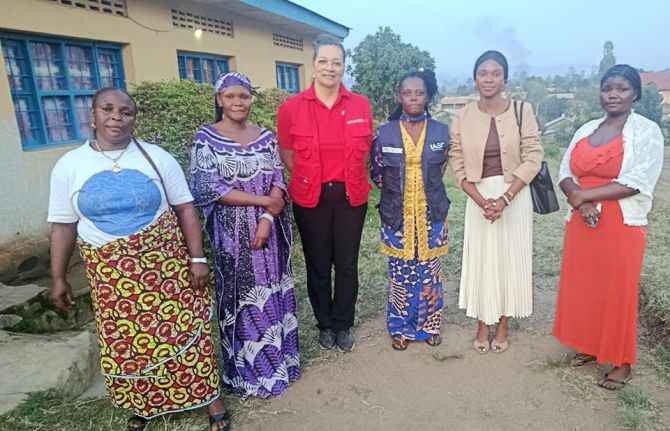
Mr Sidibé, however, pointed to the success in the Democratic Republic of Congo where there was a clear increase in the number of people living with HIV accessing ARVs. The reasons for the positive trend included civil society and political leadership working closely together as well as community HIV testing and the training of 11 000 health care workers.
"More than ever there is a need to rethink health systems and alternatives for people to access health care," he said.
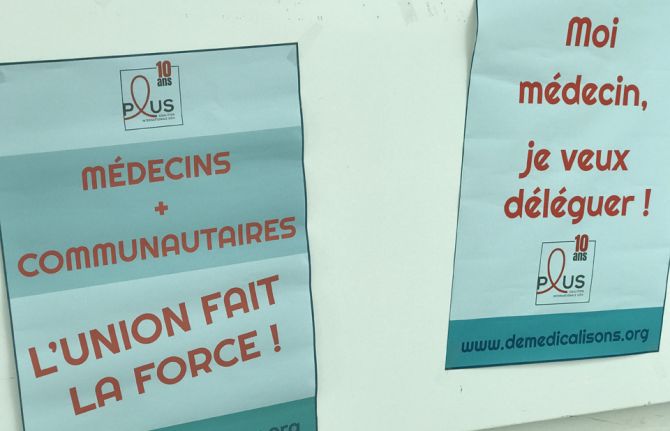
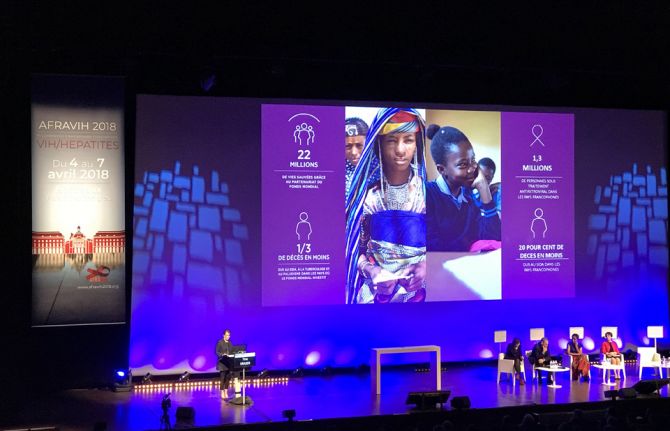
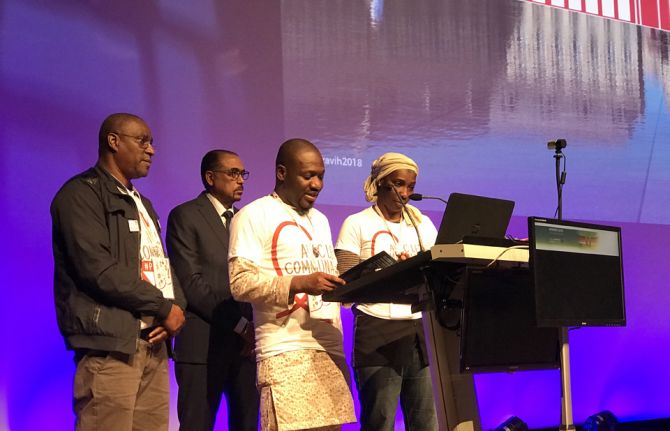
The call to delegate patient care to communities was a major rallying call during AFRAVIH, the international francophone HIV and hepatitis conference held in Bordeaux, France, early April. Mr Sidibé briefly shared the stage at the opening ceremony with the civil society organisation Coalition PLUS. They declared that the key to success in ending AIDS involved joining forces between doctors and community health workers and giving more leeway to communities to respond to the local needs of their own people.
Under the banner, "De-medicalize" the organisation explained that doctors will never be replaced but that there were too few of them and people living with HIV didn't require acute care.
Coalition Plus' recent report states that governments and the medical practitioners should delegate more tasks to nurses and community health workers. In addition to allowing for more targeted prevention and faster access to treatment, delegation of non-medical tasks would lighten the load on overburdened health systems. West and central Africa represent 17% of the total population living with HIV but 30% of deaths in the region are from AIDS-related illnesses. This is a region, according to UNAIDS and its partners, that can truly benefit from community models of care.
What worries Médecins Sans Frontières (MSF) is the risk of a significant drop in resources for treatment will hamper recent improvements in west and central Africa. This concern stems from the fact that Global Fund estimates a 30% drop in fund allocations to the region for 2018 – 2020 compared to signed HIV grants in the previous allocation period. In 2016, MSF was among the first to sound alarm bells regarding the region's high HIV death toll and the up to 80% of children unable to access antiretroviral therapy. MSF HIV Policy Advisor and Advocacy Officer Nathalie Cartier said that they supported the west and central Africa catch-up plan but that it needed to be fully implemented. "Political will has been promising but now it's time to make it a reality on the ground so that people living with HIV can reap the benefits," she said.
Global Fund supported the catch-up plan and works closely with countries in order to maximize the impact of the investments. They believe that leveraging additional domestic financing for health is crucial to increase country ownership and build sustainable programs.
All the more reason to decentralize healthcare systems and capitalize on innovations to keep health costs down. HIV self-testing, new medicines and high impact strategies involving communities are critical to improving efficiencies. "With point-of-care (POC) testing in communities and homes, delays are minimal between diagnosis and initiating treatment," said Cheick Tidiane Tall, Director of Réseau EVA, a network of pediatric doctors specialized in HIV care. “In the long run, that's a lot of people and resources saved,” he added.
Côte d'Ivoire Infectious and Tropical Diseases professor Serge Eholié couldn't agree more. "Flexible health care systems capitalizing on various innovations makes a lot of sense," he said. Turning to the Minister of Health in the Central African Republic, Pierre Somse, he asked, 'How do you respond?'
Mr Somse, also a trained doctor, said, "We doctors will stay doctors. However, there is a need for us to lean on communities and vice versa." He added, "at the heart of the issue are patients and they are and should always be the priority."



Feature Story
Globo Television visits UNAIDS following Emmy Kids nomination
11 April 2018
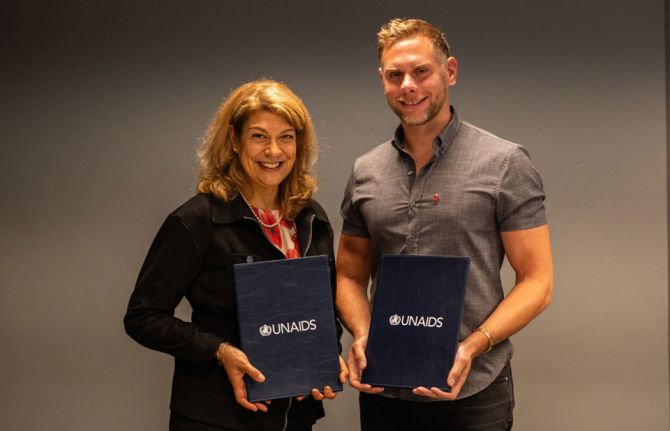
11 April 2018 11 April 2018Staff from Globo Television visited UNAIDS headquarters in Geneva, Switzerland, on their way to Cannes, France, for the 2018 Emmy Kids Awards. Globo and UNAIDS were nominated for an Emmy Kids Award in the digital category for the web series Young Hearts—I Just Want to Love, which focuses on a high school romance between a teenager living with HIV and his girlfriend.
The series was a spin-off from Brazil’s longest running soap opera, Malhação—Seu Lugar No Mundo (Young Hearts—Your Place in the World), a production developed and broadcast by Globo. Among several teen love stories in the season, the one between Henrique and Camilla became a hit with the audience. The soap averages a daily audience of 24 million viewers, mainly pre-adolescents and their parents. UNAIDS, an official partner with Globo since 2015, gave technical advice and support to the writers of the show.
UNAIDS, Globo and Gshow produced the web spin-off, which is available on the Globo streaming platform. The five-episode web series became the third most watched original series on the platform, with almost 1 million views.
Michel Sidibé, UNAIDS Executive Director, congratulated Globo, explaining how media plays a key role in stopping HIV stigma and exclusion. He praised the Globo partnership for using edutainment to reach young people with compelling and relevant HIV information.
Emmanuel Jacobina, the writer of Young Hearts—Your Place in the World for the 2015–2016 season and the web series, said that the idea came from a conversation he had with the UNAIDS team about HIV in Brazil. It disturbed him, he said, that despite there being methods for prevention, tens of thousands of people still become infected with HIV each year in Brazil. As a result, the web series, he said, seemed the best place to push the debate further and speak bluntly about relationships, sexuality and HIV.
The Director of Corporate and Social Responsibility at Globo, Beatriz Azeredo, reiterated the company’s commitment to mobilize Brazilian society around major social issues with television series and public service announcements. Globo’s Director of Communications, Sergio Valente, noted Globo’s presence in more than 100 countries and said that it has a 99% reach in Brazilian homes.
Of the three nominees in the digital category, the award went to the Norwegian series Jenter (Young Girls), produced by NRK.
UNAIDS is working towards ensuring that 90% of young people have the skills, knowledge and capacity to protect themselves from HIV and have access to sexual and reproductive health services by 2020.
Quotes
“Teach us the right way to tell stories, because we know how to transform information into entertainment.”
“Globo Television is a bridge to help us remove stigma and prejudice and hopefully change attitudes.”
“Globo Television is a true inspiration, because it has gone a long way in portraying more women as role models and informing people about zero discrimination.”
Region/country

Feature Story
New methods for HIV surveillance and estimates in India
06 April 2018
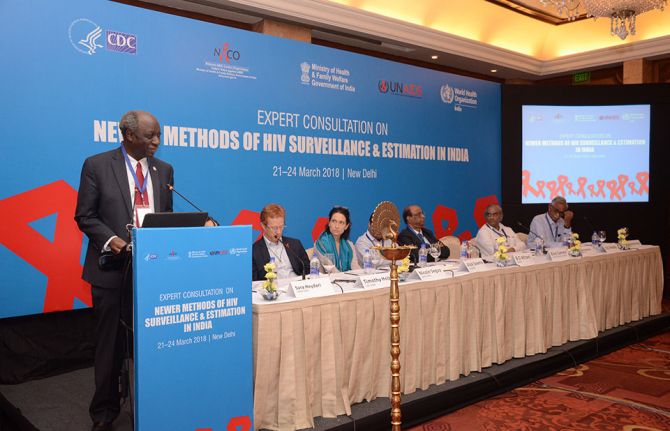
06 April 2018 06 April 2018Experts from India and around the world recently discussed new ways of carrying out HIV surveillance and making estimates on the HIV epidemic in India.
Opening the consultation, the Director General of Health Services of India, B.D. Athani, said, “Disease surveillance is the stethoscope of a public health professional and an extremely important public health function.”
The consultation heard about in-country pilot projects and other initiatives being planned. Steps being taken to strengthen the quality of data and enable their better use were highlighted, as were efforts that are being made to improve the interface between the various information systems for HIV surveillance.
Technical sessions on HIV surveillance, including the importance of integrated surveillance for HIV, tuberculosis, hepatitis and syphilis, and on making HIV estimates were held throughout the four-day event.
“The use of data is fundamental to enabling an efficient and sustained public health response. Three questions remain critical in this regard: what data shall be collected, how it shall be collected and how it should be used to help the design and implementation of an effective response,” said S. Venkatesh, the Deputy Director General of the Indian National AIDS Control Programme.
During a session on making district-level HIV estimates, the different methods of how estimates could be made were examined. The participants agreed that, for inter-district comparability and consistency, just one method should be used to generate district estimates. Determining the best method would require further analysis of the strengths and limitations of all of them, however.
During the consultation, Bilali Camara, the UNAIDS Country Director for India, noted the importance for the AIDS response of having granular information on locations and populations.
A presentation on key population size estimates included a novel pilot for virtual mapping using social media in an ethical and cost-effective way, which was recognized as the methodology of the future. The consultation also heard that India should collect behavioural information through so-called polling booth surveys—whereby information on behaviours can be collected anonymously—and other innovative approaches.
Sessions on each of the technical areas began with international experts sharing the broad global framework and guidelines. They highlighted approaches adopted by different countries and the practical considerations for each approach. The participants agreed that data from surveillance, estimates and programmes represent different pieces of information that together provide a better perspective on the HIV epidemic and response—each piece is important and should not be seen in isolation.
The consultation was held on 21–24 March in New Delhi, India. It was organized by India’s National AIDS Control Organization in collaboration with UNAIDS, the World Health Organization and the United States Centers for Disease Control and Prevention, whose experts were joined by national experts from the Indian Council of Medical Research institutes and others. Recommendations from the consultation will be compiled into a road map for implementation by the National AIDS Control Programme.
Related information
Region/country
Feature Story
Test and treat showing results in Uganda and Zambia
05 April 2018
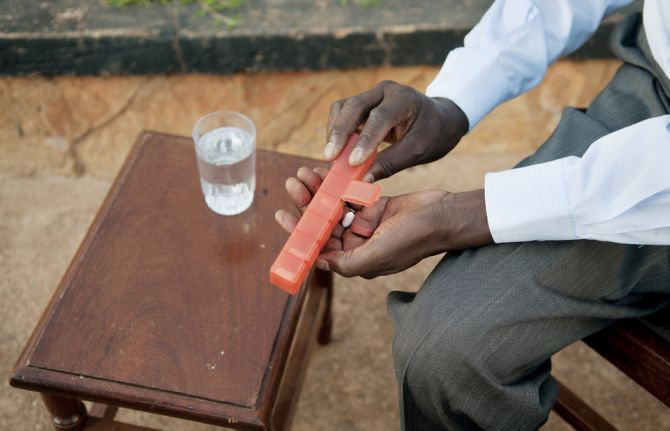
05 April 2018 05 April 2018New data show that the test and treat approach is having a significant impact on the number of people accessing HIV treatment. After Uganda adopted such an approach in 2017, according to government data the number of men newly initiated on treatment rose from 60 000 in 2016 to 80 000 in 2017, while the number of women newly initiated on treatment increased from 107 000 to 138 000 in the same time period.
Just as importantly, the treatment gap between people newly diagnosed as HIV-positive and people newly initiated on HIV treatment has shrunk for both men and women in Uganda. The gap for men narrowed by 45%, from 33 000 in 2016 to 18 000 in 2017, while for women it narrowed by 60% in the same time period, from 48 000 to 19 000. Although more women are testing HIV-positive than men, the HIV treatment gap is closing for both women and men.
Similar trends were observed in Zambia after the start of its test and treat policy in 2017. Zambia has seen the number of people newly initiating HIV treatment increase from 23 000 in the first quarter of 2016 to 45 000 in the final quarter of 2017, according to government data—an increase of 65%.
Through a test and treat approach, if a person tests HIV-positive, he or she is immediately enrolled on HIV treatment. Before the advent of test and treat, people living with HIV had to wait for their CD4 count to drop to a particular level before starting treatment.
Both these effects of test and treat were seen after the recent launches of so-called situation rooms in both Uganda and Zambia. The situation rooms are interactive software platforms that centralize data for HIV and other diseases to improve tracking of the diseases and programming in order to reach more people with services.
Feature Story
H6 commits to accelerate results for health
26 March 2018
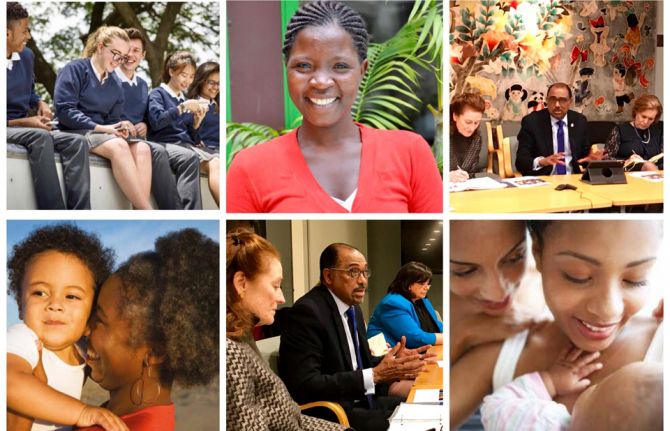
26 March 2018 26 March 2018The H6 combines the strengths of six international organizations to help countries to realize the United Nations Secretary-General’s Every Woman Every Child strategy. The partnership mobilizes political commitment and resources to transform societies so that women, children and adolescents can realize their rights to the highest attainable standards of health and well-being.
High-level representatives of the six organizations met in New York, United States of America, to shape a shared vision for the H6. During the meeting, which took place on 21 March, health leaders committed to jointly deliver more and faster results in countries.
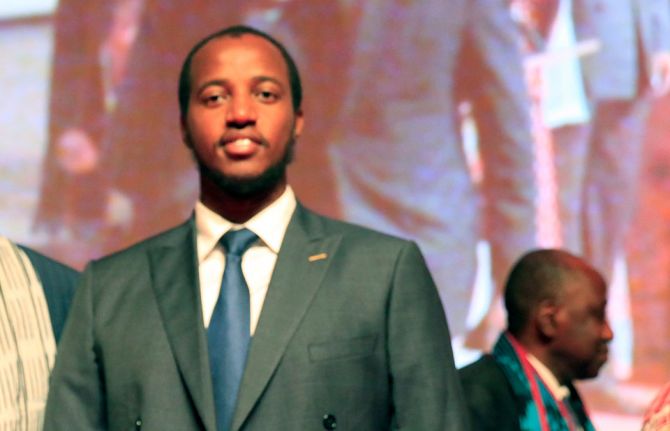
The Chair of the H6, Michel Sidibé, shared his vision for the partnership, including how it can evolve to meet the demands of the Sustainable Development Goals, including in humanitarian settings, and be a leading platform to advance United Nations reform.
“As a transformative platform, I see the H6 as an outstanding opportunity to rapidly bring United Nations reform to life and deliver results for every woman, child and adolescent on the ground,” said Michel Sidibé, Executive Director of UNAIDS.
The participants were united in their ambition to make the H6 a one-stop shop for countries for strategic policy advice, technical assistance and strategic information. Adolescent health, particularly for 10–18-year-olds, was discussed as a key focus area.
“I see an effective H6 partnership as an important way to drive health impact at the country level for all children, including by better addressing gaps in services for the age group from 10 to18 years old, and by planting the seeds of development in humanitarian contexts,” said Henrietta Fore, the Executive Director of the United Nations Children’s Fund.
The participants also committed to ensure policy-making in which communities have a voice and decided to build innovative partnerships with stakeholders beyond the United Nations.
Enhanced transparency and accountability of the H6 and reducing fragmentation and duplication in the United Nations system, as well as between the United Nations and the World Bank, will be key to success, as will a strong focus on joint reporting of results. The H6 will also work in close collaboration with the Global Financing Facility and the Partnership for Maternal, Newborn & Child Health.
“The United Nations Population Fund is strongly committed to the H6 partnership, which has proven that working in close collaboration and bringing different expertise and experience to the table is not only effective in enabling countries to deliver quality care for the women and girls left furthest behind, but also ensures strong country ownership,” said Natalia Kanem, the Executive Director of the United Nations Population Fund.
The H6 principals will now develop a results framework and reconvene in May to review and endorse it. They are aiming to adopt a road map to roll out new ways of working by mid-year.
Feature Story
Africa’s welcome mat: stories of hope and resilience from refugees in Uganda
29 March 2018
29 March 2018 29 March 2018“Right now, I just want to go to a country where there is peace,” says a young student who fled the conflict in his home country, the Democratic Republic of the Congo. His new home is Kyangwali Refugee Settlement Area in the Hoima District of Uganda—the place that will give him a chance to fulfil his dream of a peaceful life.
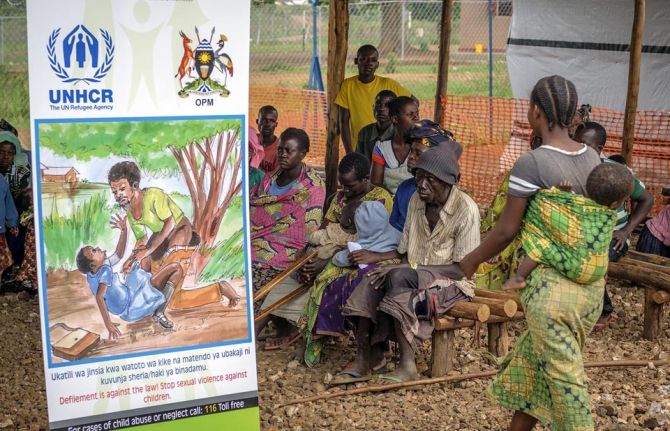
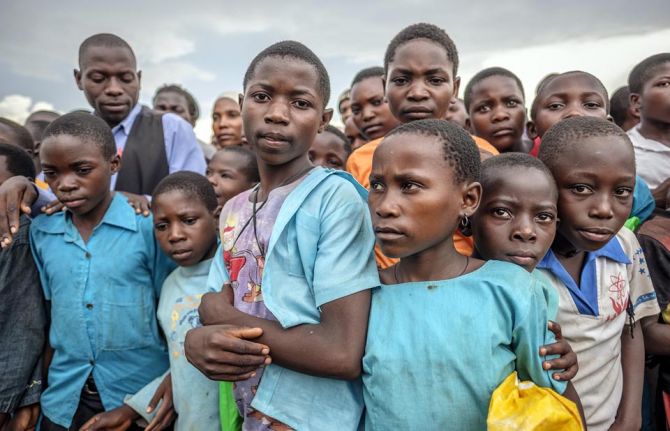
The Kyangwali Refugee Settlement Area lies on the banks of Lake Albert on the border between southern Democratic Republic of the Congo and northern Uganda. Most of the refugees in Kyangwali are fleeing interethnic conflict in eastern Democratic Republic of the Congo and making the perilous journey into Uganda on fishing boats across Lake Albert. Since January 2018, approximately 59 000 people have made the crossing. On a normal day 500 refugees arrive; on a busy day it can be as many as 2000.
Families arrive with whatever personal belongings they can carry—from mattresses and cookware to valuables, such as solar panels, piled high among the passengers in the boats. The boat ride can take as little as six hours if people travel in a motorized vessel or as much as 12 hours if they travel by canoe. “Boats sometimes run out of fuel in the middle of the lake and Ugandan marine police have to bail them out,” says Bornwell Kantande, Representative of the Office of the United Nations High Commissioner for Refugees in Uganda. “Other boats have capsized from overloading—at the peak of the influx of refugees as many as 200 people would pile onto a single canoe.”
Upon arrival at the Kyangwali reception centre, refugees are registered by aid workers and given a wristband for identification purposes. They receive high-energy biscuits and water and those who need it are given emergency health care. Refugees stay at the reception centre for a day or two before being transported to the settlement area, where they are allocated a small plot of land and material and equipment to build temporary shelter while they establish themselves.
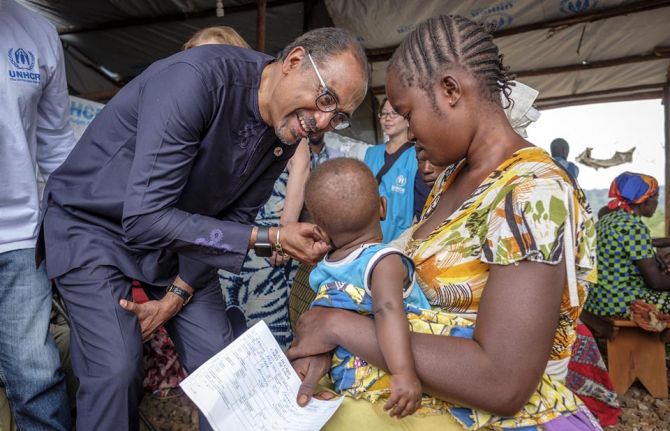
In a recent visit to the reception centre, Michel Sidibé, UNAIDS Executive Director, witnessed first-hand the health services that are offered to newly arrived refugees at its small makeshift clinic. Here refugees obtain access to emergency health care and are informed about the minimum initial service package for reproductive health, which they receive throughout the different phases of new arrival: border crossing; the short stay at the reception centre; before transportation to the settlement area; and during settlement. Services include HIV testing and tuberculosis screening, prevention of mother-to-child transmission of HIV services, provision of HIV and tuberculosis treatment to people already on it and other sexual and reproductive health services.
During his visit, Mr Sidibé listened to the stories of many refugees, who told him not only of the impact that dislocation has had on their health and their lives, but also of their aspirations and dreams to make a better life for themselves and their families. “I heard stories of sadness, but also of hope and resilience,” says Mr Sidibé.
Uganda is home to the largest refugee population in Africa, with a population of almost 1.4 million refugees in 13 refugee settlements across the country. The majority of refugees are from South Sudan and the Democratic Republic of the Congo, the latter of which has close to five million displaced people—almost as many as in the Syrian Arab Republic.
“It is beyond admirable to selflessly offer refuge to hundreds of thousands of women, children and men who are in need of international protection,” remarked Mr Sidibé. “Uganda’s refugee policy is among the most progressive in the world and is a model for other countries to emulate.”
Region/country
Feature Story
Aisha Muhammadu Buhari to ensure that no child is born with HIV in Nigeria by 2020
26 March 2018
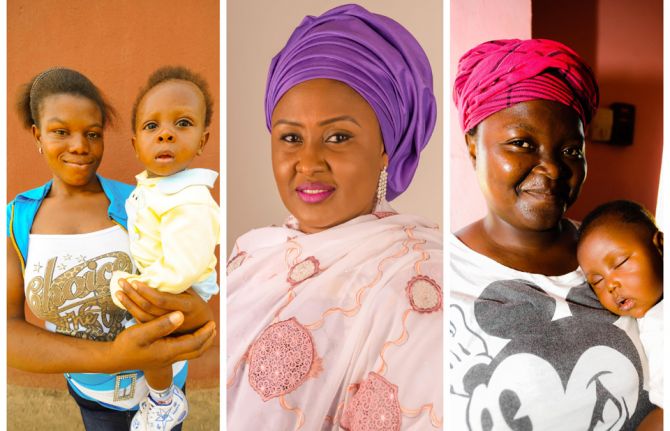
26 March 2018 26 March 2018The wife of the President of Nigeria, Aisha Muhammadu Buhari—the new UNAIDS Special Ambassador for the Elimination of Mother-to-Child Transmission of HIV and the Promotion of Treatment for Children Living with HIV in Nigeria—has vowed to end mother-to-child transmission of HIV in the country.
“It is with a great sense of responsibility and humility that I accept the honour to serve as a UNAIDS Special Ambassador. I am looking forward to using my voice to help ensure that no child is born with HIV in Nigeria by 2020,” said Ms Buhari, upon commencement of her new role.
Nigeria has one of the highest rates of new HIV infections among children in the world. In 2016, an estimated 37 000 [22 000–56 000] children were newly infected with HIV and 24 000 [14 000–37 000) children died of AIDS-related illnesses. Around 270 000 children [180 000–380 000] children were living with HIV in 2016, and just 32% of pregnant women living with HIV had access to antiretroviral medicines to prevent transmitting the virus to their child.
“I am privileged to announce Aisha Muhammadu Buhari’s acceptance of the appointment as UNAIDS Special Ambassador for Nigeria. The trust and respect that she commands in the country will help us to quicken the pace of stopping new HIV infections among children as well as ensuring treatment for all children living with HIV,” said Michel Sidibé, the Executive Director of UNAIDS.
The appointment of Ms Buhari will reinforce recent efforts to scale up the response to HIV in Nigeria. In December 2016, the President of Nigeria, Muhammadu Buhari, launched a Fast-Track plan that includes using domestic resources to maintain 60 000 people living with HIV on treatment and to ensure that an additional 50 000 people can access treatment each year.
“We are delighted that her excellency has accepted this important role of UNAIDS Special Ambassador. The goal of eliminating mother-to-child transmission of HIV in Nigeria is a laudable one. It must be achieved,” said Pauline Tallen, the Board Chairperson of the National Agency for the Control of AIDS, Nigeria.
Ms Buhari is a passionate advocate for the rights of vulnerable women and girls. During her one-year tenure, she will advocate for increased access to antenatal care services and HIV testing for all pregnant women and their linkage to adequate treatment and care. She will also advocate for an increase in domestic resources for the HIV response at the federal and state levels.
“My three lovely children are all HIV-free because I benefited from prevention of mother-to-child transmission of HIV services. All pregnant women living with HIV in Nigeria deserve children who are born free from the virus, and the new UNAIDS Special Ambassador’s voice can help us make a huge difference. She is now in a strong position to advocate for free prevention of mother-to-child transmission of HIV services in the country,” said Lucy Attah Enyia, a beneficiary of prevention of mother-to-child transmission of HIV services.
A formal ceremony to commemorate Ms Buhari’s acceptance of her appointment will take place during the visit of Mr Sidibé to Abuja, Nigeria, in April 2018.
Region/country

Feature Story
The Transgender House: a community centre for transgender people in Buenos Aires
29 March 2018
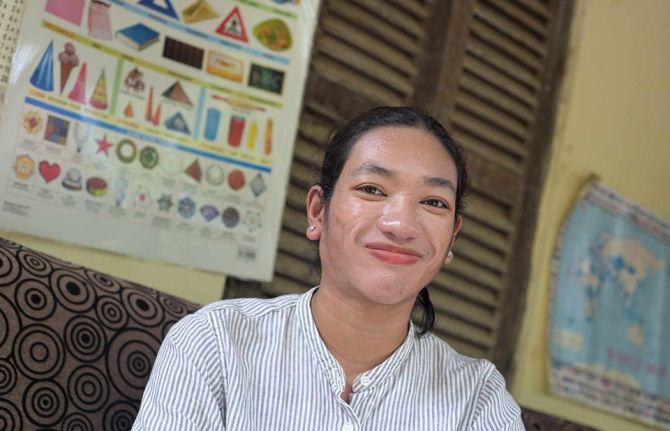
29 March 2018 29 March 2018Kimi Avalos is a young transgender woman who lives in Buenos Aires, Argentina. Because of stigma and discrimination, she couldn’t continue with her studies and complete high school. She says that she experienced bullying and harassment; her classmates insulted and physically assaulted her, under the indifferent eye of her teachers. “I really wanted to learn, but I had to drop out of school. Now, thanks to the Transgender House, my dream of finishing high school will soon come true,” said Ms Avalos.
Ms Avalos is one of 30 transgender students who recently started a new educational programme through which they can study for primary and secondary school diplomas by attending a combination of face-to-face and virtual classes. This innovative project is implemented in the Transgender House, a community centre for training and empowerment of transgender people founded in Buenos Aires in June 2017 by Marcela Romero, Coordinator of ATTTA (Association of Argentinian Transvestites, Transsexuals and Transgender) in collaboration with the City Council of Buenos Aires.
“To have this house has meant that as transgender people, we can come out from the darkness. The centre is in a visible space, on one of the main streets of Buenos Aires, in the San Cristóbal neighbourhood. This is our achievement; it shows that we exist as a community and that we have the right to a space like any other organization,” explains Ms Romero.
In Argentina, as well as in the rest of Latin America and the Caribbean, stigma and discrimination undermine learning opportunities and educational achievement of transgender people, thus affecting their future employment prospects. Discrimination and stigmatization also prevent transgender people from accessing appropriate health care, including HIV prevention, social protection and justice services.
In the region, transgender people experience frequent physical and sexual violence and hate crimes. According to data from ATTTA, 20 transgender people have been killed in Argentina since the beginning of 2018 and gender-based violence is increasing. Discrimination, gender-based violence and exclusion also contribute to increasing the vulnerability of transgender people to HIV. Transgender women continue to be heavily affected by HIV.
The Transgender House was created with the aim of providing a safe space where transgender people can be empowered and acquire knowledge and skills without the fear of being discriminated against, rejected or attacked. It works in partnership with governmental agencies, civil society and the private sector to provide a wide range of services and programmes based on the specific needs of transgender people.
MORE ON TRANSGENDER DAY OF VISIBILITY
Voices of activists for transgender rights
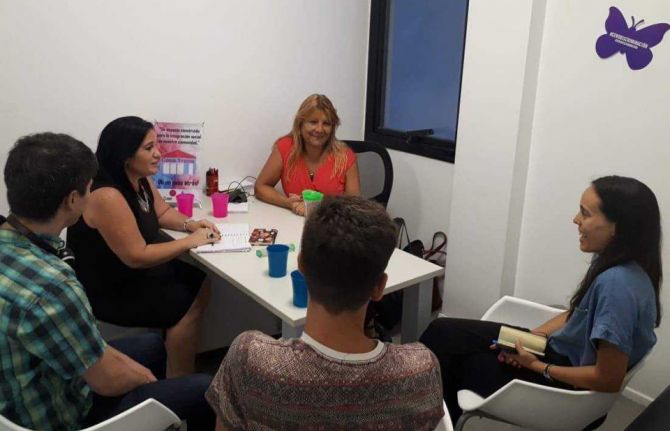
Among other initiatives, the Transgender House has established integrated counselling services and professional guidance for job searching, as well as legal advice from lawyers, who are available 24 hours a day. In collaboration with the Ministry of Education, Transgender House has recently begun educational projects that range from the implementation of primary and secondary education programmes to professional training, such as on providing care services to the elderly.
Other important activities include the promotion of prevention of HIV and other sexually transmitted infections, HIV testing and vaccination campaigns. The Transgender House also provides continuous psychological assistance and, through a partnership with Fernández Hospital, counselling services on hormone therapy. In addition, the house engages in outreach work with a team of community health promoters that visit sex workers at their places of work at night, distributing condoms and informative material on HIV prevention.
While the Transgender House is currently a successful project, a point of reference for transgender people in Buenos Aires and has multiple partnerships in the city, it hasn’t been an easy process to get to this point. Ms Romero says that she first approached the Buenos Aires City Council eight years ago, advocating for a space where transgender people could meet. Finally, two years ago, the council approved the remodelling and refitting of one of their buildings, and with the help of an architect and the vision of the ATTTA Coordinator, the Transgender House became a reality.
“The Transgender House is a best practice of community service delivery that is contributing to the achievement of the Fast-Track Targets, leaving no one behind,” said Carlos Passarelli, the UNAIDS Country Director for Argentina, Chile, Uruguay and Paraguay.
Around 400 people visit the Transgender House each month to receive counselling and information and approximately 600 people regularly participate in workshops, group meetings and courses there. “I couldn’t be happier and more grateful for the opportunity that I am given at the Transgender House. I hope that this model of respect and promotion of human rights serves as an example to transform and change society so that all of us can live with dignity,” said Ms Avalos.