

Feature Story
Empowering young women in Cité Soleil: a model for reducing vulnerability to violence in Haiti
08 August 2025
08 August 2025 08 August 2025This story first appeared in the UNAIDS Global AIDS Update 2025 report.
Gang violence in Haiti is contributing to a dire humanitarian crisis in a country where 5.7 million people face acute food insecurity and more than a million people are internally displaced, half of them children. In the country’s capital of Port-au-Prince, only 50% of healthcare facilities are operational, and access to essential health services, including HIV treatment, is severely limited. Amidst the escalating insecurity, ruthless sexual violence, including gang rape, is rampant, exacerbated by restricted or suspended gender-based violence services.
More than 6500 incidents of gender-based violence were reported in 2024, although this number is likely to be significantly underreported. Nearly two-thirds of these incidents involved rape or sexual assault. Between 2023 and 2024, there was a shocking 1000% increase in sexual violence against children.
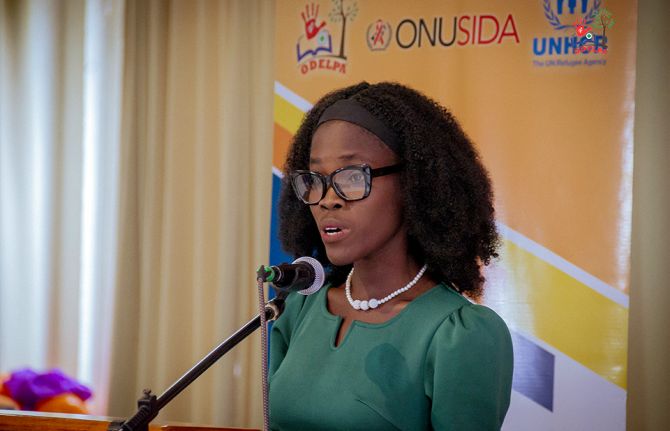
“I was a victim of gang rape in 2021,” says 29-year-old Laguerre Myrline. “This happened when we had to abandon our home to flee the attacks of armed men. At the southern entrance of Port-au-Prince, I was assaulted by several men. They abused me one after the other. Traumatized, I didn’t even go to the hospital.”
Women and children remain particularly at risk in this crisis. The Organization for Development and Poverty Reduction (ODELPA), a civil society organization supported by UNAIDS and the United Nations High Commissioner for Refugees (UNHCR), is implementing a transformative initiative aimed at reducing sexual and gender-based violence and other systematic violence in Cité Soleil, an impoverished and densely populated commune in Port-au-Prince.
The initiative includes capacity building and economic empowerment via training on HIV prevention, prevention of gender-based violence and mental health support for girls, young women and men. Through these efforts, 180 beneficiaries have received startup funds to launch income-generating activities and businesses, helping them to break the cycle of financial dependence and offering a sustainable pathway to resilience and autonomy.
The programme has been so successful that the training sessions have been replicated for more than 1000 members of grassroots community organizations. In addition, ODELPA launched a multimedia communication campaign to raise awareness and provide education on prevention of gender-based violence.
The campaign reached more than 1.5 million people across Haiti and the Haitian diaspora through four radio programmes. The project applies a holistic approach that combines education, economic empowerment and community-driven solutions as key elements to breaking cycles of violence and inequality and ensuring girls and young women can reclaim their rights and dignity and their future.
In Haiti, the recent funding cuts have had a huge effect on the national HIV response, which was almost 100% funded externally and almost entirely reliant on PEPFAR (which provided about 90% of HIV funding) and the Global Fund (which contributed the remaining 10% of funding). Civil society organizations have been significantly impacted by the funding cuts, particularly those that provide services for people from key, priority and vulnerable populations. This has increased vulnerability to stigma, discrimination and gender inequality, and weakened responses to sexual and gender-based violence.
The youth project implemented by ODELPA and supported by UNAIDS and UNHCR is a small beacon of hope. Sustainable funding will be required to support the response to HIV in Haiti, including urgent renewed global solidarity
Global AIDS update 2025
Region/country
Related
 Impact of US funding freeze on HIV programmes in Haiti
13 March 2025
 Comprehensive Update on HIV Programmes in the Dominican Republic
19 February 2025
Feature Story
Displacement and HIV: doubly vulnerable in Ukraine
11 August 2025
11 August 2025 11 August 2025This story first appeared in the UNAIDS Global AIDS Update 2025 report.
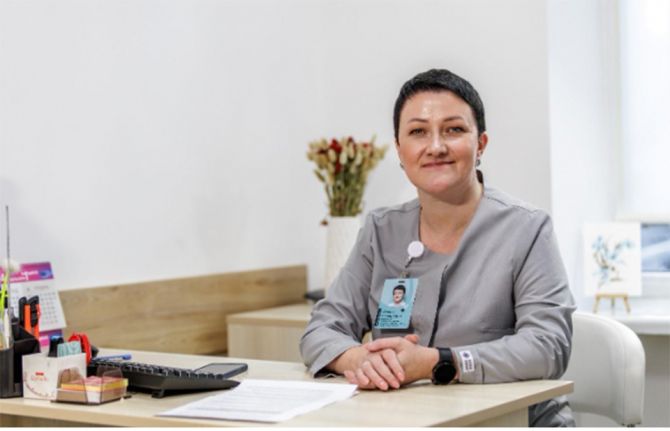
In early 2022, shortly after the full-scale invasion of eastern Ukraine, Kateryna was pregnant and caring for her young son and daughter.
“We lived under constant shelling in Pokrovsk. For the sake of my children, I had to flee to give birth,” she says. She is originally from the Donetsk region in Ukraine, which by 2024 became the scene of intense fighting.
Today, her hometown of Pokrovsk lies in ruins. With three children and no home to return to, Kateryna is trying to rebuild her life from scratch.
Kateryna has found refuge in the city of Dnipro at a shelter run by the non-governmental organization 100% Life was established by UNAIDS with donor support. The shelter provides a safe environment for women living with HIV, including those with children. It is one of four such shelters in the Dnipropetrovsk region, offering vital humanitarian assistance and connections to HIV care for people who have lost everything.
Since the beginning of the war, nearly 3.7 million people have been displaced within Ukraine. As the violence has escalated and people are forced to flee repeatedly, many people are living in areas of active fighting or under occupation. In this context, any reliable assessment of the rate of HIV among displaced people is impossible.
Despite this, the health system in Ukraine, supported by humanitarian organizations and international donors, has made extraordinary efforts to ensure continued access to HIV treatment. From the first days of the invasion, the Public Health Center quickly distributed antiretroviral medicines to central and western regions, where most internally displaced people fled. Emergency stocks were concentrated in leading health facilities and, with the help of nongovernmental organizations, volunteers and partners, supply chains were rapidly restored.
“In the early days of the war, hospitals in Lviv were overcrowded,” says Olenka Pavlyshyn, an infectious diseases specialist at the Center for Integrated Medical and Social Services. “But even then, there were no interruptions in antiretroviral therapy.” People received three- or six-month supplies of medicines, and treatment was provided based on medical need rather than documents or place of residence.
The response also reached people who fled abroad. A total of 6.4 million Ukrainians have left the country, and many face barriers to health care in host countries. “In some European countries, our citizens still cannot get health insurance, so they have no access to medical care,” says Olenka. “Others are not ready to disclose their HIV status in a new environment, so these people come back to Ukraine every six months—and we give them the medicines they need for continued treatment while living abroad.”
As the health system in Ukraine adapts to the demands of a displaced population inside the country and beyond its borders, pressure is growing.
Ukraine was once a regional leader in transitioning from donor to domestic funding for health services, but its HIV resources are extremely constrained due to the war. The country now relies heavily on international assistance to sustain essential medical care, including HIV services. Although antiretroviral therapy has been secured, HIV services may be at risk due to cuts in United States funding.
New HIV infections and AIDS-related deaths could rebound globally if the funding cuts are not recovered. Continued international support is critical to sustain the HIV response and ensure countless people caught in a war, like Kateryna, are not left behind.
Global AIDS update 2025
Region/country
Related
 Ukraine: Keeping people in care
23 February 2026
 Women, HIV, and war: a triple burden
12 September 2025
Feature Story
Community workers at the heart of a resilient HIV response in Ethiopia
04 August 2025
04 August 2025 04 August 2025This story first appeared in the UNAIDS Global AIDS Update 2025 report.
Amhara in northern Ethiopia is a region with a rich cultural history. The birthplace of the national language, Amharic, it is home to ancient churches such as the UNESCO World Heritage Site of Lalibela. In April 2023, the region was plunged into crisis when internal armed conflict erupted. The consequences were devastating.
Thousands of people were displaced, gender-based violence surged, essential services such as health and education were disrupted, and travel between cities became almost impossible.
As formal systems broke down, local community-based organizations and drop-in centres in urban areas such as the regional capital Bahir Dar continued to monitor the situation on the ground and provide vital services. These organizations became lifelines for people living with HIV, people from key populations and young people.
This changed in February 2025. Cuts in United States funding disrupted essential services. Many community-run organizations that relied on those funds were forced to close. Outreach workers who had built trust with people on their doorsteps were suddenly laid off. Peer support groups vanished. Fear took hold.
“I often find myself overwhelmed with stress,” says a member of one women-led association of people living with HIV. “If medicine and other services stop, where will I go? I simply do not have the means to afford the treatment I need.”
The data collected by the association paint a stark picture. For two months, no new clients have been enrolled in PrEP. “One of my biggest concerns is not having access to condoms,” says a case manager. “Without them, HIV will spread much more easily.”
She adds, “Without a financial budget, our members are left without the basics, no food, medical care, transportation, no hope. They have families. They rely heavily on this support. It would make a huge difference if members could access free medical treatment and hospital services. Many cannot even afford one meal a day. Their health is deteriorating. Their children are suffering. What they need most is dignity, food and a fighting chance.”
Yet even when faced with collapse, communities refused to give up. Young volunteers formed informal networks and WhatsApp groups to check on peers and stay connected. Mothers banded together to support children’s treatment. Youth collectives used community radio and shared airtime to spread critical health information.
Where formal systems failed, communities built their own safety nets.
The situation in Bahir Dar was a wake-up call. It exposed the fragility of systems dependent on a single funding source.
This crisis shows that resilience must be built into HIV responses from the start. Community-led and youth-driven responses must be recognized, resourced and scaled up. UNAIDS is providing support to community organizations to access funding support from local government authorities and private foundations to empower them to continue this important work of community outreach to the most vulnerable populations.
The conflict in the region has shown once again that HIV must feature in humanitarian, development and recovery agendas. The intertwined challenges of conflict, displacement, gender-based violence and HIV demand integrated, person-centred solutions. This will not happen if HIV is treated as an afterthought or is equated only with clinical care and if community-engagement is not recognized and supported.
Global AIDS update 2025
Region/country

Feature Story
Using sports to combat gender stereotypes and learn about HIV
30 July 2025
30 July 2025 30 July 2025This story first appeared in the UNAIDS Global AIDS Update 2025 report.
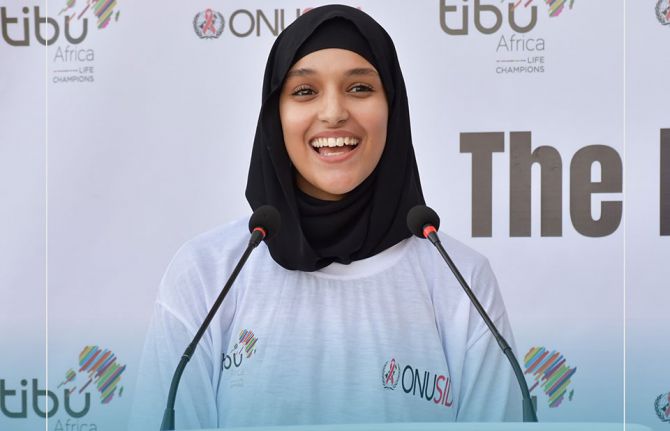
Marouane Abouzid grew up in Casablanca, Morocco, where many boys act like bullies and sex is taboo. That changed when he joined the project Sport Is Your Protection, where he gained knowledge about gender equality and health. “The training on HIV awareness led by UNAIDS and Tibu Africa was a transformative experience in the sense that I saw how sports can be an effective way to get a message out,” the 25-year-old says. “It also gave me essential skills like communicating clearly and active listening.”
He enjoyed the project so much that he trained to lead sports activities and participate in other sessions. “I talk openly about what I have learned. I encourage my friends to get tested for HIV and encourage people to respect others,” he says, excited about becoming a role model for his peers.
Marouane describes the activities as a safe space to discuss all sorts of issues that young people face in Morocco, such as poverty, unemployment and a patriarchal system.
Marouane is not alone. Assia Ezzahraoui, a participant in the Tibu Africa sports vocational school programme, joined the weeklong sexual education awareness meeting. “The informative sessions gave me new insights into symptoms, prevention methods and available treatments,” she says. Assia feels more secure about how to protect herself and her friends.
Tibu Africa was founded in 2011 and aims to bring the programme across different cities in Morocco. UNAIDS joined with Tibu Africa in 2024. “This first partnership with UNAIDS Morocco mobilized young people around issues to transcend barriers and create opportunities for dialogue and awareness,” says Mohamed Amine Zariat, President of Tibu Africa. “We hope this first step will serve as a springboard for future, even more ambitious initiatives.”
An estimated 24 000 [21 000–26 000] people are living with HIV in Morocco, and nearly 40% of these are women. Although the prevalence of HIV is relatively low in Morocco, vulnerable populations such as sex workers, gay men and other men who have sex with men and people who inject drugs are particularly at risk. Moroccan youth represent more than 30% of the total population, but a quarter of people aged 15–24 years have no job and lack education and training—young women are particularly hard hit.
Houssine El Rhilani, UNAIDS Country Director in Morocco, is aware of this. He believes the collaboration with Tibu Africa combining sport, education and awareness-raising can empower young people. “We were able to reach young people not only with information, but also through experience, providing them with concrete tools to become prevention ambassadors in their own communities,” he says. “We cannot end AIDS without prioritizing future generations.”
Global AIDS update 2025
Region/country
Related
Feature Story
Reducing stigma in health-care settings and reforming the law: a double hurdle in western and central Africa
28 July 2025
28 July 2025 28 July 2025This story first appeared in the UNAIDS Global AIDS Update 2025 report.
In seven countries in western and central Africa surveyed in 2023, more than 12% of people living with HIV aged 18–24 years reported avoiding health centres for care because of their HIV status.
Whether it is a refusal of care, humiliating comments or disclosure of their status, many people described feeling alienated. Last year, with funds from Expertise France and the help of UNAIDS and partners, a pilot was launched to raise awareness of stigma in Cameroon, Côte d’Ivoire, Senegal and Togo.
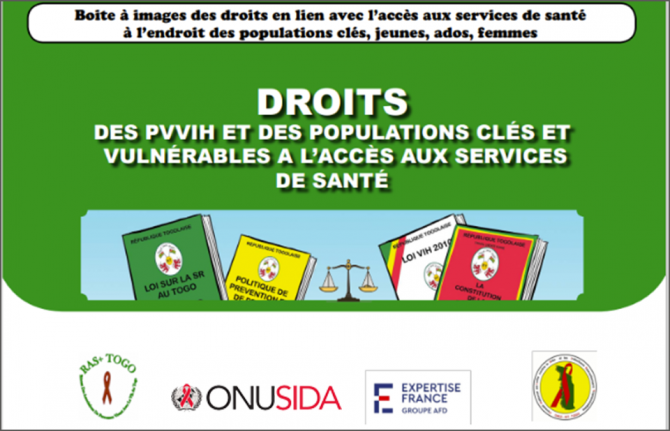
Training in the Looking In, Looking Out (LILO)* approach raised awareness among 150 health professionals in Senegal and 97 in Togo about sexual diversity, gender-based violence and respect for human rights. In Kara, northern Togo, a visual digital tool (named “image boxes”) has been designed with communities to raise awareness of health and HIV.
When individuals and communities know their rights, they are empowered to take control of their own health and to hold service providers accountable. This is one of the key messages of this tool used by the Network of People Living with HIV (RAS+ Togo). A total of 300 young people attended educational health sessions in the Central African Republic. In Benin and the Central African Republic, the project focused on legal reform, with the involvement of parliamentarians, including members of the women’s caucus in both countries. Legal texts, a draft decree and a decree have been drafted in the Central African Republic. In Benin, the work also focused on advocacy for the adoption of the new HIV bill.
“We must make the link between HIV and gender-based violence. The law must protect women in all spheres, especially including health,” said Huguette Bokpe Gnacadja, President of the National Institute for Women in Benin.
The year-long partnership has enabled action to be taken at the individual level (rights literacy), organizational level (paralegals in community organizations, training for community actors), interorganizational level and national level (legal reform).
In the next year, UNAIDS wants to further improve access to inclusive human rights-based HIV services for people from key populations, adolescents, girls and young women in the region.
“The fight against HIV will not be won in laboratories, but in the power relations between caregivers and those receiving care, between the state and its citizens,” said Fatou Sy, a UNAIDS focal point in the region who oversaw the projects in the six countries. “We have more work to do.”
*Looking In, Looking Out (LILO) refers to a process of internal and external reflection aimed at improving understanding of key populations and their access to health services. The approach seeks to strengthen the knowledge of intermediaries in the response to stigma surrounding key populations, with a view to encouraging their involvement in creating a supportive environment.
Global AIDS update 2025
Feature Story
As HIV infections soar due to injecting drug use, harm reduction should be a priority in Fiji
25 July 2025
25 July 2025 25 July 2025This story first appeared in the UNAIDS Global AIDS Update 2025 report.
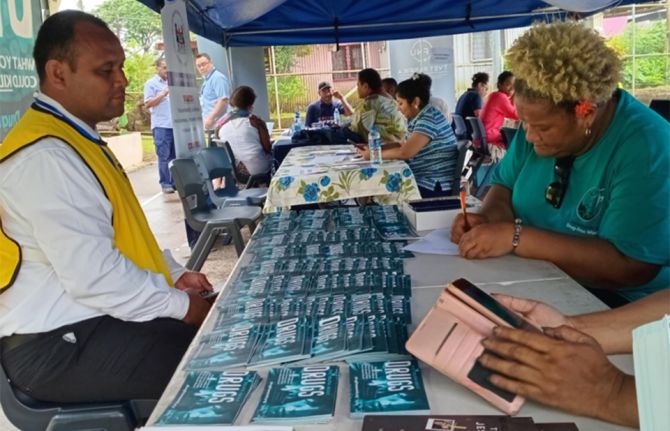
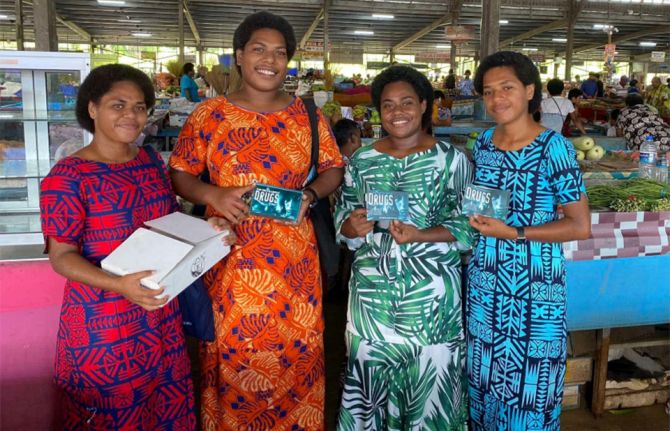
Kalesi Volatabu, founder of DrugFree World Fiji, breaks the ice at drug awareness sessions by sharing her shocking story.
When she was 13, her parents sent her to relatives in Sydney for what she thought was a vacation. In fact, they expected her to stay there, work and send money back to them in Fiji. She ended up on her own with no passport, no schooling and no care. She spent three years on the streets. Boyfriends abused her. She was raped twice. She attempted suicide three times. By the age of 17, she was a mother.
“Marijuana did nothing for me,” she says. “My drug of choice was meth. I needed to go to the hardest drug to numb the pain I was going through ... to fill the void. When I share this in Fiji today in villages, schools and churches, it gives people the power to say, ‘This is what happened to me.’ It is a healing journey.”
Kalesi leads the one community organization exclusively committed to addressing the drug use fuelling Fiji’s ballooning HIV epidemic.
Since 2014, number of new HIV infections in Fiji has risen by an alarming 10-fold. UNAIDS estimates that in 2014, there were fewer than 500 people living with HIV in Fiji. Just 10 years later, that number was 5900 [4500–8900]. In 2024, only 36% [27–54%] of people living with HIV in Fiji were aware of their HIV status, and only 24% [18–36%] were receiving treatment.
Preliminary data for 2024 from the Ministry of Health show that among people newly diagnosed with HIV who are currently receiving antiretroviral therapy, half contracted HIV through sharing needles.
Responding to the sharp increase in new diagnoses, the Government of Fiji declared an HIV outbreak in January 2025. The HIV Outbreak Response Plan and the previously announced Counter Narcotics and HIV Surge strategies call for the introduction of harm reduction programmes for people who inject drugs. Currently there are none.
Although there is agreement in principle with the introduction of needle–syringe programmes, moving towards implementation has been more challenging. “We still need to raise awareness,” says Kalesi. “It is not just about giving out needles. It is about education. But there are so many myths and misconceptions. We have to educate the leaders first. When the indigenous chiefs call, people will follow. Then there are the churches. Last but not least, the Government.”
Medical Services in the Pacific (MSP) Fiji is prepared to implement a needle–syringe programme. The non-profit-making organization provides a broad range of sexual and reproductive health services. It is already supporting the scale-up of much needed HIV prevention, testing and linkages to care. Beyond its clinics in Labasa, Lautoka and Suva, it deploys an outreach team of clinicians and counsellors to the field. A mobile clinic goes to hotspot areas to provide a package of HIV and noncommunicable disease services in areas with high levels of injecting drug use.
“Since we started providing point-of-care (rapid) screening last year, the numbers have continued to escalate,” says MSP Fiji Country Director, Railala Nakabea. “It is not only in the cities and towns. We are also seeing positive cases in rural communities. Most of the cases we detect are among people who inject drugs.”
MSP Fiji Medical Officer, Kesa Tuidraki, reiterates the importance of harm reduction alongside longer term and more widely accepted plans for the construction of a drug rehabilitation facility. “It is not only HIV,” she says. “We also have increasing hepatitis C infection, which is even more easily spread through sharing injecting equipment. We need to have harm reduction programmes in place as soon as possible. Rehabilitation does not address the immediate public health emergency.” She acknowledges the importance of partnering with an organization of people with lived experience to more effectively serve the community of people who use drugs.
For Kalesi Volatabu, it is critical that stakeholders work together to design a tailored approach. “We definitely need harm minimization strategies, but we have to contextualize the programmes. What would work in the western context will not work in Fiji. You need to speak the language of your audience. It must be driven by the people and owned by the people.”
Global AIDS update 2025
Region/country
Feature Story
Power to earn and live—overcoming inequalities and supporting women living with HIV in Tajikistan
23 July 2025
23 July 2025 23 July 2025This story was first published in the UNAIDS Global AIDS Update 2025 report.
The day for Safargul begins at 04:00 and rarely ends before midnight. She juggles the demands of raising four children, tending a vegetable garden and managing the household in the small city of Kulyab in Tajikistan. Twice a week, she works at the local AIDS centre as a peer consultant. She supports women newly diagnosed with HIV, helping them understand the importance of starting treatment and not giving up hope.
Safargul has been living with HIV since 2006. No one in her community knows her HIV-positive status. “It would mean the end of normal life,” she says. “People would exclude me from gatherings, from everyday conversations.”
Her husband and eldest son were migrant workers abroad—just like the husbands of many of the women she now supports. “I see young women infected by their husbands and refusing treatment because they fear someone in the family might find out. They do not know enough, and they have no power to protect themselves,” she says.
Safargul is worried that most of these women are economically dependent on their husbands and their families. In Tajikistan, one of the poorest countries in central Asia, nearly 30% of gross domestic product comes from remittances, with many men migrating to Kazakhstan or the Russian Federation for work. According to the National AIDS Center, in 2015 one in eight new HIV cases was linked to male labour migration, but that figure rose to one in three by 2023. As a result, the risk of HIV infection among women—especially in rural communities—has crept up.
Takhmina Haidarova knows this risk firsthand. She was raised in a traditional household and then married a man who worked abroad and rarely came home. After the loss of their child, she hoped another pregnancy would ease the pain— but during a routine check-up, she learned she was living with HIV.
“I did not even know HIV existed in Tajikistan,” she recalls. Her husband rejected her, and his family blamed her after he died of an AIDS-related illness. “I had no knowledge, no support, and no one to turn to.”
Takhmina now leads the Tajikistan Network of Women Living with HIV. With support from UNAIDS, and together with a local team of researchers, the Network conducted a time-use survey in 2024, which revealed the systemic inequalities facing women living with HIV. Nearly 80% are homemakers and spend more than eight hours a day on unpaid labour. Most need permission from their husbands to visit a health facility. For many women, autonomy over health decisions comes only after divorce or widowhood. Tragically, 97% of women living with HIV in Tajikistan hide their HIV-positive status, even from family members.
“My mother-in-law knows her son infected me,” one woman says, “but still she will not accept a cup of tea from me.”
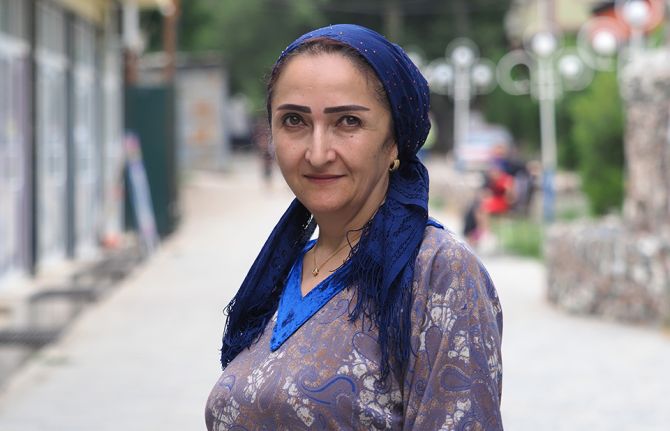
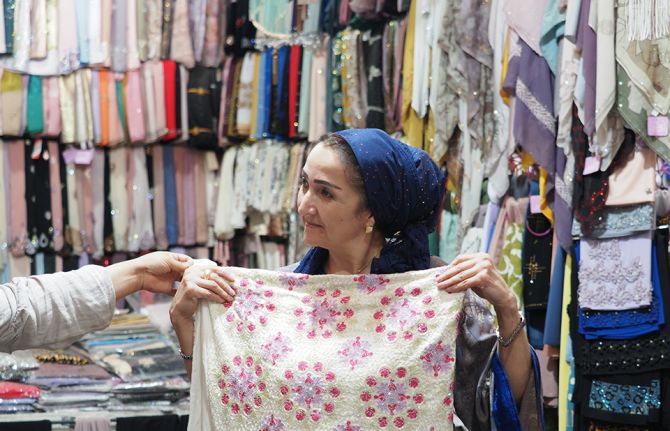
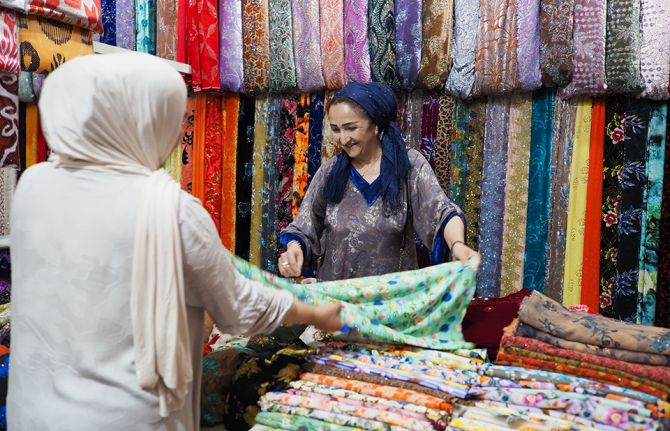
For Zarina from Tursunzade, change began with business skills training and a small grant from UNAIDS and UN Women. After leaving an abusive marriage and becoming a single mother, she built a sewing business that now employs women living with HIV. She also teaches women affected by HIV—including those in remote rural areas—how to start their own small sewing businesses.
“Thanks to this support, I became independent—and I can help others who were abandoned like I was,” she says.
UNAIDS Country Director in Tajikistan, Aziza Hamidova, refers to the recent gender assessment study led by UNAIDS, which concluded that restrictive gender norms, entrenched practices, stigma, discrimination and gender-based violence hinder timely access to health services, including for HIV. “The HIV response must reflect the real lives of women,” she says. “It must support their right to grow, earn and live with dignity.”
Progress in supporting HIV services for women is fragile. Funding cuts as small as 10–20% could reverse years of gains. More than 60% of the HIV response in Tajikistan is funded by the Global Fund and PEPFAR with the United States Government, and only 37% is funded domestically. UNAIDS and partners are worried that funding cuts may deepen deprivation and perpetuate stigma, leaving women living with HIV to bear the burden of survival and exclusion. “Investing in women’s health, safety and economic power is not just smart—it is urgent,” Aziza says.
Global AIDS update 2025
Region/country
Related
Women, HIV, and war: a triple burden
12 September 2025
Displacement and HIV: doubly vulnerable in Ukraine
11 August 2025
Feature Story
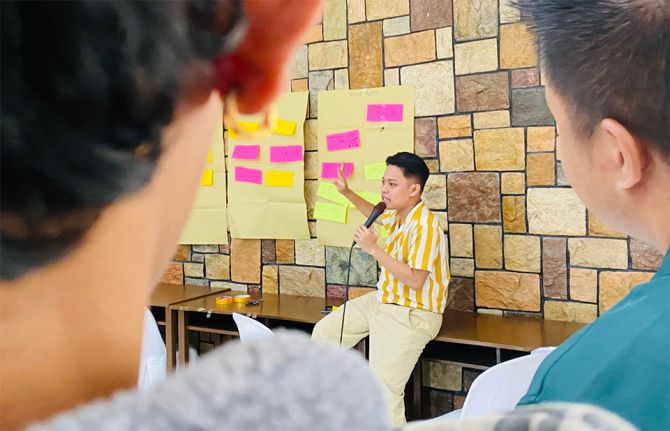
Funding cuts undermine community-led innovations in the Philippines
21 July 2025
21 July 2025 21 July 2025This story was first published in the UNAIDS Global AIDS Update 2025 report.
“We will focus on treatment!” This is the reassurance HIV advocates say they have received from the Government of the Philippines in the aftermath of United States funding cuts to the Philippines HIV response.
These commitments are critical to scale up treatment access for the 60% of people living with HIV in the Philippines who are not currently receiving antiretroviral therapy. But far more is needed to achieve epidemic control in a country that has seen a six-fold increase in new infections since 2010.
In 2024, three to four people were infected with HIV every hour in the Philippines. Of particular concern is that almost half of them are young people aged 15–24 years. Programmes to reach young key populations, especially young gay men and other men who have sex with men, are urgently needed.
“We are seeing a trend where younger and younger people are getting infected,” says Russell Elloso of Network Plus Philippines, the umbrella organization of people living with HIV. “And we are not seeing a plateau—the number of cases is still increasing. That means the current approaches are not working.”
Through PEPFAR, the United States invested primarily in supporting HIV prevention strategies and community-led work to ensure services reached people most in need.
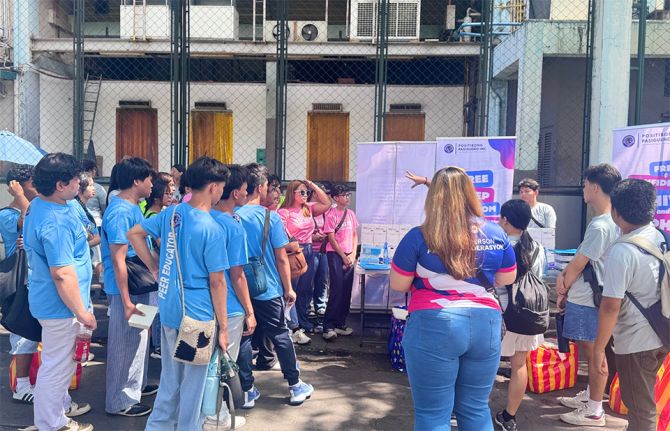
One of the programmes that has been cancelled as a consequence of the funding cuts is the EpiC-supported Free to be YOUTH HUB. This innovative think tank developed culturally resonant HIV prevention and treatment support approaches specifically for young people. It ran 12 projects, including an academy for social media influencers, an innovative approach to HIV education, and a peer-led project to re-enrol youth who had stopped HIV treatment.
“We have a progressive HIV policy in the Philippines and a comprehensive sexual and reproductive health policy, but they are not youth-focused and youth centred,” explains Aaron James Villapando, Co-chair of Free to be YOUTH. “The value of this initiative was having an advisory board focused on promoting a youth-led response. Young people can lead, and we need to be at the frontlines of the HIV response for it to be effective.”
In the aftermath of the funding freeze, the organization has ramped up efforts to engage the private sector and foundations. A key priority has been to work with local government and local youth councils to secure more decentralized and sustainable funding for HIV programmes in the respective provinces. But activists are finding it particularly difficult to secure support for interventions for young key populations.
“Our Secretary of Health has assured the public that they will scale their current initiatives with a goal of not being so dependent on international funding. But the reality is that some of the community-led projects that are most needed are not priorities,” Mr Villapando says.
Stakeholders are lobbying the Department of Health to expand modern prevention methods and community-led service delivery, which were traditionally funded by external donors. These donor investments specifically addressed critical programmatic gaps, including youth programming and increasing access to modern testing and prevention options.
Despite the Government procuring almost all HIV commodities, including PrEP, challenges remain around funding and systems for community-led responses, and the introduction of novel interventions such as long-acting PrEP, the dapivirine vaginal ring and selftesting. Advocates are lobbying policy-makers to develop and implement a social contracting mechanism so the community can continue to provide services without support from the Global Fund to Fight AIDS, Tuberculosis and Malaria (Global Fund) and PEPFAR.
Global AIDS update 2025
Region/country
Feature Story
A lifeline interrupted in Uganda— why community health systems matter
18 July 2025
18 July 2025 18 July 2025This story was first published in the UNAIDS Global AIDS Update 2025 report.
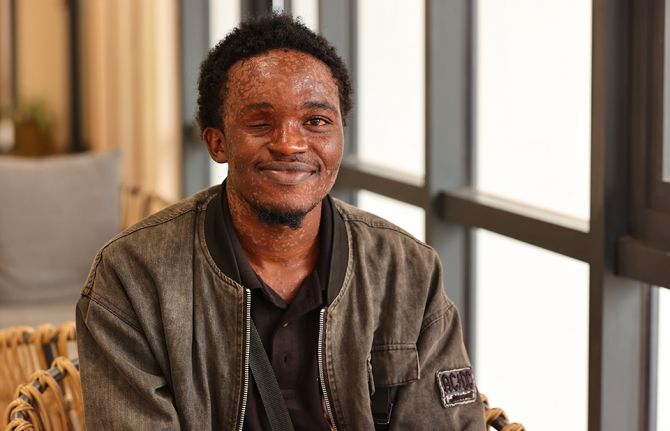
In early 2025, 22-year-old Jokpee Emmanuel arrived at Reach Out Mbuya in Kampala, Uganda, expecting to attend the Friends Forum—a safe space for young people to gather, share and support each other. Instead, he was met with a sign on the gate: “Due to the suspension of United States funding, Reach Out Mbuya will be closed for 90 days. We regret the inconvenience caused.”
The Reach Out Mbuya community health initiative is not just a health facility. It is a lifeline. For years, it served Uganda’s most vulnerable communities, offering care that goes far beyond medicine. For Jokpee, who was born with HIV, Reach Out provided access to antiretroviral therapy, emotional support, school tuition and dignity. “Reach Out was like a second home,” he says. “They did not just give me medicines. They cared for me and reminded me that I am more than my diagnosis. I could live a full life.”
The closure followed a suspension of United States funding through PEPFAR, which had long supported community-led HIV responses in Uganda. The impact was immediate and severe. Community-led and community-based centres such as Reach Out Mbuya are central to public health in many low-resource settings. They offer holistic, personcentred services catered to local realities. They respond to the social, emotional and economic realities of people’s lives. These systems have been essential to the global HIV response, driving down infections and improving quality of services and life, especially among marginalized groups.
Jokpee was forced to seek care at an overcrowded Government facility. He waited six hours, only to be told antiretroviral medicines were out of stock and to return the following week. “A week without antiretroviral medicines! That is how resistance develops. That is how people die,” he says.
He eventually received a one-month supply of medicines, but the fear of another stockout remained. Although the Government of Uganda worked to fill the gap through national health facilities, it could not match the reach or personal connection of community-based programmes.
In the weeks that followed, Reach Out Mbuya managed to reopen, with support from a PEPFAR-funded programme called Kampala HIV Project. Most staff returned, restoring most of the centre’s core services. The number of clients accessing the centre is slowly increasing but is still below previous levels.
Jokpee’s story is a warning. When community-led and -based systems lose support, people fall through the cracks. If it were not for places like Reach Out Mbuya, Jokpee and his peers would be at risk of being left behind in the HIV response.
Sustained investment in community-led responses is the only way forward if we are to end AIDS as a public health threat by 2030.
Global AIDS update 2025
Region/country
Feature Story
Crowdfunding for community-led services in Fiji’s fast growing HIV epidemic
14 July 2025
14 July 2025 14 July 2025“There is no such thing as peer support here,” says Mark Shaheel Lal, founder of Living Positive Fiji. “We are starting from zero.”
When other parts of the world were wrestling with soaring HIV rates during the 1990s and early 2000s, Fiji was hardly affected. With a population of under one million, HIV remained under the radar in the South Pacific island chain.
But there has been an exponential increase in recent years. Since 2014, the number of new HIV infections in Fiji has risen ten-fold. Last year the number of newly diagnosed people tripled from 2023 levels
In January the Government of Fiji declared an HIV outbreak in response to the sharp increase in new diagnoses. Although its HIV Surge Strategy seeks to rapidly expand HIV testing and treatment, most people still aren’t accessing the services they need.
Last year just a quarter of people living with HIV in Fiji were receiving antiretroviral therapy. Concerningly, a third of those who have been diagnosed are not on treatment.
Mr Lal is among a group of stakeholders that is working not only to spread the word that HIV medicines work, but to support people to access care. He is also among the few people living openly with HIV in Fiji.
“There is this idea that you come from a small island and everyone knows each other, so the stigma here is high. I want to help reduce that,” he explains.
Dean Cassano is a Senior International Health Project Officer at Burnet Institute, an Australian public health research organization with a focus on underserved communities.
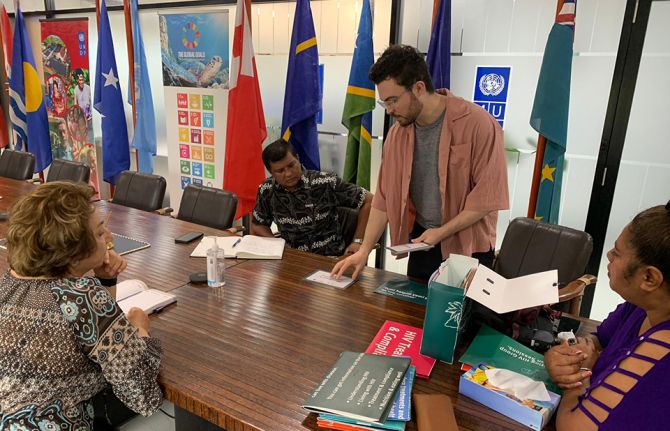
“The intervention we are proposing is a community-led response and what that looks like is peers counselling other peers. Somebody living with HIV is enabled, trained and mentored with the skills and methodology to counsel other people living with HIV. The core objective is to improve treatment adherence,” Mr Cassano explains. “We know that when someone talks to a peer they can ask about misconceptions, fears, advice on how to have a baby or how to tell a partner. They would be getting holistic support, so they know there is a way through.”
At present, people who learn they are HIV-positive in Fiji are referred to one of three sexual health clinics. Many simply never show up.
“They are too embarrassed… too scared,” Mr Lal says.
The new approach would immediately introduce newly diagnosed people to a peer counsellor. Peer counsellors would also play a key role in supporting clients as they access treatment, contact tracing, and reaching out to those who have stopped coming to the clinic.
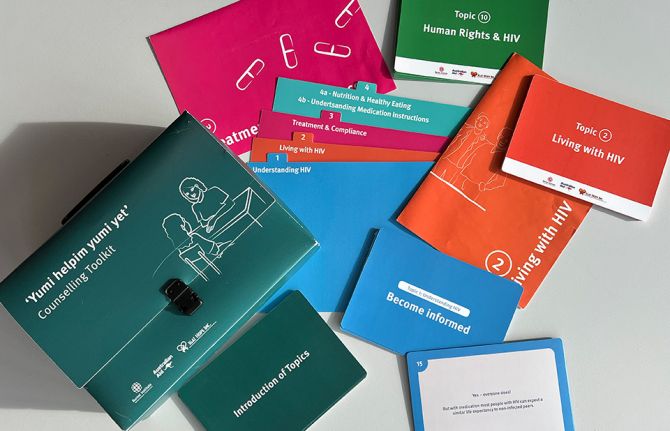
The Institute had worked on an HIV Peer Counselling Toolkit for neighboring Papua New Guinea (PNG) where new infections are also rising dramatically. Together with Igat Hope, PNG’s main people living with HIV organization, they developed culturally specific modules. The Australian Government funded this initiative as part of the Sexual Reproductive Health Integration Project.
“There are ten topics that someone newly diagnosed with HIV needs to know about how to live well,” Mr Cassano explains.
Burnet has collaborated with partners in Fiji to adapt the toolkit, for example including local specifics in sections on food and alcohol. Fiji requires an additional module on harm reduction. Among newly diagnosed people who are currently receiving antiretroviral therapy, half contracted HIV through injecting drug use.
Now comes the next step—mobilizing and training these peer counselors. With no resources immediately available, the partners raised more than AUD$146000 through a crowdfunding campaign which ended in June. Now the training begins.
“This began as a result of us seeing a need and hearing from local partners that they want this but realizing that there is no money. The long-term plan is that this peer support is embedded into the national HIV response and is a core tenet for post-diagnosis support. Our hope is that it is sustained but first it must start,” Mr Cassano said.