Feature Story
Faith2EndAIDS, Faith2EndInequality
07 June 2021
07 June 2021 07 June 2021Around 300 faith leaders and representatives of faith-based organizations met on 7 June in an online event, Faith2EndAIDS, Faith2EndInequality, on the sidelines of the United Nations High-Level Meeting on Ending AIDS.
Sharing lessons learned by faith-based organizations and faith communities in addressing stigma and discrimination, promoting human rights and increasing access to HIV services, the participants also explored the main areas of action in the political declaration on AIDS and the particular role of faith responses in implementing the commitments.
Practical examples were shared of faith-motivated programmes that increase access for people affected by inequalities, such as programmes for migrants and children. The participants emphasized the critical role that faith responses can play in mitigating stigma.
A key focus going forward is the 12 Million Campaign, where faith leaders, individuals and communities of faith commit to key actions that could promote access to HIV services by the 12 million people who are living with HIV who still do not have quality and consistent HIV treatment, care and support.
The active discussions in the chat box reflected the enthusiasm and commitment of faith communities and people of faith to play a meaningful role in ending AIDS and ending the inequalities that drive the pandemic.
Quotes
“We stand together firmly against the use of faith as an excuse to discriminate and stigmatize people living with HIV and key populations. We proudly recognize the positive results of our partnership and your recent frontline activities in addressing HIV-related discrimination, acting against gender-based violence and bringing quality care and support to all people living with HIV, including in humanitarian settings. Now is not the time to drop the ball on HIV.”
“We have not been able to respond to HIV without you and we will never be able to do it without you ... You have been invaluable partners in fighting HIV around the world. Faith-based organizations have been, are and will be crucial in responding to HIV.”
“The political declaration on HIV and AIDS urges the world to address the inequalities that are slowing progress, through bold political leadership that challenges and addresses the root causes of vulnerability to HIV.”
Related
Feature Story
Strengthening national social protection systems
08 June 2021
08 June 2021 08 June 2021Many factors in society, including poverty, stigma, discrimination and persistent gender and socioeconomic inequalities, influence the health of individuals and communities, the participants heard at a side event at the United Nations High-Level Meeting on AIDS, being held in New York and online from 8 to 10 June.
At the event, Strengthening national social protection systems to adequately include people living with, at risk of, or affected by HIV to fast-track ending AIDS, speakers pointed out that it is at the intersections of multiple inequalities that the most vulnerable people lie. Compounding vulnerabilities hit the most marginalized and left behind people, and COVID-19 has brought those inequalities to the forefront.
The event highlighted promising country experiences. It showcased innovative approaches in enhancing access to social protection by people living with, at risk of and affected by HIV and brought together high-level representatives of governments, civil society, donors and academia to accelerate joint programming of HIV and social protection programmes to respond to COVID-19 and end AIDS by 2030.
The new global AIDS strategy aims to reduce the inequalities that drive the AIDS epidemic and acknowledges social protection’s central role in that. Social protection has the power to address the social and economic drivers of the HIV epidemic and to break down the barriers that people face in accessing HIV services. Social protection comprises public and private action to reduce risk, poverty and inequality, such as social safety nets, social security and labour market policies. It includes education, nutrition, housing, health and other social services.
Quotes
“Social protection systems are leaving behind people living with HIV; key populations are further left behind. This situation is completely unacceptable and is preventable. The UNAIDS Joint Programme knows how to reach people living with HIV and key populations with social protection services, including cash transfers.”
“The HIV response must focus on supporting the whole person and not only treating the patient. Social protection’s role in the global AIDS response needs to be given the same level of importance and relevance as testing and treatment.”
“Widespread state-sponsored homophobia and transphobia is a major obstacle for the LGBTQ community to access social protection services.”
“The Global Fund’s funding focuses on social protection going beyond cash or social transfers, promotes economic empowerment for key and vulnerable populations and addresses stigma and discrimination in accessing social health insurance.”
Our work
Feature Story
Caribbean stakeholders call for focus on key populations and community-led approaches to HIV and COVID-19
08 June 2021
08 June 2021 08 June 2021Caribbean partners from governments, civil society and the development community met on 7 June to discuss regional priorities for the 2021 United Nations High-Level Meeting on AIDS and its resulting political declaration. The virtual Caribbean Caucus was hosted by the Pan Caribbean Partnership against HIV/AIDS (PANCAP) and moderated by the Caribbean Community (CARICOM) Assistant Secretary-General, Douglas Slater.
The PANCAP Director, Rosmond Adams, noted that the Caribbean has made significant progress in key aspects of the HIV response. Eight countries and territories have been validated by the World Health Organization for eliminating vertical HIV and syphilis transmission. And between 2010 and 2020, AIDS-related deaths in the region fell by half (51%).
But to get on track to end AIDS by 2030, he said Caribbean countries must step up the pace around prevention, testing, treatment, care and ending stigma and discrimination. By 2020, 82% of people living with HIV in the region were diagnosed. Two thirds (67%) of all people living with HIV were on treatment and 59% were virally suppressed.
While new HIV infections have fallen by 28% since 2010, the rate of decline is too slow. Overall, members of key population communities and their partners accounted for 60% of new HIV infections in 2020. Around one third of new HIV infections were among young people aged 15–24 years.
Speaking on behalf of the Caribbean Regional Network of People Living with HIV (CRN+), Diana Weekes noted that key structural barriers continue to block access to HIV prevention, treatment and care services. These include “stigma and discrimination … lack of privacy, breach of confidentiality and limited redress” when people’s rights have been violated. She noted that no country in the region has adopted the CARICOM model antidiscrimination legislation, which was developed almost a decade ago. CRN+ called for greater emphasis on policy and legislative changes as well as community-led responses to address these structural barriers.
Ivan Cruickshank, the Executive Director of the Caribbean Vulnerable Communities Coalition, pointed to regional data that show that HIV disproportionately affects key populations, including gay men and other men who have sex with men, transgender people, sex workers and people who use drugs.
“According to the latest UNAIDS report, nations with progressive laws and policies, as well as robust and inclusive health systems, have had the best HIV outcomes. We must therefore create inclusive societies in which people are confident in their ability to seek medical treatment and exercise their social and economic rights. We must go beyond declarations, to remove laws that continue to criminalize communities and limit young people’s access to sexual and reproductive health and rights,” Mr Cruickshank said.
The Guyana Health Minister and Caribbean representative on the UNAIDS Programme Coordinating Board, Frank Anthony, reaffirmed the region’s commitment to the HIV response, saying that “governments in the region stand ready to do their part in ending AIDS by 2030.”
He pointed to longstanding challenges in the region, such as “removing the legal obstacles that foster discriminatory practices” and “prevention sustainability.” But he also emphasized the new threat posed by COVID-19, noting that “finite financial resources had to be reprogrammed to meet these urgent demands.” He called for increased vaccine equity and a review of plans to transition countries in the region away from international HIV funding.
“We must use the platform available to us at this United Nations high-level meeting to ensure that we highlight our vulnerabilities to the HIV epidemic and the COVID-19 pandemic,” he said.
During discussions, civil society participants also emphasized the profound negative impact of COVID-19 containment measures on lives and livelihoods. They said there was an additional need for solutions to provide nutrition, mental health and financial support to people living with HIV and members of key population communities.
The Director of the UNAIDS New York Liaison Office, César Núñez, noted that in the response to both HIV and COVID-19, the role of communities is clear.
“The response must include a key role for civil society at the table when frameworks are being put together and implemented,” he said.
Mr Núñez ended by calling for CARICOM’s support in securing an ambitious, action-oriented and laser-focused political declaration.


Feature Story
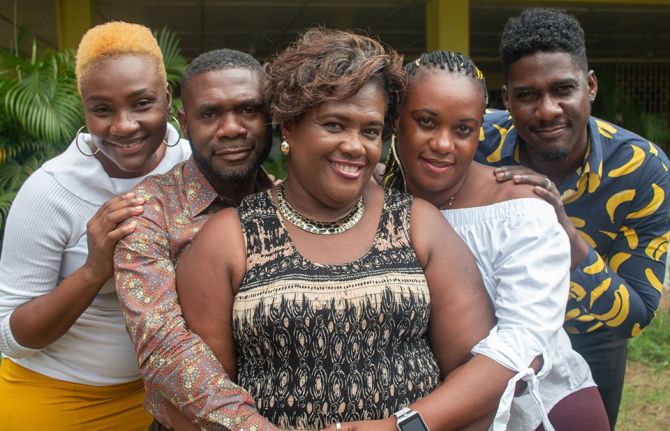
Jamaica partnership works to promote human rights
07 June 2021
07 June 2021 07 June 2021HIV outcomes rely on far more than the availability of services or treatment.
According to the 2020 Jamaica People Living with HIV Stigma Index, more than one third (38%) of respondents delayed HIV testing due to fears about how others would respond if they received a positive diagnosis. And 30% were slow to start treatment because of concerns that people might learn about their status.
Many of those fears are founded.
Almost half of the study’s respondents (48%) had experienced stigma or discrimination related to their HIV status. Members of key population communities reported even higher rates of prejudice and worse mental health than other people living with HIV.
“More needs to be done to get those living with HIV, and communities impacted by HIV, to live in a country and society where they are accepted and appreciated. That will also make their health outcomes better,” said Jumoke Patrick, the Executive Director of the Jamaica Network of Seropositives.
To accelerate progress towards that goal, in 2020 Jamaica became one of the first countries to join the Global Partnership for Action to Eliminate all Forms of HIV-Related Stigma and Discrimination. The initiative combines the power of governments, civil society, donors, academia and the United Nations. It reaches beyond the health sector to address ignorance and bias in education, the workplace, the justice system, families and communities.
On 4 June, the Jamaica Partnership to Eliminate HIV-Related Stigma and Discrimination launched its first annual report, Enabling environment and human rights.
The State Minister in the Health and Wellness Ministry and Chair of the Partnership, Juliet Cuthbert Flynn, reiterated the government’s commitment to addressing the social and legal issues that are barriers to an effective HIV response. She called for political leadership across party lines to recognize their role in helping to create an enabling environment.
“This is an imperative as we strive to allow every individual—regardless of their occupation, socioeconomic status, sexual orientation, gender identity, age, health status, disability and other status—to enjoy their human rights,” Ms Cuthbert Flynn said.
“We strongly believe that AIDS in Jamaica is not over, but it can be,” said the UNAIDS Country Director for Jamaica, Manoela Manova,
She noted that the new UNAIDS report, Global commitments, local action, showed that while dozens of countries had achieved the 2020 targets, many, including Jamaica, are entirely off track.
“HIV remains driven by inequality. The countries with progressive laws and policies as well as strong and inclusive community and health systems have the best outcomes. New HIV infections and AIDS-related deaths reduce faster. That is what we would like to achieve for Jamaica,” Ms Manova said.
Jaevion Nelson, a UNAIDS consultant, detailed the achievements of stakeholders in the national HIV response in Jamaica. A national human rights public education campaign was led by the National Family Planning Board. Sensitization exercises were conducted with police and correctional officers, health-care workers and faith leaders and congregants. People living with HIV received legal support, with several securing resolutions such as being reinstated in their jobs and receiving settlement costs. A National Transgender Health Strategy was launched, and nongovernmental organizations collaborated to develop model antidiscrimination legislation.
The next steps for the initiative include strengthening monitoring, evaluation and learning for its human rights agenda, increasing the engagement of legislators and creating a more sustainable framework for sensitizing health-care workers, law enforcement officers and other duty-bearers.
The UNAIDS Deputy Executive Director, Programme, Shannon Hader, delivered the feature address at the virtual event. “Societal enablers and HIV outcomes are linked,” she said. “We will only end AIDS if we strive to respect, protect and promote the rights of everyone, everywhere. It is the evidence-based thing to do.”
Related
Feature Story
Hearing civil society’s voice on the High-Level Meeting on AIDS
04 June 2021
04 June 2021 04 June 2021At the United Nations High-Level Meeting on AIDS, which will take place from 8 to 10 June, Member States will adopt a new political declaration to bring the HIV response back on track. After the uneven progress made in the HIV response since the 2016 United Nations High-Level Meeting on Ending AIDS, this year’s high-level meeting will be the springboard for a decade of action to reduce inequalities and root out the social determinants that fuel the HIV epidemic.
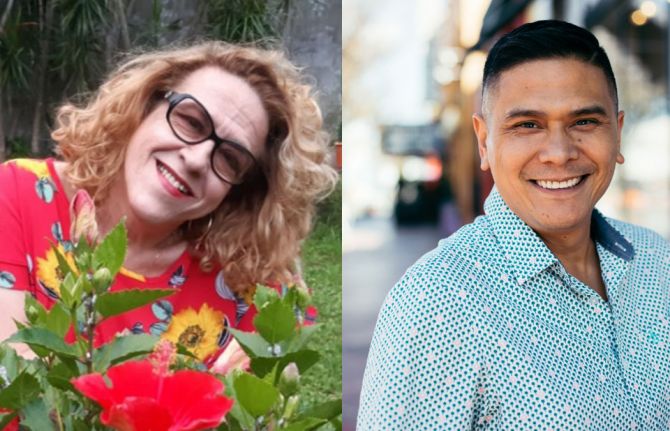
In order to find out more about civil society’s aspirations and hopes for the high-level meeting and political declaration, UNAIDS talked to two civil society representatives, both of whom are living with HIV. Jacqueline Rocha Côrtes (JRC) is from the National Movement of Women Living with HIV/AIDS (MNCP/Brazil), the Latin American and the Caribbean Movement of Positive Women (MLCM+) and the National Institute of Reassigned Women (INAMUR/Brazil). Andrew Spieldenner (AS) is the Executive Director of Mpact. Both are members of the Multistakeholder Task Force to the HLM and were involved in drafting the 2021 high-level meeting civil society declaration, in which civil society organizations urge Member States to focus efforts and resources where they are most needed and to adopt a political declaration that explicitly recognizes who is most at risk of HIV and acknowledges why this is so, to commit to fully fund and support effective HIV responses and to hold Member States accountable for their actions.
What is the purpose of the civil society declaration you released ahead of the high-level meeting?
JRC: The civil society declaration has several purposes. First of all, to bring together the main inputs given by civil society globally on the desired content of the 2021 political declaration on AIDS. Secondly, the civil society declaration serves as a tool to mobilize community efforts locally and regionally and to harmonize and sharpen our positions in order to build a stronger community position on our demands worldwide.
AS: The civil society declaration released ahead of the high-level meeting is a clear statement of the values, concerns and needs of our communities. Where Member States might be more concerned with politics, civil society continues to elevate and centre those most impacted by HIV—the same populations most often marginalized by governments through punitive laws and policies. As civil society, we want to ensure that Member States understand where we stand, in the hope that they support our work and communities in the development of the political declaration.
What are the major asks from civil society to Member States?
JRC: The major asks from the civil society declaration, from my personal perspective, are to show and remind Member States how strong we are and of our ability to mobilize and guide what is needed to end AIDS. It is an opportunity to show that we, the communities, are alive and attentive, even more so during times like this, where the COVID-19 pandemic has had such a negative impact on the response to AIDS. It is also a call to international and multilateral organizations.
AS: We want Member States to recognize the disproportionate impact of HIV on sex workers, people who use drugs, transgender people and gay and bisexual men and to centre the needs of key populations in the HIV response. We want Member States to support the delivery of necessary HIV interventions, such as comprehensive sexuality education, harm reduction in all its forms and HIV prevention and treatment. We want Member States to protect sexual and reproductive health and rights. We want Member States to be flexible with the Trade-Related Aspects of Intellectual Property Rights (TRIPS) with HIV technologies and to fully fund the HIV response.
What are the expectations of communities and civil society organizations for the upcoming high-level meeting and new political declaration?
JRC: In the political declaration, we expect to see a minimum standard of progressive broad language that includes everyone in order to make it clear that, when we refer to the response to AIDS, we are referring to human rights, the flexibility of trade agreements, the financing of the AIDS response, the community-led responses, the reduction and elimination of gender-based violence. We expect the political declaration to include firm commitments to fulfil the many goals established in the 2016 political declaration and in other political declaration that have not yet been met, as well as the most recent priorities established by the UNAIDS Global AIDS Strategy 2021–2026, agreed by many countries, which calls for the elimination of inequalities to end AIDS by 2030.
We also hope that conveniently politically correct technical language won’t serve as a veil to cover particular interests, leaving aside issues such as sexual and human diversity, sexual health and reproductive rights and the reduction and gradual elimination of punitive laws that further stigmatize people and punish citizens, who are often imprisoned or killed simply because they exist as they are.
AS: As civil society and communities, we expect Member States to support the Global AIDS Strategy 2021–2026. We understand that some Member States will be against the language describing key populations, as well as against key HIV interventions, including harm reduction, comprehensive sexuality education and TRIPS flexibilities. We hope that Member States can seek compromise to embrace and support what’s necessary to move forward in the HIV response.
Some Member States are still reticent to advance the agenda when it comes to key populations, drug use and the criminalization of sex work. What would be your message to them?
JRC: My message to them is that whether they accept it or not, humanity will not be linear like some of their political and economic projects and even social projects that try to dictate the course of human lives, over which the authorities have no governability or rights. In the same way that United Nations Member States refer to national sovereignty on whether to adopt or not certain measures, people have an inalienable autonomy to decide what is best for their lives and how they want to live.
It is imperative that Member States recognize the existence and rights of key populations.
As a reassigned transsexual woman living with HIV for 27 years, I cannot help but state that if we want to end inequalities we will necessarily have to approach and embrace human diversity.
AS: After 40 years of HIV, the disproportionate burden of HIV remains on key populations, including people who use drugs, sex workers, gay and bisexual men and transgender people. We cannot end the HIV epidemic if we do not centre the needs of key populations, including the greater involvement of people living with HIV. If Member States continue to ignore our needs, marginalize our communities and legislate against us, then the HIV epidemic will continue unabated, no matter the advances in HIV technologies.
Once the political declaration has been adopted, what will be the role of civil society in making it a reality on the ground?
JRC: We will do what we have always done—we will advocate and influence politics. We will monitor and mobilize, fight, carry out community-led work and provide community responses, build and act with solidarity, respect the internal dynamics of the various sectors, including the governments, but act on our rights and demand that our governmental authorities to do their work and comply with their commitments and duties.
And we count on UNAIDS, one of our most valuable partners, and on other United Nations agencies.
AS: The global key population networks have been advocates for community-led responses and accountability mechanisms. With the support of multilateral and philanthropic funding, we will continue to support grass-roots local and regional efforts. Unfortunately, with shrinking civil society space and funding, this will be a challenge. We need multilateral and philanthropic support in order to continue this role.
Our work
Feature Story
“Even though we are sex workers, we’re still people”: living the harsh reality of sex work in Zimbabwe
02 June 2021
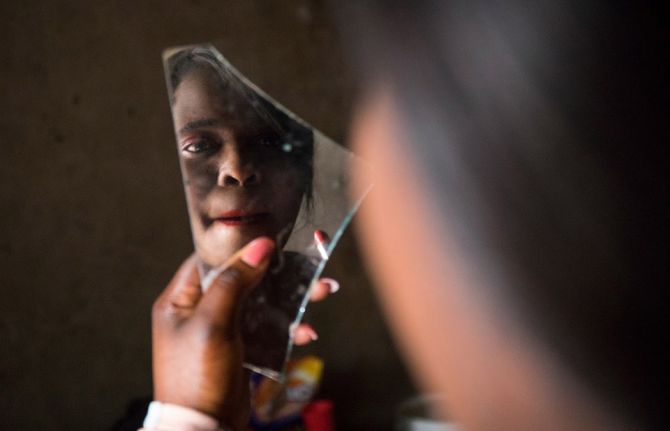
02 June 2021 02 June 2021Holding her baby in her arms, Melody (Melody, pictured above, preferred to use just her first name for this story) fled her home in Harare, Zimbabwe, one night after policemen stormed in and fatally shot her husband.
“I didn’t know my husband was a criminal. One night when we were sleeping, police barged into our home and killed him,” she says.
Terrified for her own life and without any money, she sought refuge with Emma Mambo, pictured below, a peer educator and community activist in Epworth, south-east of Zimbabwe’s capital.
Ms Mambo, affectionately known as MaiTino, volunteers with Katswe Sistahood, an organization that seeks to empower young women and girls in claiming their sexual and reproductive health and rights. She works extensively with women in her community, including sex workers. She also runs a dance and drama group for adolescent girls and young women, which explores the complex issues they face through the arts.
“I don’t get paid for my work, but I love Katswe because it elevated me and made me realize I can teach and work with people. Even when I get phone calls at night for help, I don’t mind,” she says. This is despite not being formally employed and raising her daughter, Tanaka, pictured below, as a single mother.
“Some of the circumstances these women face hurt me. I even use my own money to help them even though I am struggling myself,” she continues.
After fleeing her home, Melody struggled to make ends meet for herself and her child. Soon, she went back to sex work, a life she had left behind when she got married.
Sex work for Melody and other Zimbabwean women is a difficult and dangerous industry in which to work. While gender-based violence is a global epidemic, affecting one in three women worldwide, its impacts are exacerbated for sex workers.
Zimbabwe is one of the 103 countries worldwide in which sex work is criminalized, leaving sex workers unprotected by the law and exposed to a range of human rights violations.
Studies show that sex workers often face violence from the police, clients and partners, increasing their risk of acquiring HIV. Prevalence of HIV among sex workers in Zimbabwe is exceptionally high, estimated at 42.2%. Sex workers also face stigma and discrimination or lack of privacy from health-care workers.
Says Ms Mambo, “Going to the clinic is a procedure often void of actual medical care and dignity. This is particularly true if you are a sex worker with a sexually transmitted infection. Health-care workers will spread the news.”
This can also be true of HIV treatment. Ms Mambo helped a young sex worker go for HIV testing and counselling, only to find out that she had absconded when she was supposed to collect her treatment.
“When I eventually spoke to her, she told me that the clinic has no privacy. Everyone would be able to see her get her medication. I then helped her get a transfer to collect medication elsewhere,” she says.
Working as a sex worker in Harare, Trish (Trish, pictured below, preferred to use just her first name for this story) is familiar with the dangers of the trade, including gender-based violence. Clients often misuse alcohol and become violent towards sex workers.
“When I think back to last week, I couldn’t leave my home. My eye was so swollen. You get hit to the extent that you get injured. If you report it to the police, the client can bribe his way out without the matter being even heard. You are seen as lowly and powerless because you are a sex worker,” she says.
Police also harass sex workers from doing their job, said Ms Mambo, who often gets phone calls from sex workers in jail.
“Sometimes police go into a bar and demand that everyone lies on the floor, start searching people and start beating them. If you are unlucky, they can arrest you,” she says.
Living in the reality of arrests and assault, Melody said poverty is the only reason that drove her to be a sex worker, a line of work she entered at 19 years old. Following the death of her first husband, she momentarily escaped the trade when she fell in love with a man with a formal job who could afford to look after her and her child.
However, that was short lived as her second partner was arrested for stealing from his workplace.
“I have nothing against my last partner who got arrested,” Melody says. But she has still not been able to shake off the tainted reputation she got from her first husband.
“When I am working in bars, police come and harass me because of who my first husband was,” Melody says. “The police should leave us to work freely outside of abuse. Our children need to eat and our parents need to be taken care of,” she insists.
Her personal and work experiences with men have negatively affected Melody’s perception of men. However, she says she does not fully express her pain because these are the very men who can provide her next meal.
She does not want it to be like this forever, though. “I’d be happy to get a better job that won’t expose me to danger,” she says.
Ms Mambo also dreams of a life beyond her current circumstances. “Someone offered me a piece of arable land to farm on. I am looking for fertilizers to farm potatoes because sex work and my age don’t correlate anymore,” she says.
Region/country
Related

Feature Story
Republic of Moldova is pioneering high-tech community-led monitoring
31 May 2021
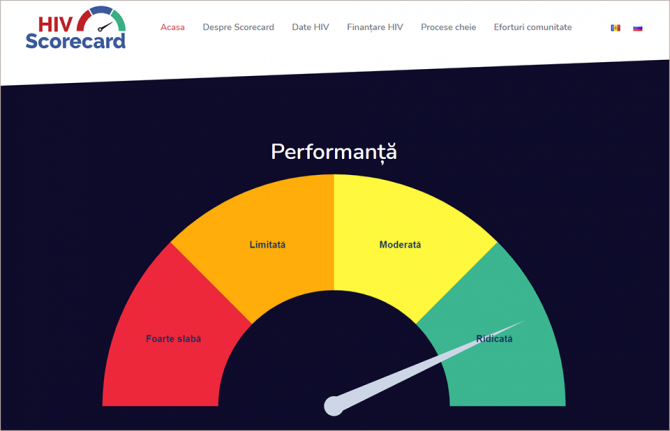
31 May 2021 31 May 2021The Republic of Moldova has launched an online platform, ScorecardHIV, to measure progress in the country's HIV response.
The new tool includes indicators and data on epidemiology, funding and procurement, programmes, human rights and community-led services. It will allow governmental institutions, health programme managers, HIV service organizations, communities and other stakeholders to track the progress and assess the effectiveness of HIV programmes in the country. A data filtering system allows the customization of indicators in accordance with the user’s interests and needs.
“The ministry will take the lead and provide political support to make sure further implementation of the tool is as effective, systematic and sustainable as possible,” said Denis Chernelya, the Secretary of State at the Ministry of Health, Labour and Social Protection. “It will be an extremely useful tool for internal monitoring as well as for understanding the main factors that contribute or impede the achievement of the set targets.”
The scorecard aims to ensure open, transparent and collective state and community-led monitoring of the HIV response. It will contribute to real-time data analysis and a rapid evidence-informed HIV response. The platform was developed by the UNAIDS Country Office for the Republic of Moldova together with the Positive Initiative nongovernmental organization and other local civil society organizations under the auspices of the Ministry of Health, Labour and Social Protection and the National Programme for the Prevention and Control of HIV/AIDS and Sexually Transmitted Infections.
The indicator map of the scorecard, which was discussed and agreed upon by all stakeholders, is sourced from the national HIV programme, ministries and government agencies and civil society organizations and is updated regularly, depending on the selected indicator—once a month, quarterly or half yearly. The platform allows data to be aggregated from different applications and sources and visualizes progress and failures in HIV programme implementation almost in real time. A task force consisting of several community organizations will update the scorecard and periodically review it.
The scorecard demonstrates how real-time data, technology and innovation can be of service for evidence-informed decisions and can strengthen cooperation between the government and communities.
“If we need to make decisions today, then we need the most recent data today. All our efforts were aimed at digitizing all possible processes, creating an infrastructure and finding IT solutions where everything can be accumulated, and then creating an analytics tool that will show us the main indicators,” said Ruslan Poverga, the Director of the Positive Initiative.
“We welcome such an important development in the Republic of Moldova,” said Alexander Goliusov, Director, a.i., of the UNAIDS Regional Support Team for Eastern Europe and Central Asia. “The scorecard was developed in line with the core principles of the new global AIDS strategy, including significant and measurable participation of civil society, a national response based on the available scientific evidence and technical knowledge, and respect for human rights and gender equality. I believe that the ability to track progress in real time, identify priority areas for rapid measures and political will and buy-in by the county’s national authorities will enable the Republic of Moldova to significantly accelerate progress towards the goal of ending AIDS by 2030.”
Learn more
Region/country
Feature Story
UNAIDS supports the Partnership for Accelerated COVID-19 Testing in Ghana
25 May 2021
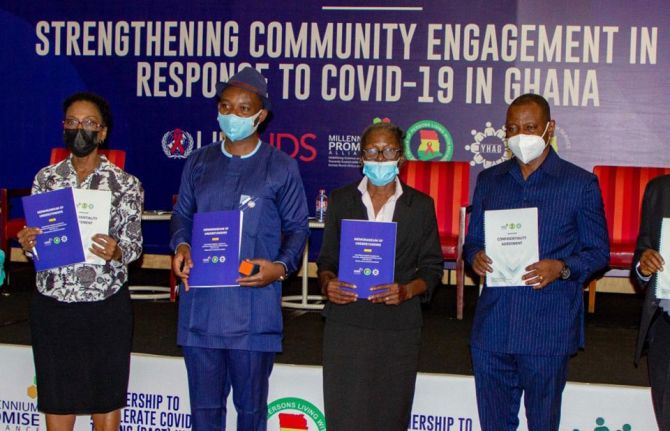
25 May 2021 25 May 2021The UNAIDS Country Office for Ghana is supporting the Millennium Promise Alliance, the Network of People Living with HIV and the Young Health Advocates Ghana in a partnership to strengthen community engagement in the COVID-19 response.
Aimed at reducing the community spread of COVID-19 and minimizing its effects on reaching the national HIV targets, the Partnership for Accelerated COVID-19 Testing (PACT) in Ghana will encourage the adoption of COVID-19 preventive behaviours, such as physical distancing, wearing face coverings and hand hygiene, reduce COVID-19-related stigma, promote vaccine uptake and strengthen the capacities of communities.
The PACT initiative in Ghana targets the two regions with the heaviest COVID-19 burden: the Ashanti and Greater Accra regions. Launching the project, the Director-General of the Ghana Health Service, Patrick Aboagye, commended the initiative and highlighted the urgent need for an all-hands-on-deck approach to end the COVID-19 pandemic.
The UNAIDS Country Director for Ghana, Angela Trenton-Mbonde, emphasized the importance of galvanizing HIV civil society to strengthen community engagement in the fight against COVID-19. “PACT will generate evidence for advocacy from communities, including people living with HIV, women’s groups and other vulnerable populations, to identify and inform health authorities of any disruption of essential health services, particularly HIV-related services at the community level, and will mobilize for greater uptake of those services,” she said.
The PACT initiative, launched by the Africa Centres for Disease Control and Prevention in April 2020, aims to conduct 10 million COVID-19 tests on the African continent. PACT has three pillars: test, trace and treat, which cover the procurement and distribution of COVID-19 test kits, the deployment and training of one million community health-care workers to support contact tracing and monitoring, and COVID-19 sensitization measures.
Our work
Region/country
Related
 Impact of US funding cuts on HIV programmes in Ghana
08 April 2025
Feature Story
The world can only beat AIDS by ending the inequalities that drive the epidemic
21 May 2021
21 May 2021 21 May 2021By Winnie Byanyima, UNAIDS Executive Director; and Tomas Tobé MEP, Chair of the European Parliament’s Development Committee
Forty years since the first cases of AIDS were diagnosed, the fight against HIV goes on. Although the world has developed the scientific knowledge and medical expertise to keep people living with HIV alive and healthy and prevent new HIV infections, we are not on track to end the AIDS epidemic as a public health threat by 2030.
In 2019, almost 700,000 people died from AIDS-related illnesses. A staggering 1.7 million people were newly infected by HIV - more than three times the target set in 2016, which would have put us on course to end the AIDS epidemic.
The medicines, information, and prevention tools are simply not reaching the people who need them most. We need a new approach that reduces the inequalities that drive the AIDS epidemic and puts people at the centre, prioritising human rights, respect, and dignity.
Social injustices and inequalities fuel epidemics. For example, the AIDS epidemic is having a devastating impact on an entire generation of young women and girls in sub-Saharan Africa. Around 4500 adolescent girls and young women aged 15-24 acquire HIV every week in this region, and they are twice as likely to be living with HIV as their male peers.
At the same time, girls and young women face sexual and gender-based violence, unintended pregnancy and may be forced to drop out of school. Yet, completion of a high school education, including comprehensive sexuality education, is one of the surest ways to keep young women and girls free of HIV.
It is also deeply concerning that more than 60 percent of new HIV infections globally occur among key populations (gay men and other men who have sex with men, people who use drugs, sex workers, transgender people, prisoners, and migrants) and their sexual partners. Entire communities and groups of people are being locked out of the right to health, well-being and to dignity because they are marginalised and criminalised.
This can - and must - change.
The UNAIDS Global AIDS Strategy 2021-2026 provides clear and effective guidance on what needs to be done to create fairer societies to get the world back on track to end the AIDS epidemic as a public health threat by 2030.
The strategy aims to put people at the centre, removing social and structural barriers that prevent people from accessing HIV services, empowering communities to lead the way, strengthening and adapting systems so they work for the people who are most acutely affected by inequalities, and fully mobilising the resources needed to end AIDS.
The European Union has the political weight, the financial clout, and the policy tools to significantly contribute to the global fight against HIV/AIDS. The European Parliament has just adopted a Resolution on Accelerating progress and tackling inequalities towards ending AIDS as a public health threat by 2030 in response to the Global AIDS Strategy.
It outlines concrete actions that the EU should take to end AIDS once and for all. These include supporting partner country efforts to build strong and resilient health systems able to deliver HIV-sensitive universal health coverage, to prioritise health as part of EU-Africa relations and to scale-up investments in UNAIDS and the Global Fund to Fight HIV, Tuberculosis and Malaria.
The resolution also seeks to mobilise EU leadership in addressing the human rights and gender inequality drivers of HIV/AIDS and to ensure that the EU supports community-led responses as key components in an effective HIV/AIDS response.
Next month, countries will gather for the United Nations General Assembly High-Level Meeting on HIV/AIDS where they are expected to back a bold new plan to end the AIDS epidemic, including new targets for 2025.
By achieving these targets, the number of people newly infected with HIV will fall to 370,000 by 2025, and the number of people dying from AIDS-related illnesses would be reduced to 250,000. Tackling the intersecting inequalities that fuel the HIV epidemic will be crucial to success.
The COVID-19 pandemic has exposed profound social and economic inequalities, underfunded public health systems, and the fragility of global responses. Certainly, COVID-19 is threatening to undermine hard-won gains made by the HIV/AIDS response, further threatening progress towards ending AIDS by 2030.
At the same time, countries are leveraging the HIV infrastructure and lessons learned from dealing with the HIV epidemic for a more robust response to both pandemics. Indeed, we have a unique opportunity to translate the right to health into rights-based, equitable, people-centred systems.
We must utilise this window to intensify global solidarity, including sustained investments in development, to build more resilient societies that reinforce everyone’s security.
The EU and UNAIDS share core values of humanity and equality to ensure that no one is left behind. Ending the AIDS epidemic by 2030 remains within the world’s reach but it cannot be done without creating stronger societies built on the principles of gender equality, social justice, and the recognition of universal human rights, including sexual and reproductive health and rights.
Failure to do so will put the lives of millions at risk and undermine the common mission of achieving the 2030 Sustainable Development Agenda, including the end of AIDS as a public health threat.
This op-ed was first published on theparliamentmagazine.eu
UNAIDS
The Joint United Nations Programme on HIV/AIDS (UNAIDS) leads and inspires the world to achieve its shared vision of zero new HIV infections, zero discrimination and zero AIDS-related deaths. UNAIDS unites the efforts of 11 UN organizations—UNHCR, UNICEF, WFP, UNDP, UNFPA, UNODC, UN Women, ILO, UNESCO, WHO and the World Bank—and works closely with global and national partners towards ending the AIDS epidemic by 2030 as part of the Sustainable Development Goals. Learn more at unaids.org and connect with us on Facebook, Twitter, Instagram and YouTube.
Related

Feature Story
How the LGBTI community is surviving the COVID-19 pandemic in Indonesia
25 May 2021
25 May 2021 25 May 2021For Vanessa Chaniago, a young transgender woman living in Jakarta, Indonesia, the first few months of the COVID-19 pandemic were filled with fear. “I was really struggling to make ends meet. I had been working for a civil society organization, which was a great place to learn and develop strong networks, but unfortunately the income was not sufficient to sustain me and my family. My income drastically declined,” she said.
According to a survey conducted by the Crisis Response Mechanism (CRM) Consortium of 300 lesbian, gay, bisexual, transgender and intersex (LGBTI) people in Indonesia, the COVID-19 pandemic has caused most LGBTI people to have experienced layoffs or reductions in income or to close their businesses. Most LGBTI people work in sectors with a higher risk of COVID-19: 20.5% in the beauty industry, 19.5% in the health sector and 12.8% in the service industry. Unfortunately, most of the respondents do not have long-term savings—30% would only be able to survive for two to three months on their savings, and 64% are not able to access loans.
Reflecting back on more than a year of the pandemic, Ms Chaniago said that the situation didn’t rapidly improve and instead got more challenging as time went on. “I decided to start a small business, selling beef rendang and other Indonesian street food. Opening a business during the pandemic wasn’t ideal, and not long after the opening I had to close down my store. Now I continue my small business on the streets.”
Ms Chaniago is determined to survive these trying times and she recognizes that many of her fellow transgender women face bigger hurdles. Many transgender people in Indonesia do not have identity cards, leaving them unable to access social support from the government. The CRM survey found that 51% of respondents did not receive social support from the government and those that tried to receive it faced many challenges in accessing it.
On top of the socioeconomic struggles they face, discrimination and violence towards the LGBTI community continues—transgender women in Jakarta have even been pranked with aid packages filled with garbage. The CRM survey also found that violence against LGBTI people increased.
Keeping in touch virtually among the community has been essential. Ms Chaniago said, “I want to tell my fellow LGBTI peers that they are not alone. As a community, we must continue to help each other out and fight for what is right.” Unfortunately, the CRM survey found that the community cannot always turn to peers for support, as many don’t have devices or enough Internet data to contact their friends.
Despite the huge hardships, there is a strong sense of optimism and hope for a better life after the pandemic. To get there, however, the LGBTI community needs support, including form the government and the public.
“Everyone has been affected by COVID-19. In Indonesia, many vulnerable groups have struggled to survive not only the pandemic but the devastating impact of loss of livelihoods and income. UNAIDS works with partners to strengthen the protection of vulnerable groups from stigma and discrimination in order to increase equitable access to support and services,” said Krittayawan Boonto, the UNAIDS Country Director for Indonesia.
The CRM Consortium consists of UNAIDS Indonesia and four national civil society organizations—Arus Pelangi, the Community Legal Aid Institute, Sanggar Swara and GWL-Ina. In addition to the survey, the CRM Consortium has mobilized resources for LGBTI people affected by the pandemic through the distribution of food packages, sanitation packages and rent allowances.
The results of the survey are highlighted in a video here.