

Feature Story
Civil society from Asia and the Pacific join the first regional consultation on the High-Level Meeting on AIDS
21 April 2021
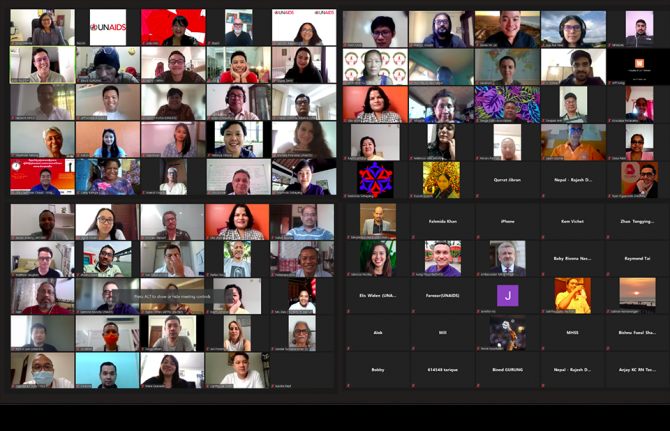
21 April 2021 21 April 2021More than 150 civil society representatives from 17 countries in Asia and the Pacific joined the first virtual regional consultation on the upcoming United Nations High-Level Meeting on AIDS.
“Your views are important. We need them, and they really matter for the success of the political declaration,” said Mitch Fifield, Australia’s Ambassador and Permanent Representative to the United Nations and one of the two co-facilitators for the high-level meeting process, in his opening remarks. He also spoke about the valuable contributions of the participants to the high-level meeting and the critical role of communities in the HIV response.
The consultation was an opportunity for civil society organization leaders to take stock of the progress made and the challenges facing the HIV response in the region. It fostered cross-sharing of different expectations of the high-level meeting, allowing civil society organization representatives to share what they see as important for inclusion in the political declaration and to collect inputs to be shared with the multistakeholder task force in preparation for the multistakeholder hearing.
Asia and the Pacific has the second largest regional epidemic after Africa, with 300 000 new HIV infections in 2019. Key populations and their partners accounted for an estimated 98% of new HIV infections, and more than one quarter of new HIV infections were among young people (aged 15 to 24 years). At present, in Asia and the Pacific 160 000 people die from AIDS-related illnesses every year because they do not receive life-saving treatment in time, or the quality of care is insufficient. Nearly 2.3 million people living with HIV, or 40%, are not on treatment, signifying a need to increase treatment coverage.
The participants at the consultation stressed that the new political declaration should give prominence to the scale-up of HIV prevention and treatment efforts, including pre-exposure prophylaxis, self-testing, harm reduction services, same-day antiretroviral therapy, multimonth dispensing and comprehensive sexuality education. Strengthening health systems and the integration of HIV services with other health services, such as services for mental health, sexual and reproductive health, and tuberculosis, is seen as a priority for the next five years to ensure that no one is left behind. “To end AIDS, we must ensure universal, free and sustainable access to prevention and treatment services. The political declaration should be built on the last milestones, especially the Declaration on Universal Health Coverage,” said a civil society organization leader.
Community members recognized that policy and legal barriers, including the criminalization of sex work, consensual same-sex sexual relations and drug use, are deterring people living with HIV and key populations from accessing health services and undermining efforts to end AIDS. “Sex work and drug use are not crimes but a part of life for many. This should be strongly stated in the political declaration,” said one participant. Key population leaders made a strong statement about removing harmful laws, policies and practices towards key populations. They highlighted the need to strengthen the legal and policy environment to protect key populations and vulnerable groups from stigma, discrimination and violence.
Current investments in the HIV response in the region reflect inadequate HIV financing, particularly for key population programming. Civil society organization leaders agreed that to ensure the sustainability of HIV programmes, increased political commitment for domestic funding and financing for communities and key populations programmes are critical. “Investments in HIV must be anchored on the principles of equity, social justice and accountability. These should include investments to support people-centred approaches to health service delivery where services are differentiated but integrated,” said another community representative.
The participants also considered the impact of the COVID-19 pandemic on communities in the region. The diversion of resources and health workers to respond to the more immediate COVID-19 pandemic presents a real risk, threatening the hard-fought-for gains of the HIV response. “We should ensure that the focus on HIV remains strong while dealing with COVID-19, and regular HIV services and uninterrupted supply of antiretroviral therapy should be guaranteed,” said a community leader. Communities also stressed the importance of a new political declaration that considers how COVID-19 has impacted community-led responses to HIV. “There should be financial commitments, a crisis fund or financial safety networks for key populations because they suffered immensely during the COVID-19 pandemic,” one participant said.
Throughout the consultation, the first and foremost demand has been for inclusiveness of key populations in decision-making. “If key populations and people living with HIV are not included in the highest level of decision-making, we will never end inequalities,” said another participant. “Empowerment of communities is integral to strong and resilient health systems. It is important to enable the meaningful engagement of civil society organizations at all levels of programming, including policy development, service delivery, monitoring and evidence-generation,” said another participant.
The main points from the consultation will be synthesized into a regional civil society statement that captures the main priorities and demands of communities for the 2021 political declaration. Likewise, recently, UNAIDS Asia–Pacific launched a social media campaign to encourage key actors, governments, donors, stakeholders, civil society, academics and influencers to make their voices heard in the lead-up to the high-level meeting on the needs and priorities of the HIV response in Asia and the Pacific.
The UNAIDS Regional Support Team for Asia and the Pacific convened the consultation in collaboration with Sonal Mehta, the Regional Director of the International Planned Parenthood Federation South East Asia, and Jules Kim, of the UNAIDS Programme Coordinating Board nongovernmental organization delegation and Scarlet Alliance, representatives of the multistakeholder task force for the high-level meeting from Asia and the Pacific.
Focus area
Region/country
- Asia and Pacific
- Australia
- Bangladesh
- Bhutan
- Brunei Darussalam
- Cambodia
- China
- Democratic People's Republic of Korea
- Federated States of Micronesia
- Fiji
- India
- Indonesia
- Islamic Republic of Iran
- Japan
- Kiribati
- Lao People's Democratic Republic
- Malaysia
- Maldives
- Marshall Islands
- Mongolia
- Myanmar
- Nauru
- Nepal
- New Zealand
- Pakistan
- Palau
- Papua New Guinea
- Philippines
- Republic of Korea
- Singapore
- Solomon Islands
- Sri Lanka
- Thailand
- Timor-Leste
- Tonga
- Tuvalu
- Vanuatu
- Viet Nam
- Samoa

Feature Story
Epidemiological Well-Being conference opens in Moscow
20 April 2021
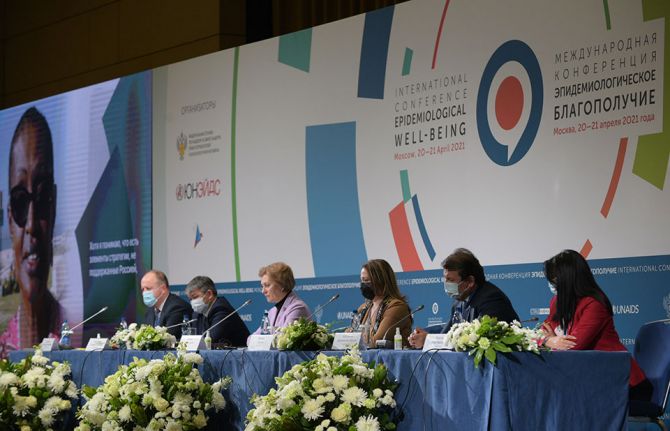
20 April 2021 20 April 2021The Epidemiological Well-Being international conference, which will draw attention to the need for stronger health systems and preparedness against epidemics in the light of the colliding COVID-19 and HIV pandemics, opened today in Moscow, Russian Federation. The aims of the conference include discussions on the progress made against infectious diseases globally, highlighting interim results for reaching the goal of ending AIDS by 2030 and coming up with recommendations for sustainable approaches to combating infectious diseases.
The conference was opened by Anna Popova, Head of the Federal Service for Surveillance on Consumer Rights Protection and Human Wellbeing (Rospotrebnadzor), who emphasized the importance of effective international cooperation. “In a critical situation of the rapid spread of the new coronavirus, countries around the world rallied for one goal—to defeat a common enemy, the COVID-19 pandemic. We realized how important it is to maintain a constant dialogue and prompt exchange of information on outbreaks of infectious diseases, to conduct scientific research and confirm laboratory data for the diagnosis of infections,” she said.
The President of the Russian Federation, Vladimir Putin, and the Deputy Prime Minister of the Russian Federation, Tatyana Golikova, sent welcoming words to the participants and organizers.
Winnie Byanyima, the UNAIDS Executive Director, welcomed the decision of the Russian Government to convene the conference in a video statement, saying, “I am grateful for the Russian Federation’s engagement as a United Nations Member State on the UNAIDS Programme Coordinating Board, your strong commitment to ending AIDS and your support to UNAIDS’ efforts of ending AIDS in eastern Europe and central Asia.”
She also expressed hope that the targets in the new Global AIDS Strategy 2021–2026 will be reflected in the Russian Federation’s state strategy against HIV. Ms Byanyima also called on the governments participating in the conference, “To engage in the negotiations in New York on a bold, new, ambitious political declaration that does not lower the bar and will advance the momentum to end AIDS by 2030.”
Shannon Hader, the UNAIDS Deputy Executive Director for Programme, addressed the participants of the conference. “While COVID-19 has increased and exacerbated many of the inequalities that were already perpetuating new HIV infections and AIDS-related deaths, it has also shown the critical importance of lessons from the HIV response—science, community leadership, the importance of public health advocacy and the critical importance of an all-of-government, all-of-society approach to end pandemics.”
The conference includes more than 20 sessions on critical aspects of combating epidemics and is hosted by Rospotrebnadzor with the support of the Ministry of Foreign Affairs and the Ministry of Finance of the Russian Federation and in cooperation with UNAIDS.
Related links
Region/country

Feature Story
Regional network of people living with HIV launched in the Middle East and North Africa
19 April 2021
19 April 2021 19 April 2021The HIV epidemic in the Middle East and North Africa is still growing—an estimated 20 000 new HIV infections in 2019 marked a 25% increase over the 16 000 new infections in 2010. The region is far from controlling its HIV epidemic and HIV treatment coverage is low, with only 38% of people living with HIV accessing HIV treatment in 2019, resulting in 8000 people dying from AIDS-related illnesses in the region.
Community-based organizations can play important roles in the region’s HIV response, but they are constrained in many countries by limited civic space and resources. In response, community leaders living with HIV have come together to launch the first regional network of people living with HIV, MENA Plus, to strengthen the community HIV response in the region.
“It is time people living with HIV have a network where they make their own decisions and get our rights without stigma and discrimination,” said Amina Ibrahim (not her real name), a member of MENA Plus from Egypt.
With a vision of a society where people living with HIV live with respect and dignity, enjoy their full rights and have equal opportunities, MENA Plus aims to enhance the leadership, representation and effective engagement of people living with HIV across the Middle East and North Africa.
“We need to discuss the suffering of people living with HIV, and especially of children living with HIV, and how to educate them about living their lives,” said Soumayya Abdelwafi (not her real name), a member of MENA Plus from Morocco.
The network will advocate for HIV treatment and prevention services in the region, the sustainability of HIV funding and ending vertical (from mother to child) transmission of HIV and new HIV infections among children.
MENA Plus will put a strong emphasis on human rights, campaigning on sexual and reproductive rights, sensitization on gender diversity and sexual orientation and the rights of minorities and key populations—vital for a region whose HIV epidemic is highly concentrated among key populations and their sexual partners.
“With diversity, we enrich networking and advocacy to help achieve rights,” said Souhaila Abdalla (not her real name), a member of MENA Plus from Tunisia.
Through enhancing the leadership, representation and effective participation of people living with HIV, especially in decision-making around health and social and financial programmes, MENA Plus aims to empower people living with HIV in the region.
“MENA plus is a welcome addition to our UNAIDS team of partners across the Middle East and North Africa. Our friends, family and colleagues living with HIV have shown remarkable resilience, determination and innovation in responding to the interconnected challenges posed by HIV and COVID-19 in recent years. Through MENA Plus, their work has the potential for even greater impact, as the new global AIDS strategy puts community-led responses at the heart of UNAIDS’ work,” said Shereen El Feki, Director of the UNAIDS Regional Support Team for the Middle East and North Africa.
Related

Feature Story
Wide range in access to HIV testing of babies in the Caribbean
12 April 2021
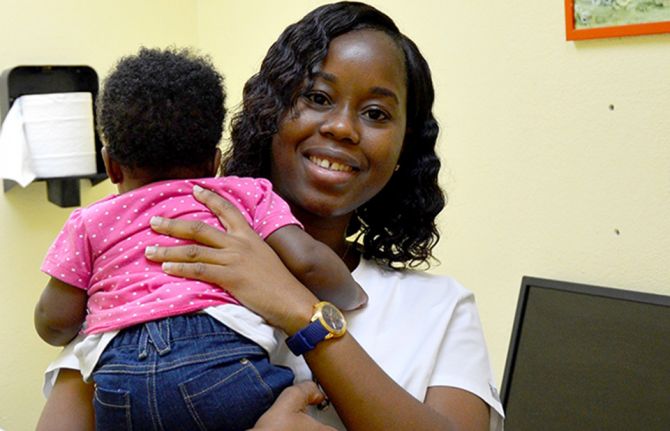
12 April 2021 12 April 2021Early diagnosis of infants who have acquired HIV vertically (from their mother) is vital. Swift testing of infants exposed to HIV and an immediate start of antiretroviral therapy upon diagnosis can ensure the survival of children who have acquired HIV. Without early diagnosis and treatment, about half of infants with HIV die by the age of two years, but many HIV-exposed infants in low- and middle-income countries are not accessing early infant diagnosis.
In the Caribbean, coverage of virological testing for early infant diagnosis varies from 21% in Jamaica to 99% in Cuba.
Feature Story
Commission on Narcotic Drugs discusses how COVID-19 is impacting the world drug problem
15 April 2021
15 April 2021 15 April 2021The 64th regular session of the Commission on Narcotic Drugs—the policymaking body of the United Nations with prime responsibility for drug-related matters—is being held from 12 to 16 April, at which the anniversaries of the 1961 Single Convention on Narcotic Drugs and the 1971 Convention on Psychotropic Substances are being marked.
In addition to the opening, operational and normative segments, more than 100 side events are taking place addressing various aspects of drug programmes and policies, including the impact of COVID-19. Five resolutions are being debated, including one on the impact of the COVID-19 pandemic on the implementation of Member States’ joint commitments to address and counter the world drug problem.
The normative session is looking at the implementation of the international drug control treaties, including the follow-up to the implementation at the national, regional and international levels of all commitments, as reflected in the ministerial declaration of 2019, as well as the inter-agency coordination of efforts in addressing and countering drugs.
In addition, the session will see deliberation on the contributions by the Commission on Narcotic Drugs to the work of the United Nations Economic and Social Council, including follow-up to and review and implementation of the 2030 Agenda for Sustainable Development.
The opening segment included a message from the United Nations Secretary-General, who noted that the COVID-19 crisis has shown the world how much the world needs solidarity, shared responsibility and international cooperation to improve health coverage.
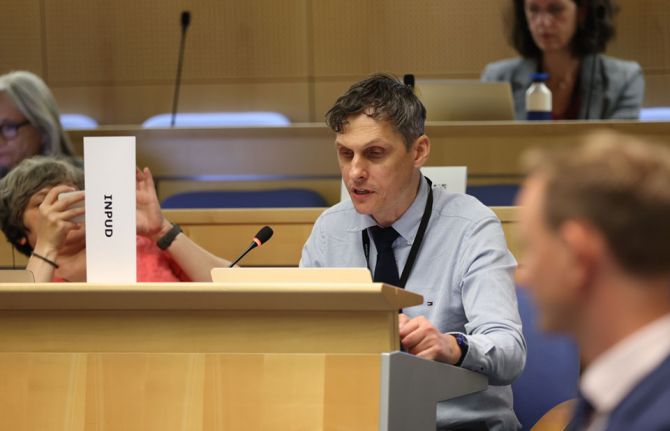
Speaking for UNAIDS at the opening plenary, Ninan Varughese, a UNAIDS Senior Adviser, noted that the new global AIDS strategy calls for the intensification and redoubling of efforts to scale up comprehensive harm reduction for people who inject drugs in all settings and commits to promote and support community-led responses. He added that the engagement of key populations, including people who inject drugs, is critical to a successful HIV response everywhere and reminded the plenary of UNAIDS’ call on all leaders to come together to support the High-Level Meeting on AIDS from 8 to 10 June 2021.


Feature Story
Former heads of state and Nobel laureates call on President Biden to waive intellectual property rules for COVID vaccines
14 April 2021
14 April 2021 14 April 2021More than 170 former heads of state and government and Nobel laureates, including former Prime Minister of the United Kingdom Gordon Brown, former President of Colombia Juan Manuel Santos, former President of Liberia Ellen Johnson Sirleaf, former President of France François Hollande and Nobel Laureates Professor Joseph Stiglitz and Professor Francoise Barre-Sinoussi, today called on President Biden to support a waiver of intellectual property rules for COVID-19 vaccines and pursue a people’s vaccine to end the pandemic in an open letter today.
The letter was sent to the White House as U.S. health authorities advised a pause in the use of the Johnson & Johnson Covid-19 vaccine. A waiver of intellectual property rules would allow for a scale up in manufacturing in the U.S. and around the world, overcoming artificial supply constraints.
The former world leaders and Nobel Laureates encourage President Biden to take the urgent action only he can and “let this moment be remembered in history as the time we chose to put the collective right to safety for all ahead of the commercial monopolies of the few.”
The letter specifically asks President Biden to support a proposal from the South African and Indian governments at the World Trade Organization (WTO) to temporarily waive intellectual property rules related to COVID-19 vaccines and treatments. At the current pace of vaccine production, most poor nations will be left waiting until at least 2024 to achieve mass COVID-19 immunization.
Gordon Brown, former Prime Minister of the United Kingdom said:
"President Biden has said that no one is safe until everyone is safe, and now with the G7 ahead there is an unparalleled opportunity to provide the leadership that only the U.S. can provide and that hastens an end to the pandemic for the world.”
“An urgent temporary waiver of intellectual property rules at the World Trade Organization would help us ramp up global supply of vaccines together with a global multi-year burden sharing plan to finance vaccines for the poorest countries”.
“This would be in the strategic interests of the U.S., and of every country on the planet".
Joseph Stiglitz, Nobel Economics Prize Laureate, said:
“While the U.S. has made enormous progress in vaccinating its own population, thanks to the efforts of the Biden administration, that alone is unfortunately not enough”.
“New mutations of the virus will continue to cost lives and upend our interconnected global economy until everyone, everywhere has access to a safe and effective vaccine. Intellectual property is the utmost artificial barrier to global vaccine supply. We as a nation must lead with our allies to back the South Africa and India waiver at the WTO, insist on technology transfer, and strategically invest in production”.
François Hollande, former President of France, said:
“The extreme inequality in access to vaccines around the world creates an unbearable political and moral situation. It is above all sanitary and economic nonsense as we are all concerned. That the Biden administration is considering waiving barriers related to intellectual property rules offers hope for the international community. If the United States supports the lifting of patents, Europe will have to take its responsibilities. In the face of this devastating pandemic, world leaders must prioritize the public interest and international solidarity”.
Other signatories include Mary Robinson, the former President of Ireland, Fernando Henrique Cardoso, the former President of Brazil, and Helen Clark, the former Prime Minister of New Zealand, together with over 60 other former heads of state and heads of government that span every continent.
The leaders also called for the intellectual property waiver to be accompanied by the open sharing of vaccine know-how and technology, and by coordinated and strategic global investment in research, development, and manufacturing capacity, especially in developing countries, underscoring that threats to public health are global and require global solidarity-based solutions.
These actions would expand global manufacturing capacity, unhindered by industry monopolies that are driving the dire supply shortages blocking vaccine access. The resulting vaccine inequality, the leaders warned, means that the U.S. economy already risks losing $1.3 trillion in GDP this year, and if the virus is left to roam the world, the increased risk of new viral variants means even vaccinated people in the U.S. could be unprotected once more.
The letter, which was coordinated by the People’s Vaccine Alliance, a coalition of more than 50 organizations including Club de Madrid, Health GAP and UNAIDS, warned that at the current global immunization rate, it was likely that only 10 percent of people in the majority of poor countries will be vaccinated in the next year.
Françoise Barré-Sinoussi, Nobel Prize in Physiology or Medicine Laureate said:
“We will not end today’s global pandemic until rich countries – most especially the United States – stop blocking the ability of countries around the world to mass produce safe and effective vaccines”.
“Global health is on the line. History is watching. I, with my fellow laureates and scientists across the globe, urge President Biden to do the right thing and to support the TRIPS waiver, insist on pharmaceutical corporations to share vaccine technologies with the world, and strategically invest in distributed production”.
Muhammad Yunus, Nobel Peace Prize Laureate said:
“Big pharmaceutical companies are setting the terms of the end of today's pandemic – and the cost of allowing senseless monopolies is only more death and more people being pushed into poverty”.
“We need strong government action to lead - not only philanthropy and the private sector – to solve today’s unprecedented crisis. We together urge President Biden to stand on the right side of history – and ensure a vaccine is a global common good, free of intellectual property protections".
--
Notes to editors:
The full letter and list of signatories can be found at here
The letter was coordinated by the People’s Vaccine Alliance, a coalition of more than 50 organizations including Club de Madrid, the Yunus Centre, Oxfam, Health GAP, UNAIDS, Physicians for Human Rights, the Nizami Ganjavi International Center, Global Justice Now and Avaaz.
Focus area
Related
Feature Story
Keeping girls in school reduces new HIV infections
06 April 2021
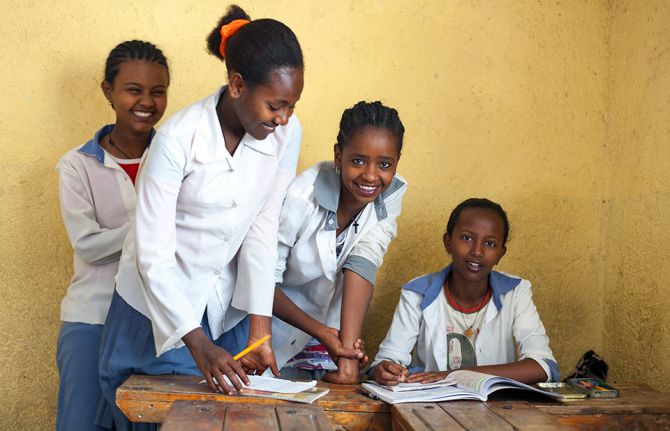
06 April 2021 06 April 2021Staying in school longer has a protective benefit in reducing the risk of HIV infection. Higher levels of educational attainment among women are also associated with increased control over sexual and reproductive health and rights.
In eastern and southern Africa, a positive association between condom use at last higher-risk sex and completion rates of lower secondary school among adolescent girls and young women has been seen. Additionally, greater gains have been made in reducing new HIV infections among adolescent girls and young women in countries that have higher completion rates for lower secondary school (>50%).
Education Plus, a new advocacy initiative for adolescent girls’ education and empowerment in sub-Saharan Africa, is being launched to step up action to ensure that every girl in sub-Saharan Africa gets a quality secondary education.
oUR WORK
Feature Story
Representatives of people living with HIV, key populations and other affected communities selected to join the multistakeholder task force for the high-level meeting on HIV
29 March 2021
29 March 2021 29 March 2021Following a public call for nominations, UNAIDS and the Programme Coordinating Board nongovernmental organization delegation has selected 16 representatives of civil society and the private sector from all regions to join the multistakeholder task force for the high-level meeting on HIV.
More than 560 nominations were received and the task force has been established with a broad and diverse expertise. There are at least two members per region. More than 50% of the members are women and 25% are under the age of 30 years. Six are openly living with HIV and all key populations are represented.
The United Nations General Assembly will hold its first high-level meeting on HIV since 2016 on 8–10 June 2021. In the run-up to the meeting, before the end of April 2021, an interactive multistakeholder hearing will be held with the participation of communities and other stakeholders, who will also participate in other activities before and during the high-level meeting itself. The task force will advise UNAIDS on the format, theme and programme of the multistakeholder hearing and will help to identify speakers for the hearing and high-level meeting plenary and panel discussions.
Multistakeholder task force members
Andrew Spieldenner, US PLHIV Caucus and MPact Global Action, United States of America
Souhaila Bensaid, MENA-ROSA, Tunisia
Aaron Sunday, African Network of Adolescents and Young Persons Development and Association of Positive Youth Living with HIV in Nigeria, Nigeria
Adilet Alimkulov, Kyrgyz Indigo, Kyrgyzstan
Jacqueline Rocha Cortes, MNCP National Movement of WLWA, Brazil
Phelister Abdalla, Key Affected Populations Health and Legal Rights Alliance, Kenya
Aleksey Lakhov, Humanitarian Action and Coalition Outreach, Russian Federation
Judy Chang, International Network of People who Use Drugs, Italy
Sonal Mehta, International Planned Parenthood Federation, India
Yasmina Chan Lopez, Red Juvenil de AMUGEN, Guatemala
Alia Amimi, International Treatment Preparedness Coalition–MENA, Morocco
Jacques Lloyd, Afrique Rehabilitation and Research Consultants NPC, South Africa
Severin Sindizera, Indigenous Peoples Global Forum for Sustainable Development, Burundi
Angela Lee Loy, Aegis Business Solutions, Trinidad and Tobago
Jules Kim, Programme Coordinating Board nongovernmental organization delegation and Scarlet Alliance, Australia
Gideon B. Byamugisha, International Network of Religious Leaders Living with and/or Personally Affected by HIV, Uganda
Our work
Feature Story
Less than 40% of countries report having training programmes at the national level for law enforcement personnel on human rights and HIV
29 March 2021
29 March 2021 29 March 2021Effective HIV responses require legal, policy and social environments that empower people living with HIV, those at higher risk of HIV infection and others affected by the epidemic to claim their rights and receive redress when those rights are violated.
Those who are responsible for enabling such legal, policy and social environments need to be properly trained. However, country reporting to UNAIDS in 2020 shows that training programmes on human rights and non-discrimination legal frameworks applicable to HIV are operating at scale at the national level for police and other law enforcement personnel in only 40 out 102 reporting countries, for members of the judiciary in 36 out of 100 reporting countries and for lawmakers and parliamentarians in 30 out of 97 reporting countries.
Feature Story
UNAIDS supports community-based campaign against COVID-19 in Equatorial Guinea
29 March 2021
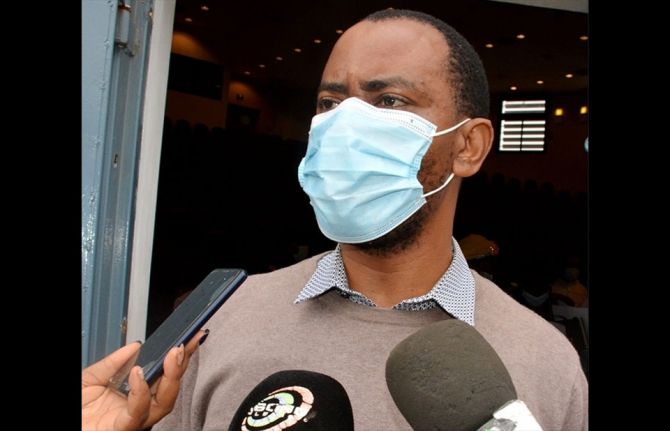
29 March 2021 29 March 2021The Government of Equatorial Guinea has launched a new community-based campaign against COVID-19 with the support of UNAIDS.
The UNAIDS Country Office for Equatorial Guinea has been supporting the government of the country since the beginning of the COVID-19 pandemic. It has supported testing and sensitization campaigns for people living with HIV and has now joined the new community-based campaign by providing the Ministry of Health with financial support to support volunteers and facilitate their travel.
The first 10 days of the campaign will focus on Bioko Island and the campaign will continue on the mainland from the end of March. Since February, there has been an upsurge of new COVID-19 infections in Malabo, the capital of Equatorial Guinea. The new campaign will allow the health authorities to trace people with COVID-19 and quickly isolate high-risk patients in order to limit the risk of transmission.
The Director-General for Hospital Coordination, Juan José Owono Okiri Nkogo, said, “After only two days of the campaign, we have already detected nearly 50 positive cases, which have been quickly managed and directed to the reference centres.”
Justino Obama, the President of the National Committee for the Fight against COVID-19, praised UNAIDS’ efforts. “Equatorial Guinea thanks the UNAIDS office for this support,” he said.
“As with HIV, our most effective weapons against COVID-19 are solidarity and responsibility. Thanks to them, we will win the battle against COVID-19,” said Jeanne Seck Ndeng, the UNAIDS Country Director for Equatorial Guinea.