Feature Story
New study recommends strategies to serve the under-protected Caribbean transgender community
01 April 2021
01 April 2021 01 April 2021On International Transgender Day of Visibility (March 31), the United Caribbean Trans Network (UCTRANS) launched the results of its survey Over-policed, Under-protected: The Experiences of Trans and Gender Diverse Communities in the Caribbean.
The study was conducted in 2020 with the support of OutRight Action International. It features feedback from transgender and other gender diverse respondents from 11 countries, garnered from surveys, individual interviews and focus group sessions.
Respondents identified the inability to change their gender marker, employment discrimination and discrimination in health services as the top challenges facing the community.
Except for Cuba, no Caribbean country allows transgender people to modify their gender on official identification.
“Gender identity recognition is important,” said Alexus D’Marco, UCTRANS’ Executive Director. “Every aspect of a trans person’s life—access to education, employment, housing, and healthcare—depends on their ability to show a valid identity card or documentation that aligns with their gender identity and expression.”
“It is beyond hormones,” said Yaisah Val of Community Action for the Integration of Vulnerable Women in Haiti (Action Communautaire pour l’integration des Femmes Vulnerable en Haiti, or ACIFVH). “We need legal recognition and documents.”
Forty-two percent of the study’s respondents indicated that they were currently unemployed. According to the report, discrimination and the lack of workplace and social protections compound this issue.
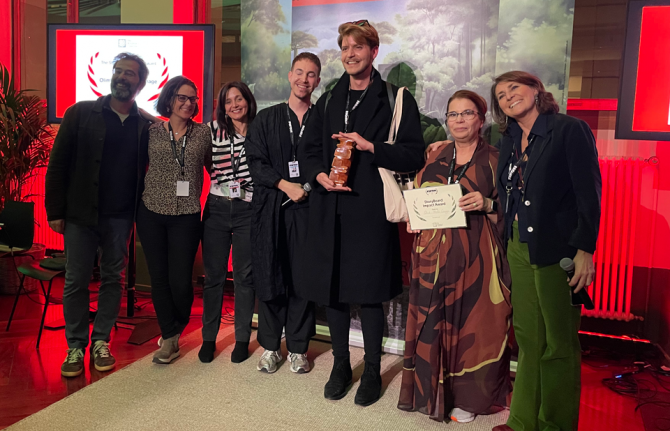
“We had someone who was working with the government and told they had to go home. They said they didn’t employ ‘she’, they employed ‘he’,” said Brandy Rodriguez of the Trinidad and Tobago Transgender Coalition, pictured above.
Around four of five respondents (78%) reported having experienced depression or anxiety. But just one-third (32%) of those who were receiving accessed health services said that it was trans-affirming or at least trans-competent.
HIV prevalence is disproportionately high among Caribbean transgender people—51% in Jamaica, 28% in the Dominican Republic, 8% in Guyana and 3% in Cuba. In 2019, 5% of new HIV infections in the Caribbean were among transgender people.
“The cycle of displacement contributes significantly to this HIV risk,” Ms. D’Marco said. “If you are thrown out of the at an early age, experience gender-based violence and find yourself sleeping on beaches or the streets, you are more likely to have sex for a meal or a place to stay. Someone with education, access to housing and healthcare would be less likely to contract HIV.”
Responding to HIV in the trans community calls for increased investments in psychosocial support. Ms. Rodriguez who is a peer navigator for transgender people accessing HIV treatment in Trinidad and Tobago says COVID-19 has increased the proportion of her clients who do not have money for transportation, food and housing. A Guyanese respondent said many of her friends committed suicide due to being unable to cope with their HIV status.
Trans advocacy in the region has burgeoned over the last decade with important strides made toward increasing public awareness and political will. Ms. D’Marco credits RedLacTrans, the regional transgender network for Latin America and the Caribbean, with helping to build advocacy capacity in the Caribbean. In many countries activists and community organizations have scaled up public awareness and political engagement efforts.
UNAIDS is supporting this movement in different ways. UNAIDS Jamaica helped TransWave develop the Trans and Gender Non-Conforming National Health Strategy, a five-year rights-based road map for advancing the community’s health and well-being. UNAIDS Caribbean has collaborated with the Caribbean Vulnerable Communities Coalition, the Caribbean Broadcasting Union, the Caribbean Media Workers Association and the University of the West Indies Rights Action Project to conduct hands-on regional and national journalist trainings on how to cover transgender people and their issues responsibly. UNAIDS Caribbean has also supported community engagement and strategic communications around two successful strategic litigation cases challenging discriminatory laws that affect LGBT people, including a colonial-era crossdressing law in Guyana.
“As we increase our focus on achieving excellent HIV prevention, treatment and human rights outcomes for all key population groups, it is critical that we address the unique challenges facing the Caribbean transgender community,” said Dr. James Guwani, UNAIDS Caribbean Director. “We need more strategic information, more investments in community-based services and comprehensive strategies to increase transgender people’s access to education, employment, justice and healthcare.”
Related
Feature Story
President of Afghanistan declares ‘unwavering support’ for a People’s Vaccine for COVID-19
01 April 2021
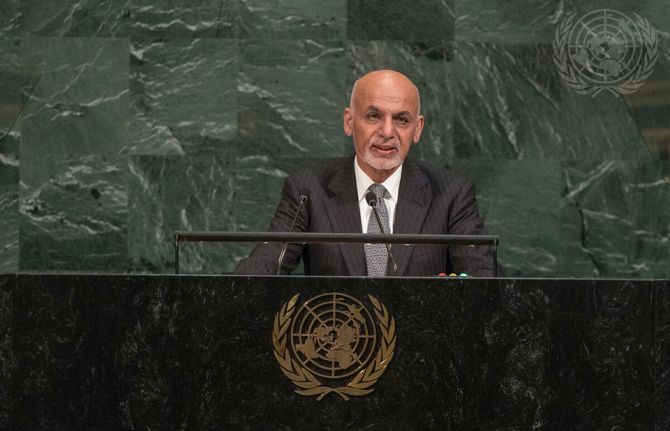
01 April 2021 01 April 2021The President of Afghanistan, Mohammad Ashraf Ghani has joined world leaders and experts in an appeal for equitable and fair distribution of COVID-19 vaccines.
In a letter to the People’s Vaccine Alliance, President Ghani outlined that despite the numerous challenges Afghanistan continues to face as a country caught in conflict, Afghanistan has witnessed fewer human losses caused by the COVID-19 pandemic compared to other countries. However, the President underscored that this did not mean that the resulting implications were underestimated or ignored.
“We must put in place all possible efforts to maximize the supply of vaccine so that everyone, everywhere can benefit as quickly as possible,” said President Ghani. “I assure you of my unwavering support to the People’s Vaccine Alliance.”
In the letter he urges fellow leaders to urgently develop a common plan to massively scale up manufacturing of the vaccine. Which would not only save millions of lives, but also build capacity and infrastructure in countries around the world to manufacture medicines and vaccines to help achieve universal health coverage and prepare for future health emergencies.
He also urged fellow leaders—especially leaders in high-income countries—to insist that the vaccine technology and know-how is shared through the World Health Organization's Covid-Technology Access Pool, and that leaders unite to strongly support the proposal made by India and South Africa to the World Trade Organization to waive patents during the pandemic.
The President of Afghanistan joins more than 150 leaders and advocates globally who have signed up to be part of the People’s Vaccine Alliance including the President of South Africa and the Chairperson of the African Union Commission, the Presidents of Ghana and Senegal, the Prime Minister of Pakistan, the Director of the Africa Centres for Disease Control and Prevention and the Special Rapporteur on the right of everyone to the enjoyment of the highest attainable standard of physical and mental health.
“EMERGENCY and all the members of People Vaccine Alliance advocate for equal access to the vaccines: while millions of people who have already been vaccinated in the United States, the United Kingdom or European countries feel safer, most of the low-income countries will barely be able to vaccinate one out of 10 people in 2021 due to the inaccessibility of vaccines,” said Rossella Miccio, President of EMERGENCY.
The People’s Vaccine Alliance calls on pharmaceutical corporations and governments to:
- Prevent monopoly on vaccine production by making public funding for research and development conditional on research institutions and pharmaceutical companies sharing all information, data, biological material, know-how and intellectual property. The WHO COVID-19 Technology Access Pool provides the mechanism for such sharing.
- Prevent monopoly on vaccine supply by enabling as many manufacturers as possible, including in developing countries, to produce the vaccines.
- Implement fair allocation of the vaccine that prioritizes health workers and other at-risk groups in all countries. Vaccination programmes should include marginalized groups, including refugees, prisoners and people living in slums and other crowded housing conditions. Allocation between and within countries should be based on need and not ability to pay.
- Provide the vaccine free of charge at the point of use.
- Ensure the full participation of the governments of developing countries as well as global civil society in decision-making forums about the vaccines (and other COVID-19 technologies) and ensure transparency and accountability of all decisions.
The People’s Vaccine Alliance
The People’s Vaccine Alliance is a coalition of organisations and activists united under a common aim of campaigning for a People’s Vaccine’ for COVID-19 that is based on shared knowledge and is freely available for all. A global common good. It is coordinated by Oxfam and UNAIDS and its other members include: EMERGENCY, Free the Vaccine, Frontline AIDS, Global Justice Now, International Treatment Preparedness Coalition, Just Treatment, Nizami Ganjavi International Center, Open Society Foundations, STOPAIDS, SumOfUs, Wemos and Yunus Centre.
Our work
Region/country
Feature Story
(Wo)man in the Mirror: seeing your true self
31 March 2021
31 March 2021 31 March 2021The night before filming began, the producer, Swati Bhattacharya, spent long hours with one of the actresses to make sure she understood the spirit of her movie.
“Because of COVID-19, I could not join, so we spoke on the phone and I told her that using no words she had to convey fright followed by acceptance,” Ms Bhattacharya said.
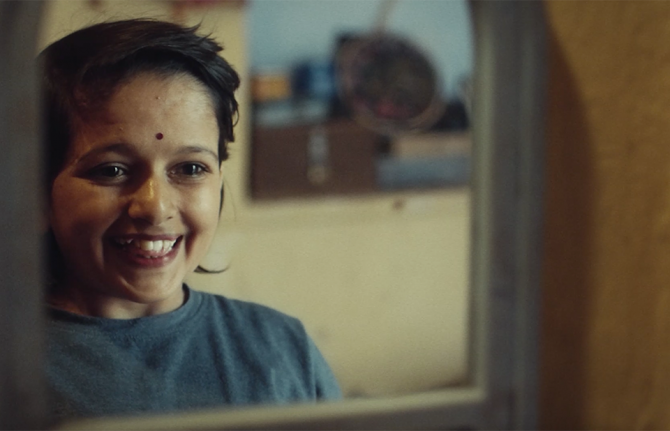
The film, the Mirror, portrays a young boy who is pouting and opts out of playing with other children during an Indian kite festival. His mother eggs him on, but he sneaks off downstairs alone. He drapes himself in a woman’s scarf and smiles as he sees his reflection in a mirror.
Moments later, his mother and his grandmother catch him dancing dressed up. The music stops and the women stare at the boy. A few seconds of dread pass by and suddenly the women join him.
“You see, this story plays out on many levels,” Ms Bhattacharya said. “The broad point is we have to accept children as they are and, in this case, build up their confidence.” She pointed to the fact that 98% of transgender people in India leave their homes or are thrown out. Inevitably, many live on the street with no money or education, often relying on sex work.
“Visibility is also an important thing,” the long-time advertising executive said. “Either you dislike the body you live in or you hate the society that you live in.” She wanted to capture the pivotal moment of self-recognition. Often, she explained, we look at children as our projects and want to make them extrovert and studious and obedient, refusing to see them for who they are and how they want to grow up.
“I wanted to show how they (transgender people) are seeing what they want to see and not the way the world sees them,” Ms Bhattacharya said.
Quoting an often-used phrase, she added, “It is easier to accept a child than mend a broken adult.”
In her opinion, most adults have been battered and bruised in some way or another, but transgender people in her country and across the world particularly suffer—from homelessness, from sexual violence and from mental illness.
Statistics show that transgender teenagers are much more likely to attempt suicide than teenagers whose identities match what is written on their birth certificates. In addition, transgender people face discrimination and in certain countries can be arrested. And transgender women have some of the highest rates of HIV, up to 40% in some cases.
Ms Bhattacharya knows these grim figures all too well. One of her earlier advertising campaigns focused on challenging long-time traditions of exclusion. Her team took a celebration traditionally restricted to married women and opened it to all women.
“As an ad person, I realized that we were using the cookie cutter version of an ideal woman, when, in fact, women are very diverse,” she said. Chuckling, she said that she realized that for years she had not catered to consumers like herself. That drove her to get to know more women and seek out their stories.
Not only did the Sindoor Khela campaign win accolades and awards, it opened her eyes to the diversity and also the many divides. “Married vs unmarried women, mothers vs non-mothers, divorcees vs widows, etc.,” Ms Bhattacharya said.
She wanted to bring these factions together and stressed that sisterhood is an untapped resource. Her film, the Mirror, alludes to this.
“In a way, the mother is aspirational, she is making the decision to accept her son and turning it into a celebration,” Ms Bhattacharya said. “The film has a strong feminist agenda because the two women are like a cloak, or two stage lights if you will.”
Tea Uglow, above, described the film as brazen. “Ultimately it is a fairy tale and we know it is a fairy tale and yet you wonder, what is really stopping this from being perfectly fine?” As a transgender woman based in Australia she wishes families would react just like this. What also struck her about the movie is that it has no negative emotional tones. No rage, no fear. “No one has any reason to fear a trans child… yet we are told to again and again.”
For Jas Pham, above, a transgender woman living in Bangkok, Thailand, the video struck a chord. “Basically, I teared up watching the video. It reminded me of my childhood,” she said.
She said that she focused on the child, but afterwards thought more about the mirror. “It is just a reflection; you see yourself and there is no judgement,” she said, adding that this is a powerful message of recognition and acceptance to families of transgender and gender-diverse children around the world.
Cole Young, a transgender American man, knows that parents do not always embrace their children in this open, accepting way, but he likes the positive, happy feel of the movie. “We know the bad reactions, we’ve experienced them, so we don’t need to re-traumatize trans people.”
Both work for the Asia Pacific Transgender Network, a nongovernmental organization pushing for the rights of transgender and gender-diverse people. They agreed that even though the film is filmed in India, the message is universal.
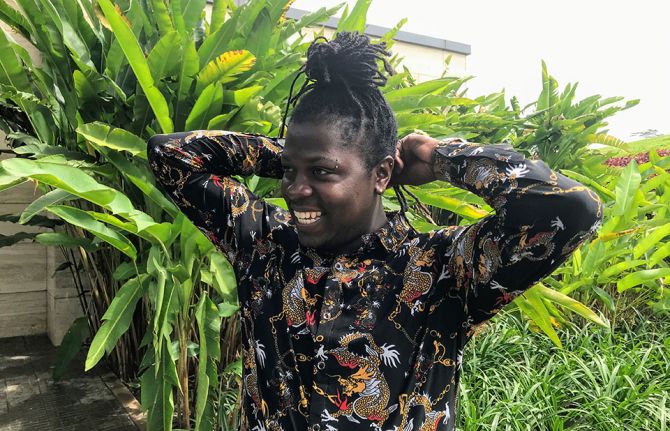
Keem Love Black, above, a Ugandan transgender woman, said the film resonated with her because at the same age she lived similar moments, and still does to this day. “I have mirror moments all the time, especially when I am going out,” she said.
Ms Black runs Trans Positives Uganda, a community organization that cares for transgender women sex workers and refugees who are living with HIV. She has used social media to raise awareness about issues concerning lesbian, gay, bisexual, transgender and intersex (LGBTI) people because few people dare speak out. Uganda criminalizes homosexuality, so she deals with persistent homophobia and transphobia among her peers and community and in health-care facilities. Reflecting upon the movie she said, “We should take up all the opportunities that come our way for visibility.”
UNAIDS is releasing the Mirror on the International Transgender Day of Visibility. Gender diversity is not a lifestyle choice but an inherent right of all people. Gender stereotypes, especially towards LGBTI people, lead to stigma and discrimination. This is more pronounced in children and adolescents, as diversity among them is not commonly understood and society puts massive pressure on them to conform to their assigned gender norms.
Above, Kanykei (who preferred not to give a last name) is one of the few transgender people who lives openly in Kyrgyzstan’s capital of Bishkek. She recalls putting on scarves when little, a bit like the boy in the film. However, her family did not take it seriously. Ever since she can remember, before she realized the difference between boys and girls, she felt like a girl. “They would laugh as in a small child is playing, but, over time, it was perceived differently, both in the family and in society,” she said.
She had to adjust her behaviour and behaved like a man. Before her grandmother’s death, five years ago, she started to consider transitioning, but she could not tell her the truth. “I lived with this gender identity conflict all the time until I decided to make the transition and live as I feel,” she said.
Ariadne Ribeiro, above, a Brazilian transgender woman, likens her own mirror moment as trying to search for herself within. That said, it scared her too. “There was always a very big fear that people might see me through the mirror as I saw myself and my secret would be revealed, and I was not ready,” she said. “I feel that the video brings a reality closer to the ideal of acceptance, something that I, at the age of 40, have not experienced.”
As a long-time transgender activist and now a Community Support Adviser at UNAIDS, Ms Ribeiro said that change is happening, but there needs to be more engagement.
That is exactly what Ms Bhattacharya aimed to show in her film. For her, when the work gains traction, that is what makes it all worthwhile. She also stressed that the “growing pains” that so many of her gender fluid friends have endured over the years are real. “I wanted to open the gates and get people to carry on the dialogue.”
Watch the film. Join the campaign #Seemeasiam on this #TransDayOfVisibility #TDOV2021.
Related
 Government ensures continuity of treatment in Malawi
10 February 2025
Feature Story
Solidarity fund helping transgender people during the COVID-19 pandemic
30 March 2021
30 March 2021 30 March 2021As the COVID-19 pandemic continues, the ongoing global health crises and resulting economic consequences of the measures imposed to contain COVID-19 have highlighted the vast and rapidly growing inequities threatening the livelihoods of the most vulnerable.
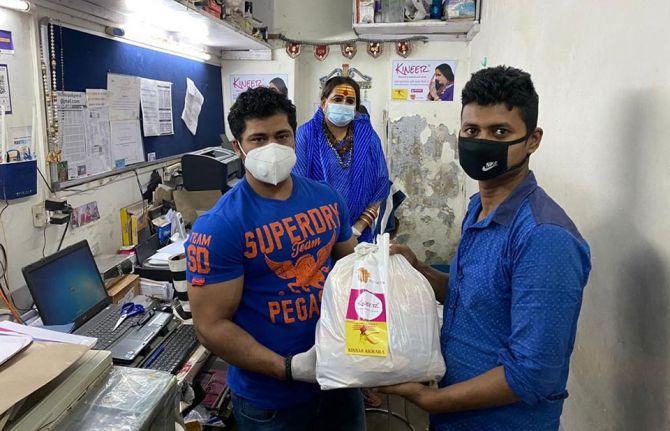
This has been especially true for transgender people around the world, who have disproportionally borne the socioeconomic hardships of the pandemic. Speaking about the transgender community in India, transgender activist Laxmi Narayan Tripathi said, “People didn’t have money to pay rent. Not even to buy rice. People may die of COVID-19, but they may die of hunger even sooner.” The Kineer Services, an initiative created by Mrs Tripathi focusing on creating employment for the transgender community in India, organized and created a platform to provide food to the transgender community across several states in India in order to tide people over the immediate hardship. Sustainable support, however, is a challenge. “What else would be better than us empowering our own people, those that are living on the margins of society, to become entrepreneurs?” Ms Tripathi added.
Recognizing that access to finance is a critical factor towards supporting vulnerable populations to survive the immediate crisis and the impact of lockdowns, UNAIDS and partners launched the Solidarity Fund for Key Populations Social Entrepreneurships and will support eight proposals for transgender-led social enterprises in its pilot phase. The pilot is being rolled out in Brazil, Ghana, India, Madagascar and Uganda. It will finance a series of selected social enterprise grants led by key populations, which will be announced in early April.
“The solidarity fund is a small step towards addressing the economic inequities faced by transgender communities. It is about building and supporting entrepreneurs from within the transgender community to address the extreme discrimination and vulnerability that the transgender community faces,” said Pradeep Kakkattil, Director, Office of Innovations, UNAIDS
The variety of social enterprises received through the solidarity fund’s first proposal call from transgender communities is a testament to the ingenuity of community-led organizations in the face of special hardship. In Uganda, Tranz Network Uganda has established the Transgender Resilience and Economic Empowerment (TREE) pilot programme in order to contribute to the economic transformation of transgender people in Uganda. The TREE project will build social capital and the resilience of transgender people in Uganda through the formation of saving groups, the promotion of financial inclusion, entrepreneurship, vocational skills development and linkages to other social economic empowerment activities.
The selected applicants for the pilot phase of the solidarity fund have shown how civil society organizations and networks are playing a critical role in providing essential social safety nets for vulnerable communities and transgender populations during the pandemic.
In Ghana, the Hope Alliance Foundation (HAF) and the OHF Initiative have been working together for the past nine years on implementing numerous HIV-related programmes that include emergency support, home-based care, capacity-building and peer support. As the ongoing pandemic and the subsequent lockdowns continue to heavily impact the Ghanaian labour market, particularly vulnerable workers, HAF and the OHF Initiative are aiming to address the resulting economic challenges through capacity-building programmes and the implementation of income-generating activities. Through the Community Economic Empowerment Program, the two organizations will work with lesbian, gay, bisexual, transgender and intersex people and people living with HIV to provide them with vocational skills training and to revitalize small- and medium-sized business that have been adversely impacted by the economic downturn due to COVID-19-related lockdowns.
In Bihar, India, Reshma Prasad sees a unique opportunity for the transgender community, which has developed unique skills in dancing, singing, art and entertainment within the local culture and across the country. Through Nachbaja, Ms Prasad wants to bridge the current gap between transgender communities and digital media by providing a centralized online platform on which they can market their skills, allow people to directly connect with the artists themselves and provide the artists with an opportunity to receive fair pricing and wider exposure for their services. Nachbaja.com has already registered more than 1000 artists for its platform and aims to grow the platform to reach all of India.
In Brazil, Grupo De Trabalhos em Prevenção Posithvo (GTP+) has been supporting people living with HIV by providing them with food security since 2016 through their Cozinha Solidaria (Solidarity Kitchen). Noticing a vast and sudden drop of the income of their beneficiaries in the past year due to the ongoing pandemic and related lockdowns in Brazil, GTP+ saw a unique opportunity to combine their knowledge of confectionary and gastronomy with entrepreneurial ventures for their beneficiaries. Through Confeitaria Escola–Cozinha Solidária (Confectionary School–Solidarity School), the organization will aim to commercialize and grow its operations by creating confectionary and food baskets for commemorative occasions while proving relevant entrepreneurial training guidance for all members.
“UNICEF recognizes the critical importance of HIV prevention among young key populations if we are to end the AIDS epidemic. We believe that this can be best accomplished by empowering communities directly. The solidarity fund is a unique resource that will do just that. For young people, these investments will yield lifelong opportunities,” said Chewe Luo, Associate Director and HIV Programme Chief, United Nations Children’s Fund.
As transgender communities become increasingly marginalized, especially during the ongoing global pandemic and subsequent lockdown measures, UNAIDS is committed to eradicating all forms of discrimination faced by transgender communities and stands behind them to drive workplace equality forward.
Our work
Related
Government ensures continuity of treatment in Malawi
10 February 2025
Feature Story
Fighting transphobia and violence one social media post at a time
30 March 2021
30 March 2021 30 March 2021“If you want to know that [Keem] is a man, just snatch away his phone and run,” taunted an Internet troll under Keem Love Black’s new profile picture on Facebook.
As a transgender woman living in Uganda, Ms Black is no stranger to the homophobia and transphobia that the lesbian, gay, bisexual and transgender (LGBT) community receives in the east African country.
“There is a lot of cyberbullying,” Ms Black says; for example, people often attack her for posting pictures of her in dresses and makeup.
Trolling is one motivation for Ms Black’s social media activism. She runs Trans Positives Uganda, a community organization that cares for transgender women sex workers and refugees who are living with HIV.
The online abuse mirrors the violence most transgender women experience in Uganda at the hands of their partners and even health-care providers. The marginalization has created a myriad of issues for transgender people in the country.
“I have been persistent on social media because I wanted to tell the world about transgender issues,” she says.
HIV disproportionately affects female sex workers and transgender women. The 2020 Global AIDS Update reports that in eight sub-Saharan countries nearly one in three transgender women said they had been physically attacked and 28% had been raped.
It is not only sexual violence that Ms Black relates, but also intimate partner violence.
“Our boyfriends really violate us,” Ms Black says.
She adds that transgender sex workers also meet the same fate at the hands of clients. However, while she believes that violence against transgender women needs to be addressed, the criminalization of LGBT people and sex work in Uganda stops survivors from speaking out.
“Sex work is illegal and our kind of sex is very, very illegal. You might end up getting arrested,” she says.
The stigma and discrimination often follows transgender people to consulting rooms at health facilities, where, while seeking treatment, they can be degraded and shamed.
“You tell a doctor, “I have anal gonorrhoea” and they will all be shocked. They'll call everyone, all the doctors, to see because they don’t believe in anal sex. They’ll say it’s against their religion,” says Ms Black.
When Ms Black lost an HIV-positive transgender friend to medical negligence in 2013, it was the final straw. Her friend was classified as a gay man, resulting in her not accessing health care that could have saved her life.
“I was like, “Okay, I have to start a campaign on social media” because people only knew about lesbians and gays,” Ms Black says.
That campaign grew from about 100 followers on Facebook to 50 000 followers today.
Ms Black’s Facebook page is mix of speaking about contemporary Ugandan issues, advocating for transgender people and fashion.
Despite her success on Facebook, Ms Black is turning to other social media platforms. “I am starting to use my Instagram page to advocate and sensitize people on transgender and health issues. I have noticed that social media is strong for advocacy,” she says.
In the last year, COVID-19 lockdowns had a big effect on women and girls and key populations. Sex workers, transgender men and women, people who use drugs and gay men lost livelihoods, faced violence and often are scapegoated as the transmitters of COVID-19.
“We are still suffering as sex workers who used to get clients from bars and clubs. The president hasn’t decided when bars will officially open yet,” she says. “During the lockdown we were all depressed; it came as a shock to us and we were not prepared at all. Some of us had a few savings, others didn’t have anything.”
Ms Black says people living with HIV faced many challenges in obtaining their treatment as public transport had stopped. “Many people stopped taking their HIV treatment,” she observes.
As with many communities across eastern and southern Africa, the transgender sex worker community displayed remarkable resilience in the face of adversity, somehow surviving the loss of livelihoods and food insecurity.
Without any formal financial support, Trans Positives Uganda teamed up with a sex-worker-led organization called Lady Mermaids, started a GoFundMe page and raised more than €5000 to buy and supply food to their members. They pulled through and, “Now that the lockdown has been eased, we are slowly getting back on our feet,” says Ms Black.
Through it all, Ms Black keeps it playful and often laughs at her naysayers. However, the memes on social media are not just fun and games for her. “Activism happens in many ways,” she says.
Find her on Facebook here and Instagram here.
Our work
Region/country
Feature Story
UNAIDS joins human rights community in mourning Christof Heyns, legal academic and expert
31 March 2021
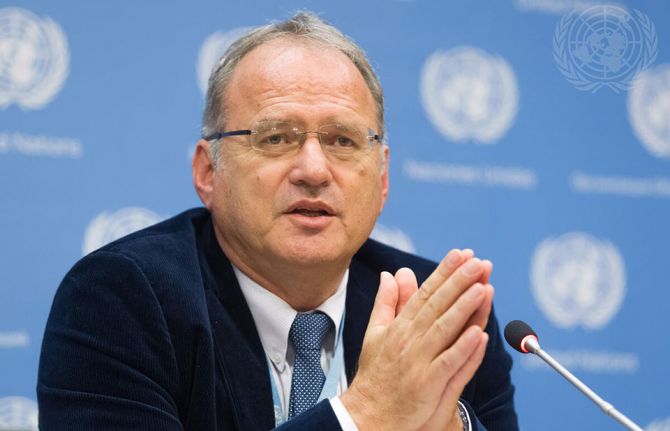
31 March 2021 31 March 2021By Patrick Eba, UNAIDS Country Director for the Central African Republic
Tributes have been pouring in since the announcement of the sudden passing of Christof Heyns, the South African human rights academic and expert. For Amnesty International, he was, “A baobab in the human rights world. A giant in his field, [who] fought hard for a just world.” For Edwin Cameron, a former judge of the Constitutional Court of South Africa and a leading global voice on HIV and human rights, “[Christof] was a meticulous, conscientious, persistent, courageous fighter for justice and human rights.”
A former member of the United Nations Human Rights Committee (2017–2020), Mr Heyns served as the United Nations Special Rapporteur for Extrajudicial Execution from 2010 to 2016 and as a member of the Working Group on Death Penalty, Extra-Judicial, Summary or Arbitrary Killings and Enforced Disappearances in Africa of the African Commission on Human and Peoples’ Rights. In 2015–2016, he chaired the United Nations Independent Investigation on Burundi.
Mr Heyns was one of the world’s most prominent experts on the African human rights system. He was the Director of the Centre for Human Rights at the University of Pretoria from 1999 to 2006 and Dean of the Law Faculty from 2007 to 2010. He later helped to establish and led the Institute for International and Comparative Law in Africa at the same university.
To many of his students, colleagues and partners, he was an accessible lecturer, a trusted ally and a thought leader who embodied the values of excellence with ubuntu (humanity). I first met Mr Heyns in August 2001 as a third-year law student representing the University of Abidjan in Côte d’Ivoire at the 10th African Human Rights Moot Court competition in Pretoria, South Africa. It was an exhilarating opportunity. This was my first-ever air travel. And It took me to no other place than South Africa, the land of Nelson Mandela, the (then) vibrant beacon of human rights optimism. The theme for the continental oratory joust that year focused on human rights violations against people living with HIV—how fitting.
Some two years later, I was privileged to be awarded a scholarship to join what is arguably one of Mr Heyns’s most enduring legacies, the Centre for Human Rights’ master’s programme on human rights and democratization in Africa. Since 2000, this programme has trained a generation of human rights scholars, practitioners and activists from across Africa and other parts of the world. During his tenure as the Director, Mr Heyns enabled the transformation of the Centre for Human Rights into a world-class academic and activist institution that took an active role in education, advocacy and litigation.
As he later became involved as a member of United Nations human rights mechanisms, Mr Heyns took with him the values of dialogue and academic generosity that he had honed in South Africa. In a world that overemphasizes uniqueness, he was an internationalist who championed experience-sharing and cross-fertilization across human rights systems. It was thus naturally that UNAIDS and the Office of the United Nations High Commissioner for Human Rights turned to him when we were seeking allies for a joint dialogue on the human rights norms and practice relating to sexual orientation and gender identity between the African Commission on Human and Peoples’ Rights, the Inter-American Commission on Human Rights and the United Nations from 2015 to 2018. Mr Heyns was at the time the United Nations Special Rapporteur on Extrajudicial Executions and I was working as the Senior Human Rights and Law Adviser with UNAIDS in Geneva, Switzerland. Throughout the process, Mr Heyns was generous with his ideas, and, as ever, courteous and considerate with his peers as well as with support staff.
This year will mark 30 years since the creation of the African Human Rights Moot Court competition. We will miss Mr Heyns but his spirit will be with us as we mark this milestone. Across Africa and globally, his legacy will live on with those he defended as a human rights expert, and in the continued fight for justice and democratization of the thousands of students, academics, practitioners and activists that he has supported and nurtured.
Au revoir professor, the struggle approach to human rights shall continue.
“It is argued that legitimate resistance is the conceptual and historical counterpart and the ultimate guarantor of human rights. Human rights = legitimate resistance … The ongoing nature of history is emphasized, as well as the creative potential of members of the present generation to influence history, and as such the nature of human rights, through their struggles.” Christof Heyns, 10 January 1959–28 March 2021.
Christof Heyns, third from left (front row) with other participants during the joint thematic dialogue on sexual orientation and gender identity between the African Commission on Human and Peoples’ Rights, the Inter-American Commission on Human Rights and the United Nations, 3 November 2015, Kairaba Hotel, Banjul, the Gambia. Credit: UNAIDS
Region/country
Feature Story
UNAIDS shows that with the right investment we can end AIDS by 2030
26 March 2021
26 March 2021 26 March 2021A new report published by UNAIDS today shows the value of investing fully in the HIV response.
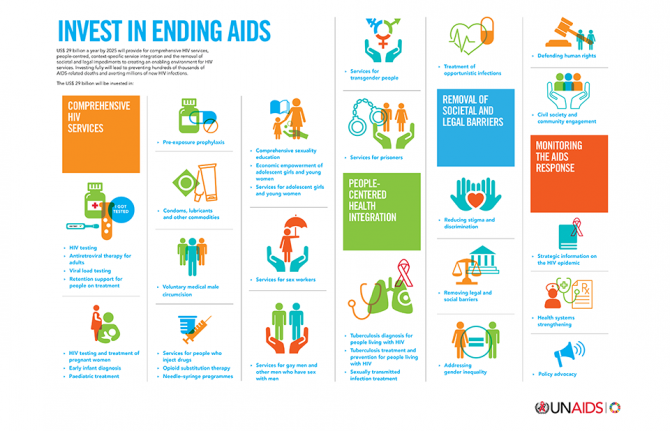
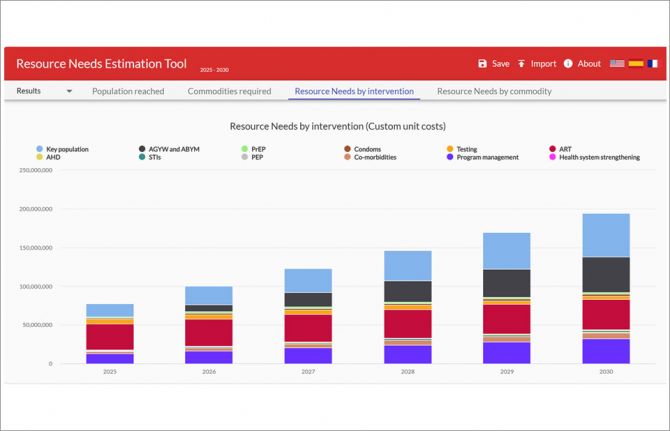
UNAIDS modelling shows that investing US$ 29 billion a year in the HIV response in low- and middle-income countries by 2025 will put the world back on track to end AIDS by 2030. The investment, paid for by both donors and the wealthier countries most impacted by the HIV pandemic, would result in annual new HIV infections falling dramatically, from 1.7 million in 2019 to 370 000 in 2025, and annual AIDS-related deaths falling from 690 000 in 2019 to 250 000 in 2025. The number of new HIV infections among children will drop from 150 000 in 2019 to less than 22 000 in 2025.
In 2016, countries agreed in the United Nations Political Declaration on Ending AIDS to invest US$ 26 billion in the HIV response by 2020. Resources in low- and middle-income countries peaked in 2017 but they started decreasing in 2018, with only US$ 19.8 billion available in 2019—just 76% of the 2020 target. As a result, none of the global programmatic targets set for 2020 were met. And the failure to achieve the targets has come at a tragic human cost: an additional 3.5 million people were infected with HIV and an additional 820 000 people died of AIDS-related illnesses between 2015 and 2020.
“We are not on track to end AIDS by 2030,” said Jose A. Izazola, UNAIDS Special Adviser, Resource Tracking and Finances. “But our modelling shows that spending wisely and focusing investment in the right place will have remarkable results and get us on track to end AIDS by 2030.”
As a result of the failure to meet the 2020 targets, spending will have to be increased, to a peak of US$ 29 billion by 2025.
The investments will be made in a variety of areas. There will be substantially greater investments in HIV prevention services, for which investments will almost double, from the estimated US$ 5.3 billion expenditures in 2019 to US$ 9.5 billion in 2025, with a special focus on key populations, to stop the 1.7 million new HIV infections that still occur each year.
Huge gains can be made in the scale-up of HIV treatment at a low additional financial cost. Modelling shows that a modest 17% increase (an additional US$ 1.3 billion) in resources for testing and treatment by 2025 will enable a 35% increase in the number of people on treatment, to 32 million people.
Spending in societal enablers—factors rooted in society as a whole that modify the effectiveness of HIV programmes: access to justice and law reform, stigma and discrimination and gender equality, including gender-based violence—will more than double, from US$ 1.3 billion in 2019 to US$ 3.1 billion in 2025, and grow to 11% of total resource needs.
“We must not repeat the mistakes of the past,” added Mr Izazola. “The time to invest is now.”
Feature Story
Transgender communities in Asia and the Pacific respond to COVID-19 through activism
30 March 2021
30 March 2021 30 March 2021The global health emergency caused by the COVID-19 pandemic has brought existing inequalities to the forefront, has exposed transgender and gender-diverse communities to a heightened risk of social exclusion, stigma and discrimination, has reduced access to health care and has caused financial insecurity.
“COVID-19 has created an existential threat to many transgender people in Asia and the Pacific. But trans-led organizations and groups have found creative ways to assist their communities, to offer support against social isolation and to support trans and gender-diverse people, especially those unable to work due to COVID-19. We recognize the importance of trans leadership and their response to communities greatly affected by the pandemic,” said Joe Wong, Executive Director of the Asia Pacific Transgender Network (APTN).
When COVID-19 reached India, Maya, a young transgender woman living with HIV volunteering at Basera Samajik Sansthan, a transgender-led community-based organization in Uttar Pradesh, was living in rented accommodation after being rejected by her family. “During the COVID-19 outbreak, my friends and I had to leave our homes because we couldn’t afford the rent,” she said. Basera Samjik Sansthan provided her and her friends with shared accommodation and supplied them with food and medicine. The community-led organization also established a peer support programme to help homeless transgender young people and provide them with hand sanitizer, masks and access to free HIV and COVID-19 testing.
Her testimony is part of a collection of stories published in Dignity amidst COVID-19: Trans Youth Leading The Response, developed by APTN and Youth LEAD, and supported by the UNAIDS Regional Support Team for Asia and the Pacific, to bring visibility to the voices and experiences of transgender and gender-diverse youth leaders and showcase the efforts of transgender-led organizations throughout the region during COVID-19.
“Many transgender people living with HIV were not able to afford transportation to medical centres to receive treatment during the COVID-19 outbreak,” said Della, a young transgender woman living with HIV from Indonesia who works for the Srikandi Sejati Foundation, whose testimony is also collected in the Dignity amidst COVID-19 series. The Srikandi Sejati Foundation established a community support programme that covered transport costs to medical centres to ensure that transgender people could access HIV services. It also implemented local workshops to support and empower transgender women in five districts in Jakarta with knowledge on COVID-19, HIV, mental health and adherence to antiretroviral therapy.
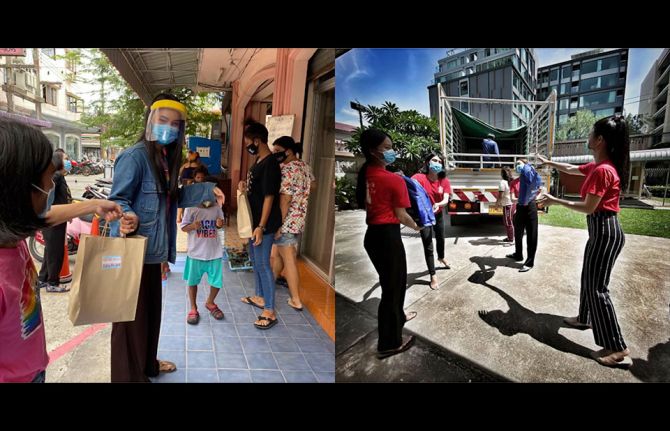
In Thailand, measures taken to curb the spread of COVID-19 and the consequent decline in tourism have forced many entertainment shows and venues to close, leaving many transgender people out of work. “The decline in tourism has heavily affected not only businesses but sources of income for transgender people. Many trans women have returned to rural areas to be with their families due to loss of employment,” said Garfield, a young transgender woman working for the Sisters Foundation, a transgender-led organization in Pattaya that provides a range of HIV services to transgender people, including check-ups for general health, HIV and sexually transmitted infections, hormone therapy and harm reduction. As described in the collection of stories, since the beginning of the pandemic, Garfield and other volunteers have been at the forefront of the COVID-19 relief efforts, distributing food supplies and hygiene products to transgender women.
Basera Samajik Sansthan, the Srikandi Sejati Foundation and the Sisters Foundation are all beneficiaries of the COVID-19 Community Support Fund established by APTN to support transgender people and community-based organizations to ease the burden of the COVID-19 pandemic in the region. APTN provided grants to 22 transgender-led and transgender-inclusive community groups and organizations across 14 countries, enabling them to assist more than 2300 people across Asia and the Pacific. The grant supported various initiatives, including access to essential supplies, food and personal protective equipment, social and mental health relief support, financial assistance and funding support to sustain organizations.
The community-led initiatives and outcomes of the response to COVID-19 are summarized in the Trans Resilience Report—Stories of Hope, Pain, and Survival from the Trans Movement during the COVID-19 Pandemic, developed with financial support from the UNAIDS Regional Support Team for Asia and the Pacific, and in APTN’s multi-week social media campaign.
“On International Transgender Day of Visibility, UNAIDS recognizes the indispensable contributions made by transgender communities in the HIV and COVID-19 response. The leadership and resilience of transgender and gender-diverse communities continues to be an inspiration for our region,” said Eamonn Murphy, Director of the UNAIDS Regional Support Team for Asia and the Pacific. UNAIDS will continue to work with APTN and transgender-led organizations to work towards a region where transgender people and gender-diverse people can thrive as equals.
Our work
Region/country
- Asia and Pacific
- Australia
- Bangladesh
- Bhutan
- Brunei Darussalam
- Cambodia
- China
- Democratic People's Republic of Korea
- Federated States of Micronesia
- Fiji
- India
- Indonesia
- Islamic Republic of Iran
- Japan
- Kiribati
- Lao People's Democratic Republic
- Malaysia
- Maldives
- Marshall Islands
- Mongolia
- Myanmar
- Nauru
- Nepal
- New Zealand
- Pakistan
- Palau
- Papua New Guinea
- Philippines
- Republic of Korea
- Singapore
- Solomon Islands
- Sri Lanka
- Thailand
- Timor-Leste
- Tonga
- Tuvalu
- Vanuatu
- Viet Nam
- Samoa
Feature Story
Tuberculosis deaths among people living with HIV are declining globally, but worrying gaps in TB care persist
24 March 2021
24 March 2021 24 March 2021Globally, the number of people living with HIV who died from tuberculosis (TB), a curable and preventable disease, has fallen from almost 600 000 deaths in 2010 to just over 200 000 in 2019, a fall of 63%. In 2016, a global target was set by the United Nations to reduce TB deaths among people living with HIV by 75% between 2010 and 2020. Nine countries (Djibouti, Eritrea, Ethiopia, India, Malawi, South Africa, Sudan, Thailand and Togo) achieved or exceeded the global target by the end of 2019, one year ahead of schedule.
Further progress towards the global targets has been made in making TB preventive treatment more available to people living with HIV. TB preventive treatment greatly reduces their risk of falling ill and dying from TB. In just two years—2018 and 2019—5.3 million people living with HIV received life-saving TB preventive treatment. That is already 88% of the 6 million target set for 2022 in the 2018 United Nations Political Declaration to End TB.
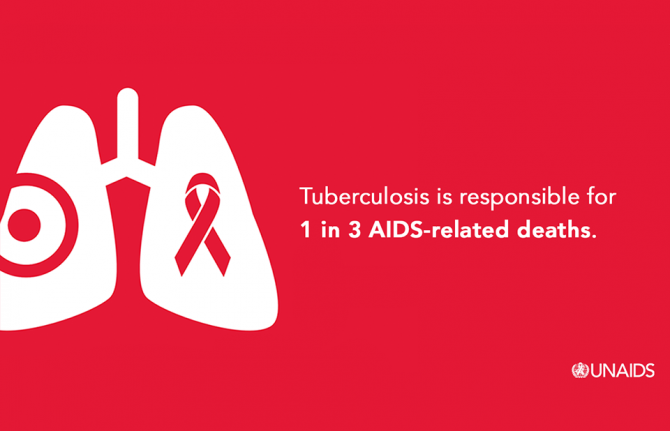
While progress in some countries is to be applauded, these successes mask the many inequalities and gaps that remain in providing the best integrated care for people living with HIV and TB. These gaps resulted in an estimated 208 000 preventable TB-related AIDS deaths in 2019—about one in three AIDS-related deaths.
“One of the greatest disparities in the global response to HIV and TB is in reaching children,” said Shannon Hader, UNAIDS Deputy Executive Director for Programme. “Much better tools to prevent, diagnose and treat TB and drug-resistant TB for young children are now available, but they are still not enough. Too many children are still not being reached with these new tools. Some health-care workers lack the confidence to manage TB among children living with HIV and, for fear of causing harm and a desire to be protective, they don’t always act. Children are being “protected to death”. We need to build confidence to manage TB and HIV in young children and reach transformational goals.”
TB is especially difficult to diagnose among the youngest infants and children living with HIV—those less than two years of age. The most severe forms of TB—disseminated TB and TB meningitis—are common among this age group and they are life-threatening without prompt diagnosis and treatment. Major advances have been made in improving TB diagnosis for children. Child-friendly medicines for the treatment and prevention of TB are available at low cost from the Stop TB Partnership Global Drug Facility. The challenge is to take these innovations to the scale and quality needed to reach all children living with HIV in need.
The Rome Paediatric HIV & TB Action Plan, part of the UNAIDS and United States President’s Emergency Plan for AIDS Relief Faith Initiative, is closing the gaps for children living with HIV. It is a unique multistakeholder partnership that has stimulated unprecedented collaboration among the faith community, private sector, regulators, donors and others to accelerate the development and implementation of better diagnostic tests, preventive measure and treatments for HIV and TB among children living with HIV.
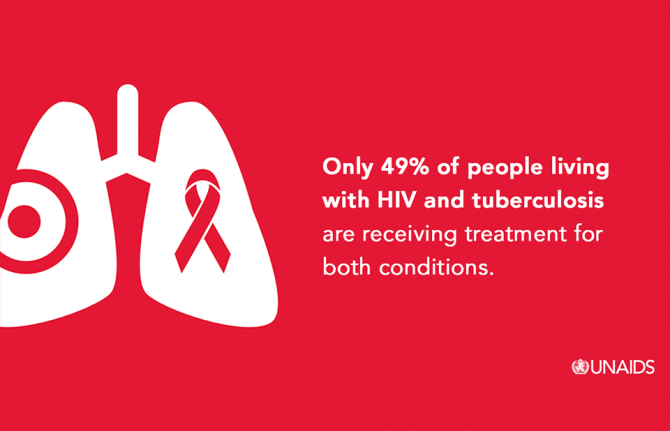
In 2019, less than half (49%) of the estimated 815 000 people living with HIV who also have TB disease were reported to be receiving both HIV treatment and TB treatment. This demonstrates that large gaps remain in screening, testing and treatment for both HIV and TB. To address this, national programmes need to go beyond traditional health facilities to find the missing millions of people who are still in need of treatment for HIV, TB or both. An integrated, community-based and person-centred approach is needed. Multidisease family and community screening for TB, HIV, COVID-19, high blood pressure, diabetes and other common conditions can be de-stigmatizing and can reduce costs for programmes and people. It is critical to encourage all people recently diagnosed with HIV, TB or COVID-19 to allow confidential screening of their family, household and community contacts, including children and young people.
Already, the clock is ticking for us to reach the ambitious new 2025 targets for TB and HIV laid out in the new global AIDS strategy for 2021–2026. Achieving these targets will place the world back on track to end AIDS and TB by 2030. A collaborative and integrated response to the pandemics of TB, HIV and COVID-19 is needed. The response must be rooted in affected communities and centred on the needs of the most affected people. Addressing the inequalities that drive TB and HIV will help to close the “deadly divide” between global commitments and the lived reality of TB- and HIV-affected communities. By ending inequalities, we can stop adults, young people and children living with HIV from dying of TB.
Our work
Feature Story
Huge gaps in TB care for people living with HIV in some countries
24 March 2021
24 March 2021 24 March 2021All (100%) of people living with HIV newly started on antiretroviral therapy should receive either tuberculosis (TB) preventive treatment (blue bar) or TB treatment (orange bar)—together, they represent “optimal TB care”. The green bar shows the percentage of people newly started on antiretroviral therapy who did not receive optimal TB care and are vulnerable to falling ill or dying from TB.
All people living with HIV who are newly enrolled on antiretroviral therapy should receive “optimal TB care”—either TB preventive treatment or TB treatment. Since 2012, the World Health Organization has recommended that all people newly diagnosed with HIV should be screened for TB. If they do not any have symptoms of TB (cough, coughing up blood, fever, night sweats, weight loss, chest pain, shortness of breath or fatigue) they should receive TB preventive treatment. If they have any TB symptoms, they should be fully investigated for TB disease. If they are found to have TB disease, they should be started on TB treatment immediately. If there is no evidence of TB disease, they should be started on TB preventive treatment.
TB is the commonest cause of hospitalization and death among people living with HIV. In 2019, TB was responsible for 208 000 (30%) AIDS-related deaths. Yet, TB is curable and preventable. TB preventive treatment reduces the risk of developing TB disease and can reduce deaths among people living with HIV by almost 40%. Without treatment, a person living with HIV who has TB disease is likely to die.