25 September 2014
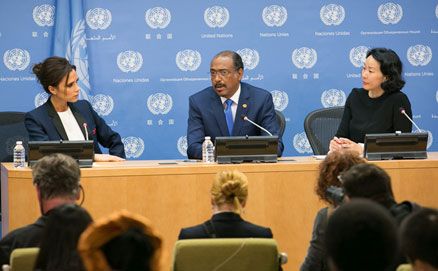
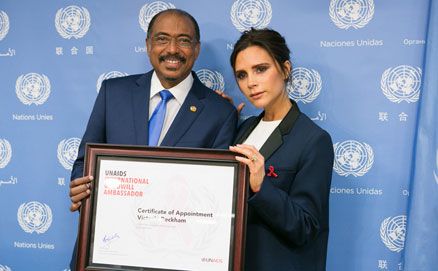
GENEVA/NEW YORK, 25 September 2014—The Joint United Nations Programme on HIV/AIDS (UNAIDS) has appointed leading fashion designer Victoria Beckham as UNAIDS International Goodwill Ambassador. The announcement was made at a special event held during the 69th United Nations General Assembly in New York.
“I dream of a generation free from HIV and I know that Victoria’s support will help us to achieve this shared goal,” said Michel Sidibé, Executive Director of UNAIDS. “Her creativity, innovation and outreach will amplify our efforts and bring us one important step closer towards ending the AIDS epidemic.”
In her new role as an Ambassador for UNAIDS Mrs Beckham will work towards ensuring that all children are born free from HIV and that children and women who are living with and affected by HIV have access to medicines and care.
“This is the beginning of an important journey for me. As a woman and a mother I have a responsibility to support other women,” said Mrs Beckham. “I am proud and honoured to be working with UNAIDS in this new role to help to raise resources and awareness to support and empower women and children affected by HIV.”
In February this year Ms Beckham visited HIV clinics in Cape Town, South Africa, where she learned about the importance of antiretroviral therapy and about how children are being left behind in accessing treatment.
Antiretroviral therapy can reduce the risk of a mother living with HIV passing the virus to her child to below 5%. However, in 2013, one third of pregnant women living with HIV did not have access to the life-saving medicines and 240 000 children became infected with HIV.
In 2013, less than half of all children who were exposed to HIV were tested for the virus within the optimum three-month period and only 24% had access to life-saving treatment. Without treatment, half of all children born with HIV will die by the age of two and the majority will die by the age of five.
Over the past five years providing access to antiretroviral medicines for pregnant women living with HIV has helped 900 000 children to be born free from HIV. UNAIDS and partners are working to ensure that all children, everywhere are born free from HIV and have access to the medicines, care and support they need.
UNAIDS
The Joint United Nations Programme on HIV/AIDS (UNAIDS) leads and inspires the world to achieve its shared vision of zero new HIV infections, zero discrimination and zero AIDS-related deaths. UNAIDS unites the efforts of 11 UN organizations—UNHCR, UNICEF, WFP, UNDP, UNFPA, UNODC, UN Women, ILO, UNESCO, WHO and the World Bank—and works closely with global and national partners towards ending the AIDS epidemic by 2030 as part of the Sustainable Development Goals. Learn more at unaids.org and connect with us on Facebook, Twitter, Instagram and YouTube.

High-level panel emphasizes fragile five-year window for rapid and massive acceleration of HIV treatment and prevention services. New agreement to reduce cost of viral load tests for HIV to below US$ 10 will improve the quality of life for millions of people on HIV treatment
GENEVA/NEW YORK, 25 September 2014—A new fast-track strategy proposes rapid and massive acceleration of HIV prevention and treatment programmes with a people-centred approach for ending the AIDS epidemic by 2030. This call and new commitments were made at a high-level side event entitled Fast track: Ending the AIDS epidemic by 2030.
Ending the AIDS epidemic: priority for post 2015 agenda
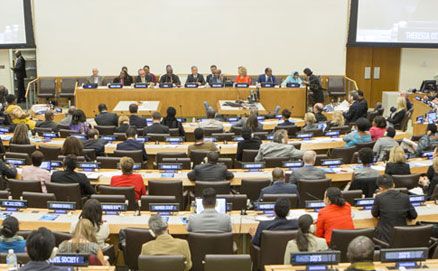
The high-level side event took place during the 69th United Nations General Assembly and was co-convened by Ghana and Switzerland in collaboration with the Joint United Nations Programme on HIV/AIDS (UNAIDS). World leaders agreed that ending the AIDS epidemic as a public health threat by 2030 was possible and must be a central agenda of the post 2015 goals.
“An AIDS-free generation is in our reach. It is our responsibility to make it happen. Nations have to unite in this common goal and act together with force of conviction,” said Didier Burkhalter, President of Switzerland. “The objective is clear: end AIDS by 2030!”
Fast Track Strategy—speed combined with location and population
This strategy calls on countries, especially those with high burden of HIV, to provide lifesaving HIV treatment and prevention services as a matter of priority to people most at risk of HIV infection in areas with high HIV prevalence and density of people living with HIV in a short window of five years. Such an approach will drastically reduce the number of new HIV infections as well as AIDS-related deaths to record low levels.
“I believe strongly that ending AIDS should be part of the post 2015 agenda,” said John Dramani Mahama, President of Ghana. “This is an epidemic that no one thought we could end, but now with the progress we see we know it can be done.”
AIDS is not over in any region—30 countries account for more than 80% of new HIV infections that occur each year in the world. Within these countries, the epidemic is often concentrated in large cities, select districts and localized areas. And in each setting, the affected populations vary. A concerted push to reach the specific populations most at risk in these countries and local areas will maximize the gains in preventing new HIV infections and stopping AIDS-related deaths.
Fragile five-year window
The success of the fast-track strategy relies upon countries to frontload investments and step up the pace of delivery of HIV services, especially the roll of out of antiretroviral therapy. This strategy will see the greatest returns on investments.
“I call on countries, the private sector and civil society to seize this opportunity to end the AIDS epidemic by 2030,” said Ban Ki-Moon, United Nations Secretary-General. “This will require innovation, leadership and shared responsibility to ensure that no-one is left behind.”
UNAIDS, together with governments, civil society and other partners, will help countries identify the areas where fast-track delivery of HIV-related services will have the most impact.
“We have a fragile-five year window to ensure that the world is on-track to end the AIDS epidemic,” said Michel Sidibé, Executive Director of UNAIDS. “Seizing the opportunity to fast track the response to HIV will save millions of lives—the cost of inaction is unthinkable.”
If fully implemented the fast-track approach will avert 18 million new HIV infections and 11 million deaths by 2030. This will have a huge impact on reducing the amount of investment needed for the AIDS response beyond 2020. However, UNAIDS modelling shows that if the targets for 2020 are not achieved until a decade later costs will continue to spiral upwards.
Ambitious 2020 HIV treatment and prevention targets
To get on-track, new targets will focus on closing the access gap to HIV treatment and prevention by setting new targets for 2020. These include a bold target of providing access to antiretroviral treatment by 2020. Target—90-90-90—would enable 90% of people living with HIV to know their HIV status, 90% of people who know their status to access HIV treatment and 90% of people on HIV treatment to achieve viral suppression.
“Thanks to the Clinton Health Access Initiative, UNAIDS, PEPFAR and the Global Fund, our negotiations secured reduction of the price of viral load testing not only for South Africa but the whole world,” said Jacob Zuma, President of South Africa. “We now have the tools we need to end the AIDS epidemic.”
The new agreement on lowering the cost of viral load tests was announced by South Africa, the Clinton Health Initiative, UNAIDS and pharmaceutical company Roche. Viral load tests are essential to monitor the impact of HIV treatment on individuals. The high price of the viral load test is a barrier to its widespread use in low- and middle income countries. With this price reduction, these lifesaving diagnostic tools will become more widely available.
Based on consultations with global treatment experts and regional consultations, UNAIDS also released an issues brief 90-90-90 an ambitious target to help end the AIDS epidemic to support the implementation of the new 2020 HIV treatment target. This document outlines the rationale, scientific evidence and strategy to rapidly expand access to HIV treatment.
In addition to ensuring that no child is newly infected with HIV, a new target of reducing new adult HIV infections from 2.1 million in 2010 to 500 000 in 2020 and to 200 000 in 2030 is proposed. This can be achieved by combining the potential of antiretroviral therapy to prevent new HIV infections with other proven HIV prevention methods such as male and female condoms, harm reduction measures, voluntary medical male circumcision, sexual and reproductive health services and innovative social security programmes such as cash transfers.
“We need to focus on data, mutual accountability and transparency for impact, and put our weight behind HIV prevention, treatment and care interventions that work. We also need to continue setting benchmarks, and I am very pleased that PEPFAR is laser focused on achieving ambitious targets in areas of high HIV prevalence. The challenge is obviously big and obviously important,” said John Kerry, United States Secretary of State.
Zero discrimination - Leaving no one behind
Together with ambitious targets for HIV treatment and prevention, the global goal of zero discrimination needs to be reaffirmed. The success of the AIDS response is primarily due to the unflinching commitment to protecting human rights. Human rights targets are indispensable to ensure that people living with HIV do not face stigma and discrimination, marginalised populations are protected and the right to health becomes a reality.
Key populations—sex workers, gay men and other men who have sex with men, transgender people and people who use drugs—regardless of where they live or the legal status of their behaviour need access to HIV services in close proximity that are free of stigma and discrimination.
Young women and girls in countries with high HIV prevalence need choices to mitigate their vulnerability and risk of acquiring HIV. In sub-Saharan Africa, HIV prevalence among young women and girls is higher than among their male peers.
“When I think about ending AIDS I dream of wanting to be alive by 2030. I want to see my husband stay free from HIV and my daughter protected from HIV infection,” said Teresia Njoki Otieno, Chair of the International Community of Women Living with HIV. “I do not want to come back here in 2030 and talk about the same thing. We should end this epidemic but we can only do this if we put women living with HIV at the centre.”
AIDS by the numbers
UNAIDS is reporting the lowest levels of new HIV infections this century, at 2.1 million [1.9 million–2.4 million]. In the last three years alone new HIV infections have fallen by 13%.
It is estimated that 35 million people were living with HIV in the world at the end of 2013. AIDS-related deaths are at their lowest since the peak in 2005, having declined by 35%.
New HIV infections among children have fallen by 58% since 2001 and have now dropped below 200 000 in the 21 most affected countries in Africa.
Defining ending the AIDS epidemic
Ending the AIDS epidemic means that the spread of HIV has been controlled or contained and that the impact of the virus on societies and on people’s lives has been marginalized and lessened, owing to significant declines in ill health, stigma, deaths and the number of orphans. It also means increased life expectancy, unconditional acceptance of people’s diversity and rights, increased productivity and reduced costs as the impact of AIDS diminishes.
UNAIDS
The Joint United Nations Programme on HIV/AIDS (UNAIDS) leads and inspires the world to achieve its shared vision of zero new HIV infections, zero discrimination and zero AIDS-related deaths. UNAIDS unites the efforts of 11 UN organizations—UNHCR, UNICEF, WFP, UNDP, UNFPA, UNODC, UN Women, ILO, UNESCO, WHO and the World Bank—and works closely with global and national partners towards ending the AIDS epidemic by 2030 as part of the Sustainable Development Goals. Learn more at unaids.org and connect with us on Facebook, Twitter, Instagram and YouTube.
NEW YORK, 25 September 2014—Roche today announced a major Global Access Program to sharply lower the price of HIV viral load tests in low- and middle-income countries. This new initiative creates a ceiling price of US$ 9.40 per test, and will reduce Roche’s average price by more than 40% in low- and middle-income countries. When fully implemented, the Global Access Program is projected to save more than US$ 150 million in costs over the next five years.
By increasing access to viral load testing, this new deal will dramatically improve the quality of HIV treatment services and strengthen capacity to achieve the global goal of ensuring that 90% of all people receiving antiretroviral therapy achieve viral suppression. The high price of viral load testing – is an important reason why less than one in four people on antiretroviral therapy currently have access to viral load testing.
Increasing the affordability and availability of viral load testing is pivotal to hopes to end the AIDS epidemic. With the aim of laying the foundation to end the AIDS epidemic by 2030, the world has embraced a new treatment target for 2020: 90% of all people living with HIV know their HIV status; 90% of all people with diagnosed HIV infection receive antiretroviral therapy; and 90% of all people receiving HIV treatment are virally suppressed. More than 13 million people currently receive HIV treatment.
“We welcome this significant price breakthrough—the urgent call of people living with HIV is being answered. Now, with viral load testing, we can help ensure HIV treatment improves quality of life,” said UNAIDS Executive Director Michel Sidibé. “I congratulate all partners for this timely agreement. It is an excellent example of public-private partnership in action and the kind of innovation needed to accelerate ending the AIDS epidemic.”
With viral load testing, doctors and nurses in developing countries can help ensure that their patients are on the right drug regimens and keep the amount of the HIV virus in their patients at ‘undetectable’ levels. This helps ensure that patients stay healthy while also preventing HIV transmission.
The UNAIDS sponsored Diagnostics Access Initiative, launched at the International AIDS Conference in Australia in July 2014, issued a call to the global community to achieve more affordable pricing for viral load testing. Through the leadership of South Africa and in partnership with CHAI, UNAIDS, The Global Fund and the US President’s Emergency Plan for AIDS Relief (PEPFAR), suppliers were challenged to lower viral load prices, and Roche is the first company to step forward and offer the HIV community an access policy that will accomplish these goals. Other partners in the DAI include the World Health Organization, US Centers for Disease Control and Prevention, African Society for Laboratory Medicine, UNITAID, the Global Fund, PEPFAR, Clinton Health Access Initiative and UNICEF.
“We applaud all the global partners who came together to ensure that over 31 million people living with HIV/AIDS in low and middle-income countries will be able to access viral load testing at this reduced price,” said President Bill Clinton, Chairman of the Clinton Health Access Initiative. “The Clinton Health Access Initiative has partnered with South Africa in its fight against HIV for more than a decade. We are honored to work with a government that is committed to HIV treatment not only in its own borders, but around the world.”
South Africa is the largest purchaser of viral load tests in the world, and the National Health Laboratory Service (NHLS) has the largest viral load program on the continent. The NHLS worked closely with Roche and other partners to create a framework that would benefit not only the 2.5 million people on treatment in South Africa, but millions more receiving antiretroviral therapy across sub-Saharan Africa and beyond.
“To end the AIDS epidemic in South Africa, we will need to build on this record of success to deliver the very highest quality of HIV treatment services, as measured by the proportion of people living with HIV who have viral suppression,” said President Jacob Zuma of South Africa. “Thanks to our ongoing partnership with the Clinton Health Access Initiative and UNAIDS, South Africa has been able to significantly reduce the per-patient price of this essential diagnostic test.”
The Global Access Program continues the longstanding leadership of Roche, which has played an important role in the AIDS response.
“As the leader in HIV viral load testing, Roche supports the UNAIDS 90-90-90 goal and the Diagnostics Access Initiative by expanding access to quality HIV testing through affordable pricing to those countries hardest hit by the disease,” stated Roland Diggelmann, Chief Operating Officer of Roche Diagnostics. “With 70% of all people living with HIV residing in Sub-Saharan Africa, we believe our commitment can truly make a difference to UNAIDS’ goal for achieving control of the HIV/AIDS epidemic.”
Leading AIDS donors welcomed the Program and pledged to effectively leverage it to scale-up viral load testing. “PEPFAR is committed to moving forward to increase use of viral load to monitor patient outcomes for PEPFAR-supported clients with the ultimate goal that all patients remain undetectable for their own health and for increasing control of the HIV pandemic,” said Ambassador Deborah L. Birx, M.D., the US Global AIDS Coordinator. “We are working on roll-out plans in partnership with countries to ensure that over the next four years all PEPFAR-supported patients and clinicians have access to accurate quality viral load data.” PEPFAR currently supports antiretroviral therapy for more than four million patients, excluding South Africa.
“The Global Fund welcomes this new initiative,” said Global Fund Executive Director Mark Dybul. “Due in large part to the high price of available technologies, many treatment programs have yet to prioritize scale-up of viral load testing. The Roche Access Program offers an important incentive to rapidly expand access to viral load testing.”
The Clinton Health Access Initiative was founded in 2002 (then the Clinton HIV/AIDS Initiative) to support government partners and address the HIV/AIDS crisis in developing countries. CHAI began work in South Africa in 2003, where they supported the government in their first national HIV treatment scale-up plan. Since then, CHAI has helped South Africa save $900M on ARV costs over 4 years; supported a testing initiative that reached 15 million people over 15 months; and assisted in the scale-up of HIV treatment to more than 4,000 health facilities around the country.
The Clinton Health Access Initiative’s role in helping to structure the new viral load agreement was made possible by the UK Department for International Development (DFID), one of CHAI’s closest and most long-standing partners. DFID funds pioneering market shaping work for essential health commodities such as medicines, vaccines, diagnostics and contraceptives. This helps organizations and governments to allocate and spend their funding more efficiently and enhances access for those most in need. They also work closely with the government of South Africa and support their efforts to aggressively scale-up HIV treatment and achieve greater efficiency in HIV spending.
About the Clinton Global Initiative
Established in 2005 by President Bill Clinton, the Clinton Global Initiative (CGI), an initiative of the Clinton Foundation, convenes global leaders to create and implement innovative solutions to the world's most pressing challenges. CGI Annual Meetings have brought together more than 180 heads of state, 20 Nobel Prize laureates, and hundreds of leading CEOs, heads of foundations and NGOs, major philanthropists, and members of the media. To date, members of the CGI community have made more than 3,100 Commitments to Action, which have improved the lives of over 430 million people in more than 180 countries.
CGI also convenes CGI America, a meeting focused on collaborative solutions to economic recovery in the United States, and CGI University (CGI U), which brings together undergraduate and graduate students to address pressing challenges in their community or around the world. For more information, visit clintonglobalinitiative.org and follow us on Twitter @ClintonGlobal and Facebook at facebook.com/clintonglobalinitiative.
UNAIDS
The Joint United Nations Programme on HIV/AIDS (UNAIDS) leads and inspires the world to achieve its shared vision of zero new HIV infections, zero discrimination and zero AIDS-related deaths. UNAIDS unites the efforts of 11 UN organizations—UNHCR, UNICEF, WFP, UNDP, UNFPA, UNODC, UN Women, ILO, UNESCO, WHO and the World Bank—and works closely with global and national partners towards ending the AIDS epidemic by 2030 as part of the Sustainable Development Goals. Learn more at unaids.org and connect with us on Facebook, Twitter, Instagram and YouTube.
23 September 2014
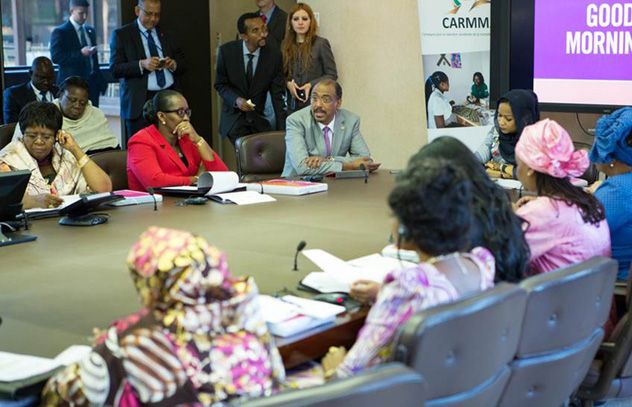
23 September 2014 23 September 2014The Organisation of African First Ladies Against HIV/AIDS (OAFLA) recently met in New York to discuss how they can scale-up their efforts towards ending the AIDS epidemic in Africa.
The First Ladies met at the Ford Foundation in New York on the sidelines of the 69th session of the United Nations General Assembly where they deliberated on effective solutions to maintain high-level commitment to ending the AIDS epidemic.
The First Ladies highlighted the need to scale-up comprehensive maternal and new-born health services which integrate HIV testing for pregnant women and provide access to antiretroviral medicines during pregnancy, delivery and which extend through the breastfeeding period.
OAFLA has recently launched a new strategic plan which highlights the urgent need to integrate HIV services into existing sexual and reproductive health services. The First Ladies agreed that targets related to stopping new HIV infections among children cannot be met if the wider context of preventing new HIV infections among women and girls is not addressed.
OAFLA was originally established in 2002 as a collective voice to support people living with and affected by HIV. Over the last 12 years, the first ladies have engaged in awareness raising campaigns and advocacy initiatives in their respective countries.
“We should intensify our collaboration with UNAIDS at the global, regional and country level to mobilize our communities to end the AIDS epidemic on our continent.”
“We have been working with UNAIDS for over a decade, our partnership is really maturing and taking shape. Our immediate focus should be about the 19 million people who do not know their HIV status. All successes we have achieved will be reversed if we do not address this issue.”
"Women across the continent still do not have the power to make personal decisions that many of us take for granted. We have to make sure that they are able to decide when to have children and the right to determine their futures. I certainly don’t want my daughter to have the same life as my grandmother when it comes to the empowerment of women."
“UNAIDS launched the 90-90-90 campaign to support country efforts in ending the AIDS epidemic as a public health threat by 2030. To reach this goal, we have to continue our strategic alliance with OAFLA and make sure that all people, particularly women know their HIV status and are able to protect themselves and their families.”
22 September 2014
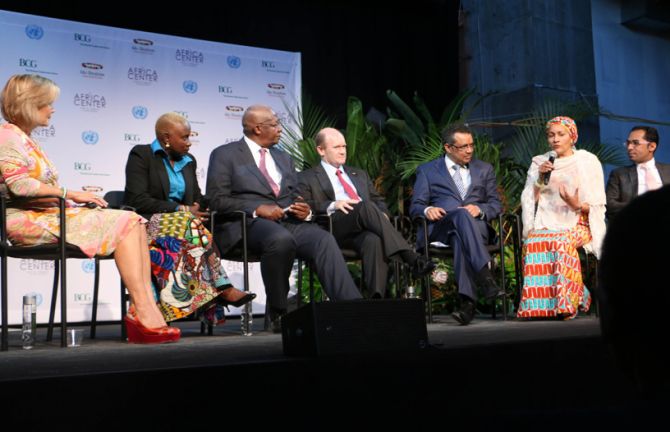
22 September 2014 22 September 2014How to realize Africa’s potential for the future of all its peoples and build international support for the continent’s development were key questions explored in the first session of the Africa Rising Forum held this week in New York.
Taking place at the Africa Center and organized by the Mo Ibrahim Foundation, the 22 September event brought together a number of African heads of state, United Nations partners, and leaders from African civil society and the business community.
They examined how to move beyond simply talking about the need for broad-based economic transformation and sustainable development to taking concrete steps to make them a reality, especially with regard to the post-2015 development agenda.
A session on ensuring shared prosperity looked at ways to improve investment and resource mobilization, champion entrepreneurship and ensure social protection. Another stressed that development cannot be achieved without the existence of good governance, peace, security and respect for human rights.
It was agreed that ensuring health for all was a critical facet of Africa’s rise, and that ending the AIDS epidemic as a public health threat by 2030 now a realistic goal. There was also a consensus that the continent’s rise should not only be measured in terms of overall wealth generated but by the inclusiveness of socioeconomic progress that leaves no one behind.
29 September 2014
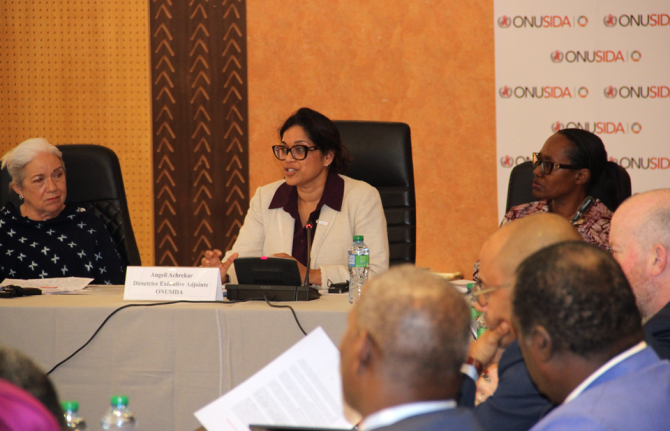
29 September 2014 29 September 2014Global leaders have committed to take action towards ending the AIDS epidemic among adolescents. At a meeting during the 69th session of the United Nations General Assembly, co-hosted by UNICEF, UNAIDS and the Governments of Brazil and Kenya, representatives from countries across six regions came together to join a growing movement to advance the response to HIV among adolescents.
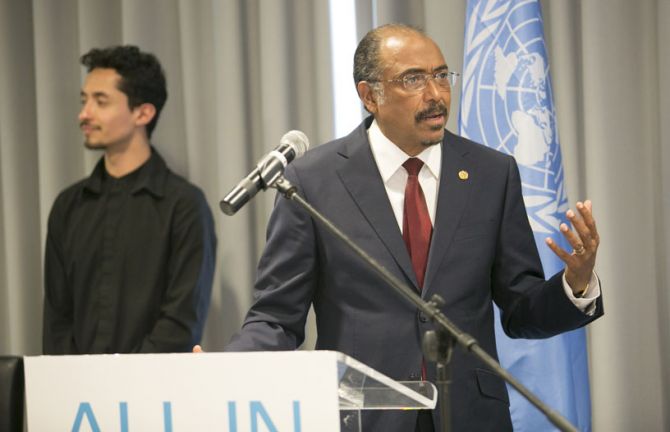
During the meeting, participants pledged their support to All In, a joint initiative between UNICEF, UNAIDS and partners to reduce new HIV infections among adolescents by at least 75% and increase HIV treatment to reach at least 80% of adolescents living with the virus. The initiative outlines that the targets can be achieved through providing HIV prevention, testing, treatment, care and social change programmes that focus on the specific needs of adolescents living with, or at higher risk of acquiring, HIV.
A global movement to advance efforts towards ending the AIDS epidemic among adolescents is urgently needed as this is the only age group among which AIDS-related deaths are actually increasing. AIDS-related illnesses are the second leading cause of death among adolescents aged 10–19 years globally, and the leading cause of death among adolescents in Africa.
In 2013, there were an estimated 2.1 million adolescents living with HIV, more than 80% of whom live in sub-Saharan Africa. Many still do not know their status. Almost two thirds of the 250 000 new infections among 15–19 year olds in 2013 were among adolescent girls.
During the event, speakers, including young people living with HIV, called on leaders to reflect on their current efforts to prevent the spread of HIV among adolescents, and to invest more in the most effective interventions. Government representatives from around the world, including Botswana, Brazil, Thailand and Ukraine, pledged their commitment to go All In for adolescents.
The formal launch of All In is scheduled for early 2015.
“Today we shine a light on what can only be described as a “blind spot” in the global fight against HIV and AIDS—adolescents. While deaths due to AIDS have decreased in other age groups since 2005, for adolescents, they have actually increased.”
“All In is about working with young people as actors of change. We need to empower young people to demand their right to health and be involved in decision making processes which concern them.”
“We have completely failed adolescent girls and young women, collectively. All In is our opportunity to reverse this!”
“We need to make sure we are doing the right things, in the right place, at the right time. We see our efforts of focusing on adolescent girls as an opportunity to support All In.”
“We can no longer afford deaths that are completely preventable—it is our responsibility to act. There is commitment and political will—now it’s time for action.”
26 September 2014
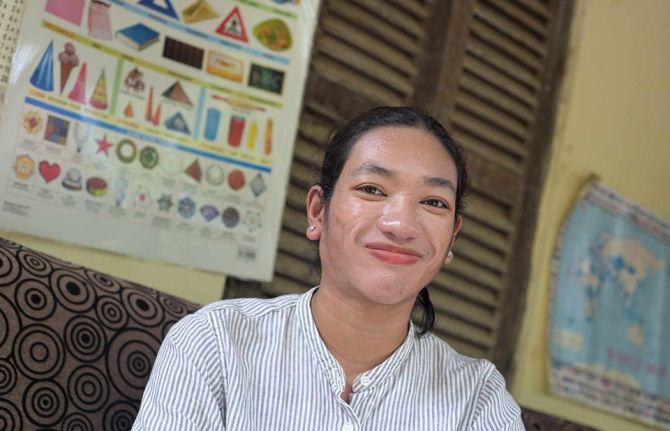
26 September 2014 26 September 2014The sexual and reproductive health rights of young marginalized populations are often neglected and their collective voice in this critical area not always heard. To try to redress this imbalance young people from marginalized communities and key populations in Bangladesh, Ethiopia, Puerto Rico and Uganda met in New York this week to discuss how to put these rights issues firmly on the post-2015 development agenda, leaving no one behind.
Taking place on 25 September, the General Assembly side event which took the form of a panel discussion, examined the vital role of community engagement, advocacy and service delivery in protecting the rights and meeting the needs of young key populations. These include men who have sex with men, sex workers and young people living with HIV.
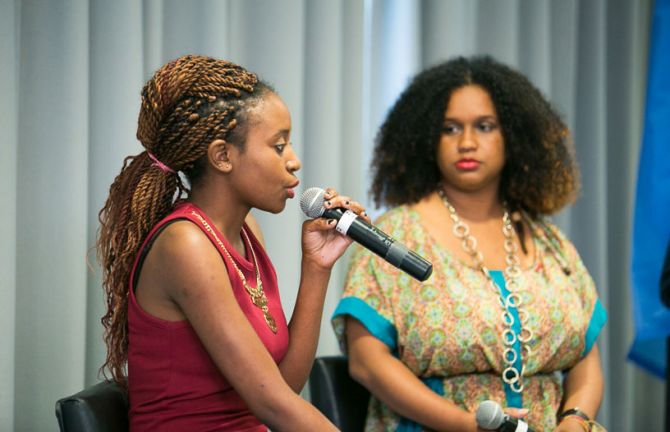
Young speakers, who were peer educators, directors of national and regional NGOs, actors and community leaders, argued that universal access to HIV services and health coverage could not be achieved without prioritizing the needs of the most marginalized. They also noted the contribution of comprehensive sexuality education to improving young people’s health and the role that communities can play in both promoting rights and challenging stigma and discrimination.
The event was hosted by the Government of Brazil and organized by the International HIV/AIDS Alliance, GESTOS, the Global Youth Coalition on AIDS, ATHENA, ICASO, International Civil Society Support, STOP AIDS NOW!, Stop AIDS Alliance, the HIV Young Leaders Fund, the African Services Committee, and the Global Forum on MSM and HIV, in collaboration with UNAIDS.
"Setting goals is only part of the story. Where we should look for change is the way that we will implement the goals. We need to change the way we are doing business and craft the space for civil society in the new post-2015 agenda."
“We are talking about development here and sexual and reproductive rights are development."
24 September 2014
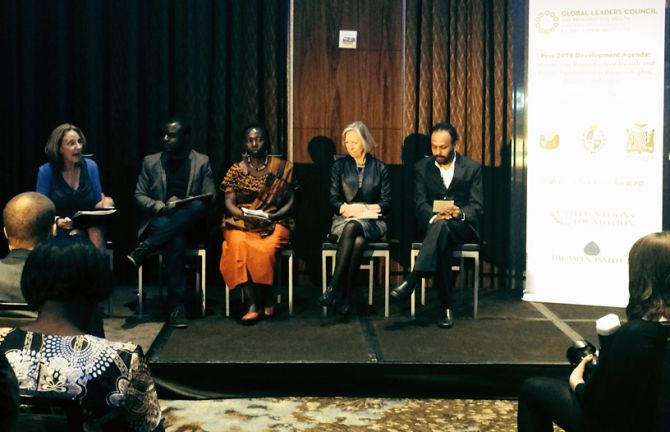
24 September 2014 24 September 2014Promoting sexual and reproductive health and rights must be at the heart of the post-2015 development agenda, global leaders said during a high-level meeting in New York on 23 September.
During a side event at the 69th session of the United Nations General Assembly, participants stressed that key sustainable development goals, such as poverty eradication and ending the AIDS epidemic by 2030, could not be achieved without such rights becoming a reality for everyone, everywhere.
It was argued that the freedom to determine what happens to one’s own body and make decisions about sexuality, relationships and childbearing are fundamental facets of life. Yet far too many people, especially women and youth, are being denied these rights and are unable to fulfil their potential, resulting in an irreplaceable loss to individuals, families, communities and societies.
The negative consequences of sexual and reproductive health and rights not being protected are widespread and often devastating, noted the participants. For example, every day 800 women and girls around the globe die from largely preventable causes related to pregnancy and childbirth, and 2100 young people aged 15-24 become infected with HIV.
Organized by the Aspen Institute, the event was attended by a number of former heads of state, including the former President of Finland, Tarja Halonen, and the former President of Malawi, Joyce Banda. They were joined by United Nations representatives as well as current ministers and heads of global nongovernmental organizations.
Several leaders shared their personal stories with the audience, highlighting their own individual reasons for supporting reproductive health and rights as a key component of sustainable development. This sharing built on the Why we Care initiative, spearheaded by the Aspen Institute, which encourages global leaders to champion global family planning.
"Sexual and reproductive health and rights must be affirmed as a non-negotiable aspect of the post-2015 agenda."
"Even one woman dying giving life is one too many. I don’t know about you, but I am ready to get the job done."
"Why is it that something that is so fundamental to women ends up being the most controversial in the development agenda?"
"The message from young people is clear—there is no way we can justify a new development framework that does not put young people’s issues at the centre of the agenda, including sexual and reproductive health and rights."
"We have seen it time and time again in the AIDS response. If you put rights, equality and dignity of women first you will see results."