Feature Story
Faith communities discuss the way forward in the HIV response
06 October 2020
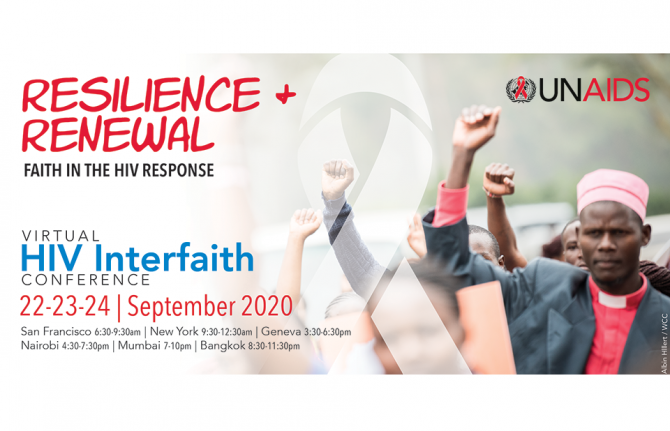
06 October 2020 06 October 2020More than a thousand people of faith working in the HIV field recently came together for an online HIV interfaith conference, Resilience & Renewal: Faith in the HIV Response.
“More than ever, it is important that faith communities and leaders are strong voices for people. This means, in a time of COVID-19, recognizing that a call to action on COVID-19 and a call to action on HIV should be complementary and synergistic—they are not in opposition to each other. We will rely on faith partners to be strong and true voices of support for people living with HIV,” said Shannon Hader, UNAIDS Deputy Executive Director, Programme.
During the three-day meeting, the participants identified joint action to address some of the challenges and emerging issues related to the achievement of the 2020 and 2030 HIV targets. All people of faith were invited to sign the online declaration of commitment to the HIV response: Our Promise to Action—Resilience & Renewal: Faith in the HIV Response.
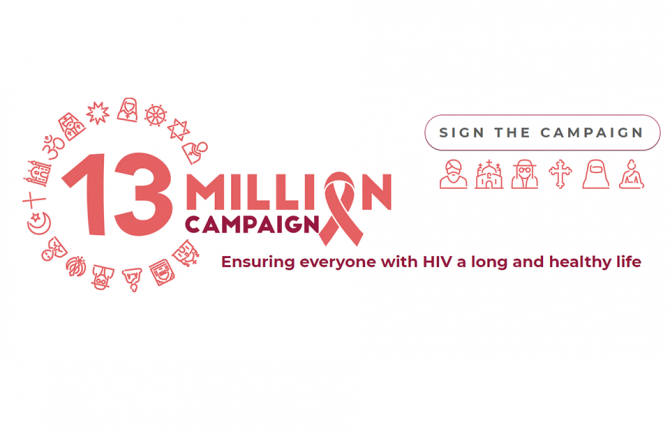
The conference also saw the launch of the 13 Million Campaign to engage faith leaders, individuals and communities to promote access to health services by the 13 million children, women and men living with HIV who are not yet on antiretroviral therapy.
Winnie Byanyima, the Executive Director of UNAIDS, reminded the participants that the nearly four decades-long HIV response has taught us that global solidarity is essential to overcoming the COVID-19 pandemic. Like HIV, this new pandemic is not just a disease, it has social, economic, ethical and political implications on society and only a multisectoral approach, including the involvement of faith communities, can help the world to overcome it.
Jessie Milan Jr, the Chief Executive Officer of AIDS United, highlighted the increased vulnerability of marginalized communities to both epidemics. Racial injustices have compounded the suffering. “When our faith in systems and society is shaken, our faith community is needed even more,” he said.
Thabo Makgoba, a South African Archbishop, noted that religious institutions are serving the vulnerable, especially at the national level, and are providing a substantial proportion of services and cooperating actively with government agencies. He proposed that 5% of global funding for HIV be channelled through faith-based initiatives.
Katy Godfrey, from the United States President’s Emergency Plan for AIDS Relief (PEPFAR), shared her experience in providing HIV services to 15.7 million people, in close collaboration with governments and faith communities. She reiterated that services could only be effective if they are underpinned by a learning process that listens to community needs, and works with them, that is responsive to convenient client-centred care and that does not neglect care for the carers.
Good practices by faith groups that ensure the provision of HIV services during COVID-19 were shared. The conference was also an opportunity for faith groups to learn from the science, research and information presented at the 2020 International AIDS Conference. Narratives shared by people engaged in the HIV response spurred discussions and presented opportunities to learn from their experiences and journeys. Songs, prayers and petitions from children challenged the current paucity in the HIV response for children and adolescents.
Representatives of community groups played a major role in the conference.
Nine women with disabilities from Nigeria from the BOLD (Beautiful Outstanding Ladies with Disabilities) Hearts Network participated. Ndifreke Andrew-Essien, the Coordinator of the BOLD Hearts Network, said, “It was wonderful to listen to and see how persons with disabilities living with HIV were building even more resilience and inspiring many. We truly benefitted from the conference. It is our hope that in future our deaf constituents can participate through sign language interpretation.”
“I was particularly impressed by the good practices from Kenya, especially those of linking peers who have achieved viral suppression. The use of celebration as a strategy, rather than punitive, is something which inspired me,” said Aarti Parab, one of six adolescents living with HIV who were facilitated to attend the conference.
A consortium of organizations from several faith traditions and people living with HIV from around the world organized the meeting, which was held from 22 to 24 September, with the support of the UNAIDS/PEPFAR Faith Initiative.
Related
Feature Story
Tanzanian community-based organizations support women who use drugs
05 October 2020
05 October 2020 05 October 2020Community-based organizations in Dar es Salaam, United Republic of Tanzania, with assistance from UNAIDS, are supporting women who use drugs and their families to survive during these difficult times.
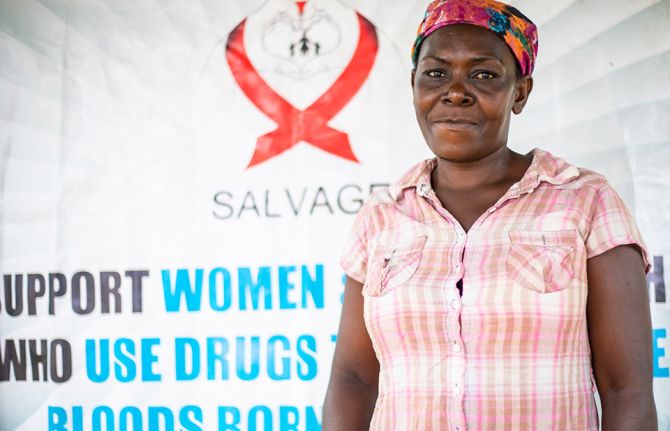
“Before the pandemic, life was simple and better. I used to do activities at the beach, such as cleaning fish, helping people load and clean their boats, and they would pay me. I would help my daughter wash her clothes; I would escort her to school and cook food for her. Life was simple,” said Doroth Hassan as she sits in the office of SALVAGE, a sister organization of the Tanzania Network for People who Use Drugs (TaNPUD), in Kigamboni, Dar es Salaam.
Ms Hassan would normally provide for herself and her daughter by doing sex work and other informal jobs, such as the work on the beach. But this has become a challenge since the onset of the COVID-19 pandemic.
“Now life has changed. I live in fear and worry. People who I worked for don’t want to pay, with the excuse that they have no cash because of the coronavirus. Everything changed. Life is tough. Clients disappeared, vanished. And the few who are still coming cheat; they pay less for sex,” said Ms Hassan.
She is not alone in her worry. Most of the women who use drugs in Dar es Salaam survive in the same way as Ms Hassan does, by doing sex work, trading and doing other jobs in the informal sector. They live in camps for people who use drugs or in informal and densely populated settlements.
With support from UNAIDS and other partners, local community-based organizations, including TaNPUD and SALVAGE, have been able to provide some relief to women in the camps and settlements in Dar es Salaam.
“TaNPUD raised awareness and SALVAGE provided buckets, soap and food with other hygiene materials to us and other women in the community. TaNPUD always advocates for our health rights,” said Oliver Kinanda, a person who previously used drugs and is now on opioid substitution therapy.
Ms Kinanda also volunteers at the Medication-Assisted Treatment (MAT) clinic in Temeke, where she lives. Here, she informs people on prevention of tuberculosis (TB) and takes samples from clients for TB screening. With the onset of COVID-19, however, her tasks have shifted.
“As a peer educator I have knowledge of prevention of COVID-19 and provide education and awareness. Together with other people who use drugs I also got help; for example, face masks,” said Ms Kinanda. She has also received information and support from other local community-based organizations, including donations to the community and the clients she works with in the Temeke MAT clinic.
Ms Hassan received the same support.
“TaNPUD is raising a voice on our behalf, and SALVAGE, as the sister organization of TaNPUD, supporting women, has been linking us to care and treatment with other services and providing shelter, food and hygiene support to us,” she said.
The support, distributed with financial and material assistance from UNAIDS, will help to alleviate some of the consequences of the global pandemic, even as the effects of COVID-19 are slowly wearing off in the United Republic of Tanzania.
Happy Assan, the Coordinator of TaNPUD, said this support has so far reached 55 families of women who use drugs in Dar es Salaam.
“The support covered food and hygiene needs. It also provided women with the ability to stay at home instead of going out, for example to do sex work, and to negotiate less risky sex. The support reduced fear and worry about meeting the food needs of families with children,” said Ms Assan.
Many of the women who use drugs are living with or at risk of HIV infection and depend on reliable access to treatment and care, including harm reduction services. Despite the support in the community, some services that the women who use drugs depend on have been halted.
“Harm reduction services have been interrupted; they are less. No condom distribution or other commodities, only needle and syringes distribution. At least now SALVAGE is helping with sanitary items. At hospital there is no other support; HIV treatment only,” explained Ms Hassan.
Ms Hassan and Ms Kinanda both recount facing increased stigma during the pandemic—some derived from unintended consequences of the support, since the face masks they received were a certain colour, making the wearer identifiable in the local community as a person who uses drugs. Stigma and discrimination at hospitals is also reportedly high, adding to the difficulties of accessing services. But most difficult is the financial loss because of the pandemic.
As Ms Kinanda puts it, “No clients, no pay. Financially it is hard because my clients say they have no cash because the coronavirus has affected their jobs. I continue providing awareness and education to the community and my family too. I financially suffer, but what can I do other than continue pushing on?”
Our work
Region/country
Feature Story
“I want to contribute to creating a world without stigma and discrimination”: young women living with HIV in Uzbekistan become activists
30 September 2020
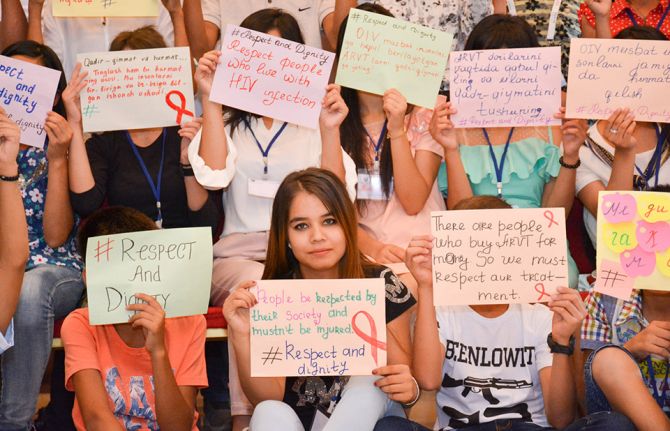
30 September 2020 30 September 2020Lola Makhmudova (not her real name) grew up in a close-knit family, but her parents were afraid to tell her about her HIV-positive status for a long time, even though they both work in the health sector. She found out about it by chance, after hearing nurses talking in the hospital when she was 10 years old.
“Once, a few years later, when I already knew a lot about HIV infection and treatment, I was in the hospital with one boy, he also had HIV,” Ms Makhmudova said. “But his parents refused to give him antiretroviral therapy for religious reasons. I told them about myself, that therapy helps you to remain healthy, that I feel good and live a full life. I am happy that I managed to convince them. We are still friends with this boy.”
Ms Makhmudova is now 18 years old and has been a peer counsellor and volunteer at the Day Center for HIV Affected Families in Tashkent, Uzbekistan, for several years. She communicates with children and adolescents living with HIV, helps them to accept their diagnosis and explains the need for treatment.
Ms Makhmudova has not yet decided precisely what she will become when she is an adult, but she is sure that she wants to help people. She became one of three young people living with HIV to join the new United Nations Youth Advisory Board in Uzbekistan.
She takes her work on the Board for Youth Affairs seriously. “I was scared at first,” she said. “Everyone there is so grown up and smart. But I decided that I would study, I would learn languages so that I could be heard, and I could influence decisions that concern young people.”
The Board for Youth Affairs includes 15 young people from different regions in Uzbekistan, representing various social groups and interests, including the most disadvantaged and marginalized.
“Uzbekistan has agreed to be a fast-track country for implementing the Global United Nations Youth 2030 Strategy. The United Nations Board for Youth Affairs is part of the initiative. Currently, the board works with partners to ensure that the views of young people are taken into account in the development and implementation of United Nations strategies and programmes as well as the State Youth Policy in the country,” said Charos Maksudova, UNAIDS Country Manager for Uzbekistan.
Guzal Akhmedova (not her real name) is a young woman who has been living with HIV for eight years. She is a second-year student at the University of World Economy and Diplomacy and speaks Uzbek, English and Russian and is learning Chinese.
“I have been working as a peer educator for five years, and it is giving me a lot of opportunities. I’m a delegate of the International AIDS Society. In 2018, I was selected to go to the Netherlands to participate in the conference. And this year, I got a scholarship to take part in the virtual AIDS 2020 conference. My life and my story of living with HIV are unique because I love myself, my illness, my body and everything that I have. This all started when I accepted myself as I am. I suggest my simple motto to everyone: positive mind, positive life!”
Shirin Botirova (not her real name) found out that she was living with HIV five years ago, when she was 15 years old. Like many of her peers, she had to go through all the stages of accepting her HIV status. And this, according to her, was not easy. “After a while, I decided to start a new life without self-stigma. And from that day, my activism began. I started going to a self-help group, studying all the information about HIV.”
She also began studying law to know her rights and how to protect people living with HIV.
Since 2015 Ms Botirova has been actively participating in various trainings for peer counsellors.
“Today, I am a national trainer, and I try to share the knowledge and skills that I have. We conduct training throughout the country, and even in other countries, talk about peer self-help groups and consultations, give general concepts about HIV.”
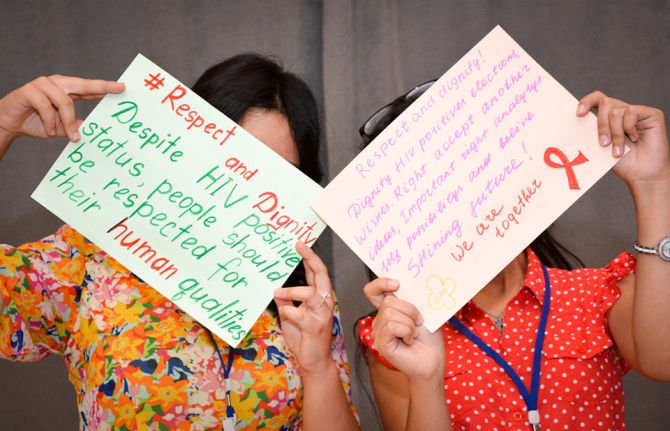
Ms Botirova is doing everything to ensure that the world accepts people living with HIV without stigma. “I want to contribute to creating a world without stigma and discrimination. I set myself the goal of changing the attitude of people towards us, people who are living with HIV, since this is one of the most urgent tasks in our region. I believe that everything depends on ourselves, and I believe that together we can create a world without borders.”
Region/country
Related
Feature Story
Young people discuss innovations to reduce health inequalities
01 October 2020
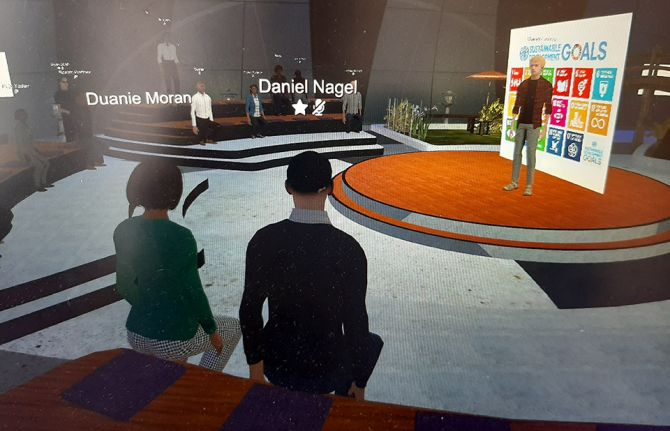
01 October 2020 01 October 2020A virtual event held on the sidelines of the United Nations General Assembly used virtual reality and extended reality technology to connect the young delegates of YOUNGA—a youth forum initiative of the Office of the United Nations Secretary-General—with influential decision-makers and industry leaders. The discussion and the following interactive question-and-answer session on global challenges and how to create solutions for a more inclusive and sustainable world used three-dimensional avatars of each panellist and participant.
On the event’s panel were Tanaka Chirombo, representing the Global Network of Young People Living with HIV, Daniel Nagel, representing Youth Against AIDS, Dilnaz Kamalova, the co-creator of Sequence, an application that helps to monitor a person’s daily intake of medicines, and Praddep Kakkattil, the Director of Innovations at UNAIDS.
Social, technological and scientific innovations, from new medicines and testing tools to innovative community-led approaches, have been a crucial aspect of the HIV response since the beginning. As we are transitioning to a more virtual world, technologies such as applications, video games, social media platforms and new community-led approaches will be important to bridge the gap between people and HIV services, especially for hard-to-reach populations.
Convened by UNAIDS, the event showcased examples of social and technological innovations led by young people, saw a discussion on how to ensure that the voices of young people and innovative approaches led by young people are central in the next global AIDS strategy and sought to identify the critical factors for scaling up proven health innovations for all young people in need.
Community innovations have always been critical to the AIDS response, as they show the resilience and leadership of communities affected by HIV. Mr Chirombo highlighted how local networks of young people living with HIV have played a key role in improving service provision through the roll-out of innovative peer-support services and youth-led monitoring to assess HIV services. “Young people need to get involved and take the lead to see changes on the ground,” he said.
The importance of collaboration between networks of young people to leverage access to political space and resources for innovations was spoken about throughout the event. “We need to overcome silos, listen to each other and be open to new ideas and partnerships,” said Mr Nagel.
“We need to believe in the ideas we are developing and understand that adolescents and youth can make an impact and change the world,” said Ms Kamalova, who is also a Youth Ambassador for the United Nations Children’s Fund.
Mr Kakkattil spoke about how the AIDS response has been driven by innovations since its early years and about the power of activism to demand the scale-up of scientific and social innovations. “The Health Innovation Exchange, founded by the UNAIDS Secretariat, is a good example of how we can make efforts to connect communities, innovators, developers and investors to improve access to health,” he said.
The event, Youth-Led and Youth-Centered Health Innovations to Reduce Inequalities, was moderated by Gareth Jones, the Vice-Chair of the PACT.
Related

Feature Story
HIV recency testing programme launched in eastern Europe and central Asia
25 September 2020
25 September 2020 25 September 2020A new project aimed at helping countries to incorporate recency testing into national HIV reporting systems has been launched by UNAIDS in seven countries of eastern Europe and central Asia.
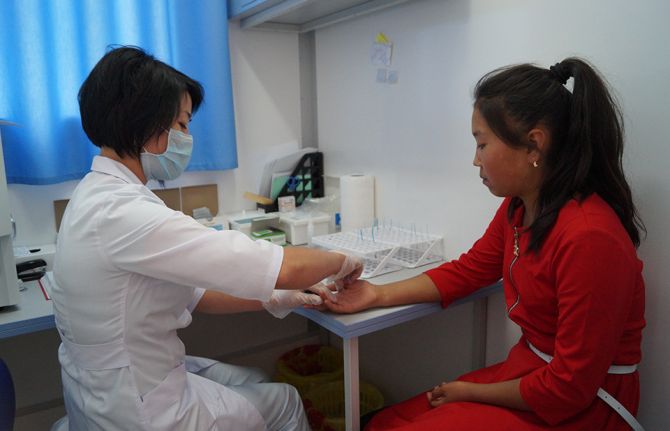
A recency test is a laboratory-based test that detects whether an HIV infection is recent (less than six months) or not. The incorporation of HIV recency testing in national HIV case reporting systems will help to assess how HIV is being transmitted, describe behaviours that are facilitating HIV transmission and optimize HIV-related data collection and information on risk factors.
Many countries in eastern Europe and central Asia report that despite significant progress in the epidemiological surveillance, prevention and treatment of HIV, a substantial number of new HIV diagnoses are made late. In Armenia, for example, according to national data, almost 66% of all new diagnoses of HIV infection in 2019 were made at the stage when the CD4 count was less than 350 cells/mm3 (in Kyrgyzstan, the percentage was 53%, while in Tajikistan it was 56%).
“The average time from infection to the moment a person enters the health-care system in the region varies from five to seven years,” said Lev Zohrabyan, a UNAIDS Regional Strategic Information Adviser. “All those few years, a person could be putting at risk his or her own health and the health of a partner. Moreover, prevention measures are often based on old data on transmission.”
By determining recent infections among people newly diagnosed as living with HIV, countries can identify the geographic areas and subpopulations where HIV transmission is happening. They can then effectively interrupt HIV transmission by building evidence-informed policies, guiding resources to the right place and measuring the impact of HIV prevention programmes.
“We often understand the situation as it was—what happened five years ago. This test allows us to identify and characterize cases that occurred a maximum of six months ago. Thanks to this system, we may better understand where the latest cases of HIV infection occurred,” said Meerim Sarybaeva, UNAIDS Country Manager for Kyrgyzstan.
After a multicountry study, the testing has been thoroughly evaluated and discussed with national partners with the aim of developing the most effective way of incorporating HIV recency testing into national HIV case reporting systems. The innovative technology has been transferred to national experts through extensive training programmes provided by UNAIDS for epidemiologists and laboratory experts.
This innovative approach is being integrated into routine HIV surveillance in several countries in eastern Europe and central Asia in the framework of the UNAIDS Regional Cooperation Programme (RCP) for Technical Assistance on HIV and Other Infectious Diseases, funded by the Government of the Russian Federation. The RCP aims to strengthen health systems, ensure better epidemiological surveillance of HIV and promote the scale up of HIV prevention programmes among key populations at higher risk in Armenia, Belarus, Kyrgyzstan, Tajikistan and Uzbekistan.
Our work
Region/country
- Eastern Europe and Central Asia
- Albania
- Armenia
- Azerbaijan
- Belarus
- Bosnia and Herzegovina
- Bulgaria
- Croatia
- Cyprus
- Czechia
- Estonia
- Georgia
- Hungary
- Kazakhstan
- Kyrgyzstan
- Latvia
- Lithuania
- Montenegro
- Poland
- Republic of Moldova
- Romania
- Russian Federation
- Serbia
- Slovakia
- Slovenia
- Tajikistan
- North Macedonia
- Türkiye
- Turkmenistan
- Ukraine
- Uzbekistan
Feature Story
How the Jamaica transgender community is surviving COVID-19
24 September 2020
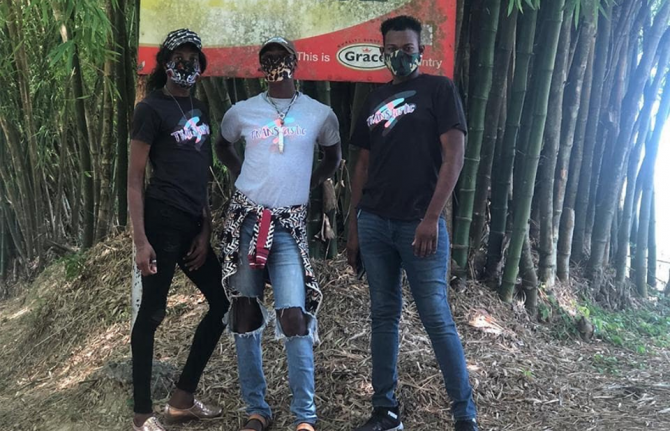
24 September 2020 24 September 2020Rose Clark (not her real name) is a 21-year-old transgender woman living in Kingston, Jamaica. Through sex work she’d been able to afford the basics—food, clothes and a small apartment.
Another transgender woman, Carla John (not her real name), worked in a hotel bar on Jamaica’s north coast. It allowed her to live independently of an unsupportive family since she was 19 years old.
COVID-19 upturned their lives. A night-time curfew made it impossible for Ms Clark to work. She was evicted in May. Ms John’s employer shut down operations in April and sent staff home. Since then she’s been living with hostile relatives.
These two are not alone. The Equality Group—a coalition of civil society organizations serving lesbian, gay, bisexual and transgender (LGBT) people in Jamaica—conducted an online survey to gauge the impact of COVID-19 on the LGBT community. It found that a quarter of respondents had lost their job, while three in 10 were unable to pay for food, rent or utilities.
“There’s been a sharp increase in homelessness,” reported Renae Green, Associate Director of Policy and Advocacy at Transwave. “The community has experienced major loss of income and people are unable to pay for housing, food and other basic amenities.”
The transgender community as a whole has several layers of vulnerability—low access to education and employment, small or non-existent family safety nets and high vulnerability to gender-based violence. These are the underlying causes for a 2018 study finding that half (51%) of transgender women in Jamaica were living with HIV.
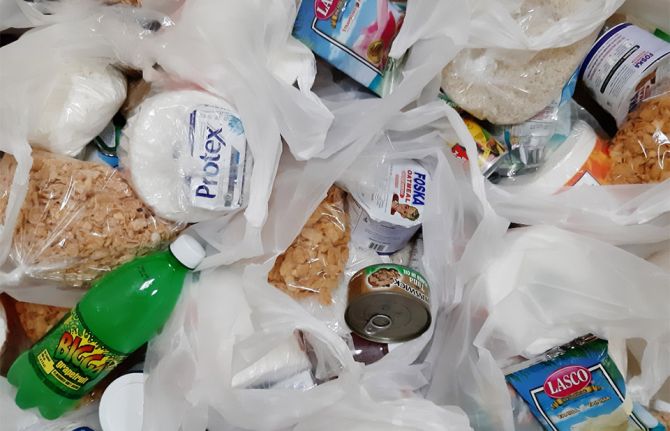
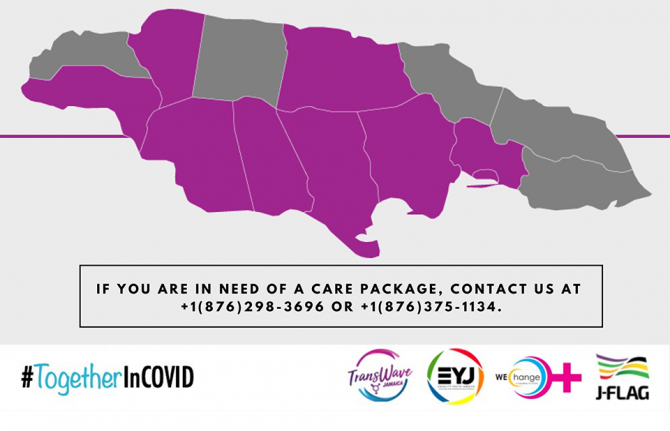
Transwave has collaborated with WE-Change, JFLAG and Equality Youth to run a COVID-19 hotline. It also provided care packages, including non-perishable food items and toiletries, to people in need. Already more than 100 transgender people have benefitted.
Critically, a Trans Emergency Fund was established to raise money to cover or subsidize applicants’ rent for short periods. Both individuals and organizations have made donations. And Transwave manages a virtual support group, providing much needed emotional solidarity during this trying time.
If anything, COVID-19 has intensified Transwave’s ongoing efforts to shine a light on the hidden issues facing one of Jamaica’s most marginalized groups.
“We are not included in decision-making processes,” Ms Green said plainly. “Decision-makers barely talk about us. We keep having to say “remember trans people”.”
UNAIDS Jamaica provided financial support that was used to ensure that Transwave had personal protective equipment and to supplement care package supplies. The office has also made certain that transgender issues are included in the coordinated HIV civil society response to COVID-19.
This fresh pandemic response has unfolded alongside Transwave’s 2020 strategic planning work, which has been supported by UNAIDS and the United Nations Population Fund.
“There is an urgent advocacy agenda for transgender people that includes all the social determinants to health and human rights,” said Manoela Manova, the UNAIDS Country Director for Jamaica.
“COVID-19 has laid bare just how vulnerable people are when they do not have equitable access to opportunities, justice and health care,” added UNAIDS Jamaica’s Community Mobilization Adviser, Ruben Pages. “That’s why it’s so important and inspiring that Transwave has continued its core work through all this.”
Our work
Region/country

Feature Story
“Physical distance, not social distance”: supporting Jamaican women living with HIV during COVID-19
21 September 2020
21 September 2020 21 September 2020The socioeconomic impact of COVID-19 is clear. People have lost incomes. Children are out of school. Food and housing insecurity are on the rise. And there has been an increase in domestic violence.
But for many women living with HIV in Jamaica, there are added layers of stress. According to the Jamaica Community of Positive Women (JCW+), many of their clients reported having received only one month’s supply of HIV treatment, although they were hoping for the recommended three months. New screening protocols at certain clinics have made some people feel exposed to unfamiliar health-care staff and unexpected disclosure of their HIV status. A few women report not having been able to access contraception on time.
According to the Coordinator of JCW+, Olive Edwards, the pressure of dealing with both pandemics has had a huge mental health impact on women living with HIV.
“Uncertainty is taking a toll,” she said. “It has disrupted life and people are worried. Some are struggling to cope with these feelings of constant uncertainty.
JCW+’s main objective for 2020 was to provide community support for women living with HIV in order to improve treatment adherence and reach viral suppression. When COVID-19 hit in March, they were presented with an added challenge. How would they address women’s new needs?
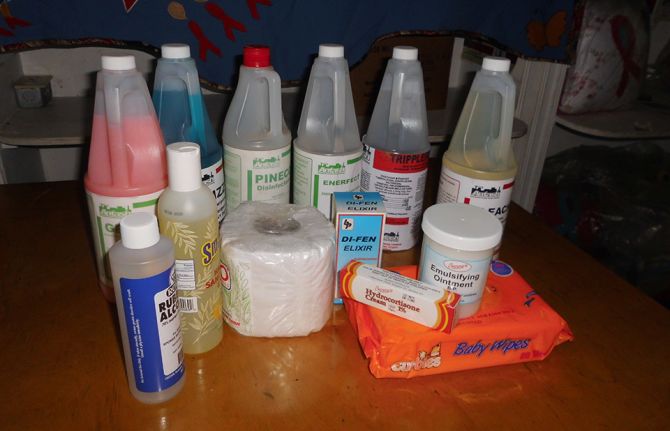
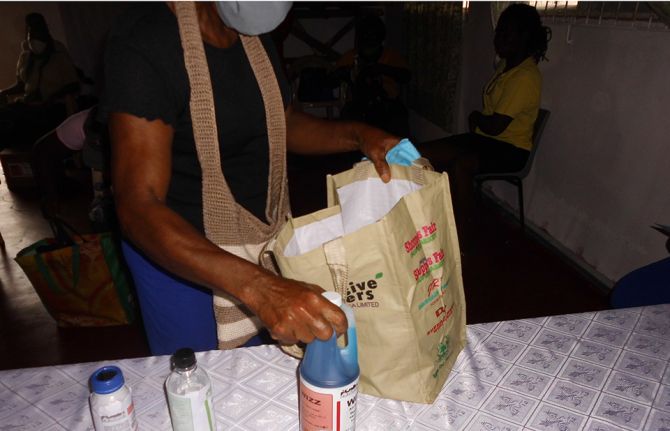
UNAIDS Jamaica’s COVID-19 emergency response contributed hygiene supplies to care packages. JCW+ used these as an entry point for connecting with clients. Women were provided with soap, household disinfectant and bleach and were shown during peer-share sessions how to use those products, along with masks made by a community mobilizer.
From there, the organization linked women to the Positive Health and Dignity Movement and treatment adherence projects. JCW+ participants prepared personal development plans with a focus on treatment adherence, education, job training and certification goals, where necessary. They keep in contact with the care teams in order to ensure access to optimal health and social support services. They have conversations to keep hope alive and send text reminders to reinforce key health and well-being messages.
“Community needs to be engaged at this time. Managing COVID-19 is about physical distance, not social distance. We felt women needed to meet and talk,” Ms Edwards said. They’ve limited support group sessions to eight people at a time.
According to the UNAIDS Country Director for Jamaica, Manoela Manova, the AIDS response must now strike a delicate balance.
“We must address standing health-care and human rights priorities as well as the immediate physical needs triggered by the COVID-19 response,” Ms Manova said.
Going forward, Ms Edwards says JCW+’s advocacy priorities are ensuring that the HIV response is not neglected because of COVID-19 and ensuring the most marginalized people are caught by state social safety nets.
Ms Edwards asked that UNAIDS continue to “feel the pulse of what is taking place” and support community outreach strategies that are relevant to Jamaican culture.
Our work
Region/country
Related
Feature Story
COVID-19 brings Jamaican people living with HIV closer together
18 September 2020
18 September 2020 18 September 2020COVID-19 has brought new challenges for many people living with HIV in Jamaica:
“I am concerned about going to the clinic too often, but I can only get one month’s supply of antiretrovirals at a time.”
“The place I normally go to meet with my community facilitator is no longer available. Now how do I access care?”
“I haven’t been taking my medicines the way I should. Am I going to catch COVID-19?”
For Dane Lewis, Programme Manager of the Jamaica Network of Seropositives (JN+), addressing the community’s anxieties has cleared a path to more connection and support.
“JN+ started doing a survey almost immediately. We reached about 70% of our membership. This was an opportunity to reconnect to our base, to see what the needs were. It helped us to re-establish contact and brought our community closer together,” he said. “Ultimately we think this pandemic will help us bring and keep more people in care.”
There are an estimated 32 000 people living with HIV on the Caribbean island. In 2019, just 44% of them were on antiretroviral therapy, while roughly one third (35%) were virally suppressed. While most people access treatment through the public health-care sector, community organizations like JN+ play a key role in supporting people to start antiretroviral therapy and stay the course.
They’ve also been a critical partner during COVID-19. Despite having a multimonth dispensing policy, the Jamaica Government has authorized just monthly dispensing in order to avoid stock-outs.
“Community organizations like JN+ have allayed fears and followed-up so that people continue their treatment,” said UNAIDS Jamaica Country Director, Manoela Manova. “That’s why it’s important that civil society is at the decision-making table and that community workers are classified as essential workers during COVID-19.”
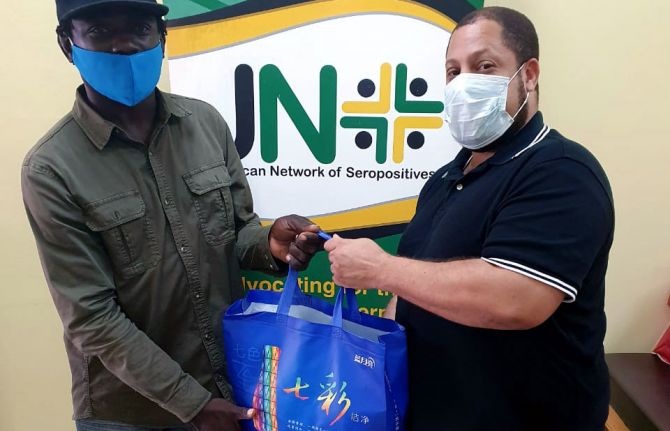
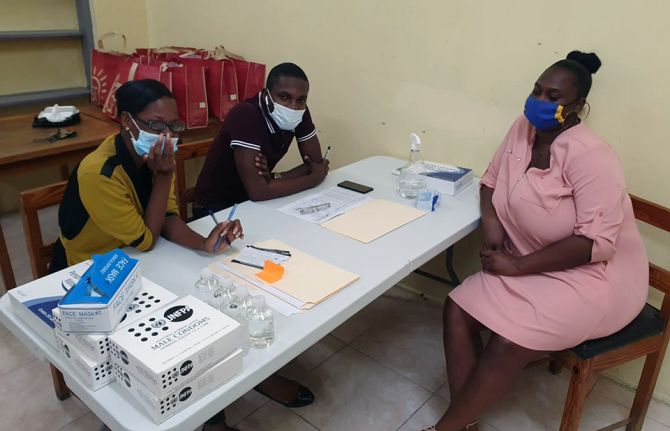
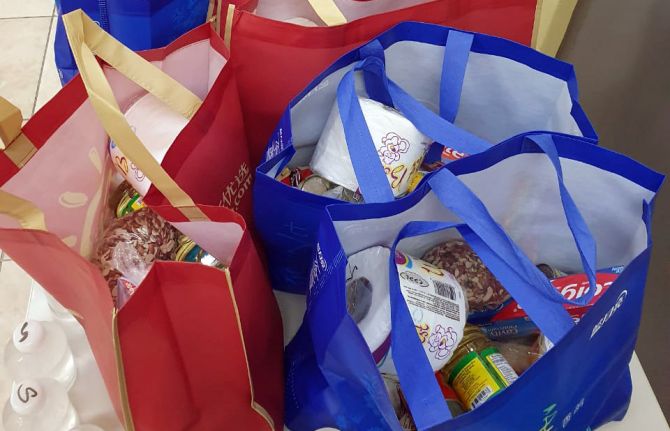
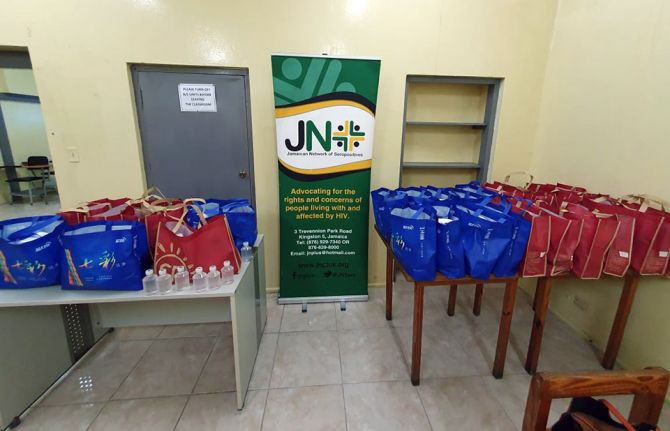
For the organization’s retention navigators, not much has changed. They continue to reach out to clients via the telephone to check in on whether they are taking their medicines as they should. There has been more of a shift for community facilitators, who were traditionally connected to treatment sites. Face-to-face support has largely given way to telephone calls and video chats. Twice a month, online sessions are used to address wide-ranging community concerns. JN+ team members are on hand to do things like drop off care packages or connect clients affected by community lockdowns to new treatment sites. The organization has also helped people register to receive financial support from the state.
“There has been a lot of anxiety about being able to access basic food and sanitation items. People lost jobs because of the pandemic, so anxieties turned into real needs for many. We had to stop doing in-person activities, such as our support groups, and refocus our energies on coordinating the peers to provide care packages. The support and network we offer have been important,” Mr Lewis explained.
The JN+ COVID-19 experience underlines the key role that community organizations play in helping clients to access resources.
UNAIDS Jamaica has been working to support the response at the practical and tactical levels. It provided hygiene products to be widely distributed and also facilitated weekly collaboration between civil society organizations responding to the needs of people living with HIV during COVID-19.
“Community organizations save lives,” said Ruben Pages, UNAIDS Jamaica’s Community Mobilization Adviser. “The JN+ experience shows why it is important to support community organizations that are able to reach marginalized people with unique support that those in need are not able to find anywhere else.”
Our work
Region/country
Related
Feature Story
Pacific Unite concert promotes solidarity during the COVID-19 pandemic
16 September 2020
16 September 2020 16 September 2020Broderick Mervyn and his colleagues huddled around a computer, curiosity giving way to pride, as they tuned in to the Pacific region’s first-ever virtual concert.
“I’m from Rotuma Island, a lesser known island of Fiji, and when I saw a Rotuman group perform, there was a sense of pride, admiration and patriotism of not only our country but our culture,” said Mr Mervyn, Coordinator and Founder of Ignite4Change, an organization that advocates for political participation by vulnerable groups.
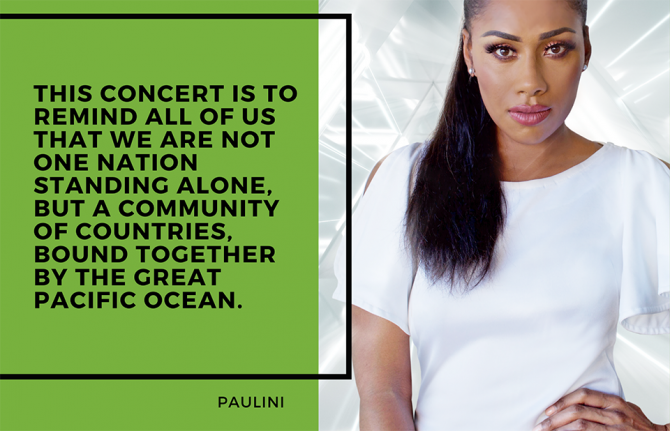
Mr Mervyn’s sentiments were shared by fellow Pacific islanders and diaspora. At a time of isolation, when many are missing their family due to closed borders or feeling alone, listening to songs of hope performed by dozens of notable musicians and emerging, homegrown artists brought reassurance. The concert, Pacific Unite: Saving Lives Together, was organized by the United Nations in collaboration with community partners intent on bringing communities together in the time of COVID-19 in order to foster solidarity, pay tribute to essential workers and encourage everyone to play their part in preventing the spread of the epidemic.
The concert featured supportive messages from leaders and influencers, including Prince Charles, Fijian Prime Minister Frank Bainimarama and New Zealand’s Prime Minister, Jacinda Ardern, and showcased the region’s vibrant cultures.
“It was educational just as it was entertaining—we got to see and hear from other Pacific islands,” said Foto Ledua, a station manager of Buzz FM in Vanuatu. “As a whole, it is such a great promotion for the Pacific and showed how diverse our cultures are, how rich our music is and how incredibly talented our people are.”
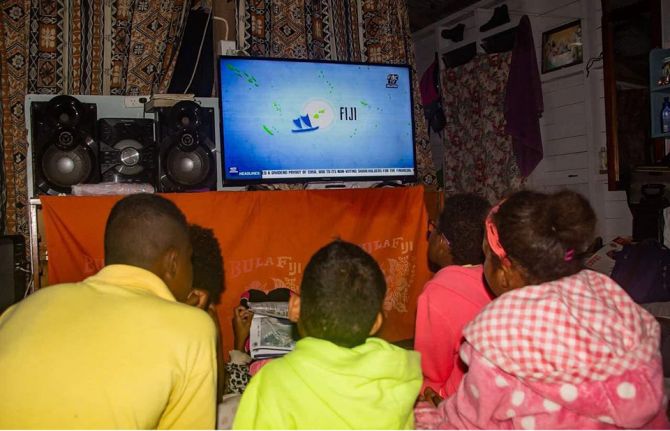
Ms Ledua spoke about the changes brought by COVID-19, including the economic crisis from decreased tourism and the losses that artists face without live concerts to perform at. She said that, “At a time like this, when people can’t travel out of their countries, or even their cities, having a concert brought into your living room is really uplifting.” The concert was broadcasted on television and radio in 13 Pacific countries, Australia and New Zealand and has reached nearly 75 000 views on the United Nations YouTube and Facebook platforms.
Ms Ledua observed that among those watching the event with her, the concert sparked conversations about the impact of COVID-19, as well as climate change, economic recession and other issues facing the people of the Pacific. Reflecting on the response to COVID-19, she said, “In our diversity, we are the same—we may be from different islands, different countries, but we all face the same problems here in the Pacific. We've been through difficult periods in our history, and we survived. We can get through this if we all work together.”
The Speaker of Parliament of Fiji and UNAIDS Regional Goodwill Ambassador for Asia and the Pacific, Ratu Epeli Nailatikau, expressed a similar view on the need to come together to combat the spread of COVID-19. “There are those with no safety net to fall back on … until we beat COVID-19, and hopefully nurse our economies back to normal, we need to act together to slow the spread of the virus and look after each other,” he said.
As the first virtual concert in the region, Pacific Unite brought the people of the Pacific together, reaffirming their shared culture and resilience, and also highlighted the critical role that UNAIDS can play in coordinating the COVID-19 response. Across countries, UNAIDS country directors have led or supported efforts in ensuring that United Nations staff and their dependents have access to the latest COVID-19 information, treatment, care and support. UNAIDS staff have the specialized experience of responding to health crises and building the capacity of communities to prevent the spread of epidemics. The Pacific is no different, where Renata Ram, the UNAIDS Country Director for Fiji and the Pacific and Chair of the United Nations Communications Group for the Pacific, led the charge to mobilize United Nations agencies and community partners and to guide the planning and execution of the concert.
“I accepted the United Nations Resident Coordinator’s proposal to organize the concert, recognizing that it must be for the Pacific, by the Pacific. The soul of the concert were the stories told by communities on how they are coping in a COVID-19 world. These stories and the concert itself speak to the driving force of UNAIDS—the power of communities,” said Ms Ram.
An isolated region, the Pacific is not always afforded the opportunity to be heard on the global stage. Ms Ram spoke about the impact of the virtual concert, stating, “We have unlocked a new communication tool through which voices from the Pacific can be heard. Too often our voices are drowned out due to our small numbers, too often we have been left behind.”
The Pacific Unite virtual concert reveals new possibilities for connection and action and exemplifies how the United Nations can mobilize with artists, community partners and governments to innovatively face the challenges at present and in the future.
Our work
Region/country
- Asia and Pacific
- Australia
- Bangladesh
- Bhutan
- Brunei Darussalam
- Cambodia
- China
- Democratic People's Republic of Korea
- Federated States of Micronesia
- Fiji
- India
- Indonesia
- Islamic Republic of Iran
- Japan
- Kiribati
- Lao People's Democratic Republic
- Malaysia
- Maldives
- Marshall Islands
- Mongolia
- Myanmar
- Nauru
- Nepal
- New Zealand
- Pakistan
- Palau
- Papua New Guinea
- Philippines
- Republic of Korea
- Singapore
- Solomon Islands
- Sri Lanka
- Thailand
- Timor-Leste
- Tonga
- Tuvalu
- Vanuatu
- Viet Nam
- Samoa
Feature Story
Somalia: building a stronger primary health care system
15 September 2020
15 September 2020 15 September 2020This story was first published by WHO
In the first year of the Stronger Collaboration, Better Health: The Global Action Plan for Healthy Lives and Well-being for All (GAP), 12 signatory agencies have engaged with several countries to help them achieve their major health priorities. The initial focus has been on strengthening primary health care and sustainable financing for health. Somalia is one of the countries where progress under the GAP is most advanced and where its added value has been most clearly demonstrated.
The Somalia country Director and Representative of the World Food Programme, Dr Cesar Arroyo underlined the vital importance of the GAP – through cementing collaboration among the 12 agencies: “The GAP initiative marks a crucial step towards solving health-related challenges in Somalia and offers us an opportunity to strengthen our partnerships across the humanitarian community thereby enhancing operational efficiency, particularly within the COVID-19 context and beyond”.
Three decades of civil war and instability have weakened Somalia’s health system and contributed to it having some of the lowest health indicators in the world. The situation varies from region to region but between 26-70% of Somalia’s 15 million people live in poverty and an estimated 2.6 million people have been internally displaced.
But the Government is committed to using current opportunities to strengthen health and social development. These include implementation of Somali National Development Plan for 2019–2024 and the Somali Universal Health Coverage (UHC) Roadmap, launched in September 2019.
Both plans identify primary health care as the main approach to improving health outcomes in the country. Primary health care provides whole-person care for most health needs throughout the lifespan, ensuring that everyone can receive comprehensive care ─ ranging from health promotion and prevention to treatment, rehabilitation and palliative care ─ as close as possible to where they live.
Working together, the Government of Somalia, GAP agencies and multilateral and bilateral partners have identified 5 priorities for enhanced collaboration to accelerate progress towards UHC.
Says Monique Vledder, Head of Secretariat for the Global Financing Facility for Women, Children and Adolescents: “The launch of the Global Action Plan has helped accelerate momentum across global health agencies to align their support to country partners. In Somalia, the GFF has brought the spirit of the GAP from the global to the country level, convening partners across the federal and local governments, Somaliland, UN agencies, donors and civil society to establish the Health Sector Coordination Committee. Country stakeholders and GAP agencies are now building consensus around a priority package of essential services and critical health system reforms”.
Establishment of a health coordination mechanism
Efforts are underway to set up a coordination mechanism for all health partners to strengthen primary health care and fill gaps in services at the district level, building consensus around a priority package of essential services and critical health system reforms and mapping the availability of services and health workers.
Improving access to a package of high-quality essential health services
The country’s health services package is being updated with support from GAP agencies and other partners, with a focus on prevention and community-based components, communicable and noncommunicable diseases, and mental health.
Strengthening emergency preparedness and response through UHC
Somalia is prone to emergencies from natural disasters and disease outbreaks and is now responding to COVID-19. GAP agencies are exploring opportunities to support the finalization and implementation of components of a National Action Plan for Health Security, which includes strengthening of laboratory and early warning systems and ensuring that a package of essential health services and key commodities are effectively delivered in humanitarian settings.
Strengthening the role and capacity of the Ministry of Health
This is essential to address fragmented health service delivery and funding arrangements; improve institutional capacity for policy-making, regulation, coordination, planning, management and contracting; and use of data in decision-making.
Harnessing the private sector for UHC
Private health services and the pharmaceutical sector are largely unregulated in Somalia but could contribute to improving access and achieving UHC. GAP agencies are exploring opportunities to support the development and operationalization of a strategy for the private health sector, to assess its current role in service delivery and implementation of regulatory frameworks and contracting mechanisms.
“GAP provides us an opportunity to accelerate progress in achieving universal health coverage in Somalia through coordinated action and alignment with development partners and UN agencies. More than ever, we now need to push this agenda as we support the health systems of Somalia recover stronger and better from the COVID-19 pandemic“, said WHO Country Representative in Somalia, Dr Mamunur Malik.
“Our collective engagement in improving access to care for women, children, and other vulnerable groups will be decisive in improving health and well being in the country. Through an integrated, coordinated and collaborative approach such as the GAP, we can also build the required capacity of national and local health authorities to deliver not only cost-effective health interventions using a primary healthcare approach, but also monitor and track porgress of the health-related indicators of sustainable development goal in the country", he added.
Although there are many health and social challenges in Somalia, the GAP is leveraging emerging opportunities to strengthen primary health care to support the country in achieving UHC and other health-related SDGs.
To move these efforts forward, GAP agencies are collaborating with the Government to develop an operational plan. They aim to align this with the new funding that a number of agencies are providing for the response to COVID-19, to support the scale-up of primary health care, including implementation of the package of essential health services.