Feature Story
From HIV survivor to COVID-19 responder
03 March 2021
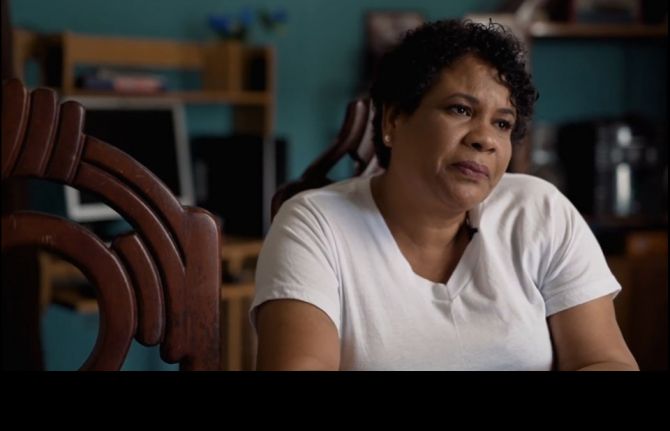
03 March 2021 03 March 2021Ingrid Bretón learned that she was living with HIV when she was 19 years old. It was 1994 and HIV treatment was not yet available in the Dominican Republic.
“I lasted almost five years alive, but dead inside,” she remembers. “I went through every denial process that a newly diagnosed person goes through. Health centres did not want to assist me. I lived every kind of stigma and discrimination.”
In her town, La Romana, she was known as “the AIDS girl”. It was impossible to find work.
HIV treatment helped changed the trajectory of her life. With the guidance of her doctor, José Román, she became the first woman living with HIV in La Romana known to have given birth to an HIV-free baby. As she continued treatment it occurred to her that she was perfectly healthy and could live a more meaningful life.
“I thought to myself, “I am not getting sick, my hair is not falling off, I do not have sores, I do not have AIDS. I want to do things,”” Ms Bretón remembers.
In 2002 she formed the Paloma Group Foundation (La Fundación Grupo Paloma), which provides psychosocial support, legal assistance and job opportunities for people living with and affected by HIV in the eastern region of the country. The organization also plays a key advocacy role, bringing visibility to issues such as treatment adherence, prevention and stigma and discrimination.
One of the foundation’s innovations is an agriculture project that employs people living with HIV.
“It’s a beautiful process,” Ms Bretón says while walking through the sunny, red earth fields, past tomatoes, papayas and bananas. “The idea is that people living with HIV are able to move forward, working and providing for their families.”
The families with whom the Paloma Group Foundation works have been directly affected by the COVID-19 pandemic. The work of the foundation has been critical during this time. Its volunteers do home deliveries of food, medicine and clothing. The foundation is a source of connection and emotional support at a time when communities living with HIV are more isolated than ever due to social distancing measures.
The first Rapid Survey on the Needs of People Living with HIV in the Dominican Republic in the context of COVID-19 found that while 92% of respondents received their antiretroviral therapy, roughly one in six had less than one month’s supply left. Thanks to the advocacy of the UNAIDS Country Office for the Dominican Republic, protocols have now been amended so that people living with HIV and accessing treatment through the public health system can receive a three- to six-month supply of their medicine at one time.
The country office has urged the government to strengthen comprehensive care programmes, including through alliances with civil society. For example, the Paloma Group Foundation provided assistance to people living with HIV at the Francisco Gonzalvo Provincial Hospital during a five-month period in 2020 when medical personnel were not available at the La Romana facility.
The UNAIDS Country Office for the Dominican Republic has also called for particular attention to be given to the social protection and food security needs of people living with HIV who are in economically fragile situations. The office responded quickly to the fallout of COVID-19, offering support to the Paloma Group Foundation and other community organizations contributing to the national HIV response. UNAIDS’ comprehensive response included the provision of personal protective equipment and information specifically for the community of people living with HIV. The second stage of their response included mobilization of nutrition support.
“This was of great value to families given the economic crisis caused by COVID-19,” Ms Bretón says.
“Civil society plays the leading role of bringing awareness to communities and advocating on their behalf,” says the UNAIDS Country Director for the Dominican Republic, Bethania Betances. “As we respond to two pandemics—HIV and COVID-19—is it vital that they are at the decision-making table to help shape an effective, humane response.”
Watch: The extraordinary story of a woman living with HIV in the Dominican Republic
Region/country
Feature Story
Gender inequalities in Senegal highlighted on Zero Discrimination Day
03 March 2021
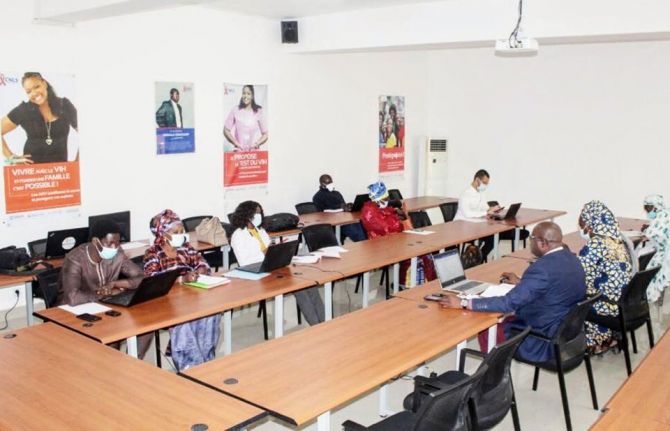
03 March 2021 03 March 2021The Network of People Living with HIV in Senegal (RNP+) marked Zero Discrimination Day 2021 by hosting a dialogue on the extent and impacts of the stigma and discrimination faced by women and girls living with HIV in Senegal—a country in which the 2017 People Living with HIV Stigma Index showed one in two people living with HIV experienced stigma and/or discrimination from others.
“Discrimination continues to affect women and girls and this is the reason why they are often excluded from the labour market, are isolated in their communities or experience stigma in health centres. Key populations are also historically the target of discrimination in Senegal,” said Soukèye Ndiaye, the President of RNP+.
Various assessments undertaken in the country have revealed that women living with HIV face obstacles in accessing reproductive health services, that sex workers face high levels of stigma in health-care settings and that the economic and social vulnerability of women living with HIV is not sufficiently taken into account in HIV programmes.
This dialogue served as the spearhead for the advocacy strategy that RNP+ will develop this year on human rights and gender issues in order to better respond to the expectations of its members and communities affected by HIV. This strategy will be accompanied by communication tools such as videos in several local languages and dialogue and sensitization sessions with key actors in the regions most affected by HIV.
During the dialogue, the participants were invited to support the RNP+ in this process. In particular, they were asked to become “champions” committed to making a better use of journalists, community radio and social networks to sensitize the general public to the challenges of discrimination.
Abdoulaye Ka, in charge of human rights issues at the National AIDS Control Council (CNLS), recalled the importance of continued collaboration between the state and non-state sectors. “Community organizations and networks have long been essential in the fight against AIDS because of their central role in raising awareness, informing, dispelling myths and misinformation and providing services to marginalized, vulnerable and discriminated against populations.”
The dialogue, which was supported by UNAIDS, brought together about 30 participants, including people living with HIV, representatives of women’s movements and key populations, human rights advocates, policymakers and health service providers in a meeting held both virtually and physically.
“In Senegal, we know that discrimination against people living with HIV is still a major stumbling block in all aspects of the HIV response. The United Nations Joint Team on AIDS has always placed human rights and gender considerations at the centre of its work and support,” said Demba Kone, the UNAIDS Country Director for Senegal.
Feature Story
Central African Republic marks Zero Discrimination Day
02 March 2021
02 March 2021 02 March 2021On 1 March, people around the world join together to celebrate Zero Discrimination Day, which this year highlighted the urgent need to take action to end inequalities.
In recent years, the Central African Republic has made the reduction of health inequalities a national priority. In mid-2019, 10 priority areas towards universal health coverage were established. These include the objective of ensuring that every citizen in the country has access to a health centre within 5 km of his or her home.
The country was the first to join the Global Partnership for Action to Eliminate all Forms of HIV-Related Stigma and Discrimination, which through harnessing the combined power of, and using the unique skills of, governments, civil society and the United Nations aims to consign HIV-related stigma and discrimination to history.
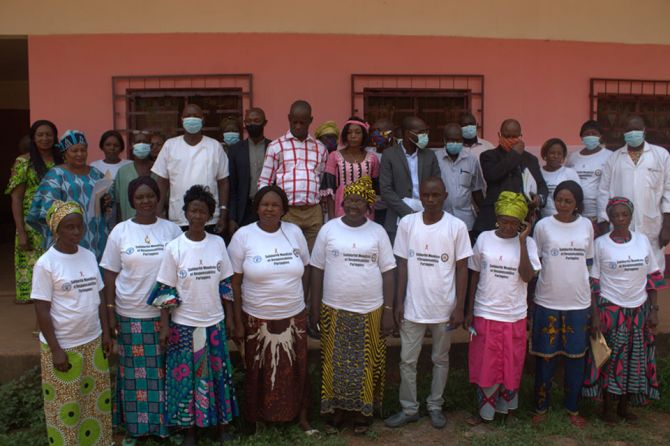
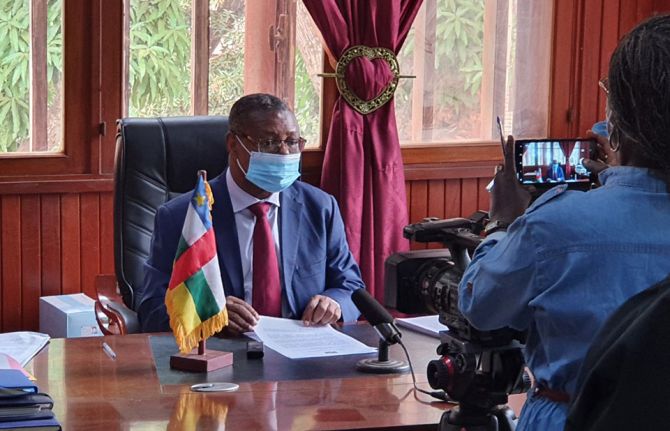
To mark Zero Discrimination Day this year, the country organized several activities ahead of and during the day. A declaration recalling the government’s commitment to non-discrimination and equality was issued by the Minister of Health and Population on television and radio. “It is only by addressing inequalities that we can achieve the Sustainable Development Goals, including those related to well-being and health for all,” said Pierre Somse, the Minister of Health and Population.
Recent studies show that inequality and stigma are major obstacles to access to health services. For example, more than 80% of people living with HIV in the country report having experienced discrimination or stigma. “These challenges are further compounded by conflicts and attacks on populations and health personnel that deprive hundreds of thousands of our citizens of their rights, including the right to life, dignity and health,” Mr Somse added.
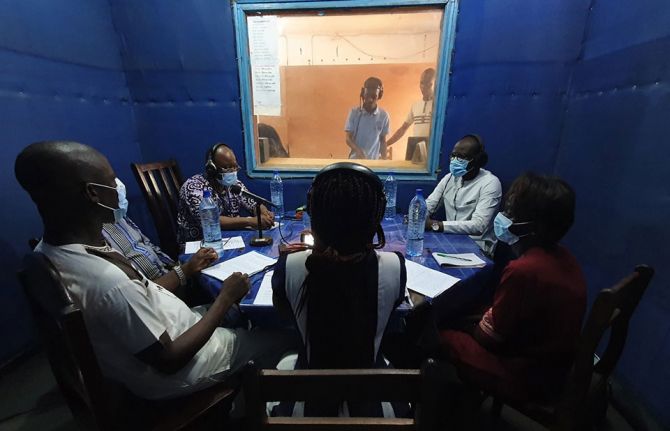
A civil society consultation was organized to flesh out the priorities for the elimination of stigma and discrimination in the country. A round-table meeting was also held on a national network of human rights journalists radio programme to raise awareness on the negative impact of stigma and discrimination as a major barrier to people taking up HIV prevention, treatment, care and support services. Speaking on the programme, Aminata Adoum, of the National Association of Women Lawyers, highlighted the work of her organization in supporting women living with HIV against discrimination and violence.
On Zero Discrimination Day 2020, health professionals, including professional organizations of doctors, nurses and midwives, as well as patients’ associations, signed a National Charter for Quality of Care and Patients’ Rights that sets the principles of humanism, ethics and respect for dignity to guide relations between patients and health-care providers. This year, the patients’ charter was posted in health facilities in the capital city, Bangui, and dedicated sensitization sessions on the charter took place for medical staff in two major health-care centres in the capital.
“This Zero Discrimination Day campaign is part of a comprehensive set of priority activities to address human rights barriers to HIV services that the country will be implementing over the next three years, including community-led monitoring of human rights violations, know your rights education, legal services, the development of anti-discrimination law and engagement with community leaders, legislators and opinion-makers,” said Patrick Eba, the UNAIDS Country Director for the Central African Republic.
Region/country
Feature Story
COVID-19 spurs on multimonth dispensing of HIV treatment in Cambodia
25 February 2021
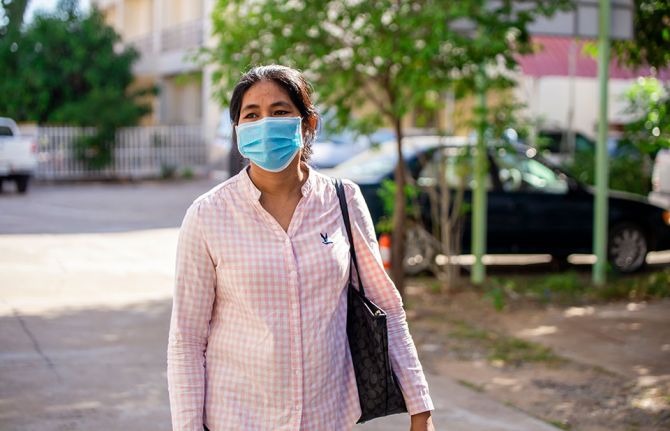
25 February 2021 25 February 2021When the COVID-19 pandemic broke out in Phnom Penh, Em Ra, pictured above, was worried.
She lives with HIV and she only had supplies of medicine to last a month.
“First, I was afraid that the medicine could not be shipped to Cambodia, the second is that when we don’t have medicine for a few months we have to come to the clinic often,” she said. “This increases my expenses but also raises my chances of getting COVID-19.”
During a recent visit to the National Center for HIV/AIDS, Dermatology and STDs (NCHADS) clinic, her doctor, Prak Narom, informed her that she would qualify for multimonth dispensing of HIV treatment. “Because of COVID-19, a patient in good health who takes their treatment daily can be prescribed HIV medicine for more than three months, and for some patients we can give them up to six months,” he explained.
Ms Ra is one of thousands in Cambodia who can now pick up a stock of medicine in one visit. There are an estimated 73 000 people living with HIV in Cambodia and now nearly 50% of people on treatment have access to multimonth dispensing of HIV treatment. Before the pandemic, that number stood at 34%.
The multimonth dispensing of HIV treatment programme in Cambodia began in 2019, long before the COVID-19 pandemic, but it has proven to be a godsend.
“When we started multimonth dispensing, there were some challenges because we had a shortage of drugs, but today we have overcome that so we can give medicine to people for up to six months,” said Ly Penh Sun, Director of NCHADS, pictured above.
The UNAIDS Country Director for Cambodia, Vladanka Andreeva, had feared the worse when COVID-19 shut down the country. “The biggest and oldest HIV treatment site in the capital was repurposed to serve as a COVID-19 centre and our outreach activities had to cease with public venues closed to the public.”
But UNAIDS, with the national AIDS programme and communities, worked together and helped with moving people to another treatment site, while providing face coverings and hand sanitizer to people living with HIV. UNAIDS also advocated that people living with HIV be integrated in the emergency cash transfer programme. As a result, more than 2500 households benefitted.
And more importantly, UNAIDS and partners pushed to introduce the home delivery of treatment and the rollout of multimonth dispensing of HIV medicine at the national level.
“We have used COVID-19 as an accelerator to further scale up and promote the multimonth dispensing of medicine,” Ms Andreeva said, pictured above.
It has been so successful that Mr Narom can’t believe it.
“In the past we used to see 30 patients in the morning, but now with multimonth dispensing we can reduce that by half or more than half,” he said. “I can now spend more time with my patients and carry out more in-depth check-ups.”
When a person is unable to take antiretroviral therapy regularly, their viral load increases, impacting the person’s health, which can ultimately lead to death. Even relatively short-term interruptions to HIV treatment can have a significant negative impact on a person’s health and potential to transmit HIV.
UNAIDS is advocating that all countries, ministries of health and national AIDS programmes grant access to three months or more of antiretroviral therapy for all people living with HIV, including refugees and migrants.
As for Ms Ra, she has joined a Telegram group started by the clinic for people living with HIV in case they have questions about their health or their medicine.
Watch: COVID-19 spurs on multimonth dispensing of HIV treatment in Cambodia
Photo credit: UNAIDS/S.Dara
Our work
Watch: COVID-19 spurs on multimonth dispensing of HIV treatment in Cambodia
Region/country
Feature Story
Faith-based project against paediatric HIV launched in Côte d’Ivoire
02 March 2021
02 March 2021 02 March 2021Faith-based organizations play a key role in all areas of the HIV response and provide a significant part of HIV-related health care through their networks of hospitals, clinics and community systems, particularly in high-burden countries. For this reason, UNAIDS and the United States President’s Emergency Plan for AIDS Relief (PEPFAR) launched a joint initiative to capitalize on the global and national leadership of faith-based organizations and to harness the power that a network of faith-based organizations could offer in some countries, including Côte d’Ivoire.
The UNAIDS–PEPFAR faith-based initiative was launched in Côte d’Ivoire on 14 October 2020 under the leadership of the Ministry of Health and Public Hygiene through the national AIDS control programme.
Following the national launch, several activities were initiated in the country as part of the initiative. These include the ongoing development of the Faith-Based Action Plan, under the leadership of the national AIDS control programme, which aims to ensure effective coordination and close monitoring of programmes, as well as synergy and complementarity in their implementation.
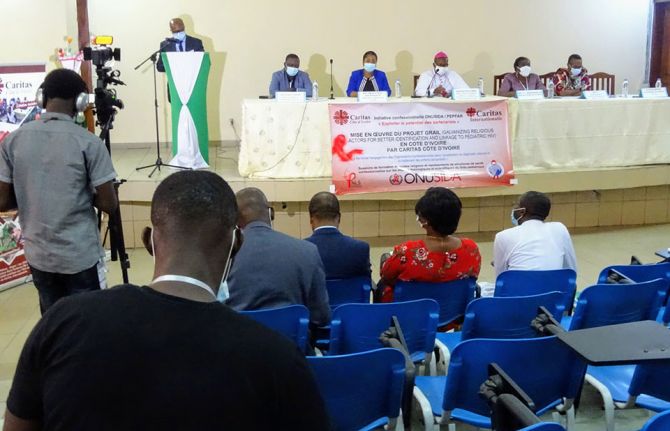
Caritas Côte d’Ivoire, which is a member of Caritas Internationalis, the organization in charge of implementing the social doctrine of the Catholic Church at the global and country levels, launched the GRAIL (Galvanizing Religious Actors for Better Identification and Linkage to Paediatric HIV) project on 9 February. This project will strengthen the involvement of faith-based organizations in accelerating the early diagnosis and treatment of children living with HIV in Côte d’Ivoire.
During the launch of the GRAIL project, a representative of the Ministry of Health and Public Hygiene welcomed the commitment of the Catholic Church in the national response to HIV and recalled the place of paediatric AIDS in national priorities.
“The COVID-19 pandemic that we are facing is a very worrying health and social emergency that requires a strong response. Many of the people affected are children living with HIV,” said Bruno Yedoh Essoh, the President of Caritas Côte d’Ivoire.
“Gaps in the diagnosis and care of children living with HIV are notable and an effective national partnership with faith-based organizations in Côte d’Ivoire can help fill these gaps,” said Jean-François Somé, a UNAIDS PEPFAR/Global Fund to Fight AIDS, Tuberculosis and Malaria Implementation Adviser who represented UNAIDS at the launch.
The GRAIL project will focus on training religious leaders and faith-based health service providers on paediatric HIV and on actions to reduce stigma and discrimination against people living with HIV, including children. The first session of a training workshop for religious leaders and faith-based health service providers on paediatric AIDS started immediately after the launch of the GRAIL project. Other training sessions are planned around the country.
Prise en charge des enfants vivant avec le VIH/SIDA Le projet GRAIL lancé Les enfants vivant avec le VIH/ SIDA en...
Posted by Caritas Nationale CI on Tuesday, February 9, 2021
Our work
Region/country
Related
Feature Story
“We must move forward, only forward”
25 February 2021
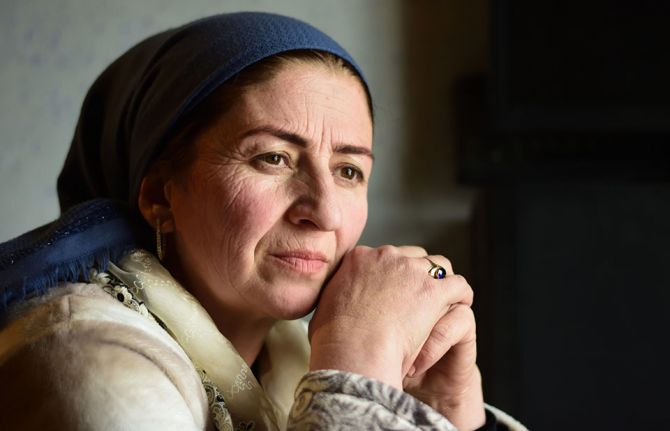
25 February 2021 25 February 2021Malohat Sharipova, pictured above, teaches in a primary school in Bohtar, Tajikistan, but in her spare time she works as an outreach worker for AFIF, a nongovernmental organization that helps people living with HIV, tuberculosis and key populations.
AFIF works closely with the regional AIDS clinics, providing outreach workers who support and work with people living with and affected by HIV. During the COVID-19 pandemic, AFIF’s outreach workers have provided people living with HIV with three-month supplies of antiretroviral medicines, food and personal protective equipment, including antiseptic, masks and gloves.
The outreach workers are trained to carry out screening to detect tuberculosis and hepatitis in people living with HIV and injecting drug users. “It is necessary to ask 10 to 12 questions on HIV and tuberculosis developed by specialists to determine the need for further diagnosis. If there are symptoms, a person is advised to undergo timely testing, either at the nearest medical centre or using a kit for self-testing, which we provide,” said Ikram Ibragimov, the Director of AFIF.
AFIF’s activities are supported by the Ministry of Health of Tajikistan and conducted within the UNAIDS Regional Cooperation Programme for Technical Assistance for HIV and Other Infectious Diseases in the Commonwealth of Independent States, funded by the Russian Federation. Since the beginning of the project in 2019, about 7500 people have undergone community-based testing.
Ms Sharipova has four children, two daughters who are married and have left home, an older son who works in another city and her youngest son, who is in the 11th grade in school.
“In 2010, my husband was admitted to hospital. Before that, he had been complaining of abdominal pain for a long time. I tried to persuade him to visit a doctor, but he didn’t. He was hospitalized when it got bad, was diagnosed with liver cirrhosis and died soon after. I got a call from the hospital, and they told me to get tested for HIV.”
“When they told me that I had HIV, I thought, “Thank God I'm still alive, I can walk and work.” After my husband’s death I needed to raise my children, support my mother-in-law, who I loved like a mother.”
She has been taking antiretroviral therapy since 2010. “I feel fine. Previously, it was necessary to take the pills strictly twice a day. Now doctors have prescribed a different scheme, so I can take medicine only once a day. I need to stay healthy for my children and be able to help them. I do not talk widely about my diagnosis, but I don’t hide it. I think I was seen by many at HIV prevention events and trainings.”
Ms Sharipova leads a group for women—“We have female consultants working with women and men work with men. When people first learn about their HIV-positive status, they usually feel confused and scared, do not know what to do next. We talk to them, invite them to our self-help groups, explain the therapy, the future. Sometimes it is challenging to work with them, but I always say: we must move forward, only forward.”
Photography: Nazim Kalandarov/UNAIDS
Our work
Region/country

Feature Story
US$ 64 million to respond to HIV, TB and malaria in Congo
01 March 2021
01 March 2021 01 March 2021The Global Fund to Fight AIDS, Tuberculosis and Malaria, the Government of Congo and health partners have announced two new grants worth more than US$ 64 million to strengthen prevention and treatment services to respond to HIV, tuberculosis and malaria and to build resilient and sustainable systems for health in Congo.
The two grants are a 97% increase from the previous allocation against the three diseases and will be spent from 2021 to 2023.
“UNAIDS looks forward to continuing to work closely with all partners to accelerate the elimination of vertical transmission of HIV and paediatric AIDS in Congo and to improve access to HIV/tuberculosis programmes, sexual and reproductive health, and legal services for young women and adolescent girls and all groups at higher risk of contracting HIV,” said Winnie Byanyima, Executive Director of UNAIDS.
The HIV grant will significantly increase the number of people living with HIV who know their HIV status and will expand access to life-saving antiretroviral therapy, particularly for pregnant women. In 2019 in Congo, only 51% of people living with HIV knew their HIV status and only 25% of people living with HIV were accessing antiretroviral therapy. Only 10% of pregnant women living with HIV in Congo were offered antiretroviral medicine to prevent the virus being passed to their babies.
The tuberculosis component of the grant aims to boost the national tuberculosis response, increase the notification of new tuberculosis cases and reach a 90% treatment success rate by 2023, in line with the World Health Organization’s End TB Strategy. The grant will also support the country’s efforts to improve treatment success for people with multidrug-resistant tuberculosis. The malaria grant will support the country’s goal to distribute 3.5 million mosquito nets by 2023 and expand access to quality malaria diagnostics and treatment tools.
“In the context of the country’s financial crisis, exacerbated by the COVID-19 pandemic, the grants allocated to Congo are a breath of fresh air. They provide renewed impetus to the government’s action in favour of populations affected by HIV, tuberculosis and malaria,” said the Prime Minister of Congo, Clément Mouamba.
The United Nations Development Programme will implement the HIV and tuberculosis grant, while Catholic Relief Services will implement the malaria grant.
Our work
Region/country
Feature Story
Reporting the realities faced by LGBTI people and people living with HIV in Asia and the Pacific
01 March 2021
01 March 2021 01 March 2021The transgender community has been severely affected by the COVID-19 pandemic in Asia and the Pacific. “My main worry is about survival and being able to support and cover the essential needs of the transgender community when job security is less and businesses are closing,” said Khartini Slamah, a transgender woman and activist from Sarawak, Malaysia, who is also known as Mama Tini in her community. “Many transgender people are unable to pay rent and utility bills, unable to do sex work, conduct their usual businesses. Some even lost their jobs,” she said.
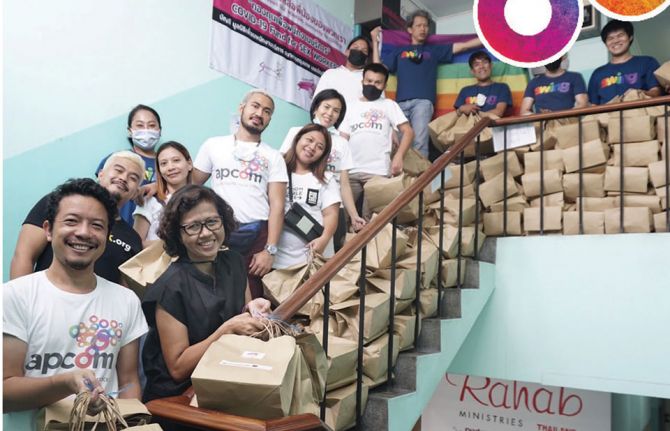
Mama Tini’s testimony is featured in the COVID-19 Effect Series, a regular newsletter that profiles issues, challenges and solutions from the lesbian, gay, bisexual, transgender and intersex (LGBTI) communities, key populations and people living with HIV across Asia and the Pacific, created by APCOM, a regional network for LGBTI people based in Bangkok, Thailand. Since April 2020, with more than 19 issues, the newsletter has provided a platform to leverage the voices of people living with HIV and LGBTI people and to share stories, highlight challenges, showcase innovation and build strength within these communities.
The articles included in the newsletter show how civil society organizations are playing a critical role in providing essential safety nets for vulnerable communities during the pandemic. Since the first COVID-19 outbreak in Malaysia, Mama Tini has been working closely to provide support to transgender women, gay men and other men who have sex with men and female sex workers to encourage sexual health screening and testing and to raise awareness of HIV and other sexually transmitted infections.
The newsletter is also a testament to how community-led organizations have used the structure and networks from the HIV response to ensure timely access to information about COVID-19 while preventing disruption to HIV services. Examples of these initiatives include how community-led HIV services provide antiretroviral therapy, HIV testing and pre-exposure prophylaxis (PrEP) to key populations and fundraising efforts for food packages.
CARMAH, a partner in Viet Nam, has been implementing the TestSGN initiative to encourage HIV testing in Ho Chi Minh City for several years. Since the beginning of the pandemic, CARMAH has provided PrEP to 450 gay men and other men who have sex with men and transgender people in Ho Chi Minh City. During the COVID-19 outbreak, the organization implemented more flexible working schedules to ensure that PrEP and HIV testing services were not disrupted.
“The COVID-19 Effect Series documents the important work carried by our community partners and individuals in the response to COVID-19. The series captures inspiring stories from the grass-roots level on overcoming challenges, sharing best practices and how we are all working tirelessly to ensure access to HIV prevention and treatment services and the protection of LGBTI rights,” said Midnight Poonkasetwattana, the Executive Director of APCOM
The COVID-19 Effect Series also captures the unique voices of outreach workers. One of them is Deepak Tripathi, a Senior Programme Officer at the Committed Communities Development Trust (CCDT), an organization based in Mumbai, India. He has a background in and passion for documentary movies, story-telling and news anchoring, but now works full time at CCDT. Throughout the pandemic, Mr Tripathi has been committed to helping the communities hit hard by the economic fall-out from COVID-19.
“Most nongovernment organizations in India, including CCDT, play a crucial role in continuing improving the health and well-being of their target population or beneficiaries, especially during natural crises or disasters, including the COVID-19 crisis,” said Mr Tripathi. CCDT held fundraising events to support migrant workers and daily-wage communities, donated medical equipment and 3000 personal protective equipment kits to hospitals in Mumbai and supplied nutrition kits or bags to 500 individuals and the families of people living with and affected by HIV.
APCOM has also used the COVID-19 Effect Series to promote fundraising initiatives, such as #CoronaAPCOMpassion, an emergency fund started by APCOM staff donating their salaries. APCOM collaborated with SWING, the Thai Sex Workers Organization, based in Bangkok and Pattaya, and mobilized 20 000 baht (US$ 650) to purchase basic food and supplies for sex workers. Also, APCOM donated 9000 baht (US$ 300) to the Bangkok Rainbow Organization to support the health and well-being of LGBTI people in Thailand. You can watch a video here and read about other communities that have benefited from this emergency funding, and how you can support it.
“The human-interest stories included in the COVID-19 Effect Series raise the visibility of human rights violations and the challenges faced by LGBTI people and people living with HIV in accessing health services. The series amplifies community voices that have often been unheard in COVID-19 narratives,” said Eamonn Murphy, Director of the UNAIDS Regional Support Team for Asia and the Pacific, which has provided financial support to make the newsletter a reality.
To mark Zero Discrimination Day by making the voices of the communities heard, APCOM is launching a short report that compiles stories and articles published in the COVID-19 Effect Series.
Our work
Region/country
- Asia and Pacific
- Australia
- Bangladesh
- Bhutan
- Brunei Darussalam
- Cambodia
- China
- Democratic People's Republic of Korea
- Federated States of Micronesia
- Fiji
- India
- Indonesia
- Islamic Republic of Iran
- Japan
- Kiribati
- Lao People's Democratic Republic
- Malaysia
- Maldives
- Marshall Islands
- Mongolia
- Myanmar
- Nauru
- Nepal
- New Zealand
- Pakistan
- Palau
- Papua New Guinea
- Philippines
- Republic of Korea
- Singapore
- Solomon Islands
- Sri Lanka
- Thailand
- Timor-Leste
- Tonga
- Tuvalu
- Vanuatu
- Viet Nam
- Samoa
Feature Story
Gaps in antiretroviral therapy coverage among prisoners living with HIV
22 February 2021
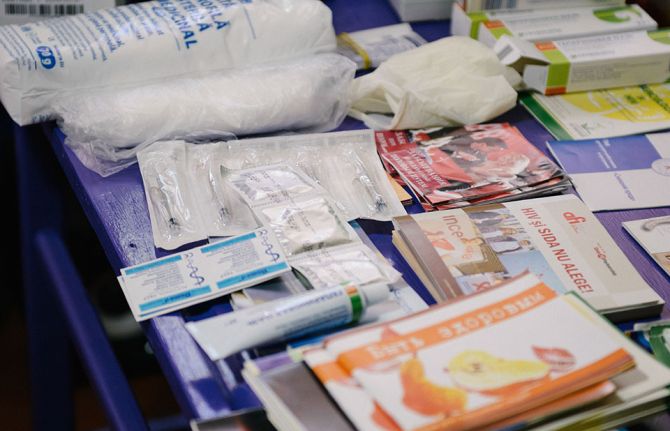
22 February 2021 22 February 2021On any given day, approximately 11 million people worldwide are in confinement. Drug injection and sexual intercourse occur worldwide in prisons. The risk of sexual violence among prisoners—and their insufficient access to condoms, lubricants, pre-exposure prophylaxis and harm reduction services—heighten their chances of acquiring HIV, hepatitis C and sexually transmitted infections.
Among people who inject drugs, recent incarceration is associated with an 81% and 62% increased likelihood of HIV infection and hepatitis C infection, respectively.
Closed settings should, in theory, favour the delivery of effective testing and treatment services, although treatment interruptions and concerns about confidentiality and discrimination pose challenges. In 2019, 78 countries reported to UNAIDS that HIV testing was available at any time during detention or imprisonment, and 104 countries reported that antiretroviral therapy was available to all prisoners living with HIV. Coverage of antiretroviral therapy is good, although gaps remain.
Our work
Feature Story
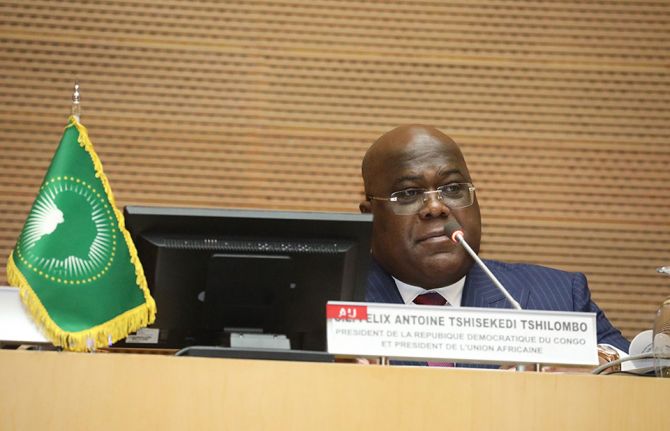
Félix Tshisekedi, President of the Democratic Republic of the Congo and 2021 African Union Chair, calls on his peers to learn from HIV and strengthen health systems
15 February 2021
15 February 2021 15 February 2021The 34th Ordinary Assembly of the African Union Heads of States and Government was held virtually on 6 and 7 February 2021.
The President of the Democratic Republic of the Congo and new Chair of the African Union, Félix Tshisekedi, pictured above, urged Member States not to forget devastating global epidemics, such as malaria and AIDS, and learn from them to strengthen health systems, including the reinforcement of the Africa Centers for Disease Control and Prevention.
“Leveraging the experiences we have gained in the fight against adversity and our ability to adapt, we should not give up. Let us not forget other pandemics, often more deadly, that are still affecting the continent, like malaria and HIV,” said the President of the Democratic Republic of the Congo.
The assembly recognized the African Union’s role in mounting a united, innovative and strong partnership among Member States to address the COVID-19 pandemic, which has had a significant economic impact on Africa and further weakened its health systems.
Heads of states committed to sustaining efforts to curb the spread of the virus and mitigate its socioeconomic impact by using the Africa Continental Free Trade Agreement and to implement a coordinated vaccination programme through the Africa Vaccine Acquisition Task Team to ensure that no country is left behind.
“In responding to the pandemic, we have been at the forefront of innovation. We established the groundbreaking Africa Medical Supplies Platform to assist African Union Member States to access affordable medical supplies and equipment,” said the President of South Africa, Cyril Ramaphosa, pictured above.
The President of South Africa commended heads of states for their extraordinary and decisive leadership in tackling the COVID-19 crisis. He expressed dismay at the increase in violence against women and called on the continental body to prioritize women’s economic empowerment and develop a convention to promote, protect and fulfil women’s rights. He called on Member States to ratify International Labour Organization Convention No. 190 on eliminating harassment and violence in the world of work.
Aside from the African Union Chair’s handover from South Africa to the Democratic Republic of the Congo, the two-day assembly marked critical decisions on the implementation of the African Union’s institutional reform, including its Commission, and the election of four new commissioners. Moussa Faki Mahamat was re-elected as the African Union Commission Chairperson for a second four-year term and newly elected Monique Nsanzabaganwa, the first female in the history of the Commission, as his deputy.
“I congratulate the President of the Democratic Republic of the Congo, Félix Tshisekedi, for taking the reins as the Chair of the African Union for 2021 and commend him for calling on his peers to sustain efforts in the AIDS response and strengthen health systems in Africa while we are still facing the COVID-19 pandemic. I reaffirm UNAIDS’ support to the African Union. Saving lives, tackling inequalities and advancing universal health care are lessons learned from AIDS to address current and future pandemics successfully,” said Clémence Aissatou Habi Baré, Director of the UNAIDS Liaison Office to the African Union and United Nations Economic Commission for Africa.
Region/country
- West and Central Africa
- Benin
- Burkina Faso
- Burundi
- Cameroon
- Cape Verde
- Central African Republic
- Chad
- Congo
- Côte d'Ivoire
- Democratic Republic of the Congo
- Equatorial Guinea
- Gabon
- Gambia
- Ghana
- Guinea-Bissau
- Guinea
- Liberia
- Mali
- Mauritania
- Niger
- Nigeria
- Sao Tome and Principe
- Senegal
- Sierra Leone
- Togo
- Middle East and North Africa
- Afghanistan
- Algeria
- Bahrain
- Djibouti
- Egypt
- Iraq
- Islamic Republic of Iran
- Jordan
- Kuwait
- Lebanon
- Libya
- Morocco
- Oman
- Qatar
- Saudi Arabia
- Somalia
- Sudan
- Syrian Arab Republic
- Tunisia
- United Arab Emirates
- Yemen
- Eastern and Southern Africa
- Angola
- Botswana
- Comoros
- Eritrea
- Ethiopia
- Kenya
- Lesotho
- Madagascar
- Malawi
- Mauritius
- Mozambique
- Namibia
- Rwanda
- Seychelles
- South Africa
- South Sudan
- Eswatini
- Uganda
- United Republic of Tanzania
- Zambia
- Zimbabwe